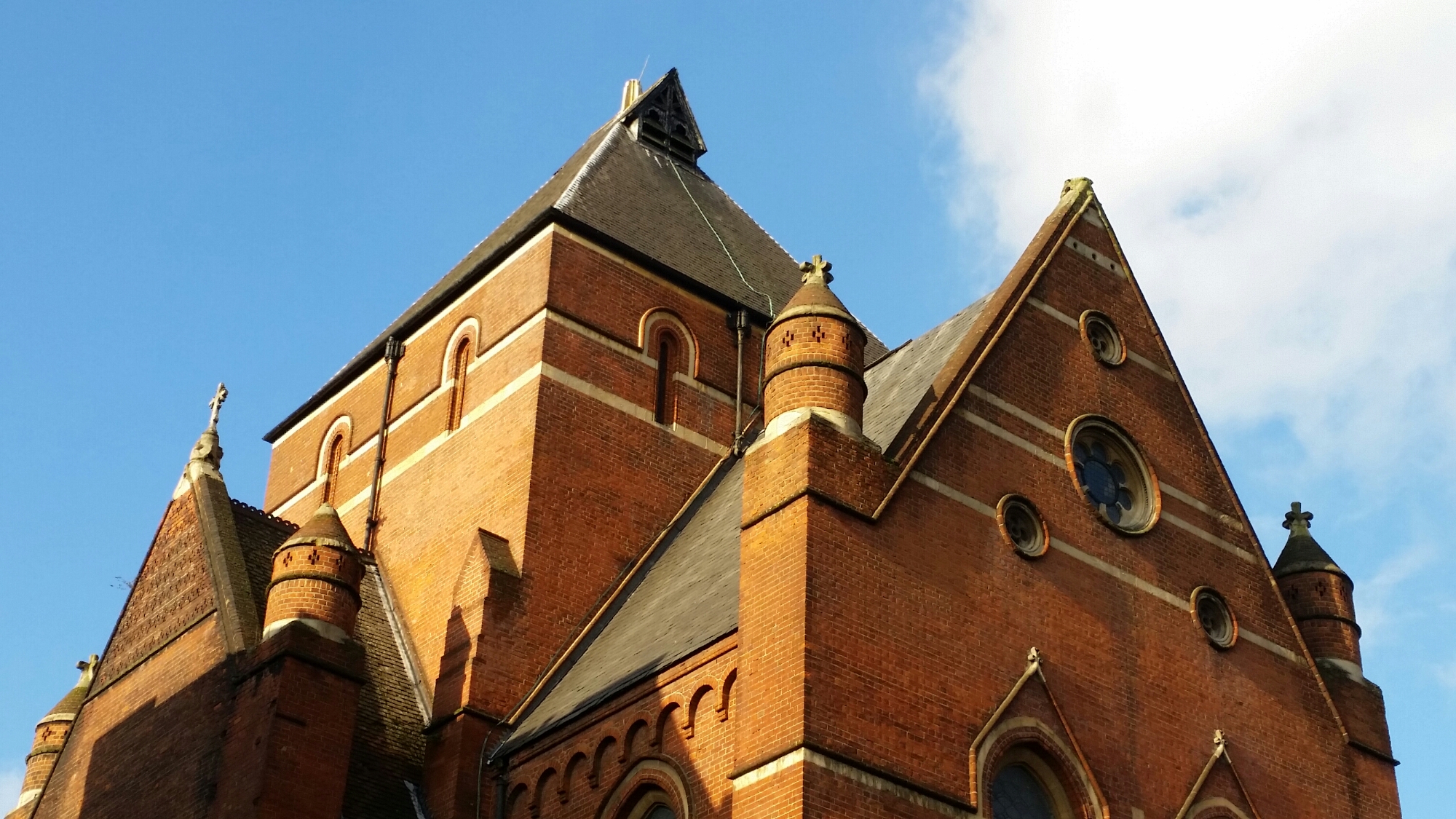
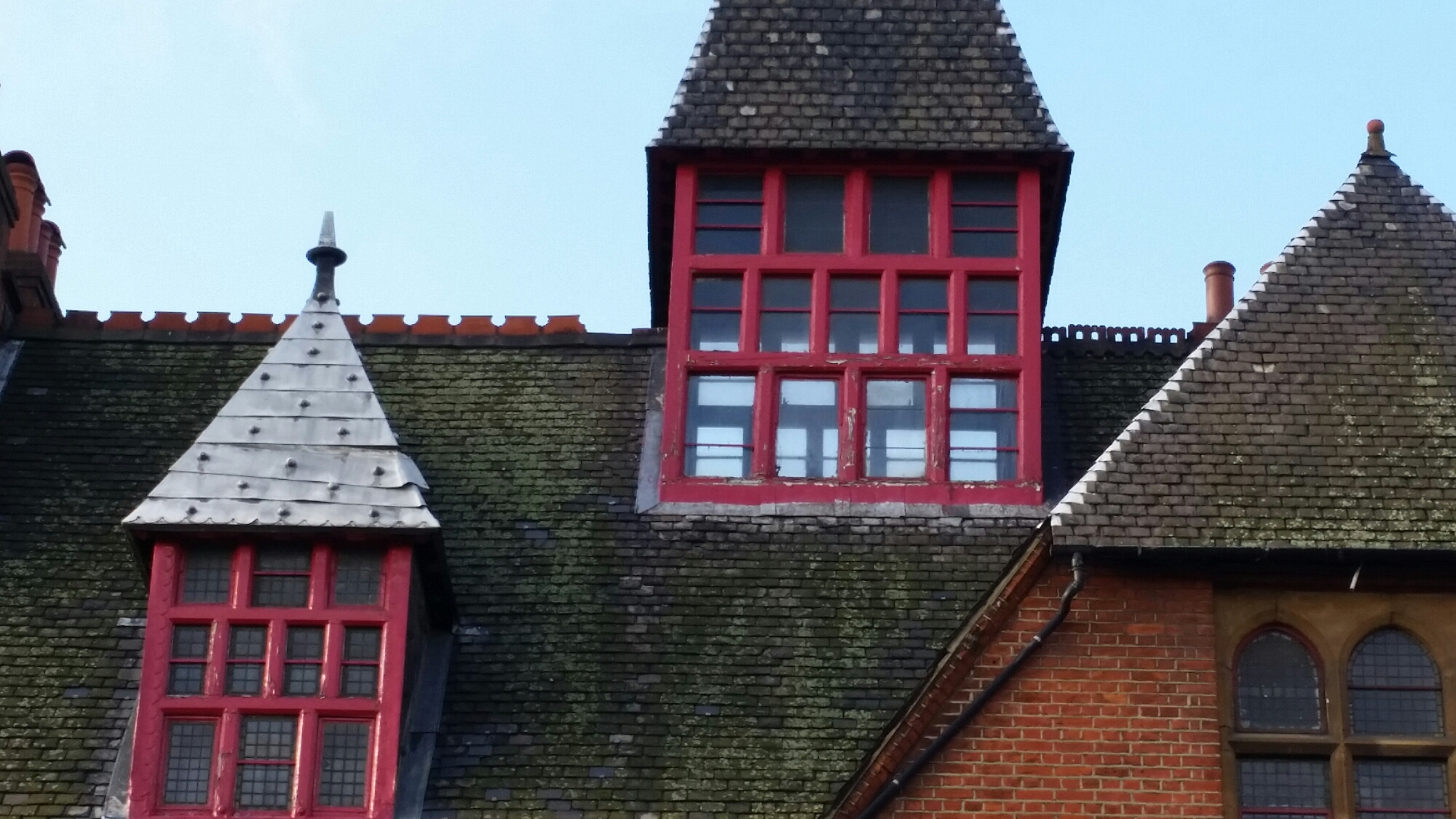
I have been meaning to find out the name of the large Victorian church up the road from the Geffrye Museum. The answer is that it is now a branch of the Christ Apostolic Church Bethel, but was originally opened in the 1860s as St. Columba, complete with School, Clergy House and Mission House next door. It was designed by James Brooks. I remembered seeking it out in the early 1970s, inspired by Ian Nairn’s description of it as ‘a dusky, grubby working church that could as well be in the Ruhr or an industrial suburb of Paris’:
Monthly Archives: November 2014
Geffrye Museum
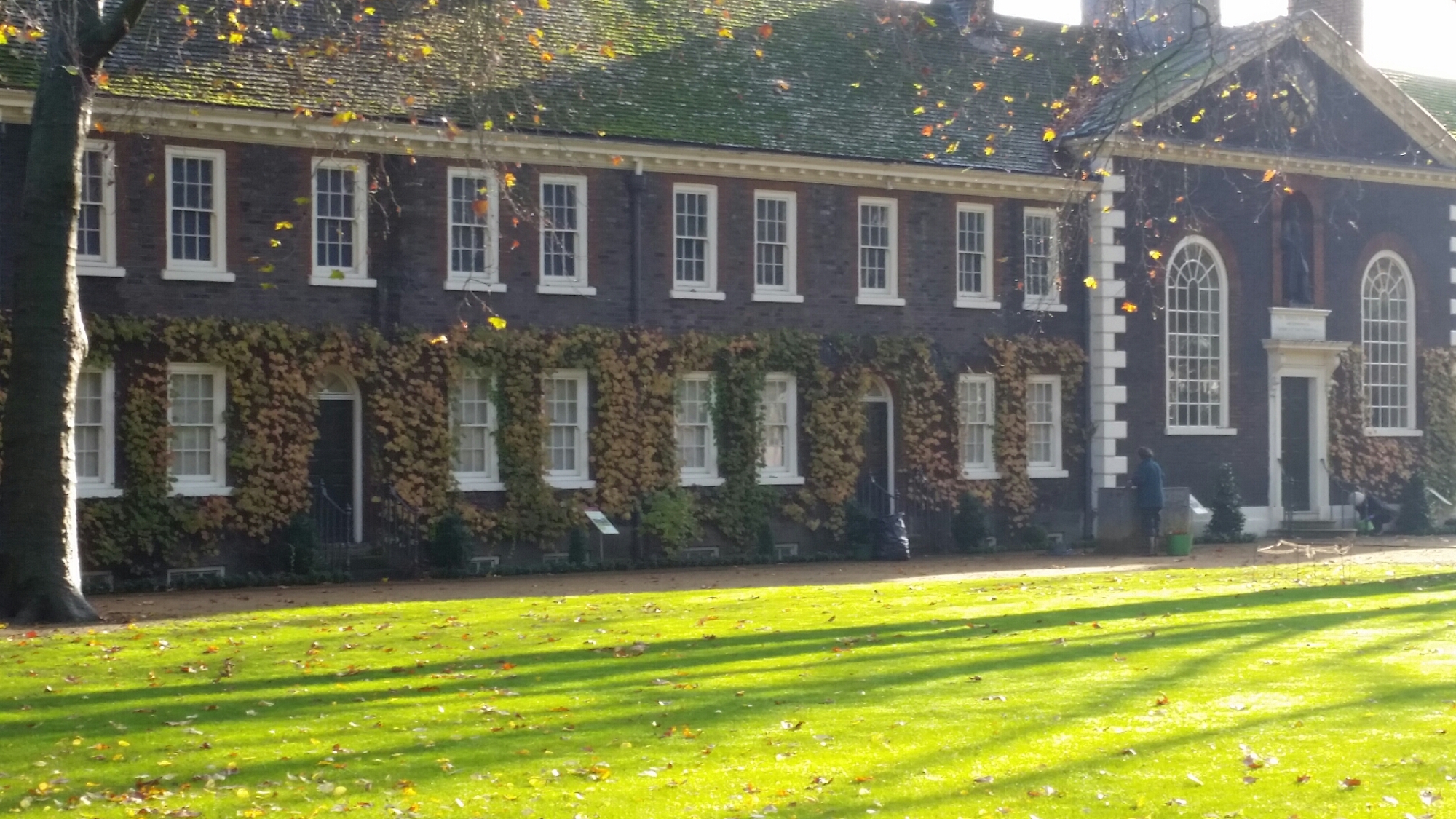
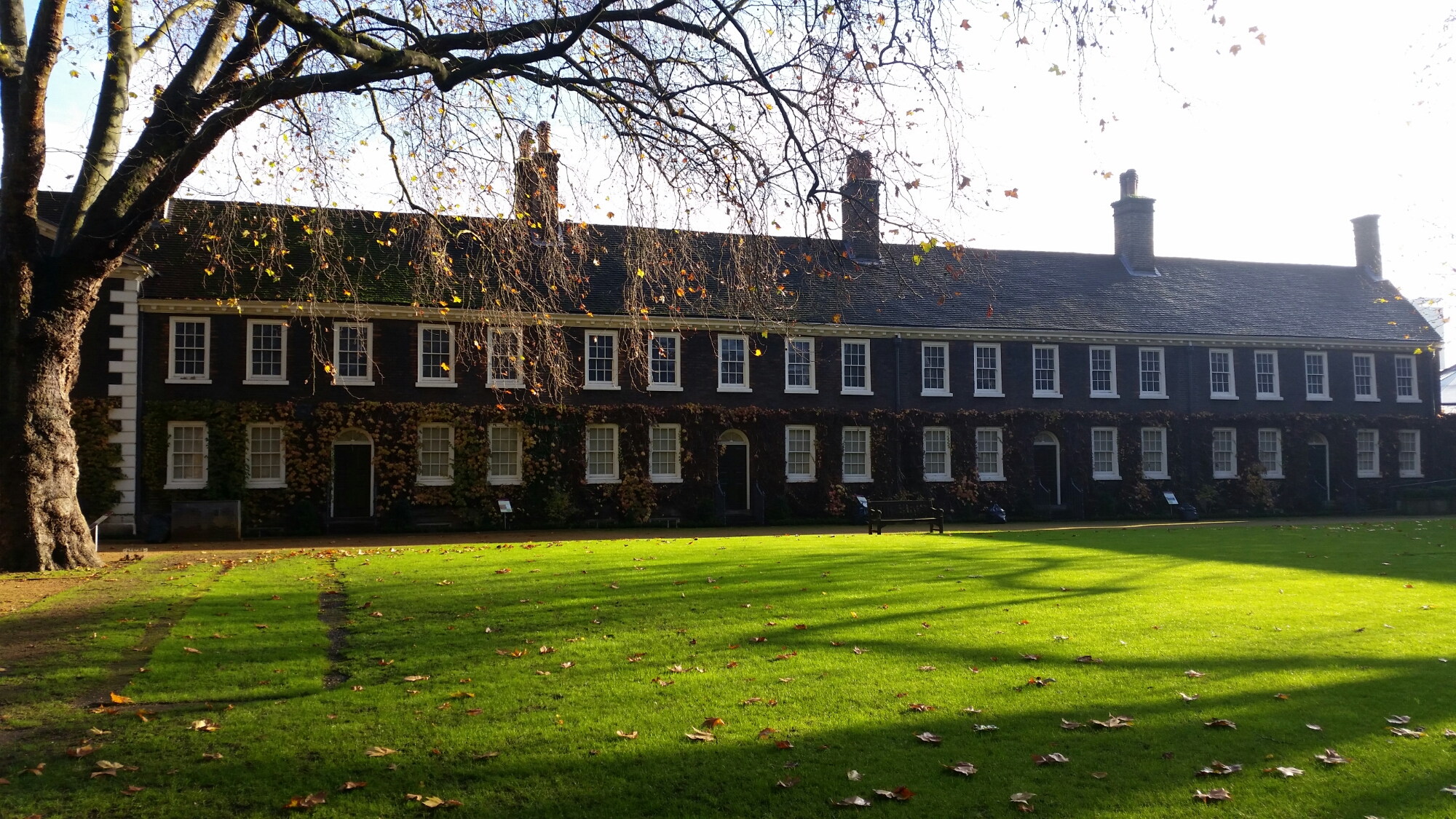
One of the pleasures of today was walking past the Geffrye Museum and seeing how the crisp November sun lit up the space in front of the early eighteenth-century almshouses. They were built out of a bequest from Sir Robert Geffrye, a big wheel in the Ironmonger’s Company, Lord Mayor in 1674 and died in 1703, leaving the residue of his estate to be used to construct fourteen almshouses, with a chapel in the middle and a statue commemorating the founder:
Truman, Hanbury and Buxton
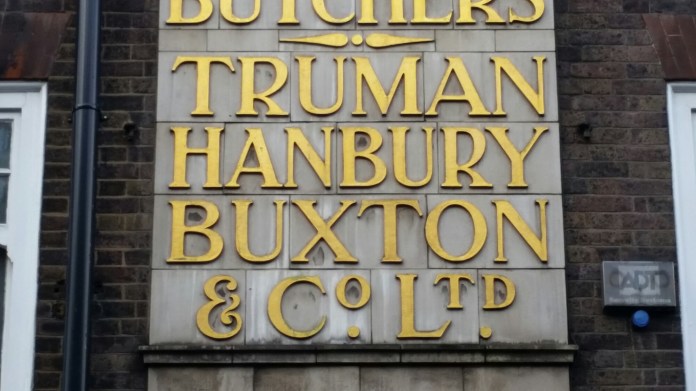
A morning recording session in the Kingsland Road meant that I was able to investigate the premises of Truman, Hanbury and Buxton in Brick Lane, which was empty on a weekday morning. The origins of the brewery go back to 1669 when Thomas Bucknall established a brewhouse on ‘Lolsworth Field at Spittlehope’. The business was then taken over in 1694 by Joseph Truman. His son Benjamin became a partner in 1722 and helped build production up, particularly of porter, such that they were producing 83,000 barrels a year in 1766 (not just porter, but also three types of stout and a mild ale). He became a country gentleman with an estate in Hertfordshire, was painted by Gainsborough, became High Sheriff, and was knighted by George III. In 1775, he wrote his credo on a page of the company accounts: ‘there can be no other way of raising a great Fortune but by carrying on an Extensive Trade. I must tell you Young Man, this is not to be obtained without Spirrit and great Application’. Following his death in 1780, the Quaker Hanburys bought into the firm. Sampson Hanbury, whose father Osgood was a banker and mother Mary a Lloyd (of the banking family) is said to have been a brilliant businessman, buying a steam engine in 1805, producing 200,000 barrels by 1820, and buying a country estate at Poles in Hertfordshire in 1800. In 1808, his nephew Thomas Buxton joined the firm, reformed its management, encouraged literacy in the workforce and entered parliament as MP for Weymouth in 1818. There are black eagles, the sign of the brewery:
This is the sign of The Jolly Butchers up the road, one of many pubs now closed:
Art and Public Projects
I started the day by attending a discussion with the All-party Parliamentary Design and Innovation Group about the relationship between art, design and architecture in major infrastructure projects, like the Jubilee Line, the Olympics, Heathrow Airport and now Crossrail. There was interesting discussion about the merits (or otherwise) of the Bird’s Nest Stadium in Beijing: designed by an artist (Ai Weiwei), but apparently regarded by engineers as an inefficient use of metal. If it’s a choice between Heathrow Terminal 2, an architecturally worthy but dull building with an exciting art project by Richard Wilson, and Terminal 5, an architecturally very exciting building without such evident public art, I’m for the latter.
George Barret junior
I have been asked why a bust of George Barret junior should appear on the façade of the Royal Institute of Painters in Watercolour alongside Turner and Girtin. The answer, I assume, is that he was nearly, but not quite, one of the founders of the Society of Painters in Watercolours, joining it after its first meeting in Stratford Coffee House in November 1804, was a devoted member, exhibiting local scenes of the Thames valley and home counties every year for thirty-eight years, and, perhaps most importantly, published The Theory and Practice of Water-Colour Painting Elucidated in a Series of Letters in 1840, so was regarded as a theoretician of the genre, helping to establish its currency.
Bow Street Police Station
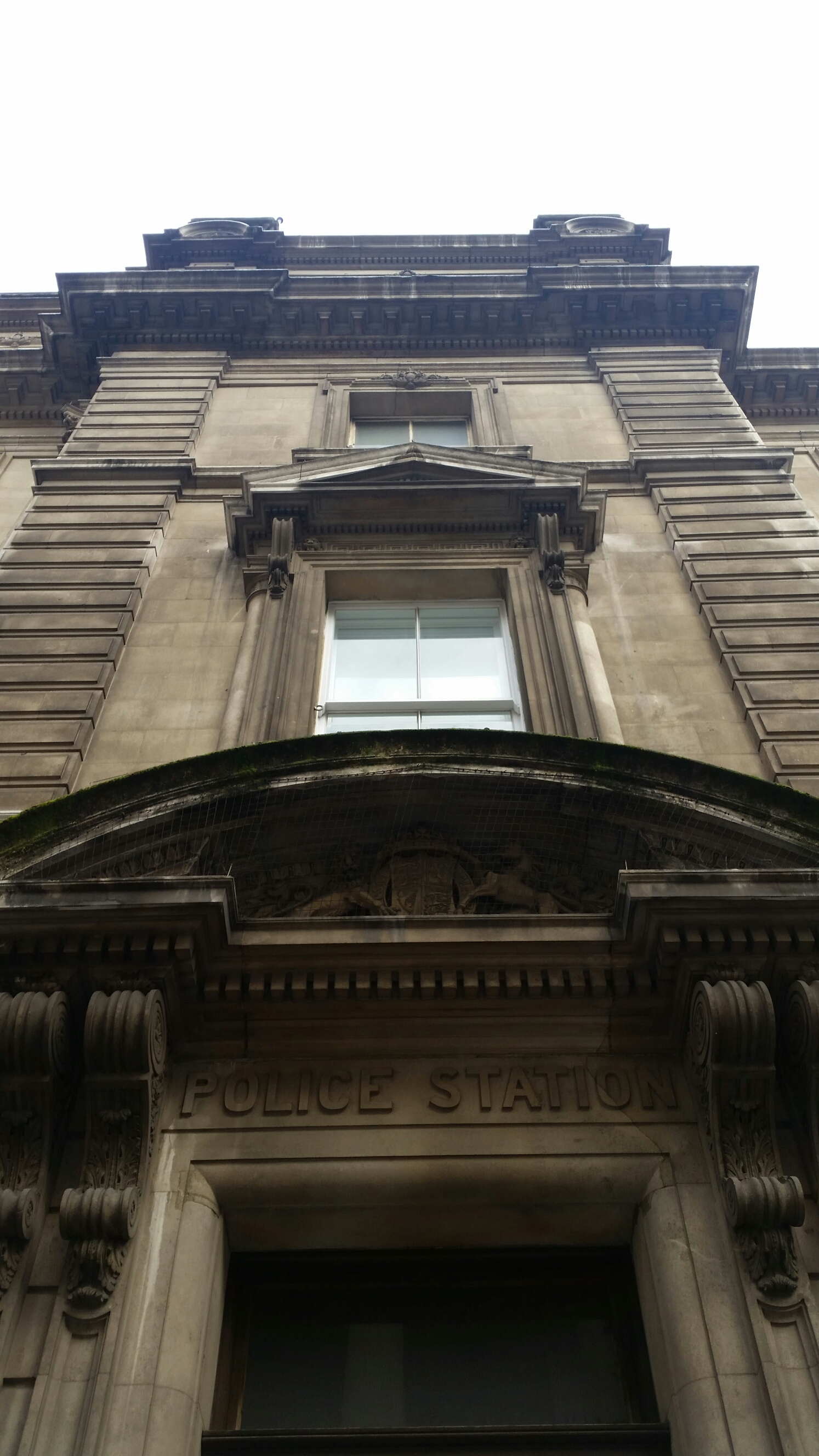
I was surprised to spot that Bow Street Police Station is no more – in fact, was shut down in 2006. Surprised because it was the home of the Bow Street Runners, London’s first police force, founded by Henry Fielding, the author of Tom Jones, in 1749. They worked out of his office at 4, Bow Street. It’s quite a fine building, designed by Sir John Taylor of the Office of Works in the neoclassical tradition of Cockerell and Pennethorne, now to be (apparently) a boutique hotel:
Joseph Kosuth
I first came across the work of Joseph Kosuth in Wellington, New Zealand, where, in 2000, he did an installation for the University Art Gallery called Guests and Foreigners, Rules and Meanings. I have ever since admired the way he combines history, lettering, allusion and meaning in complex museum settings. The granddaddy of conceptualism, he started using neon lights in 1965, before Bruce Nauman, Tracey Emin and the rest. He’s got an exhibition opening tonight at Sprüth Magers in Grafton Street.
Twisting Bridge
On the way to lunch today, I walked under Chris Wilkinson’s beautifully elegant bridge across Floral Street connecting the Royal Opera House to the Royal Ballet School next door. I had never previously stopped to admire the quality of its engineering, like a Slinky:
2, Temple Place
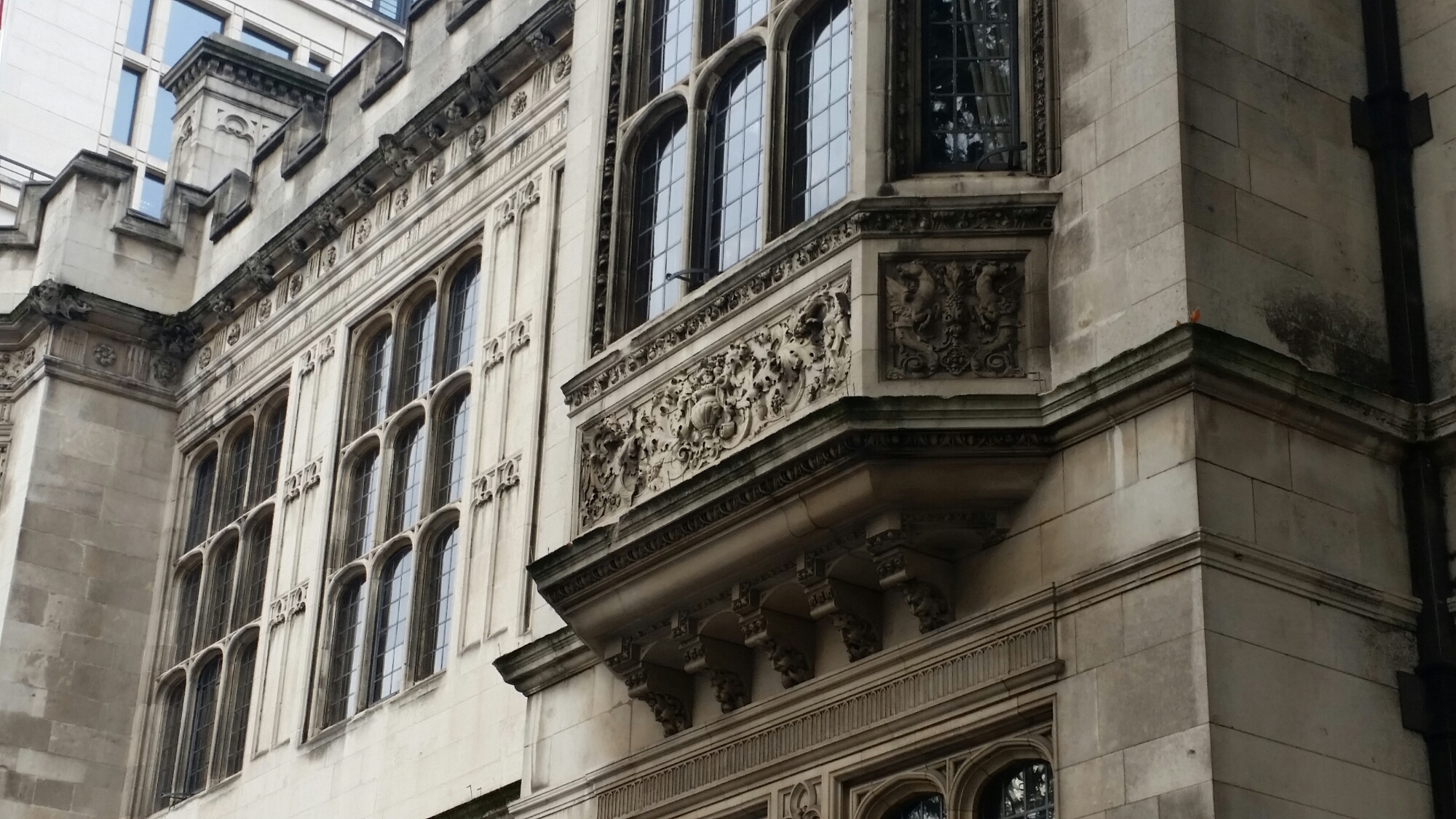
I had a fine thanksgiving lunch today in 2, Temple Place, an extraordarily grand building on the corner of Temple Place near the tube station. It was designed by John Loughborough Pearson and decorated internally by John Dibbledee Crace as the estate office for William Waldorf Astor, with a flat above so that his children would be safe from kidnapping. It’s in a style of opulent Tudorbethan more normal in Washington than London, with scenes from The Three Musketeers on the banisters and a frieze which includes pictures of Machiavelli and Pocahontas (but I didn’t like to spend lunch checking):
The Royal Institute of Painters in Watercolours
Now that they have renewed the connection to the Bakerloo line at Embankment, I spend more time walking down Piccadilly. My eye is often caught by the grandiosity of the former headquarters of the Royal Institute of Painters in Watercolours, which opened in 1883, having been founded as the New Society of Painters in Water Colours in 1831 (after a false start in 1807) as a protest at the refusal of the Royal Academy to accept watercolour as a legitimate medium. Their exhibitions were originally held at 16, Old Bond Street, then moved to Exeter Hall in the Strand (the site of the Strand Palace Hotel). In 1838, they moved to 53, Pall Mall and in 1883 to Piccadilly, to a building designed by E.R. Robson and including on the façade heroic busts of the greatest watercolourists:- SANDBY, COZENS, GIRTIN, TURNER, D. COX, DE WINT, BARRET and W. HUNT:-


You must be logged in to post a comment.