
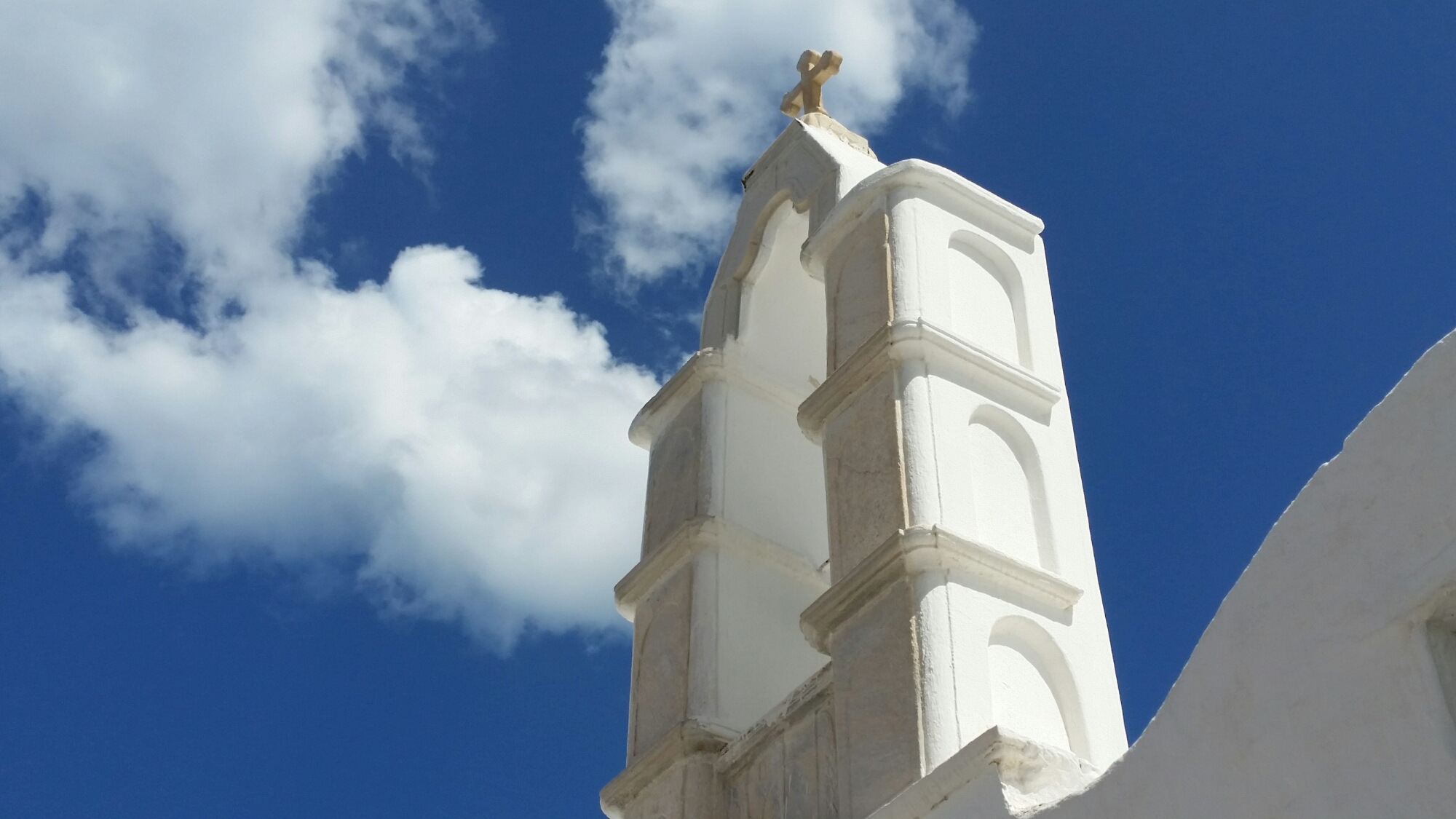
In honour of Good Friday, I’m posting some more pictures of Mykonoan churches and church towers:-
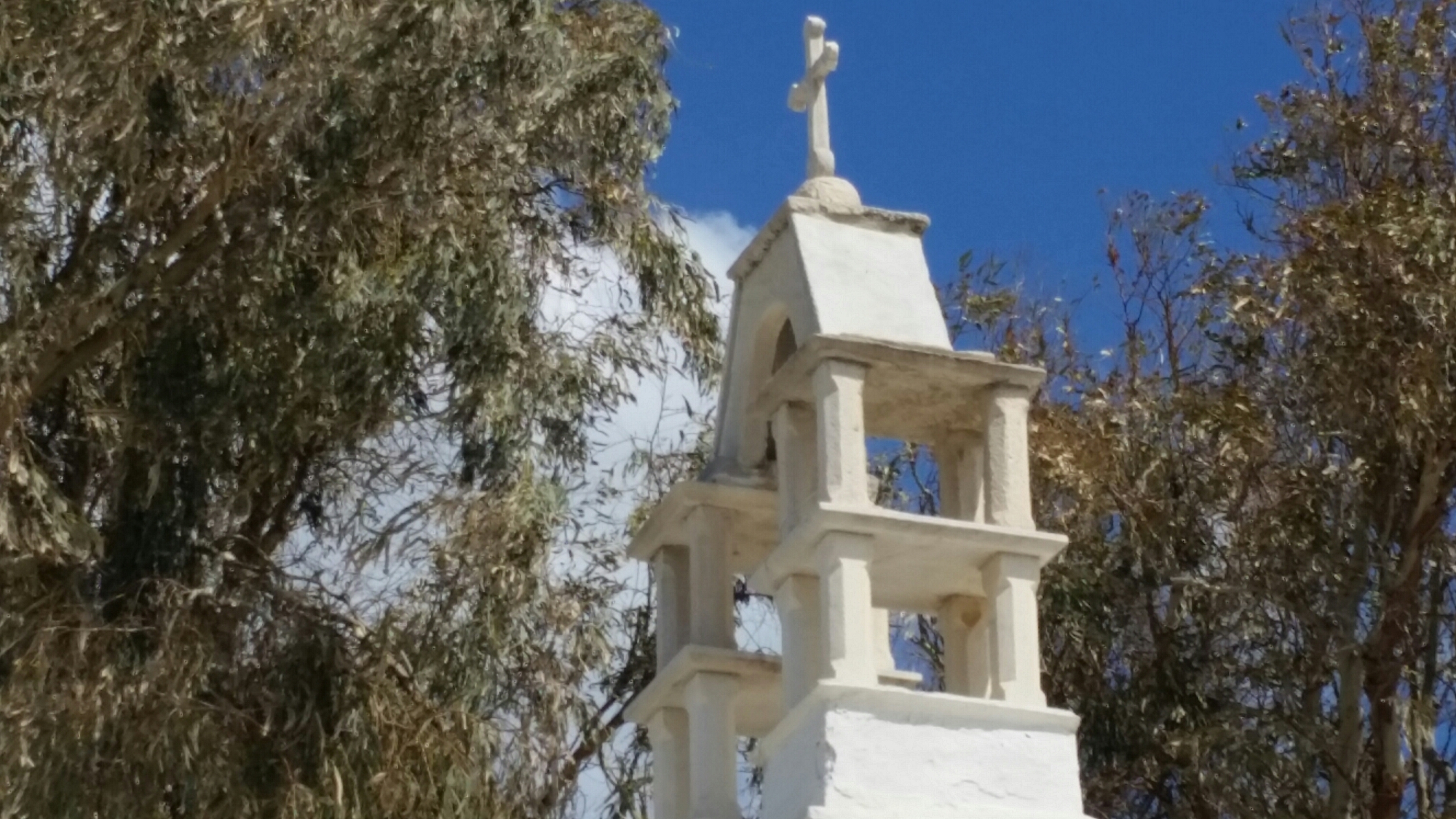
In honour of Good Friday, I’m posting some more pictures of Mykonoan churches and church towers:-
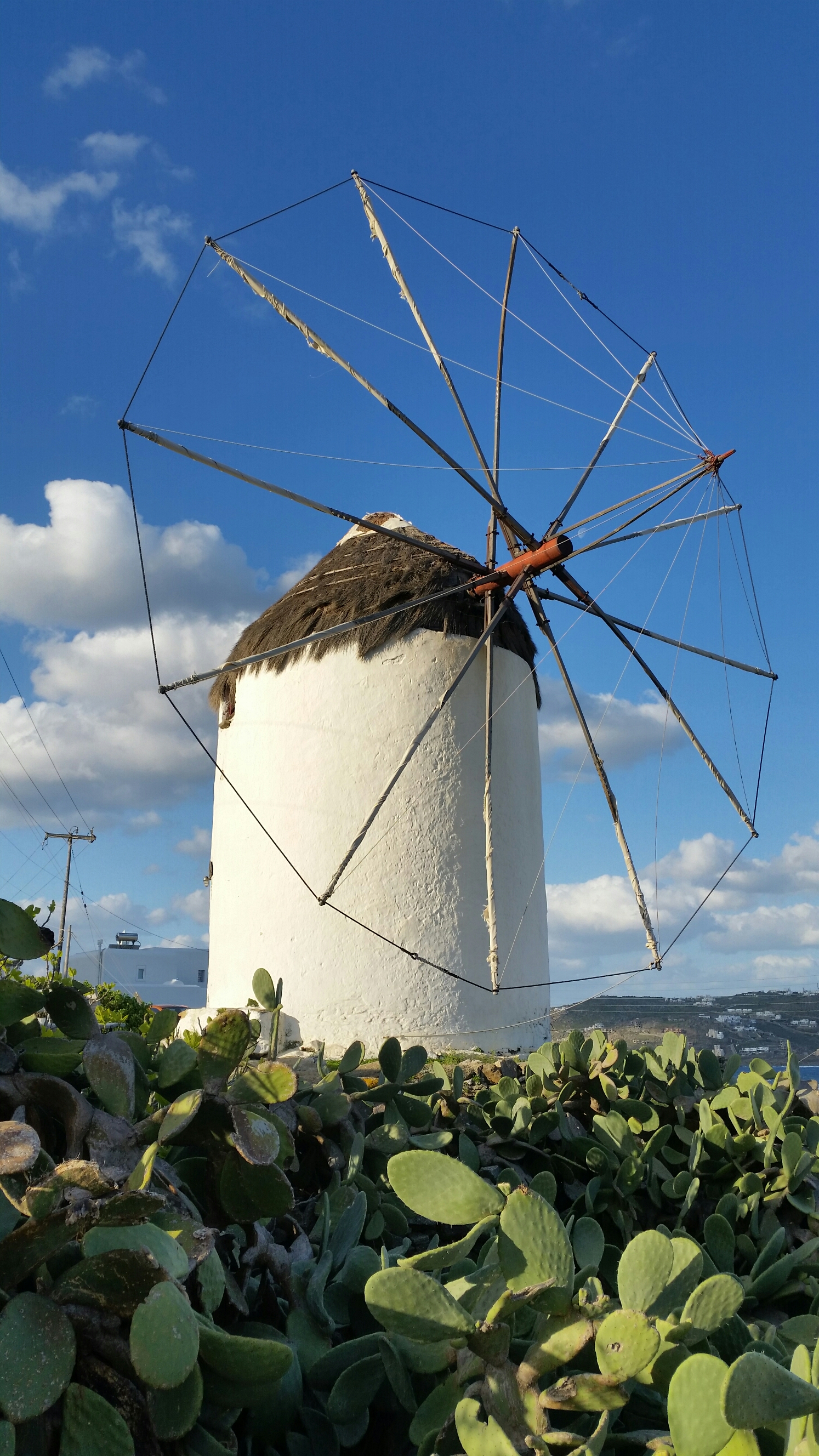
It is not surprising that it is known as The Island of the Winds. Yesterday the wind got up and we can’t take the ferry to Delos. This morning I thought I would explore the windmills which are such a feature of the island, prominent in the town and on the hillside above. They apparently date back to the 16th century when the island was occupied by the Venetians as part of their maritime empire and are an admirable example of form and function, the subject of Nick Grimshaw’s dissertation at the Architectural Association:-
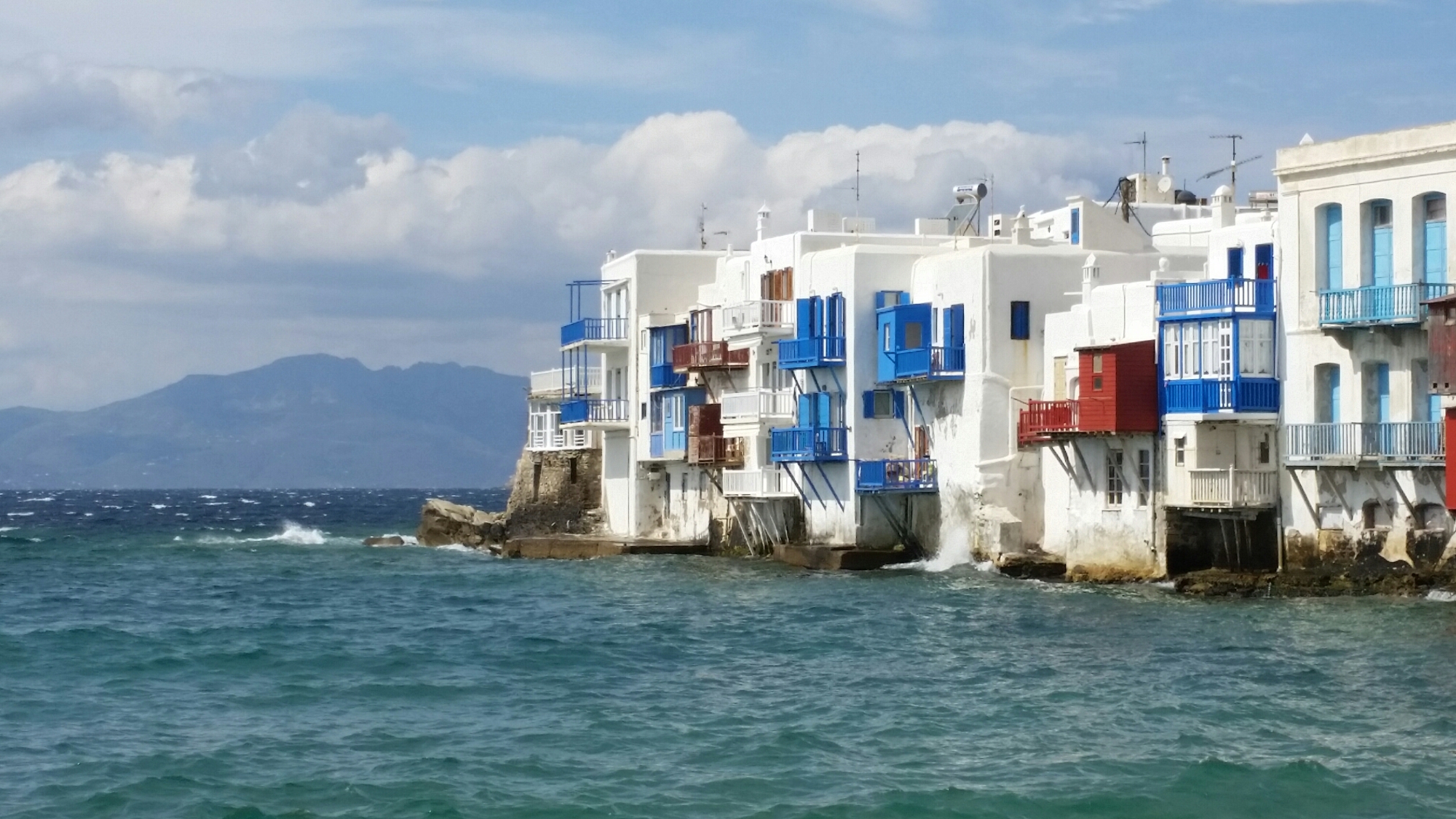
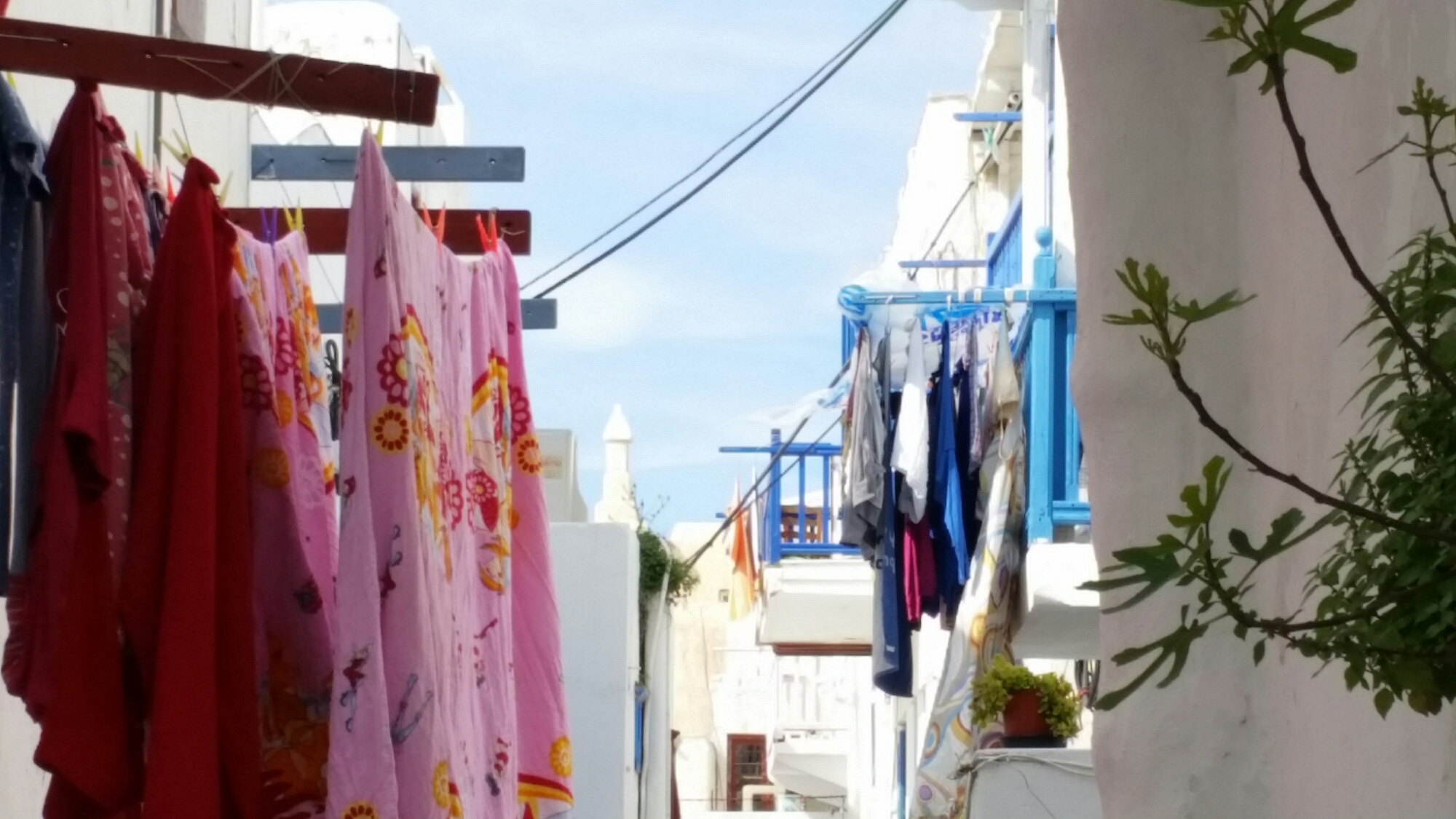
It’s hard to take any photographs of Mykonos which haven’t been taken a thousand times before – the town bleached in the sun, the universal whitewash, the straggling backstreets interspersed with small churches, and the ornamental chimneypots:-
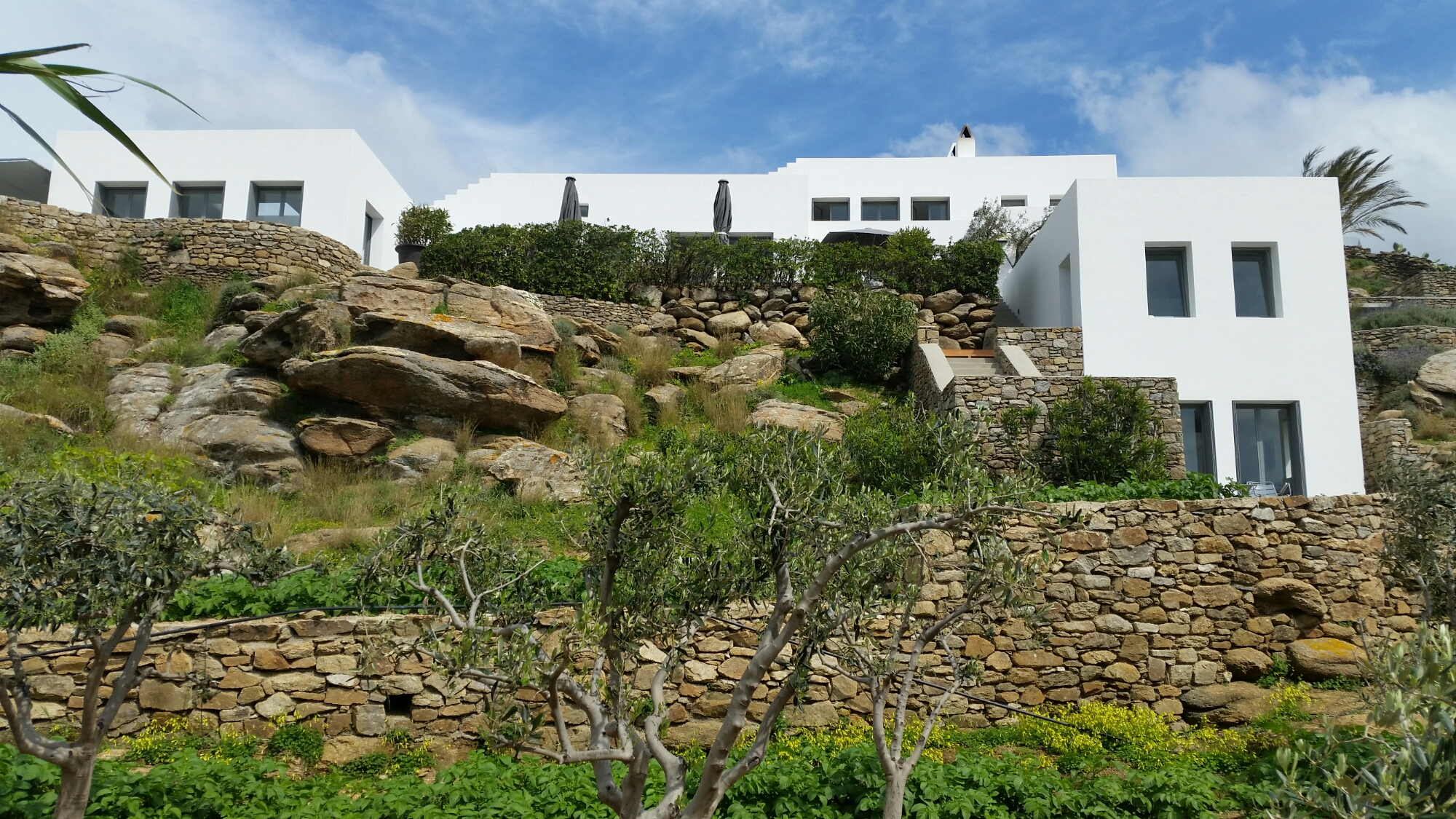
We are staying on Mykonos in a villa designed by Marc Corbiau, a Belgian architect who has perfected a combination of well-considered sybaritic modernism with a sculptural approach to the Mykonoan vernacular:-
Since visiting Bassae, I have become interested in how the British Museum acquired the Bassae Frieze, a subject much less studied than the Elgin Marbles. The answer is that the site was known from the writings of Pausanias and was routinely visited by archaeologists from the time of the French architect J. Bocher in 1765, who was murdered on his second visit. In 1811, the site was recorded by Cockerell and the German archaeologist, Carl Haller von Hallerstein, whose drawings were lost at sea. One of the group spotted the carving of the combat of a Greek and a Centaur down a foxhole in the debris, Cockerell made a rough sketch, and sought permission to excavate the site from Veli Pasha, the local Turkish governor. The site was then excavated the following year by a group who called themselves the Society of Travellers, led by Haller and Otto von Stackelberg, but without Cockerell who was by then in Sicily. In the 1830 Supplement to Stuart and Revett’s Antiquities of Athens, Cockerell describes how they built huts in a little settlement which they called Francopolis. ‘They had frequently fifty or eighty men at work in the temple, and a band of Arcadian music was constantly playing…every day some new and beautiful work of the best age of sculpture was brought to light’. The Bassae frieze was thus discovered, reassembled in Zante and sold at auction in May 1814. Known as the ‘Phigalean Marbles’, they were bought by Sir James Campbell, the Governor of the Ionian Islands, on behalf of the British Museum and were subsequently widely reproduced, not least in the library of the Traveller’s Club and by Cockerell in his building of the Ashmolean.
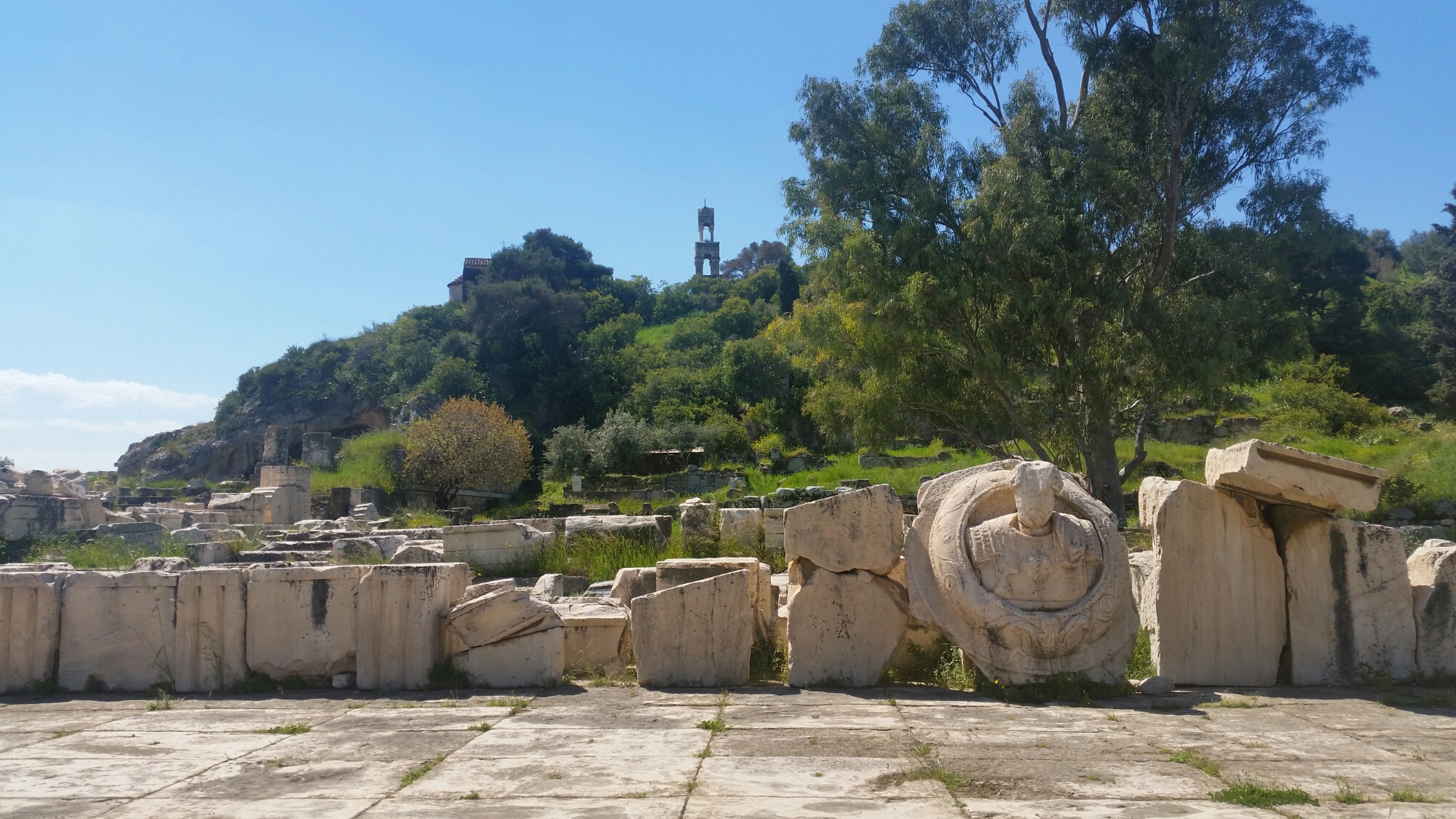
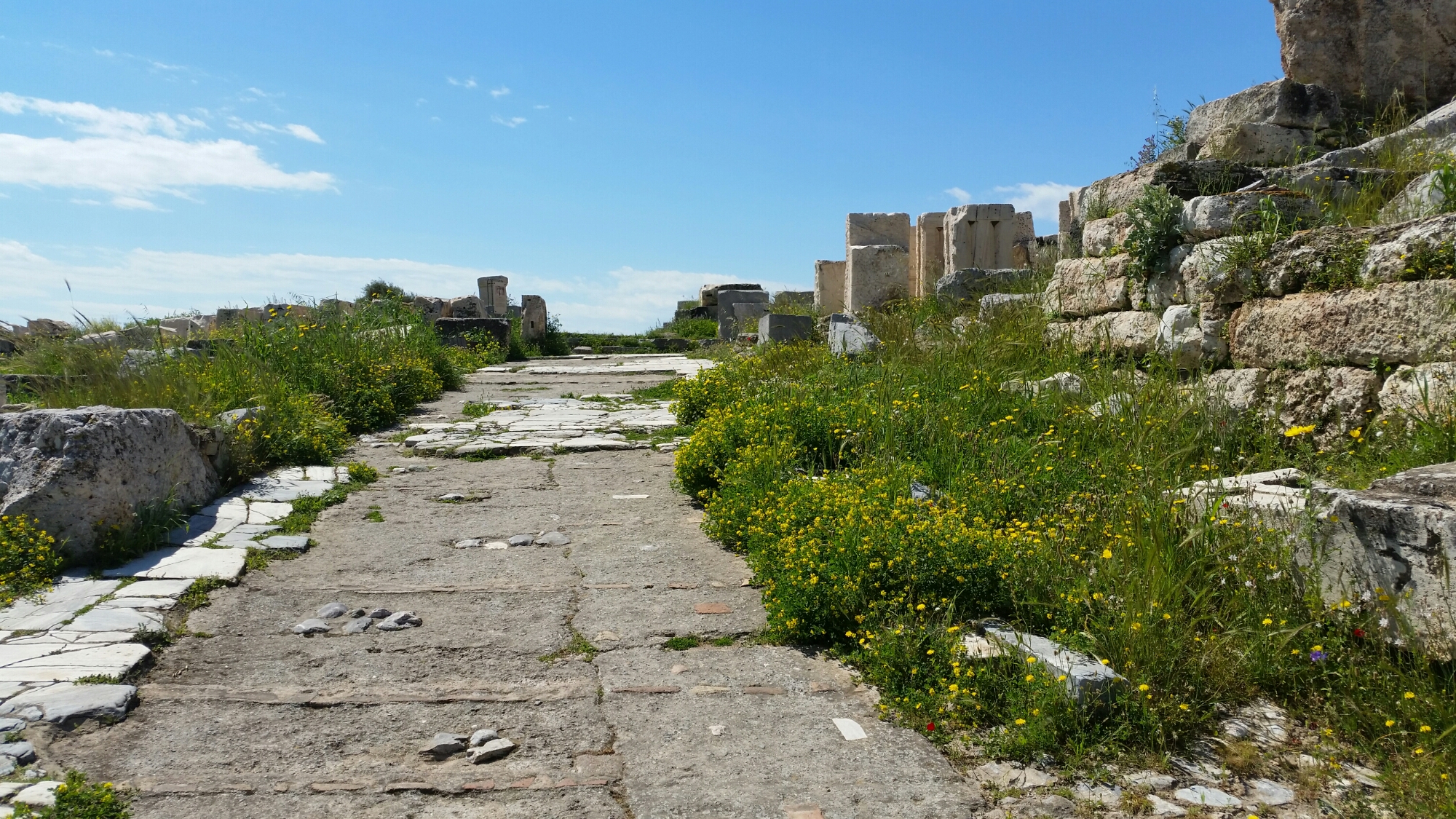
We were nearly the sole visitors to the archaeological remains of Eleusis, where the Eleusinian Mysteries were celebrated in a temple to which access was restricted and which seated over 3,000. All the remains and fragments of the several temples are rather arbitrarily arranged, piled up indiscriminately as if awaiting rearrangement one day – the remains of columns, inscriptions, a marble foot – all excavated some time ago and left evocatively in amongst the wild flowers:-
In visiting Bassae and other classical sites in the Peloponnese, I can’t help but wonder how the early neoclassicists travelled so far and wide in the first part of the nineteenth century, not just Elgin, but a whole generation of Philhellenes. Cockerell had received a good classical education at Westminster, worked as an assistant to Robert Smirke on the rebuilding of the Covent Garden Theatre and then embarked on the Grand Tour, setting off for Troy in April 1810. In 1811, he helped with the excavation of the Temple of Aphaia in Aegina. He visited the Temple of Apollo Epikourios in Bassae in August 1811 and then travelled to Egypt with Frederick North, the fifth Earl of Guilford, who had been Governor of Ceylon (where he built a Doric bungalow) and was to establish the Ionian Academy on Corfu. Cockerell exhibited drawings of the Temple of Bassae at the Royal Academy on his return to London in 1817, but formal publication of them in a book did not happen till 1860.
After a day spent searching for an electrical wheelchair repair shop, we stopped for some ruin therapy at Ancient Corinth. I had low expectations because it is so close to modern Corinth, a suburban ruin, and hadn’t anticipated that much of it would be still unsorted and unrestored, so unlike British archaeological sites where much is made of a few neolithic stones in a field.
We started with the Temple of Apollo:-

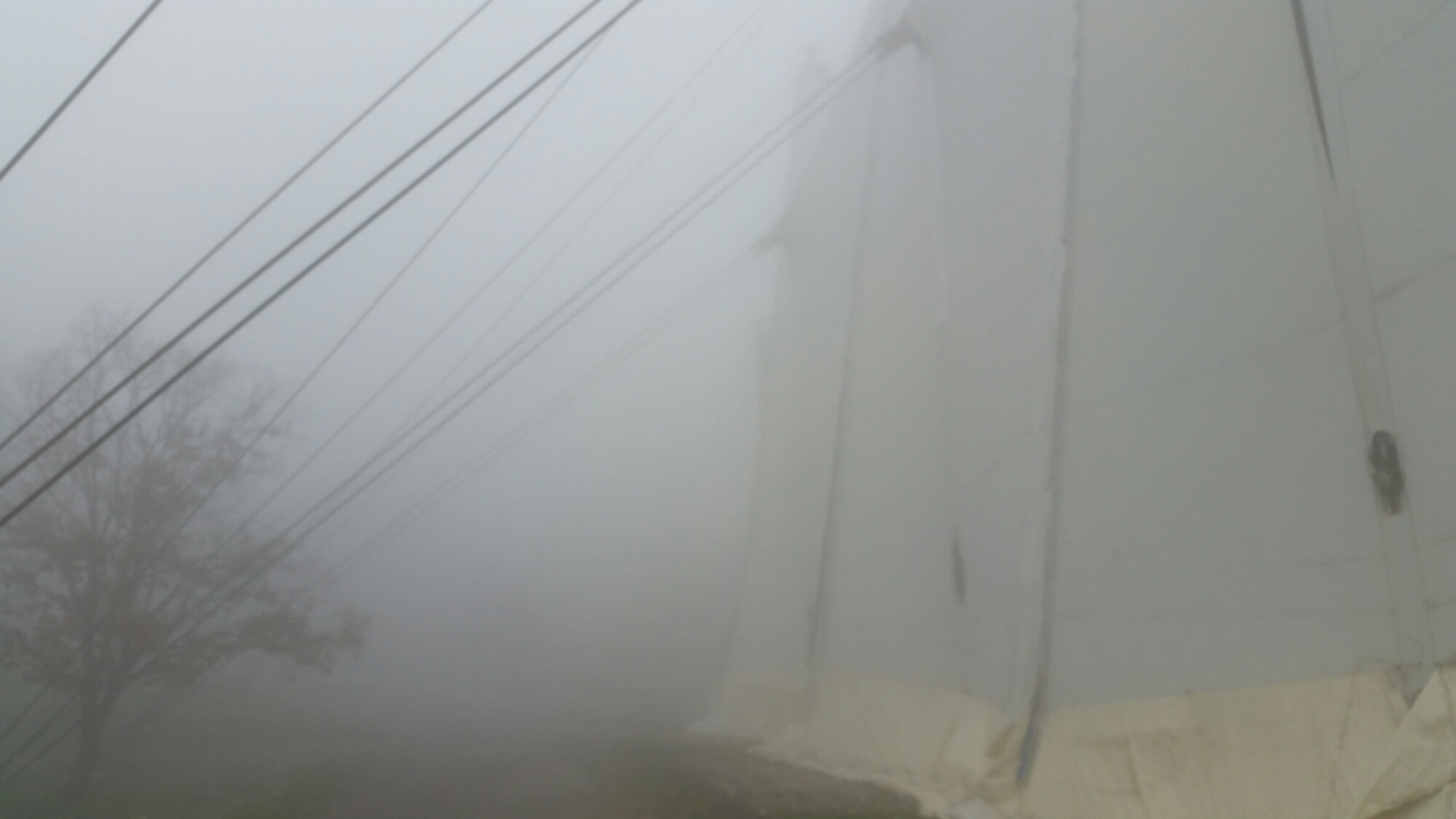
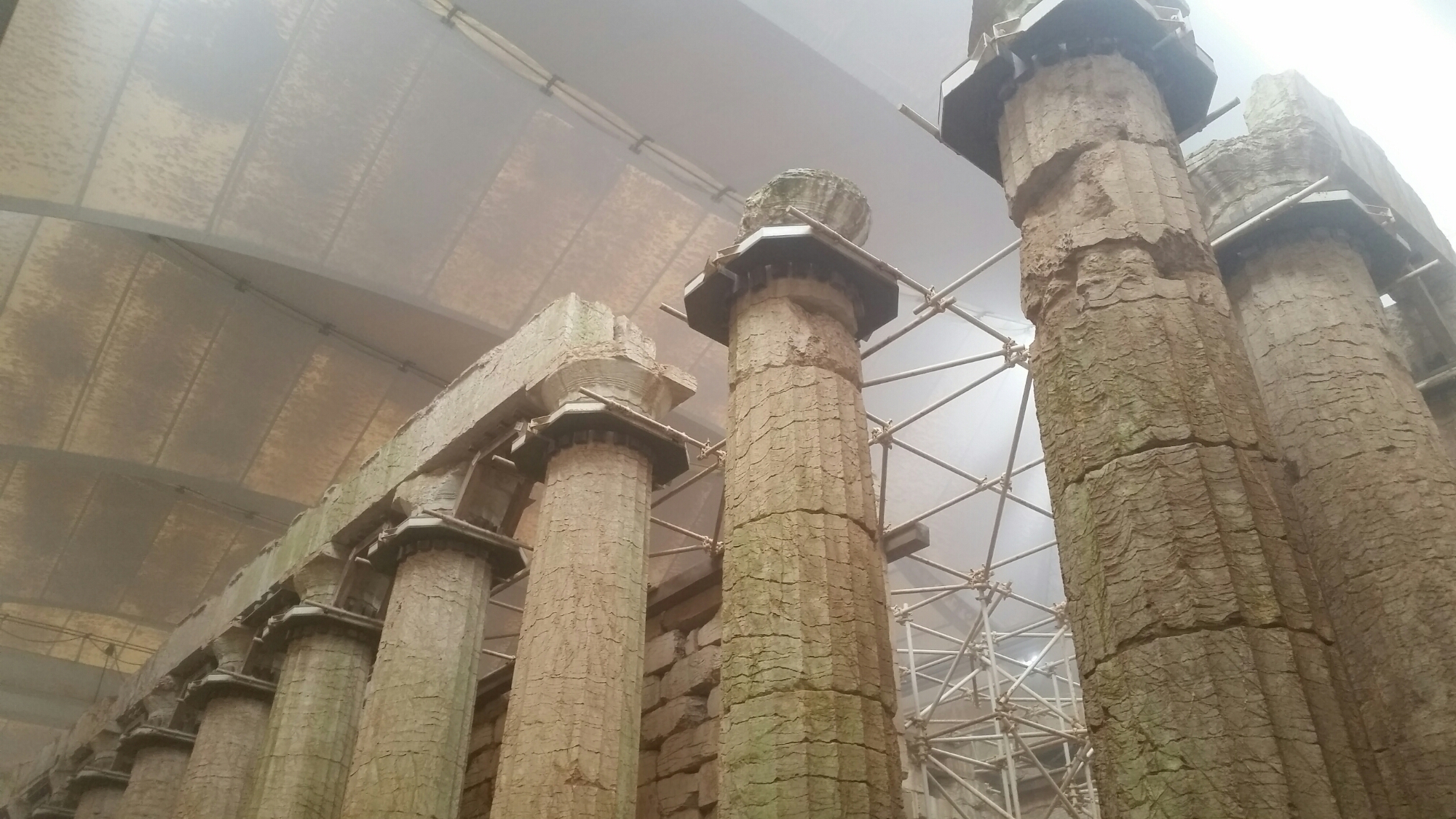
We decided in the afternoon to set off into the mountains to see the Temple of Apollo Epikourios, a place of pilgrimage for the early Greek Revivalists and described and recorded by C.R. Cockerell. It is impossibly remote, now protected by a huge surreal canvas tent which somehow adds to the quality of its fragile survival, stripped of its sculptural decoration, but still magnificently fine, hiding inside.
This is the tent:-
This is the temple inside:-
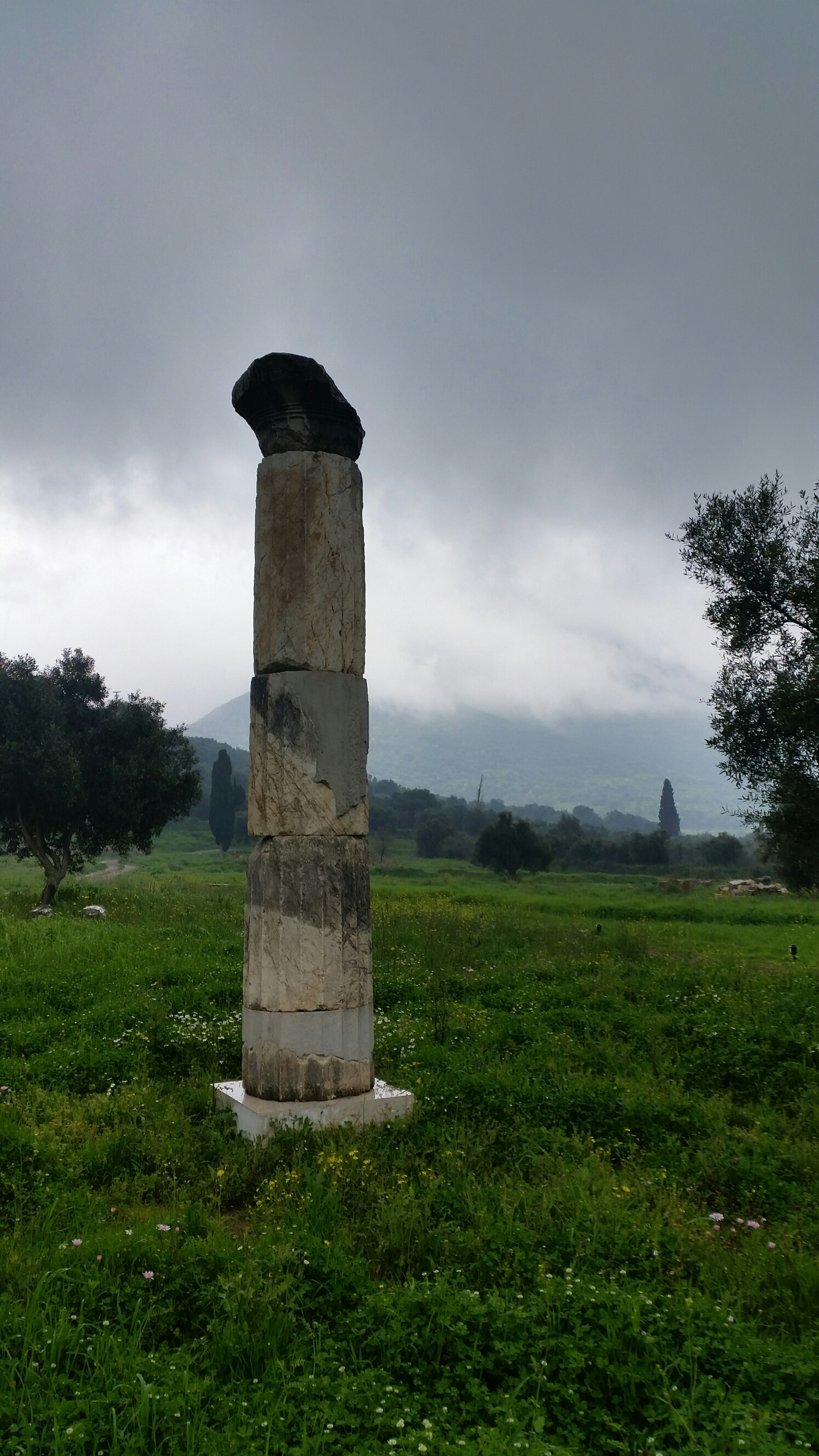
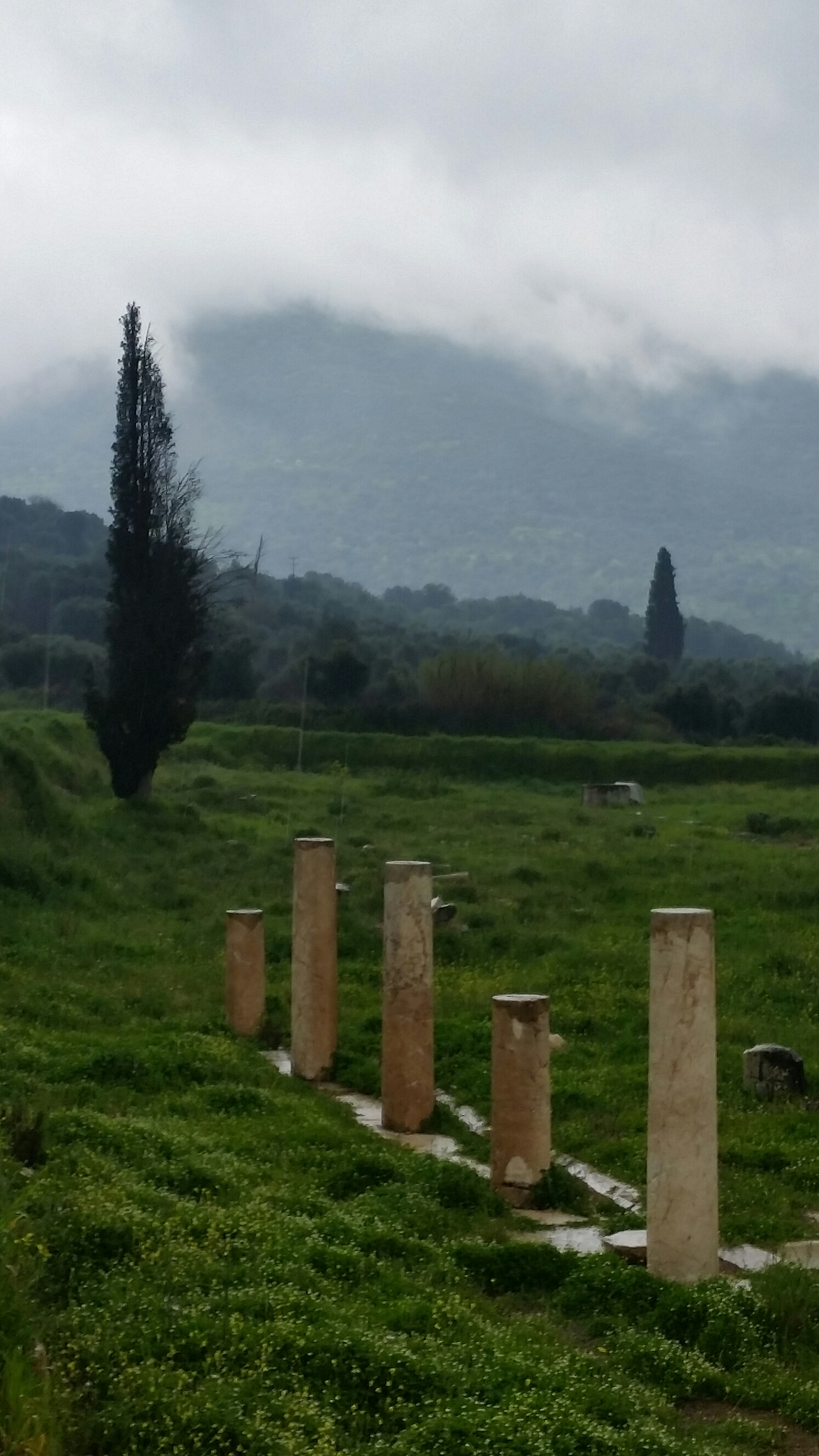
It was cold and wet when we drove across the hills to see Ancient Messene, one of the less well known of the classical sites and fairly empty of tourists, but on a huge scale, still in the process of being reconstructed and looking like a Poussin even in the drizzle:-



 | Charles | Saumarez | Smith |
You must be logged in to post a comment.