
I have just returned from the launch of Charles Landry’s latest book on his experience of what makes cities successful called Cities of Ambition. Very often, it’s due to the presence of an effective mayor, as, most famously, in Barcelona, but also, more recently, in Antwerp and Malmo; or, as in Manchester, an effective and long-lasting CEO. But, more broadly, it requires a sense of civic ambition. He doesn’t think it’s an issue of architecture or in the hands of architects – in fact, he’s notably critical of starchitects – but more a matter of soft issues, including the encouragement of new technology. After all this talk of cities of the future and how to solve problems of the environment, it was slightly surreal to emerge out onto the streets of London, which were 100% gridlocked, and bicycle across London. I have seldom had a more Darwinian experience of hundreds of novelty bicyclists, including me, dicing with death.
Monthly Archives: July 2015
Alexander McQueen
I missed the Alexander McQueen exhibition when it was shown at the Met so have been glad to see the version of it at the V&A, so full of tailoring swagger, brocade and bustles and his trademark bumsters, as well as the darker and more sinister gothicism. I was more impressed by the qualities of facture, the amazing floral detailing, the use of embroidery and the bleached felt roses, and the staggeringly inventive construction of his dresses, the transgressive formalism, than I was by the sometimes overblown theatrical romanticism and camp historicism. In retrospect, it’s hardly surprising that he couldn’t maintain the pressure of invention.
London on a bicycle (1)
As I bicycled this morning from Stepney to South Kensington to see Savage Beauty, a journey I used to undertake every day, I could not help but remember the words of an eighteenth-century guidebook to the effect that London, the greatest city in the world, stretches all the way from Limehouse in the east, to Hyde Park Corner in the west, a distance of six miles.
Whitebait Dinner (3)
What’s the origin of the Whitebait Dinner ? The RA has always had a social aspect ever since the foundation of an informal dining club called the Friday Nights Club, first held at the Turk’s Head Tavern on 5 October 1770. In the nineteenth century, it was known as the Academy Club and met on the opening day of the exhibition at the Trafalgar Tavern in Greenwich (there are menus from the 1869s in the Museum of London) and later in the summer somewhere in the countryside. Turner loved the Whitebait dinners and it is thought to be during the trip downriver in 1838 that he saw the Téméraire being dragged off to Deptford to be broken up as scrap.
China and the RA
Yesterday I was asked by Sir David Tang to speak at his new China Exchange about the nature of the relationship between the Royal Academy and China in the light of our forthcoming Ai Weiwei exhibition. The short answer is that it goes back a long way to the time of the foundation of the RA when William Chambers at least had a good knowledge of Chinese architecture from his three visits during the 1740s with the Swedish East India Company and when the modeller, Tan-Che-Qua, was included in the background of Zoffany’s early portrait of the Academicians. There have also been a number of major exhibitions of Chinese art, beginning with the Great China exhibition in 1935/6 and including the Genius of China in 1973/4 and China: The Three Emperors in 2005/6.
Whitebait Dinner (2)
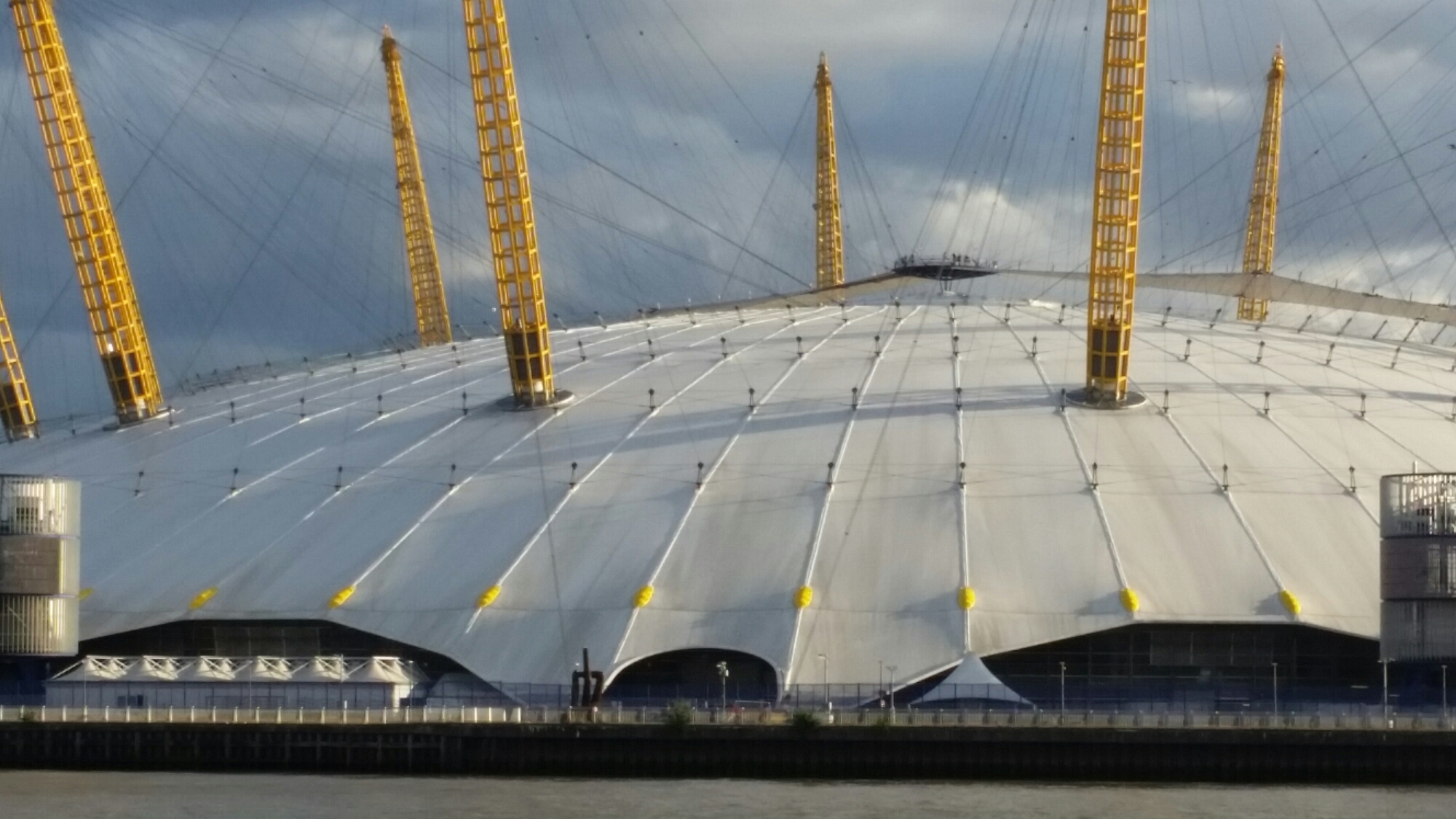
This year’s Whitebait Dinner was held at Trinity Buoy Wharf, far downriver beyond the baroque magnificence of the Royal Naval College, past the Trafalgar Tavern where the Academy Club first held its whitebait dinners on the first Monday in May, past the curious mixture of new development and old style industrial dereliction on Greenwich Reach, past the Dome and Richard Wilson’s A Slice of Reality, underneath Wilkinson Eyre’s grand cable car, until we docked alongside the Trinity Buoy Wharf, with its lighthouse built in 1864 and its mixture of industrial architecture, shipping containers and art installations.
The Dome from the river:-

Rame Peninsula
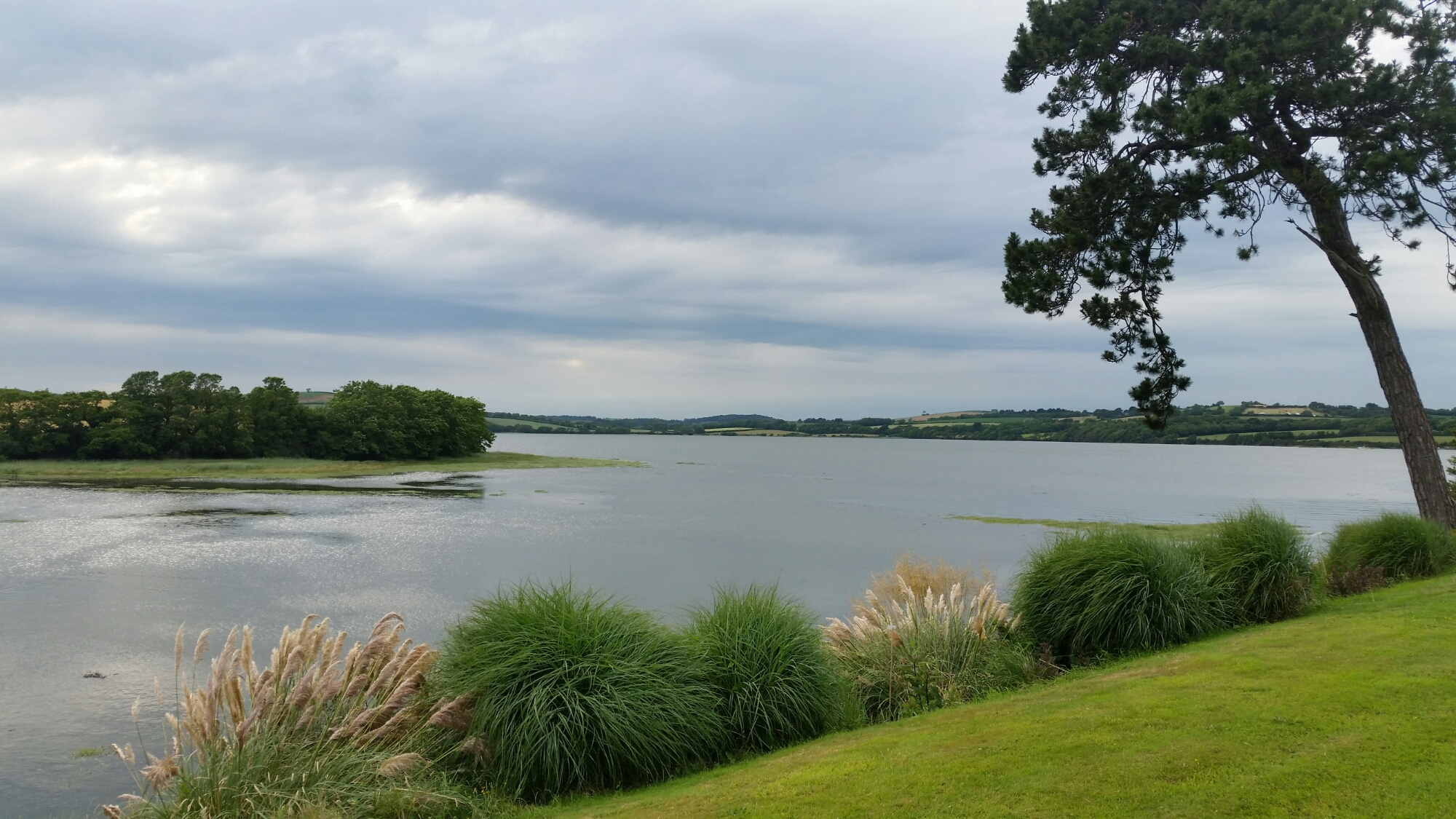
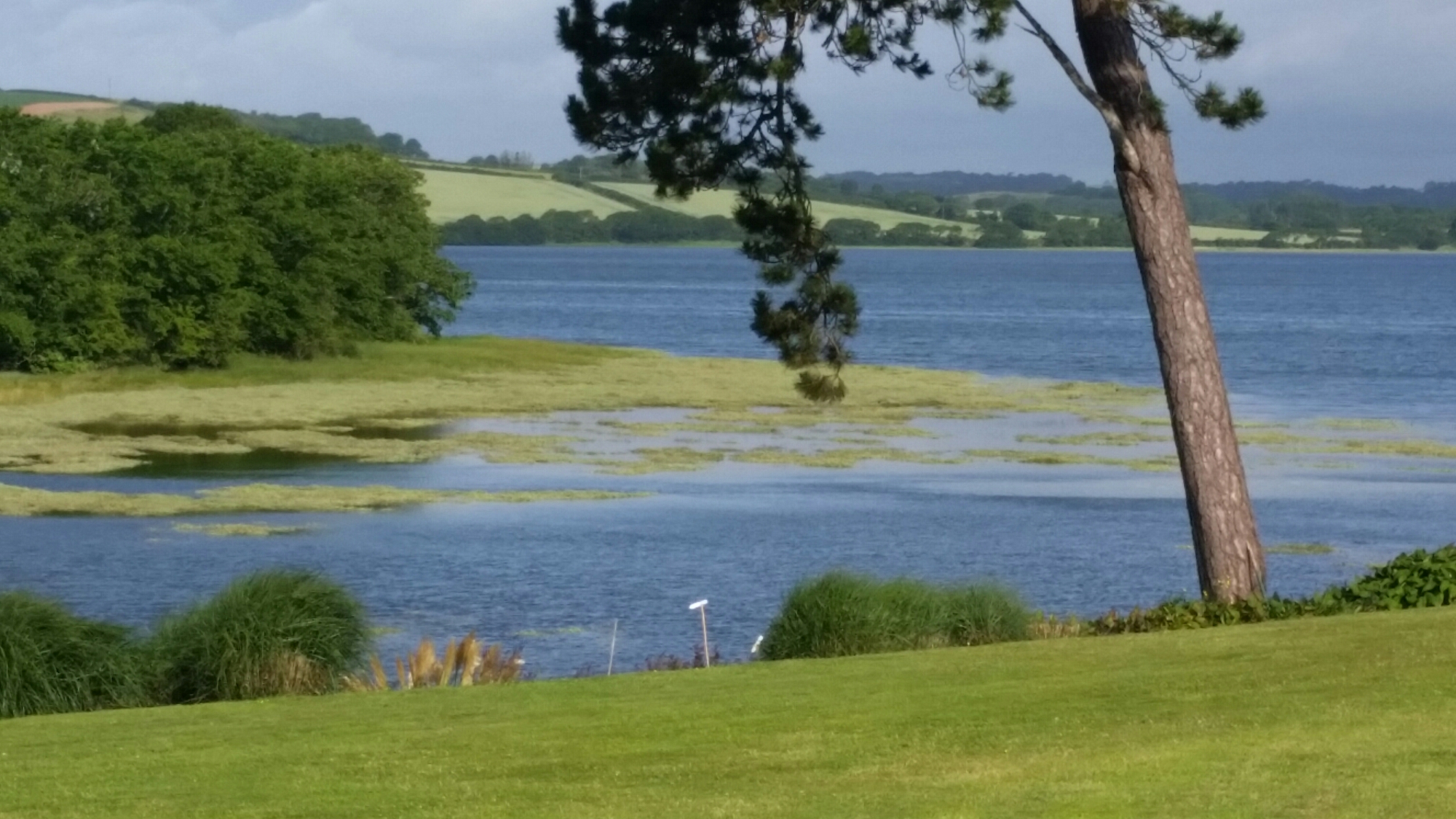
We stayed the weekend on the Rame Peninsula looking out onto the estuary of the River Lynher, a view which changed according to the light:-
Antony House
On Sunday morning, we went round Antony, admiring portraits of generations of Carews, Pole Carews and Carew Poles, beginning with Richard Carew, the historian of Cornwall, and including Alexander Carew, the regicide, and Sir William Carew, the builder of the house, up to Sir Richard Carew Pole whose portrait was painted in the mid-1990s by the PRA.
The house is a perfect size, not too large and perfectly proportioned, built of Pentewan ashlar between 1718 and 1724 by a local builder John Moyle, who agreed to build the house ‘according to a Draught agreed upon in a good and workmanlike manner and to the satisfaction of Sir William Carew’. Inside, it’s darkly panelled, its atmosphere more that of the generation before the 1720s than Palladian.
The south front:-

The garden front:-

St. Germans
Of the great priory church of St. Germans, seat of the bishop until the construction of Truro cathedral, we saw no more than the great west door surrounded by Norman ornament:-


Port Eliot
After lunch we went to walk along the banks of the River Lynher in the parkland of Port Eliot, drained by Edward Eliot some time after he succeeded in 1748 and then planted by Humphrey Repton following the production of a Red Book in 1793:-


 | Charles | Saumarez | Smith |
You must be logged in to post a comment.