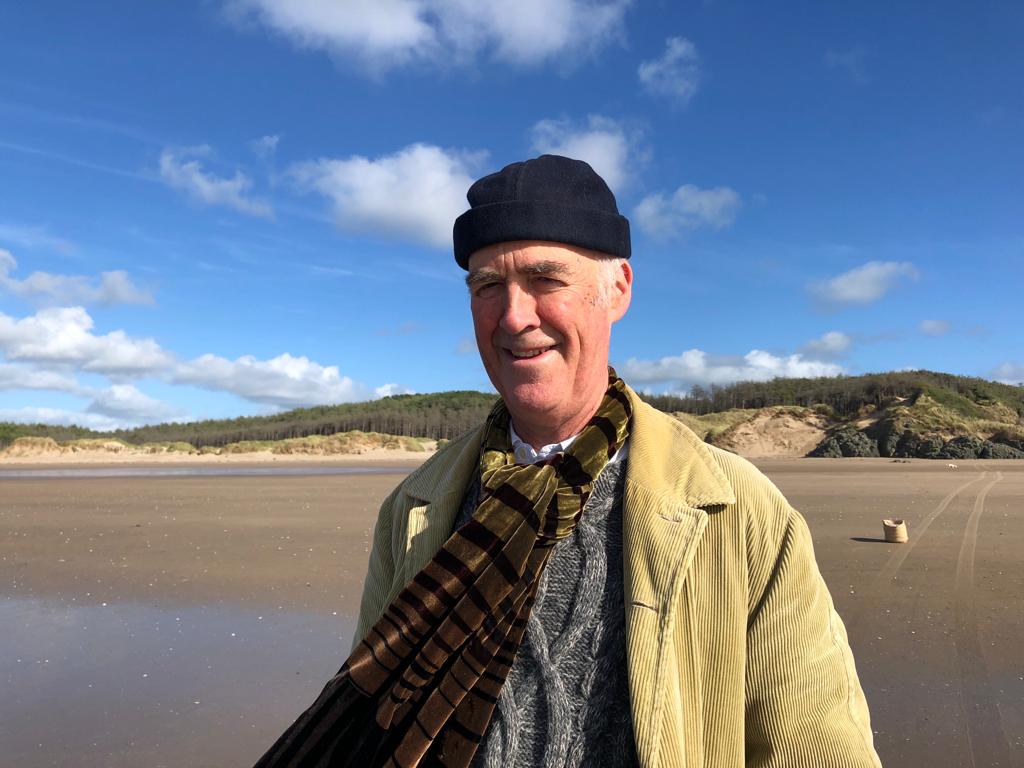
I went earlier this evening to a memorial event for Rodney Fitch at Central St. Martin’s. As often happens on such occasions, I learned much about him which I should have known, but didn’t: that he had himself been at the Central School of Arts and Crafts; had been a key person in the early history of the Conran empire as Managing Director of the Conran Design Group; and what an important person he was in the retail revolution – the transformation of the high street through better shops. I first met him in the early 1980s (I think when his company had just gone public) when he funded a studentship on the recently established V&A/RCA MA Course in the History of Design. His interest and emphasis was on the training of students with a good knowledge of the history of industrial and product design and he was then, and remained, passionately interested in the professionalisation of design education, not least through the University of the Arts.
Monthly Archives: September 2015
Somerset House
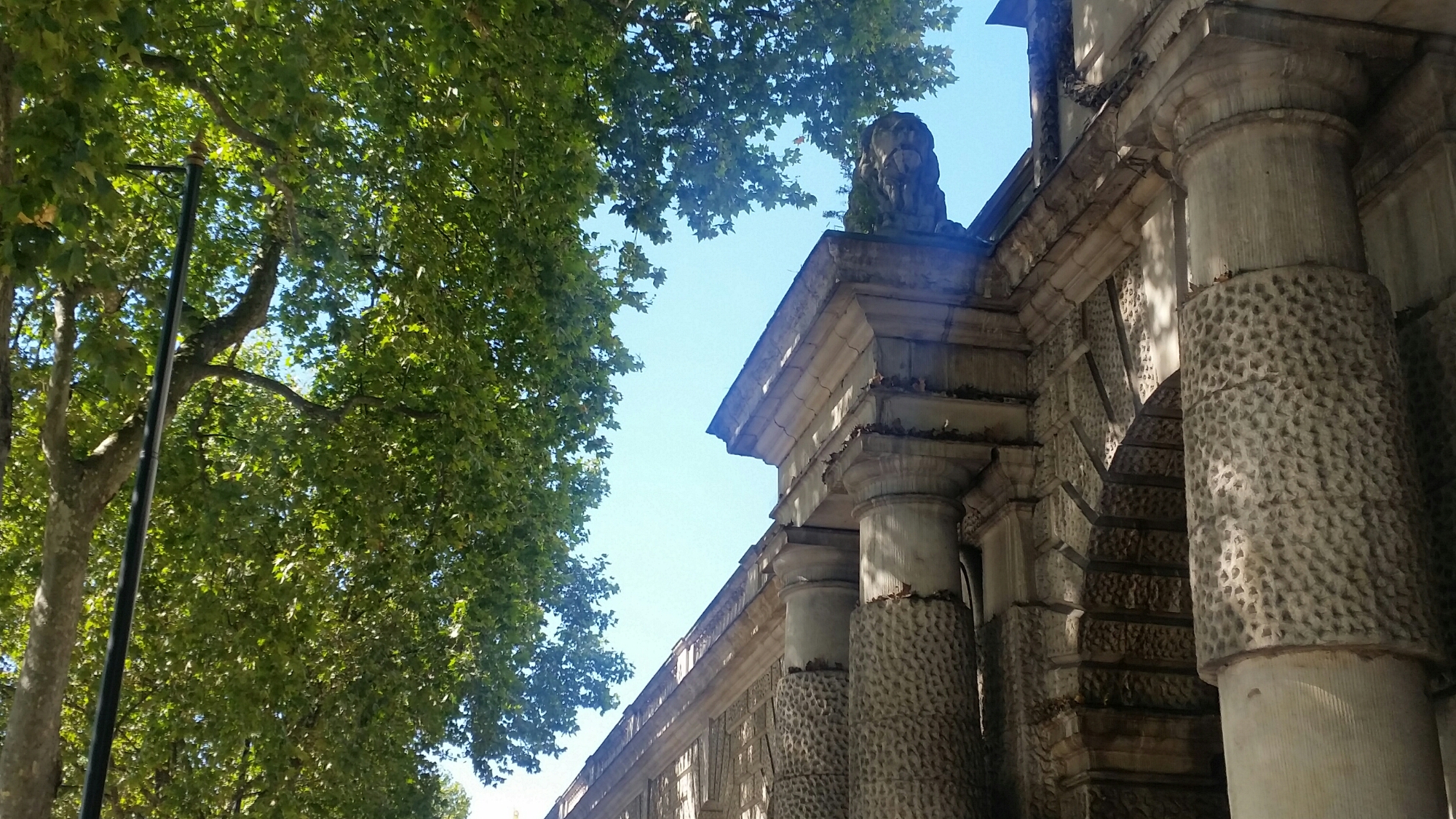
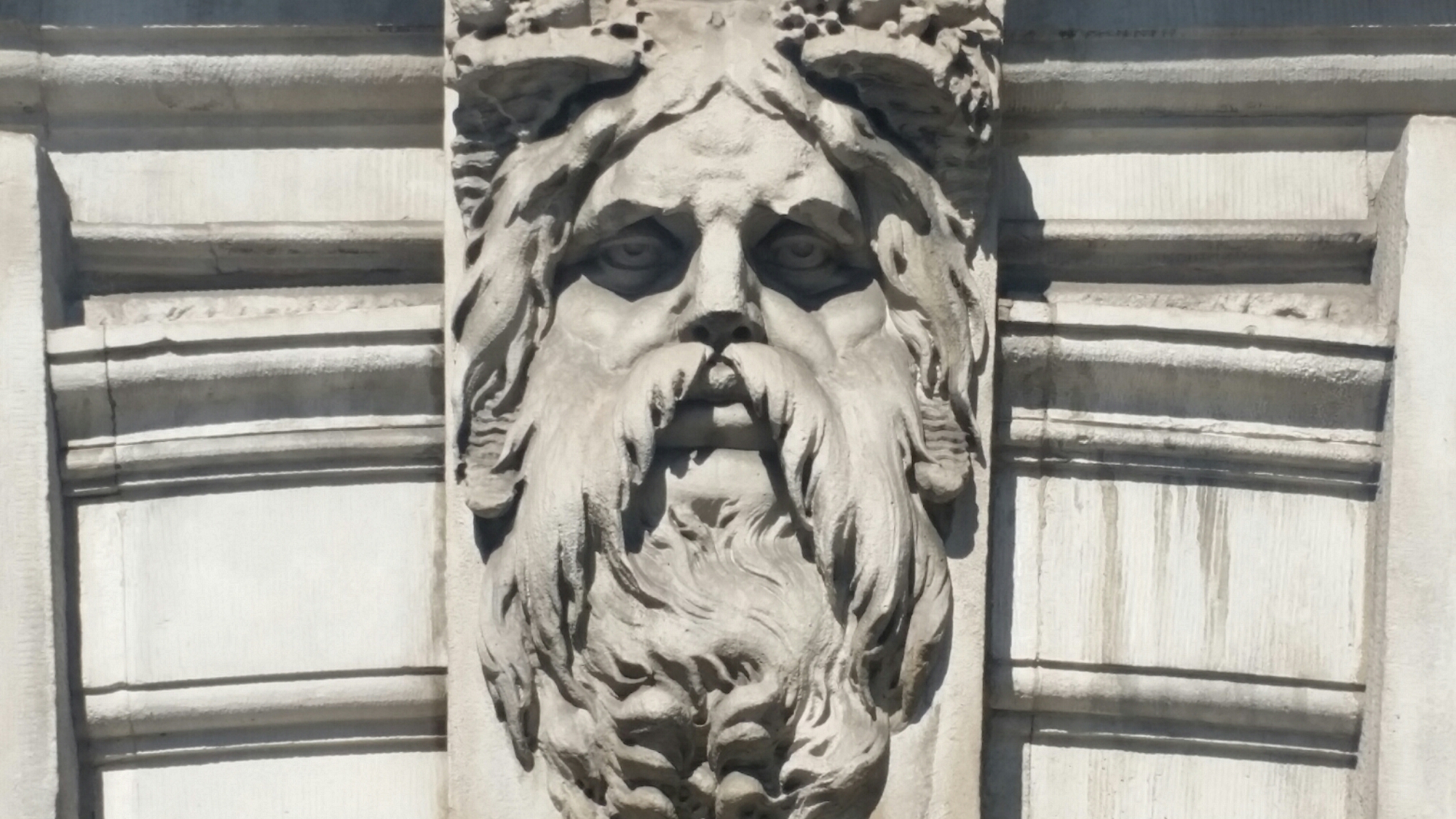
Lunch at Spring in the New Wing of Somerset House (the work of James Pennethorne, not Chambers) gave me a chance to admire some of the detailing of the stonework in the river entrance off Embankment and round the courtyard, which was the work of some of the sculptors of the early Royal Academy. The keystone over the entrance on the river front was by Joseph Wilton, a friend of Chambers and was probably to Chambers’s design. It depicts Ocean and was flanked the the English rivers, mostly carved by Wilton, but three by Carlini. The urns flanked by tritons are likewise by Wilton:-
Alderbrook
I went today with a group of patrons to Alderbrook Park in Surrey to see the Ai Weiwei pavilion which was originally designed as one of the Serpentine pavilions jointly with Herzog and de Meuron. Alderbrook is in deepest Surrey, in that area of the North Downs beloved of late nineteenth-century industrialists where Norman Shaw built a characteristically large, tile-hung, Tudor-style house for Pandeli Talli, a Greek merchant banker, MP and bachelor. It was bought by Albert van den Bergh, who had a margarine fortune, in 1936 and was demolished by his grandson in the late 1960s. The pavilion, largely made of cork, is buried half underground on the slope of the Downs.
Gordon Darling AC
I have been mourning the death of Gordon Darling, who, together with his wife Marilyn, was responsible for the establishment of the National Portrait Gallery in Canberra. I first met them in 1994 when they came to visit me at the National Portrait Gallery in London. A portrait gallery had been established in Canberra under the auspices of the National Library, but it wasn’t as they wanted it – too documentary and not at all celebratory. They looked to the NPG in London as the best model and – it being Australia and as they had the best possible contacts in government (Gordon had been chairman of the NGA) – it was set free under its own Board of Trustees not long afterwards. Gordon and Marilyn became, and have remained, great friends as passionate supporters not just of portraiture, but of Australian art and of the relationship between the British and Australian art worlds.
Maurice de Sausmarez
A request to borrow a work by Maurice de Sausmarez made me realise that my namesake – but not a blood relation – had been an ARA. I’ve always thought of him primarily as the author of Basic Design: the Dynamics of Visual Form, a key work in bringing the ideas of the Bauhaus to England, and, also, as the person who established the teaching of art in Leeds University before Quentin Bell. But I hadn’t realised that he had an affair with Bridget Riley in the 1950s, was a very capable portrait painter (see his painting of Bonamy Dobrée), and became an ARA in April 1964.
Eileen Hogan
I was only able to go briefly to the opening of Eileen Hogan’s exhibition at Browse and Darby tonight. I am familiar with some of the work, not least because her monumental paintings of beehives have been shown in the Summer Exhibition and in a previous exhibition at the Fleming Collection. What I was particularly impressed by, both this evening and seeing the work before, was the painting of clothes in her wardrobe, called Self-portrait through wardrobe, which are a hybrid between a meditation on the meaning of clothes, their associations, and pure painting of fabric and colour.
Unilever House (4)
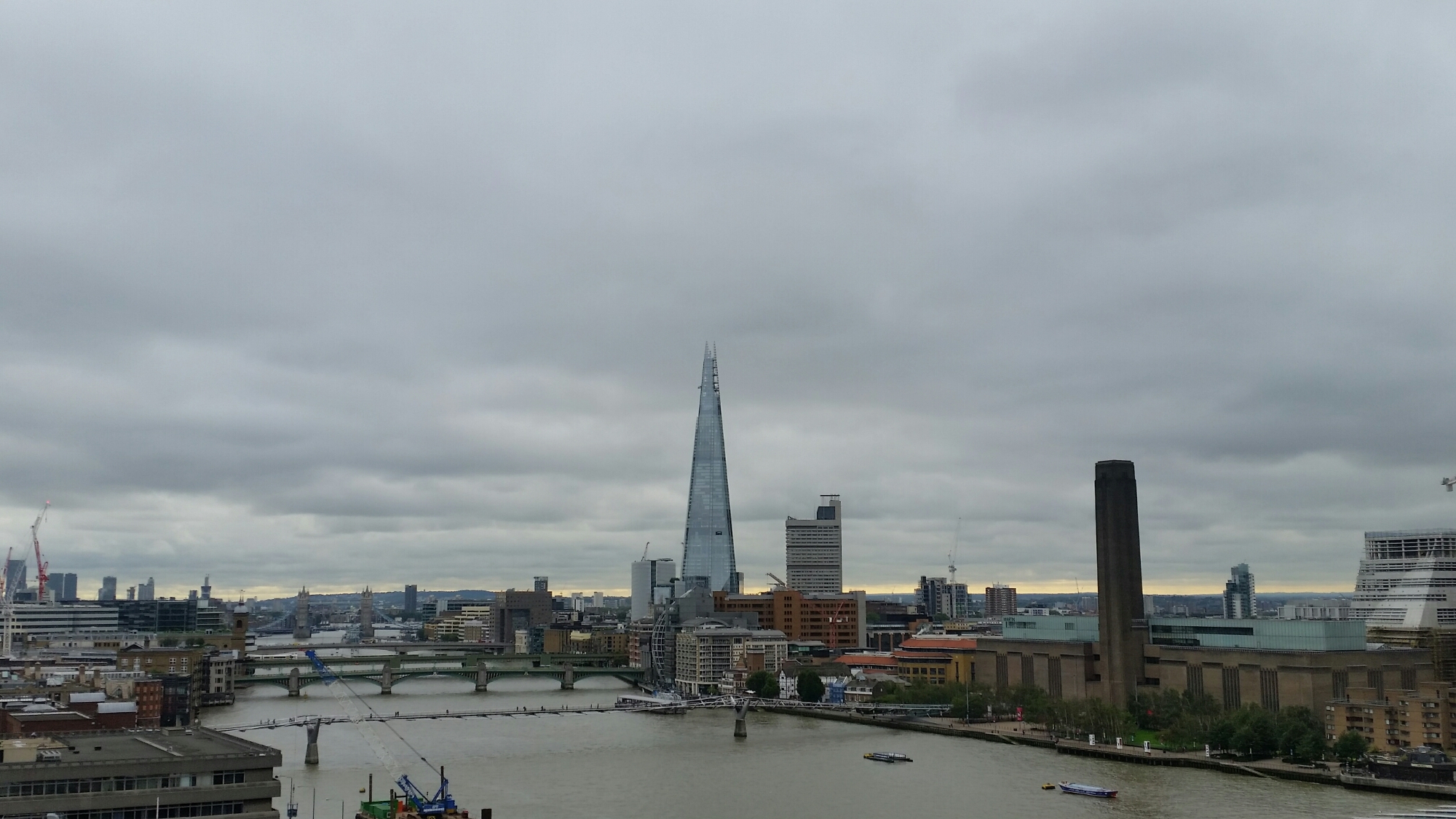
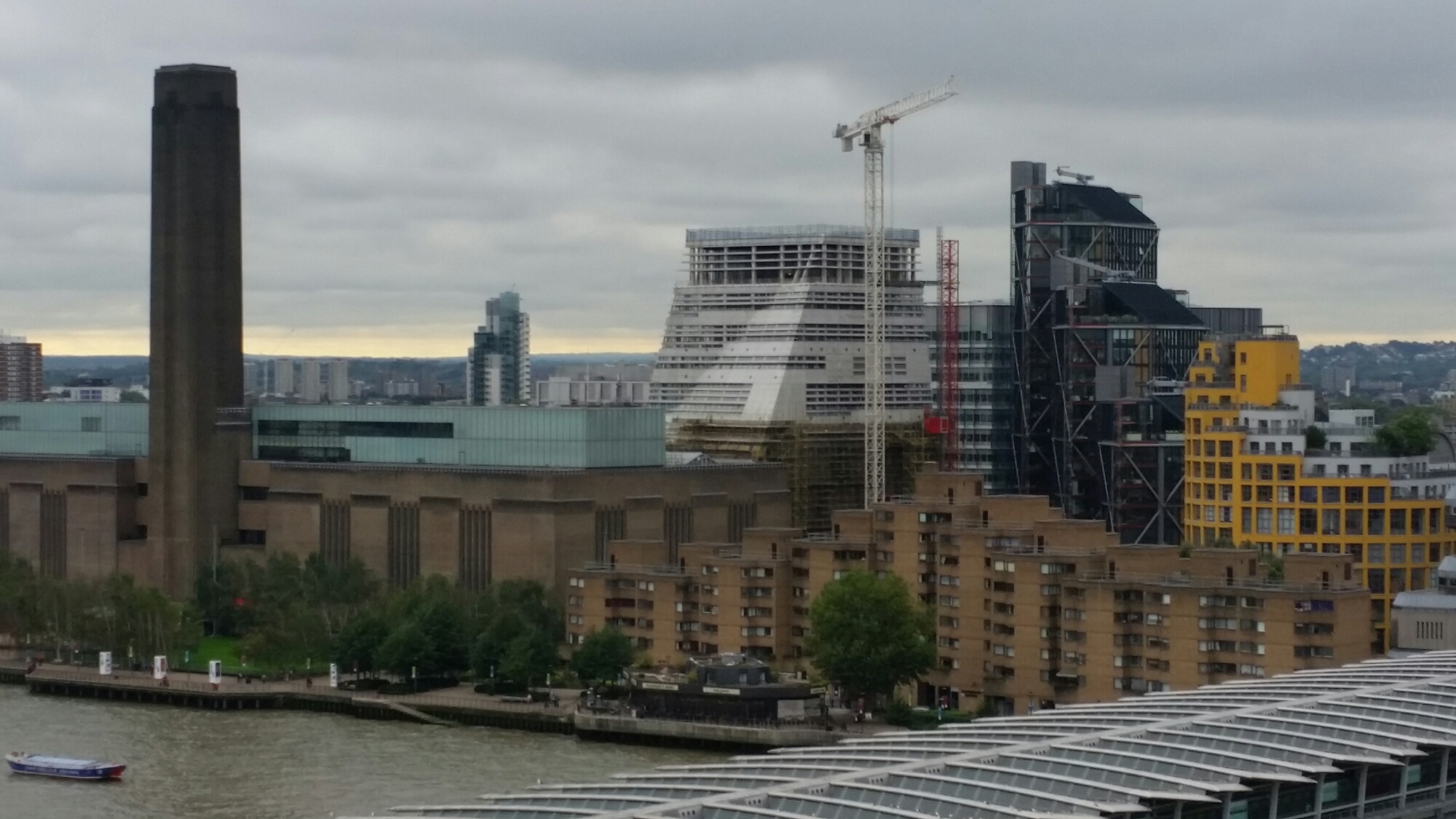
I was able for the first time to go onto the roof of Unilever House this morning (Unilever employees only). One gets a rather amazing view out across the city, down towards Tower Bridge, past the emerging Tate Modern behind NEO Bankside, the Rogers Stirk Harbour apartment buildings which have been shortlisted for the Stirling Prize. It’s just behind the curved yellow building which Piers Gough did for the Manhattan Loft Corporation in 1999:-
Greenwich Peninsula
We were asked to lunch on Greenwich Peninsula, not the most obvious place for lunch, but unexpectedly enjoyable, like visiting another country. We were originally going to have lunch in Craft, Tom Dixon’s new venture, where the food is said to be delicious, but it doesn’t open for lunch on Sunday, so we sat outside eating Lebanese food instead.
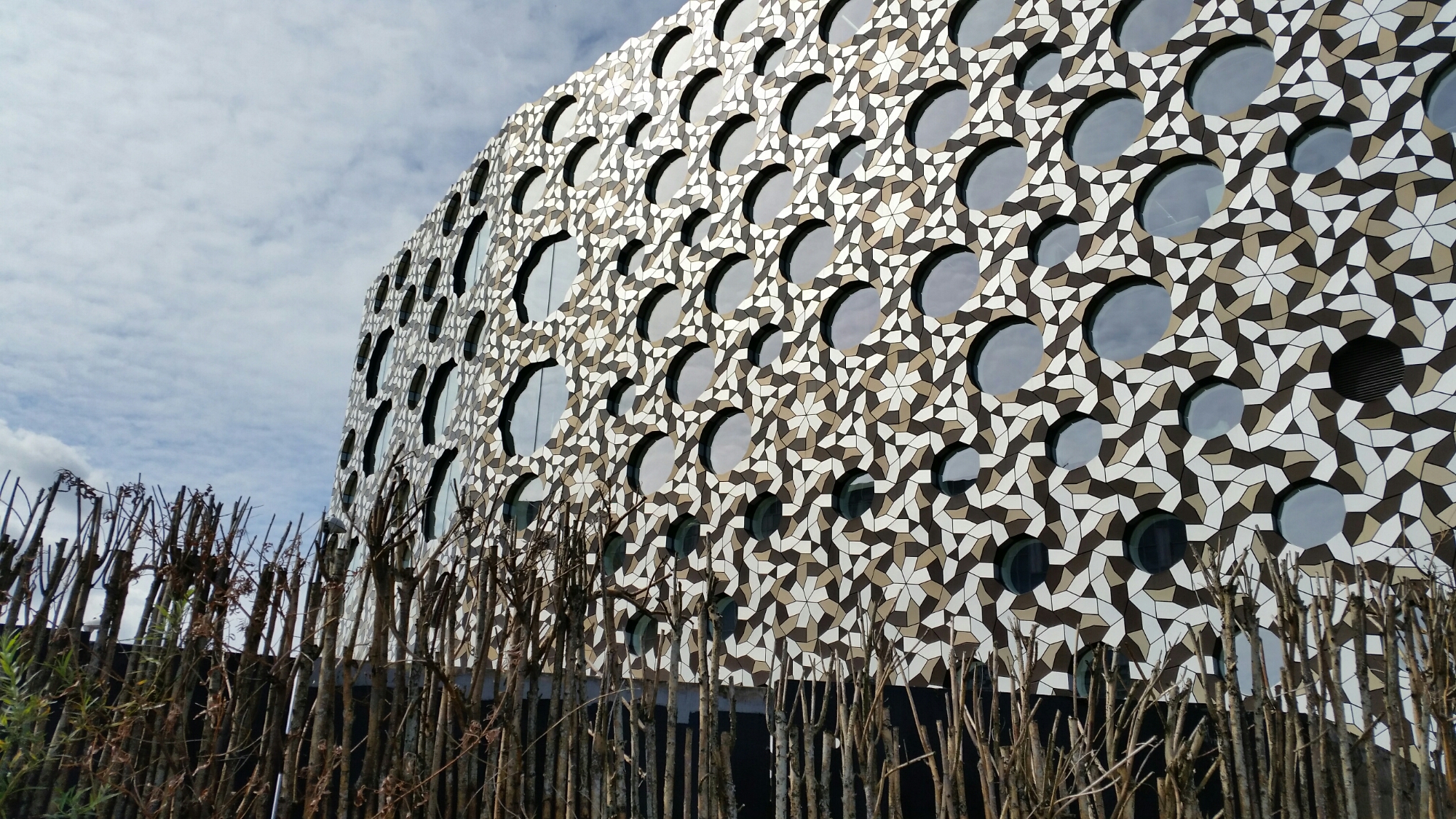
First, we enjoyed Farshid Moussavi’s Ravensbourne School of Art close up with its polyhedral tiling:-

East Bergholt
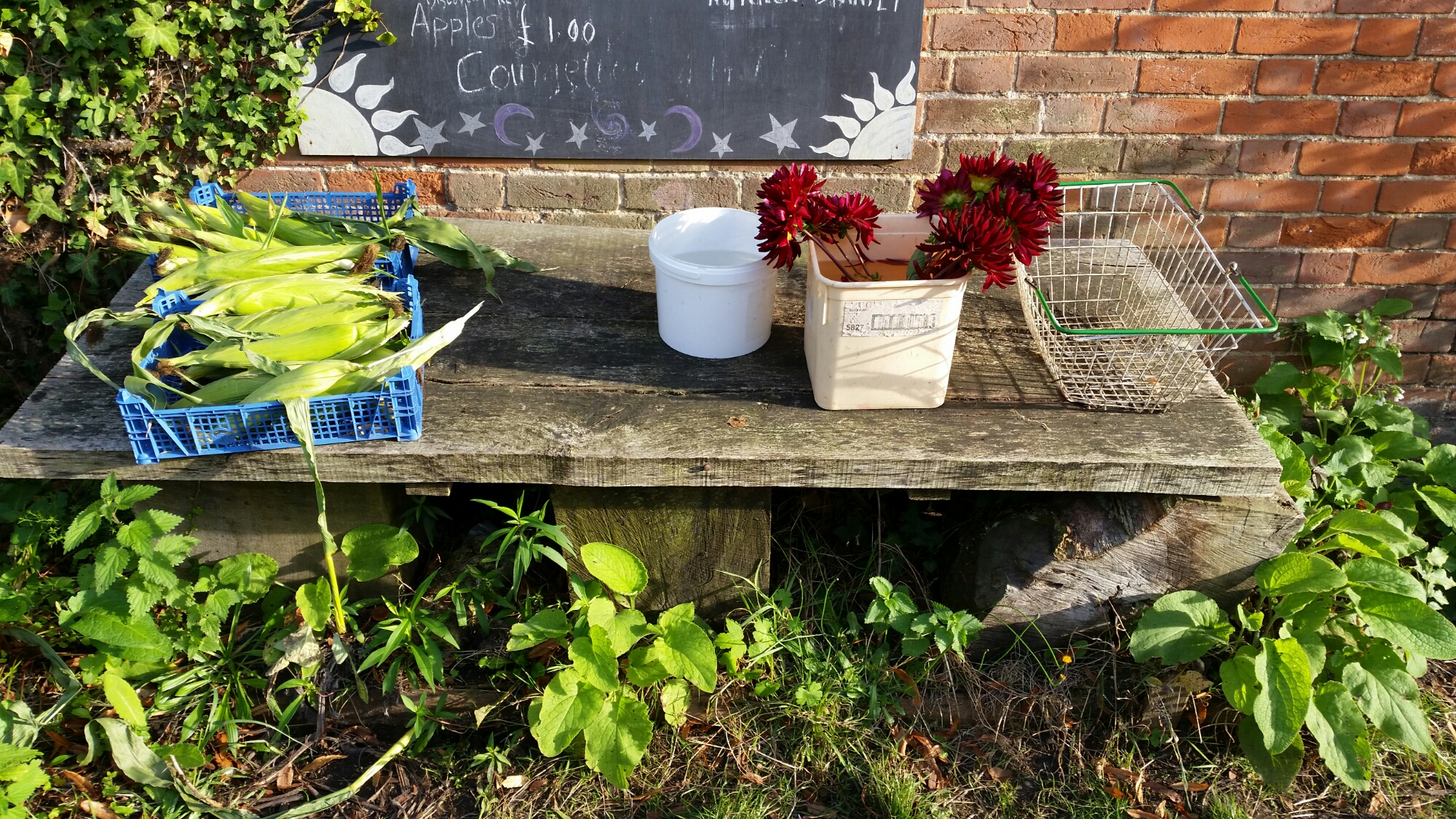
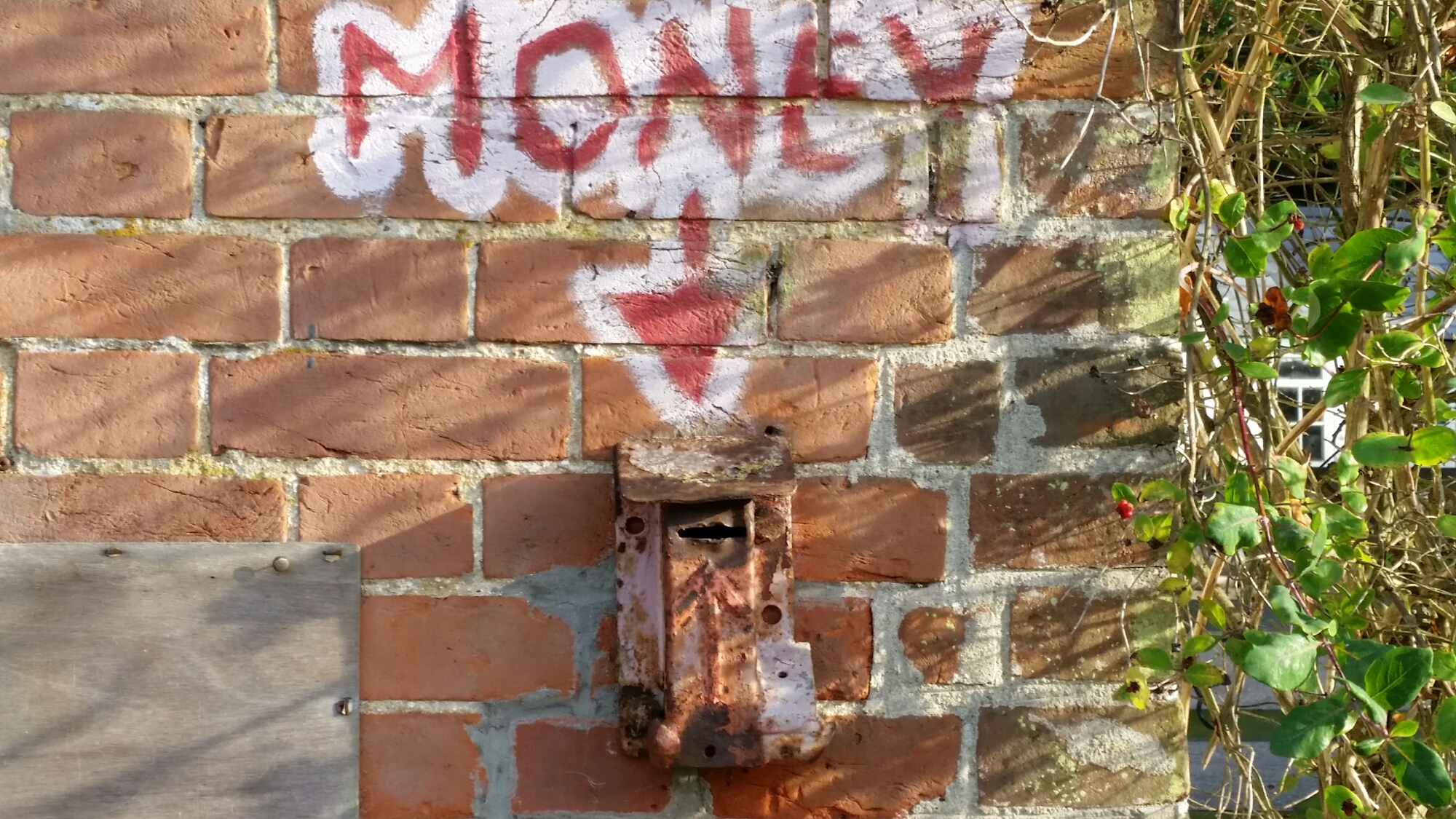
The last of my posts from Suffolk is of the organic food stall just by the church which had maize and dahlias. We bought all the dahlias:-
Stoke-by-Nayland
I have been assured that I have been to Stoke-by-Nayland before. I have no recollection of it. I feel sure that I would remember the two perfectly preserved Tudor houses which flank the road down to the church, like Robin’s Croft in Chilham:-


 | Charles | Saumarez | Smith |
You must be logged in to post a comment.