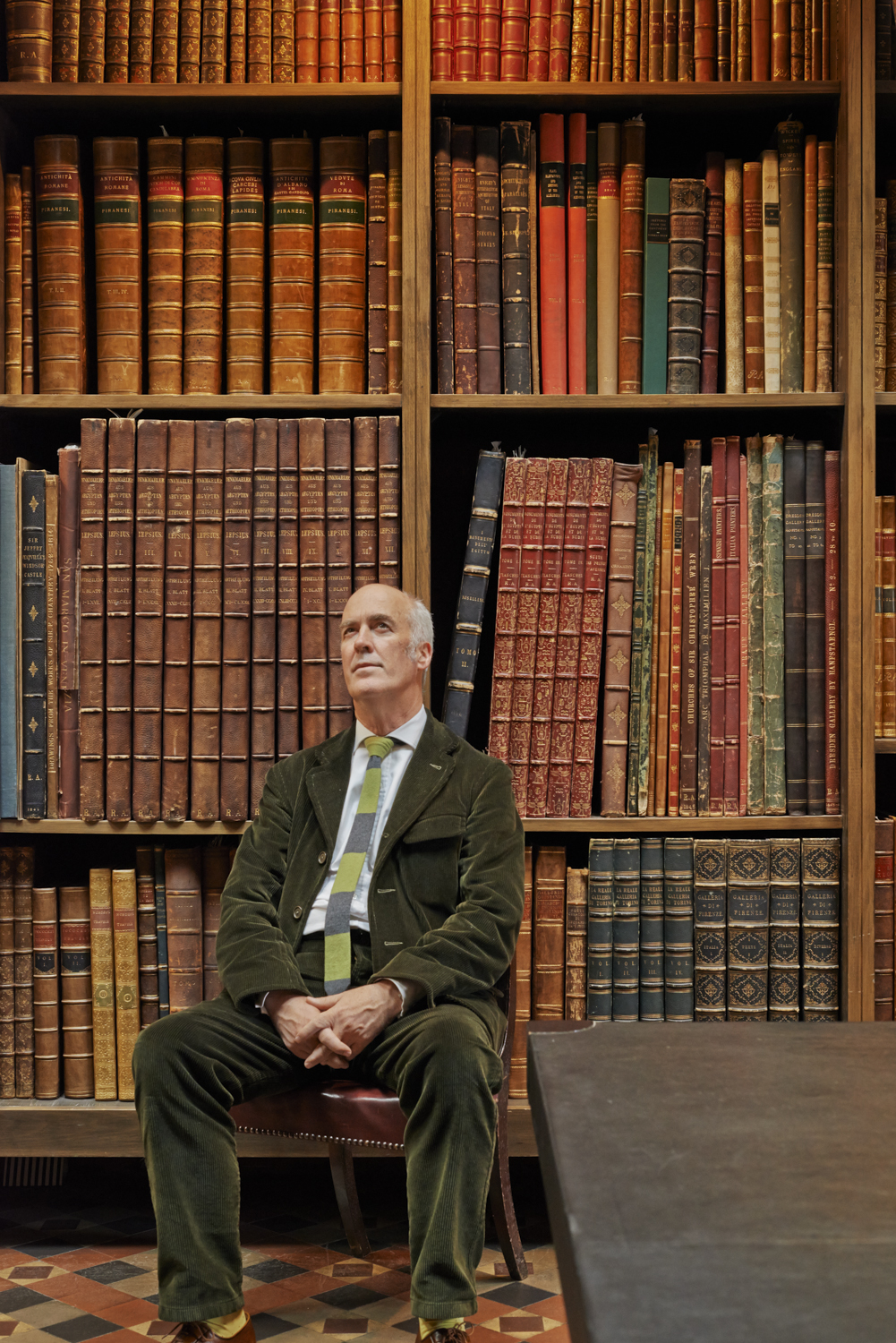
I went to the opening of Alan Cristea’s extraordinarily smart new gallery on Pall Mall. I am perhaps the only person who regrets his move southwards because he could, and should, have been the anchor tenant in the renovated Cork Street where he would both have given the new development historical legitimacy and attracted other blue chip tenants. Suffice it to say that he is part of a move of the art galleries away from Bond Street back towards their historical origins on Pall Mall, not far from where both the Royal Academy and the National Gallery were founded.
Monthly Archives: October 2016
National Theatre
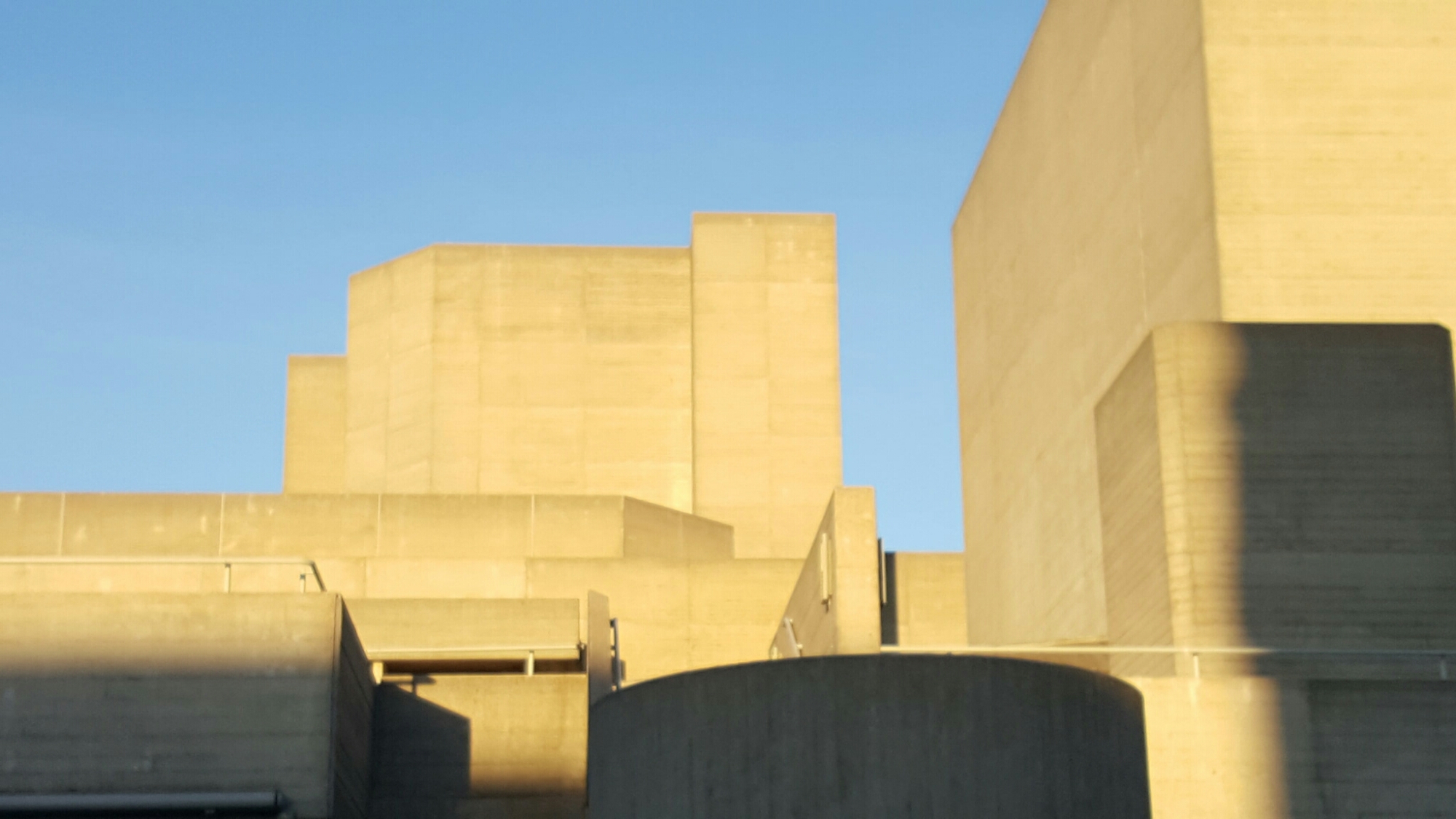
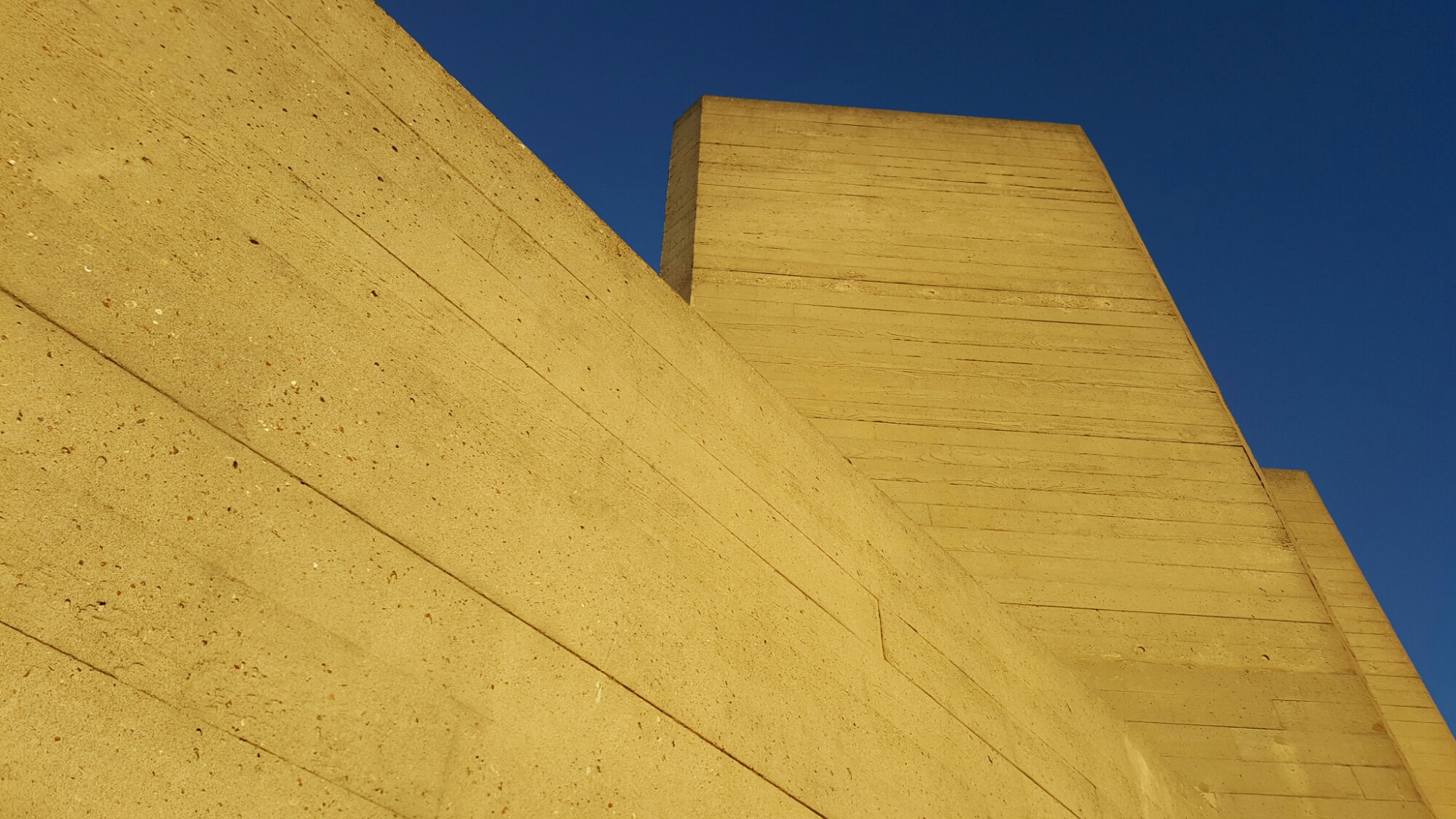
I have already mentioned in the Comments section of my blog how much I enjoyed Barnabas Calder’s admirable book Raw Concrete: The Beauties of Brutalism which has not one, but two chapters devoted to the work of Denys Lasdun, including one on the National Theatre which converted him from an interest in medieval architecture to modernism. I thought of him as I walked past the National Theatre last night and stopped to admire its complex abstract geometry and discovered, which I had not known, that there are decks and terraces from which one can explore its different horizontal levels:-
Jeff Koons Hon RA
I have just been to a talk by Jeff Koons, who is over for the opening of an exhibition at the Almine Rech gallery. What I most enjoyed was the discussion afterwards in which he revealed a detailed knowledge of, and interest in, the work of mannerists in the collection of the Hermitage, including the work of Pontormo, at which point many of the characteristics of his work – its extreme attention to finish and its sometimes sentimental appeal to the emotions – slipped into place. He’s a late modern mannerist.
The New London
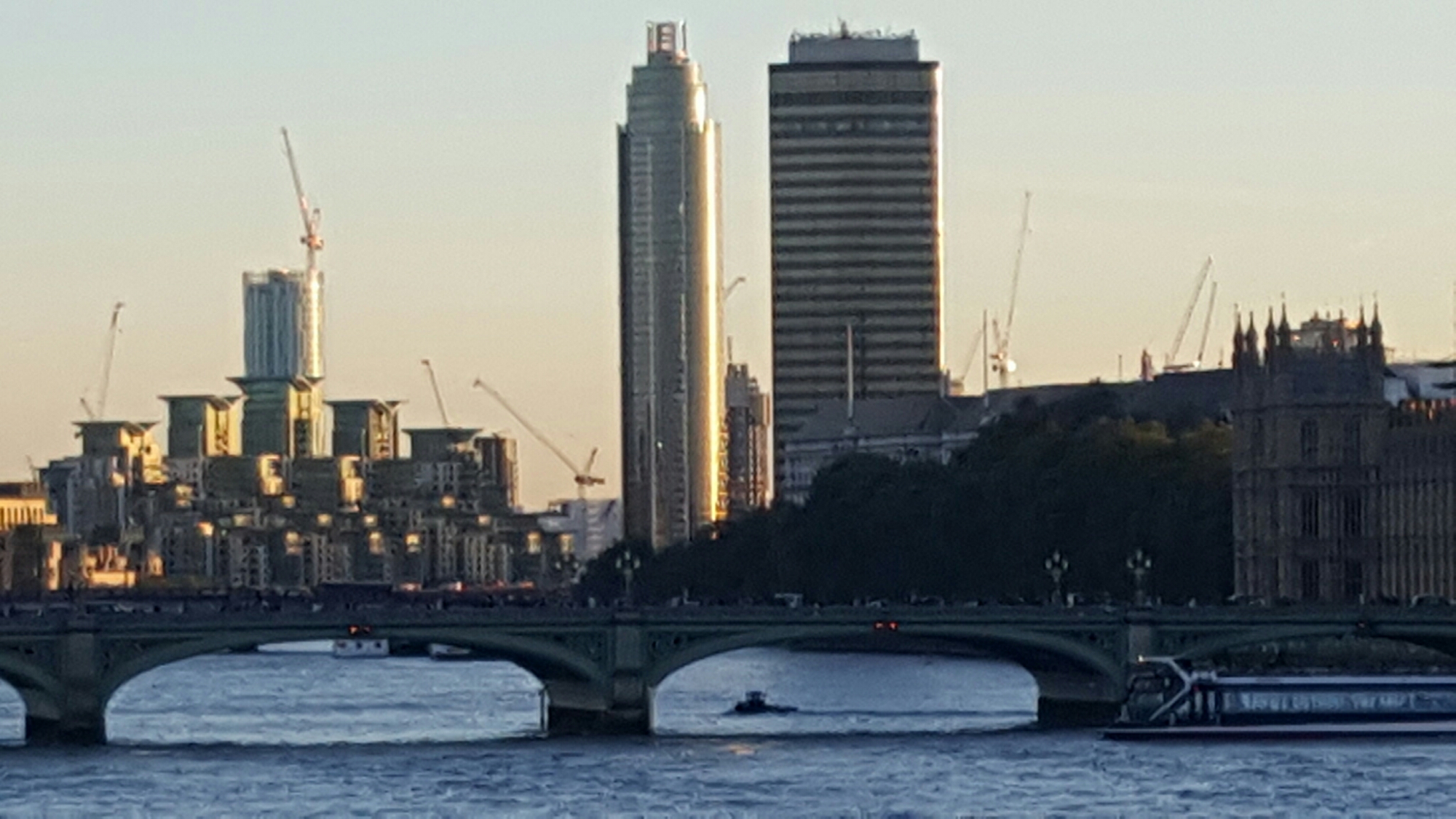
I was walking across Hungerford bridge – the new one designed by Lifschutz Davidson – and looked out towards the west and saw, not the pinnacles and towers of the Palace of Westminster, but a wilder and more unexpected roofscape of the new Vauxhall, dominating the skyline with a chimera of international wealth. I find it odd to remember that it was Ken Livingstone, not Boris, who dreamed that his native city could become Dubai-on-Thames. Now that his dream is being realised, does he – should we – congratulate him on the viagra of redevelopment ?
St. Vedast-alias-Foster
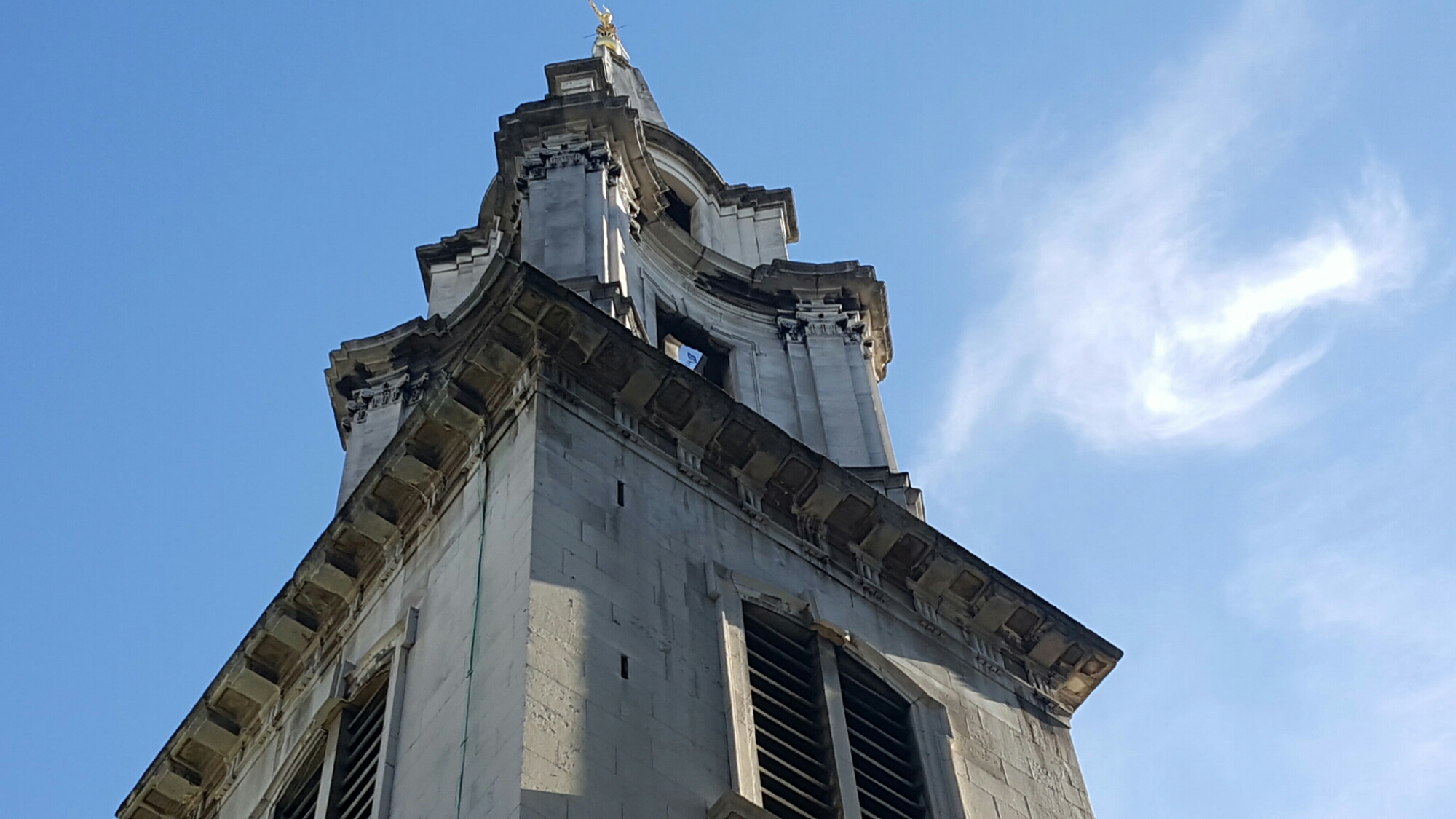
I don’t often have a chance to explore the City Churches, but was passing St. Vedast, Foster Lane en route to buy a sandwich. It was originally built by Wren in the 1670s, with payments amounting to £1,853 15s 6d between July 1670 and October 1673. The steeple was added during the 1690s, designed by Wren, but a revised draft by Edward Wilcox, a carpenter, was subsequently approved by the parish. Bombed in the war, it was rebuilt by Stephen Dykes-Bower, with John Betjeman listed as a church warden:-
Steven Runciman
I have been reading Minoo Dinshaw’s long, magnificently scholarly and perceptive biography of Steven Runciman. Dinshaw is very good at exploring the ambiguities of Runciman’s personality: on the one hand, the child of a family of wealthy, lowland Scots with puritanical instincts (guests at Elshieshields were always advised to bring their own drink); and, on the other hand, someone with a great taste for louche company and subversive gossip. Occasionally, as with his subject, there is slightly too much information about obscurer members of the Almanac de Gotha (Runciman called his chickens after members of the French aristocracy), but the rich information pays off in explaining who his friends were in 1930s Cambridge and what his contribution was to the study of the Bogomils.
William Kentridge Hon RA
I have been meditating on the full impact of the William Kentridge exhibition Thick Time at the Whitechapel: a set of six installations consisting of film, music, history, animation, humour and memory, owing as much to a sense of thoughtfulness about the nature of history as to drawing and art. Best of all is the first grand installation, The Refusal of Time, partly because of its length and epic scale and the relationship between the machine in the middle like a printing press, and the confidence of the changing imagery on the walls around, beginning with a metronome and ending with a people’s march:-

 | Charles | Saumarez | Smith |
You must be logged in to post a comment.