
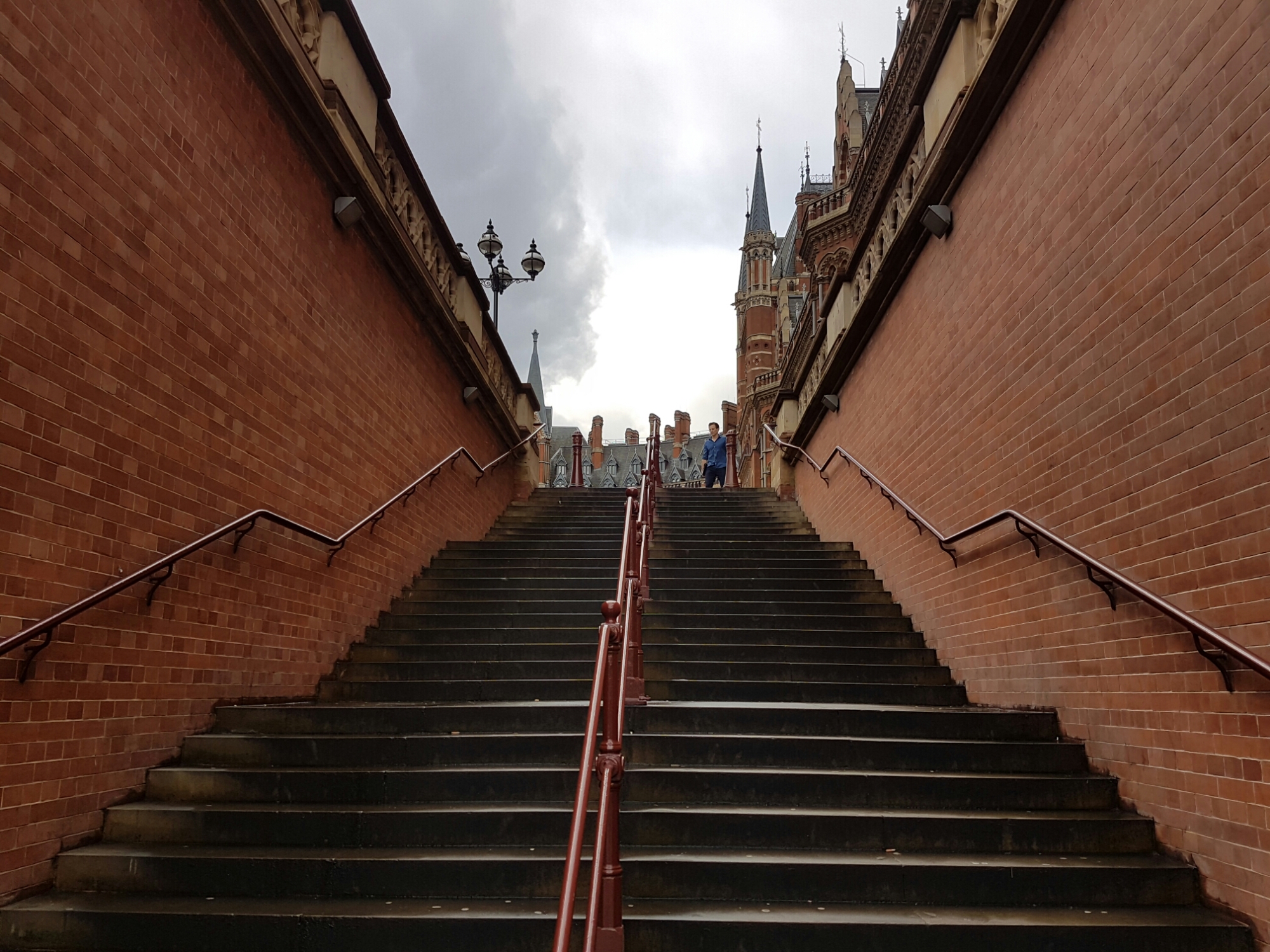
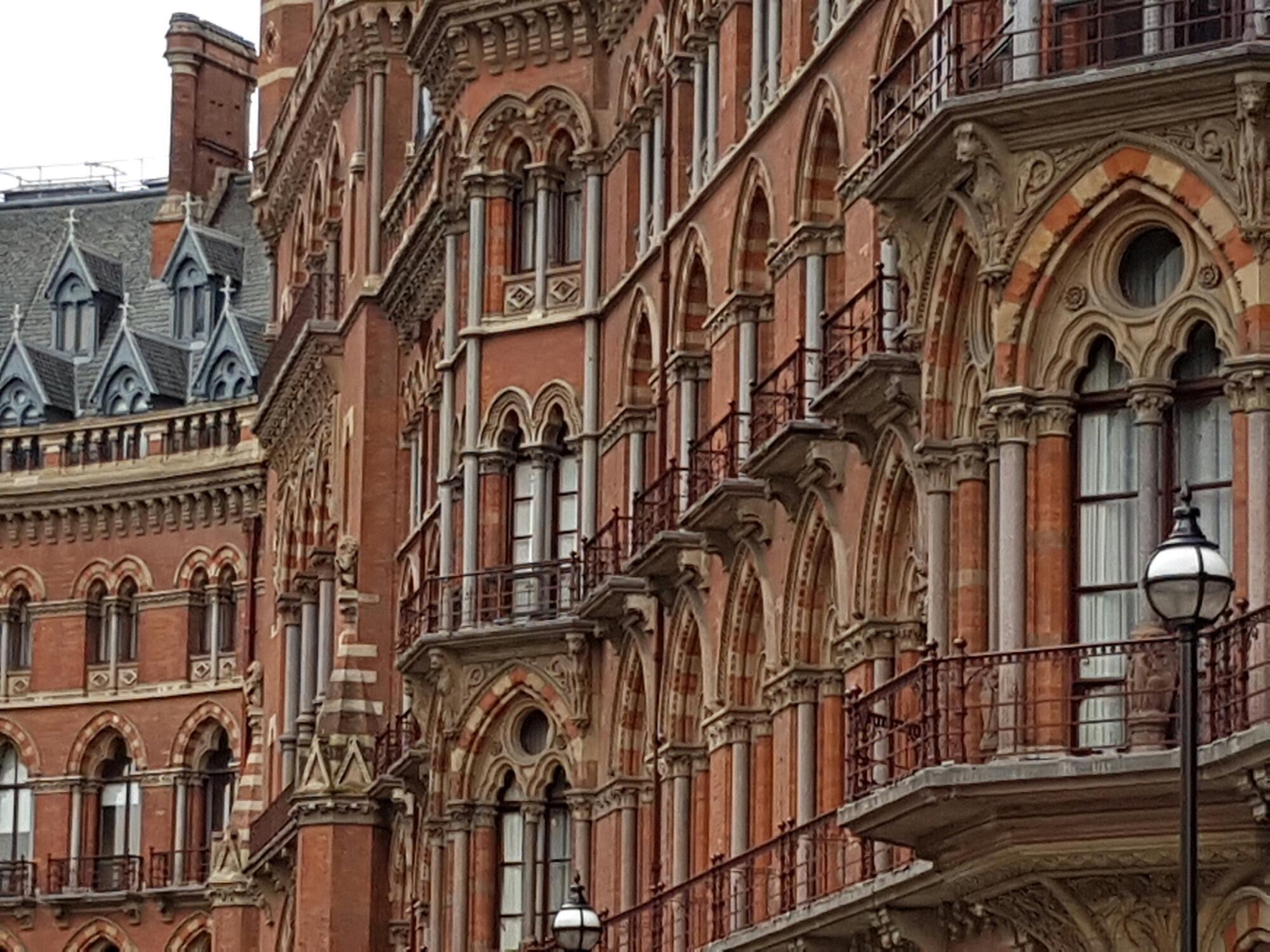
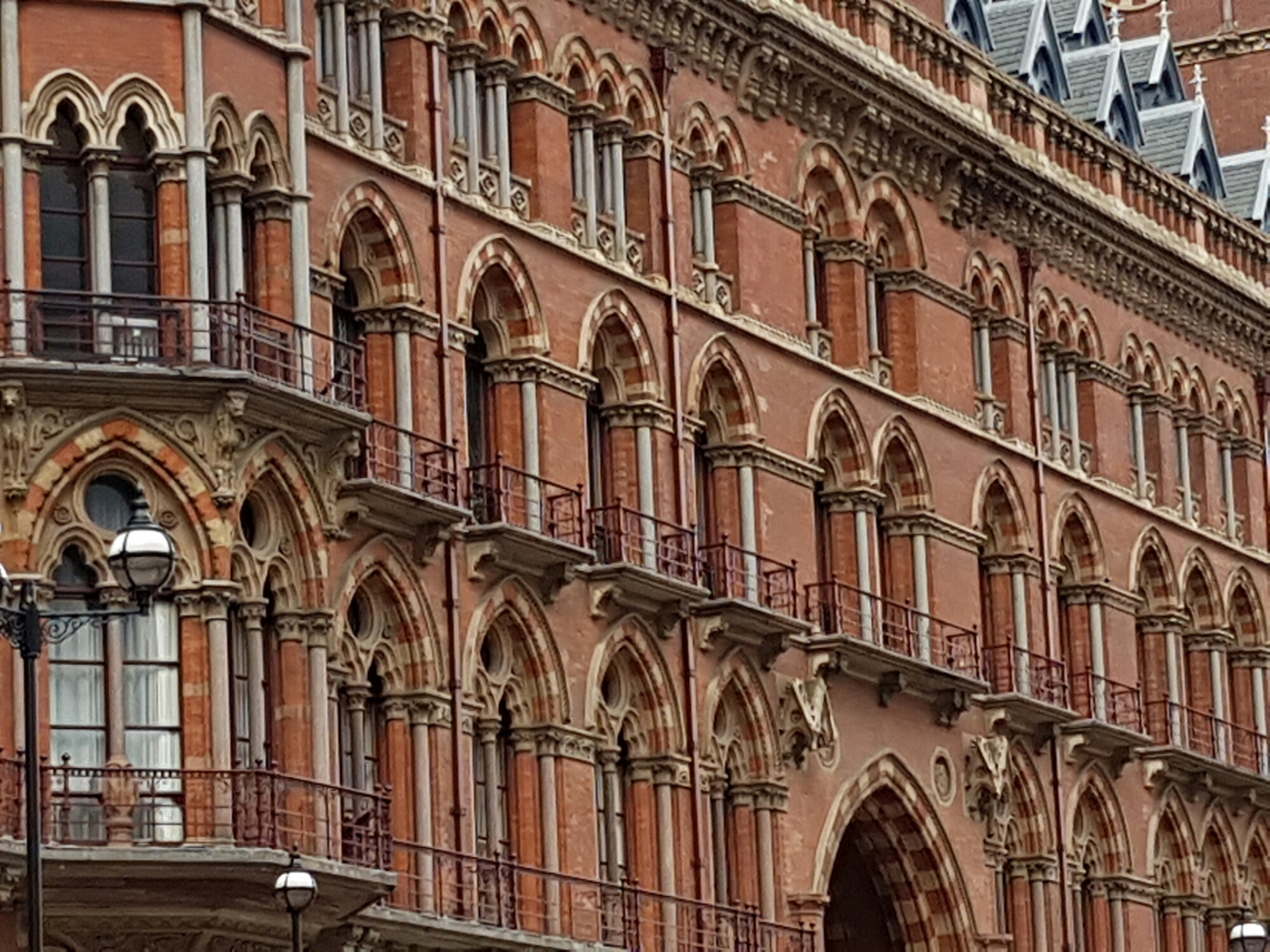
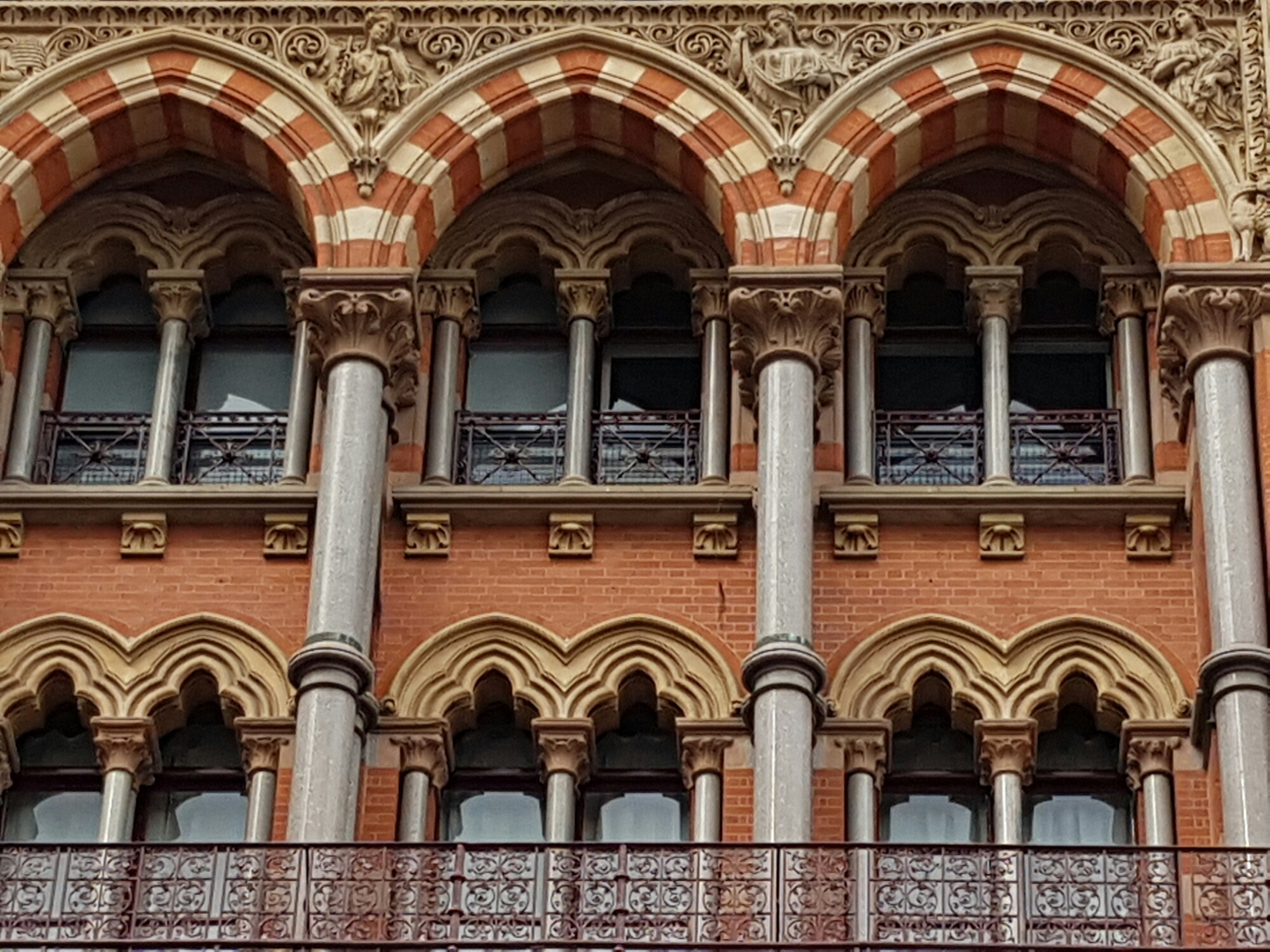
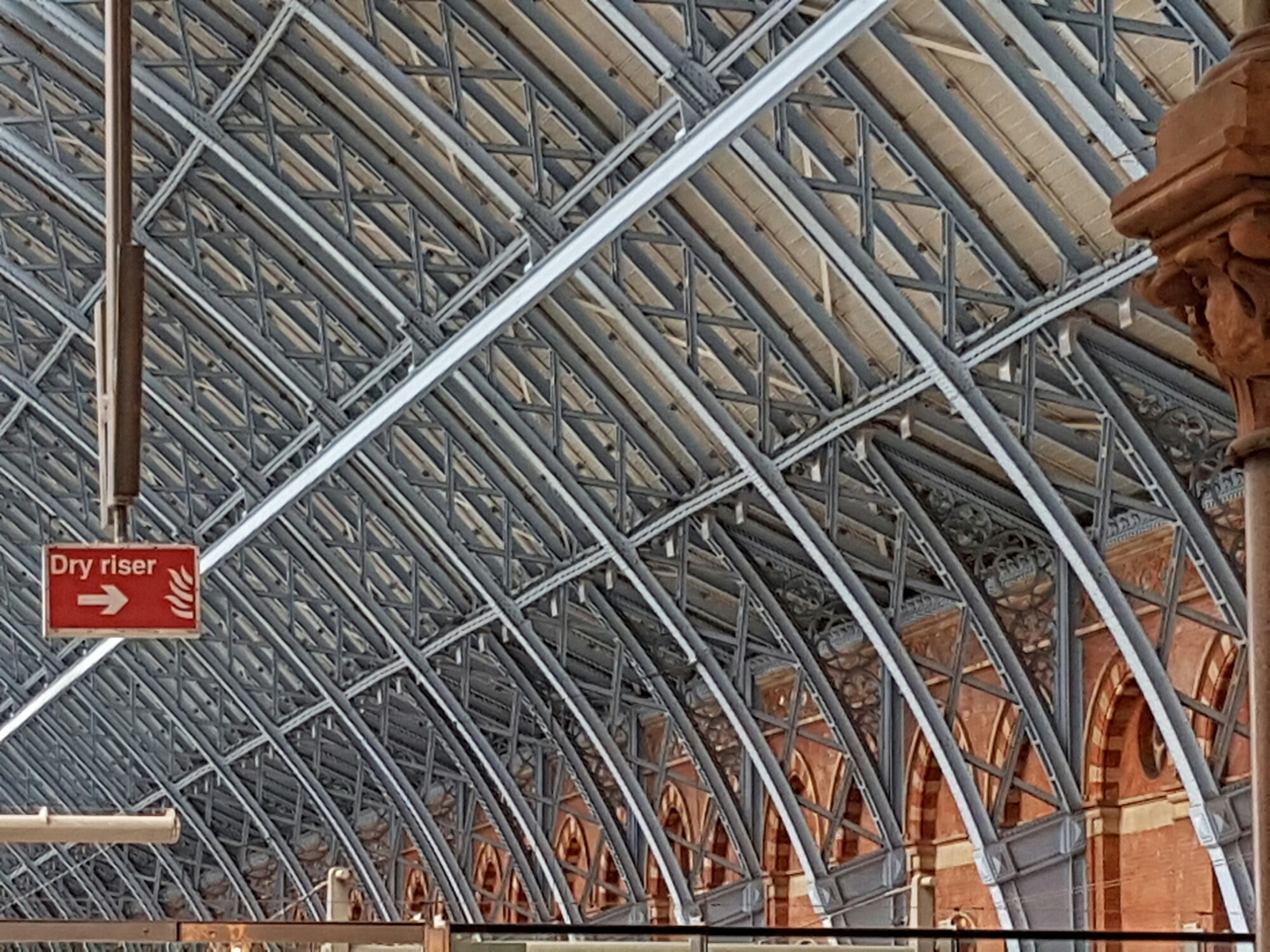
I was slightly early for lunch at Central St. Martin’s yesterday, so stopped to admire the façade of the old Midland Hotel, designed by George Gilbert Scott as the front to St. Pancras Station, which I normally only see from a traffic jam. It was the result of a separate competition, organised by the Midland Railway Company in 1865 and won coincidentally by Scott with the design for a building which was vastly much more palatial than its specifications, with 300 rooms, hydraulic lifts and no bathrooms. It closed in 1935 as too expensive to maintain, became offices for British Rail, and great efforts were made in the 1960s to demolish it. It was only saved thanks to the efforts of ‘the furious Mrs. Fawcett’ and her colleagues at the Victorian Society. She was a former debutante who worked in Hut 6 at Bletchley and only died last year. We owe her a lot:-

 | Charles | Saumarez | Smith |
How right you are! It’s a splendid building, now that it’s been cleaned.
I’ve always believed – probably wrongly – that it was related to Barry’s Houses of Parliament, just as Waterhouse’s Manchester City Hall was, but the dates don’t work.
Restoration by Richard Griffiths Architects was completed in 2011
The firm also restored the too little known magnificent c. 1566 Eastbury Manor House in Barking, an unexpected National Trust treasure, as well as Seddon and Gough’s St Paul’s Hammersmith close to Hammersmith Bridge and overshadowed by the Hammersmith flyover – a terribly polluted part of London
Of course, it even attracted the interest of Paul Nash , not an artist whom one generally associates with Victorian Gothic. see his painting in Aberdeen Art Gallery, Northern Adventure of 1929. Nash was living across the road
I enjoy the way Martin Hopkinson has pointed out Nash’s painting as another level
to your post. The building is beautiful, as is how your posts connect us.
Jane and Ted Fawcett were quite a formidable pair and did a lot to promote building and garden conservation
Someone who rather surprisingly refused to support the campaign for it’s retention in 1966, was Sir John Summerson, who told John Betjeman that he thought the building was ‘nauseating’.
Yes, but Summerson was a MARS group modernist, who supported the demolition of what he regarded as the boring Georgian terraces of Dublin.
I remember that Betjeman always called Summerson ‘Coolmore’, the nom-de-plume he used for his column in Architect and Building News.
Is the structure in the front of Nash’s painting the beginnings of Camden Town Hall in the making? Had they knocked something down to clear the site (“boring Georgian terraces”, maybe….) – and give Nash his view? No view nowadays from one street back….