
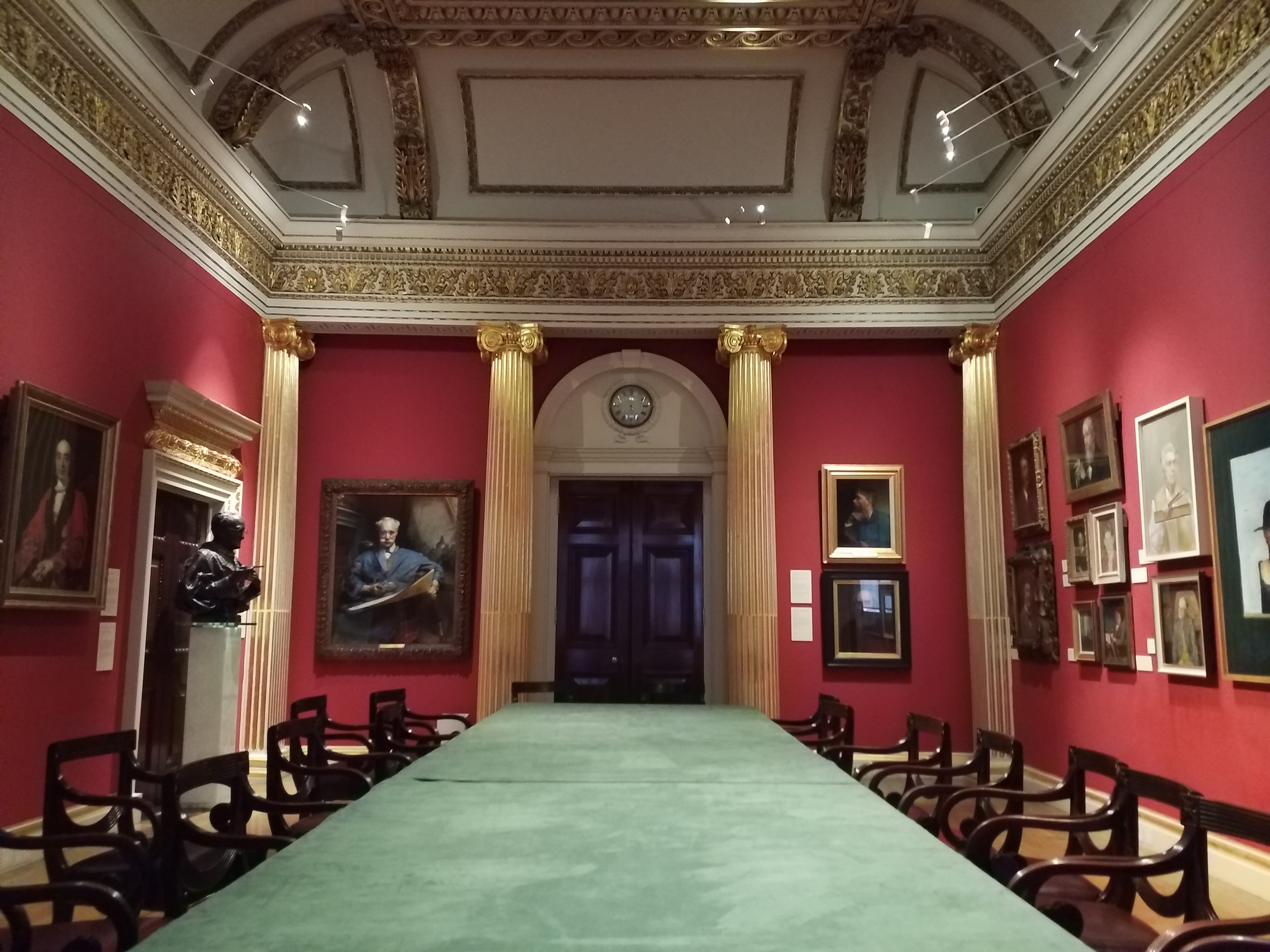
I’ve twice been asked this week to explain the architectural history of the General Assembly Room at the Royal Academy. The only problem is that it belongs to a period of the building history about which I am a bit foggy. The answer is that Lord George Cavendish, the cantankerous third son of the fourth Duke of Devonshire, member of parliament and of Brooks’s, and rich in his own right having inherited £700,000 from his Uncle Henry in 1810, took a lease on the house in August 1815 from his nephew, the sixth Duke. He had already decided that he would radically remodel the rooms at the front of the house and convert what had been a bedroom on the west side into a State Dining Room and create a ballroom at the east end of William Kent’s grand rooms of parade. He employed Samuel Ware as his architect, who had been articled to John Carr, the prolific Yorkshire country house architect who had been employed long before on making changes to Burlington House, and he been a student in the Royal Academy Schools from 1800. As the Survey of London correctly describes, ‘Owner and architect showed exemplary good taste and great skill in the remodelling carried out between 1815 and 1818. Considerable preliminary study had preceded each operation and full respect was shown for the work done in Lord Burlington’s time’. This is what is confusing about the style of the room. It is essentially a scholarly reworking of William Kent’s style, using details which were copied from Kent’s own designs, either in Burlington House or Chiswick:-

 | Charles | Saumarez | Smith |