Merce Cunningham

Yesterday was the centenary of Merce Cunningham’s birth. We went to the celebratory Night of 100 Solos at the Barbican – an astonishingly visually exciting, abstract, composite performance, with Dada-ist backdrops by Richard Hamilton, organised by dancers from Cunningham’s company, including Siobhan Davies.

I had not realised how important London was to an appreciation of Cunningham when his Dance Company performed at the Phoenix Theatre in 1964, the year that Rauschenberg won the Golden Lion at the Venice Biennale. All will be revealed in Alla Kovgan’s forthcoming 3D film.

Standard

Notre-Dame de Paris

It’s hard to escape the horrendous pictures on breakfast television of fire ballooning through the nave of Notre-Dame, demonstrating, as if it was needed, how much more vulnerable buildings are during restoration projects.

But it’s also worth remembering the extent to which Notre-Dame is a nineteenth-century reconstruction by Viollet-le-Duc – meticulous and scholarly as it was – after the acts of gross destruction during the French Revolution, when it was rededicated to the Cult of Reason and most of the statues on the façade were smashed. So the putative medieval spire and bell tower are, in fact, later reinventions.

It doesn’t reduce the catastrophe, just reminds one that buildings can and do go through disasters and their spirit and history survive.

Standard

A German Life

In the various discussion as to how far, if at all, current political circumstances bear any relationship to Germany in the early 1930s – the drift to the far right, the rise of extremism, a referendum with illegalities which the government chooses or prefers not to investigate – it was a pleasure to see A German Life at the Bridge Theatre which is precisely about how easy it was to be complicit with the rise of fascism: to laugh at it, or ignore it and pretend it isn’t happening or is just a part of normal life, dominated by the smiling faced and always polite villains of the right, who seem in many ways so normal. It’s an amazing and totally convincing tour-de-force by Maggie Smith, directed by Jonathan Kent.

Standard

Golders Green Crematorium

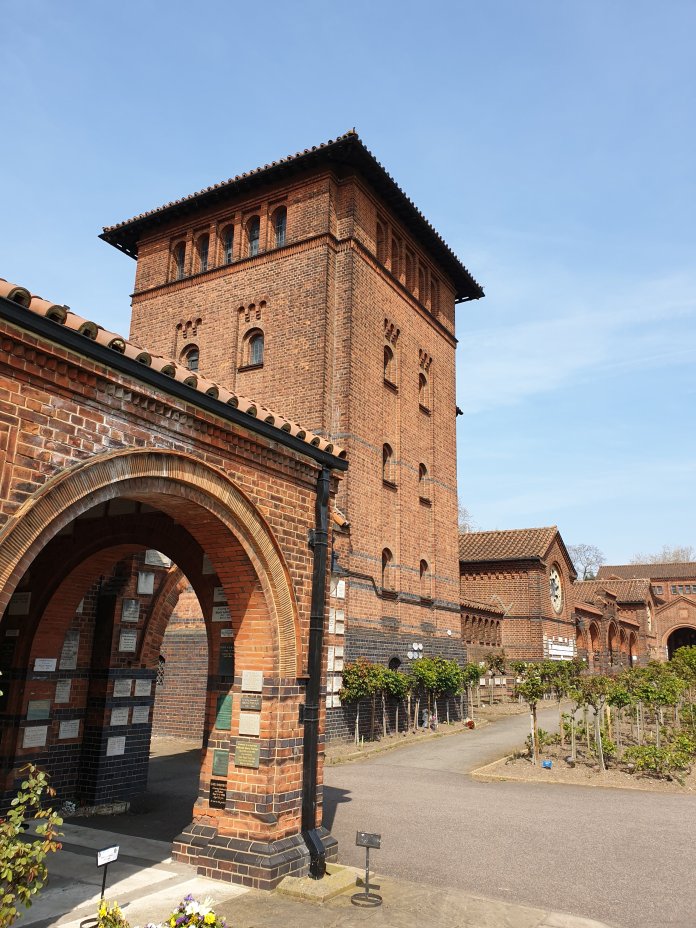
We went to the funeral of Michael Kaufman (not the former Director of the Courtauld Institute) in Golders Green Crematorium. Normally, I am not keen on the chapels of crematoria, which remind me too much of Evelyn Waugh’s The Loved One. But this is just next to Hampstead Garden Suburb and was designed by Sir Ernest George in red brick Lombardic, the garden by William Robinson, music by Debussy, Elgar and Schumann, and the address by Max:-

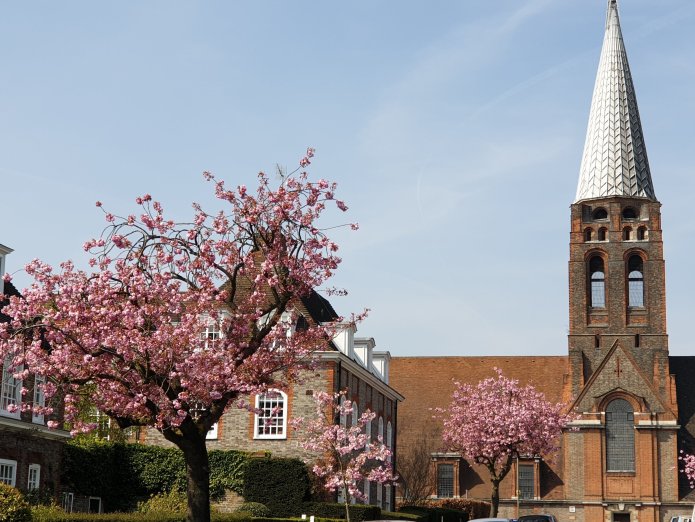
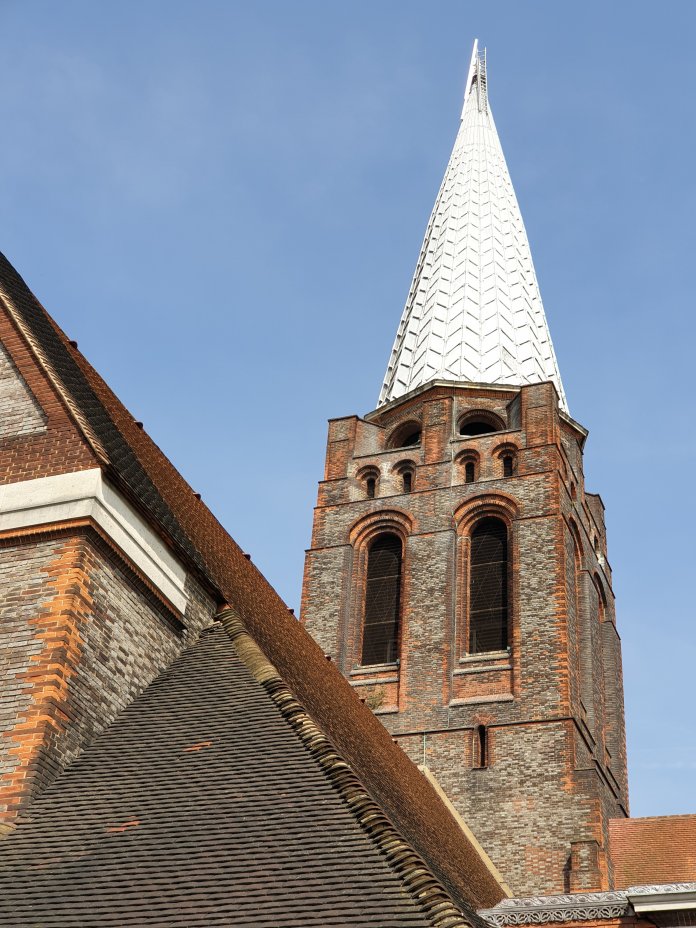
We stopped off to admire St. Jude’s by Lutyens (consecrated 1911) nearby:-

Standard

Sunday Morning Walk

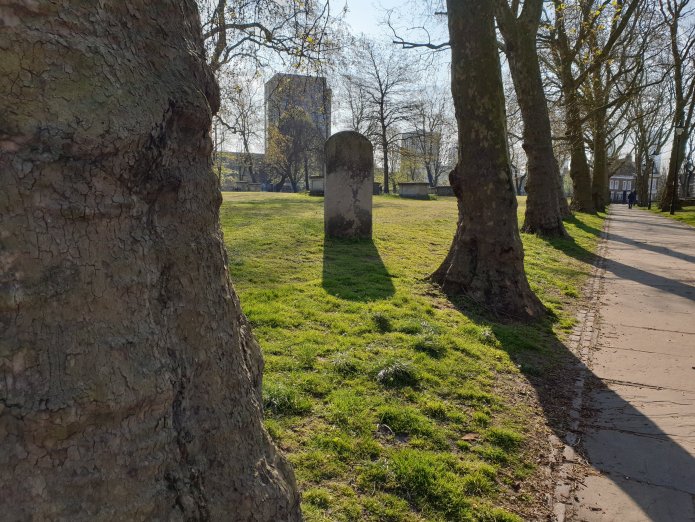
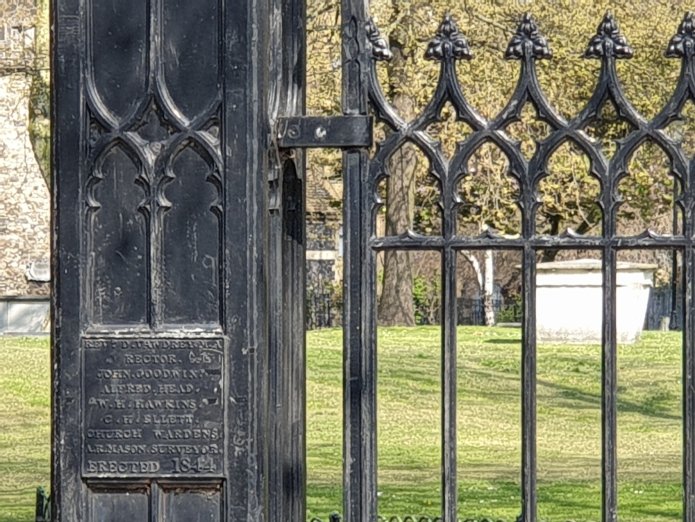
It was a beautiful clear light this Sunday, as I walked, as always, through St. Dunstan’s churchyard:-

Flamborough Walk:-

Limehouse Station:-

And back through the churchyard again:-

Standard

The Life of Stuff (2)

Reading Susannah Walker’s wonderful account of objects her mother had assembled and then metaphorically buried in her house in Worcester and how they could be used to understand and interpret her own life history has made me think about how far she was influenced by her experience of the teaching on the V&A/RCA MA Course in the History of Design, which she refers to in her acknowledgements. In particular, it has made me go back and listen to a talk which John Styles gave at the Open University in a conference on ‘the Domain of Design History: Looking Back Looking Forward’ on the Course and its origins in the V&A:-

http://www.openartsarchive.org/research/clips/teaching-architectural-and-design-history-2

Much of this is about the Course’s institutional origins and development in the museum. It perhaps misses out the aspect of the Course which I remember best: the idea that objects, and particularly objects in the museum, have their own life and history, which help to illuminate, and provide an understanding, of the past, which is what Susannah Walker’s book demonstrates so beautifully.

Standard

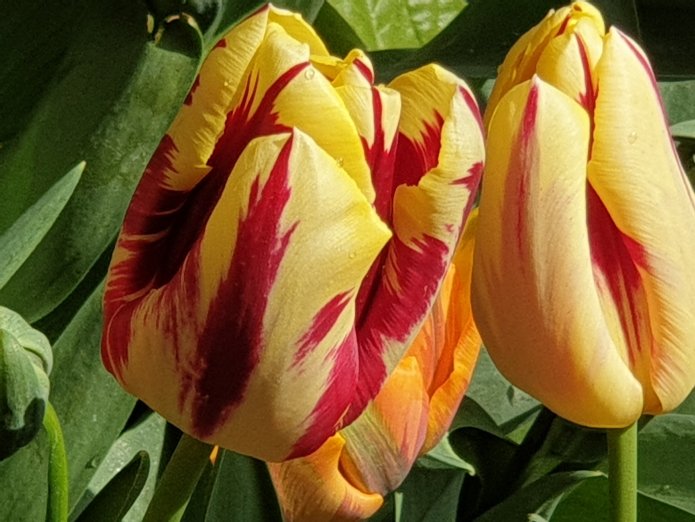
Tulipomania

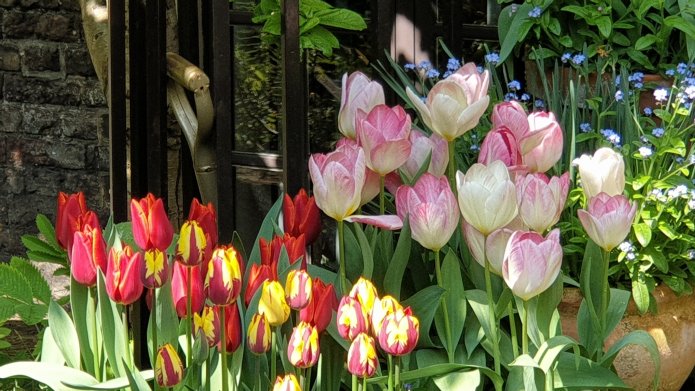
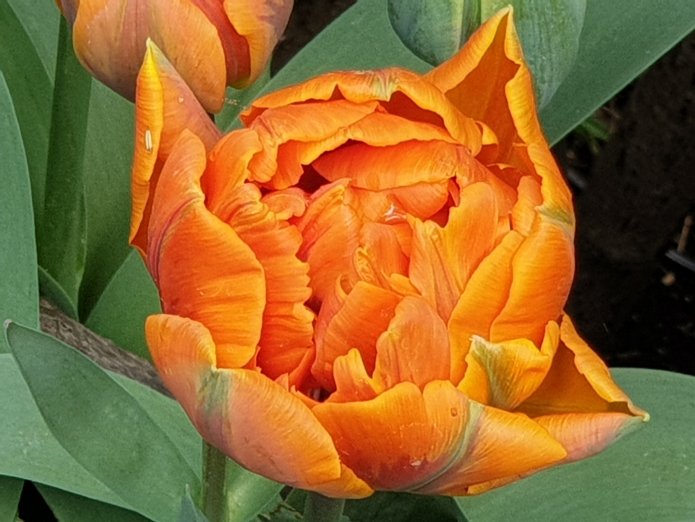
The tulips in the front garden were at their best this morning in the sunshine after the rain and longer lasting because of the cold:-

Standard

The Life of Stuff (1)

I read on twitter about a book which has been written by Susannah Walker, a former student on the V&A/RCA MA Course in the History of Design. It’s called The Life of Stuff: A memoir about the mess we leave behind. It’s a beautifully written, profound investigation of her feelings as she clears up the belongings left by her mother after her death in her tragically chaotic house in Worcester: a miniature design history of objects accumulated and hoarded and never thrown away – cutlery and vacuum cleaners, a black basalt teapot and a napkin ring, each of them inspiring a set of memories and thoughts about their design or history, why and how they were acquired and how they fit within her family history. It’s such a powerfully evocative description of her interest in the meaning of things, which she herself describes as partially originating in the seminar room, now demolished, hidden behind the eighteenth-century galleries of the V&A.

Standard

Bill Viola

In case people hadn’t registered, the day that Viola Michelangelo closed at the Royal Academy Blain|Southern opened a much smaller, more intimate exhibition of his video works down in the basement. There is a Self Portrait of Bill himself, drowning:-

Then a series of not just intimate, but extremely intense works, including Unspoken (Silver and Gold):-

Standard

Sean Scully

It has been a week of intense activity at Blain|Southern, celebrating Sean Scully.

First, Nick Willing’s admirable and informative film, which showed the nature of his life, career and working methods.

Then, volume 2 of his catalogue raisonné was launched with a conversation at the gallery which showed a different, more intellectual and reflective aspect of his character, as he and Marla Price discussed the significance of each of his major works from the 1980s.

Tonight his exhibition at the National Gallery opened, which shows new work inspired by, or is, in some way, related to Turner’s deep, meditative seascapes, mood paintings, in which the horizon dissolves into pure colour, as represented by Turner’s Evening Star from upstairs. There are three galleries of Sean’s big, adventurous, recent work.

He spoke movingly at the opening of what Trafalgar Square, and the National Gallery, meant to him as a child, coming in from Sydenham on Christmas Eve to see the Norwegian Christmas tree (he did not mention how important Van Gogh’s Chair, then in the Tate, was to his decision to become an artist).

Much of the rationale of the National Gallery is based round the belief thar free access to the collection is an inspiration to children to become artists. Sean is the living exemplar that this policy works.

Standard