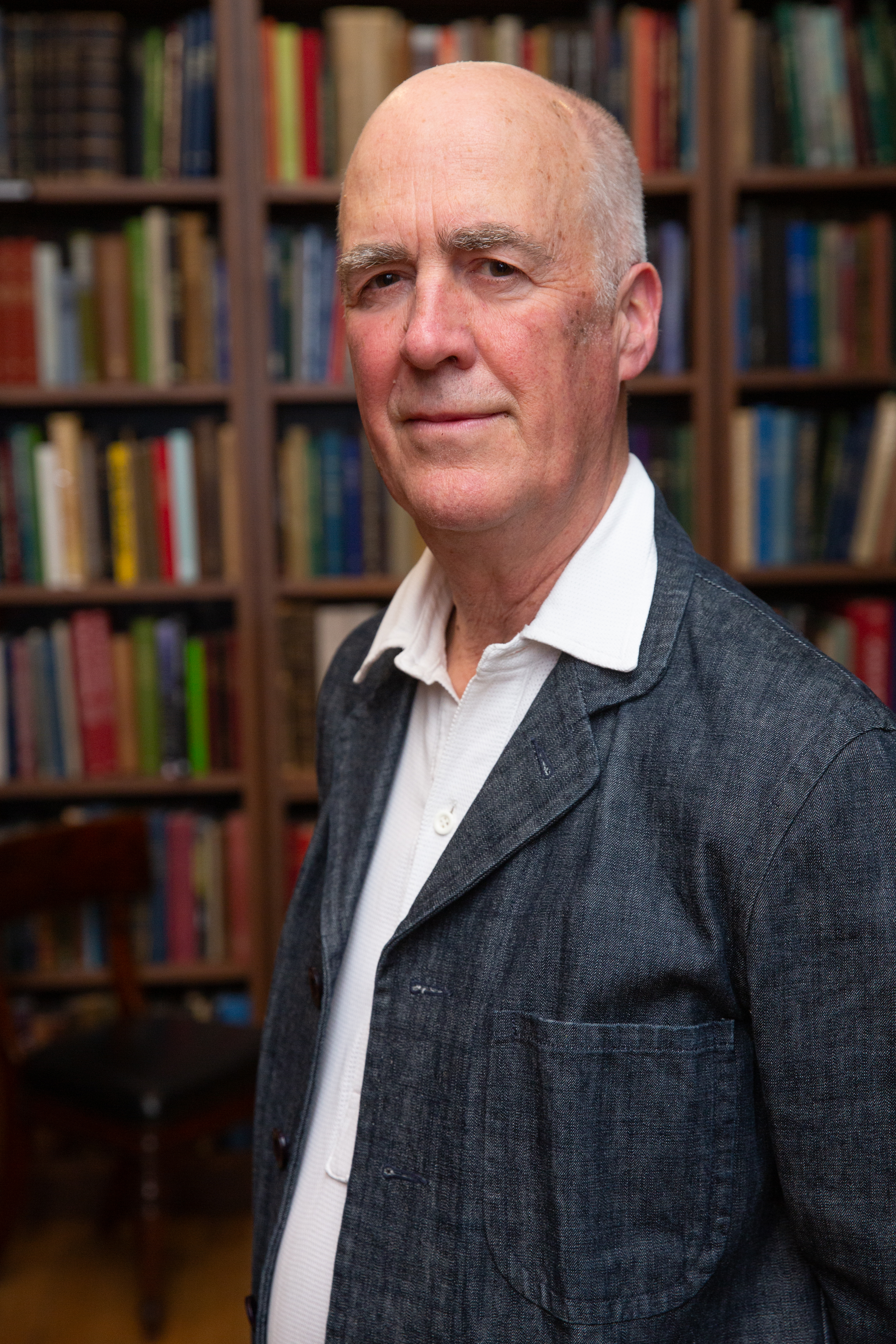
I haven’t got a picture of Tom Krens in my book on museums because on Google every picture looked the same – the picture of an archetypal businessman, which I thought I could live without. But looking further, I have discovered a picture which I would have liked to use, but didn’t spot, from the Bennington Banner some time in the mid-1980s. It shows Joe Thompson on the left, who has just stood down as Director of Mass MoCA after 22 years, Tom Krens on the right, and I assume it is the young Michael Govan in the middle, making plans for Mass MoCA, which developed into the global expansion of the Guggenheim, the opening of Dia Beacon, and now the demolition of LACMA – a very evocative image of three people planning a museum revolution:-
Monthly Archives: October 2020
Living Museums (2)
The other wonderful long interview in Living Museums is with Tom Krens, the charismatic ex-hippy, ex-Director of the Guggenheim Museum. In writing my book, I knew that he was important, but it was very hard to find out about his thinking. For Living Museums, he has been interviewed at great and revealing length, talking about where his ideas came from, many of them while smoking pot, as he describes it, and going through the Williams College slide collection night after night in the late 1970s. As I had assumed, but didn’t have straightforward evidence, many of his ideas came from Deconstructivism: ‘The 1970s were, of course, the golden age of French Deconstructivism, and Minimal and large-scale land-based art were mounting a challenge to the traditional norms of how art was made, exhibited, and transacted. The aesthetic and structuralist discourse could be applied to museums, and here was a real world, real-time opportunity to direct some of that thinking to a tangible endeavor that had just fallen into my lap’.
Living Museums (1)
I have just received too late to include in the bibliography of my museums book, let alone any reference it it in the text, a very fascinating collection of interviews of the most important recent museum directors by Donatien Grau, who works at the Musée d’Orsay, under the title Living Museums: Conversations with Leading Museum Directors. It begins with interviews with Michel Laclotte and Alan Bowness – Bowness fascinating on his collecting philosophy- and includes an interview with Irina Antonova, the remarkable Director of the Pushkin Museum, who started working there in 1945 and only retired in 2013. I have just got to Peter-Klaus Schuster on the subject of the Neues Museum: ‘Chipperfield’s Neues Museum is a ruined temple with almost Piranesi-like qualities, a temple of remembrance like a palimpsest, with its damaged pieces of archaeology that directly reveal to Museum Island visitors the dignity, beauty, and sense of transience from antiquity to the nineteenth and twentieth centuries. All the archaeological fragments are combined in a great collage that belongs to the archaeology of modernism – a very intelligent reconstruction concept, in my opinion !’
Romilly Saumarez Smith (1)
I have been included in the mailing for Romilly’s next exhibition, which, like the Goldsmith’s Fair, is organised wholly online by a new and interesting online gallery called Living Object, which happens to be based nearby, but since it is purely online could be based in Timbuktu. I particularly admire the Madagascan ammonite extruding gold and diamonds:-
https://mailchi.mp/875fb999c858/goldsmiths-fair-online-4640601?e=9dc0f9b85b
Higham Hill Common Allotments
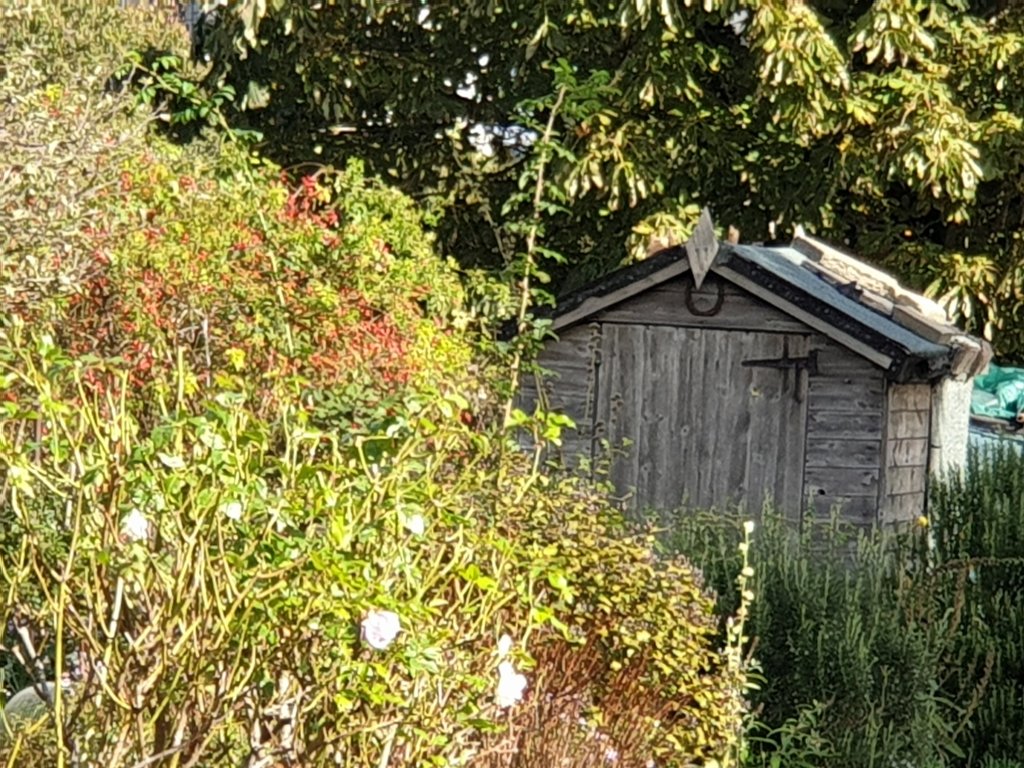
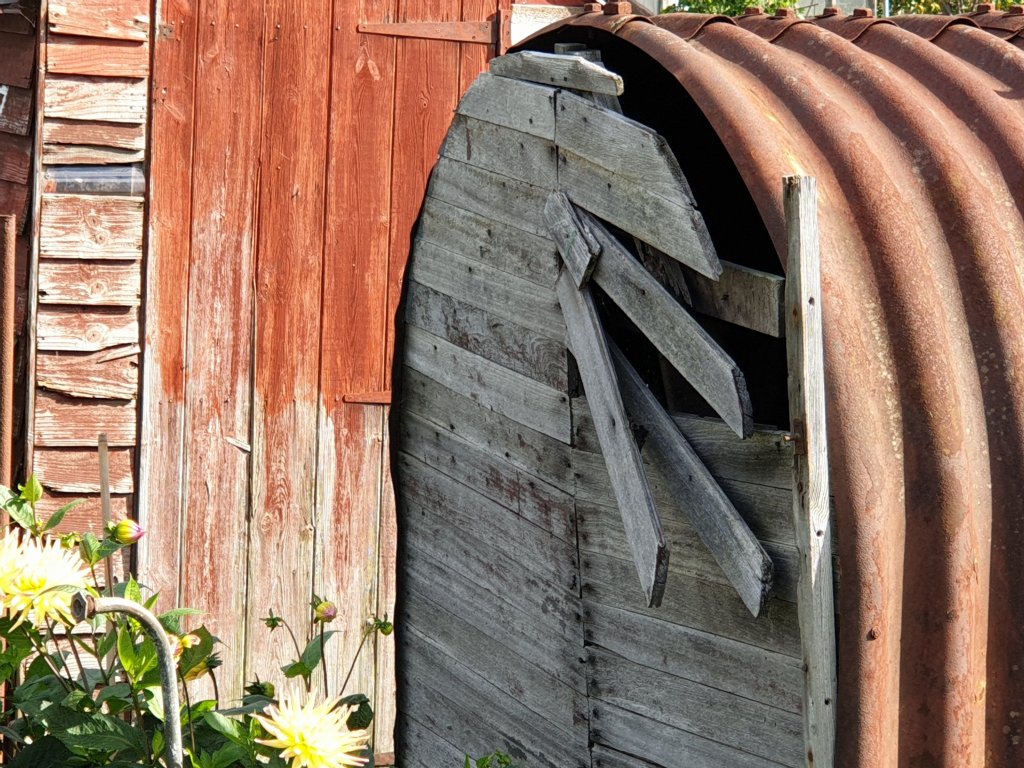
We went on a trip to Walthamstow to see one of the oldest allotments in London, ten acres of common land opened not long after the passing of the Inclosure Act in 1850 and cultivated in small plots ever since:-






Whitechapel Bell Foundry (65)
I can’t not post the photographs by John Claridge in today’s Spitalfields Life: they are so powerful, so densely textured, so beautifully composed and, above all, so recent. It was all intact in 2016 – the sense of history, the accumulation of dirt, the feeling that one was walking into another era. The argument has been that the moment it was closed, it is impossible to resurrect, but the building is still there, the memory, all the records, some of the people who worked there, providing it continues to be used for its original purpose, but not as a hotel:-
https://spitalfieldslife.com/2020/10/09/john-claridge-at-whitechapel-bell-foundry-o/
Whitechapel Bell Foundry (64)
As someone on my Comments section sensibly suggested, I have now checked as to whether or not it is OK to make comments on the legal proceedings while the Inquiry takes place. The advice is that it’s not, not least because it might be irritating to the Inspector. So, you may all be pleased to hear that I am going to go quiet on the topic until the end of the month in order to await the formal findings and final decision.
If meanwhile, you are interested in finding out what is going on, there is a twitter feed which is run anonymously which is likely to provide some level of independent running commentary on what is going on:- (https://twitter.com/SavetheWbf?ref_src=twsrc%5Egoogle%7Ctwcamp%5Eserp%7Ctwgr%5Eauthor).
Alternatively, of course, you can attend yourself by writing to elizabeth.humphrey@planninginspectorate.gov.uk and logging in, but the hearings are going to take place all next week and are not going to end till the end of the month. The only bit of it which I will really miss is the visit to Middleport Pottery, which I have only seen from the outside and provides a good model for how to keep an old craft industry going in a new economic environment.
Before I log out, it is probably worth re-iterating that a legal Inquiry is a very expensive business. It sometime feels to me a bit like David and Goliath: a small-scale charitable organisation intervening to prevent a rich American plutocrat from despoiling a piece of London heritage. Many of my blog followers have already contributed very generously. Indeed, they have made the recruitment of Rupert Warren QC possible. But we are still about £15,000 short of what we need to cover our expenses. The simplest way to give is to go to the relevant page of the Re-Form website which has all the relevant information as to how to do it, including a Gift Aid Form:-
https://re-form.org/whitechapel/information
Finally, I want to thank all my friends and blog followers for their generosity and valiant support. We await the decision.
Whitechapel Bell Foundry (63)
I’ve spent a long day listening to two conservation experts be cross-examined as to why and how they think the historic character of the Whitechapel Bell Foundry is best conserved by a) demolishing the adjacent 1980s extension and turning it into a hotel lobby b) building a massive 103-room hotel next door in a style which somehow simulates the original bell foundry in a totally kitsch way c) turning the majority of the surviving bell foundry into a ‘themed’ café d) putting in a little toy foundry in a small space next door to the courtyard e) separating the toy foundry from the café with a brand new, intrusive glass screen. The clear advice of Historic England is that the best way of retaining the historic character of a building is to retain its original historic use. Conversion into a modern hotel is nothing like its original use. So, it seems pretty obvious at the end of the day that the best way of retaining its character is to reinstate it as a Foundry, as Re-Form and Factum Foundation have together imaginatively and persuasively proposed.
Whitechapel Bell Foundry (62)
In reflecting on the first day of the proceedings of the Public Inquiry into the proposed conversion of the Whitechapel Bell Foundry into a hotel, there is an obvious and glaring weakness in Raycliff’s case. That is, that during the hearings on the first day, it became clear that, as one would expect, Alan and Kathryn Hughes, the fourth-generation owners of the Bell Foundry, had very good links with other companies in their line of business, not least through their fellow membership of one of the city livery companies. So, the obvious question is: what effort did they make to transfer the business to others in the same trade, including the offer of a management buy-out, before they sold it on the open market to Vince Goldstein ? And can they document these attempts ? One is left with the strongest possible impression that they made no effort whatsoever to keep it going as a Foundry in order to maximise the commercial benefit of a sale to a developer and chose to ignore the legal requirement for a change of use, assuming that if they couldn’t make a commercial success of it, nobody else could. But this doesn’t stack up as an argument when you look at the legal requirement for change of use.
LACMA
In writing about museums for my book (now designed, index done, just awaiting the final version of the text), I got very interested in the issues and controversy surrounding Peter Zumthor’s designs for the new LACMA. This morning I read the long piece about it in the current New Yorker, too late for my bibliography:- (https://www.newyorker.com/magazine/2020/10/12/the-iconoclast-remaking-los-angeles-most-important-museum).
I have realised from the commentary that the critics felt that the article corroborated their hostile views, maybe because of Zumthor’s final dismissive comment about not worrying about the cost. I didn’t read it like that at all. I felt it helped to explain and interpret why Michael Govan had chosen Zumthor when he moved to LACMA in 2006 and was a reminder that there were already plans in place to demolish the Pereira buildings, which may now be regarded as a period piece, but would have been incredibly expensive to refit and were never completely satisfactory (Rick Brown the Director had wanted Mies van der Rohe to design it and left to go to the Kimbell where he was able to employ Louis Kahn). It was also a reminder that Zumthor is a great architect. It may be a high risk strategy, but it is a bit too late to lament the loss of the Pereira buildings now they have been pulled down.
 | Charles | Saumarez | Smith |
You must be logged in to post a comment.