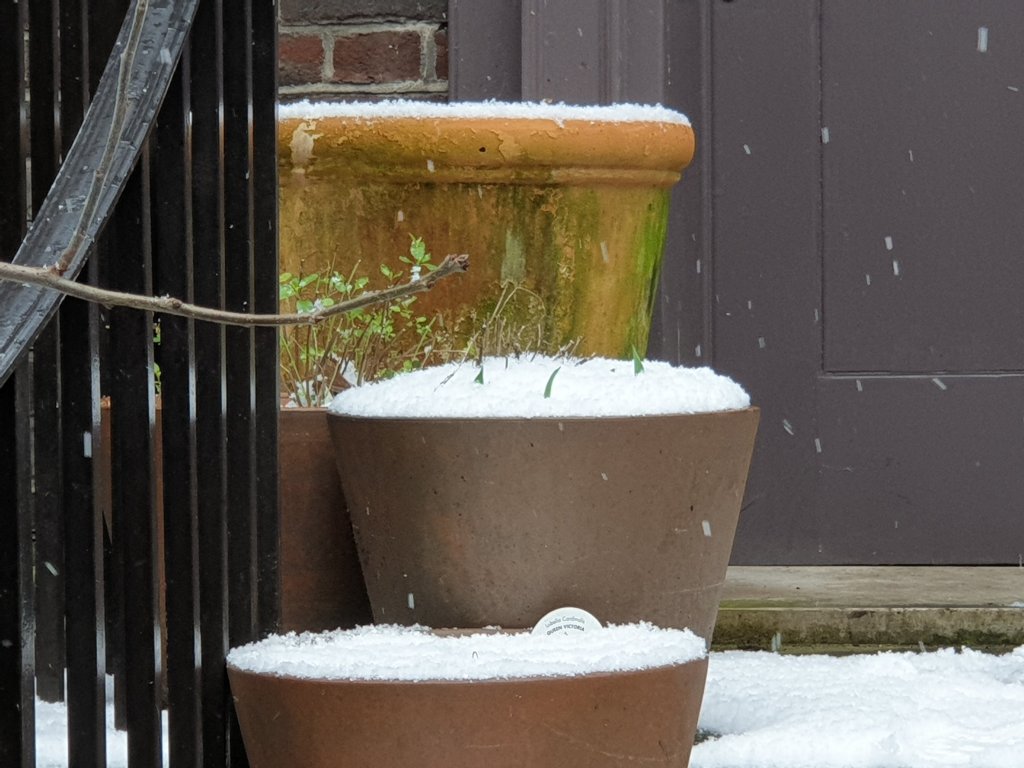
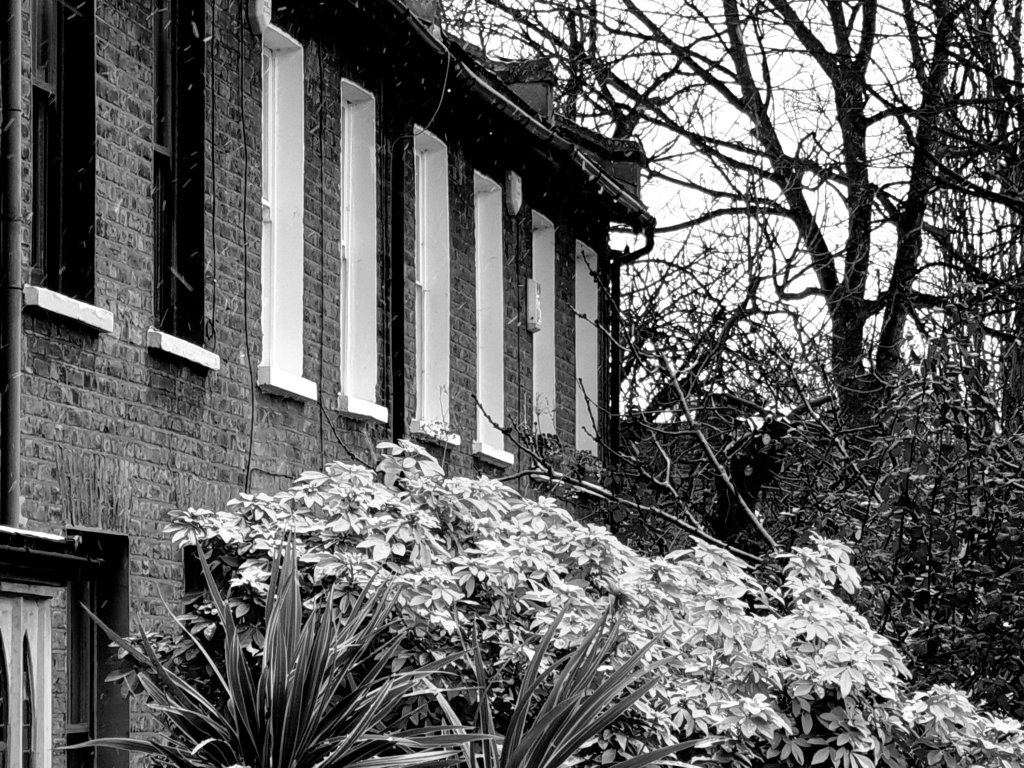
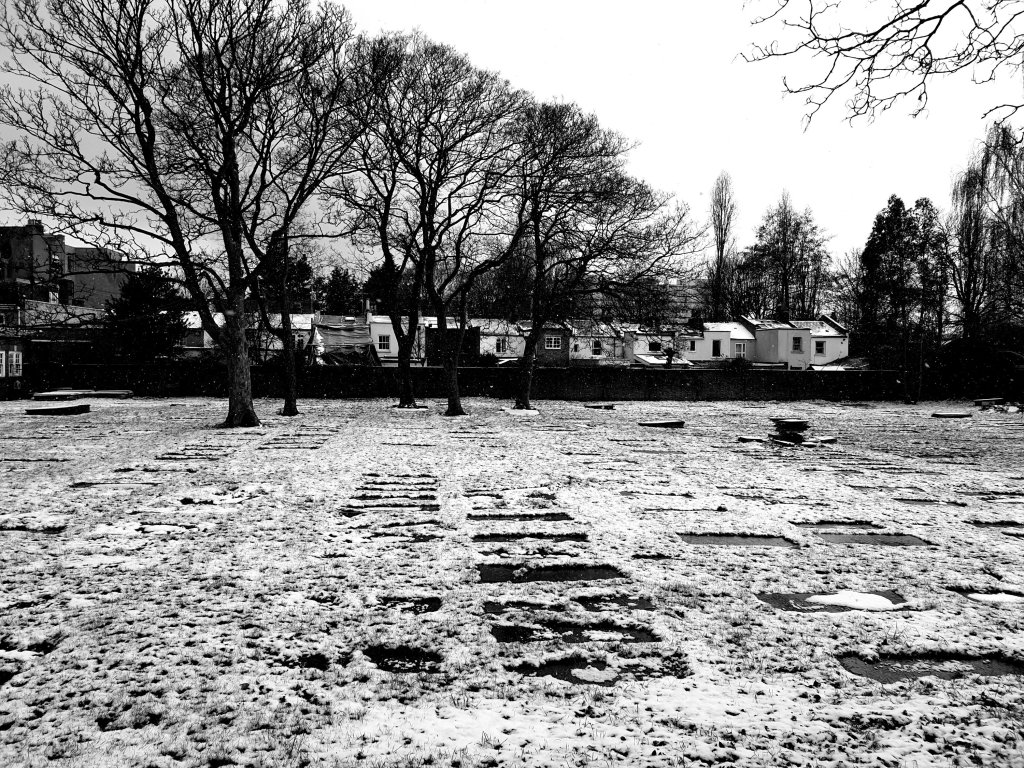
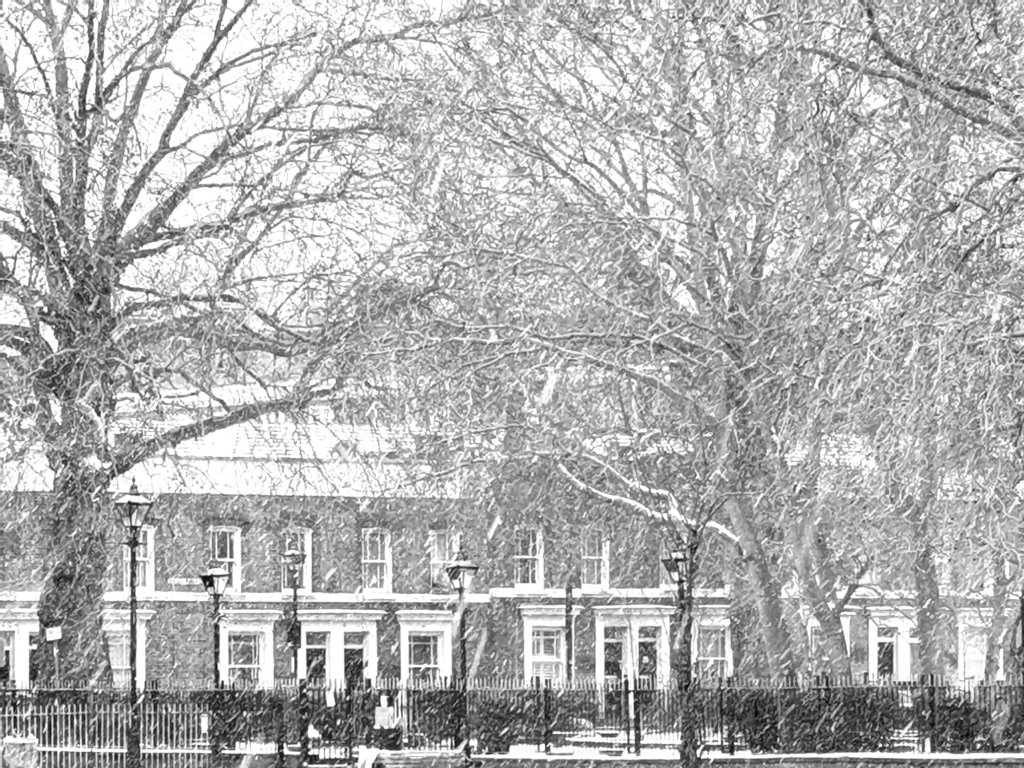
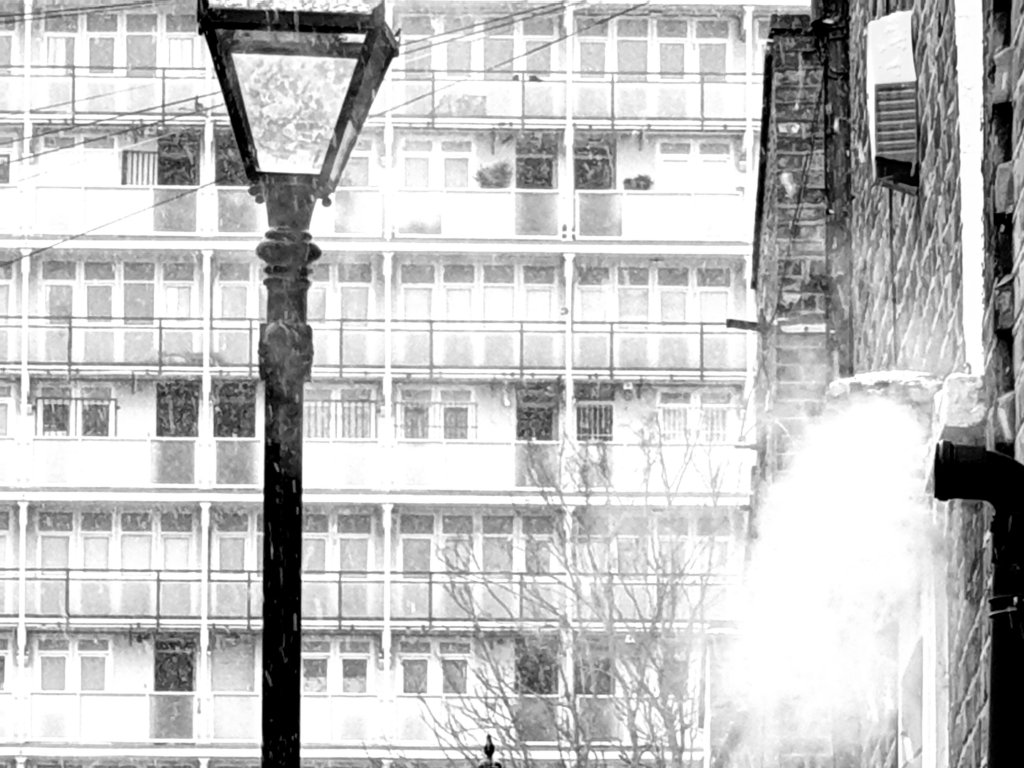
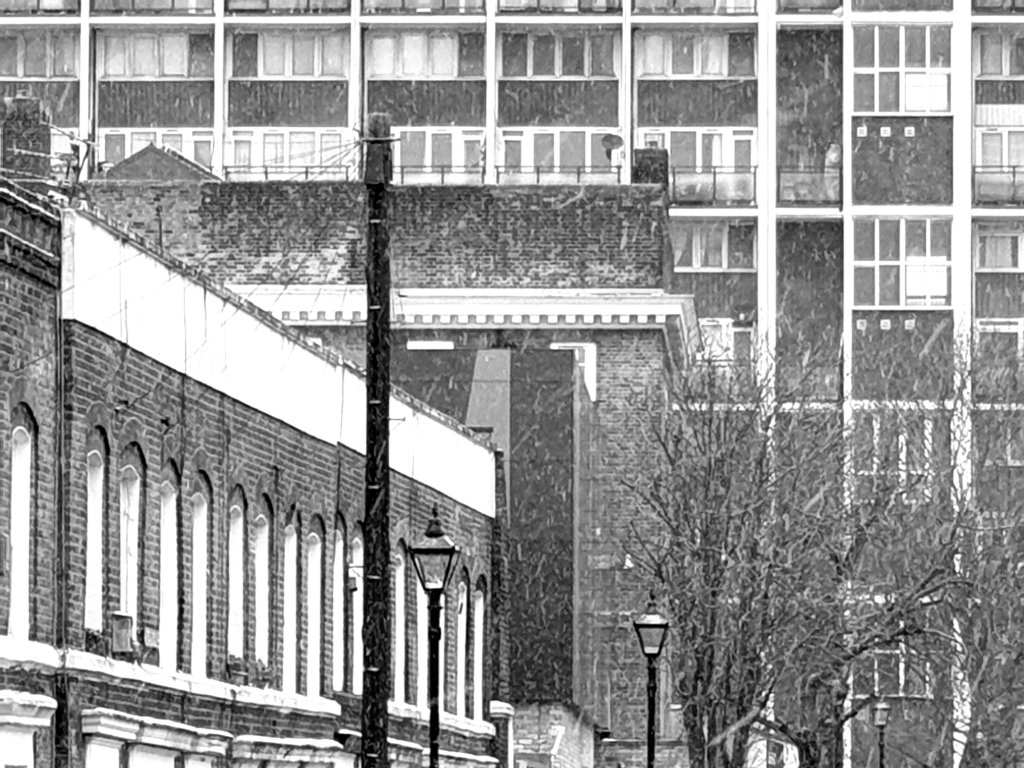
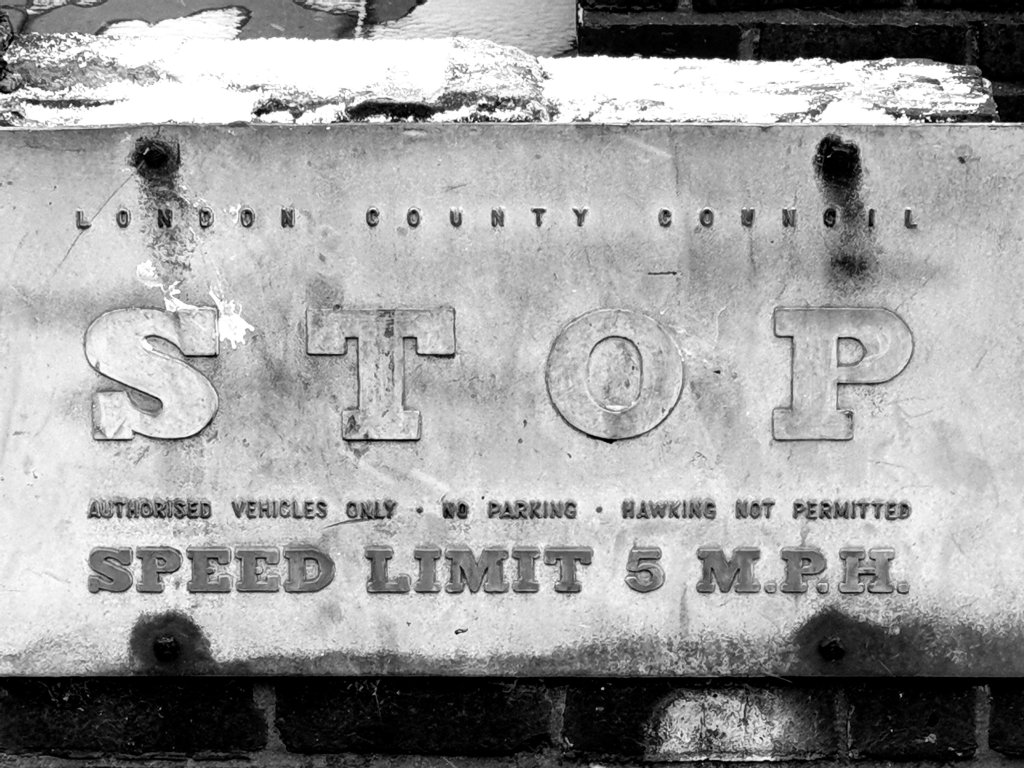
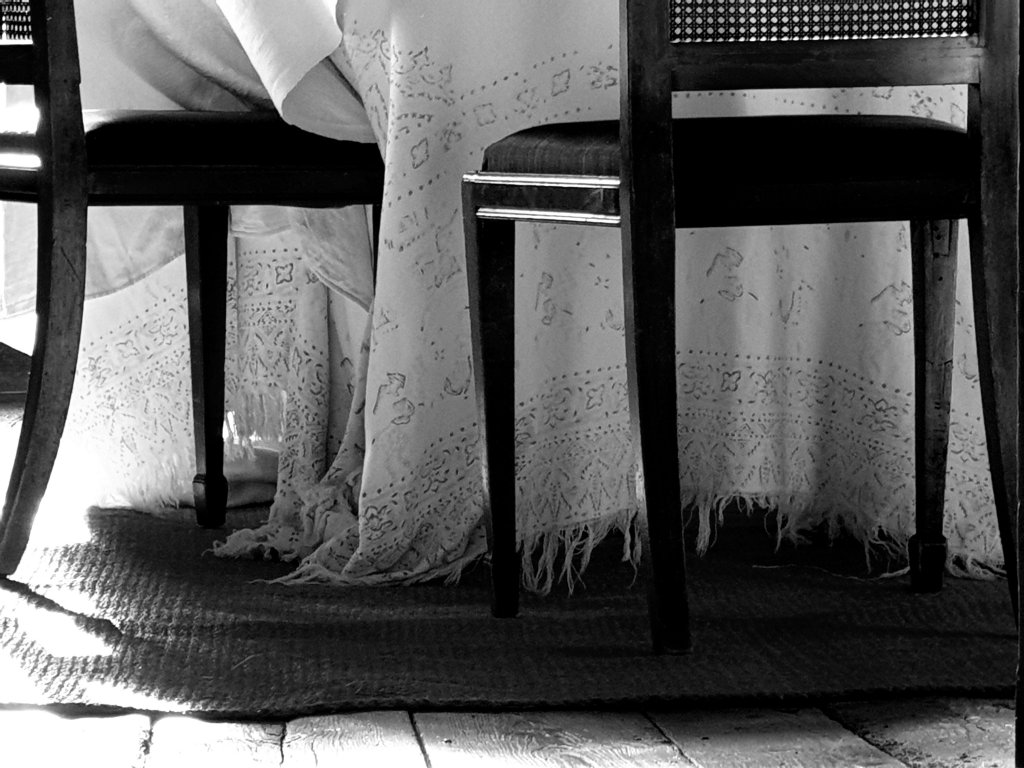
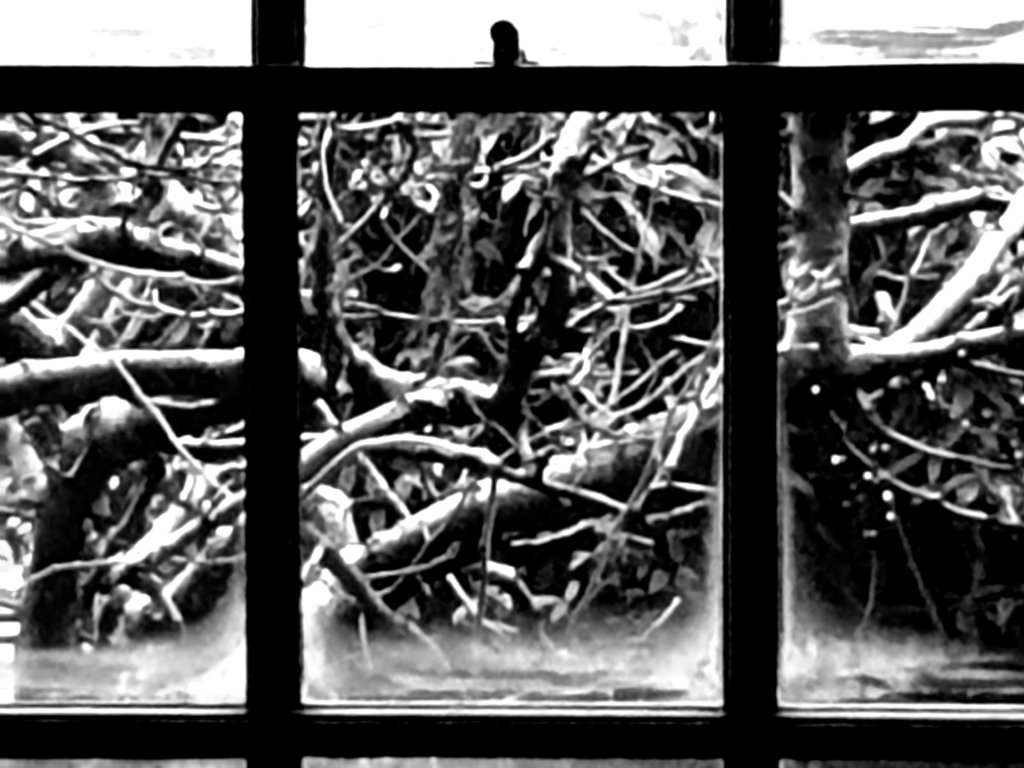
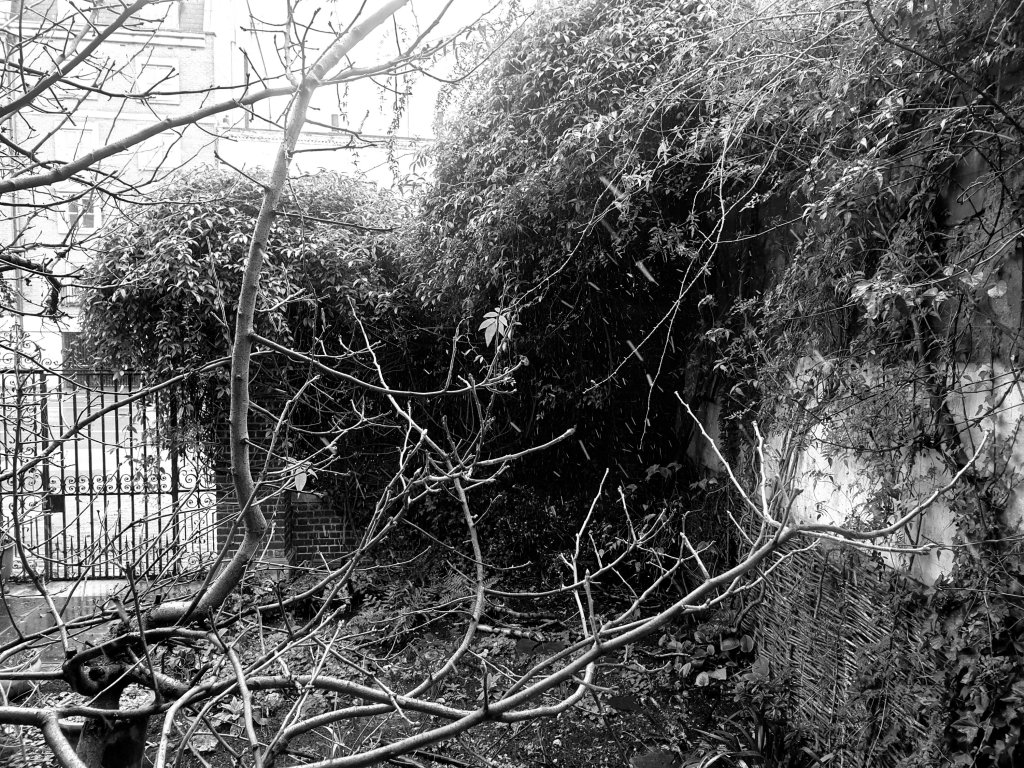
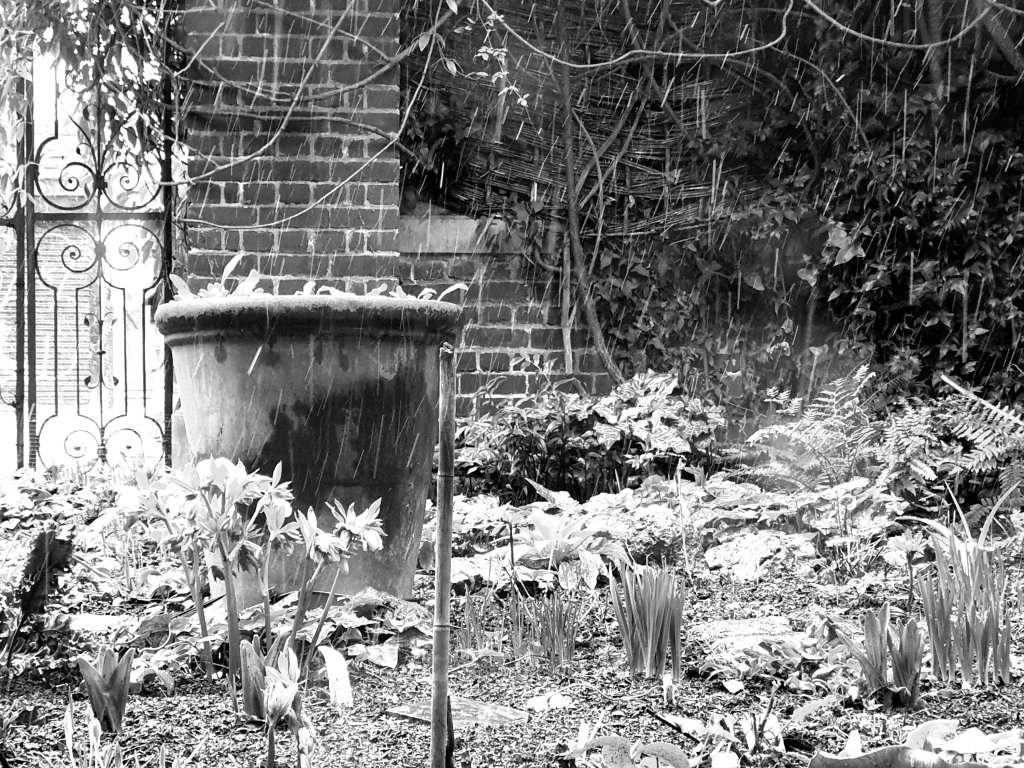
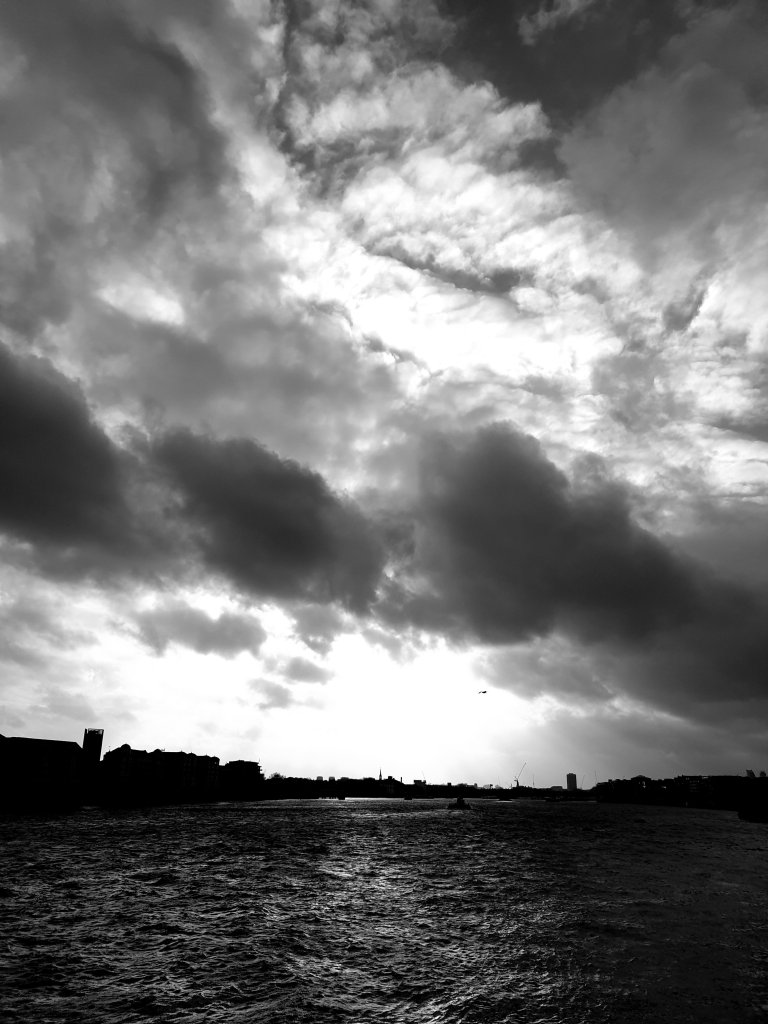
I went out into the snow to see what it looked like – actually, not very attractive as it has mostly already turned to slush – and partly because I wanted to see what it looked like in photographs, as everyone else seems to be able to photograph the snow falling. I can’t, but tried:-
I have been reading the collected essays of Janet Abrams which have been published by Princeton University Press under the title Daddy Wouldn’t Buy Me a Bauhaus. They belong to an era which now seems as remote as the Pyramids: the medium being the large-format Blueprint with its its sense of optimism and confidence in the power of design, graphic as well as architectural; when the Independent was first launched, breaking the mould of journalism; the era of Peter Eisenman and Richard Meier; the early days of postmodern theory; when Andrée Putman was the epitome of fashionability and Frank Gehry was beginning to be known. I’m not sure how well it has all aged, but it is no doubt time for it to be excavated.
You may all be wondering what on earth has happened about the Whitechapel Bell Foundry, as indeed am I. The truth is that it has all gone quiet since the Planning Inquiry finished at the end of October, first of all, while the Planning Inspector writes his report, which is apparently now done, and now while Robert Jenrick ponders his recommendation, which we know he is not obliged to accept. So, we are twiddling our thumbs while we await the verdict, hoping against hope that he comes to the right conclusion and forbids Raycliff to convert it into a now totally redundant posh hotel with only vestiges of its former use. The bells of the world will then ring out in celebration.
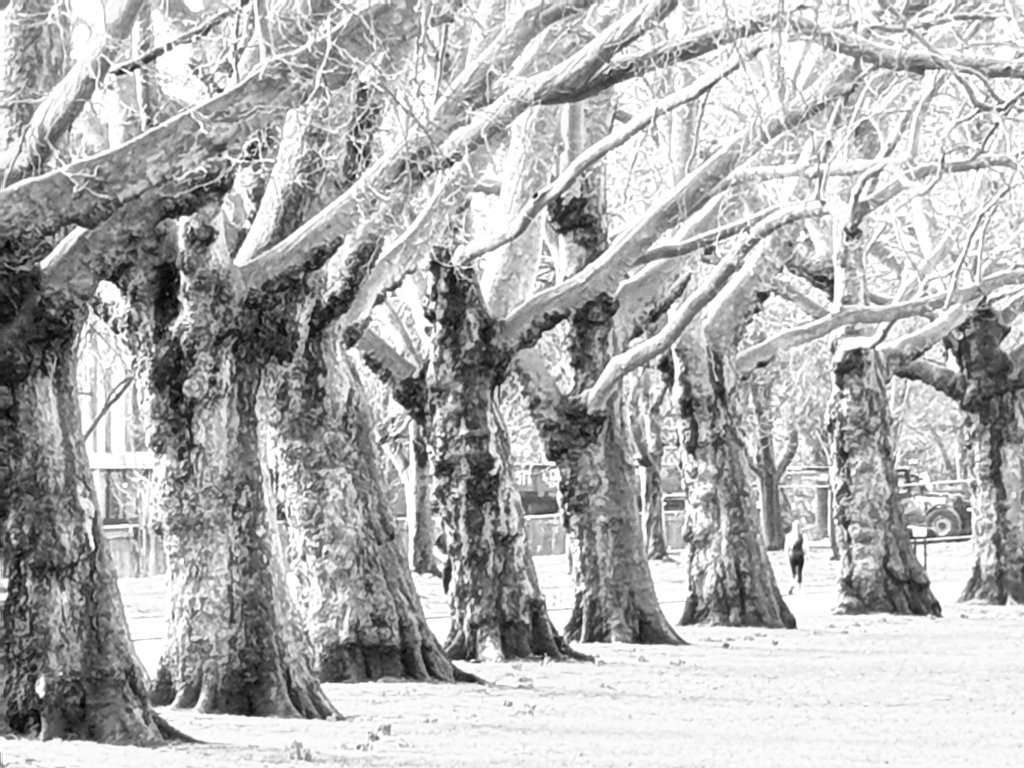
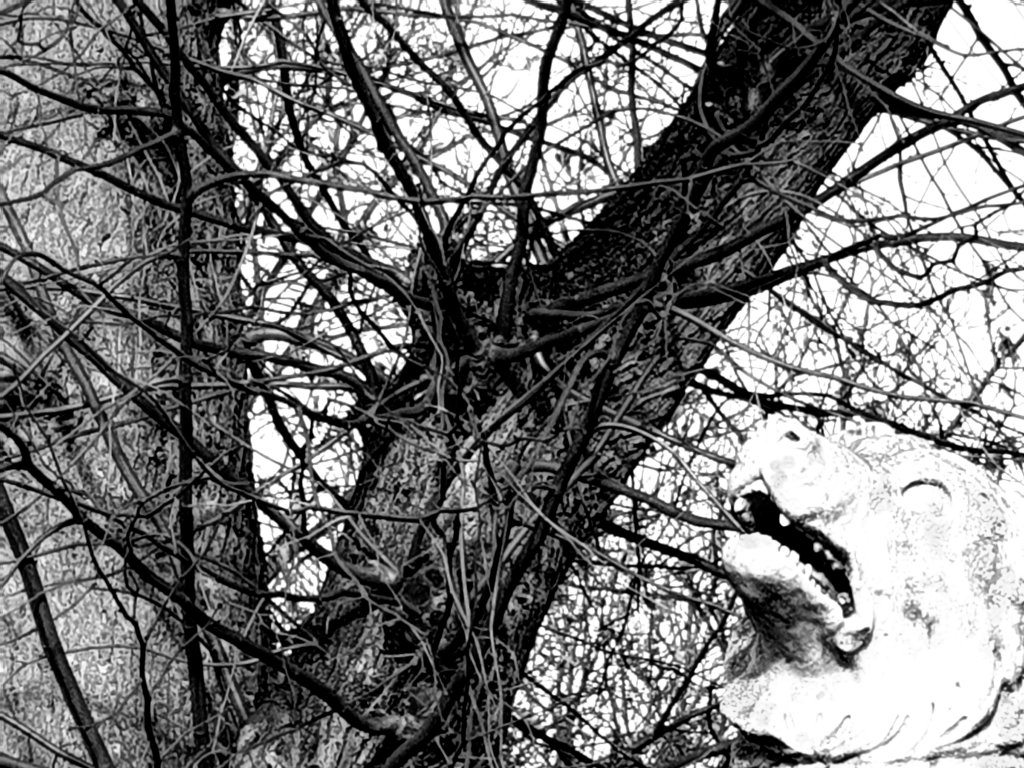
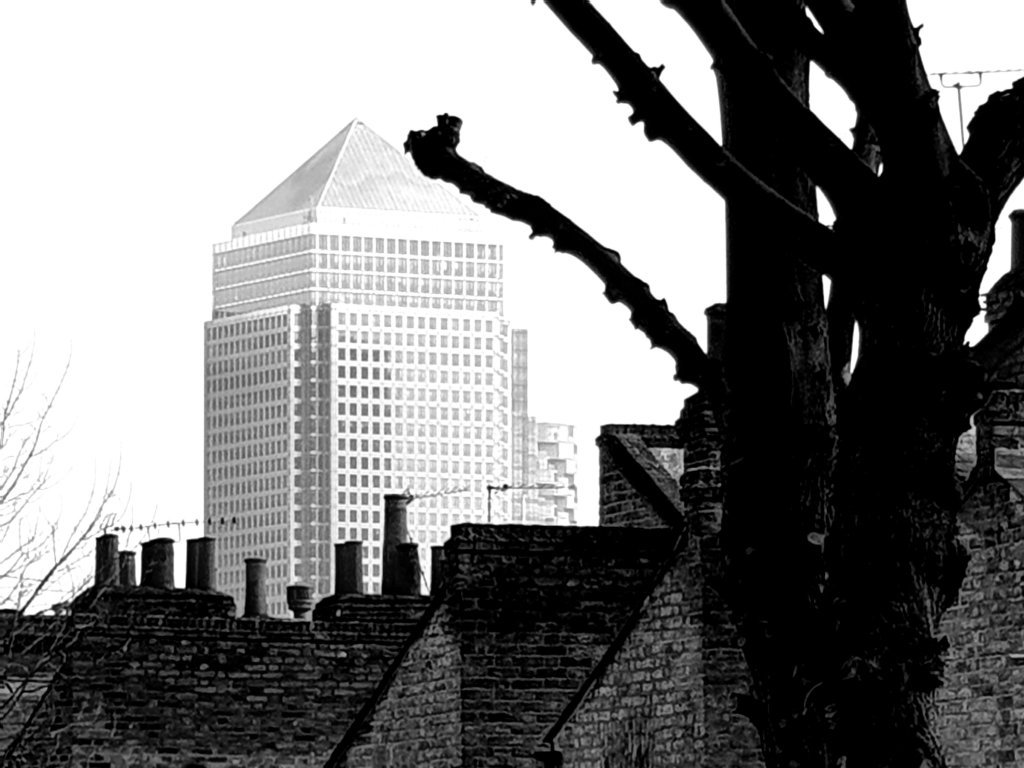
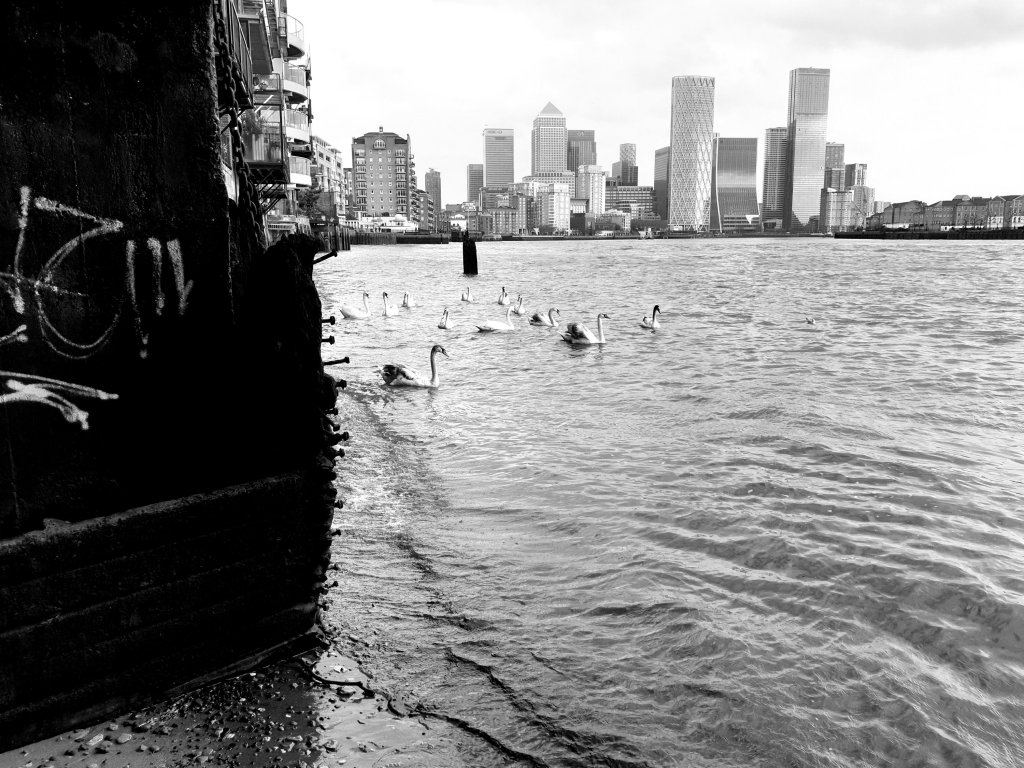
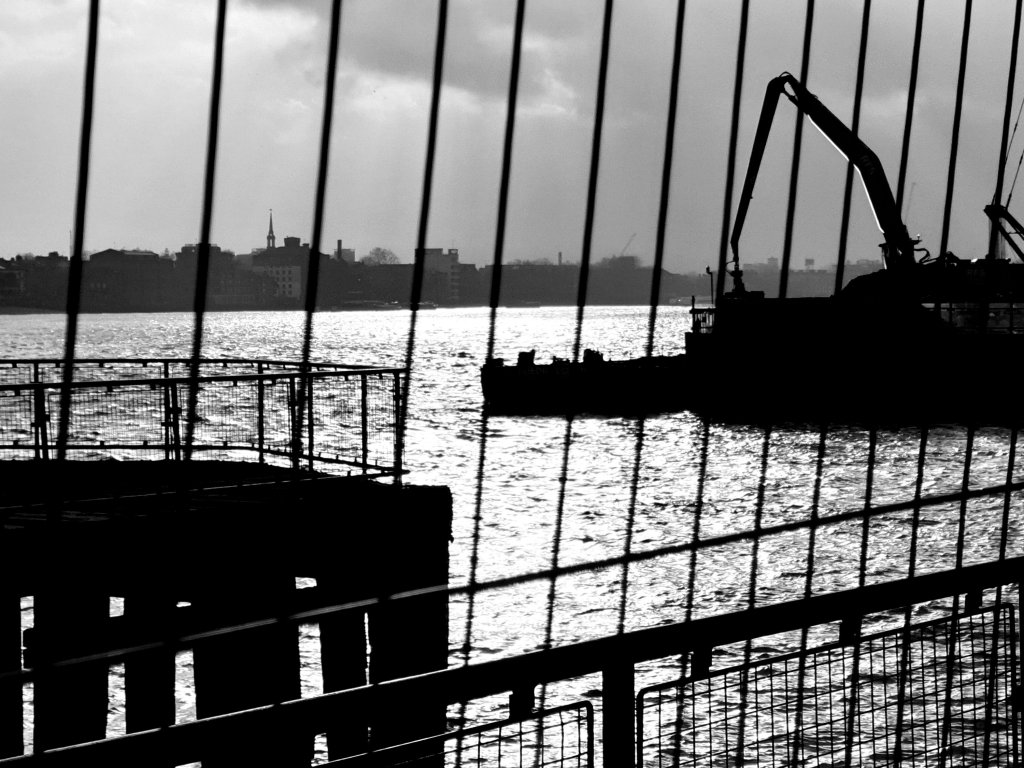
I went out walking to check that the outside world still exists. The answer is, it does, but only just.
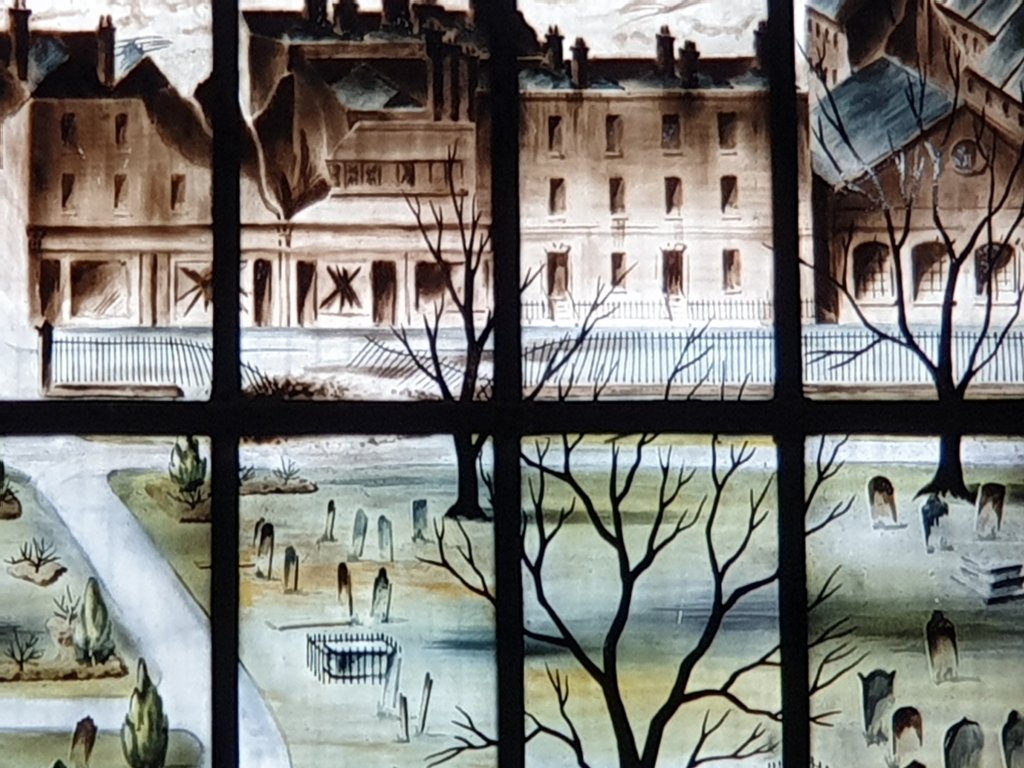
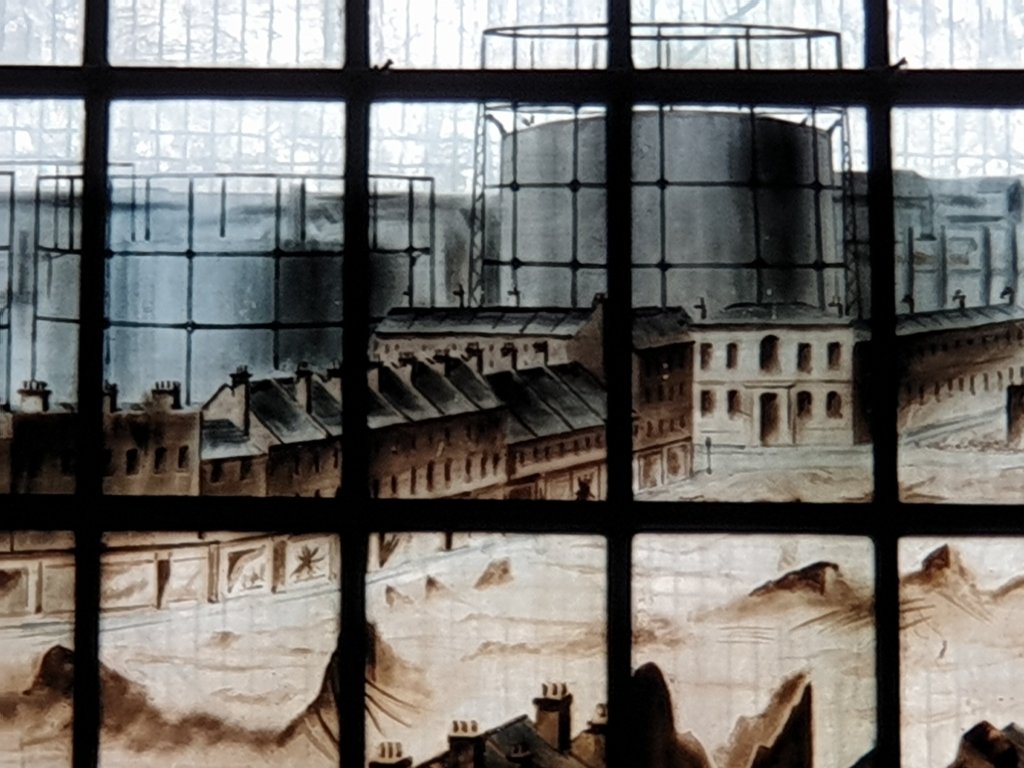
As the door of St. Dunstan was open – unusually – I wandered in and greatly admired the East Window by Hugh Easton, who had been trained as an artist in France and Italy and then served in the War as a naval commander. He depicts the devastation of the church’s surroundings during the war with wonderfully meticulous topographical precision. A great treat to see some art:-
I am a tiny bit bemused by the exceptional amount of interest my anodyne, but enthusiastic comments about The Dig have had, most especially, it appears, in Alaska.
By way of postscript to what I have already written, I have been interested to discover what an exceptionally interesting person Peggy Piggott (née Preston) was, a formidable and remarkable archaeologist in her own right, entirely independently of her husband Stuart, who she divorced in 1954 (he spent the war years in India), when she married a Sicilian, Luigi Guido, who she then nursed after he had a psychotic breakdown. She was also, not coincidentally, the aunt of John Preston, who wrote the novel on which the book is based, although he apparently did not know her well because his father did not get on with her.
I was also a bit baffled by the house in the film because it is so evidently not Tranmer House, the rather dull Edwardian house where the real Sutton Hoo is based, but is instead, as several people have pointed out, Norney Grange in Shackleford near Godalming, a house designed by Charles Voysey with its incredible Vanbrugh-ian entrance porch, so prominent when Basil Brown arrives at the house to be interviewed:-
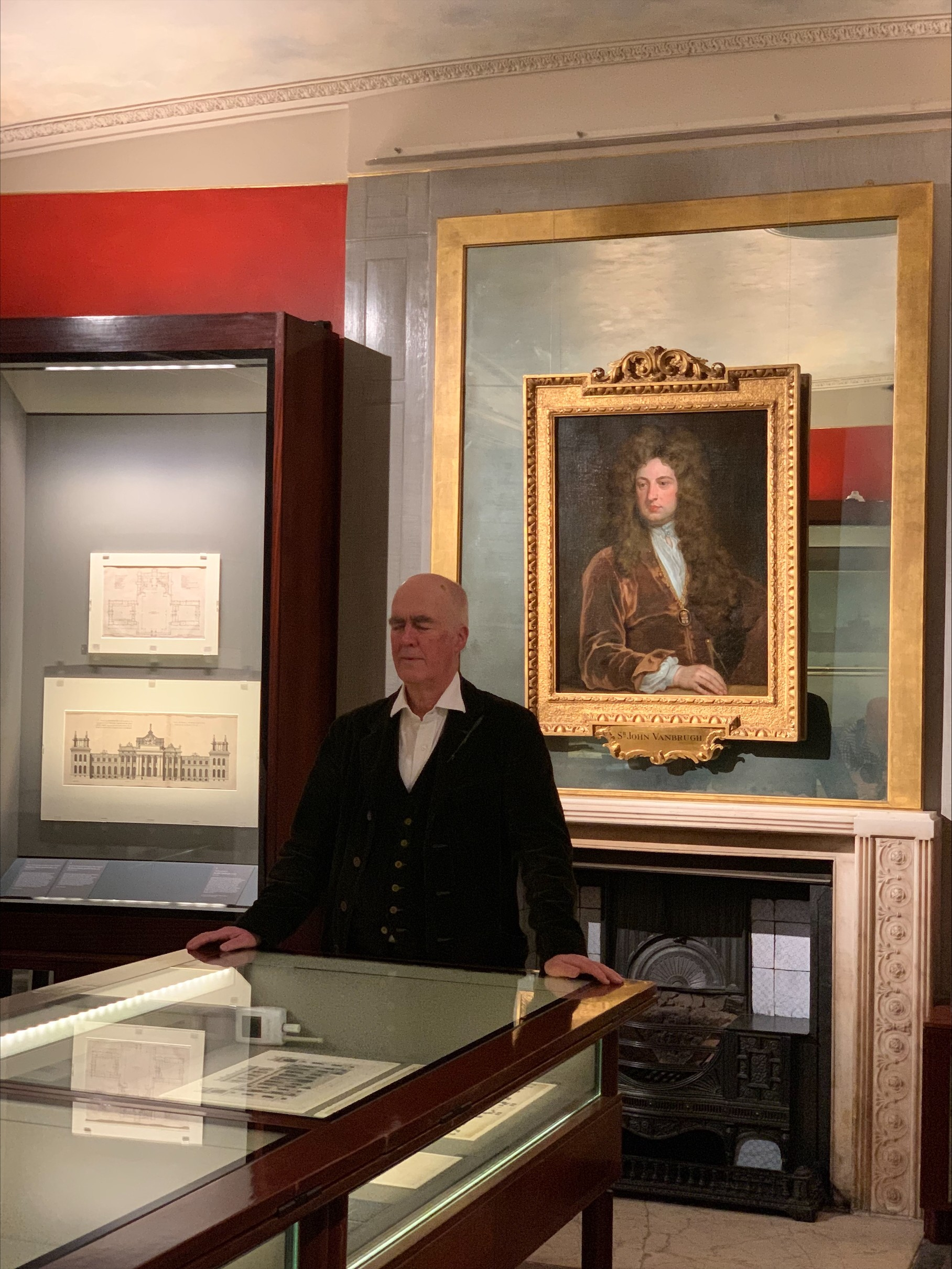



 | Charles | Saumarez | Smith |
You must be logged in to post a comment.