Van Gogh’s Sunflowers

I’m interested in Martin Bailey’s blog post (see below) about the Sunflowers not because it reveals the Prime Minister’s enthusiasm for Van Gogh, but because the painting was acquired as a result of special pleading by Jim Ede, then an incredibly junior curator at the Tate, only just out of the Slade, on behalf of the National Gallery aka The National Gallery of British Art, and that Charles Aitken described himself as Director of the National Gallery tout seul, without apparent reference to Charles Holmes, the Director of the National Gallery in Trafalgar Square. It shows how symbiotic the two institutions were, and intriguing that such a young curator should have been so successful in acquiring it, when the tastes of the National Gallery in Trafalgar Square were still very conservative.

https://www.theartnewspaper.com/blog/sunflowers-exhibition-australia

Standard

Issues in the Architecture of Art Museums

I’m afraid that readers of my blog are going to have to suffer a month of heavy-duty promotion for my museums book (The Art Museum in Modern Times available from all good bookshops, including John Sandoe), partly because of the amount of interest there seems to be in the fate of museums post-COVID, including at my alma mater, the V&A, and partly because the pistol seems to have been fired on advance publicity, even though the book doesn’t formally appear till March 25th.

There can, of course, be no physical book launch, but I am doing a long planned seminar paper for the Cambridge Architectural History seminar, which is open to anyone, under the title ‘Issues in the Architecture of Art Museums’. To join it, you will need to pre-register here:-

https://us02web.zoom.us/webinar/register/WN_3cZNPTISTHCpTFdXcU8SpQ 

The talk will be about some of the issues that I had to deal with in writing about the history of museums and their architecture over the last eighty years or so, since the opening of the Museum of Modern Art in its new building in 1939. I will be focussing not so much on the issues of museology – how attitudes to the display of art have changed over the period – but more about the problems of writing architectural history in the modern period, the frequent lack of good source material in spite of digitisation, the problems of the secondary literature, which is often published by the institutions concerned, so is seldom critical. I will be using the talk not so much as a presentation of the individual case studies, but more as a way of testing its thematic conclusions which I wrote after completing the book.

For any questions please contact the convenor, Jana Schuster: jana.c.schuster@gmail.com 

https://johnsandoe.com/product/the-art-museum-in-modern-times/
Standard

My Life at and after the Warburg

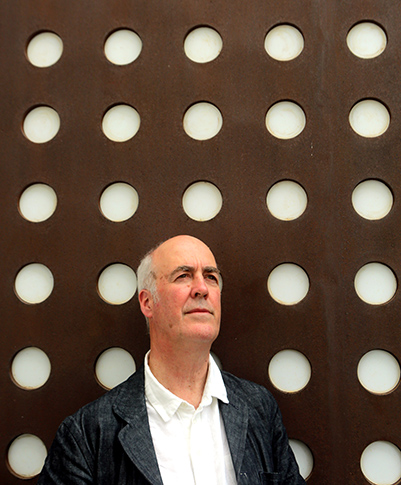
Some time ago, I was asked to record thoughts on my life after the Warburg in which I was able to describe my indebtedness to it as an institution, including, most especially, Joe Trapp and my supervisor, Michael Baxandall, neither of whom encouraged me to write like Edith Wharton (see previous blog). Both look a bit grim in their photographs, but they weren’t.

https://warburg.blogs.sas.ac.uk/2021/03/03/charles-saumarez-smith/

Standard

Can museums adapt to a changing world?

For anyone who has access to a Financial Times subscription, there is a long read in today’s paper on four recent books about museums, including I’m pleased to see, my own, not quite yet available (due March 25th.), which is complimented (I think it’s a compliment, but a very ambiguous one) for being written ‘with the crisp elegance found in Baedeker’s Guides, or even Edith Wharton’s writing on Italy’. Then, it is, equally legitimately, castigated for being ‘delightfully free of any critical ideas’. This is no doubt true. It is a celebration of art museums, not a condemnation of museums of archaeology, so I have not dealt with restitution, the hot topic of the moment, and of at least two of the other books.

https://on.ft.com/3bQiT3q

Standard

Alan Bowness (3)

I have just been sent further information and a link (Alan Bowness and Artists’ Lives – Sound and vision blog) to Bowness’s involvement in Artists’ Lives, the best possible resource for recent history and not as well known as it should be. I also listened to Norman Reid on himself and Nick Serota on him too (https://www.bl.uk/voices-of-art/articles/nicholas-serota-norman-reid-as-director-of-the-tate-gallery). Highly recommended.

Standard

Alan Bowness (2)

I was intrigued by a picture of Alan Bowness posted yesterday in twitter which showed him standing alongside John Summerson, who I recognised and Norman Reid, who I didn’t (see attached). Summerson had married Hepworth’s sister and Bowness one of her triplet daughters. It led me to a recording of Bowness describing what he thought he was like as a museum director (https://www.bl.uk/collection-items/alan-bowness-on-the-role-of-the-museum-director), presumably drawn from a much longer interview. It is characteristically diffident, describing himself as better as teacher and preacher than museum administrator. No bad thing.

Standard

Green Park

I had already been tipped off that Andrew Jones, an enterprising lawyer, had spent lockdown, not travelling round Africa as he normally does, but walking round his local neighbourhood, which happens to be Green Park. The result is a charming, deeply well-informed guide to the amazing range of buildings which surround the park – the relatively nondescript as well as the architecturally wonderful – and is packed full of social, as well as architectural information. Did you know that Rupert Murdoch lives in 25, St. James’s Place ? Does Arlington House really have a penthouse with a retractable roof ? The author stayed in the Royal Overseas League en route to school, had his stag party in a suite in the Ritz, and a relative eloped with King Zog, so he appears exceptionally well qualified to write about the area’s more exotic inhabitants. Just published.

Standard

Alan Bowness (1)

I was pleased to read Richard Calvocoressi’s long and thoughtful obituary of Alan Bowness (see below), having expected there to be others in the papers today. It feels as if it does justice to the full breadth of his achievements at the Tate, which can sometimes be overlooked – the opening of Tate Liverpool, the establishment of the Turner Prize and the two Patrons schemes to help with the funding of acquisitions. What I hadn’t fully appreciated was the astonishing range and depth of acquisitions during his time at the Tate.

There is a very good interview with Bowness in the recent volume, Living Museums: Conversations with Leading Museum Directors, by Donatien Grau which amplifies Calvocoressi’s account, including Bowness’s national service as a conscientious objector and the fact that he was shortlisted to be Director of the Tate in 1964.

https://www.theartnewspaper.com/feature/alan-bowness-obituary

Standard

Regent’s Park

Some scenes from Regent’s Park in the sun this afternoon.

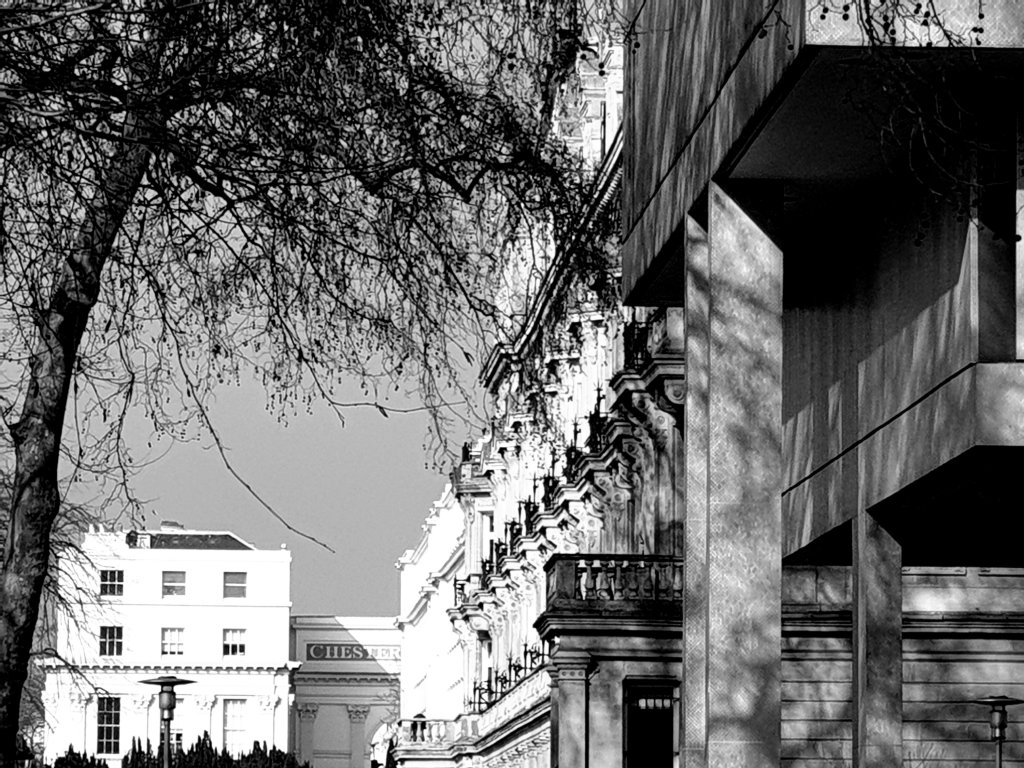
The front of Lasdun’s Royal College of Physicians looking north towards Chester Terrace:-

Some penguins also enjoying the sun:-

Cumberland Terrace:-

And Casson’s Elephant House (1964), described as ‘zoomorphic brutalism’:-

Standard