
Happy Easter to all my blog followers !

Visiting Plas Brondanw today raises the issue of how seriously one should regard the long career of Clough Williams-Ellis as a semi-amateur, but talented architect – he only spent a few months at the Architectural Association which he found by looking it up in the telephone directory.
What I hadn’t properly realised was the extent to which Plas Brondanw became a centre of liberals on holiday, a kind of mountaineering version of Hampstead, with cottages leased to Bertrand Russell, a relation through Amabel, who was a Strachey, Eric Hobsbawm, E.P. Thompson et. al., all attracted to mountaineering and a kind of strenuous Welsh retreat. I always thought of him in terms of doing up posh houses in Oxfordshire, but maybe there is a different side to him.
We haven’t been to Plas Brondanw in a long while – Clough Williams Ellis’s seventeenth–century house on a steep hillside looking across the Porthmadog valley to the mountains, a spectacularly picturesque setting which he enhanced with an elaborate Italianate layout and planting begun before the First World War.
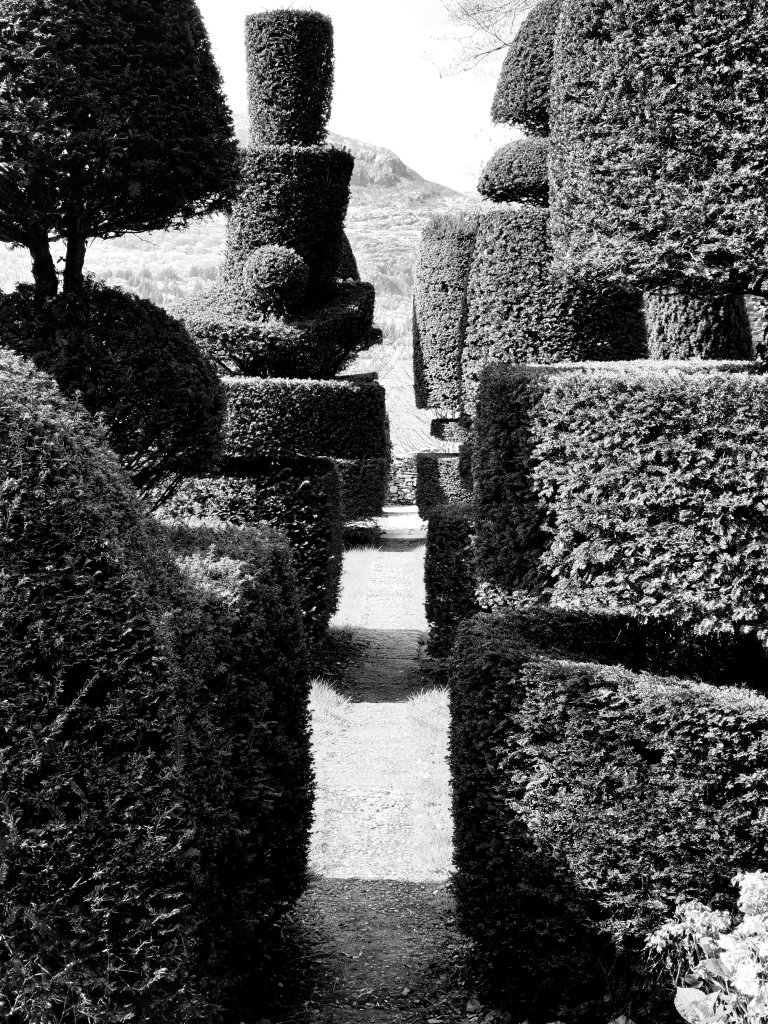
Brilliant topiary:-


A garden pavilion:-

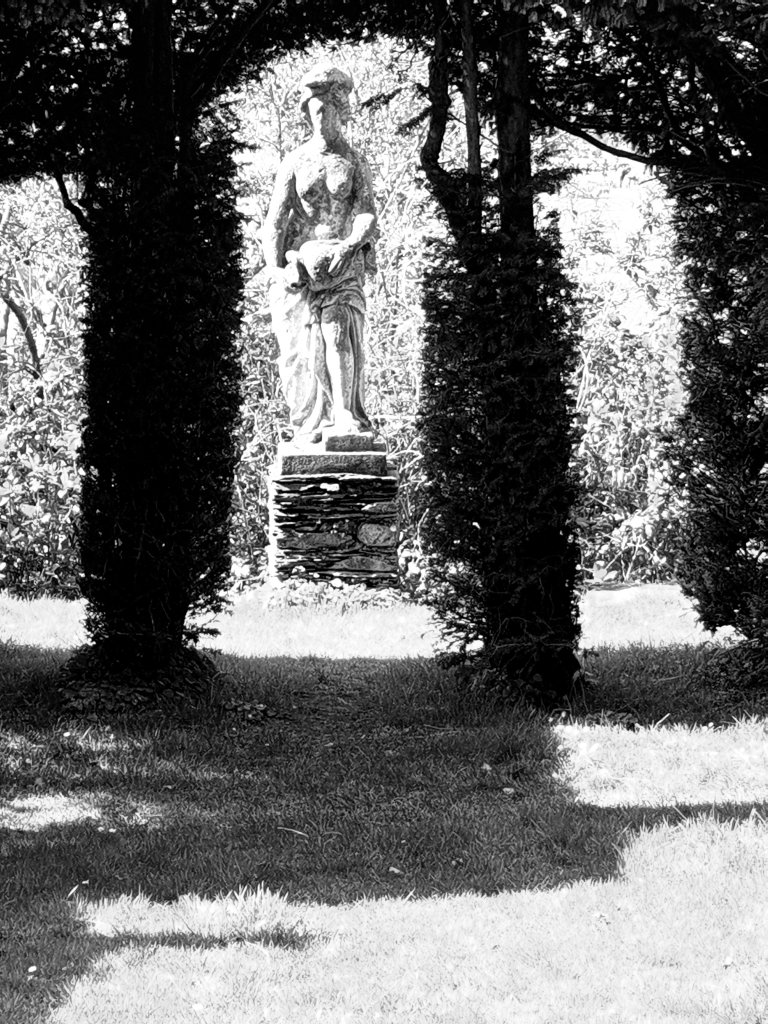
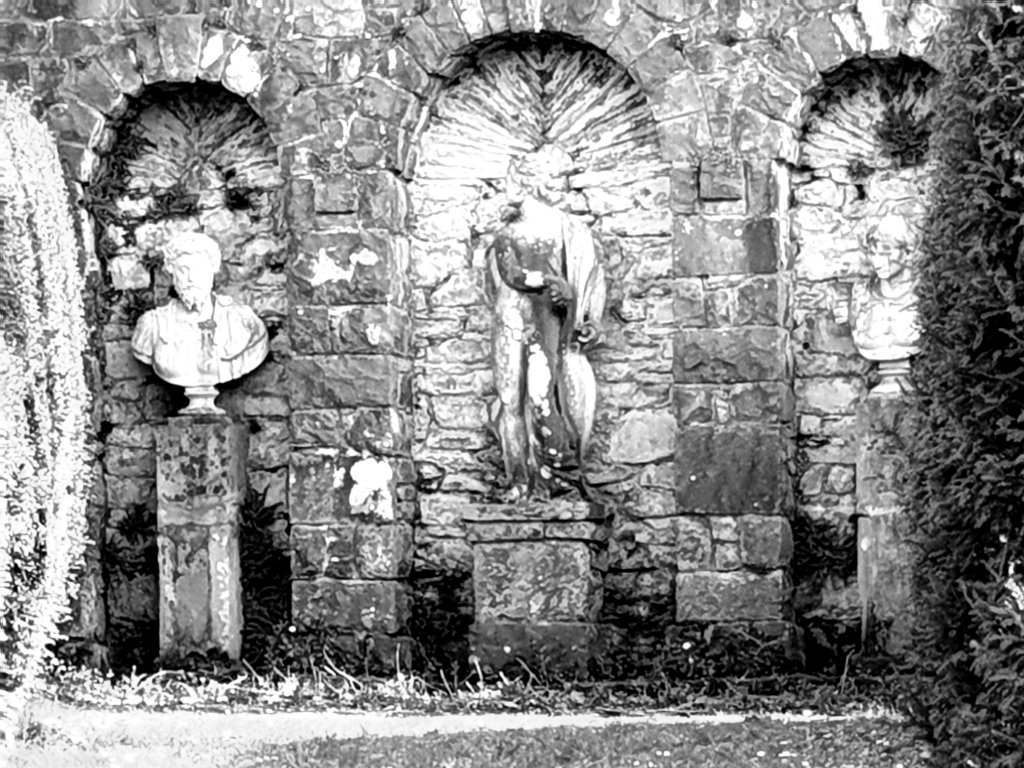
A multitude of garden statues:-
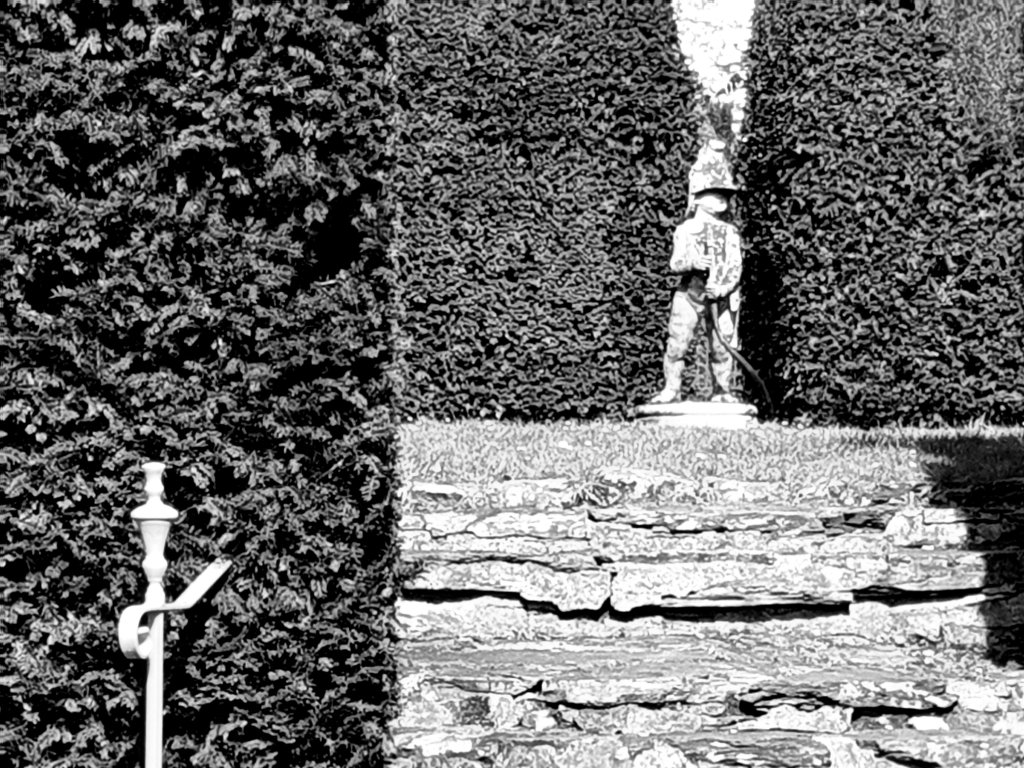
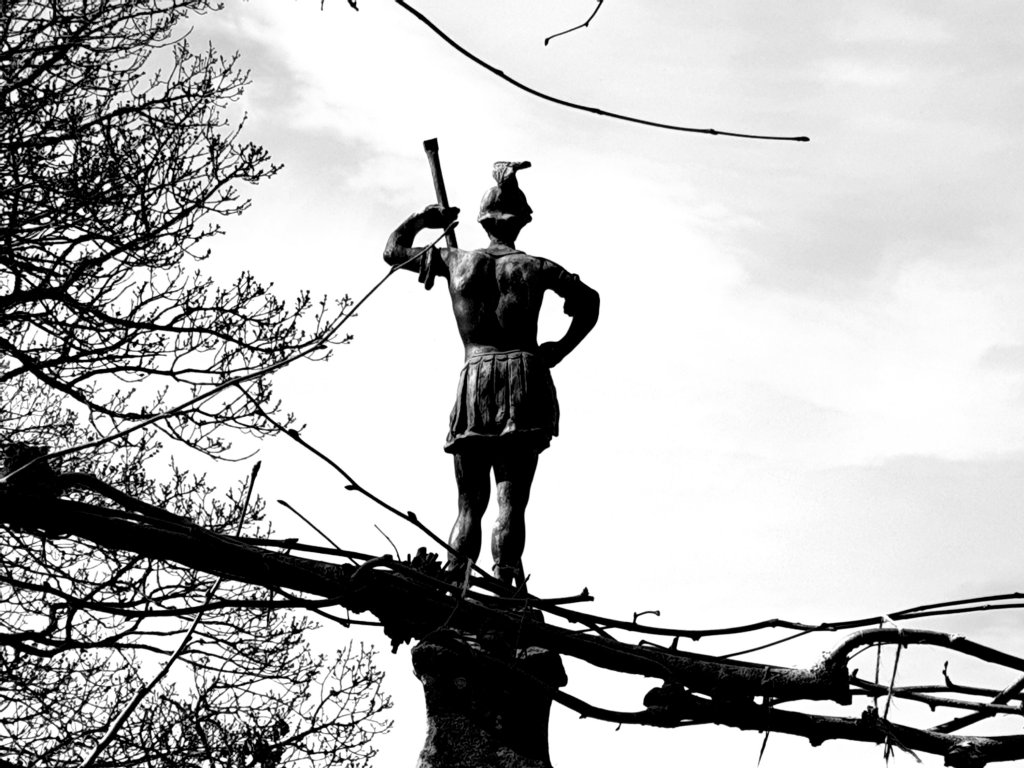

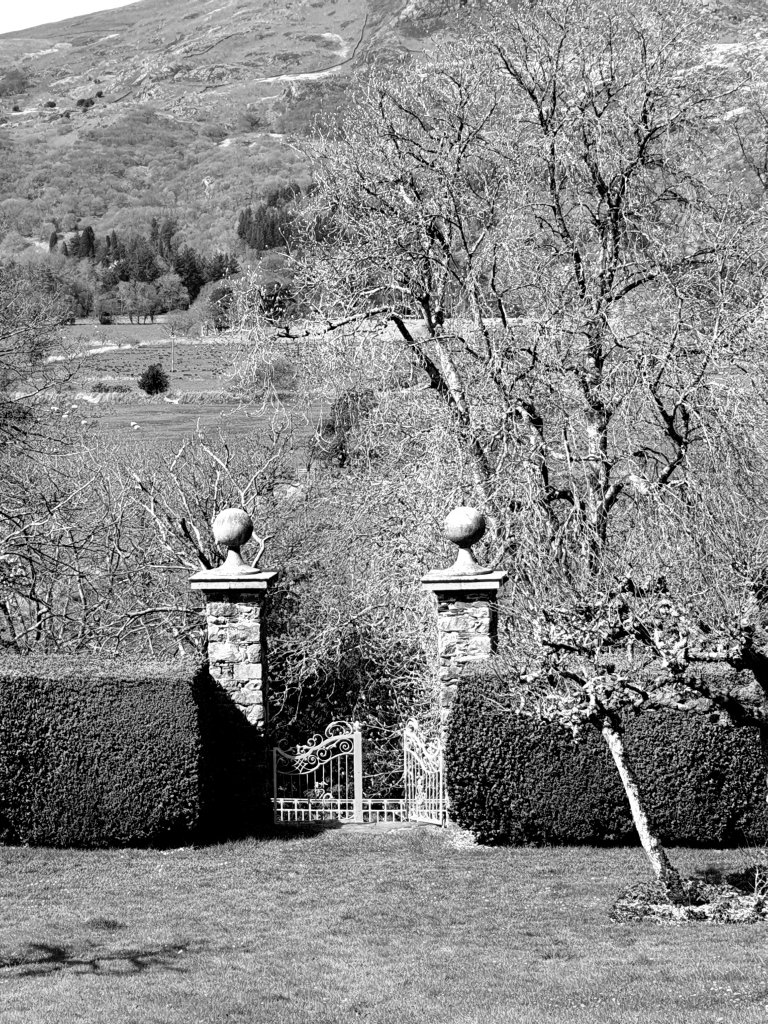
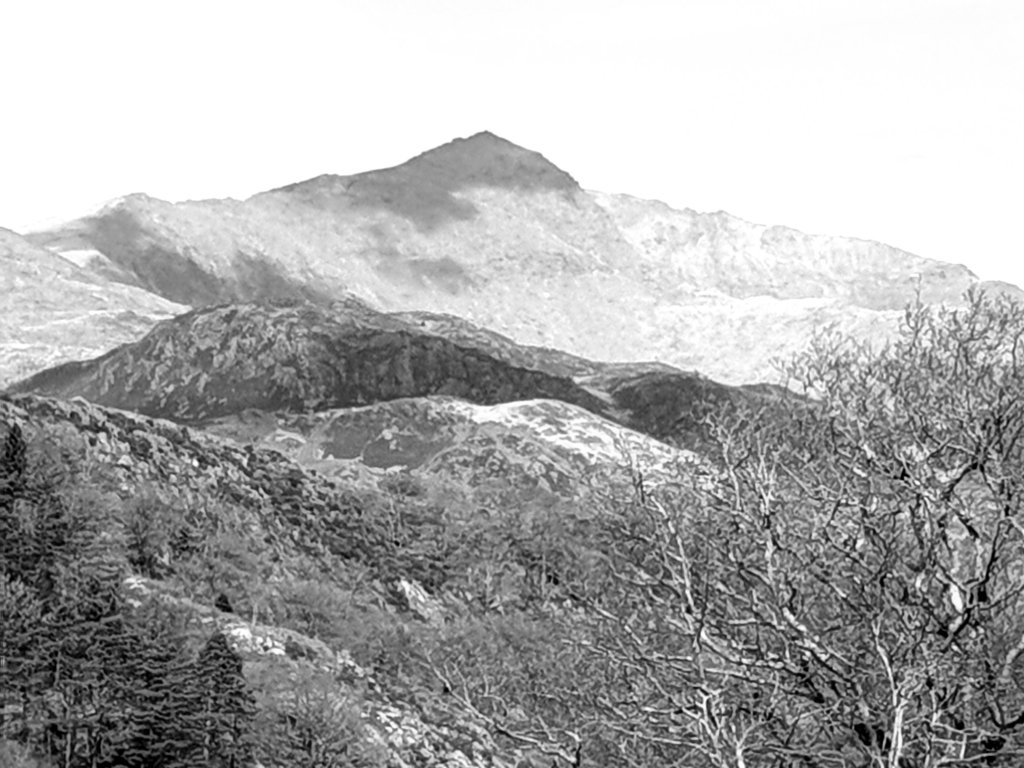
And views out towards the mountains:-

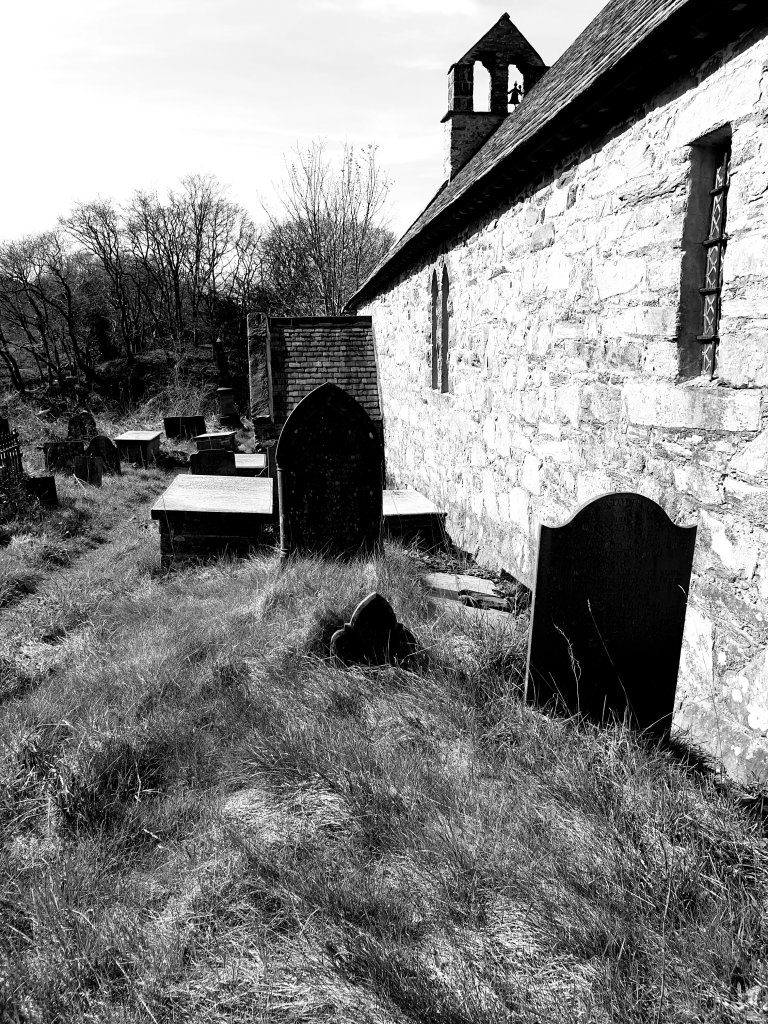
We drove through the mountains by way of Bedgellert to see St. Brothen, a church in the care of the Friends of Friendless Churches, up a minor road beyond Garreg, hidden below a farmyard in a highly picturesque position surrounded by woods:-

Inside is very unspoilt, cared for, but not much used:-

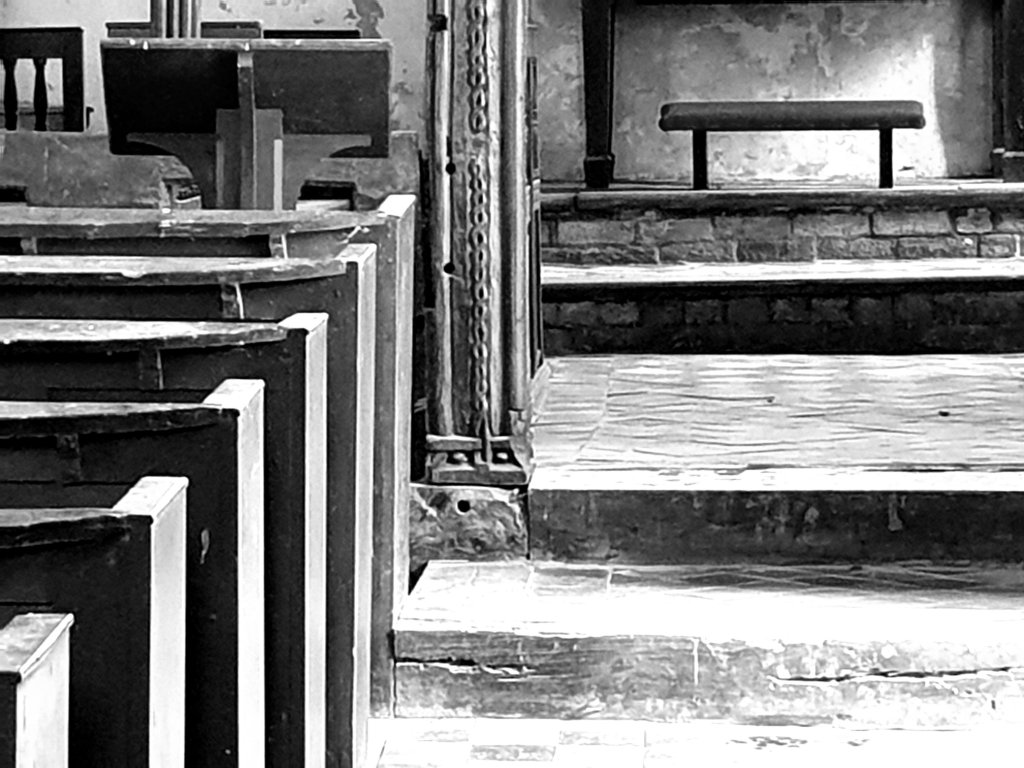

The churchyard overgrown:-


I have been asked about the availability of the book about Pentagram. The answer is that I was kindly sent a copy of the special edition, but Unit Editions are producing copies to order (https://uniteditions.com/products/pentagram-living-by-design-pre-order).
If you are interested, I strongly recommend it. It provides a great deal of information about the back history of Pentagram, how it came to be established, as well as succinct biographies of all its partners, including Alan Fletcher, Colin Forbes, Kenneth Grange and Theo Crosby, its founders. The text is by Adrian Shaughnessy, who has also published the book which is itself, as it should be, a brilliant piece of book production. Not cheap:-
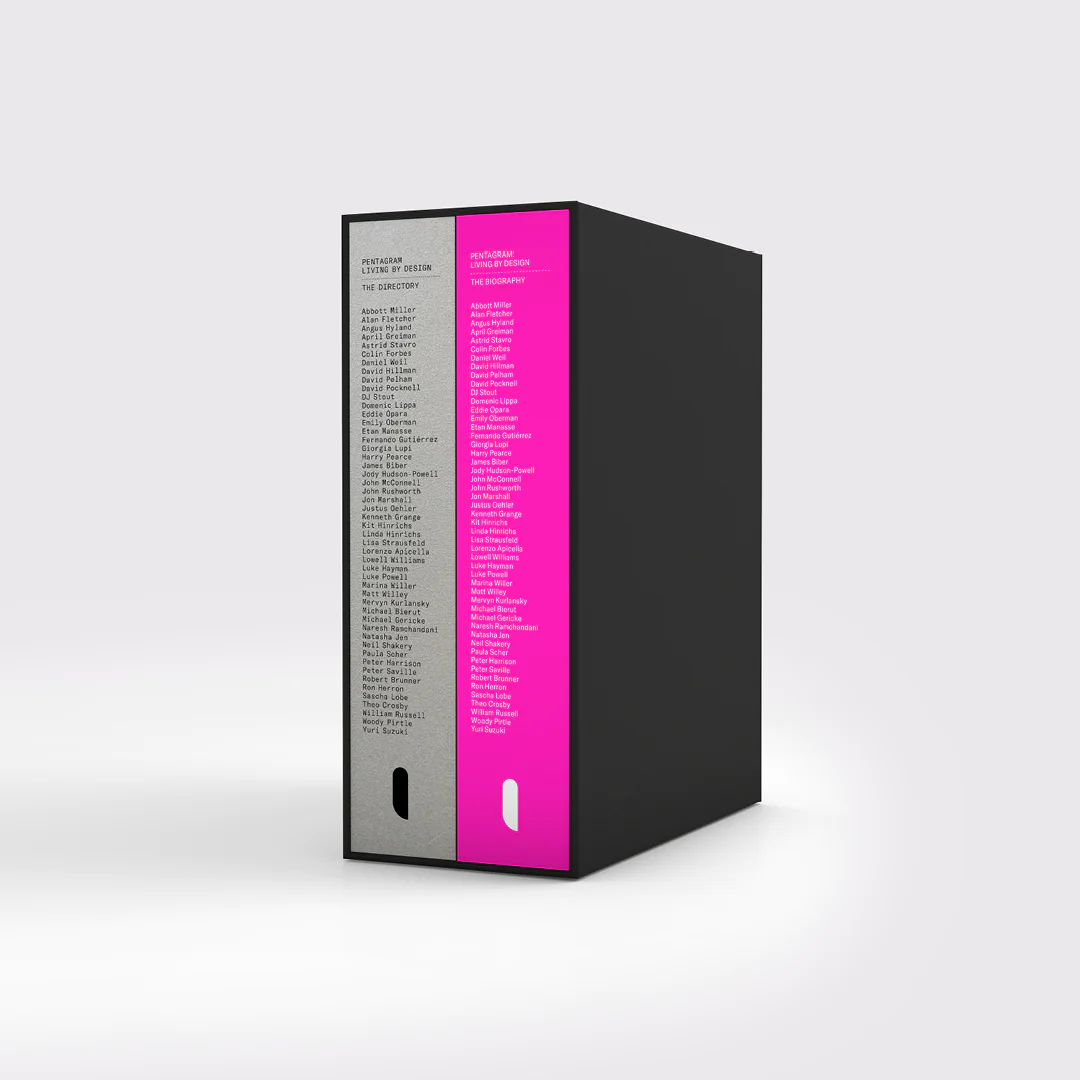
I have been slow to unwrap and properly appreciate the incredibly impressive two-volume book which Pentagram has produced to celebrate its fifieth birthday – well, strictly speaking, its fifty first as it only arrived last week.
Volume one is all the partners in alphabetical order, including Harry Pearce, with whom I worked closely at the RA. He established its current design identity, which is clever precisely because it is low-key, a background logo based on its graphic design history which turned out to be vastly much more interesting than expected, particularly in the 1950s:-

He also did the design identity for Berry Bros. and Rudd, which is particularly brilliant, again because it is low-key and ostensibly historical, but modern at the same time, a tricky combination:-

More recently, he has refreshed, as they say, the identity of Thames & Hudson:-

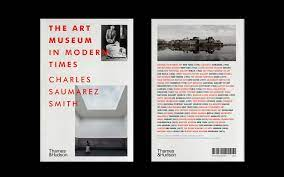
And he designed my book The Art Museum in Modern Times during that long first summer of COVID, so that we never actually met during the long process and the book probably benefitted from his total concentration:-
I regard him as a design genius.

I have written a review of András Szántó’s excellent volume of essays, Imagining the Future of the Museum, in this month’s Burlington Magazine.
Unfortunately, the review is only available to subscribers or to those who have access to a copy in a library. The gist of my view is as follows: ‘There is much to admire in this attitude of energetic experiment and the mood of criticism and questioning, which is evident throughout the volume. It is clear that architects, perfectly understandably, are interested in the creation of museums that are as much about the idea of civic and community space as they are about looking at, and learning from, works of art’.
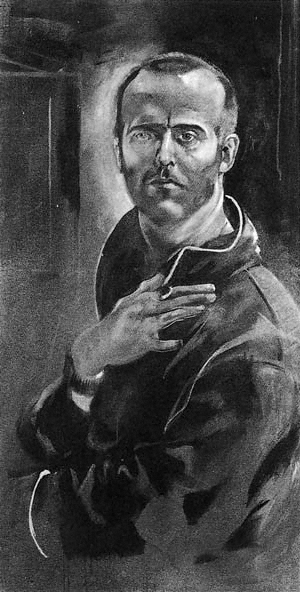
I am currently working with the documentary filmmaker, Adam Low, in trying to track down as many as possible of the paintings and drawings of the artist, Philip Core, who died of AIDS in 1989, in the hope that it might be possible to put together enough material for an exhibition. In particular, we are interested in locating the conversation pieces which were exhibited at Francis Kyle’s Gallery in 1979 in an exhibition ‘Pieces of Conversation’ which included The Chance Meeting on an Operating Table of a Sewing Machine and an Umbrella: Andy Warhol and Marcel Duchamp, now held by the Arts Council (copyright):-

At the time, such literary and photographic work was deeply unfashionable, but we feel that it could be a good moment to reconstruct his career. Not least, we are hoping to identify someone who got in touch with me fifteen or twenty years ago who had a collection of his paintings in store – from memory somewhere in south-east London, in Bexley, Bromley or Beckenham.
Any help with this project, still in its early stages, would be greatly appreciated.

 | Charles | Saumarez | Smith |
You must be logged in to post a comment.