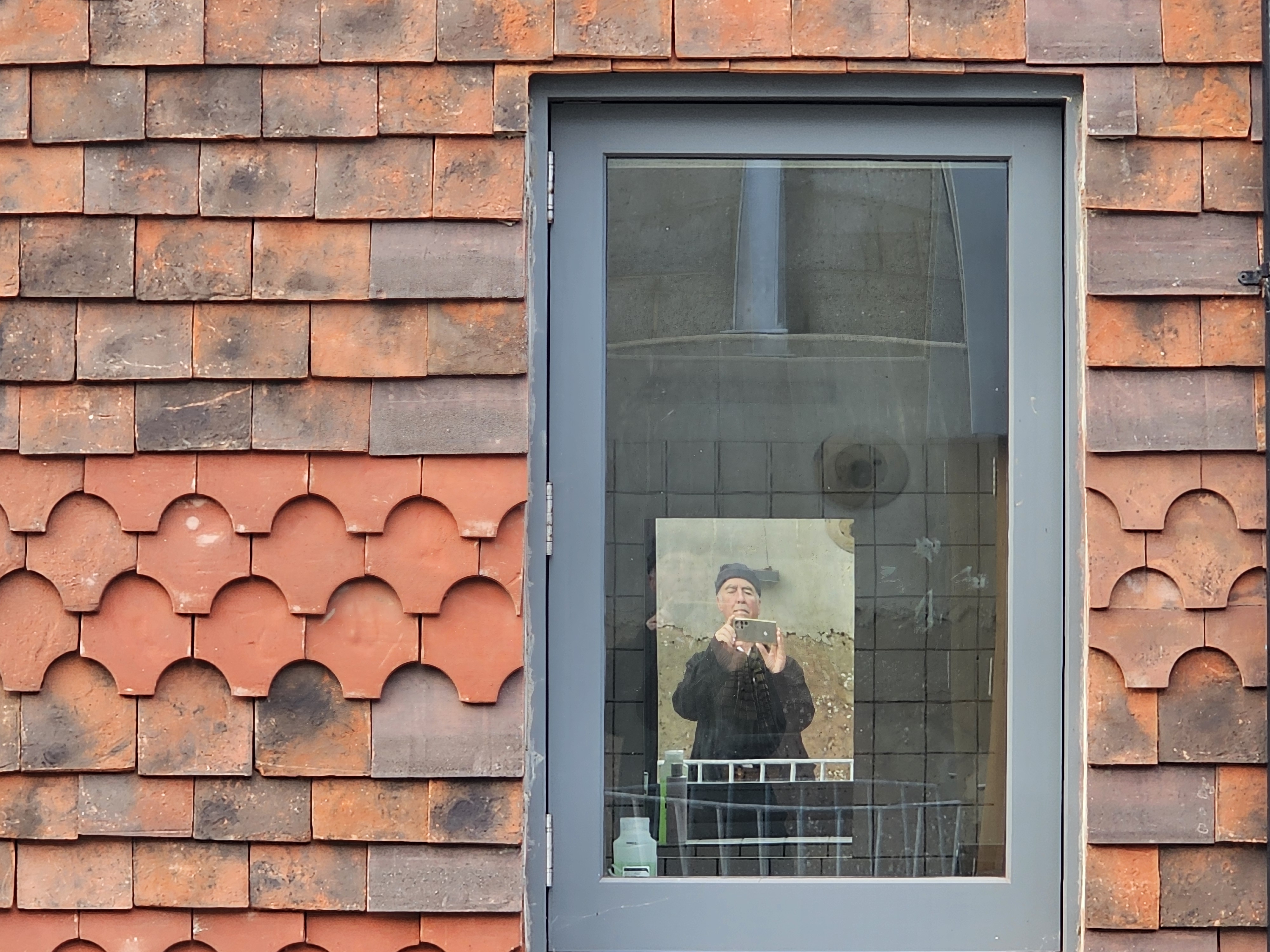
Sir Michael Hopkins (5)

We went to a memorable memorial event for Michael Hopkins in his house in Suffolk in which I inevitably learned more about his architectural practice.

I half knew, but only half, that he had bought a timber frame house by the church in Cratfield, Suffolk, whilst still a student at the AA, so whilst he was building the purest glass house modernism in Downshire Hill, Hampstead, he was simultaneously fiddling round with medieval forms of construction at weekends, an ambiguity which seems essential to understanding his architectural practice.

The other thing which sticks in my mind is that he taught at Yale, but the students undertook a project based in Aldeburgh, which required them to undertake a deep examination of a historic building and everything about its context and construction, which felt as close as one would get to his approach to architecture.

The third thing worth recording, which I did not know, is that he would retreat to a room next door to where we would eat – it was, in a way, his office – where he would draw, but also write, surrounded by the life of the house, but very slightly separate from it. This also was an ambiguity in his temperament, both quiet, but also very present.

Standard

Old Masters

If you go to the preview of the Christie’s sale of Old Master paintings this week, you will find in the room on the left at the top of the stairs two display cases showing installations of the nails drawn from Old Master paintings. We went to see them yesterday afternoon:-

Standard

Canary Wharf (4)

There is a certain amount of doom-mongering in today’s FT about Canary Wharf following the news that HSBC is relocating to the City.

Oddly, I am rather pro-Canary Wharf having watched its development from when it was just a gleam in the eye of Michael von Clemm who was looking for somewhere for the back-of-house facilities for Roux Brothers, of which he was chairman. He realised the potential of somewhere where it would be easier to build high-rise office blocks with big floor plates than in the conservative City. Of course, the City was jealous and has itself allowed a square mile of hideous new development which presumably means that it is now not so expensive to rent office space in the City.

What may have been forgotten is that George Jacobescu kept the best site by the river for a cultural institution after Margaret Thatcher had offered it to the National Portrait Gallery to relocate from central London.

After the great success of the newly refurbished NPG in central London, might it be a time to resurrect this idea – not, of course, a total move, but somewhere with more space for its twentieth-century collection and its huge and wonderful photography collection ?

It could ease what looks like being huge pressure of numbers on the beautifully restored, existing building.

HSBC departure spells doom for isolated experiment of Canary Wharf – https://on.ft.com/3NBgDzM via @FT

Standard