Kimbolton Castle

Kimbolton Castle is a tricky house to grasp: originally late medieval, built round a courtyard, traces of which remain in the basement.

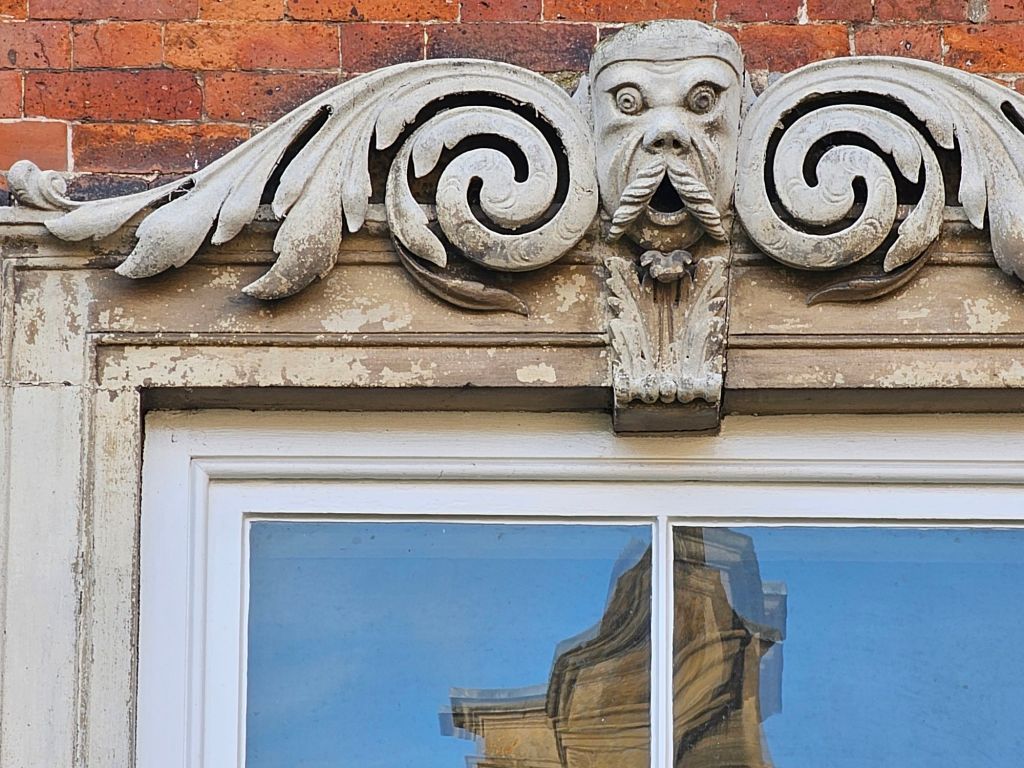
Poshed up in the 1680s by Henry Bell, a mason-contractor from King’s Lynn who added fine window heads and drain pipes in the courtyard:-
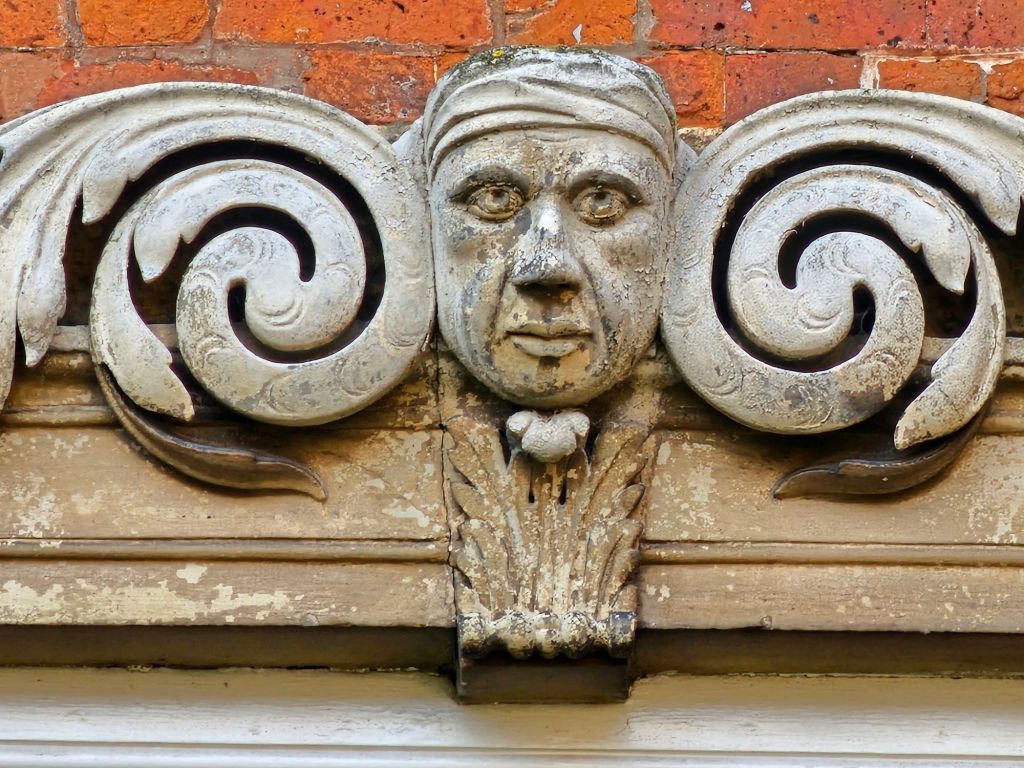
Poshed up again by the 4th Earl whose wife employed Vanbrugh to reconstruct the south range after part of it collapsed while the Earl was Ambassador in Venice.

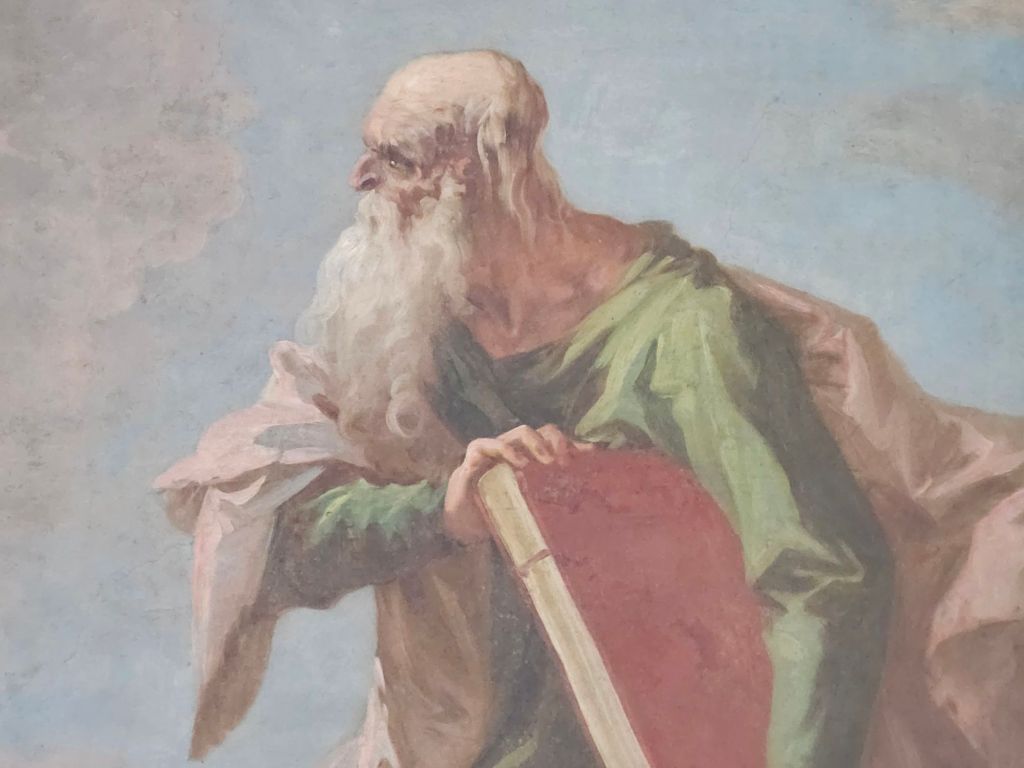
The fourth Earl, an Italophile (he had been on the Grand Tour in the 1670s) brought Gianantonio Pellegrini with him back from Venice who decorated the staircase hall with slightly anodyne portraits of the fourth Earl’s children:-

He was better at the decorative surrounds:-

Pellegrini also did paintings in the chapel:-

And the ceiling of the so-called boudoir on the South Front:-

Then, after the accession of George I, Lord Manchester asked Alessandro Galilei to design a new East front:-
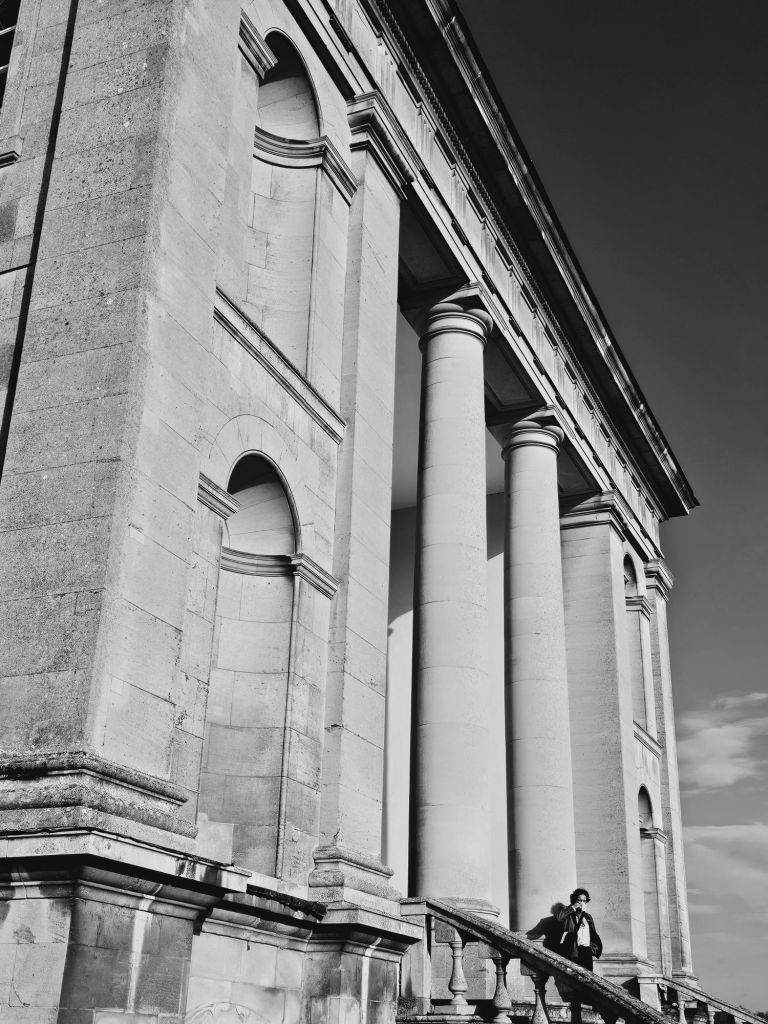
The house was sold to become a school in 1950, which is what it still remains.

A treat to have seen it.
Standard

Old Town Clothing (4)

Long-term readers of my blog will know that I have had a roughly thirty-year attachment to a wonderful clothing store which was established in Elm Hill, Norwich thirty two years ago. It was exactly the opposite of every other men’s clothing store: the clothes were made to last forever; they made no effort whatsoever to follow fashion, in fact were wilfully modelled on styles which dates from round about the First World War; and they were designed to be generous to the expanding waistline instead of assuming that every one is built like a svelte twenty-one year old.

Today I received the catastrophic news that Old Town will close at the end of the year. Its proprietors, Marie and Will, have tried, but so far failed to find someone to take the business on. This seems unbelievable. The clothes are not so obviously cheap, so there should be a modest profit in them. They must have the most loyal clientele of any store in the world. It is exactly the sort of small-scale business enterprise producing ecologically sustainable clothing which should be a model for the future. Surely there is someone enterprising out there of the next generation who might be willing to take it on, even some hedge fund which might invest in it, or one of those Japanese companies which might take it on under new management ?

Because its clothes are built so magnificently to last I hope that I have got enough suits in the cupboard to see me out and then hand them on to the next generation, including at least two suits which are thirty years old. But what of the next generation ? Are they to be deprived of the pleasures of ringing up Miss. Willey’s successors and ordering a new suit which will fit without having to be fitted and will never go out of style because it was never in style ?

Now is your last chance to acquire an heirloom (https://www.old-town.co.uk/). And I hope that there might be someone out there with the intelligence and interest to take the business on into the future.

Standard

Sir Christopher Wren (5)

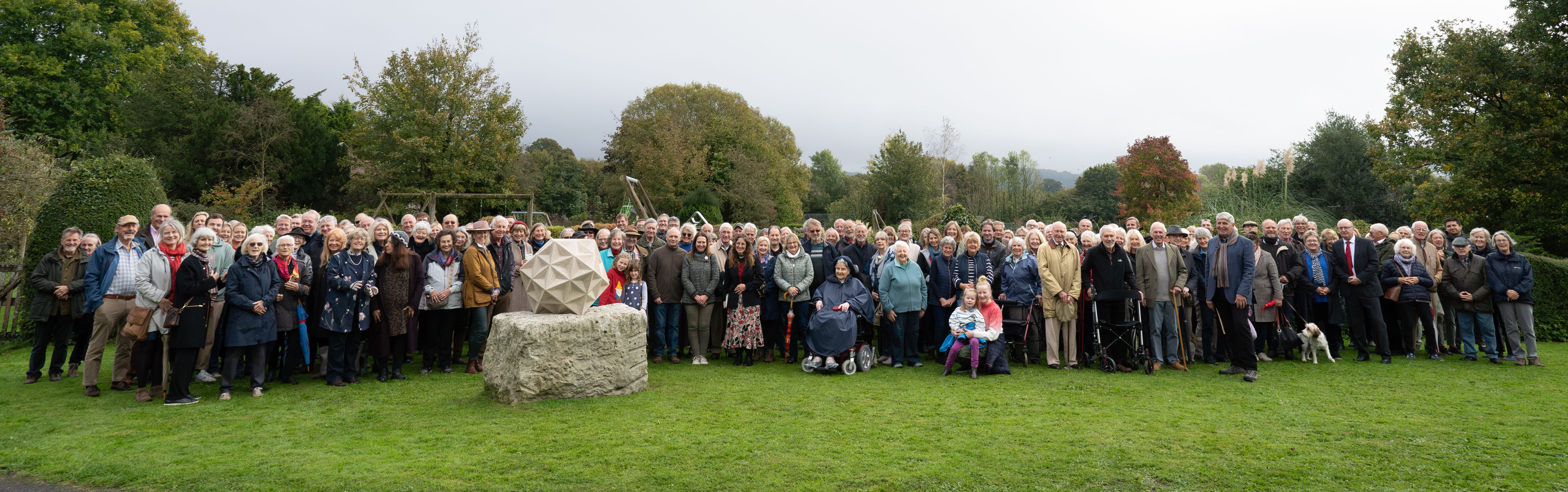
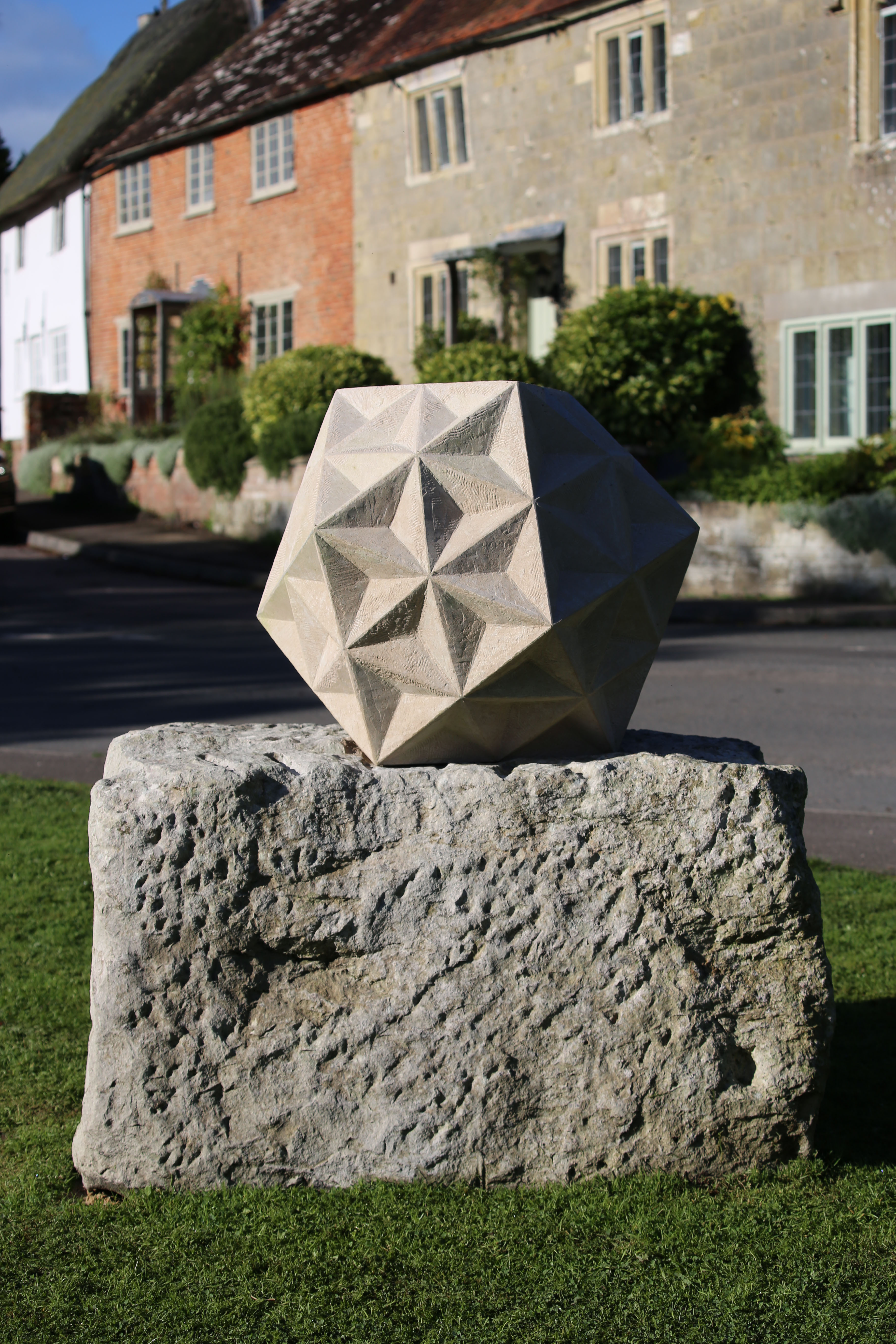
I sadly missed the unveiling of the monument to Sir Christopher Wren in East Knoyle, west of Salisbury, where his father was rector for twenty years and where Wren himself was born in 1632, but I have just been sent a photograph of it by its sculptor, John Maine. It’s a very beautiful and appropriate monument to Wren’s mathematical (and astronomical) intelligence:-

Even more impressive is his picture of the entire village assembled at its unveiling:-

Standard

Architects and the British Museum (2)

For anyone interested in the culture of the British Museum, I recommend a reading of the most recently available set of their Board’s minutes concerning the potential impact on the security of the collection as a result of the acceptance of what is demurely described as ‘the corporate sponsorship under discussion’.

In other words, they could not bring themselves to make it a matter of public record that they had accepted sponsorship from BP in spite of declaring on the front page of their website that it is their policy to act openly and honestly.

Standard

The Petrie Museum

To my shame, I have never previously been to the Petrie Museum in spite of having spent a great amount of my life in its neighbourhood. The truth is that I never knew where it was, not easily accessible from University College’s great courtyard on Gower Street, but up what feels like a back alley off Torrington Place. But it’s amazing when you get there – such an incredibly rich, apparent jumble, but actually ordered collection of tightly packed objects, many still with hand-written labels, deeply old-fashioned, but so old-fashioned as to be itself a form of archaeology, conveying the wealth and depth of Egyptian antiquities in a closely confined space.

I remember that Jeremy Dixon and Edward Jones were hired to re-present the collection more than twenty years ago. I wonder what happened to that project.

Standard

Architects and the British Museum (1)

Here is an interesting moral dilemma for architects. The forthcoming competition to redevelop the British Museum will be amongst the biggest, most interesting and most prestigious not just in the UK, but in the world. But in my experience, architects are more concerned and more aware of the relationship between buildings and climate change than most, as reflected in the declaration Architects Declare UK, which was instigated by Haworth Tompkins, one of the best and most thoughtful UK practices which might – and should – be considered. So, this may subtly influence and limit the field of practices who are considered to the British Museum’s detriment. Herzog & de Meuron are available because they haven’t signed the declaration. But most UK practices have.

Before someone points it out on my behalf, I worked very happily with BP as a sponsor in the 1990s, but times are changing, in a way that the trustees of the British Museum have chosen rather aggressively to ignore.

https://www.museumsassociation.org/museums-journal/news/2024/01/architects-may-boycott-british-museum-over-bp-deal/#msdynttrid=vRZ0-2pn9_CGyfsrzRgp0CjAsi2p66LvY_9JvFHx8_c

Standard

Saltburn (2)

As I expected, I have got into trouble for liking Saltburn from friends, most of whom thought it was terrible; but I liked it – a romp.

As has been correctly pointed out, I apologised for liking it from a mixture of puritanism – it’s so magnificently over-the-top – and possibly a bit of snobbery, seeing Brideshead Revisited converted for Gen Z.

Standard

British Library (4)

By chance, I was the first in the queue for manuscripts on November 6th., the day the British Library closed down all services apart from its café and ordering books published before 1972. I was hoping to be first in the queue tomorrow when some level of service is set to resume, but can’t make it.

The article below is a good summary of the issues: the strangeness that so little attention has been paid to a Russian cyber attack on a major national institution, including the theft and publication of confidential information; and the tendency, as probably was inevitable in the current climate of disinformation, for the British Library itself not to have made clear at once the full gravity of the situation, somehow suggesting that it remained open, in spite of its core functions having been totally shut down.

I have some sympathy for the hard-pressed staff, but it would be interesting to know what their disaster plan recommended and it doesn’t seem particularly sensible to have kept the staff in the dark, not to mention readers.

https://www.standard.co.uk/lifestyle/british-library-cyber-hack-rhysida-ransomware-tom-holland-b1131623.html

Standard

Saltburn (1)

We went to Saltburn last night. It was packed. I’m afraid I enjoyed it very much – a cross between The Go-Between and The Draughtsman’s Contract, but much more gothic than either, more decadent, and more over-the-top. I particularly admired the way that Drayton House was used for much of the film, an appropriately ripe set of English baroque interiors, especially brilliant in the scene of Oliver’s arrival at the front door, but also in the many scenes of the garden with statuary by John Nost playing a prominent part in the background.

Standard