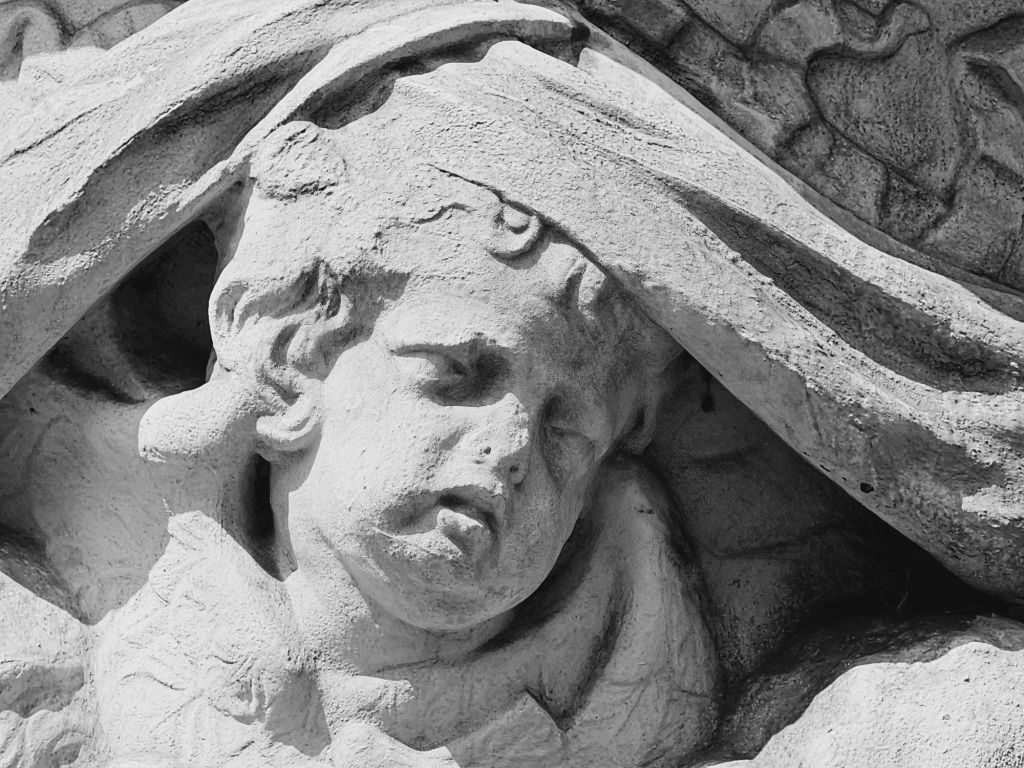
I was prompted by the very good recent book on Hawksmoor – Terror and Magnificence: The LondonChurchesof Nicholas Hawksmoor by David Meara, a retired archdeacon – to stop and have a look at the carvings on the small circular bollards which protect the St. Alfege from the adjacent road.
The carvings are, of course, very worn – three hundred years of weather and exhaust – but are fine. Hawksmoor ? Or the free invention of stone carvers who look as if they have worked on St. Paul’s:-
Last night was my first chance to see the fine facsimile of the Kriophoros which used to stand in the entrance hall of the Warburg Institute, borrowed by Gertrud Bing from Wilton House in 1957, but returned in 2007.
The facsimile will stand in the new entrance hall as reconfigured by Haworth Tompkins, when it reopens in October:-
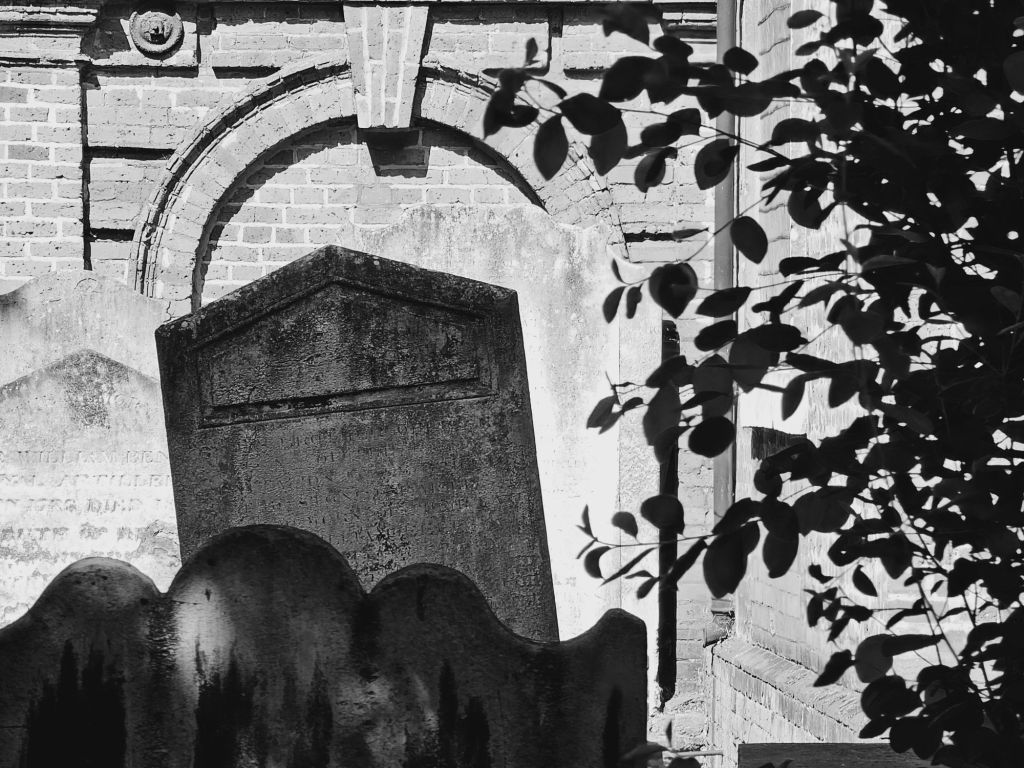
I bicycled to St. Luke’s, Charlton (between Greenwich and Woolwich) to see the tomb of Brigadier Richards, a friend and neighbour of Vanbrugh and recipient of the Duchess of Marlborough’s long letter of complaint about Vanbrugh’s malpractices at Blenheim, which caused Vanbrugh to resign in November 1716.
The church is just to the north of Charlton House and dates from the 1630s:-
It must have been a prosperous suburb in the early eighteenth century, attracting at least two prominent figures associated with Vanbrugh – James Craggs, the Postmaster General, who the Duchess of Marlborough blamed for recommending Vanbrugh as architect for Blenheim:-
And Brigadier Richards, who had been Commander-in-Chief on an expedition to Newfoundland in 1696 and, after serving in the army under the Duke of Marlborough at Blenhein and Ramillies, was appointed Surveyor of the Ordnance to King George I. He may have been involved in the design of buildings for the Royal Arsenal in Woolwich.
His monument is pretty elaborate, attributed to Guelfi:-
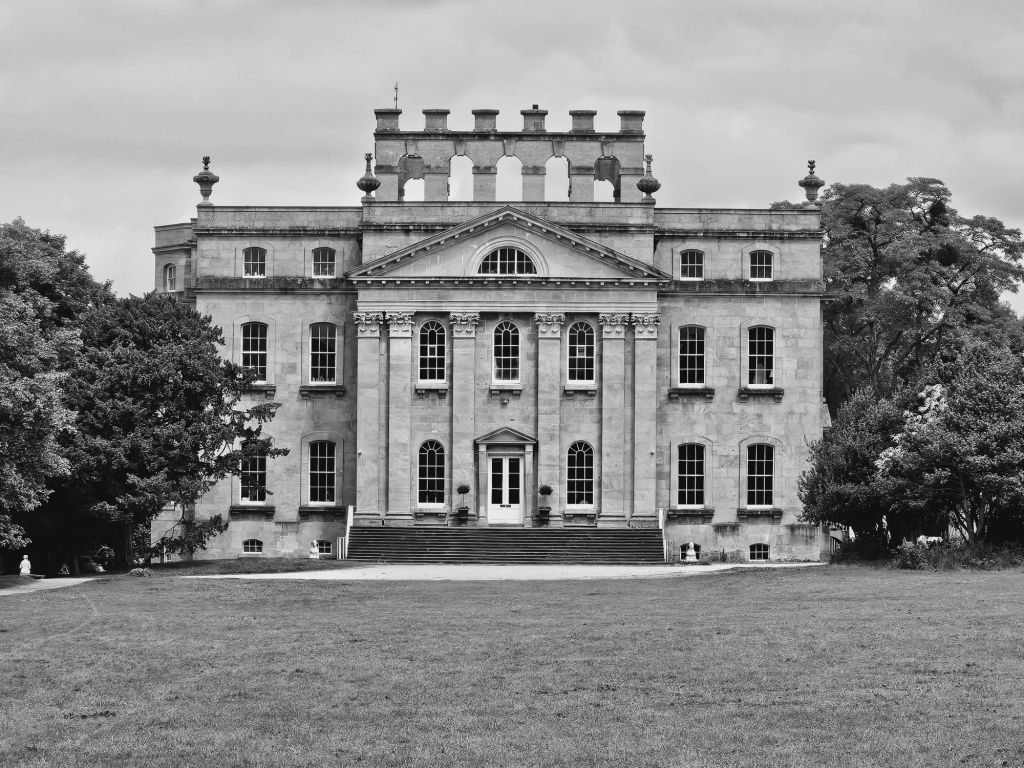
I went on a day trip to see and study King’s Weston, one of Vanbrugh’s less familiar houses, although important as dating from 1711 when work on Blenheim had pretty well stopped.
It’s a curious mixture of conventional façades, but with Vanbrugh’s characteristic tweaks, including the urns on the parapet and the brilliant, but idiosyncratic arcaded chimneys on the roof:-






 | Charles | Saumarez | Smith |
You must be logged in to post a comment.