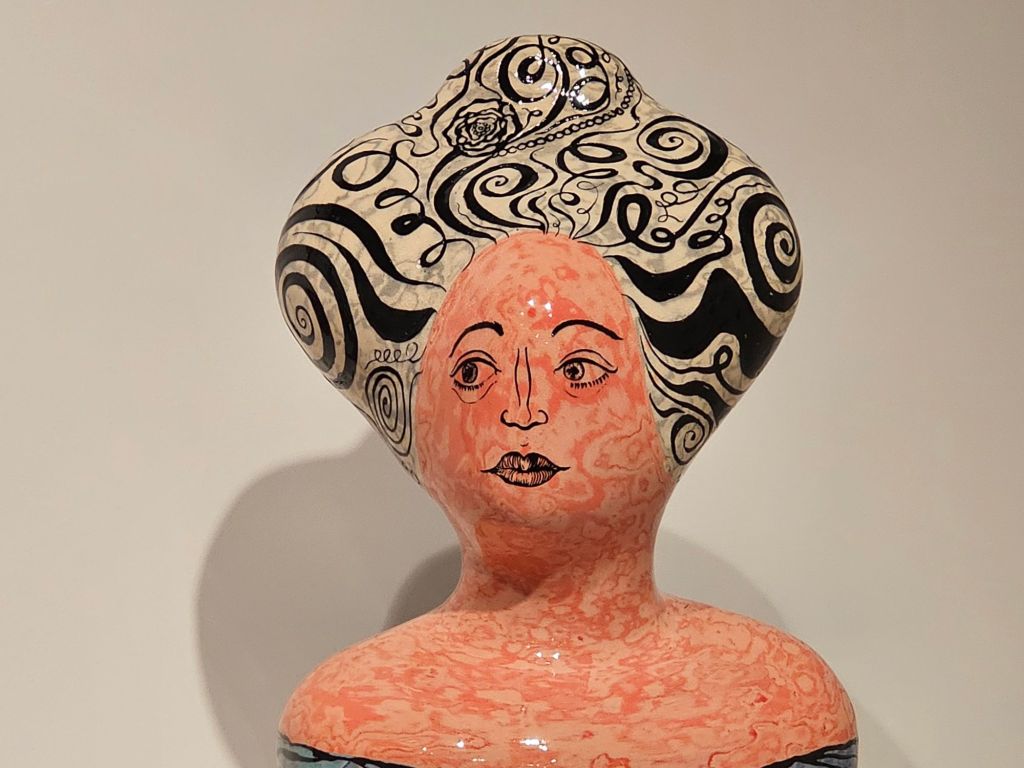
We went to the Grayson Perry exhibition at the Wallace Collection on Sunday. I wasn’t going to post anything about it, except someone said to me that they thought Grayson was negative about the Wallace Collection. I thought the exact opposite – that he had maybe started out being a bit resistant to it, but had ended up making a wide range of wonderful work in response to its collection, including metalwork, tapestry and pots.
I’ve realised that it is essential to take the sound guide in which he talks through what stimulated the major pieces:-
We attended the memorial service for Sir Henry Keswick this morning. Charles Moore admirably summed up his many virtues. He was my chairman of trustees at the National Portrait Gallery, taking over from Owen Chadwick on the same day that I started as Director. I always liked and respected him and he remained a good friend, although, as he once pointed out, we had absolutely nothing in common, apart from strong-minded wives.
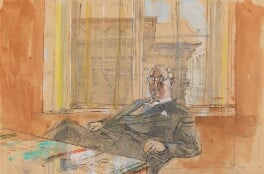
I remembered that I gave a speech at a dinner when he stood down as chairman and I re-publish the speech in his memory, as well as his portrait by John Ward from the NPG’s collection:-
Two of Henry Keswick’s great virtues as a chairman of Trustees were that he liked speeches to be short and he liked to get home not too late at the end of the evening.
But now that he’s no longer chairman of Trustees, I can safely disobey him on both counts.
I first met Henry at my interview for the post of Director. It was held, as some of you will remember, at the Headquarters of the Civil Service Commission at number 24, Whitehall. Candidates were given a large badge with a number on it to make sure that one did not join, by mistake, the interviews for cleaners for the Ministry of Defence.
I had been tipped off that Henry was a big-shot financier and that he was likely to ask me penetrating questions about accounting practice. He fixed me with a penetrating glare and asked me:
‘Could you tell me what’s your favourite picture ?’ For a moment, I thought it was a trick question, but, from that point onwards, I always thought he had the right set of priorities for the Gallery.
Shortly after my appointment was announced, I thought I should go and pay my respects to my future chairman of Trustees and (rather forwardly) invited myself to lunch at his headquarters in the City. I remember two things about the visit. The first was that, shortly after I had arrived, he lent back in his office chair and said,
‘You do know, don’t you, that I didn’t want you to be appointed’. Well, as it happened, I did and I regard him as having been an unceasingly loyal and good friend, ally and supporter ever since, always keen, rightly to keep the Gallery and its Director, up to the mark, but in a way which was always supportive as well as tough.
The second thing I remember about that visit was that he mentioned that he was on the Board of the Telegraph Group and that it took an awfully long time to get to Canary Wharf. I made the mistake of saying to him that I thought it was pretty quick by the Docklands Light Railway. He looked at me and paused in a slightly glacial way and said,
‘You mean to say that you think that I might travel by the Underground Railway ?’
Well, we’ve had a good seven and a half years together. Visitor numbers have more than doubled from half a million to well over a million (in fact, we’re close to the million mark this year already). We’ve opened the Ondaatje Wing, with its beautiful new Tudor Gallery, paid for by Drue Heinz and Lord Wolfson. On Saturday, we hear if we’ve won the Stirling Prize for the best building of the year 2000. We’ve already won the Royal Fine Arts Commission Award for the best gallery. We’ve even got an audit and compliance committee.
But what I will remember Henry for most of all is not just the achievements of the last seven and a half years, the trips to his and Tessa’s house at Oare, but more his sense of decency, the feeling that he always had the right instincts and a healthy contempt for redundant bureaucracy. I will always think of him whenever I receive another circular from the Department for Culture and him invariably saying,
‘You don’t seriously expect me to read all this awful rubbish, do you ? I’m going to put it straight in the rubbish bin’.
Ladies and gentlemen, we will all miss Henry as chairman. We have much to thank him for — his loyalty to the Gallery, friendship and his good sense. I think it is safe to say we will never see his like again. And I hope you will now all rise and drink a toast of appreciation to ‘Henry’.
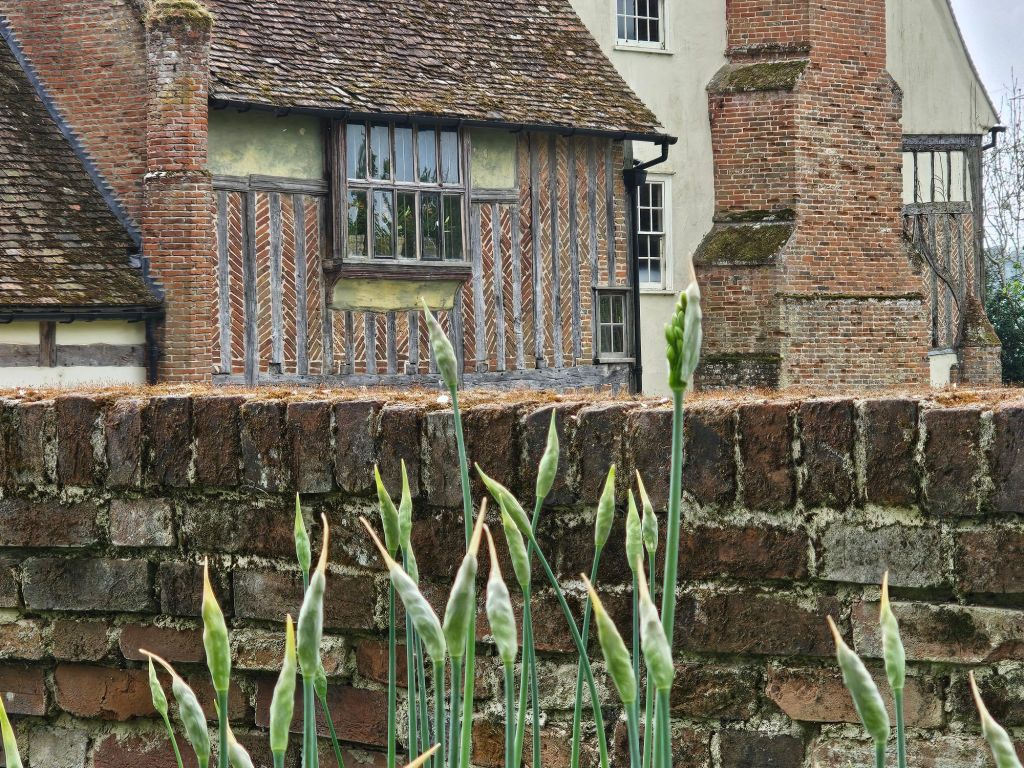
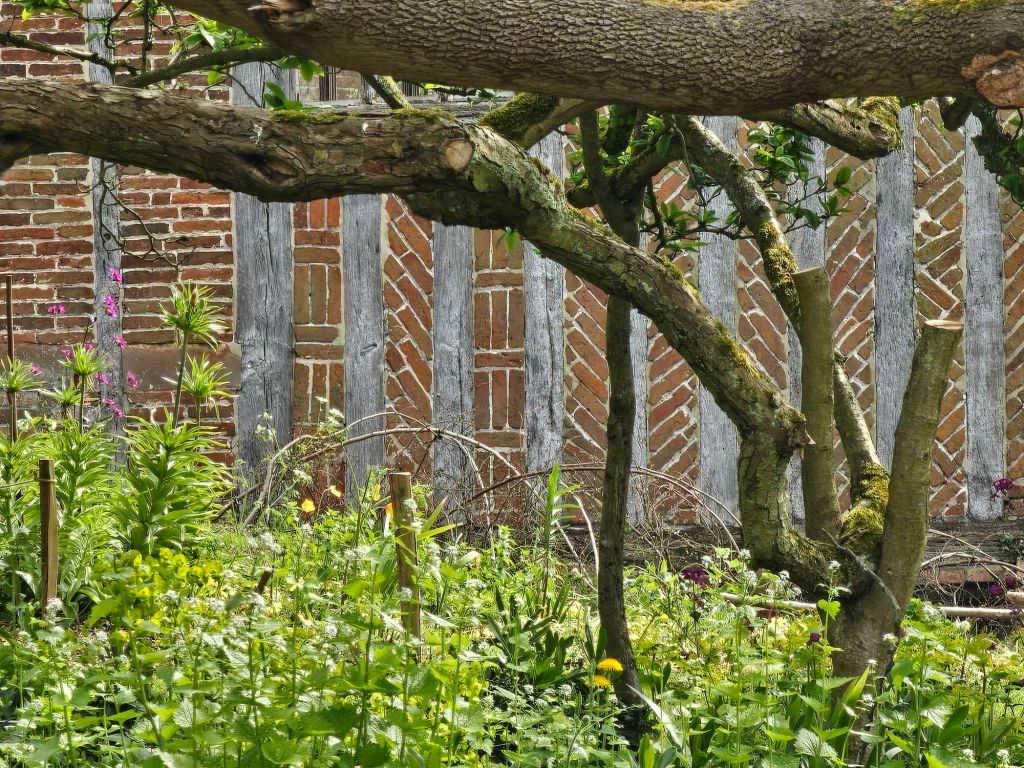
I haven’t been to Benton End since January 2020, pre-COVID, before the decision that it might be taken on by the Garden Museum.
It’s the Suffolk house where Cedric Morris and Lett Haines had their idiosyncratic art school after a fire burnt down their previous house nearby in Dedham. In 2020, there was almost nothing left of the garden where he cultivated irises in the 1950s, only a sense that it might be restored – gardens survive mysteriously, not least in the plants looked after by his executors, including a gift today of plants from the garden of the painter, John Morley.
In 2020, not much survived of the 1950s garden, but I was persuaded the project was very worthwhile. Now the garden is flourishing and there are ambitious plans for the house:-
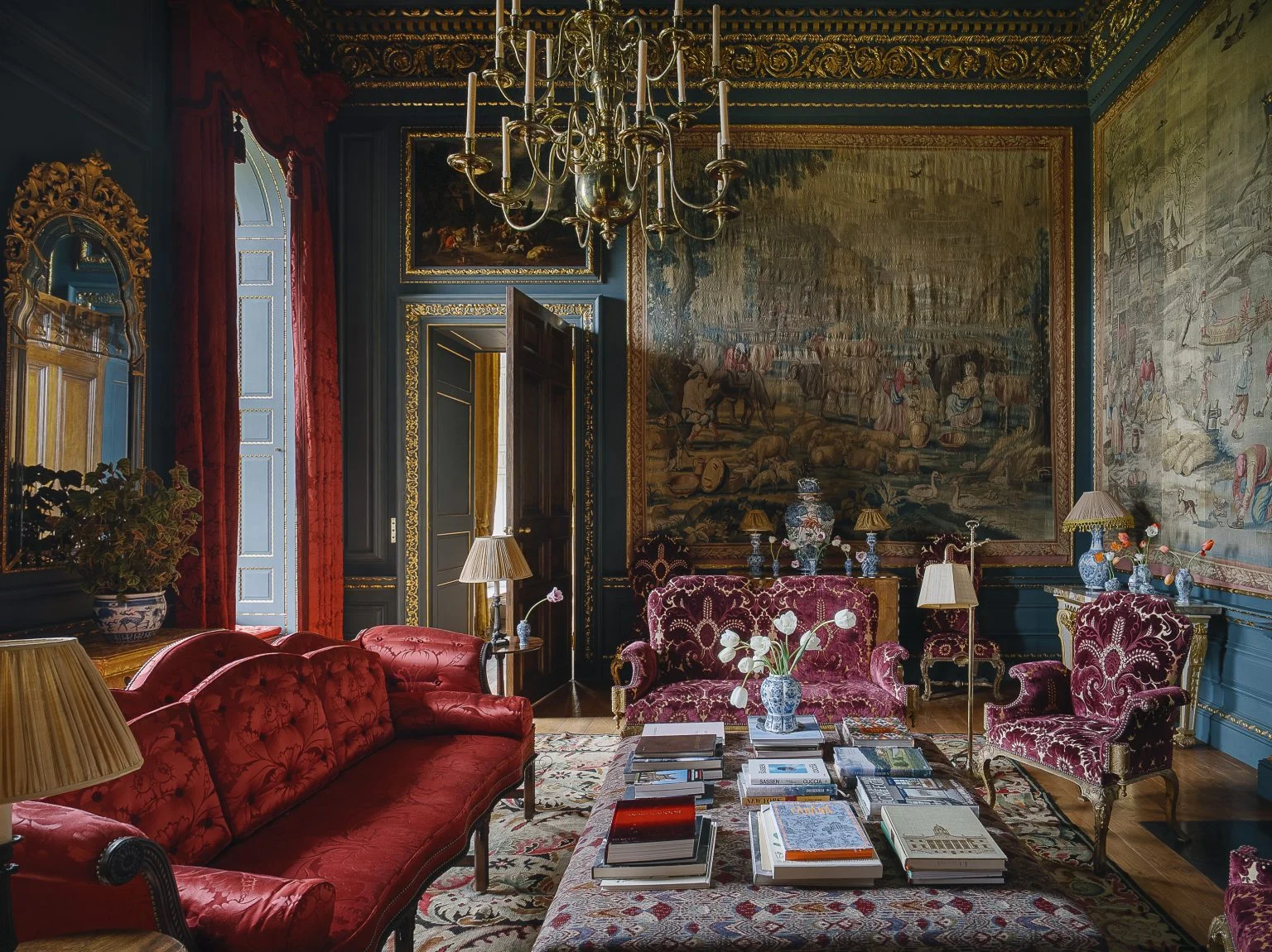
I wrote briefly yesterday about the changes which have been made during the refurbishment of Castle Howard and now have access to images which show the changes.
The most interesting change is the reconstruction of the Tapestry Drawing Room on the south front, one of the rooms which was completely burnt out in the disastrous fire in the early hours of the morning of 9 November 1940 when the house was occupied by a girl’s boarding school. The tapestries which had hung there were rescued, but the room itself remained a burn-out shell. So, the question was whether or not it should be restored as an exact replica of the room as it was immediately before the war, following the evidence of the photographs taken by Country Life. A decision was taken to recreate the room as it might originally have been, as designed by Vanbrugh, helped by the survival of the tapestries. This is what Francis Terry has done so remarkably successfully:-
Issues or restoration are often treated as a straight choice: does one restore something as it was, as was done following the fire at Uppark? Or does one keep it as a managed ruin, as is happening at Clandon?
What has been done at Castle Howard is interesting in showing another way of doing it – an inventive, but not archaeological reconstruction, which keeps the spirit of the original, but not as a precise replica.
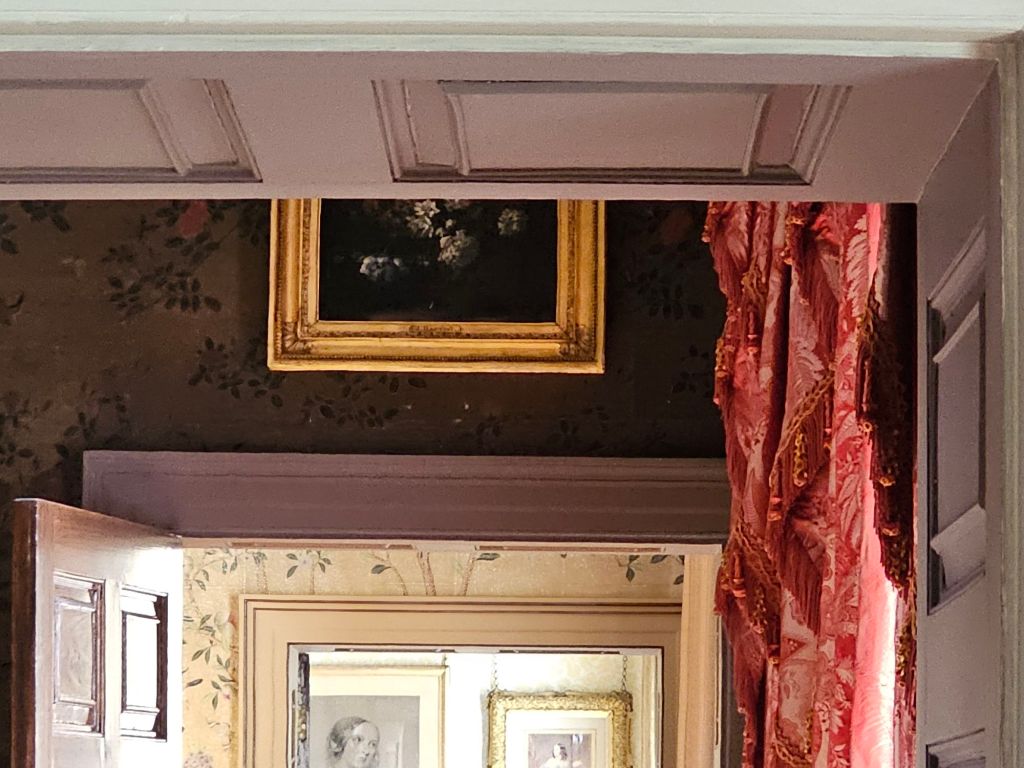
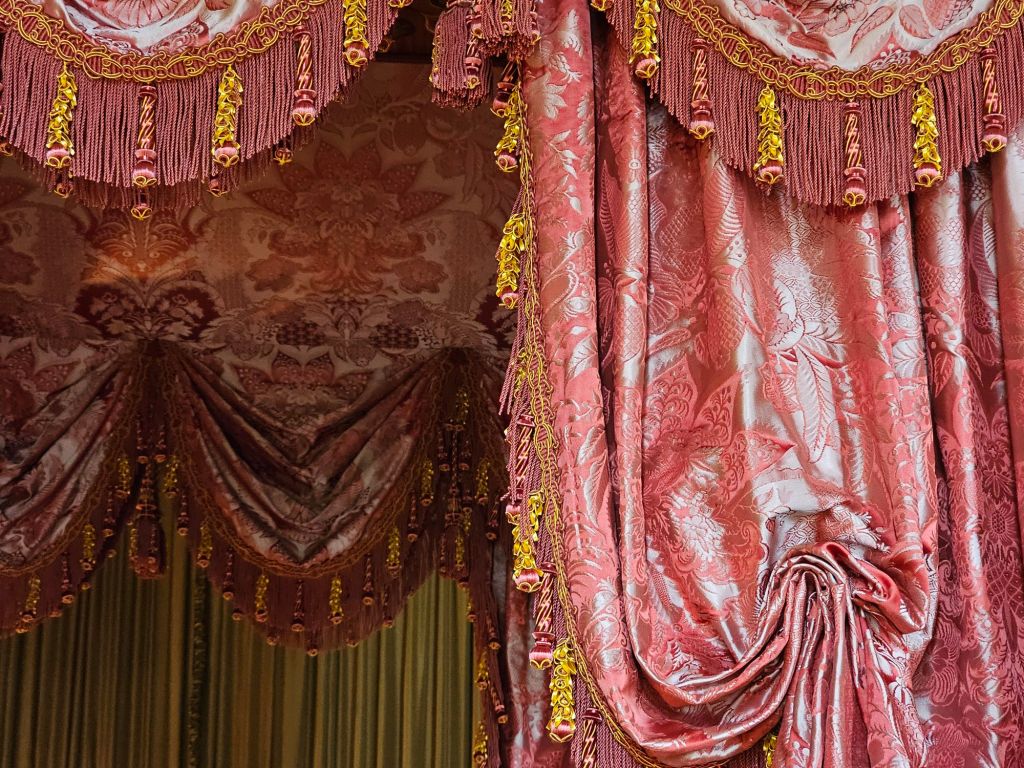
It was the launch today of Castle Howards’s 21st. Century Renaissance, a comprehensive rehang, refurbishment, and in small but significant ways, a reinvention of its interiors: starting with the visitors’ entrance where the family portraits have been replaced by objects from the 4th. Earl’s Grand Tour:-
Then the run of bedrooms in the Thomas Robinson west wing which have been comprehensively redone – and beautifully – by Remy Renzullo:-
Then (but for some reason I didn’t take photographs) the Tapestry Drawing Room has been completely and magnificently recreated by Francis Terry in the style of Vanbrugh: not a reconstruction, but a reinvention, done with great sensitivity and historical intelligence. A very interesting precedent for historic interiors.
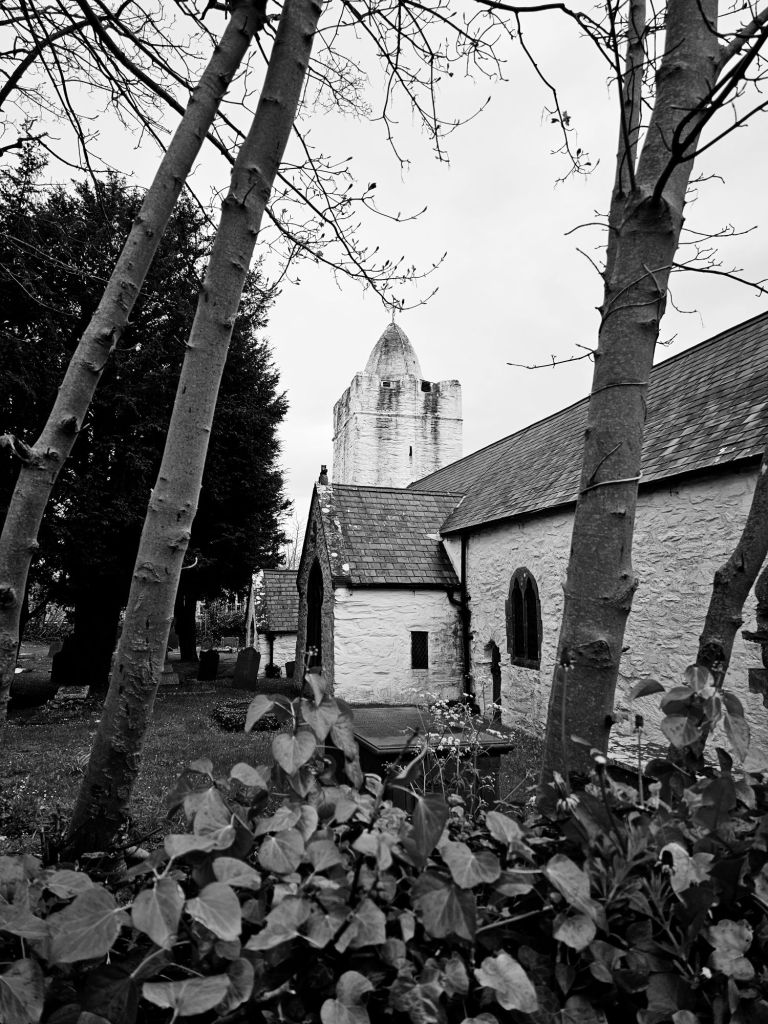
St. Mechell is a saint I have never heard of before: a miracle worker of the sixth century who turned thieves to stone and founded a clas, a type of small monastery, in Llanfechell in the north part of Anglesey. The church is long and narrow with an unusual and distinctive pepper pot spire which was apparently added in the eighteenth century:-
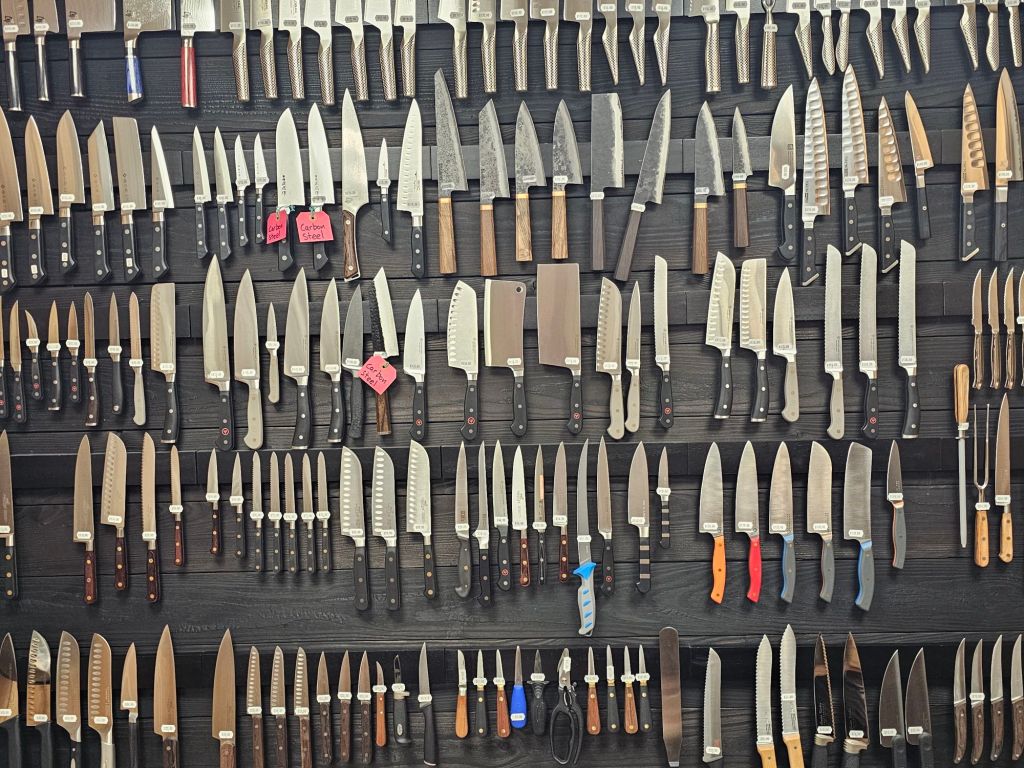
We were tipped off that thereis a butcher’s in Valley, an unlikely spot for a shop that is remarkable both for the quality of its meat and, more unexpectedly, a superb, almost museum quality, selection of kitchen knives, sharpeners and pots and pans, a definite addition to Anglesey’s gastronomic opportunities:-

 | Charles | Saumarez | Smith |
You must be logged in to post a comment.