
I wrote briefly yesterday about the changes which have been made during the refurbishment of Castle Howard and now have access to images which show the changes.
The most interesting change is the reconstruction of the Tapestry Drawing Room on the south front, one of the rooms which was completely burnt out in the disastrous fire in the early hours of the morning of 9 November 1940 when the house was occupied by a girl’s boarding school. The tapestries which had hung there were rescued, but the room itself remained a burn-out shell. So, the question was whether or not it should be restored as an exact replica of the room as it was immediately before the war, following the evidence of the photographs taken by Country Life. A decision was taken to recreate the room as it might originally have been, as designed by Vanbrugh, helped by the survival of the tapestries. This is what Francis Terry has done so remarkably successfully:-
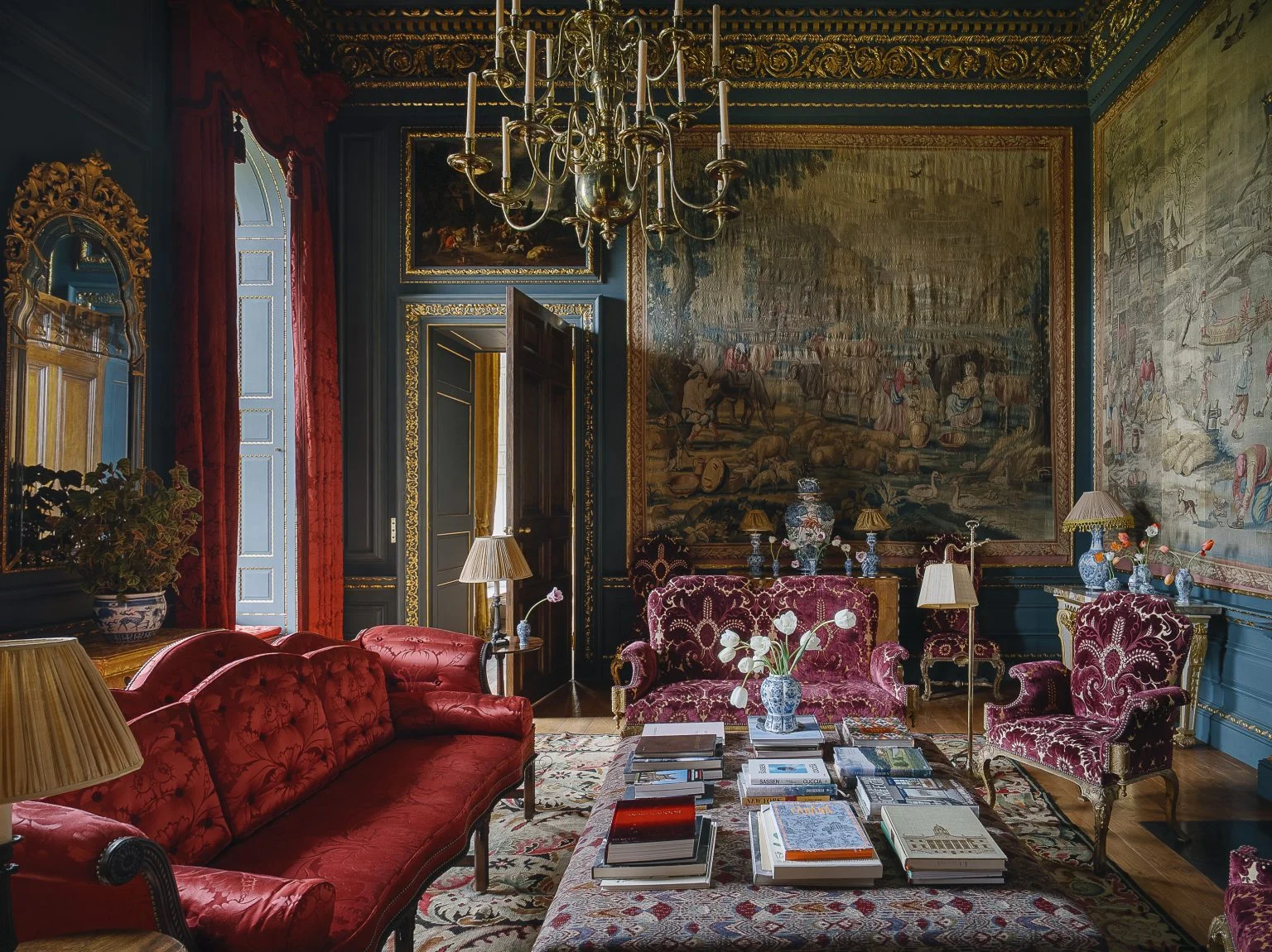
Issues or restoration are often treated as a straight choice: does one restore something as it was, as was done following the fire at Uppark? Or does one keep it as a managed ruin, as is happening at Clandon?
What has been done at Castle Howard is interesting in showing another way of doing it – an inventive, but not archaeological reconstruction, which keeps the spirit of the original, but not as a precise replica.
 | Charles | Saumarez | Smith |