Temptation of Influence

I was invited to a screening of a film, Temptation of Influence, by an architect/filmmaker, Marko Milovanovic, about the ways in which influences in architecture are received/transmitted across generations.

From Louis Kahn to Shane de Blacam, who worked on the completion of the Yale Center for British Art after Kahn’s death in Penn Station on 17 March 1974; from de Blacam to Sheila O’Donnell, who was one of his first year students in his first year of teaching at University College, Dublin in 1976; from Palladio to de Blacam, who stayed in a monastery in Padua to visit all the works of Palladio by bicycle and train; from Kahn and de Blacam to Niall McLaughlin who was required as his first project aged 17 to construct a model of a saltbox house

The way architects look at and remember details of construction and adapt them or reject them through history, learning across time.

Very well worth seeing, but probably only available online, if that.

Standard

Liverpool Street Station (33)

I have been alerted to the increasingly bizarre situation surrounding the potential modernisation of Liverpool Street Station (see below).  As posters on Instagram suggest, it could benefit from new loos and better disabled access.  But does this really require building tower blocks on top of the station or the adjacent hotel, completely out of scale with the station itself ?

Liverpool Street Station was preserved as the result of one of the epic conservation battles of the 1970s.  The adjacent land was developed as Broadgate, which is already in the process of being demolished. 

Why can’t we just leave the Victorian train sheds alone, preserve them and protect them, with their lovely Victorian roofs and ironwork detailing ?  And put in some new lifts and escalators and maybe renovate the hotel.

It requires a firm of good conservation architects, not a lot of aggressively posturing new build, creating new offices which may not be required.

https://www.architectsjournal.co.uk/news/exclusive-herzog-and-de-meuron-working-on-all-new-rival-liverpool-street-plans?utm_id=7378&delivery_name=8105&utm_campaign=FABS_AJ_EDITORIAL_DAILY_NEWS_REG&utm_content=&utm_term=Exclusive%3A%20Herzog%20and%20de%20Meuron%20working%20on%20all-new%20rival%20Liverpool%20Street%20plans&utm_medium=email&utm_source=Adestra&eea=RzlOQXJYamhWYUp1UmRDTm83ZlE5QT09

Standard

Harrow School

Since I was in the neighbourhood, I thought I would go and see Harrow School, which I have never been to.

It’s a bit unrewarding because, like Oxbridge colleges, it is, for obvious reasons, very strictly private, apart from what can be seen from the High Street.

This is the Old School, the original bit, Jacobean, but done up by C.R. Cockerell:-

The Vaughan Library by Sir Giles Gilbert Scott (1861-3) commemorates Charles Vaughan, the headmaster who resigned in 1859 (blackmail) :-

Nairn is pretty dismissive of all of it, but it looks good to me, stretching along the top of the hill, a mixture of buildings, all with a strong civic presence.

Standard

Harrow Arts Centre

I came to see the new Greenhill Building of the Harrow Arts Centre because I thought it looked interesting in the long list for the RIBA London awards.

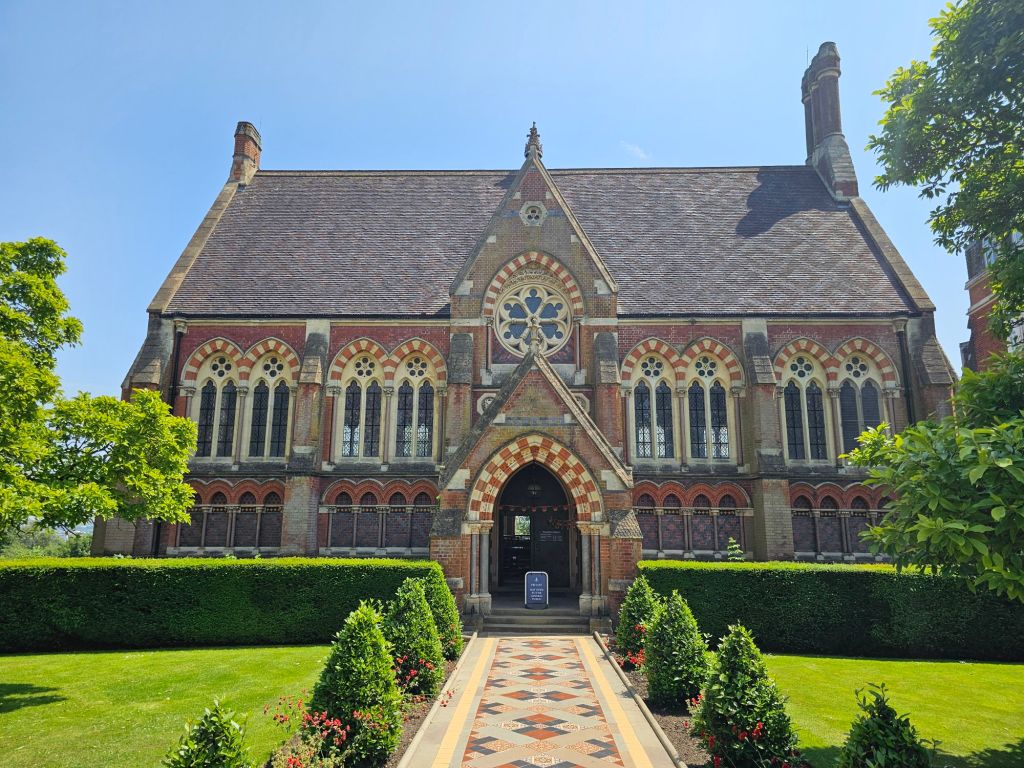
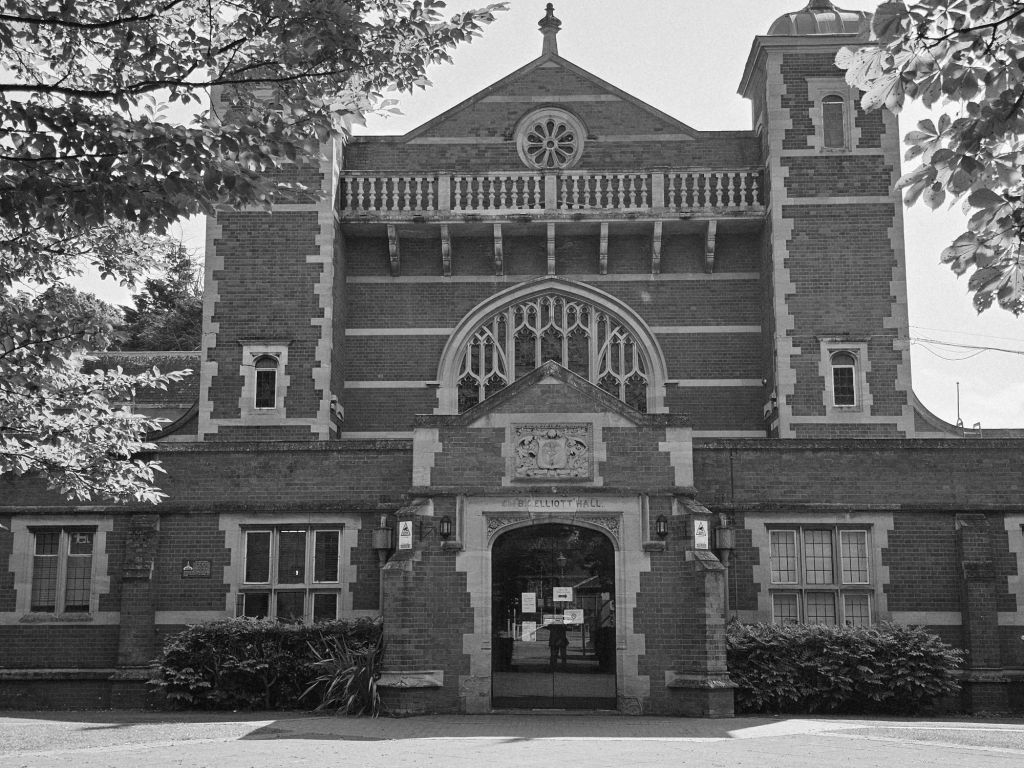
The Harrow Arts Centre is itself an unexpected building, not in Harrow, but Hatch End, its main building having been the assembly room for the Royal Commercial Travellers School, which closed down in 1967.  It was designed by H.O. Cresswell, who seems to have been a local architect, not the Harry Cresswell who worked under Aston Webb and then for the Office of Works:-

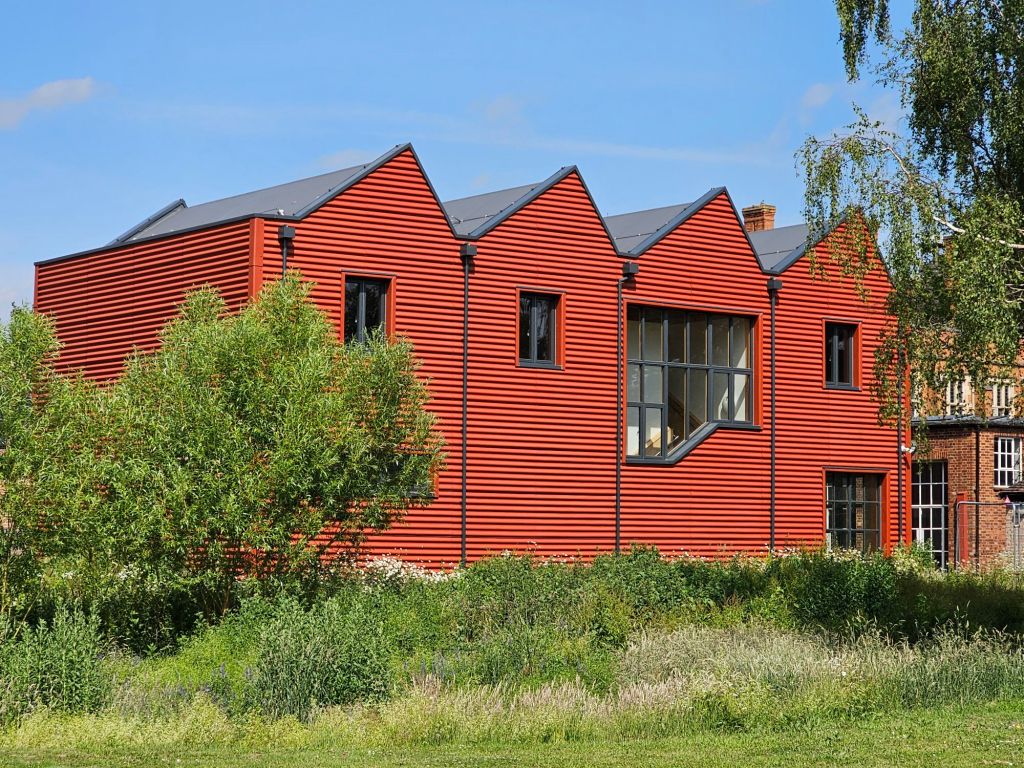
Chris Dyson was commissioned to add a new building, the Greenhill Building, which he has done in a lightweight, semi-industral way, constructed out of corrugated corten painted bright red, so that it fits naturally in the site:-

Standard

Castle Howard (7)

I listened to the exceptionally well-informed podcast by John Goodall and Clive Aslet about Castle Howard (link on Spotify below). 

It comes in two parts.  The first is about the early history of the house and the third Earl of Carlisle’s motivation in building it.  He was, as John Goodall correctly points out, highly ambitious, a member of the Kit-Cat Club and had travelled to Rome, writing detailed notes about his time there.  Vanbrugh was the same generation, a successful playwright.  Carlisle fell out with William Talman, the leading architect of the time, who over-charged for his services.  So, he asked Vanbrugh to come up with designs.  Sketches survive.

The second part is about the recent and very successful renovation of the Tapestry Drawing Room by Francis Terry: an imaginative re-invention, equivalent to what George Howard did in recreating the dome after the fire in November 1940 (not 1944).

The question is raised at the end as to whether the National Trust should recreate Clandon.  After all, the Russians recreated the palaces outside Leningrad with the utmost care after the Second World War.  And was Clandon not insured ?

Standard

Encounters

I have just been sent the copy I ordered of Encounters, the newly published book of Denise Scott Brown’s photographs, taken over a roughly twenty-year period, from 1952 when she moved from South Africa to England, through to the mid-1970s when she was preoccupied by architecture and parenthood.

It has been obvious from previous publications and exhibitions what a remarkable photographer she was.  This book demonstrates it over and over. 

I have gone through jotting down some of the images I thought particularly interesting, but it may be against the spirit of the book which is about a searching, recording, documentary eye – I was going to say architectural, but it’s as much about people, their look, their behaviour, as about signage, suburbs, Manhattan and industrial buildings:-

16/17 Robert Scott Brown, her first husband with whom she travelled round Europe in a Morgan three wheeler

18 DSB, presumably taken by him ?

48/49 DSB seen taking photographs by RSB

237 A beautiful picture of Manhattan towards Central Park, taken from the RCA Building in 1962

244 The Smithsons’ School at Hunstanton, maybe under construction.  She was, I think, taught by Peter Smithson at the AA

248  Denys Lasdun’s housing in Usk Street not long after its construction, surrounded by bomb-damaged East London

258 Royal Crescent, Bath as it was in the 1950s.  A beautiful photograph

260 London c1955 Still astonishingly bomb-damaged. It shows so clearly how devastated the area was round St. Paul’s

262 The tomb in St. Anne’s, Limehouse

263 The west front of St. Anne’s c.1955. So raw

264 St. Mary Woolnoth.  Fantastic !

267 Said to be Robin Middleton at the back of St. George’s Bloomsbury.  Can it be ?

268 This is St. Anne’s again, not St. George’s, Bloomsbury

279/280 Siena

284/285/286 S.Andrea, Amalfi. Here is the idea of the grand flight of steps, as in the Sainsbury Wing.  She likes these steps.

320/321 The house of her childhood
Standard

Invisible Landscapes (3)

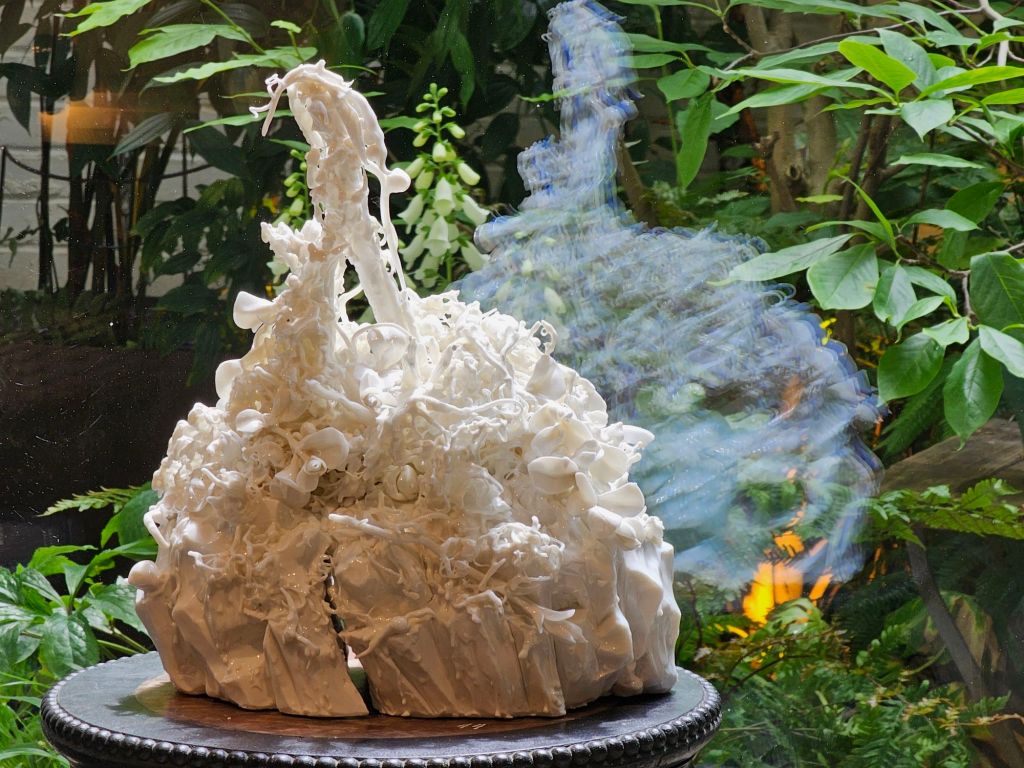
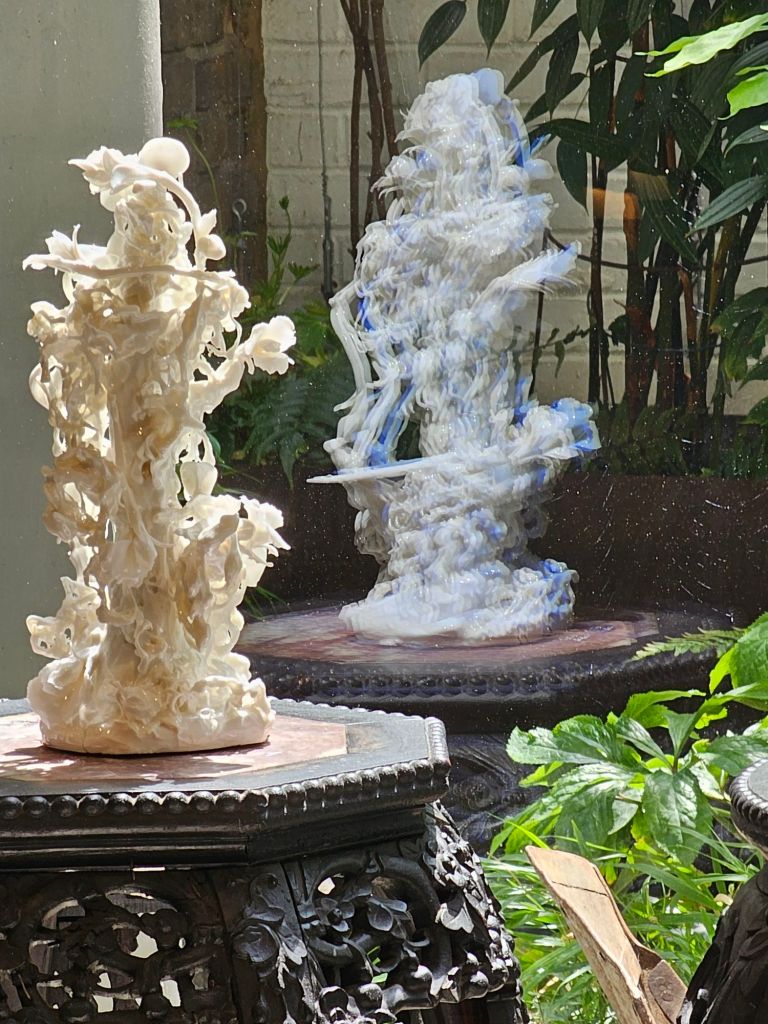
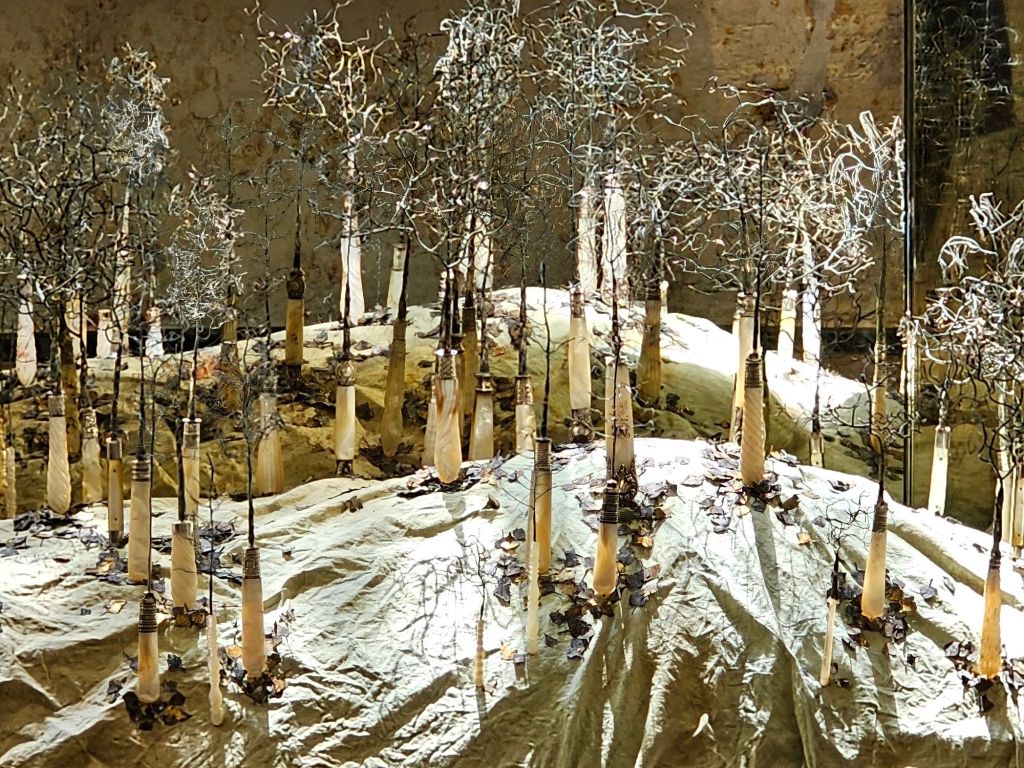
I have found it hard to photograph Romilly and Lucille’s exhibition because the sunlight is transient and the quality of the space hard to convey.

This is a way of saying, do come if you can.  It is on today from 12 to 5 at #7, 78, Chiltern Street:-

Standard

Roger Cooper

I have been alerted by my friend, Adam Bennett, to the death of Roger Cooper, with whom we stayed in Tehran in the summer of 1973. There are obituaries in the Times and Telegraph.

At the time, we understood him to be the BBC Correspondent in Teheran. Peter Avery, the Persian scholar at King’s, had told him and his younger American wife, Cherie, that four Cambridge undergraduates needed somewhere to stay. They fed us with mountains of the finest caviar from the Caspian Sea, made us feel enormously welcome, taught us a lot about the customs of Iran, and invited us to attend the Summer Festival in Shiraz which he was possibly covering for the BBC.  So, from Teheran, we travelled southwards by bus through Qom to Isfahan and on to Shiraz.  For some reason, Roger and Cherie were at least as interested in contemporary Polish culture as they were in Persian and they were friendly with visiting groups of Polish actors and musicians who were also invited to stay.  It was Roger and Cherie who suggested we should cross the border into Afghanistan, which they told us was by a long way classed as the poorest country in the world.  I’m glad we did because we saw Herat before it had been much touched by the modern world with tribesmen on horseback on the main street.

We lost touch with Roger after we left Iran.   After the fall of the Shah, Roger would have lost his job, came back to London, but went back to Iran ostensibly on business, where he was arrested as a spy and spent six years in an Iranian jail, playing chess with his jailor.   He wrote Death Plus Ten Years in which he described his remarkable sang froid, made possible by the experience of having been educated in a British boarding school.

He was released in 1991.  Adam Bennett’s father discovered that he was going to speak about his experience at Chatham House.  We went to hear him.  What I remember of what he said in conversation was how incredibly shocked he had been at arriving back in Britain by how much it had changed during the six years he had been in prison.  He left what he described as a post-war society in which much of the urban fabric was still war damaged, people lived in comparative poverty and drove bashed-up, second-hand cars.  But when he came back everyone was driving big, smart, new cars.  He didn’t like it and retired to Spain to run a holiday business.

Standard

Philip Core (3)

I have been asked to add a PS to my post about Philip on the gestation of the remarkable piece of research about him.

During her college years in the 1970’s, Bethany Ewald was one of the tenants next door to Lucy Core, Philip’s mother’s New Orleans carriage house.  The two remained close friends, especially as Lucy encouraged Bethany to focus on becoming a writer. Many years later, on Lucy’s deathbed, she made Bethany promise to write about Philip.

Now, half a century later, thanks to French Quarter Journal.com, she has worked with a dedicated team who “conspired” with her to bring Philip Core’s legacy to light.

Standard