Liverpool Street Station (34)

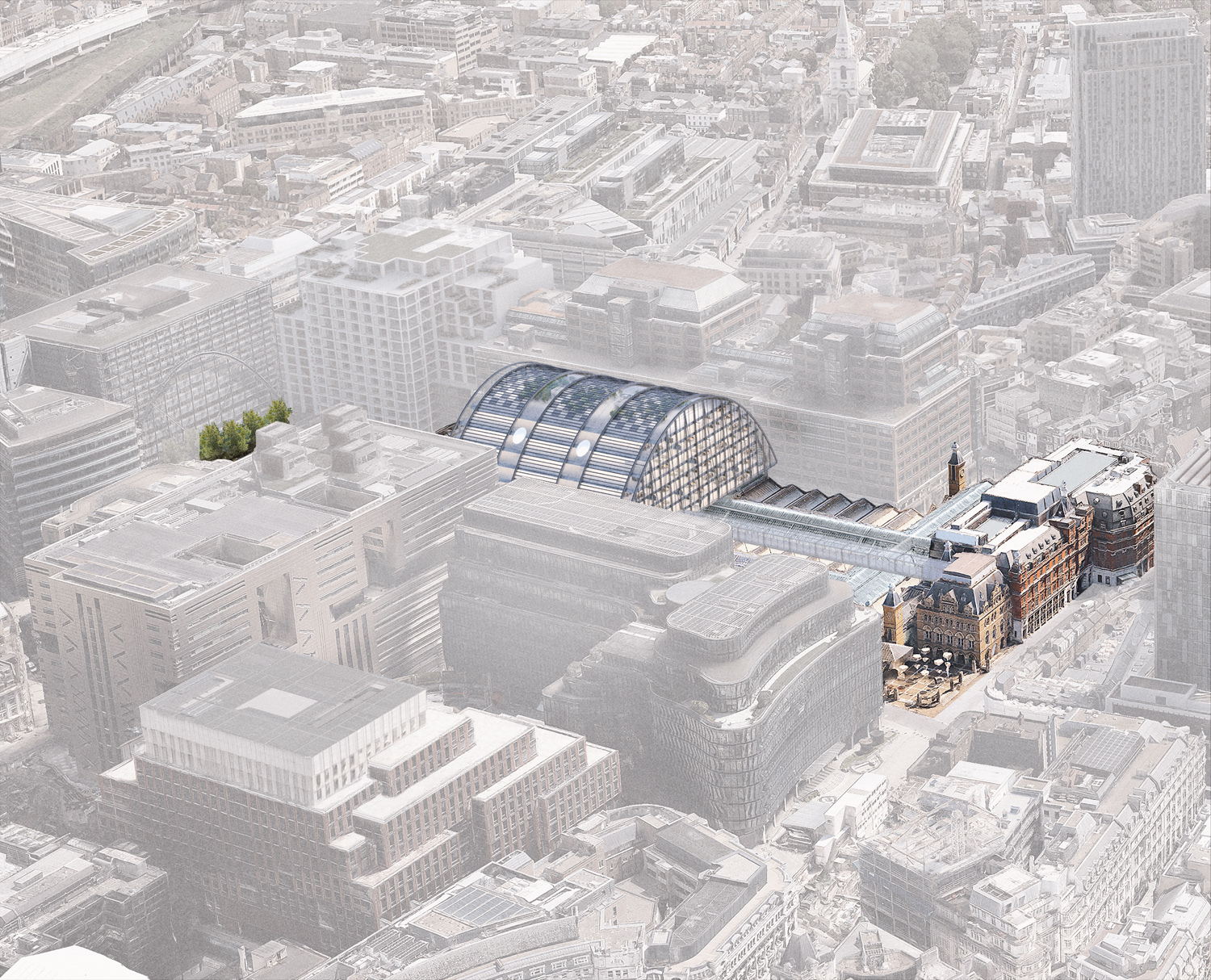
It is a long time since I have posted anything about Liverpool Street Station, partly out of a sense of relief that Herzog and de Meuron had withdrawn what always looked like a terrible plan – to build a tower block on top of a listed Victorian hotel.

Now I am pleased to see that John McAslan who did the development of King’s Cross in a very successful way has come up with a plan which looks obvious: to concentrate the new development above the glass train sheds in such a way as to retain, indeed enhance, the full scale of the sheds to public view. I just hope that Network Rail will see the clarity and logic of this approach and adopt it so as to avoid the versions of a towering inferno which have been proposed:-

https://www.savebritainsheritage.org/news/a-new-vision-for-liverpool-street-station-unveiled-by-john-mcaslan-partners

Standard

Vanbrugh Tour

I am posting information about the Vanbrugh Tour that Martin Randall has organised and I am leading in July in case there is someone, besides me, who would like to see all of Vanbrugh’s major houses in the space of a week.

I know it looks expensive, but then hotels are expensive.

I once went to Castle Howard, Seaton Delaval and Grimsthorpe over a long weekend. It was pretty memorable:-

https://www.martinrandall.com/tours/vanbrughs-greatest-houses

Standard

Vanbrugh300 (4)

Thanks to the National Lottery Heritage Fund funding the celebrations of Vanbrugh’s tercentenary next year, the Georgian Group has just launched a website which will make it possible to find out what is planned, including events at each of his major houses. It blows up the Kneller Kit-Cat portrait as its frontispiece, with a backdrop of the frontispiece of the plays and the façade of Castle Howard from Vitruvius Britannicus.  There is already a lot planned for next year and more to come:-

https://www.vanbrugh300.co.uk/

Standard

The Modern British City 1945-2000

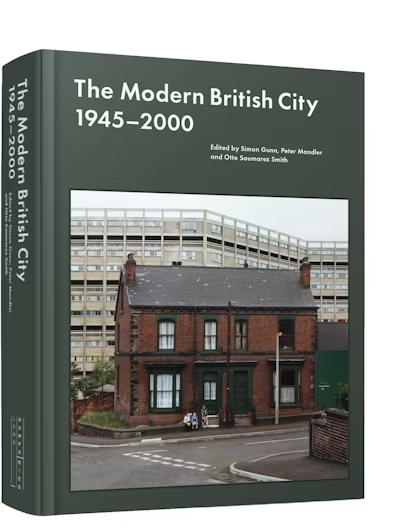
This week sees the publication of The Modern British City 1945-2000, edited by Simon Gunn, Peter Mandler and Otto Saumarez Smith, also published, like John Vanbrugh: The Drama of Architecture, by Lund Humphries. It consists of nearly 500 pages of articles on all aspects of the post-war city from a social, political and planning perspective, hard to summarise, although Peter Mandler does a good job in doing so in his ‘Afterword: The Five Phases of the Modern British City’: less about the utopian grand plans for new cities and more about cities as they actually were; constrained by restrictions on new development during the 1950s; only really undergoing radical redevelopment in the 1960s; already subject to a new interest in conservation and heritage in the 1970s; developing post-2000 through the rise in the number of students who attended the new universities and then often stayed. There is a lot about the ambiguities of gentrification, particularly in the 1960s.

It’s a rich read:-

Standard

John Vanbrugh: The Drama of Architecture (16)

I have been asked if my event was livestreamed and the answer is yes.  Free, but a suggested donation.  Not sure what it will be like without the lovely audience.

Standard

John Vanbrugh: The Drama of Architecture (15)

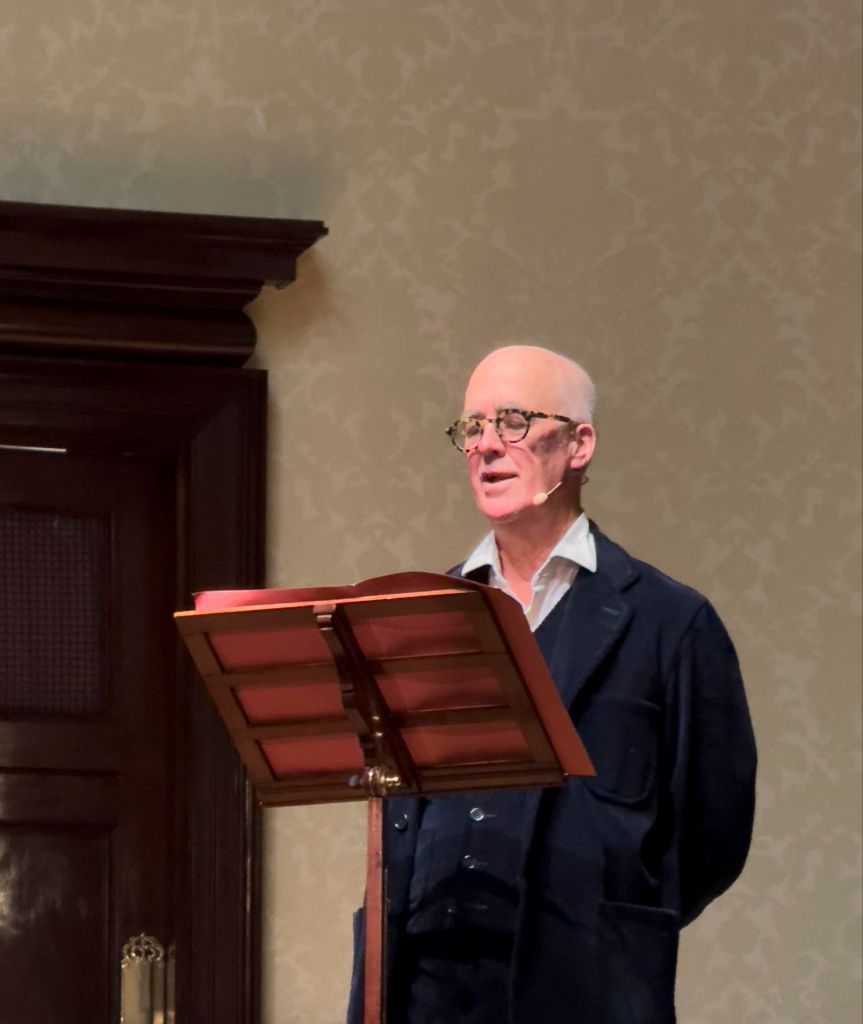
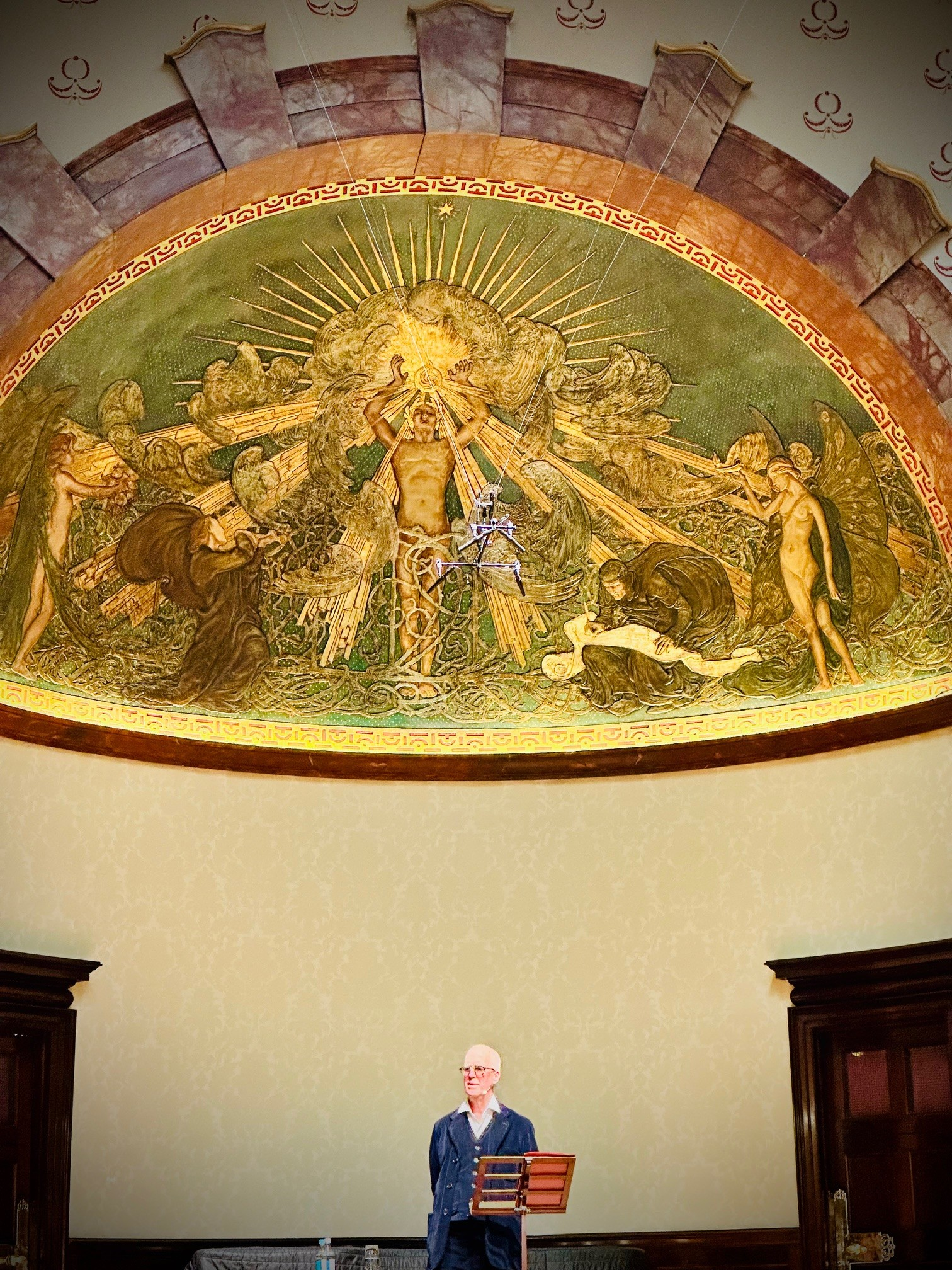
John Gilhooly, the Director of the Wigmore Hall in London, very generously suggested that I could launch my book, John Vanbrugh: The Drama of Architecture there.  It was an amazing experience because the Wigmore Hall is such a beautiful space – so grand and yet still so unexpectedly intimate, a performance space with perfect acoustics, designed for the piano.  In the Green Room are photographs of all the greatest concert performers of the last fifty years.  I was both overwhelmed, but also found it unexpectedly enriching.

Thank you so many of you for coming:-

Standard

The Townhouse Bicycle (3)

https://www.pashley.co.uk/blogs/pashley/pashley-x-considered-things?_kx=91rxTAkG8ktn4MziNJ3eW1DlEf6fO7dxT8g5UFS4ZdGR4bqdgWd67RNg5-COqw10.Ux7JNC

Standard

Poundbury (2)

I felt badly that I had never been to Poundbury in spite of the fact that it is such a topic of architectural discussion and debate – I suspect by people who hold very strong views against it, but also may not actually have seen it. So, in August, I went on a day trip and was shown round Phase III of its development by my nephew, George Saumarez Smith, who has been responsible for much of its recent design for which ADAM architecture and Ben Pentreath have recently been awarded the Georgian Group’s Diaphoros Prize.

I was impressed by the scale of Poundbury’s development, done in three phases, and the way that the two earlier stages which are different in character have matured. It has taken time. Unlike Upper Heyford, its population is now about 4,000 after thirty years; Upper Heyford is planned to have a population of 13,000 after ten. The first stage is more like a village.

I sense that new towns are very scared of density, hypnotised by the early twentieth-century dream of the garden city. If you compare Poundbury to big new areas of recent urban development, like the outskirts of Aylesbury and Cambridge, then it scores highly in being carefully planned, well considered and properly Georgian in feel – three-dimensional architecture, not paste-on, neo-Georgian.

I can’t really understand why it attracts such extreme ire, except that it is thoughtfully traditional which architects absolutely hate.

I have written about it at greater length in this month’s Critic:-

https://thecritic.co.uk/issues/november-2025/dont-be-down-on-poundbury/

Standard

John Vanbrugh: The Drama of Architecture (14)

I had been tipped off that the first review of my book would appear in this week’s Country Life and, indeed, it has – a very nice, generous and well-informed account of it by Michael Hall, the former editor of both Apollo and the Burlington Magazine.

He makes the point that Vanbrugh may have been good at making sketches of his projects in the same way that Norman Shaw would do designs on the cuffs of his shirts at dinner parties. I think this is exactly right, as suggested by the two sketches of the garden front of Castle Howard which surfaced in the collection of the Marquess of Bute in the mid-1990s – not finished drawings, but showing just enough to give an idea as to what the garden front would look like.

More on this tomorrow in my talk at the Wigmore Hall for which there are still a small number of tickets available:-

https://www.wigmore-hall.org.uk/booking/60776

Standard

Duncan Robinson (3)

Duncan Robinson’s posthumous book, Pen and Pencil: Visual and Literary Culture in Georgian England, was launched last night at the Paul Mellon Centre – very appropriately, as it turned out from Brian Allen’s speech, because Duncan had helped save and stabilise the finances of the Paul Mellon Centre when he first became Director of the Yale Center for British Art in 1981.

He had been thinking about the book while he was at Yale and later as Director of the Fitzilliam Museum, but only started writing it after he had retired from Magdalene College, Cambridge in 2012. In fact, I see that nearly my last correspondence with him was about his Introduction in February 2021. He died in December 2022.

After reading English at Cambridge, he went to study early Italian paintings as a Mellon Fellow at Yale, but he must have imbibed a great deal of the intense anglophilia and study of English literary culture which was a characteristic of Yale at the time. Chauncy Brewster Tinker, the author of Painter and Poet: Studies in the Literary Relations of English Painting had died in 1963, but his spirit lived on, not least at the Elizabethan Club which Tinker had helped found.

I am so pleased that Duncan’s book has now been published, beautifully produced by Pallas Athene:-

https://pallasathene.co.uk/shop/pen-and-pencil-visual-and-literary-culture-in-georgian-england

Standard