If you happen to be passing a newsagents which stocks copies of Country Life (not many do), you might like to buy a copy of this week’s issue (January 14th.), which has a cut-down version of a talk I gave in October about Vanbrugh’s changing reputation.
Surprise, surprise, everybody hated his buildings during his lifetime and then gradually came to acknowledge their power – ‘The Shakespeare of Architects’, as John Soane called him.
Long-standing readers of my blog may remember that, in 2022, I got involved in the controversy surrounding the plans to re-develop the Custom House, a fine, if austere, early nineteenth-century official building, much of it designed by Robert Smirke, occupying a wonderful site right next door to the Tower of London where goods could be off-loaded for inspection and payment of customs duty straight from the river.
The plans went to a planning appeal and quite rightly were turned down.
Then, it appears that a number of things happened behind-the-scenes. First, the Georgian Group either drew up, or had already drawn up, an alternative scheme which respected the existing fabric of the building. Next, with the encouragement of the City authorities, ownership was transferred to Jastar Capital, a hotel group which was more likely to respect the historic characteristics of the building. Then the new owners engaged the King’s Foundation to oversee a five-day formal process of consultation with all the key stakeholders, including the Georgian Group. The result is that they have come up with a scheme which, so far as possible, retains the historic fabric and opens the building and, equally important, its river frontage to public access.
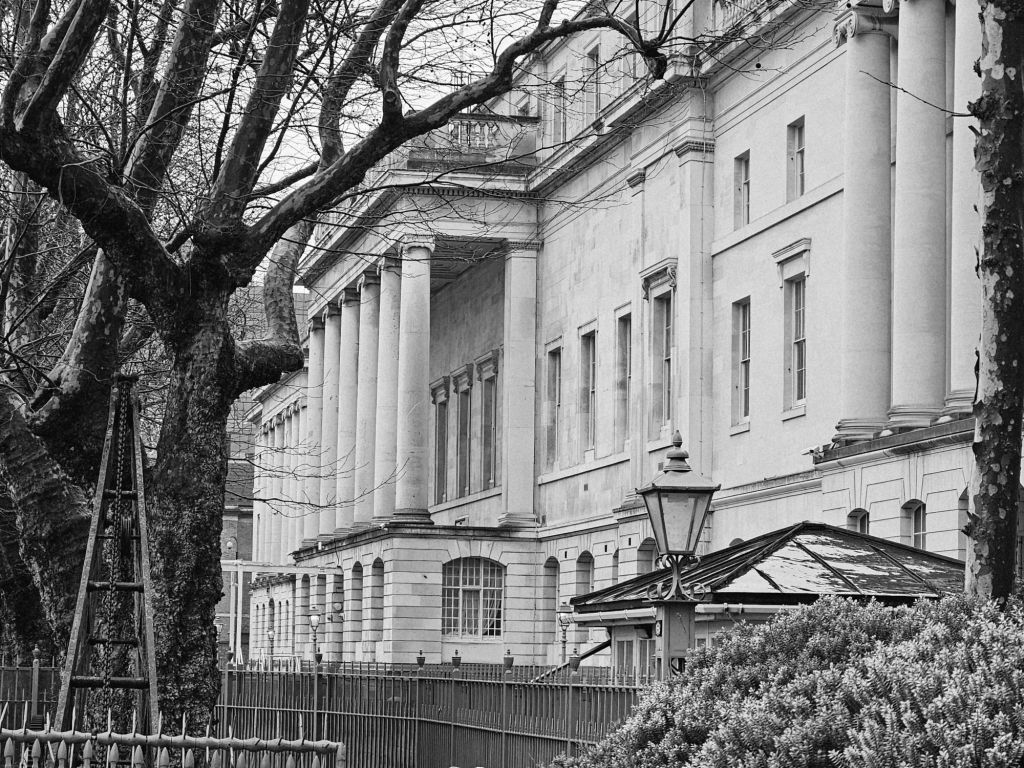
This is the river frontage (in the rain):-
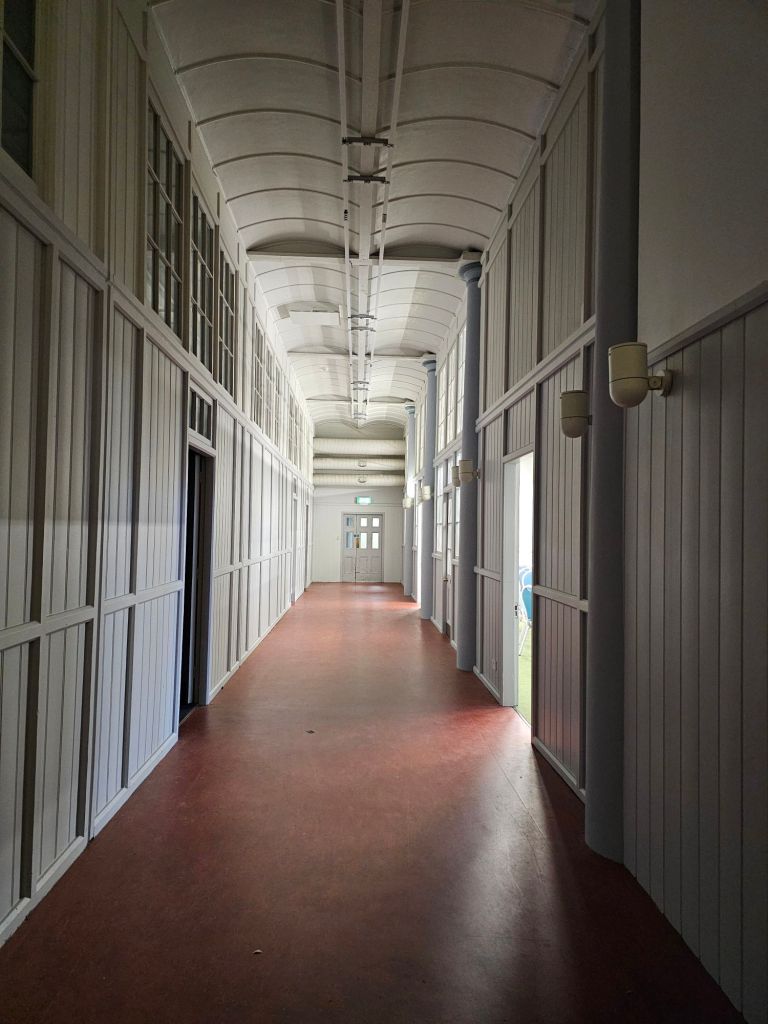
This is the interior as is with an iron roof and a great deal of later infilling:-
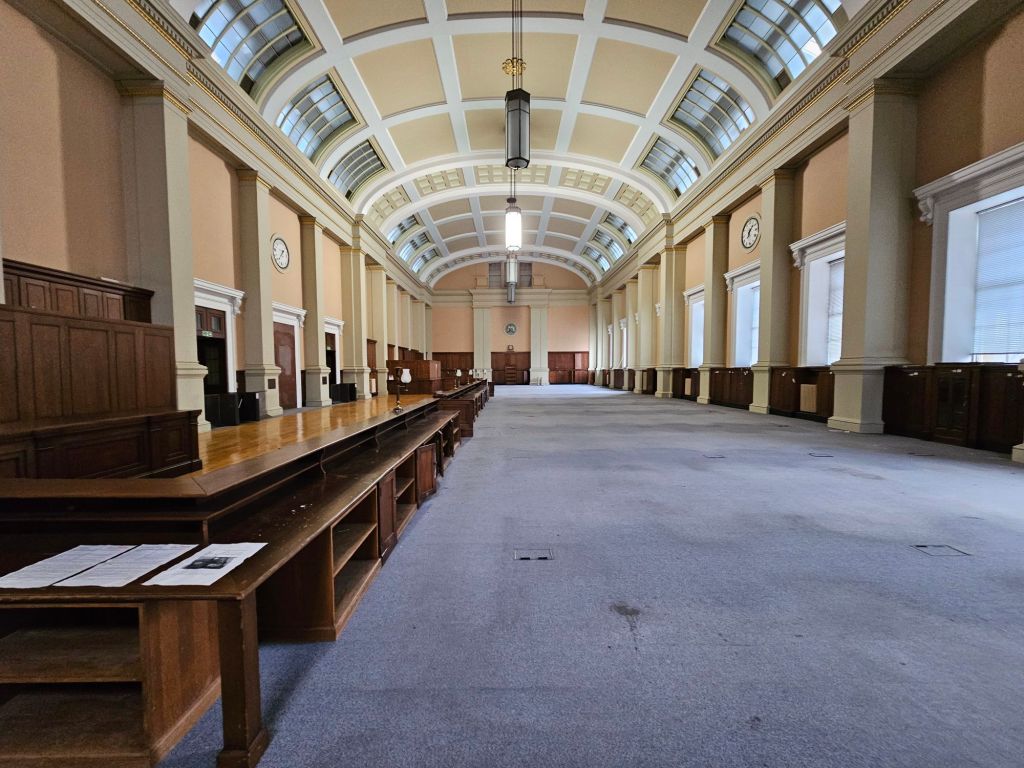
This is the wonderful upstairs Long Room:-
It feels like a model of how – sometimes – a long drawn-out planning process can have a good outcome.
I was originally expecting to use crowd-funding as a way of financing the publication of my Vanbrugh book, but, in the event, this turned out to be unnecessary owing to the generosity of two trusts; but the film that was generously made by Lone Star Productions to accompany the planned online request for funding survives and has been made available by Lone Star.
I have been trying to post it even though it is now a bit out-of-date and the book has been published (and despite the fact that I gave the wrong county for Kimbolton !). But I have been experiencing difficulties in doing this and it may need someone better than me at tech to instal it, so that it is not password protected.
I am still hoping that it might be possible for someone to make a documentary about Vanbrugh as part of the celebrations of his tercentenary which are gathering pace, with exhibitions planned at most of the houses, including an exhibition, Blueprints of Power, opening at Blenheim Palace on February 14th.
The BBC say Vanbrugh is of zero public interest, but he designed two of the greatest country houses, two plays which are still performed, his drawings are going to be the subject of a forthcoming exhibition at Sir John Soane’s Museum (opening March 4th.), and the building of Blenheim starred in The Favourite.
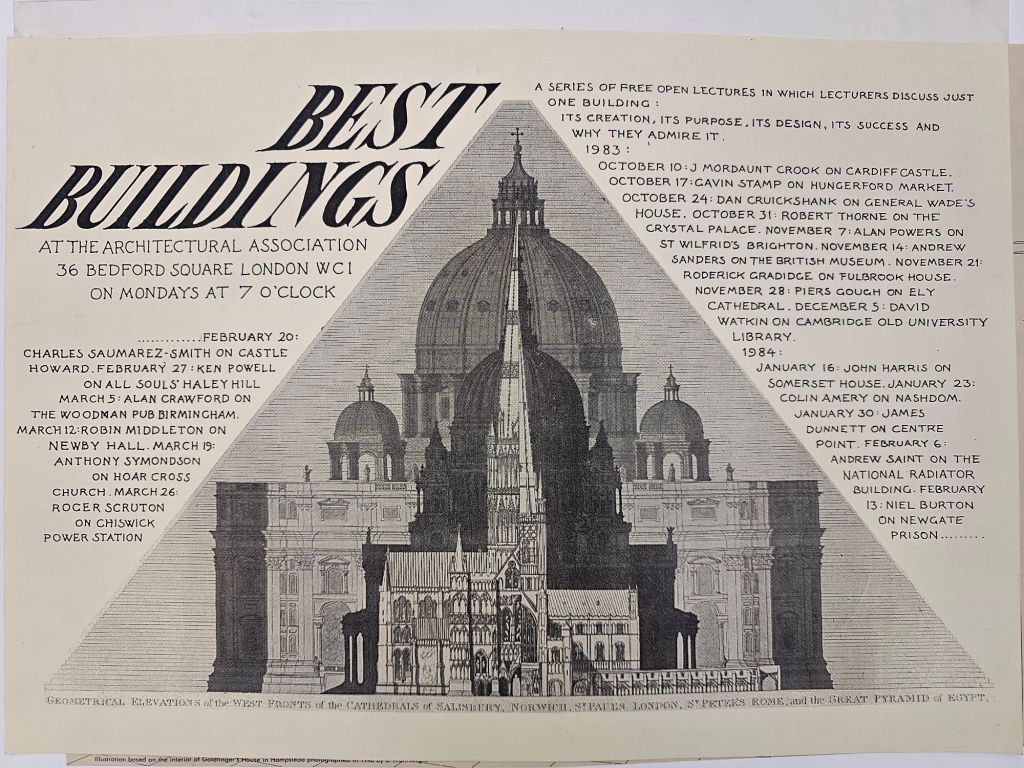
Sitting in the library of the Paul Mellon Centre this afternoon, Joshua Mardell asked if I would be interested in a poster drawn by Gavin Stamp advertising a series of lectures on ‘Best Buildings’ due to be held at the Architectural Association in Autumn 1983 and Spring 1984.
Indeed I was, not least because the first lecture in the series was by me.
I had never seen the poster, but remember the occasion well. The lectures were organised by Robin Middleton, then head of general studies at the AA, as well as librarian in the Department of History of Art at Cambridge. They were unpaid, but included dinner afterwards at the Neal Street Restaurant, then über-fashionable; and it was nearly the only time I met the late Andrew Saint. The lecture was going to be published in AA Files, but for some reason wasn’t.
I would like to have heard Roger Scruton on Chiswick Power Station.
The lectures were thought to represent a shift in intellectual interests from the nineteenth century to the eighteenth, although this is scarcely evident in the overall choice of subjects.
GMS/6/1, Best Buildings lecture series poster, advertising lecture series held at the Architectural Association, 1983, Gavin Stamp Archive, Paul Mellon Centre for Studies in British Art.
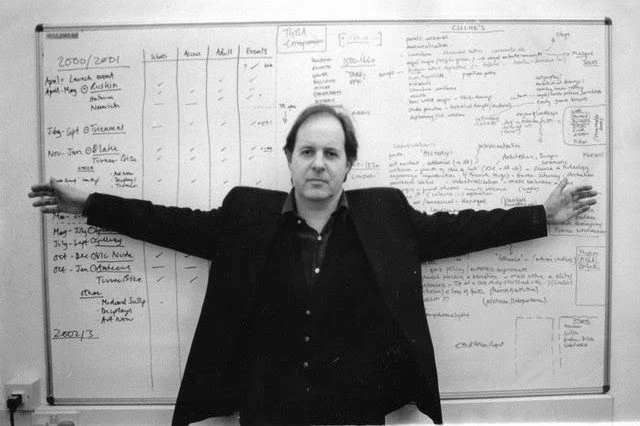
I have been waiting to post something about Dick Humphreys, a friend from when he was Head of Education at the Tate (and, indeed, before that) who died entirely unexpectedly in October.
I’m glad that an obituary has now appeared in the Telegraph which is a very good record of his character, his contributions to the intellectual life of the Tate and the exceptionally wide range of his interests:-

 | Charles | Saumarez | Smith |
You must be logged in to post a comment.