Drawn to War (1)

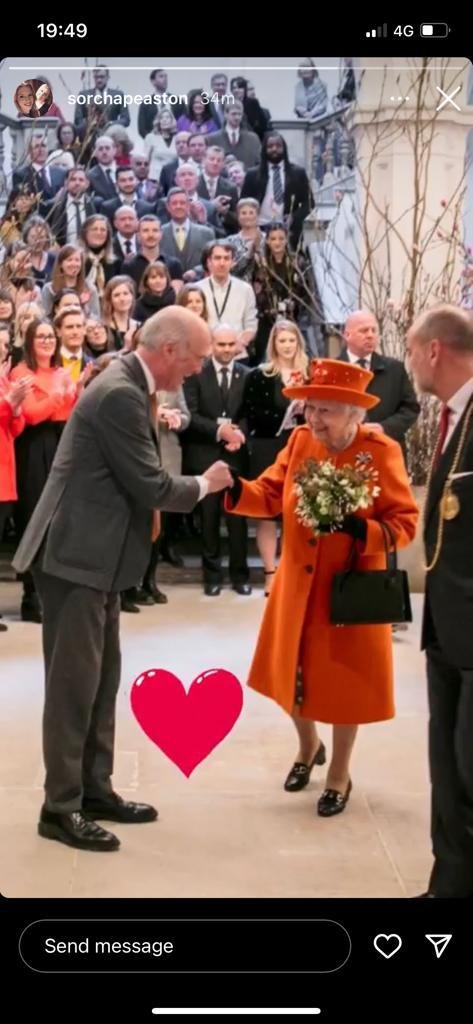
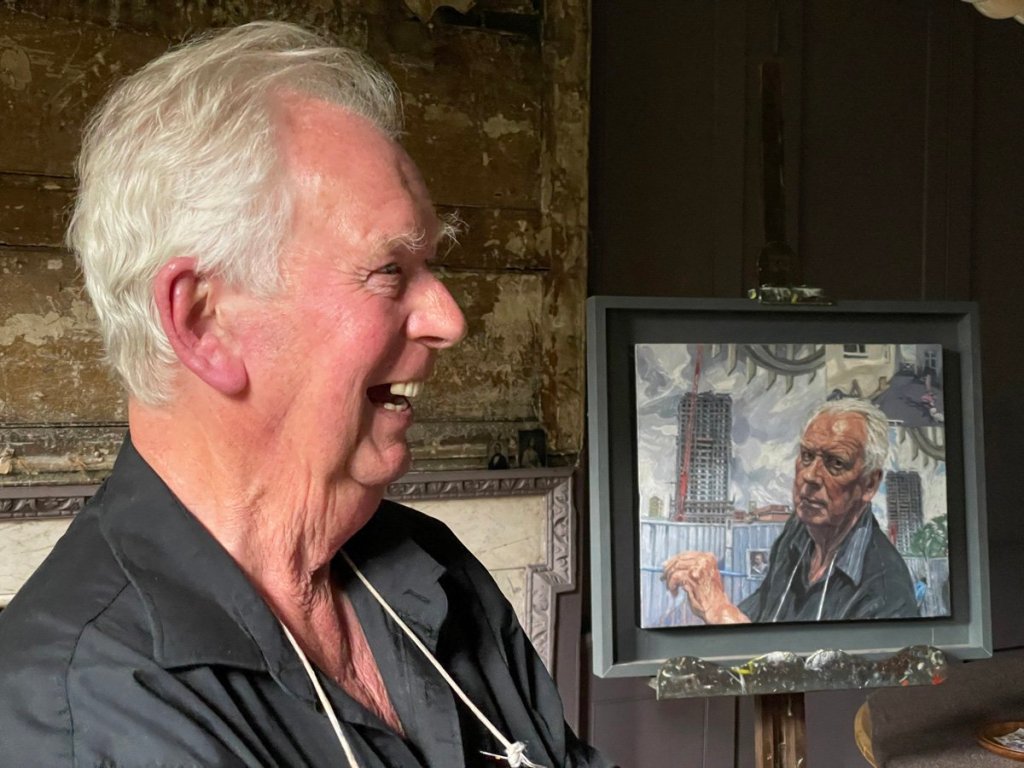
I have been swotting up on Margy Kinmonth’s film about the life of Eric Ravilious, Drawn to War, which is now on general release in cinemas all over the country – and very good it is. I make a fleeting experience, supposedly impersonating Kenneth Clark who was responsible for Ravilious’s appointment as a war artist. Here is a picture of the filming in the Imperial War Museum on 13 April 2021. It seems like another era, much more than just over a year ago:-

Standard

The Custom House (8)

A very good, clear account, as attached below, of the decision not to allow the development of the Custom House as yet another luxury hotel. I hope the developers will now work with the Georgian Group on an alternative and more imaginative scheme. Or perhaps the City could buy it off them and facilitate a more publicly oriented scheme ?

https://georgiangroup.org.uk/2022/07/04/custom-house-appeal-decision/?s=09

Standard

Serpentine Pavilion 2022

I thought I should go and see this year’s Seroentine Pavilion designed by Theaster Gates: a big, black cylinder with a hole in the roof:-

In some way, of course, this imagery has been extensively worked through, not least by Mark Rothko in the Rothko Chapel in Houston and James Turrell in his light installations. I don’t think this invalidates the authority of the black drum – part-funereal and part-meditative. It’s only a bit odd that one can buy a cup of coffee which slightly detracts from the idea that it is sacred space:-

Standard

Friends of Friendless Churches

We are relatively recent converts to the Friends of Friendless Churches and have still not managed to see any in England; but in North Wales, they look after some of the most profound and moving chapels and small churches and they do so in the most unobtrusive and sympathetic way – lowkey, keeping the churches open, trusting visitors to respect what they are seeing, with minimal intervention and interpretation. I greatly admire this approach to the preservation of the past. It allows the buildings to survive without telling one what to think or feel. So far as I can tell, it is run by one person only, so its overheads must be minimal. This is only a way of saying that it’s a very good cause. See attached.

https://friendsoffriendlesschurches.org.uk/become-a-friend/?s=09

Standard

The Olympic Legacy (2)

For anyone like me interested in examining the effect of the Olympics, good and bad, and the incredibly complicated politics behind it, I recommend Dave Hill’s very detailed account in his self-published book on The Olympic Park (see below). It’s hard now to track the changing policies which Hill details. Ken Livingstone and particularly Tessa Jowell come out of it well. The issue which Ollie Wainwright raises in the Guardian yesterday is how far Boris Johnson then hijacked the Legacy Corporation and thwarted the realisation of their original ideals.

https://www.onlondon.co.uk/shop/olympic-park-when-britain-built-something-big/?s=09

Standard

The Custom House (7)

Following my last post, I have discovered that I am behind the times. The City of London Corporation has indeed already recognised the weaknesses of what was proposed for the redevelopment of the Custom House and has endorsed the alternative plans put forward by the Georgian Group before Christmas as economically viable. So, hats off to the Georgian Group for not only effectively objecting to the scheme on historical grounds at the Inquiry, but for then putting forward a realistic and fully costed alternative, which retains the integrity of the historic fabric and will allow much better public access. Let’s hope the current owners will move forward on the basis of the Georgian Group’s proposals.

https://georgiangroup.org.uk/2022/04/29/city-of-london-custom-house/

Standard

The Custom House (6)

Hurrah ! Hurrah !

The Inspector, Paul Griffiths (he was also the Inspector for the Bell Foundry redevelopment) has recommended refusal of planning permission for the development of the Custom House, such an exceptionally important historic building, as – how did you guess ? – another luxury hotel.

Maybe this is a signal that the planning department of the City of London is beginning to recognise that over-intensive new development may not necessarily be the best strategy for the Square Mile; and that it needs to retain as much as possible of its historic fabric and the creation of new civic space to counterbalance the skyscrapers.

Now, it just needs an imaginative scheme as to how it might be developed as public space: a competition is needed perhaps. It could be a public reading room (vide what has happened to the British Library); a modern version of a bazaar; a centre for London fashion is what I think it should be (such a good space for a catwalk) ?

There are lots of better and more imaginative uses for it than a luxury hotel.

Standard

The Olympic Legacy (1)

I am immensely impressed by Oliver Wainwright’s Long Read (see below) on the failed aspirations for London’s 2012 Olympics. It was always intended to be at least as much about the urban regeneration of Stratford and the River Lea as it was about sport; and it was a bit of a surprise that London won it.

Wainwright documents the original hopes and aspirations of the local community for better facilities, particularly housing; how these plans, developed by Ken Livingstone and Tessa Jowell were hijacked by Boris Johnson when he became Mayor; and how most of what has been built is more for wealthy young professionals who can afford the high rents, instead of mass housing for the working population, as was originally intended.

Oddly, I am a bit more sympathetic than he is to what has been achieved. Much of the Olympic Park is well laid out and, at least so far, well maintained (although, as is pointed out, big roads bisect it unhelpfully). Chobham Manor is an experiment in a modern version of traditional housing, worth the attempt, although a bit sterile. East Bank will bring culture to East London, including the V&A. And V&A East, its massive storehouse on the west of the park, will, I suspect, be even more adventurous.

I have written about some of the same issues for the August/September issue of The Critic, and Iain Sinclair wrote about them in last Saturday’s Financial Times. I suppose everyone is waking up to the need to examine what the area is like after more than a decade of new development, and how successful (or not) it has been as the nearest approximation to a millennial New Town. The short answer is that landscape designers are much better at creating new environments than urban planners.

https://www.theguardian.com/uk-news/2022/jun/30/a-massive-betrayal-how-londons-olympic-legacy-was-sold-out

Standard

The Marks and Spencer debate (3)

I was one of the signatories to the letter asking the Secretary of State to call in the plans to redevelop the old Marks and Spencer building on Oxford Street. As I see it, it is not just an environmental issue, but also the question as to whether or not it is sensible to demolish a decent, if not especially adventurous, classical (Néo-Grec) building of the late 1920s in order simply to replace it with an entirely nondescript new office building. The original is a survival of an unfashionable style which had a sense of civic value; the replacement seems not to have anything to recommend it. So, I hope the Inspector leading the Planning Inquiry will reject it.

https://www.theguardian.com/business/2022/jun/24/not-just-any-building-why-plans-for-ms-flagship-store-hit-a-raw-nerve?CMP=Share_AndroidApp_Other

Standard

Moelfre

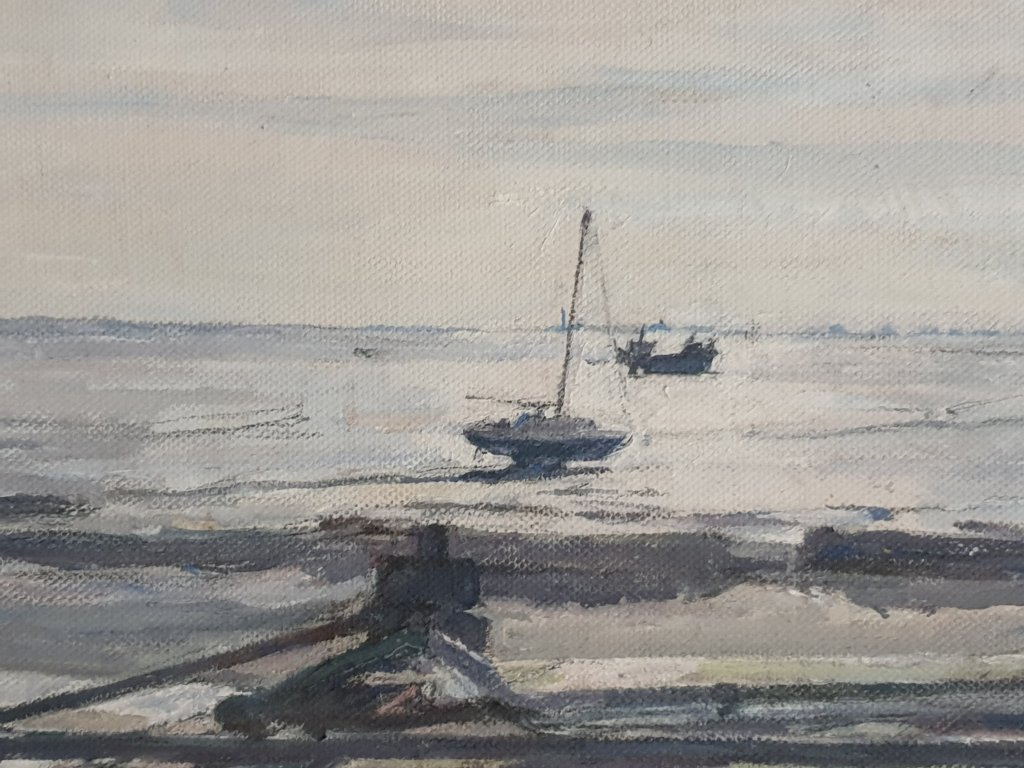
We like Moelfre, a sweet fishing village with a small harbour looking south towards the mountains and east towards Liverpool, described in the Shell Guide a touch snobbishly as ‘a village for seaside and retirement to one’s dream bungalow’ (written by Lord Esher):-

Standard