The slow train from Milan to Turin enabled me to finish Iain Pears’s moving description of the love affair between Francis Haskell, who comes across as a surprisingly nerve wracked academic, afflicted by all sorts of doubts about his sexuality and author of sixty volumes of diary held by the National Gallery, and Larissa Haskell, the charming, highly intelligent, assistant curator of drawings at the Hermitage Museum who had endured terrible privations during the Siege of Leningrad which she survived much more easily than he had the torture of Eton.
I would have liked a little bit more about the milieu of King’s College, Cambridge as it was in the 1950s, but it gives a good sense of the nature of European museum and research culture at the time and a relationship of shared intellectual values across national borders.
Rather amazingly, since the last symposium of the Provenance Projected Project in Oslo, Uwe Fleckner and Mari Lending have compiled an immense 272-page Dictionary based round all the key terms involved in the thinking round the project: from Acquisition to Weathering. Yesterday, we heard about Authorship, Material, Renovation, Reconstruction and Postproduction. They will be short essays on architectural themes and issues, due to be published by Hatje Cantz in late October. An astonishing feat of systematic co-ordination, including a 23-page bibliography. I have written the tale of the Whitechapel Bell Foundry under the rubric of Craft.
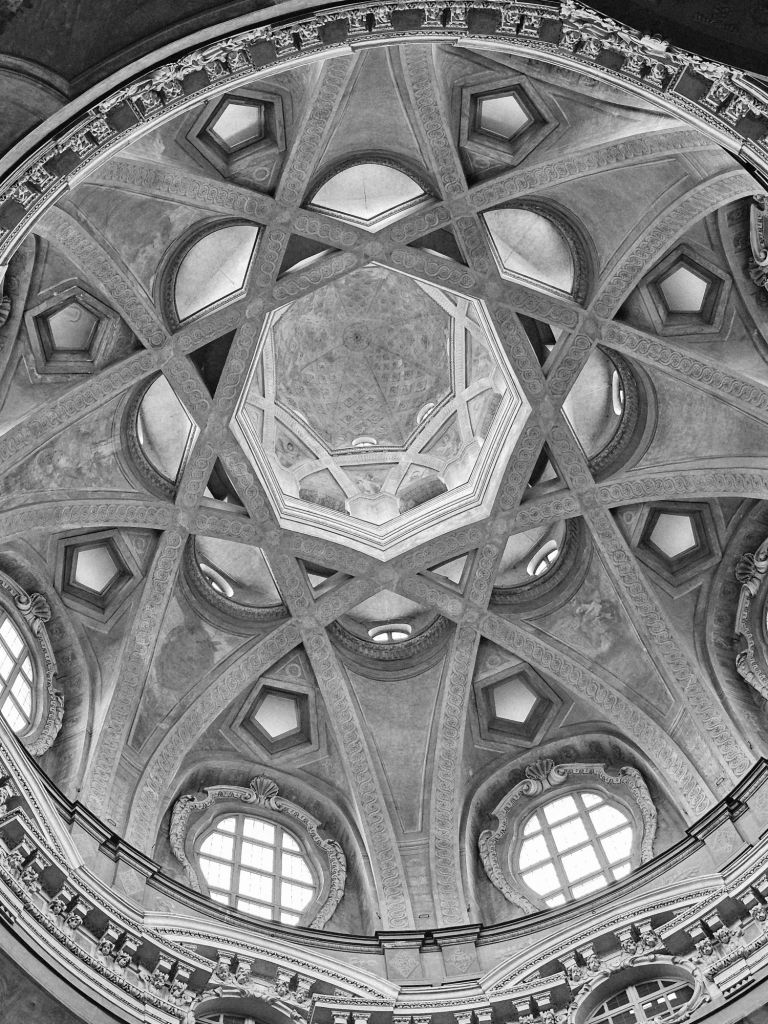
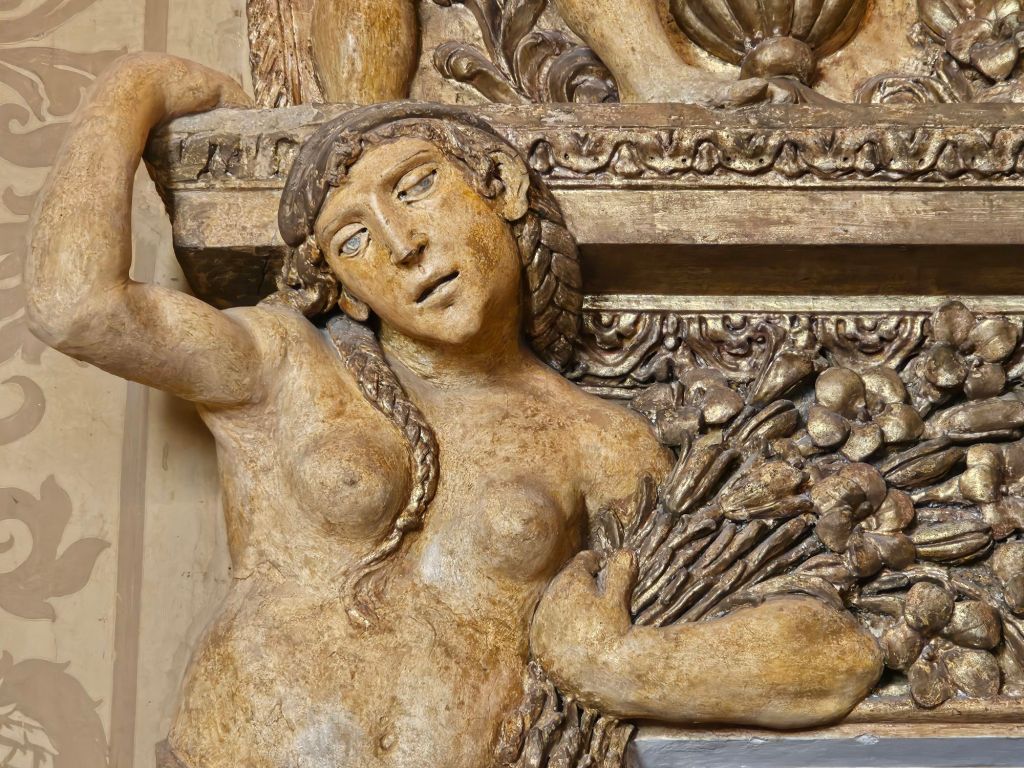
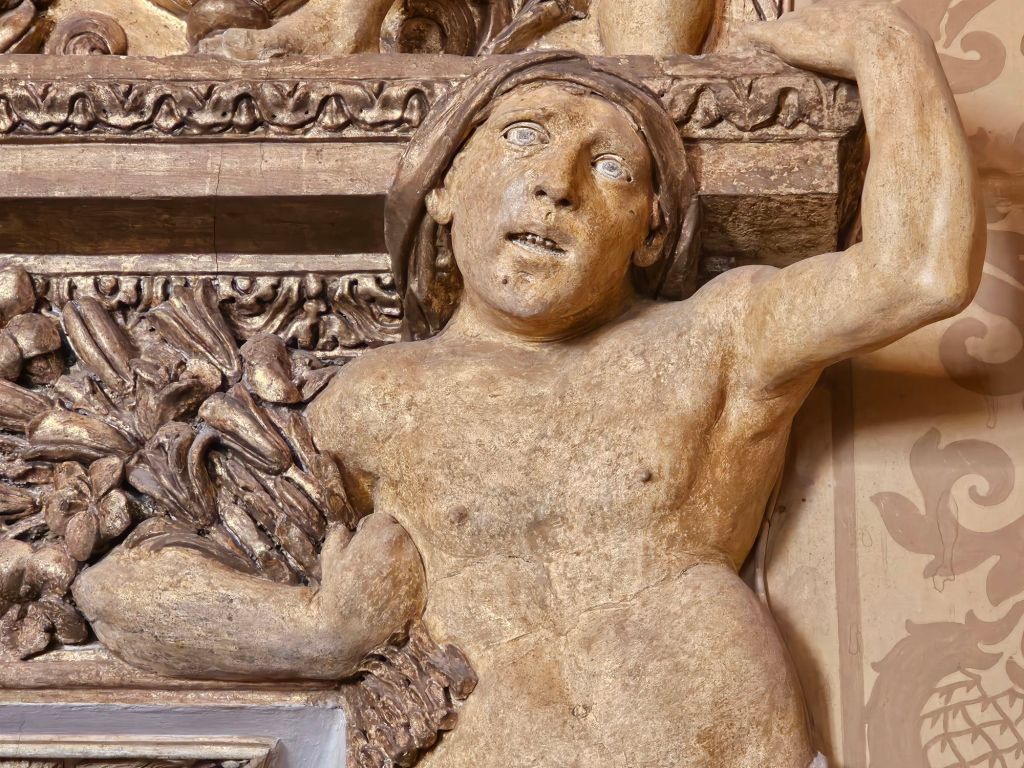
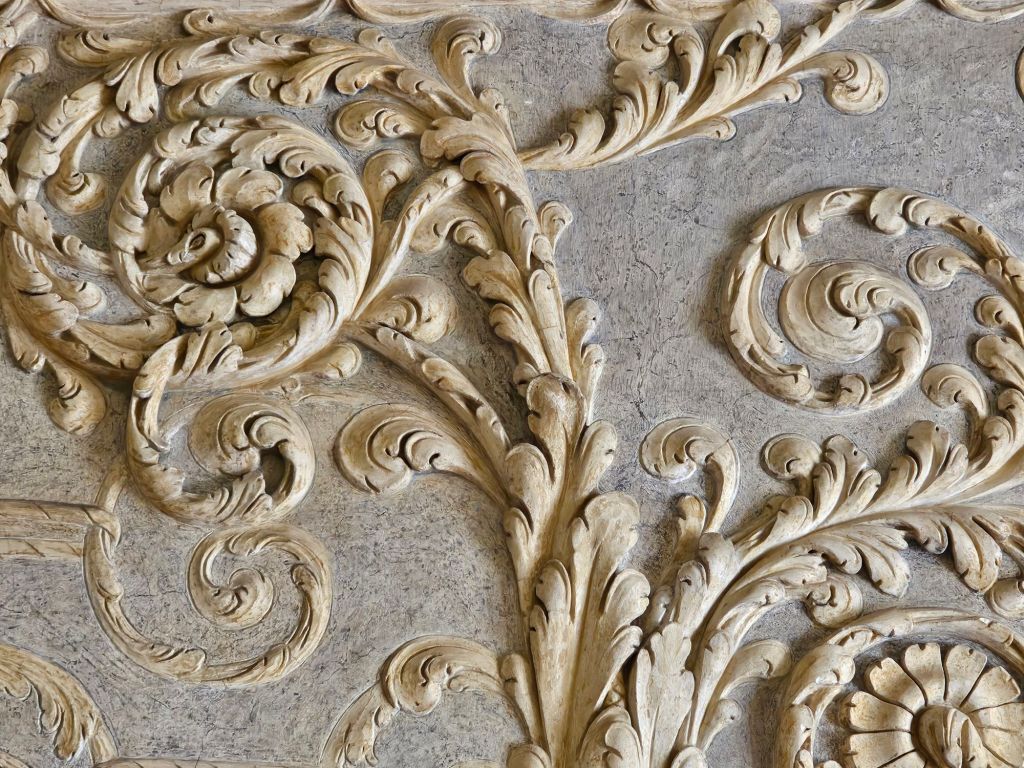
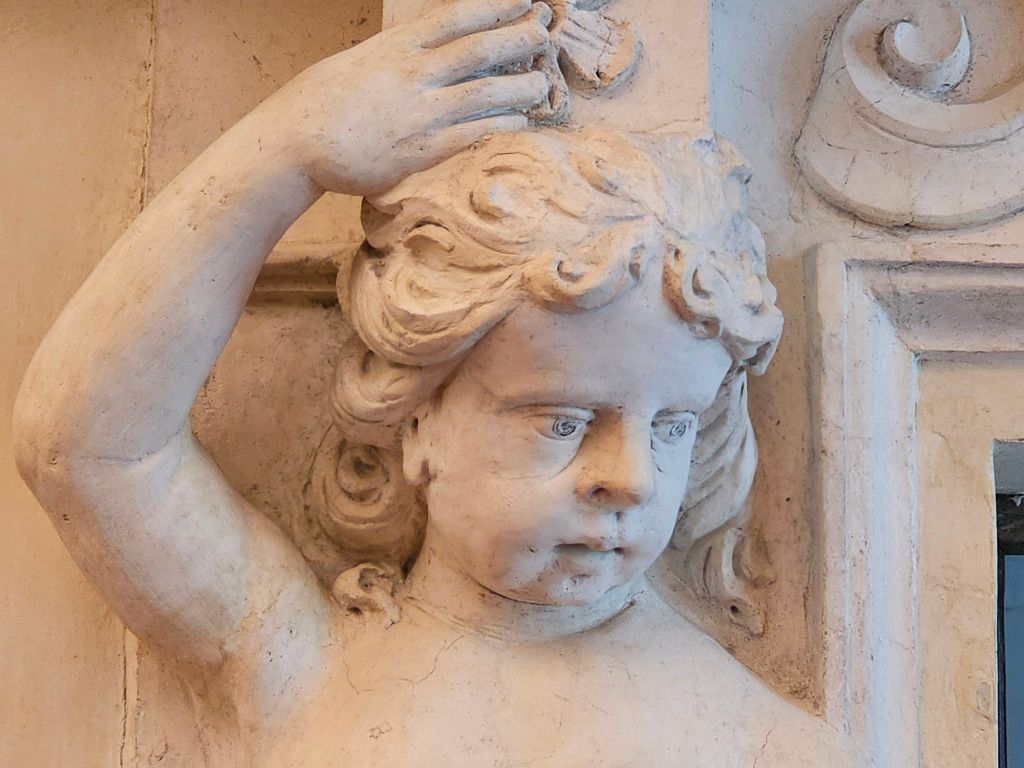
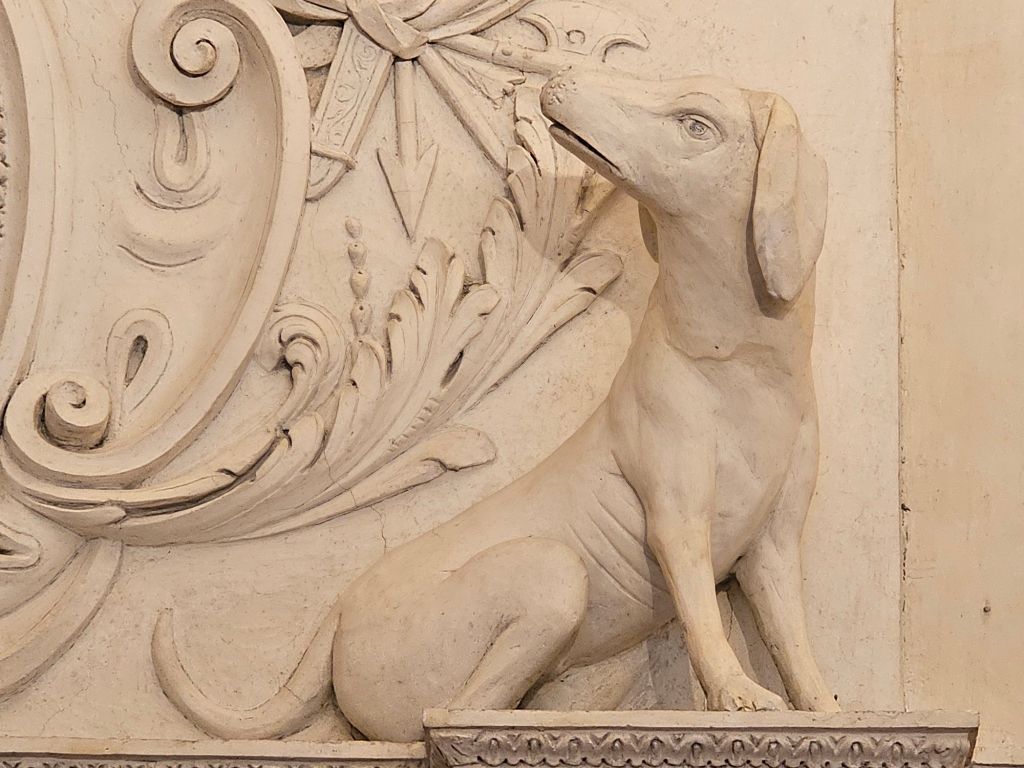
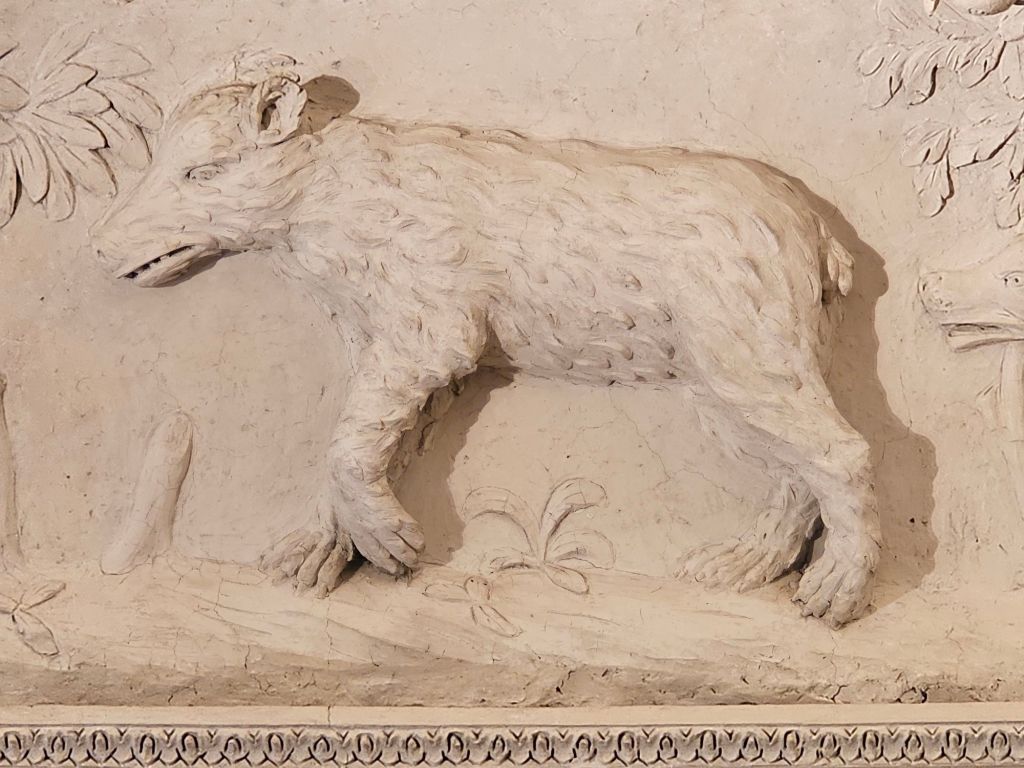
A good place for a conference: a maison de plaisance with fine stucco work, taken over in 1859 as the Regia Scuola di Applicazione per gli Ingenieri, before being taken over by the architecture faculty of the Politecnico di Torino.
This is the Room of the Lilies:-
The plasterwork decoration of The Golden Cabinet of the Flowers:-
And the Hunting Room, where the plasterwork is dated 1644:-
Over the last few months, Romilly and her translators have been working away on a very adventurous exhibition, Invisible Landscapes, jointly with Lucille Lewin, a ceramic artist. It opens on Wednesday 4th. June for four days only under the auspices of Tristan Hoare, not in his gallery in Fitzroy Square, but in Chiltern Street, not far from Baker Street, in a wonderful private space.
Having seen it take shape on the dining room table, I am looking forward to its installation by the curator, Omar Mazhar. See attached for details.
I have been asked (see Comments) about the new development next to the London Hospital which looks very similar to what is proposed for the Blue Anchor Brewery site in Whitechapel. It seems to be the new norm for urban development: some semi-high rise apartment buildings set back from the street and surrounded by carefully landscaped courtyards. It’s an efficient formula, with nothing to object to, but contributes nothing to either the local community or the street. The so-called Silk District was designed by BSBG, a firm of architects who made their reputation in Dubai, designing palaces, schools and golf clubs.
The Blue Anchor Brewery site has been planned by AHMM, architects of the very successful new town hall, which has just been awarded the RIBA London Building of the Year Award 2025. This means that it is a strong candidate for the Stirling Prize. One just hopes that they can provide some sense of urban and civic character to the development, maybe in the way it relates to the street, including some shops, instead of just being a version of a gated community.
Likewise, the Genesis Cinema development. It’s a big chunk of Whitechapel which deserves careful thought and something a bit more imaginative than a bit of townscape which might just as well be in Dubai.
I don’t think I have ever seen a memorial service as full as that for the late Ros Savill, the brilliant and lovely former Director of the Wallace Collection, so endlessly energetic and ebullient that it is hard to imagine that she is no more: museums, country houses, friends and family, she had time for us all.
Born 9 July 1834, the son of James Ross, an architect. He took over his father’s office in Inverness following his death in 1853, entering into partnership with William Joass in 1859. Married in 1865.
He travelled extensively, both round the Highlands, drawing medieval castles, visiting St. Kilda, going on study tours round English cathedrals (beautiful abstract drawings of Durham Cathedral) and twice down the Rhine, as interested in the landscape as buildings and studying its geology. In his architecture, he was as interested in the relationship of buildings to their surroundings as, also, in their ground plan.
He did an immense amount of architectural work, not just in Inverness, including its cathedral, but throughout the Highlands. He began by building on Ardross Street in Inverness, where he lived; started work on Inverness Cathedral in 1866. He went on to design churches; town halls; Duncraig Castle in 1866 for Alexander Matheson, the opium trader; it was enlarged four years later; Invergordon Castle in 1873; Eden Court and Torridon House in 1874; Aberlour Girls’ School, also in 1874; Portree Parochial School in 1875; Urrie House in 1883; Skibo Castle in 1901 for Andrew Carnegie, the Scots-born steel magnate. He did well over 1000 buildings, many of which have since been demolished, including work on the sea-front at Oban.
He is said to have done only three sketches for Ardtornish – a way of designing in a purely scenic way, interested in how it looks from down the Loch, its best view still.
It seems to have been a very business-liie approach: a quick sketch; then left to the office to work up into detailed drawings. It gave him time for local politics and he was big in freemasonry as well.
Octavius Smith bought the estate of Achranich in 1845. His father, William Smith, was a Unitarian MP and was Parliamentary Commissioner for Highland Roads and Bridges, which had introduced Octavius, his eighth son, to the remote parts of the Highlands, including Morvern.
Octavius was an interesting figure. He made money out of a distillery in Fulham, but spent part of the summer in Scotland. He lost the use of an eye in an explosion while building a new house on the estate (he was a qualified civil engineer). Of this, only the clock tower survives:-
Octavius died in October 1871 and was succeeded by his second son, Valentine, who demolished his father’s house in 1884 and commissioned a new one from Alexander Ross, an architect-antiquary in Inverness who had travelled in Alsace. This is the house as now:-
Valentine Smith died in 1906. The interiors were then radically remodelled by his sister, Gertrude, following plans devised by John Kinross in 1908:-
She lived in the house with her son, Gerard, till 1929, and the following year, the estate was bought by Owen Hugh-Smith (no relation of Octavius) in 1930 on the recommendation of Sir John Stirling Maxwell. He died in 1958. The management of the estate was taken over by his daughter, Faith, in 1967.
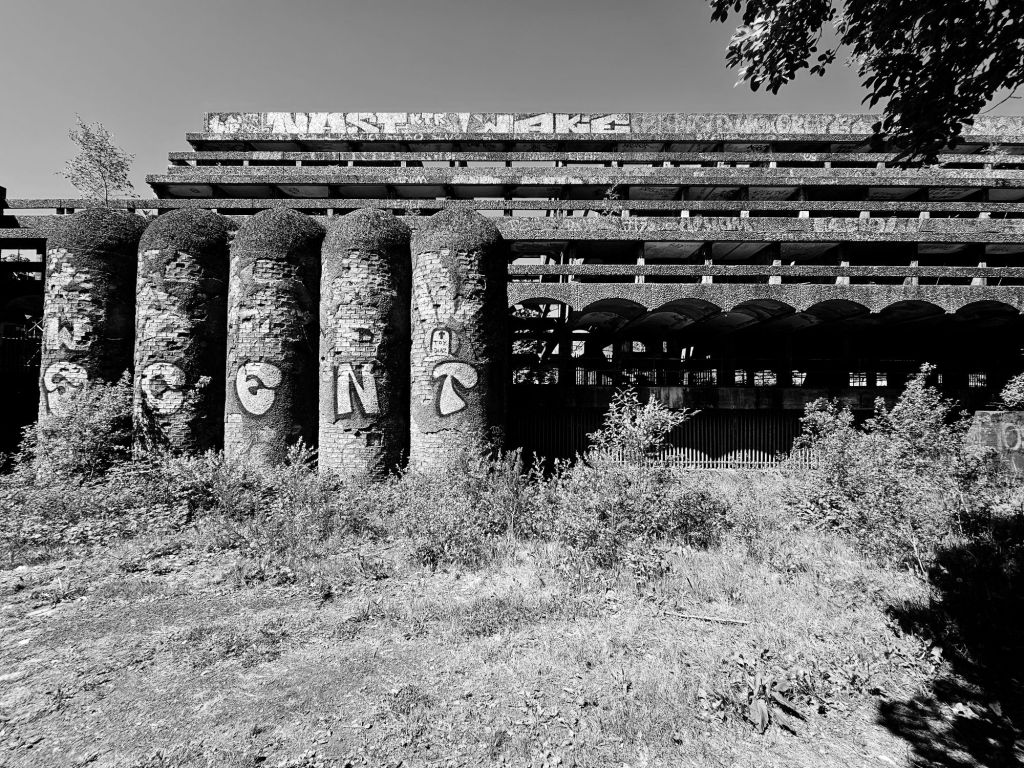
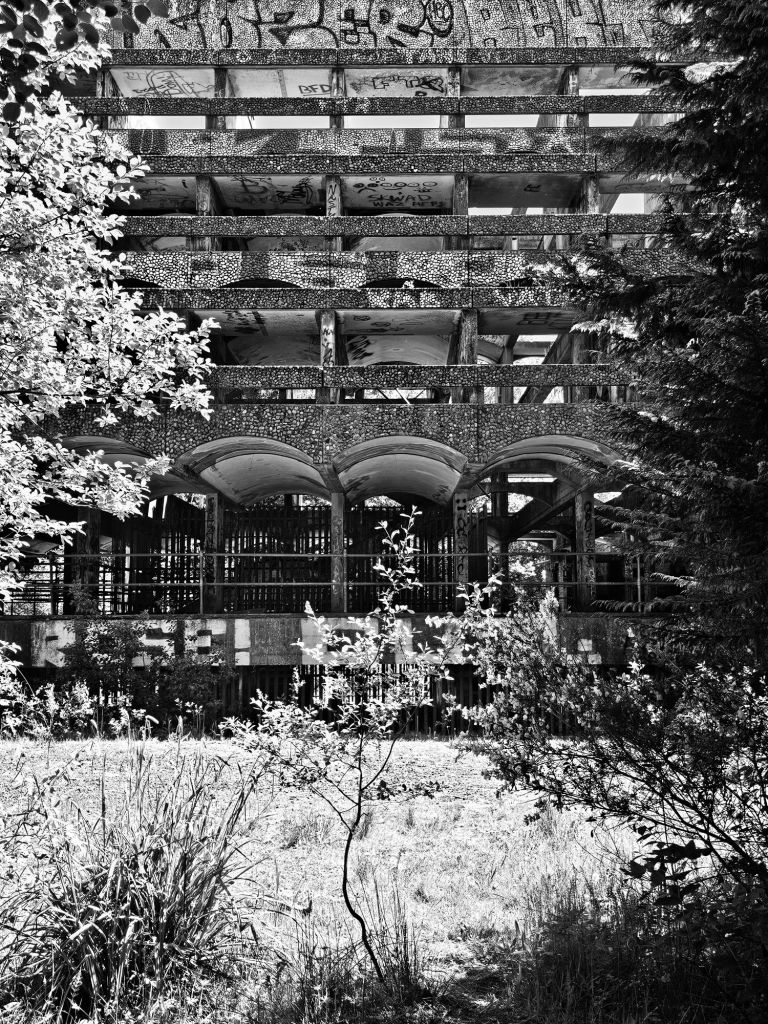
I stopped off en route to the Highlands to see what remains of St. Peter’s Seminary, Cardross, as grand a set of ruins as it’s possible to imagine:-
Designed by Isi Metzstein and Andy Macmillan of Gillespie Kidd and Coia in 1961 for 100 students, it was redundant almost from the beginning and closed in 1980.
Over the years, there have been plans to regenerate/restore it, but in its current state of nearly total dereliction, it is hard to imagine and on such a massive scale:-





 | Charles | Saumarez | Smith |
You must be logged in to post a comment.