As the garden moves into its autumn phase, I have been particularly impressed by the fat and overblown daturas, known for good reason, as The Devil’s Trumpet:-


And the Japanese begonias, which the Wynn-Jones from Crûg found in Japan:-


As the garden moves into its autumn phase, I have been particularly impressed by the fat and overblown daturas, known for good reason, as The Devil’s Trumpet:-


And the Japanese begonias, which the Wynn-Jones from Crûg found in Japan:-


This long read piece in the New Statesman tells one almost more than one needs to know about Dominic Cummings and his intellectual formation. Two things stand out: that at Oxford, he was a pupil of Norman Stone, who was a clever, radical Tory anarchist, who was also a well-known drunk, which could perhaps help to explain Cummings’ tendency to wander round the Commons with a glass in his hand and always arrive at work so late and so disheveled. The second thing is the amount of time he spent in Russia in the mid-1990s, where he will have witnessed at first hand and perhaps enjoyed the breakdown of civil society and the way it could benefit a small number of oligarchs who later helped to bankroll his Vote Leave campaign. Clever, undoubtedly, but corrupt as well.
https://www.newstatesman.com/politics/uk/2019/09/dominic-cummings-machiavel-downing-street
The front page of the Times today quotes a senior cabinet minister warning of the possibility of a ‘violent popular uprising’ if a second referendum overturned the result of the first. Immediately afterwards, Dominic Cummings is quoted as saying, ‘We are enjoying this, we are going to leave and we are going to win’. The said cabinet minister is then quoted saying that ‘it only takes a couple of nasty populist frontmen to inspire people’. The conclusion is obvious. We have two nasty populist frontmen and their plan is to inflame public opinion and encourage the threat of violence. Only the Times is too pusillanimous to say so.
Our copy of East London Homes: Creative Interiors from London’s East End has arrived, a book which documents and records the amazing variety of interiors in east London, some purely and austere modernist, but most creative freestyle, mixing old and new, full of potted plants, the product of London’s creative economy and the work of architects, photographers, furniture dealers and stylists, mostly young. We’re in, with beautiful photographs which make even my study look nearly tidy. It’s been produced by Hoxton Mini Press who have done so much to investigate the social life of East London through photographic books. A good Christmas present, I think.
I was encouraged this afternoon to watch the 16mm. black-and-white film shown in the Weston Gallery at the RA. It’s by Graham Ellard and Stephen Johnstone and depicts the taking down of the casts which used to be in the old Architecture Room at the Royal Academy Schools, but are now in store pending the re-development of the Schools. The film is deliberately ghostly, interlaced with Blinky Palermo removing casts in the 1960s and alongside it are examples of the casts themselves, including a Corinthian capital from the Pantheon:-

And half an Ionic capital, cast from the north porch of the Erechtheion on the Acropolis:-

I have been asked what I meant in describing my sense of ‘the loss of the purest pursuit of knowledge across frontiers’ on entering the portals of the Warburg Institute. I realise that the wording of my comment may have been ambiguous. What I meant is that owing to a lifetime of working in museums, I have been not been able to spend the time as I would once have liked devoted ‘to the purer pursuit of knowledge, as represented by the Warburg. By chance I have been reading the letters that Kenneth Clark wrote to Gertrud Bing this morning in which he mourns the fact that, when the Warburg came to London, he had ‘looked forward to spending a considerable time at the Institute working on the Classical Revival, but I find myself more and more forced into a life of action’; or the same thought over twenty years later, ‘I have feelings of particular piety for the Warburg Institute, and I much regret that I have not taken advantage of its presence in England in the way I hoped to do. Partly through what is known as public work, and partly I suppose because I have not been able to keep down the buried actor in me as well as Warburg did’. I feel much the same, leave aside the actor bit.
I went to the party to celebrate the 25th. anniversary of St. John, the wonderful and austerely carnivorous restaurant established by Fergus Henderson, who was trained at the Architectural Association and has an eye for design as well as pigs, and Trevor Gulliver, also once an architect, in St. John Street in an old smokehouse in the days when, nearly impossible to remember, property was cheap owing to its proximity to the meat market. I was reminded of the fact that we interviewed Trevor Gulliver to run the restaurant at the National Portrait Gallery. At the time, he had a smart restaurant, Putney Bridge, on the banks of the Thames. Over the years, I’ve had many memorably delicious meals at St. John and even more at St. John Bread and Wine in Spitalfields, as well as living as much as possible on their bread and doughnuts from Maltby Street. I salute their achievement !
I called in on the exhibition on Ladybird Books at the Garden Museum. For some reason, I didn’t have them in my childhood, although now I see them, I clearly should have done, not just for the quality of the information about garden and wildflowers, but for their illustrations, including books on the Seasons, written by Elliot Lovegood Watson and illustrated by Charles Tunnicliffe RA:-


The Ladybird Book of Garden Flowers was illustrated by John Leigh-Pemberton:-


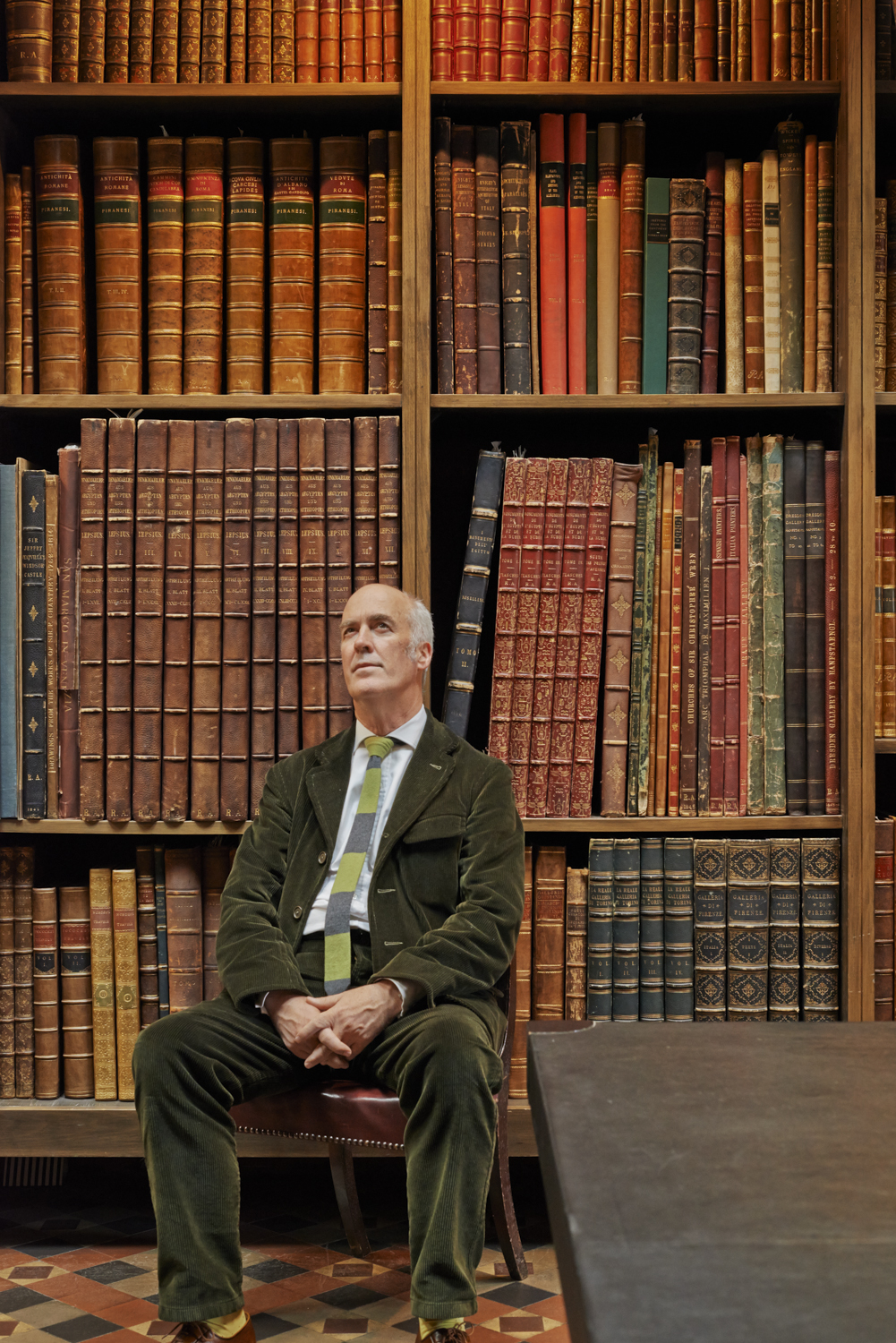
It’s a long time since I’ve entered the portals of the Warburg Institute, where I did my PhD. from 1977 to 1986. Each time I go now I feel an exaggerated sense of memory and loss – the loss of the purest pursuit of knowledge across frontiers.
The cast in the entrance apparently is the sole survival of the original Cubitt house in the north-west corner of Woburn Square:-

The corridors are now lined with the ghosts of the past. Gombrich:-

Gertrud Bing who was Aby Warburg’s personal assistant, then Fritz Saxl’s lover (together they commissioned a house in Bromley by Tecton), helped establish the library in London and became the Institute’s Director after Henri Frankfort’s death in 1955:-

And Eric Warburg, the member of the family who was most closely involved in the transfer of the library from Hamburg to London, assisting the shipping of 60,000 books in two small steamers down the Elbe:-

I should feel more pleased than in practice I am at the clarity, authority and unanimity of the Supreme Court’s admirably lucid judgment, which may restore some degree of judicial authority to public life, including the re-assembly of parliament. But it also demonstrates very clearly how quickly public political values can be, and have been, corroded by a government determined to sweep due processes to one side, firing anyone remotely hostile or independent minded in the civil service, wilfully misunderstanding and misinterpreting the historic role of the civil service. It was a small thing, but indicative, that a spokesperson in 10, Downing Street spoke yesterday of remainiac Scottish judges, as if the judiciary is somehow bent. Unfortunately, it is 10, Downing Street which has been bent, corrupted by the folly of power.
You must be logged in to post a comment.