Cast Courts

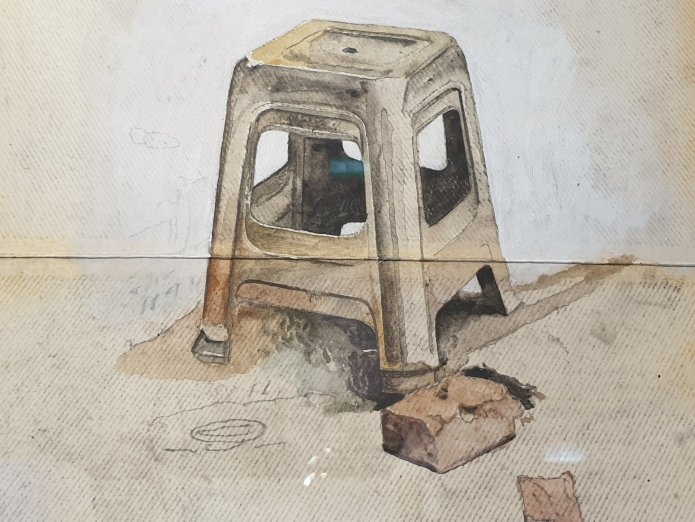
I went to see the new displays in the Cast Courts at the V&A, which were opened in November with funding from the Weston Foundation.

First opened in 1873, the Cast Courts were originally known as the Architectural Courts, full of both originals and copies, conceived by Henry Cole and designed by Major-General Henry Scott, the architect of the Albert Hall. It was intended partly to provide source material for students in the National Art Training School (I note that there was already a ‘Female antique class room’).

They were spared from destruction by the innate conservatism of the V&A, although the classical casts were transferred to the BM and, in 1947, a big collection of electrotypes was sold to Metro Goldwyn Mayer to be used as film props, as they were in Indiana Jones and the Last Crusade (1989).

They were last redisplayed in 1982, but in those days, the gallery in the middle was of fakes, whereas now it is full of interpretation:-

The inside of Trajan’s Column:-

Standard

Victoria and Albert Museum

Standing outside the Aston Webb façade of the V&A waiting for the museum to open, I was struck by the extent to which the sculpture on the façade of a highly international museum of design consists of a pantheon of British artists, all painters:- Hogarth, Reynolds, Gainsborough, Romney and Cosway to the left of the main entrance and Turner, Constable, Watts, Leighton and Millais on the right. They were put out at almost exactly the moment that the Tate Gallery was established as the National Gallery of British Art. Was it the V&A’s bid for supremacy in the field ?

Standard

Brexit again

I was encouraged by a friend who does not agree with my views on Brexit to watch the television programme on the origins of the Referendum last night. It was in many ways salutary, demonstrating the relentless and well organised pressure from the right of the conservative party and from UKIP on Cameron and that Cameron was not especially keen on Europe himself, always having to argue for Britain’s exceptionalism. What came across was how much it was, and is, an argument purely within the conservative party and that there is never any reference or awareness of another half of the country; nor did anyone at that stage make the argument for remaining within Europe, not even Nick Clegg, a committed Europhile. So, it’s no wonder we are where we are.

Standard

Hanover Square

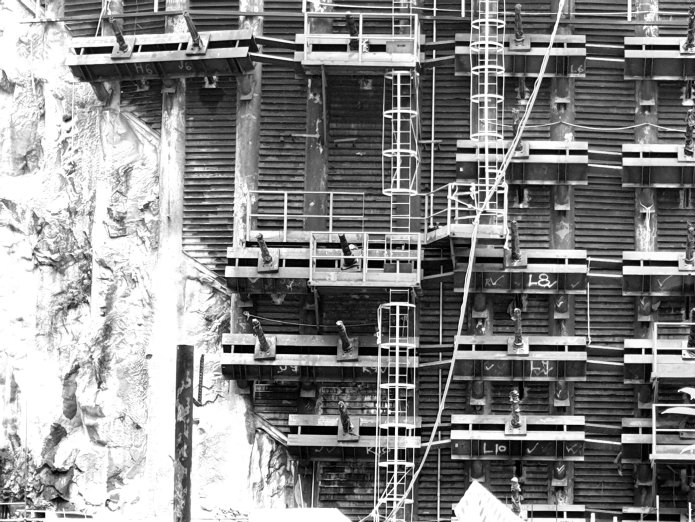
One of the pleasures of working at Blain|Southern is the view from my office window over the gigantic building site which will be Crossrail, as the seagulls circle overhead:-

Standard

The Morning Walk (2)

As well as worrying about the state of the nation, I also took some photographs in the cemetery in St. Dunstan’s, Stepney:-

A tombstone in the Stepney Meeting House Burial Ground in White Horse Road:-

Under the railway arch in Chaseley Street:-

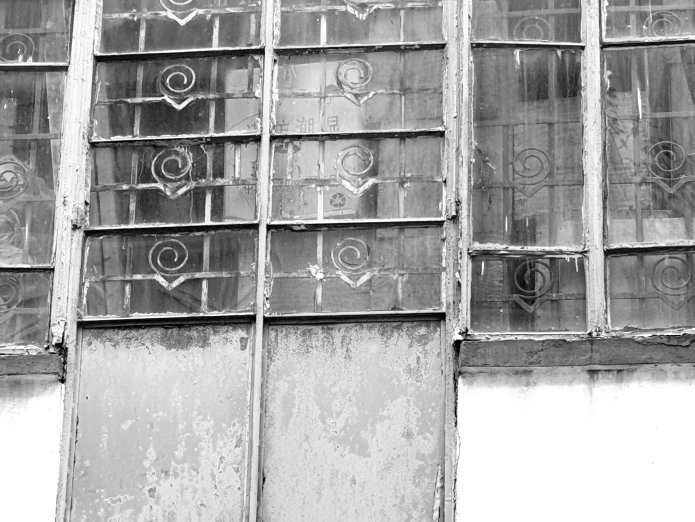
And the old warehouse next door:-

The Novo Cemetery:-

The library and archives in Bancroft Road:-

Samuel Barnett’s dwellings in Globe Road:-

And fresh eggs straight from the farm in the weekly Victoria Park farmers’ market, alongside German cakes, cheese from Normandy and bread baked by Syrian refugees (enjoy it while you can):-

Standard

The Morning Walk (1)

My Sunday morning walk was this week intended to stave off the sense of impending political catastrophe as an increasing number of public companies, including the pro-Brexit Dyson, announce that they are leaving these shores. Three things, in particular, have shocked me this week: first, the cogency of Sir Ivan Rogers’s speech to the UCL European Institute, demonstrating the realities of leaving the European trading partnerships, which was, after all, why we joined the EEC long ago; the second is the increasing stridency and xenophobia of the Tory brexiteers like Nadine Dorries and Mark Francois vilifying anyone who might not share their views; and the third, most shocking, was Jacob Rees-Mogg’s suggestion that the Queen might be encouraged to prorogue parliament to implement the results of a referendum held over two years ago in case parliament takes the view that some effective solution must be agreed in order to avoid the potential disaster of a No Deal Brexit. Where are we living ? Do we still live under a parliamentary democracy ? Has the right wing of the Tory party taken leave of its senses ?

Standard

St. Augustine’s, Hammersmith

I had read about the refurbishment of St. Augustine’s, Hammersmith in connection with Open House and arranged to visit this afternoon. It is an Edwardian church, opened in 1903 for a large and diverse inner city Catholic congregation. The priest-in charge, Father Gianni Notarianni, who trained as a painter in Brighton before becoming a priest, wanted to change its atmosphere and commissioned Roz Barr, who had worked for Eric Parry on St. Martin’s-in-the-Fields, to draw up plans for it.

They stripped the dark varnish from the ceiling to reveal the original pale wood:-

They commissioned Julian Stair to design a new and monumental altar of twelve layers of Venetian plaster:-

They got John Morgan, the typographer, to design the new lettering for the quotation from St. Augustine behind the tabernacle:-

Roz Barr herself designed the iron halo that hangs above the altar.

The result is a very successful purification of the environment for church ritual:-

Standard

The Front Door

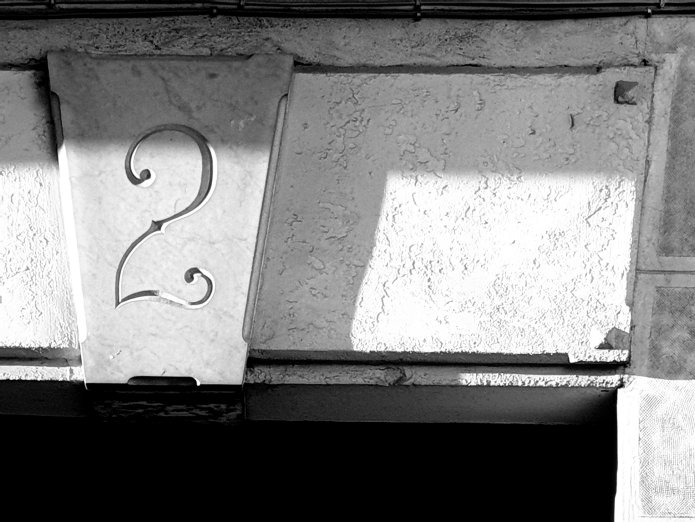
We had Ged Palmer of The Luminor Sign Company in the Roman Road round to paint numbers on our front door. I thought that this would be perfectly simple, but hadn’t realised what strong views can be held round type faces. Should it be Caslon – right in date, but the numerals a bit too chunky ? Or Baskerville ? Or Garamond, which is more elegant ? Or the signwriter’s own freehand, which is the basis of the signwriter’s craft ? That was only be beginning of the problem. I thought they should be white, so they would be legible. But, no, dark black brown was the preferred option. We have lived without numbers on the front door for eighteen and a half years. No wonder. Now we have them – I think very successfully:-

Standard

Old Flo (2)

I was tipped off in my Comments column that Canary Wharf had produced a very informative educational pamphlet about Old Flo. It has and I have now been sent one. It gives a very clear and well illustrated account of the gestation of the piece in drawings, first in his Shelter Drawings and then (unusually for him) in sketches in the early 1950s, and then in the maquette and working model. It was the LCC which, in 1956, launched its Patronage of the Arts scheme and, in 1961, invited Henry Moore to contribute a work. He was paid £7,000. On 8 June 1962, she was installed in the Stifford Estate, where, according to Joan Keating, my informant, she was known as ‘The Fat Lady’. The Queen opened the Estate in 1962, but it was demolished in 1997 and is now Stepney Green Park, an unsafe location for a sculpture now worth £18 million.

The Stifford Estate:-

Old Flo herself where she used to be:-

Standard