One of the pleasures of working at Blain|Southern is the view from my office window over the gigantic building site which will be Crossrail, as the seagulls circle overhead:-
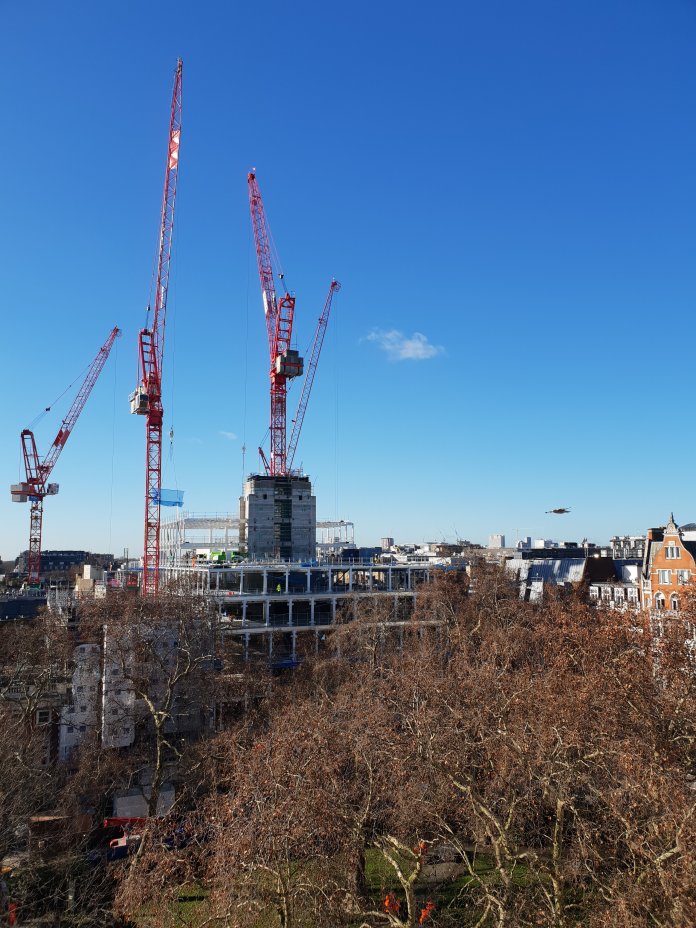
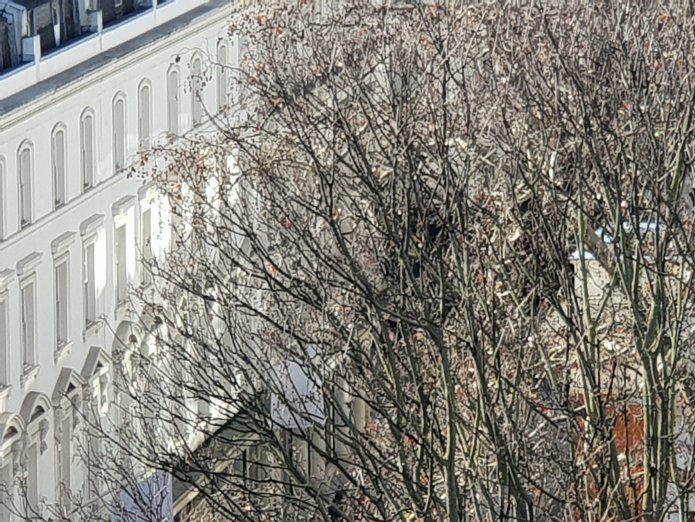
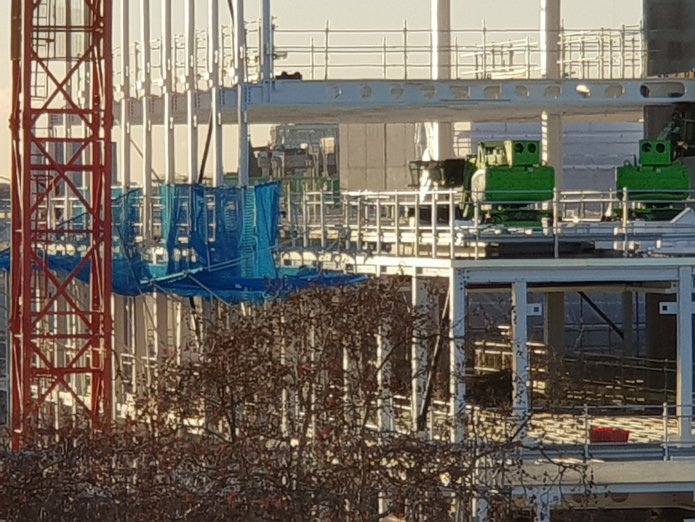
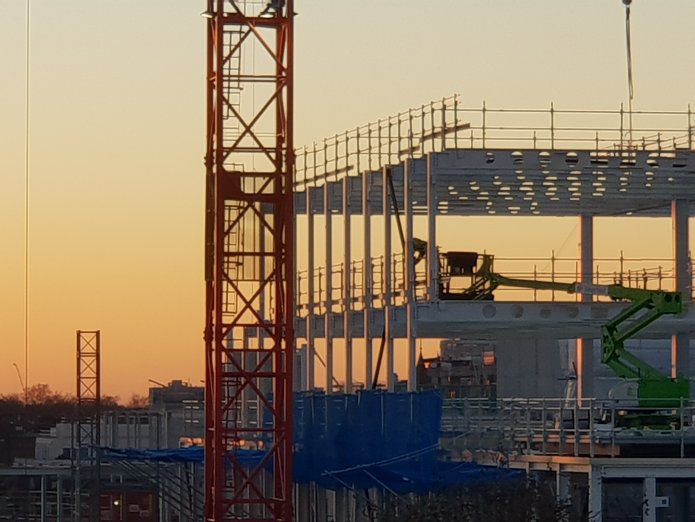
One of the pleasures of working at Blain|Southern is the view from my office window over the gigantic building site which will be Crossrail, as the seagulls circle overhead:-
As well as worrying about the state of the nation, I also took some photographs in the cemetery in St. Dunstan’s, Stepney:-
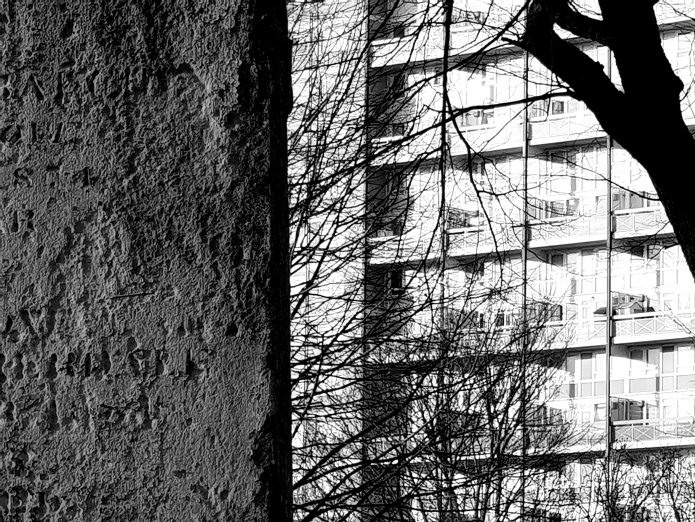
A tombstone in the Stepney Meeting House Burial Ground in White Horse Road:-
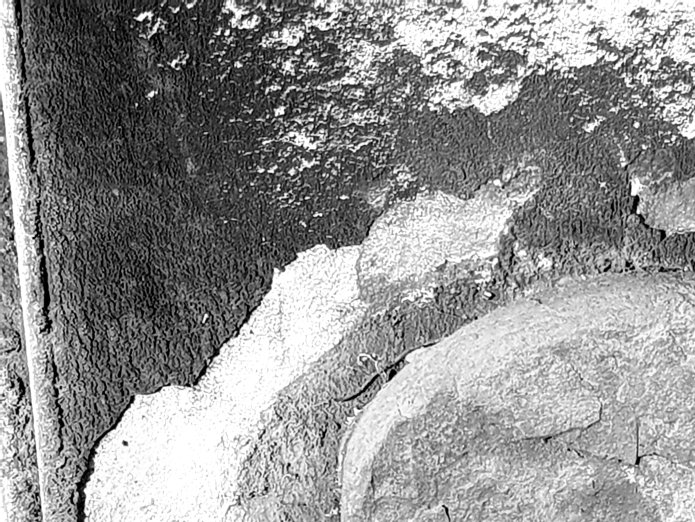
Under the railway arch in Chaseley Street:-
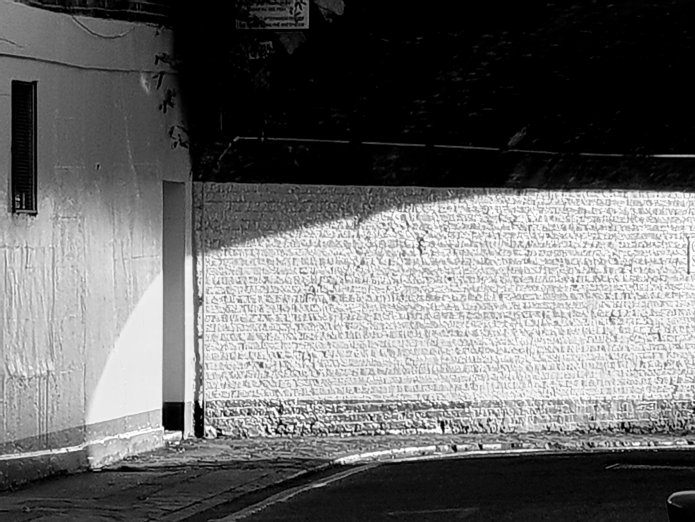
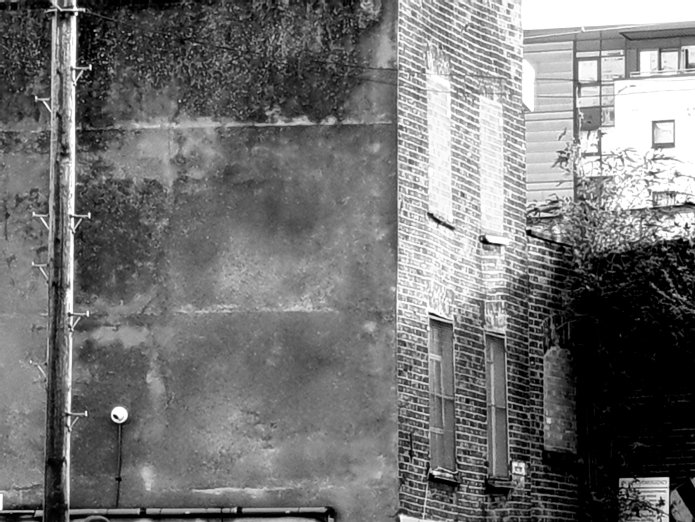
And the old warehouse next door:-
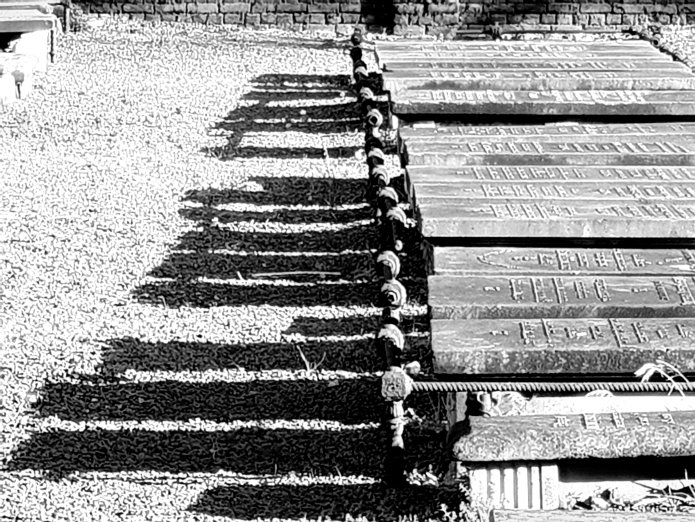
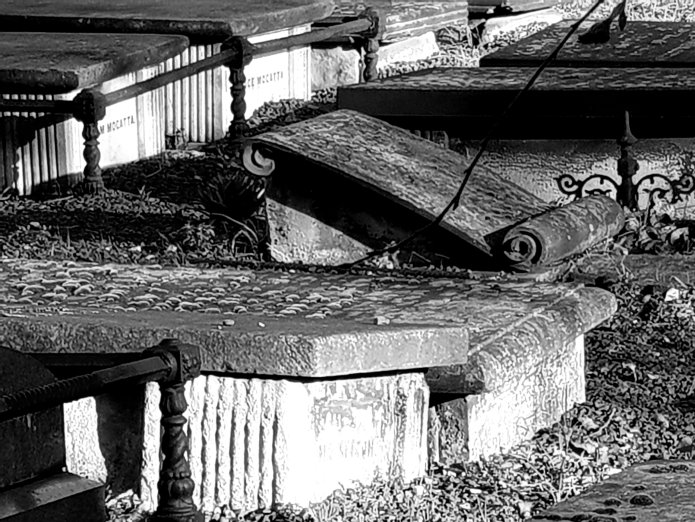
The Novo Cemetery:-
The library and archives in Bancroft Road:-
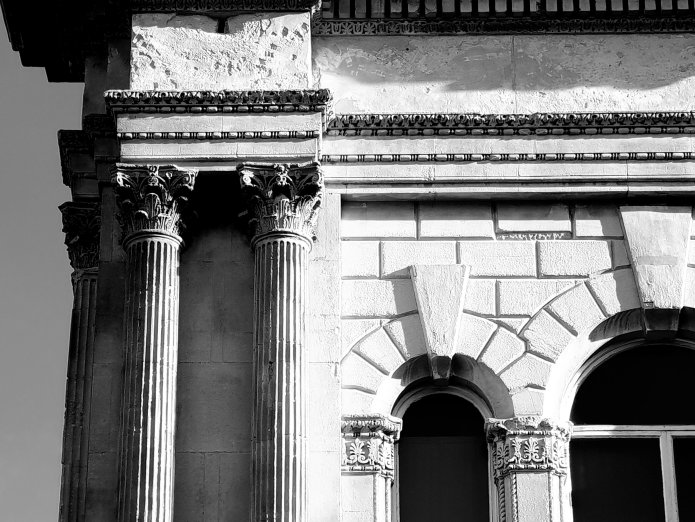
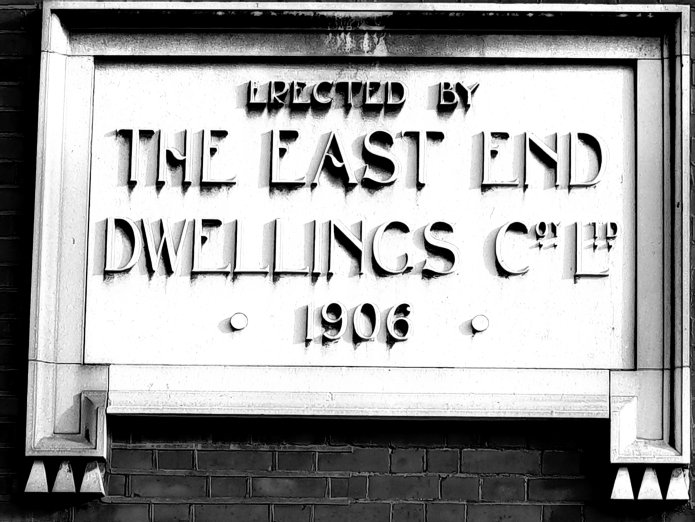
Samuel Barnett’s dwellings in Globe Road:-
And fresh eggs straight from the farm in the weekly Victoria Park farmers’ market, alongside German cakes, cheese from Normandy and bread baked by Syrian refugees (enjoy it while you can):-

My Sunday morning walk was this week intended to stave off the sense of impending political catastrophe as an increasing number of public companies, including the pro-Brexit Dyson, announce that they are leaving these shores. Three things, in particular, have shocked me this week: first, the cogency of Sir Ivan Rogers’s speech to the UCL European Institute, demonstrating the realities of leaving the European trading partnerships, which was, after all, why we joined the EEC long ago; the second is the increasing stridency and xenophobia of the Tory brexiteers like Nadine Dorries and Mark Francois vilifying anyone who might not share their views; and the third, most shocking, was Jacob Rees-Mogg’s suggestion that the Queen might be encouraged to prorogue parliament to implement the results of a referendum held over two years ago in case parliament takes the view that some effective solution must be agreed in order to avoid the potential disaster of a No Deal Brexit. Where are we living ? Do we still live under a parliamentary democracy ? Has the right wing of the Tory party taken leave of its senses ?
I had read about the refurbishment of St. Augustine’s, Hammersmith in connection with Open House and arranged to visit this afternoon. It is an Edwardian church, opened in 1903 for a large and diverse inner city Catholic congregation. The priest-in charge, Father Gianni Notarianni, who trained as a painter in Brighton before becoming a priest, wanted to change its atmosphere and commissioned Roz Barr, who had worked for Eric Parry on St. Martin’s-in-the-Fields, to draw up plans for it.
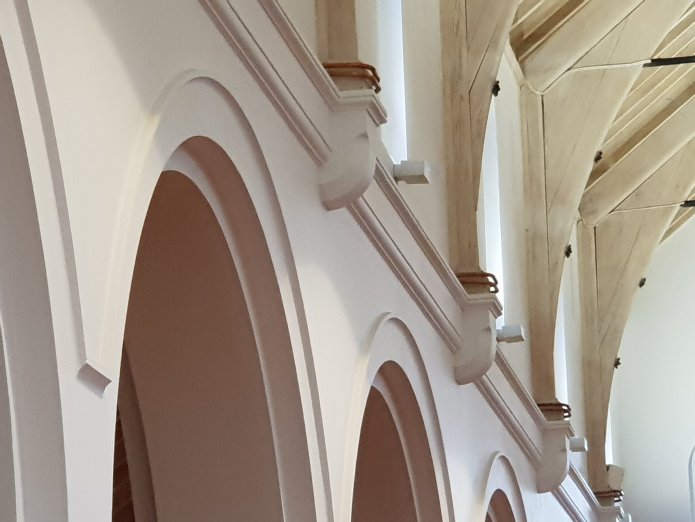
They stripped the dark varnish from the ceiling to reveal the original pale wood:-
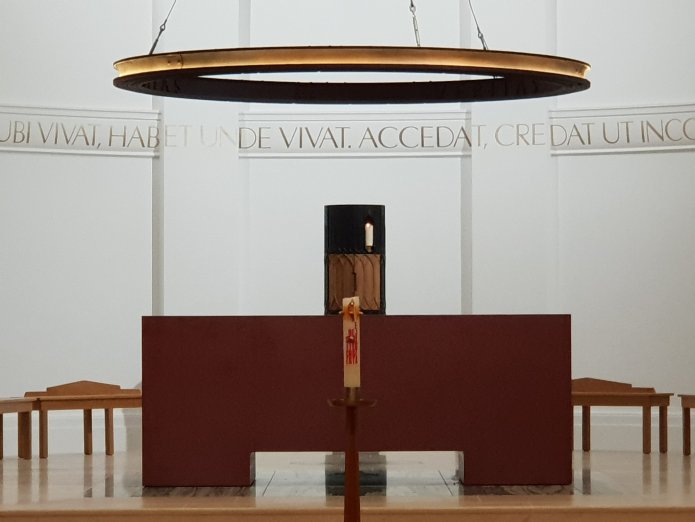
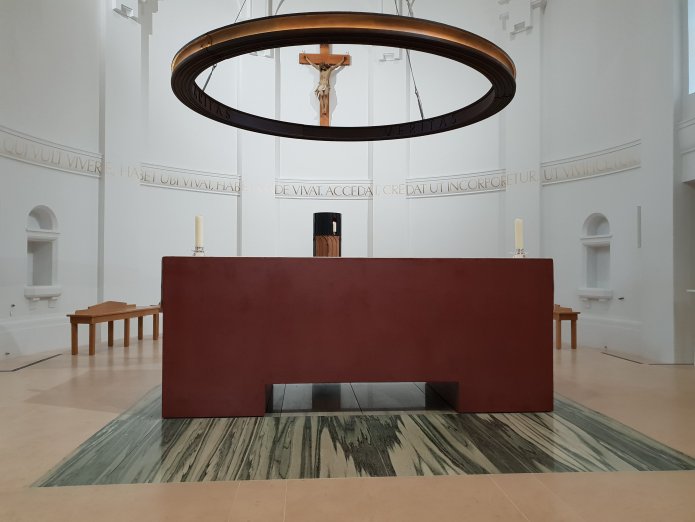
They commissioned Julian Stair to design a new and monumental altar of twelve layers of Venetian plaster:-
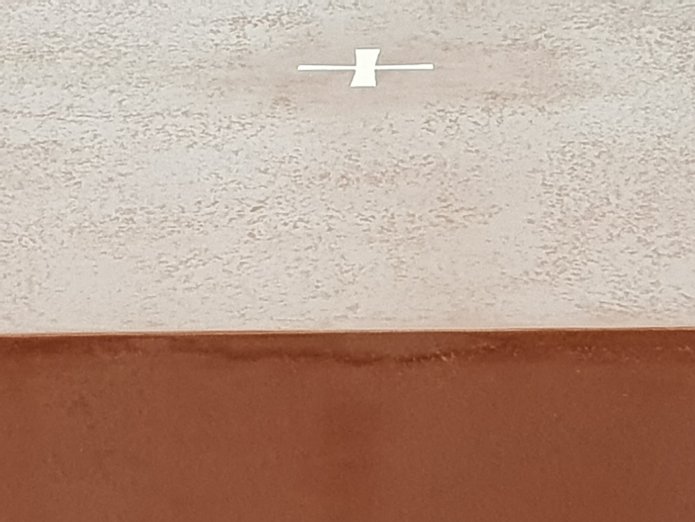
They got John Morgan, the typographer, to design the new lettering for the quotation from St. Augustine behind the tabernacle:-
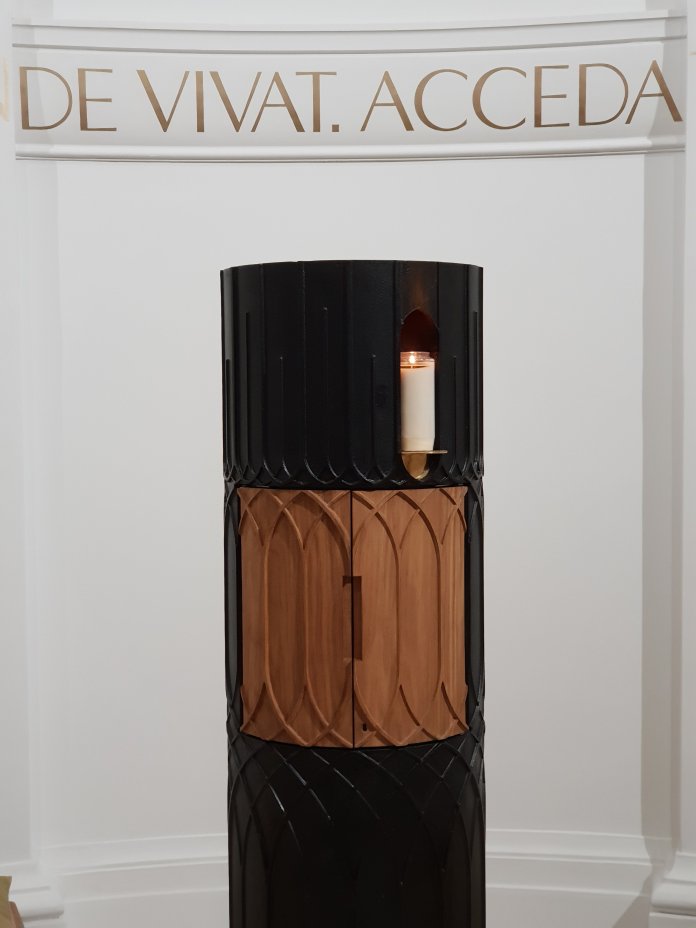
Roz Barr herself designed the iron halo that hangs above the altar.
The result is a very successful purification of the environment for church ritual:-
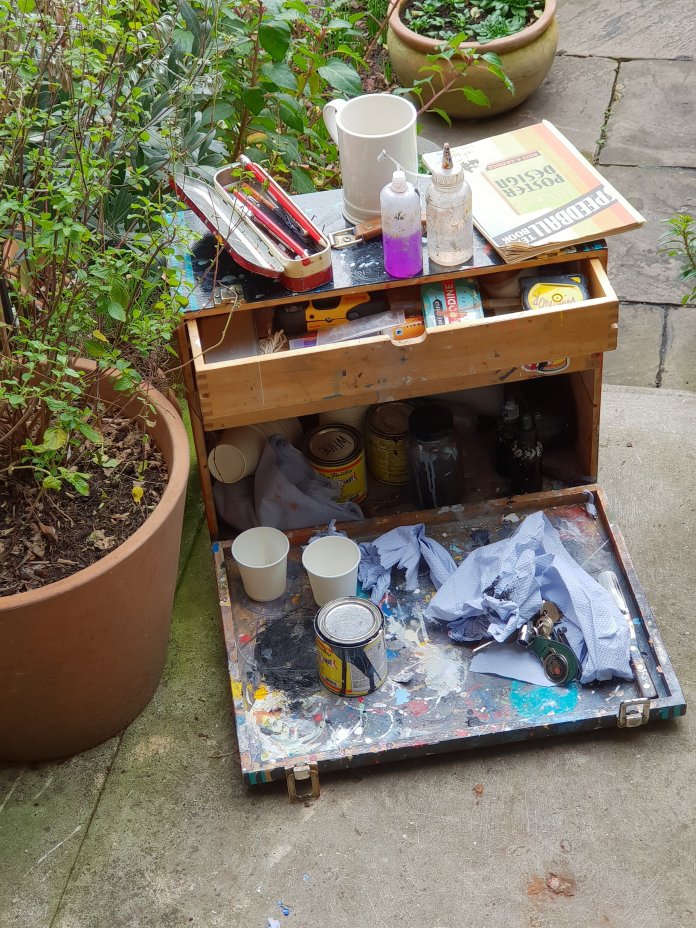
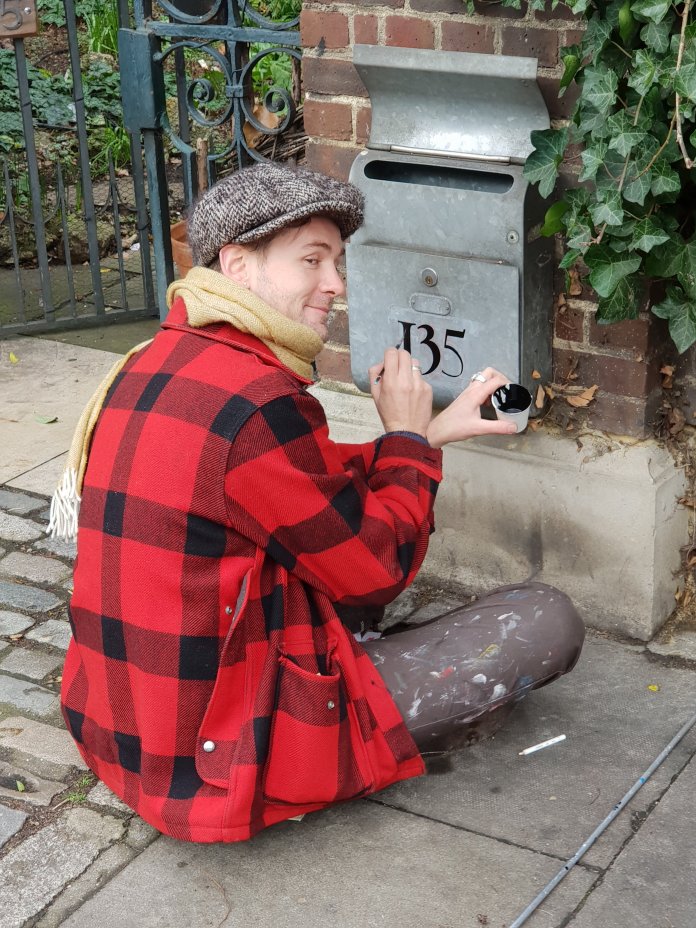
We had Ged Palmer of The Luminor Sign Company in the Roman Road round to paint numbers on our front door. I thought that this would be perfectly simple, but hadn’t realised what strong views can be held round type faces. Should it be Caslon – right in date, but the numerals a bit too chunky ? Or Baskerville ? Or Garamond, which is more elegant ? Or the signwriter’s own freehand, which is the basis of the signwriter’s craft ? That was only be beginning of the problem. I thought they should be white, so they would be legible. But, no, dark black brown was the preferred option. We have lived without numbers on the front door for eighteen and a half years. No wonder. Now we have them – I think very successfully:-


I was tipped off in my Comments column that Canary Wharf had produced a very informative educational pamphlet about Old Flo. It has and I have now been sent one. It gives a very clear and well illustrated account of the gestation of the piece in drawings, first in his Shelter Drawings and then (unusually for him) in sketches in the early 1950s, and then in the maquette and working model. It was the LCC which, in 1956, launched its Patronage of the Arts scheme and, in 1961, invited Henry Moore to contribute a work. He was paid £7,000. On 8 June 1962, she was installed in the Stifford Estate, where, according to Joan Keating, my informant, she was known as ‘The Fat Lady’. The Queen opened the Estate in 1962, but it was demolished in 1997 and is now Stepney Green Park, an unsafe location for a sculpture now worth £18 million.
The Stifford Estate:-

Old Flo herself where she used to be:-

I went to an event at Central St. Martin’sthis evening which was meant to be about beauty, but was actually about housing. First up was Sir Roger Scruton, the chairman of the government’s Building Better, Building Beautiful Commission. I am unusual in that I don’t think this Commission is a stupid idea (the government needs to encourage public housing and badly needs some level of public consensus as to how best to do this), nor that Scruton as a philosopher who has written about architecture is necessarily a bad person to chair it. But I wasn’t reassured by the fact that he said baldly that people hate living in Los Angeles when it has a population of 4 million who have chosen to live there and do so very happily. Next was Liza Fior of Muf. Her practice has done good work in Barking and elsewhere (as it happens, on the Mile End Road) which is sensibly informed by public consultation. Andrew Whittaker, the Planning Director of the Home Builders Federation, made clear that the big volume builders give the public as far as possible what the public wants, which is very conventional, traditional housing. Deborah Garvie, the Planning Director of Shelter argued, which is obvious, that for the homeless basic housing is far better than none. And Neil Pinder, a very impressive secondary school teacher, advocated much greater diversity in young architects.
Was there any consensus about what makes for good housing ? Almost none. What form should new housing take ? I suspect that Peter Barber’s 100 Mile City at the Design Museum provides a better answer.
For those of you who see a photograph of me above my blog posts, you will notice they have changed. For a long while, I have enjoyed being able to show a series of informal photographs taken by Maryam Eisler for her book Voices: East London, published in 2017. But they were very summery and informal, taken in Stepney. They have been replaced for the New Year (and the new job) by three very formal photographs taken by Clare Hewitt for Apollo and three marginally less formal ones taken in the home of José Olympio da Veiga Pereira in São Paulo by Greg Salibian for an article in the Folha de S. Paulo.
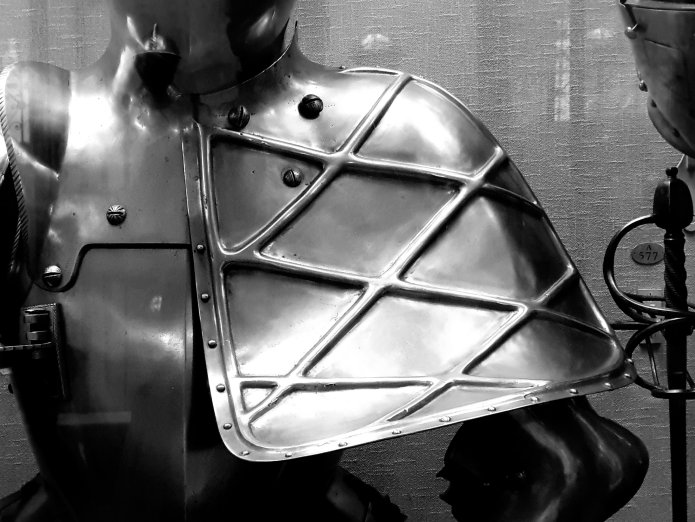
I had lunch yesterday at the Wallace Collection. Whenever possible, I check that the display of armour in the Wallace Collection has not yet been modernised, as it is one of the last places where one can enjoy a wholly traditional museum display, nearly exactly as it was when first laid out in 1908, dense with objects and minimal labelling.
Of course, one day it may have to change, but I hope that some of its atmosphere can be preserved.
The backside of the horse armour of Otto Heinrich, Count Palatine made by Hans Ringler of Nuremberg:-

The armour made by Anton Peffenhauser in 1580:-
The exhibition at the Royal Academy which pairs the work of Bill Viola, the best known contemporary video artist, with the drawings of Michelangelo has had a pretty good drubbing in the national press, as if it is illegitimate to think that there might be some connection in the approach of two artists across time and from completely different visual cultures and that it is necessarily hubristic to compare them. It is true that in the second of the galleries the Michelangelo tondo together with some of his great presentation drawings are confronted on the wall opposite by big screen images of birth, childhood and death in Viola’s Nantes Triptych (1992). This is a (deliberately) radical and unexpected way of looking at – and thinking about – the work of Michelangelo. But the great majority of the exhibition consists of large-scale and immersive work by Bill Viola.
I still greatly admire the first work in the exhibition The Messenger, which I first encountered in the nave of Durham Cathedral at dusk in late August 1996. I had never seen Five Angels for the Millennium (2001), an incredibly impressive work, particularly as seen in Gallery III. And the final work in the exhibition is Fire Woman (2005), a film of resurrection, fire and brimstone. Yes, maybe it has a touch of Hollywood in it. But I don’t object to technical magnificence. And nor did Michelangelo.


You must be logged in to post a comment.