We went last night to a discussion at the Whitechapel Art Gallery between Tanya Harrod, who has just published a volume of writings on the subject in a series under the joint imprint of MIT Press and the Whitechapel, and Phyllida Barlow RA, whose work is so obviously interested in the use, if not the mess, of ordinary materials and the materiality of making. It became clear that the volume represents a very broad range of possible approaches to the idea, and meaning, of craft, such that I can just about see that Phyllida’s work, which I first became aware of in the exhibition she did in the old Lutyens bank next to St. James’s Piccadilly, might represent one end of the spectrum: using materials spontaneously and without too much deliberate care in order to subvert the conventions of their use and to create works of art which shock by their vital unexpectedness.
Author Archives: Charles Saumarez Smith
Gavin Stamp (4)
I have been going through the sale catalogue of one part only of Gavin Stamp’s architectural library, which has been issued by Janette Ray, an architectural book dealer in York (other parts of the library has been cherry picked by friends or issued by other booksellers). His books demonstrate the astonishing range of his architectural taste – not just ample Victoriana and books about Alexander Thomson, war memorials and Lutyens, as are to be expected, but collecting in depth on design, early photography, India, railway stations, and Plečnik. It is also a reminder of how much he himself wrote, including an article on St. Martin’s Church, Delhi in the Architectural Review, which he bound and inscribed ‘To Mum and Dad’, a book on early photographs of London, countless talks and contributions to exhibitions, and his book on power stations, as illustrated by Glynn Boyd Harte (luckily, I already own it). A great man.
Brexit
Every so often I meet people who are much more knowledgeable than I am about the terms of our departure from Brexit: who have actually read the detailed terms, as I haven’t, and regard it as the best available, if complicated, and potentially deeply undesirable, terms of departure, which have been secured as the result of lengthy negotiation with Brussels. The question then is as to whether or not the House of Commons will accept the terms as agreed in their vote on December 11th. The answer is, probably, but not inevitably, not. The current arithmetic suggests that the vote will be lost by somewhere between 20 and 50 votes. Then what happens ? The vote could be put to the country on a three-way vote between remaining in Europe, accepting the deal as currently proposed, and crashing out (pure Brexit). If the vote on the current deal is lost, Mrs. May would probably have to resign unless she agreed to put the vote to the country. If she resigned, who would take over ? Who knows ?
Charles I
I left out of my recent post the exciting fact that Charles I was Exhibition of the Year and I was pleased that both Per Rumberg and Desmond Shawe-Taylor, its curators, were there to collect it. I remember discovering that Per Rumberg had travelled from Yorkshire to Piccadilly on Boxing Day last year to check that Gallery 6 had been painted exactly the right shade of red and this scrupulous attention to the detail of display helped to give the exhibition its memorable beauty:-
https://www.apollo-magazine.com/exhibition-of-the-year-winner-apollo-awards-2018/
The Apollo Awards
I am recovering from the mild shock of travelling on the Central Line to Mile End carrying a magnum of Pol Roger and a large framed certificate naming me as the Apollo Personality of the Year, a lovely and unexpected award for being the Secretary and Chief Executive of the Royal Academy in its 250th. year. So, after a mere 24 years of running national museums (or the Royal Academy which is an equivalent), I can prepare to hang up my clogs and enjoy the champagne.
https://www.apollo-magazine.com/personality-of-the-year-winner-apollo-awards-2018/
Coup d’Etat
As part of my background reading about Brazil, I have learned a great deal from the recently published book by Lilia Schwartz and Heloisa Starling, Brazil: A Biography, published by Allen Lane earlier this year. One of the chapters I found particularly interesting was the one on the 1964 coup d’etat which led to over twenty years of military dictatorship. Much of it was planned and organised by a privately funded thinktank called the Research and Social Studies Institute, which engaged in subversive propaganda against the democratically elected government in order to support the free flow of international capital, with the help of generous funding from big business and the CIA. The incoming government had access to information on the ideas and political beliefs of 400,000 Brazilians, assembled by the Situation Analysis Group, a sub-department of the Research and Social Studies Institute, which gave the government the tool to repress opposition. One does not wish to be melodramatic, but there are familiar elements in this narrative: the existence of privately funded right-wing think tanks influencing public debate and trying to curb public broadcasting; illegal influence over a democratic referendum; the assembly of massive amounts of data about voting intention; and the involvement of a foreign government influencing the domestic political debate. Maybe this is irrelevant, but it gave me a faint frisson as I read about it.
The Glass House
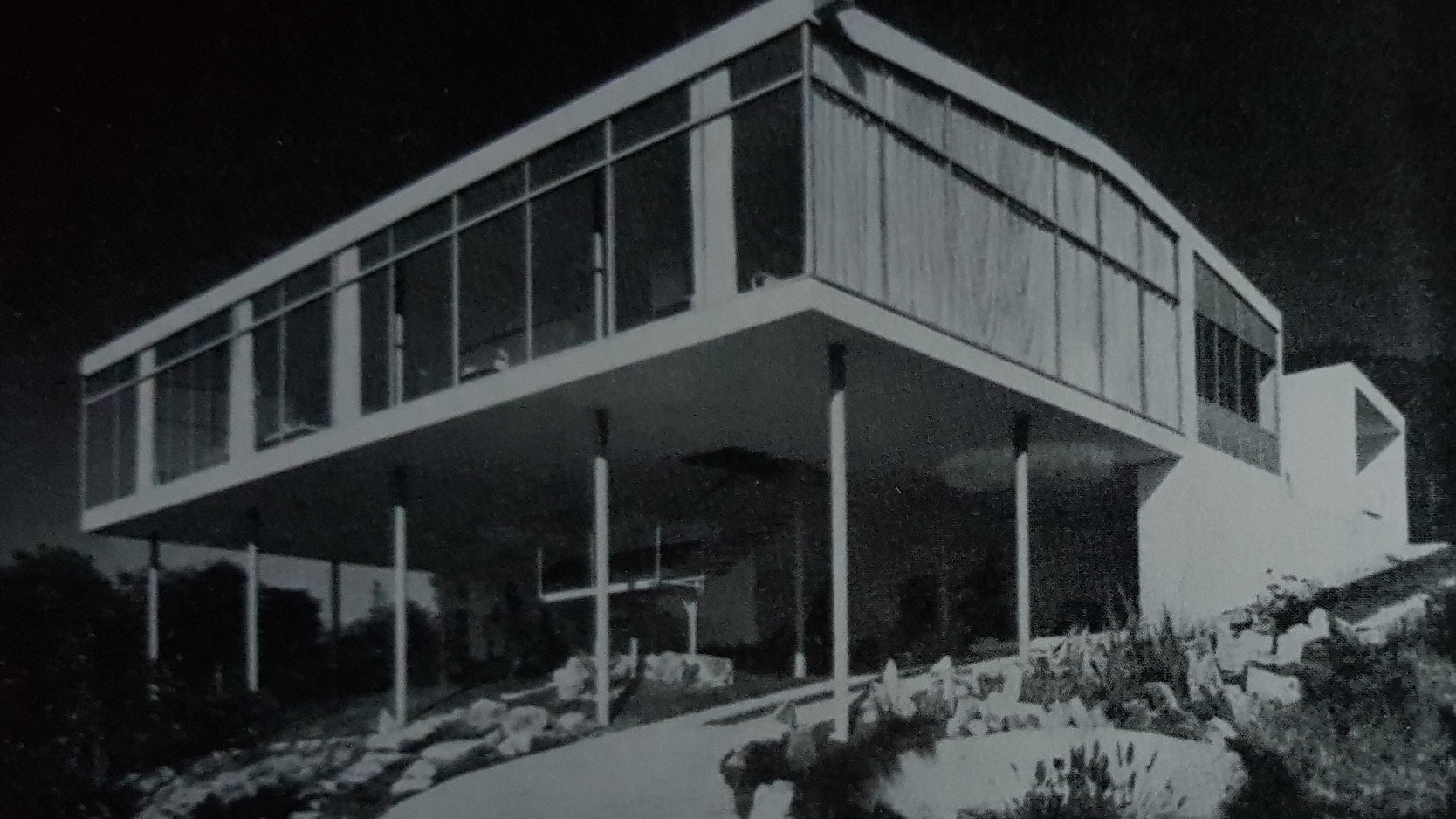
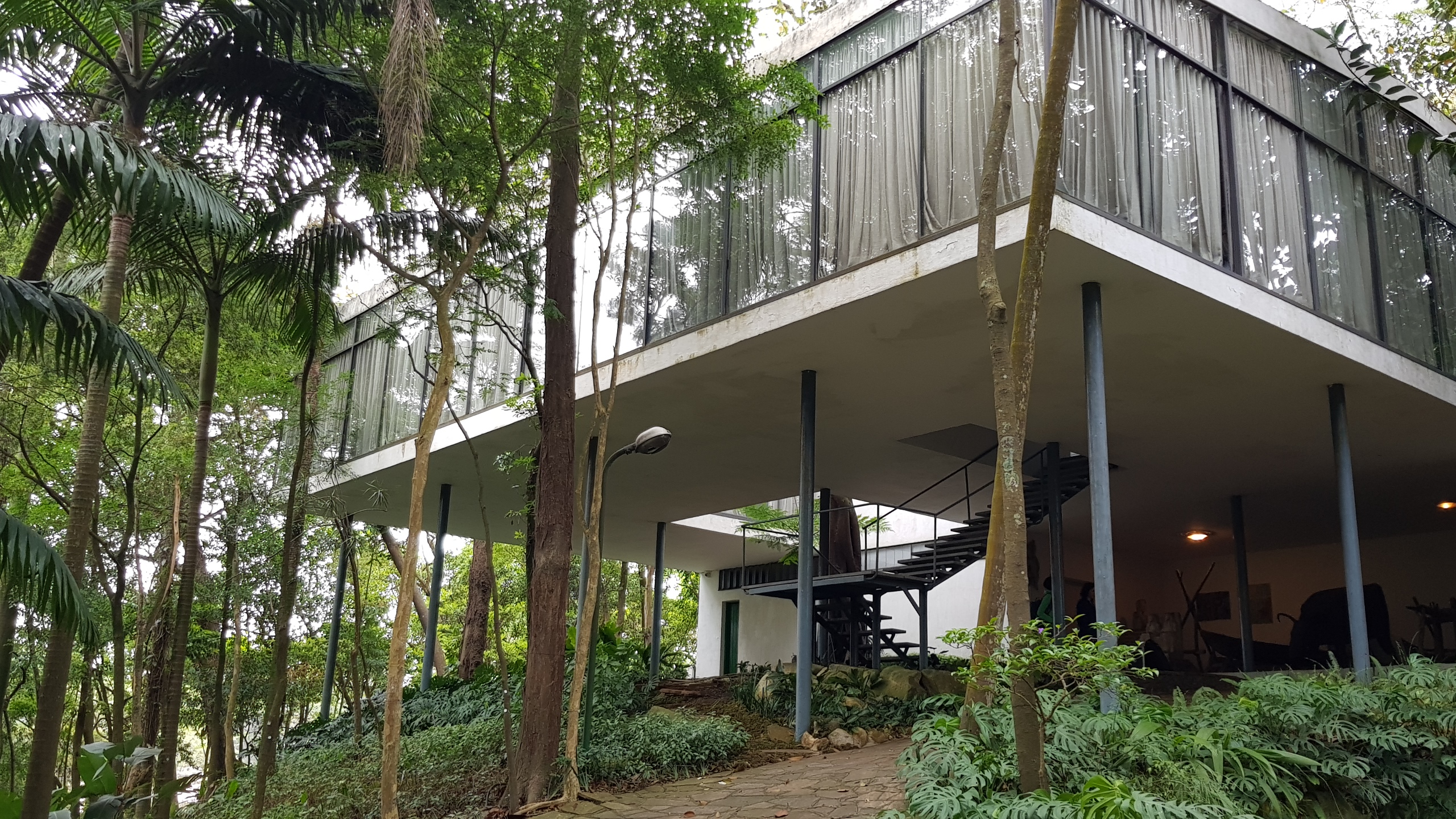
Since getting back from São Paulo, I have been reading more about the gestation of the Glass House, Lina Bo Bardi’s great house which she designed on what was then an open hillside in Morumbi where she and her husband, Pietro Maria Bardi, bought two vacant lots in 1949, thinking that they might establish artists’ studios equivalent to the Meisterhäuser of the Bauhaus. It was not only Lina Bo Bardi who was deeply knowledgeable about all aspects of international modernism (she had published an article on ‘Case sui trampoli’ – houses on stilts – in Domus which she co-edited in 1944), but also her husband, who had tried to persuade Mussolini to adopt modernism as the appropriate style for a Fascist State and organised exhibitions on the work of Richard Neutra and Le Corbusier in the early years of the São Paulo Museum of Art. Early photographs of it, standing on stilts and bereft of vegetation, make it look vastly much more programmatic than it does now. As she herself wrote on its completion:-
In the thick of rambling foliage, she lightly dropped a house of crystal. In its Swiss-precision finishes, its steely textures, its respectful perch, nothing obscures the fact that it is an artificial outpost.
This is the picture she used to illustrate her article:-
And this is roughly the same view as it is now:-
Breid
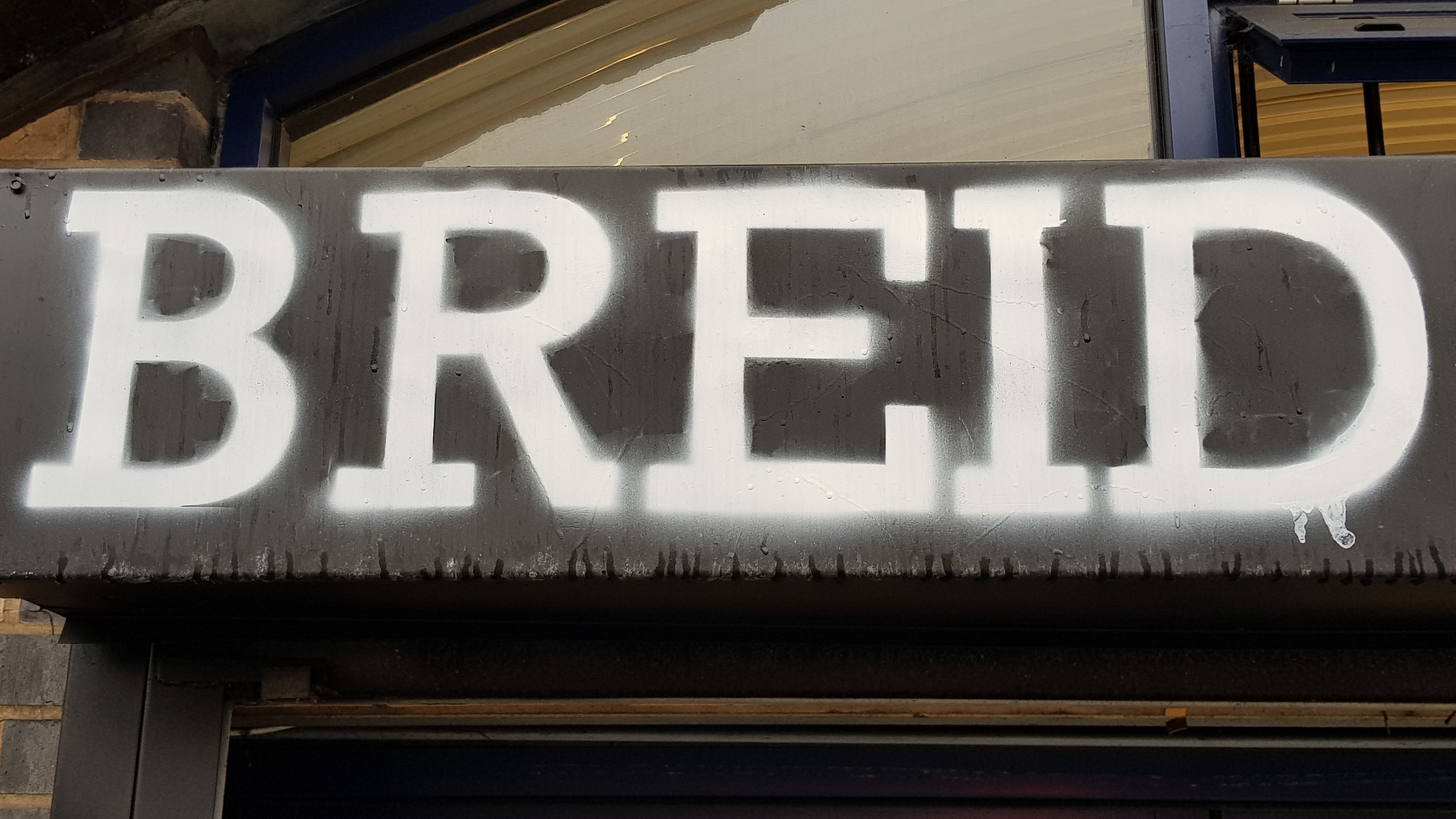
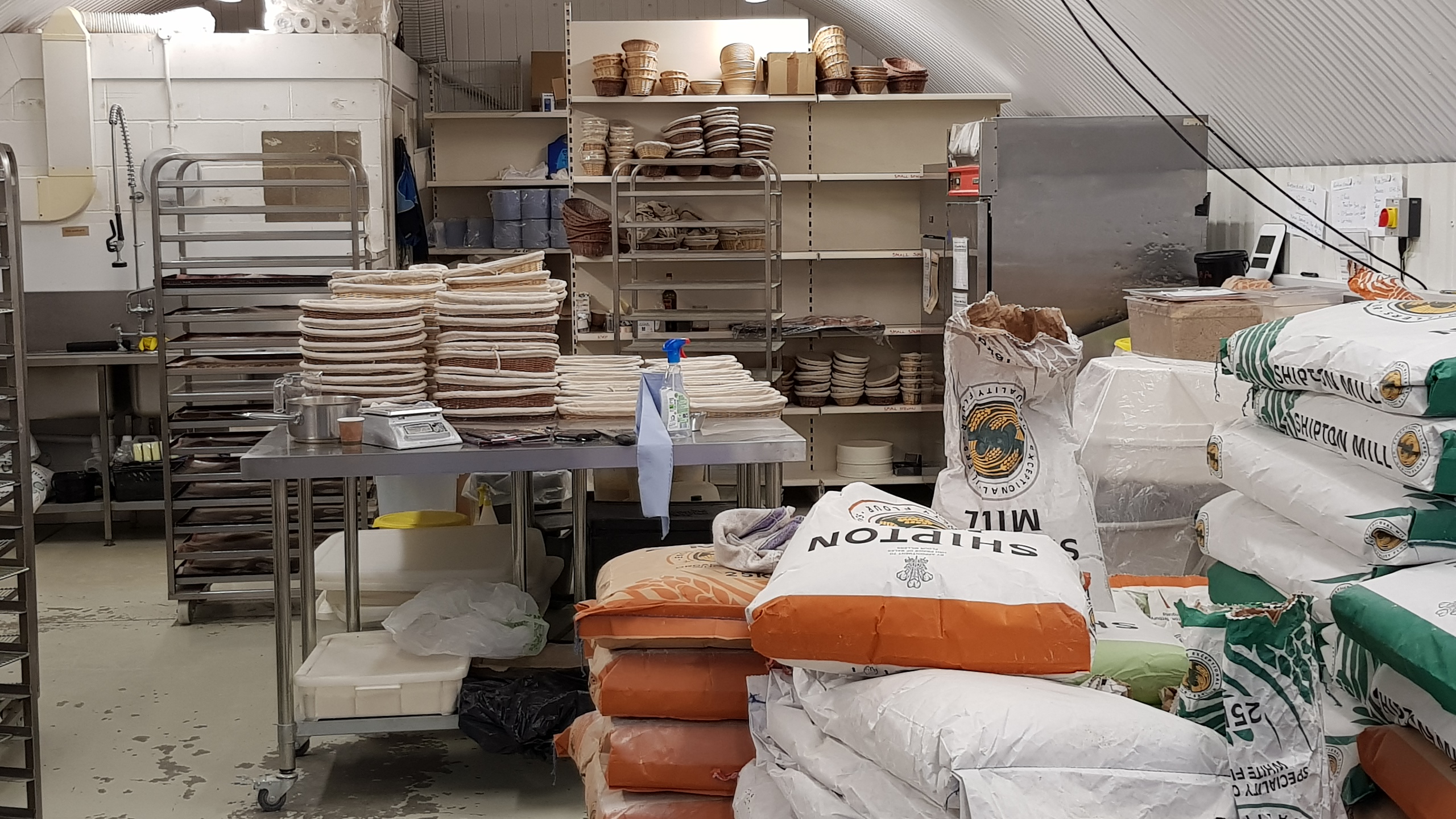
I had been told that a new bakery had opened under the railway arches off Vallance Road, so I went to investigate. The railway arches are themselves under threat after being sold off by Network Rail which is perhaps what allows small entrepreneurial businesses to flourish – at least for the time being. The sourdough bread (or Breid as it is apparently known in Scotland) is delicious:-
Voices of art
I have already written about this project on Twitter and have realised that – quite rightly – there is a great deal of interest in it, but hitherto not much awareness that the British Library has been documenting and recording the lives not just of artists, but of those in the art world over a very long period of time, such that it now provides an invaluable oral history.
They have just put together a series of studies of aspects of the art world, based on, and making use of, the original, often very lengthy, recordings, which I hope will raise awareness of the project, not least because much of the work is privately funded:-
Zarina Bhimji
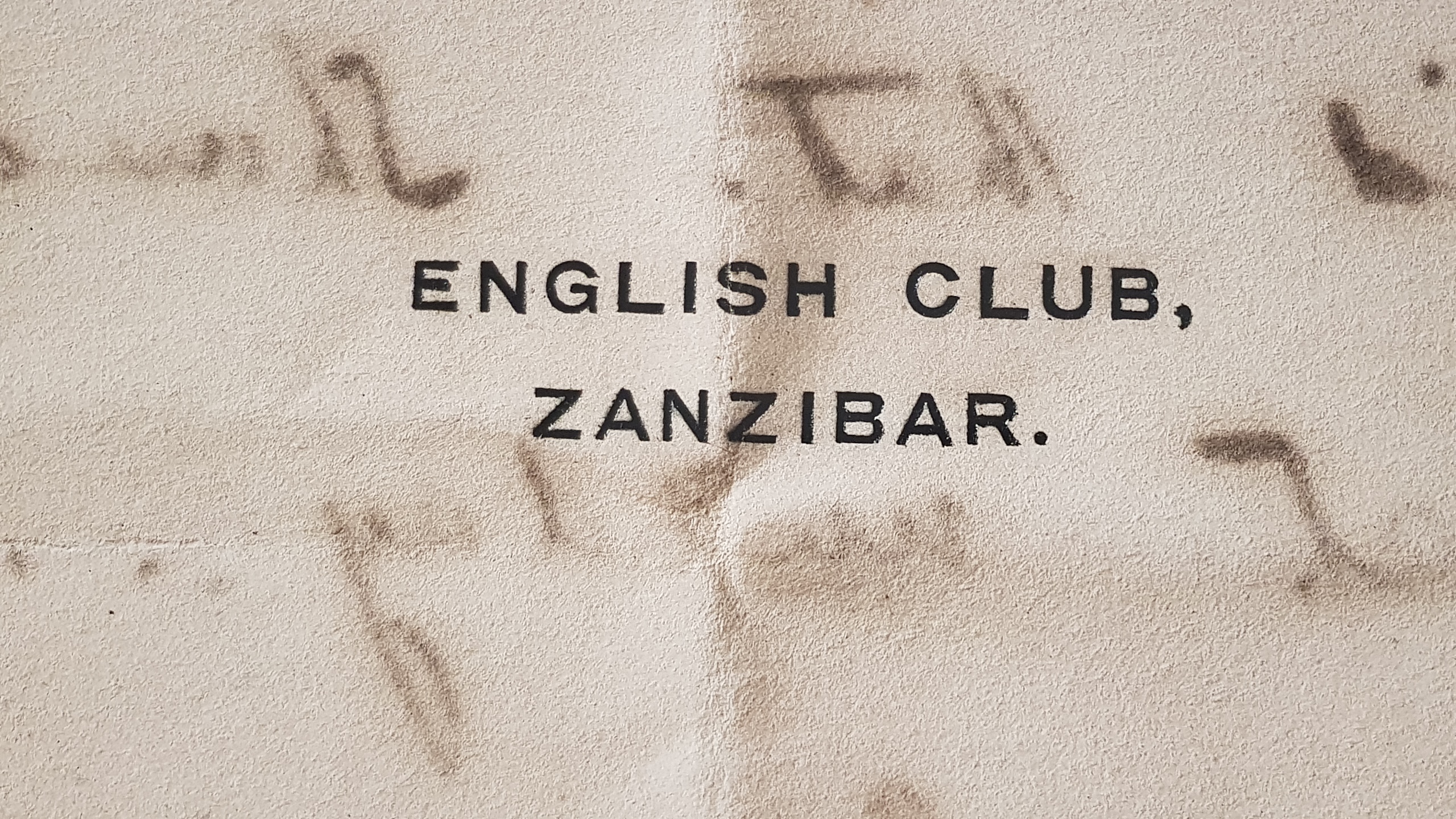
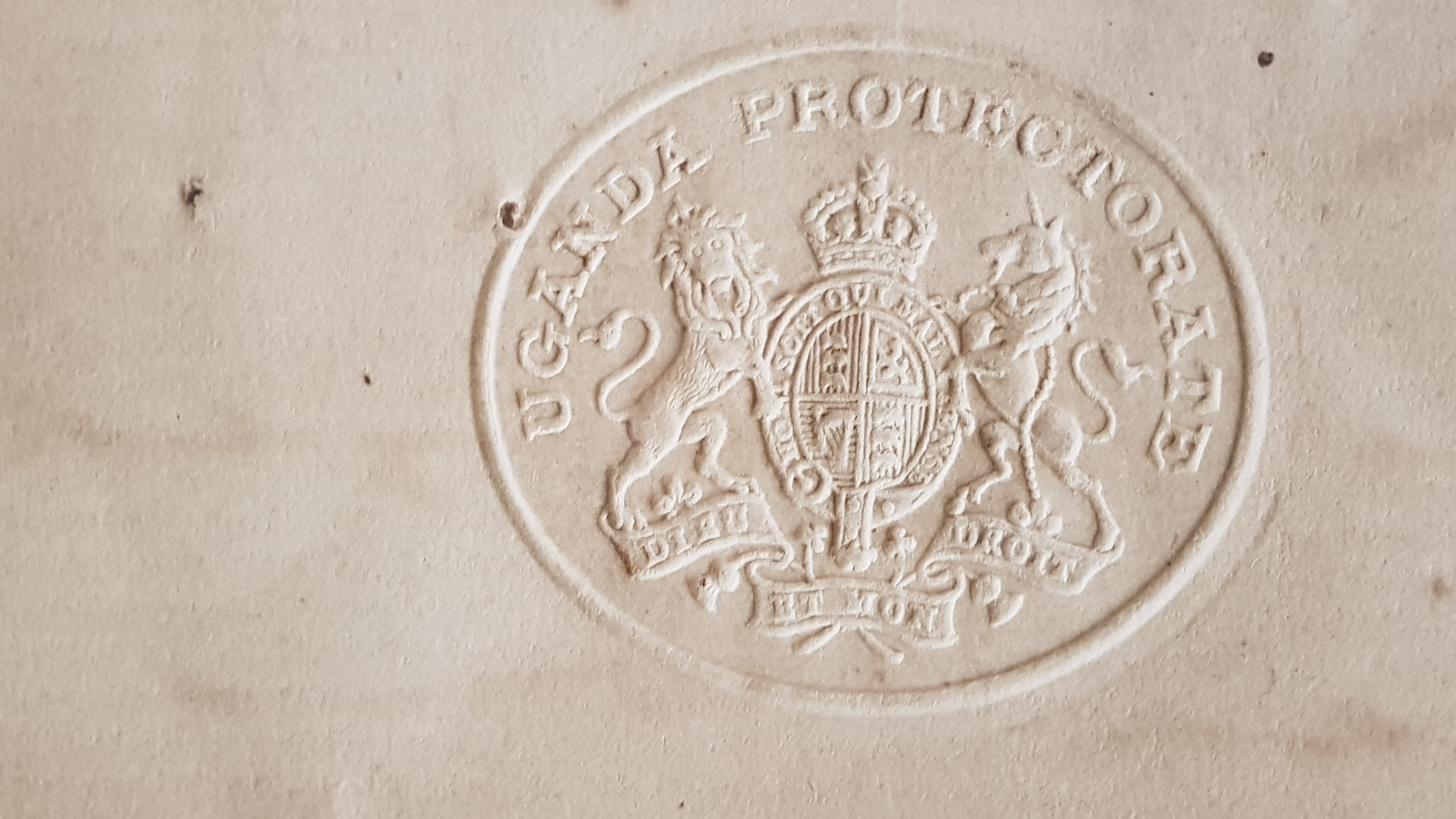
I had breakfast at Tate Britain to see the work of Zarina Bhimji, who explores the imagery of, on this occasion, the stamps, die-stamps and typography of the old colonial Empire in Africa, drawn from its documentation now preserved in archives across the world:-


You must be logged in to post a comment.