I have been reading the booklet, the return of the past: Conversations on Postmodernism, which the Soane Museum has produced to accompany its exhibition. It consists of interviews with the key protagonists and makes clear that while we tend now to think of it as merely a colourful style of historical pastiche, it had its origins in a widespread disillusionment in the early 1970s with the whole apparatus of the welfare state, local authority control of housing, statism and the standardisation which was a characteristic of modernism. Piers Gough saw himself as a pop architect wanting people to like and enjoy what he produced, including the taxi drivers who bought flats in Cascades. Jeremy Dixon toured the country talking to branches of the RIBA and was embarrassed by what his profession had inflicted on British cities. I had a flashback to what it was actually like in 1974 with hyperinflation, the beginnings of IRA bombings, two general elections, and the three-day week. It is hardly surprising that architects looked for new solutions to reconnect architecture to its public.
Author Archives: Charles Saumarez Smith
The Royal Academicians
It’s time now to catch up on all the things I didn’t have time to do in the week. One of them is to identify the sitters in Henry Singleton’s big painting of The Royal Academicians in General Assemby which now has pride of place in our new Collections Gallery. So far as I can find, this can only be done by reference to a published Key to the Royal Academicians, which was produced by Charles Bestland to accompany the original engraving (there is no key provided in the Gallery, nor in the recently published book about our History and Collections).
Benjamin West is easy, sitting in pride of place on the President’s Chair in a cocked hat, painted in 1795 three years after he had become President and after turning down a knighthood in the expectation that he would be made a life peer. The figure immediately to his right is Sir Francis Bourgeois, described in the key as ‘Painter to His Majesty and to the Kg of Poland’:-

On the left are three figures (6,8 and 10 in the key) – Sir William Beechey, Portrait Painter to His Majesty; Francis Wheatley; and Joseph Wilton, now aged 73 and Keeper of the Schools, wearing spectacles:-
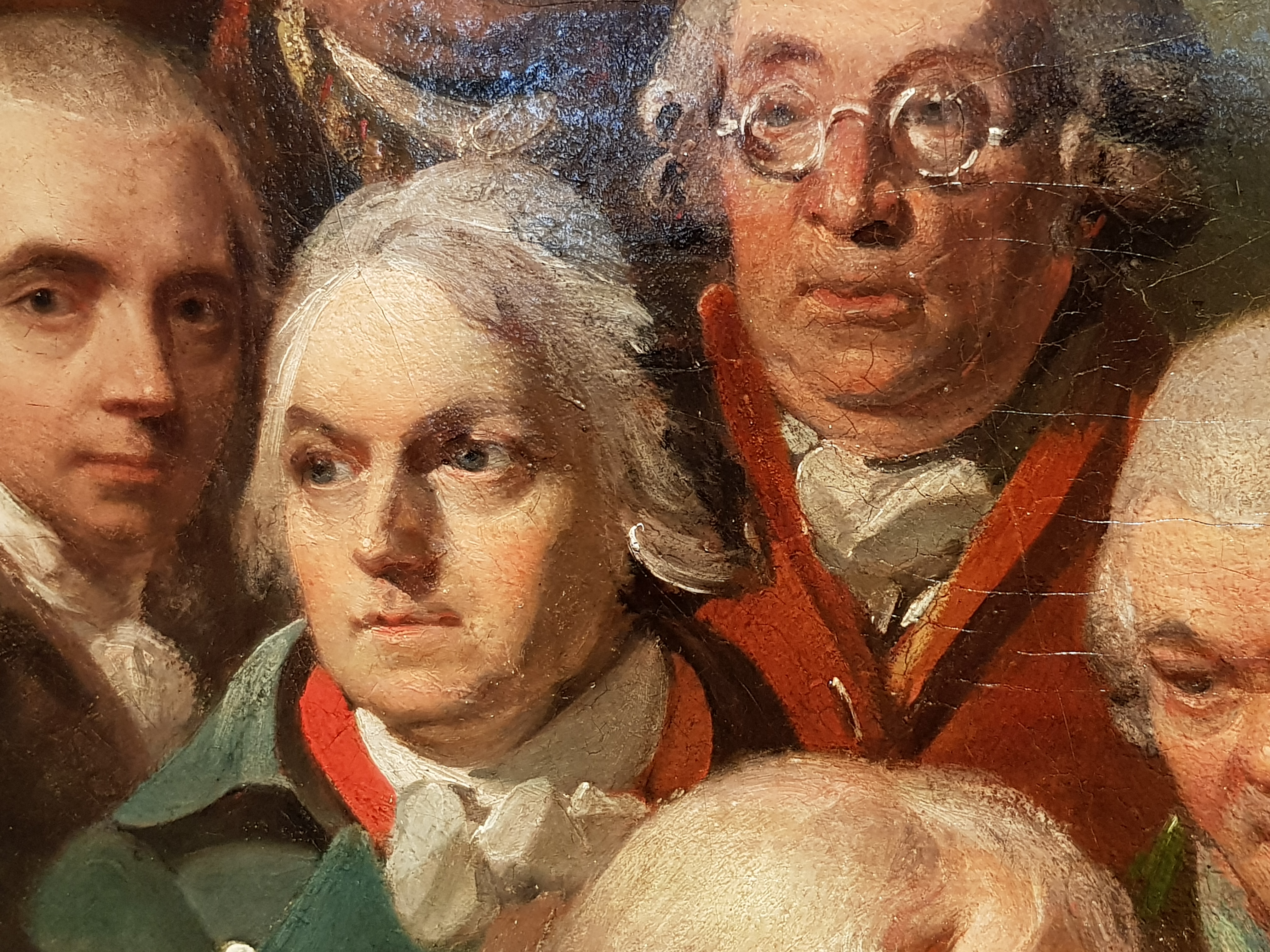
Standing proudly underneath Laocoön is Benjamin West’s fellow countryman, John Singleton Copley

And next door to Copley, Robert Smirke, architect of the British Museum, and John Opie, the Cornish painter:-

Hercules
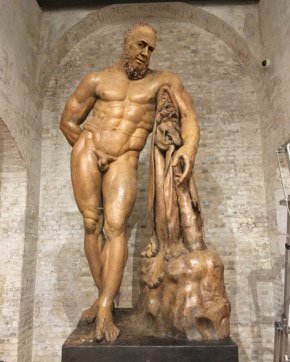
We had a staff party last night to celebrate the completion of Burlington Gardens in which a faintly familiar figure appeared on the screen:-
David Chipperfield RA
I have just been listening to the podcast produced by the Art Newspaper (ow.ly/Vk0w30k55XY) which consists of ten minutes of me (you can skip that) and then a long and fascinating description by David Chipperfield of his methodology at the RA – his focus on how spaces are used, what he calls his diagnostic approach, his sensitivity and interest, for example, in how works of art are stored, his sense of the project being a jigsaw of interrelated parts which needed ordering and clarification – which is precisely what he has done. He is asked how far it helped or hindered him that there were so many architect RAs involved and I suddenly realised how important it had been to him that every aspect of his proposals was being intensively inspected by his peers, including Sir Nicholas Grimshaw, who chaired the Client Committee (and who, I think, suggested putting the lavatories on the ground floor, not the basement), Chris Wilkinson, who took over the Client Committee, and Spencer de Grey, who was responsible with Norman Foster for the Sackler Galleries: tough judges of every aspect of what was proposed.
A Letter to the Times
I don’t normally write letters to the Times, but was encouraged to yesterday. This is the text (I don’t think it has been edited):-
In the week that the Royal Academy opens a new building dedicated to Britain’s achievements in the arts, I write in support of Alice Thomson’s article about the decline in all forms of art teaching in Schools. This is an issue about which all Royal Academicians are united in deploring: the loss of visual skills; the importance of creativity; the role of the imagination; and the ways in which the arts have been a vehicle for social mobility. The government is going in the wrong direction.
Pomo (1)
I called in at the Postmodernism exhibition: nice, if small. Jim Stirling’s No. 1 Poultry, beautifully illustrated in drawings which show it artfully in the context of its surroundings; Rex Wilkinson of CZWG’s Cascades, with a disgracefully nasty review by Stephen Gardiner in the Observer which demonstrates the depth of prejudice at the time against any form of architecture which might give pleasure to the viewer or play games with formal language; Terry Farrell’s MI6 Building; John Outram’s Wadhurst Park which was my first introduction to the genre; and then, unexpectedly, Jeremy Dixon’s original designs for the Royal Opera House, which are much less flamboyant examples of the style, but share an interest in classicism and contextualism, trying to avoid the destruction of Covent Garden as a neighbourhood, a quality for which it is inadequately appreciated.
Paddy Leigh Fermor
A cancelled lecture meant that I was able to call in at the exhibition in the British Museum devoted to a triumvirate of friends in Greece in the post-war period – John Craxton, Paddy Leigh Fermor and Niko Ghika. It reminded me of the fact that the NPG commissioned John Craxton to paint Leigh Fermor, based on a knowledge of their friendship and the fact that Craxton had done the dustjackets for all of Leigh Fermor’s books from Mani onwards. It never happened. By then, it was perhaps too nostalgic an exercise and Craxton had become more interested in his life in Crete than in answering the demands of a formal commission. But it’s sad nonetheless and means that Leigh Fermor is recorded in the NPG only by photographs (Craxton by an early Self-portrait because Freud claimed that his portrait of him was not of him).
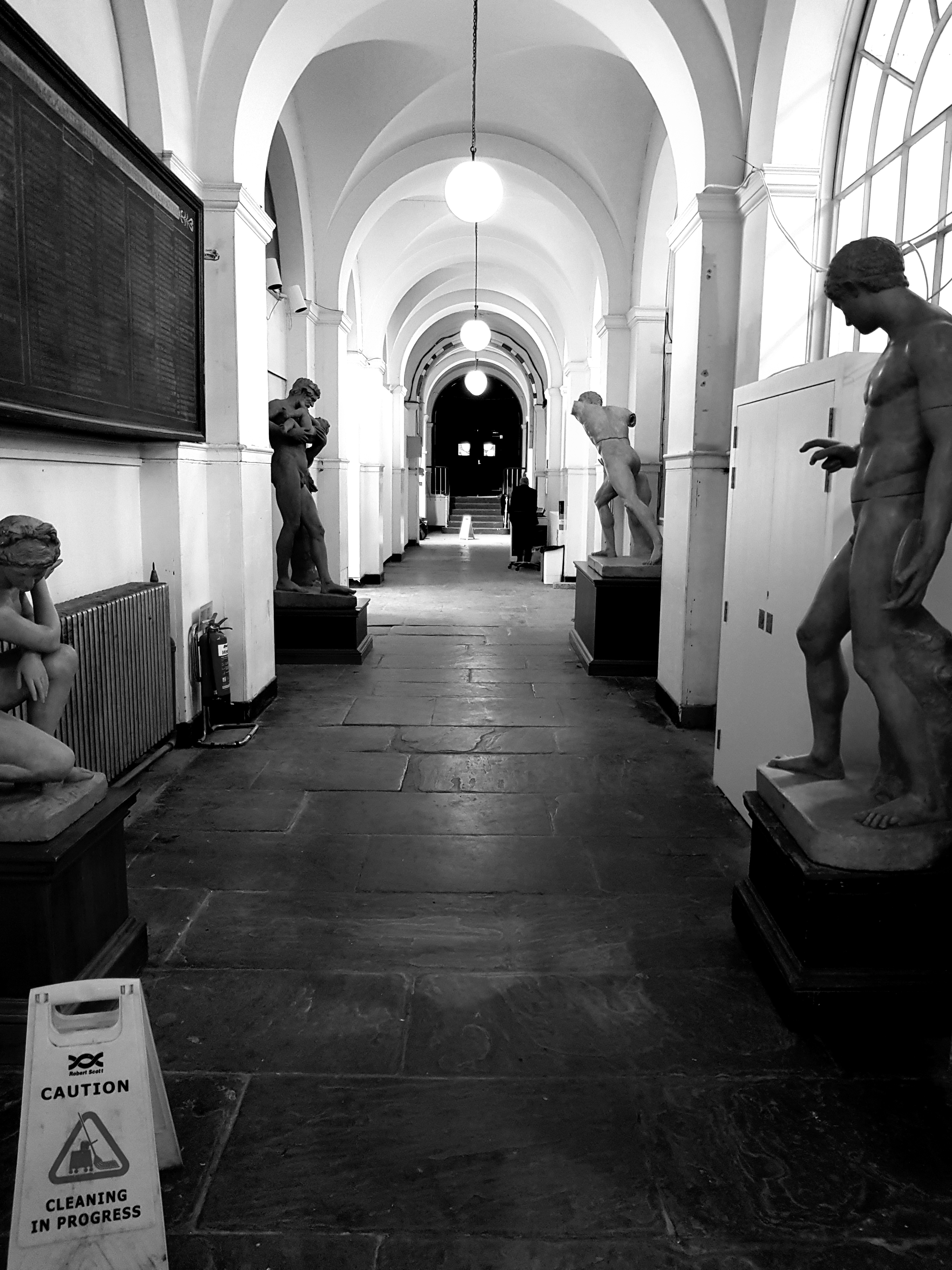
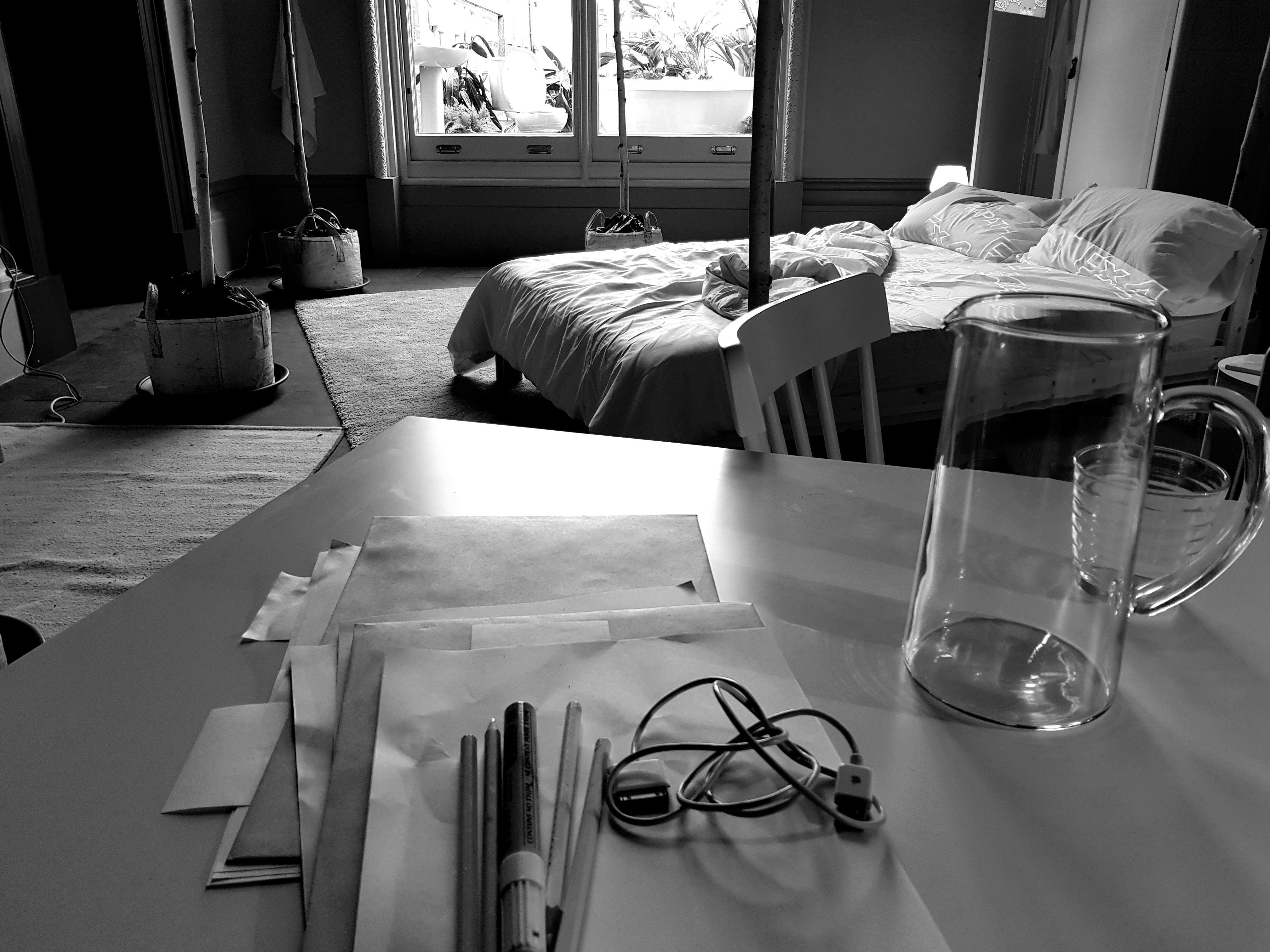

HLF
While I’m on the subject of the New RA, I should document the role of the HLF in making it possible.
I discovered last night (which I had not known) that the origins of the project go back to 1992, when Sir Piers Rodgers, my predecessor, but three – or four, depending on who you count – first learned that the British Museum was planning to vacate the building and went to see Virginia Bottomley, the then Secretary of State, to seek her support for the RA to secure it (they had apparently previously tried to acquire it in 1900 when the University of London left). It was the same era as the establishment of the lottery by John Major as a way of escaping Treasury control on major capital projects.
During the 1990s, there were endless discussions as to its appropriate use, including a common one that it should be a centre for the display and discussion of architecture, vigorously promoted by Philip Dowson, the then PRA.
The HLF turned the first project down in 2001. The RA asked for too much money and it was after the HLF had turned its funding – for good reason – away from London. But they did give the current project £12.7M in 2013; and one of the pleasures of last night was seeing Jenny Abramsky, the then chairman, who supported the project after lying on a bed in our then louche café, Wesley Kerr, the then chair of the London committee, Christopher Woodward, who supported the project when it went to the main Board against those who felt that the RA was a private institution, Jane Stancliffe, the original project officer, and Patricia Lankester, who has been a project monitor since the beginning, as well as being able to walk Peter Luff, the current chairman, through the building.
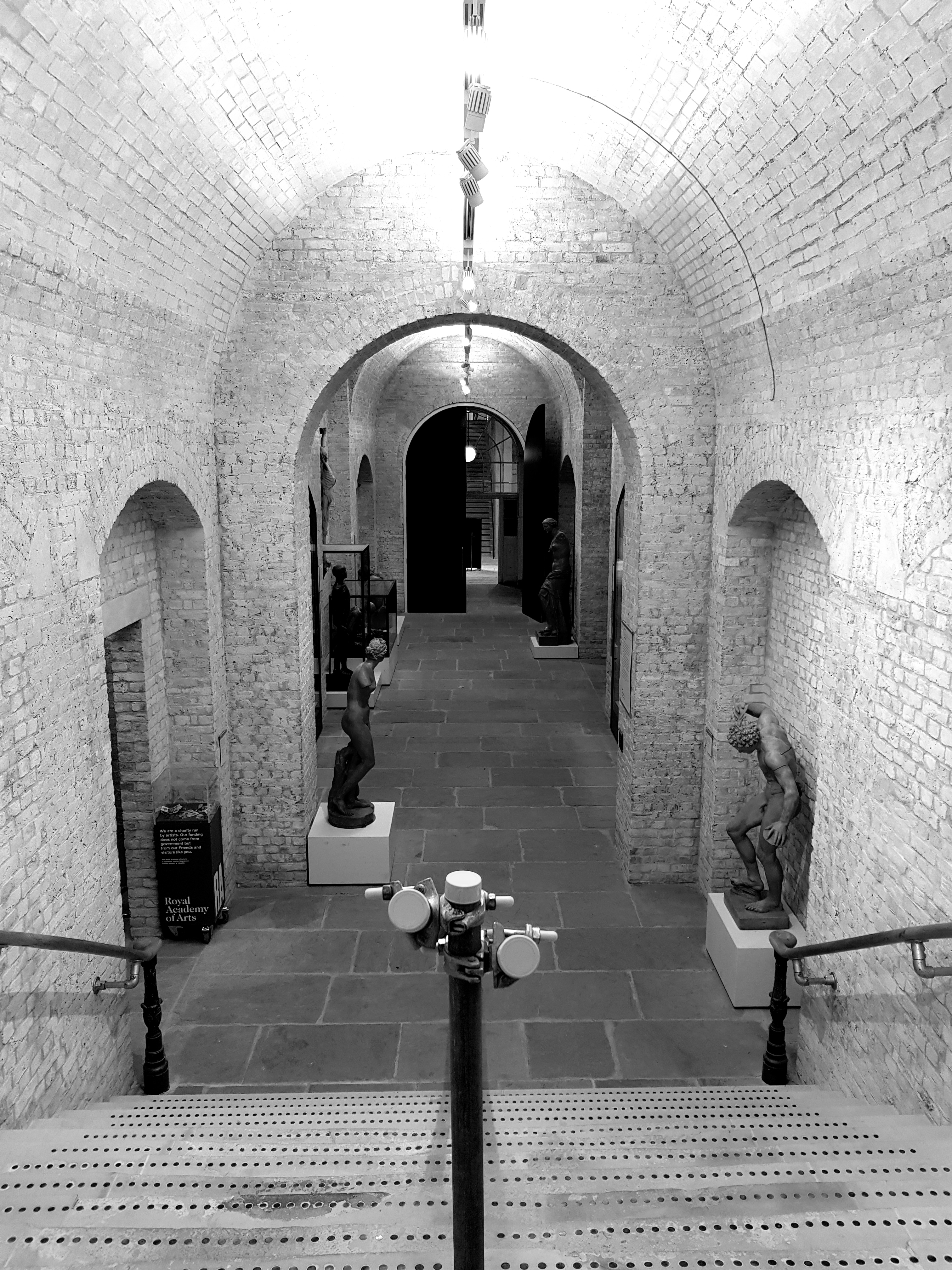
I mention all this because fewer people are buying lottery tickets; the HLF is no longer able to give big lottery grants; the Arts Council has absorbed its lottery funding into its routine grant-giving. So, Burlington Gardens may be one of the last grand monuments to a long and fertile period of lottery funding:-

The New RA (3)
We had the opening of the New RA last night – young and old, long-term supporters, donors, patrons, all those who have been involved in the project since the beginning, artists, RAs, all in a great impenetrable swirling mass throughout the building. It is a slightly strange experience after many years (at least ten) of looking at ground plans and CGIs of the various spaces to see them realised in three dimensions: some exactly as conceived from an early stage of the project; some, like the Dorfman Architectural Court, bigger and more important to the experience than expected, filled with architectural casts from Thomas Lawrence’s collection:-
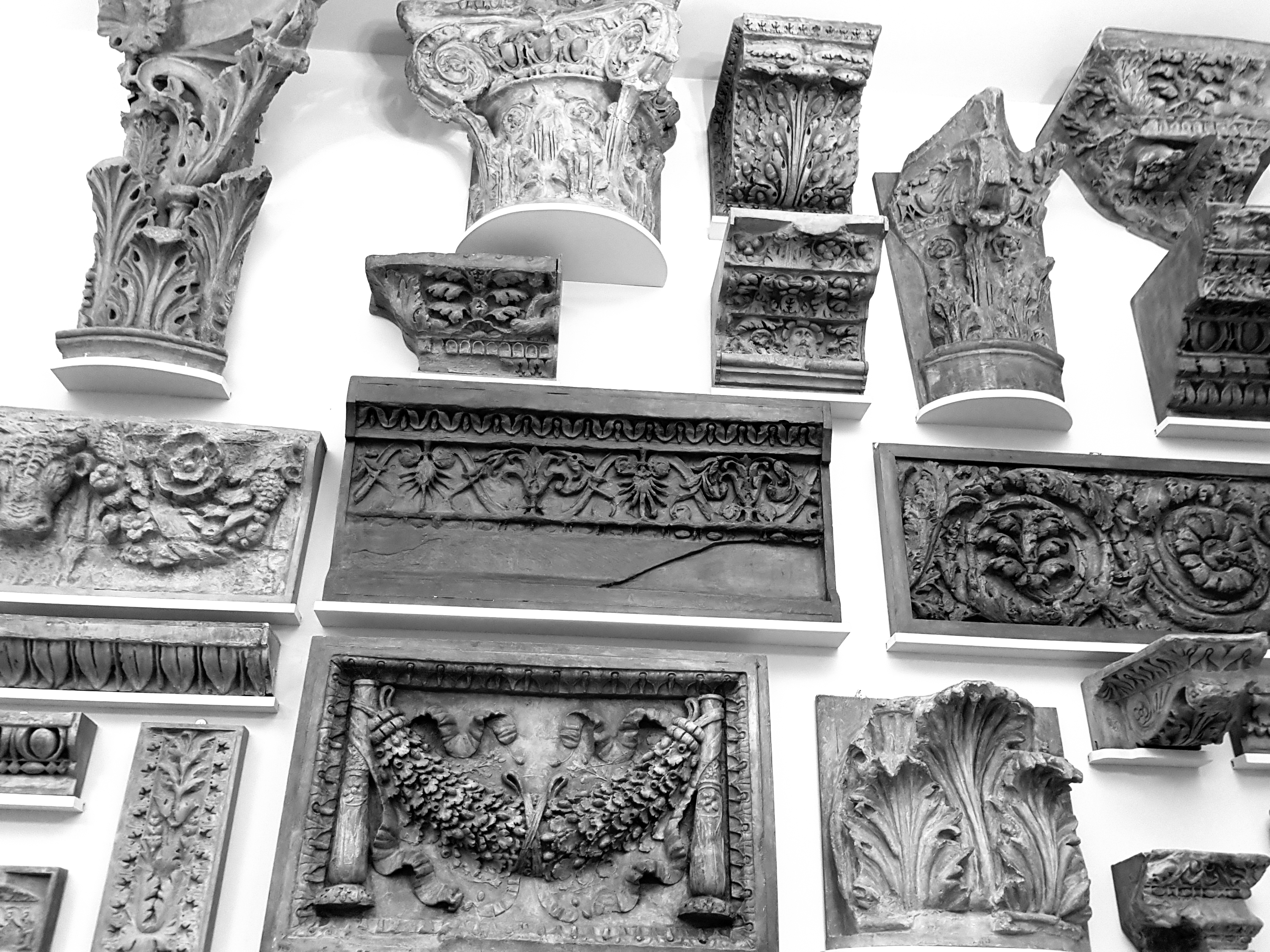
There were moments that I particularly enjoyed: two people who came on a hard hat tour sitting enjoying the seats that they sponsored; seeing Roy Strong, who gave me my first job at the V&A, and Isaac Julien, one of the recently elected RAs; and lots of staff who contributed to the project at an early stage seeing the results of their labours.
I took only one photograph, which was from the bottom of the disabled ramp at the front, a solution to the problem of convenient and permanent access from the street which was reached after many false attempts:-
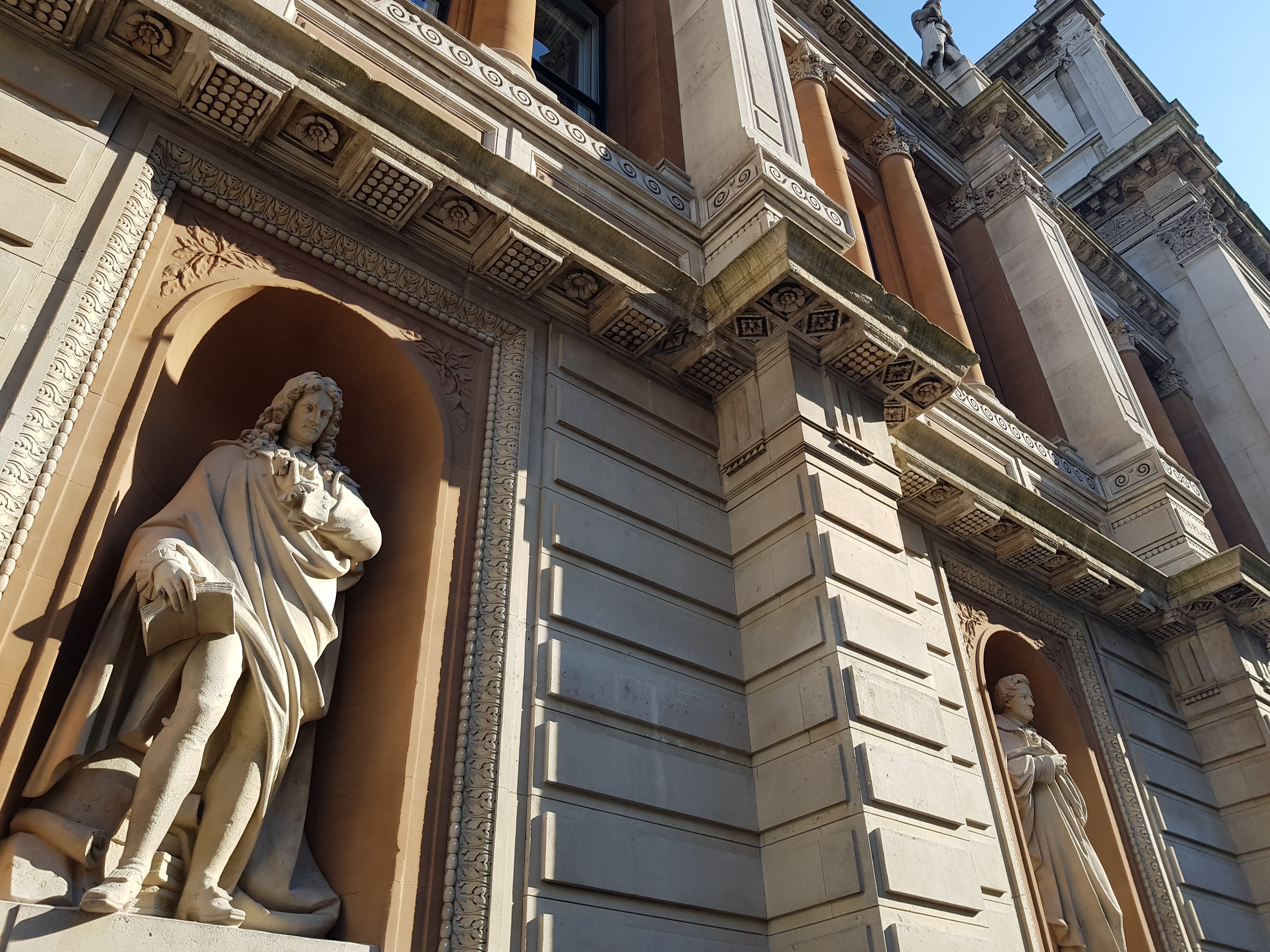


You must be logged in to post a comment.