It was the second day of the conference to mark the 41st. anniversary of the foundation of the V&A/RCA MA Course in the History of Design – or maybe it was the 40th. anniversary of the first cohort of students graduating.
The day was about current issues in the history of design: new ways of engaging audiences; the new galleries of the Röhsska Museum of Design and Craft in Gothenburg; a new film about the Artists International Association; and sessions in the afternoon about decolonisation.
The evening was more nostalgic: Chris Frayling on the origins of the course – the closure of the circulation department, his interview by Iris Murdoch, the role of John Physick; Penny Sparke on the wonderful Gillian Naylor and Clive Wainwright; and John Styles on the support of the V&A curators. There have been 800 students since 1982 and they are in jobs all over the world – Paris, Alberta, M+ and, not least, in the V&A itself.
So, Roy Strong’s view that it would be good for the V&A to be involved in postgraduate teaching was right, although it was not quite as straightforward as was occasionally implied.
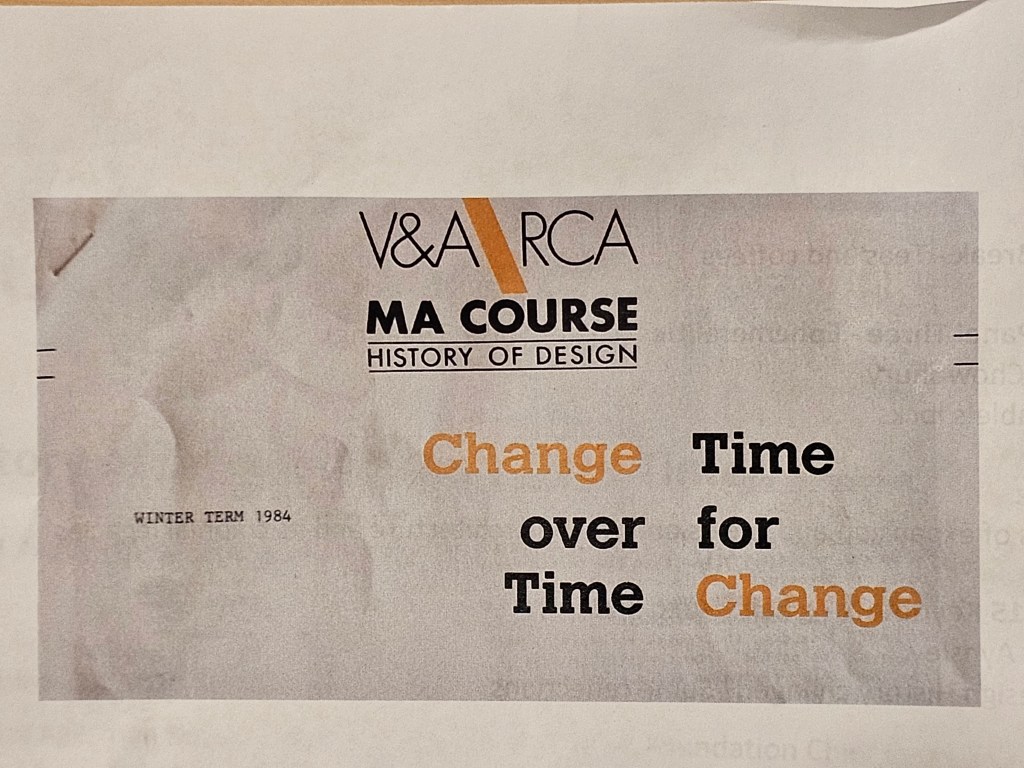
Today was the first day of a two-day conference to mark/celebrate/explore the changes in the writing and study of the history of design since the establishment of the V&A/RCA MA Course in the History of Design in October 1982. The conference is called History of Design: Change over Time/Time for Change.
Paradoxically, the image which appeared on the screen in between papers was dated October 1984 (see above), perhaps taken from the first set of public seminars which started with one given by Jules Prown, who was referred to in the first paper as a key figure in the field of Material Culture.
Jeremy Aynsley gave a brilliant overview of the history of the subject, but also showed a picture of the 1984 student brochure, not the original one, which had been compiled at speed for the launch of the course in 1982. It would be interesting to compare the two. The 1982 version of the course was called ‘Design and Decorative Arts: History and Technique’, which institutionalised an adversarial relationship between the V&A and RCA and was abolished in 1984.
Having not kept in touch with the development of the subject since I left the V&A in 1994, two things struck me.
The first was the extent to which the course fertilised the V&A’s exhibition programme between 2000 and 2010 when Mark Jones was Director with a whole series of big ambitious survey exhibitions, including Paul Greenhalgh on Art Nouveau and Christopher Wilk on Modernism.
The second was the amazing and impressive diversification and internationalisation of the subject such that it now encompasses absolutely everything. I particularly liked the suggestion in three papers that it should be about touch, sound (the sound of a typewriter) and smell. Presumably taste as well.
To my shame, I had never heard of Shane de Blacam, who won this year’s Architecture Prize at the Royal Academy last night and gave a charming, informative and beautifully illustrated account of the buildings he had designed as if for the first time.
He was trained at University College, Dublin and then went on a Fulbright Scholarship to study at the University of Pennsylvania which was obviously a good place to be in the late 1960s, not least because of the presence of Louis Kahn, with whom de Blacam worked as a project assistant on the Yale Center for British Art. He told a story which I had never heard that the first version of the project came out at $17 million (I think that was the figure, but wasn’t taking notes) but Paul Mellon refused to budge from the budget he had set of $14 million because he was annoyed by New Haven who had insisted on there being shops on the street (actually, a good thing). So, de Blacam was responsible for re-engineering the building to cost quite a lot less, which normally results in an impoverishment of the building’s character, but not at the YCBA with its luxurious use of white oak and concrete (Kahn died in 1974 and the building only opened in 1977, so quite a bit of the work at this stage must have been done by Anthony Pellecchia and Marshall Meyer who worked in Kahn’s office).
De Blacam then went back to teach at University College, Dublin which he was obviously brilliant at to judge by the number of his former students from Dublin who where in the audience, before setting up in practice with a colleague, the late John Meagher who had studied in Helsinki before working for Venturi Scott Brown, also in Philadelphia. I now realise that we were only shown a relatively small proportion of their projects, but they were without exception exceptionally interesting – beautifully drawn, carefully considered, an unusual mixture of modernism, but with declared, sometimes modern, historical references, including a recreation of Adolf Loos’s Karntner Bar at Trinity College, Dublin and much acknowledgement of Kahn and Asplund.
There was little indication of the dates at which the projects were done, so I have looked up when they were done (some are undated on their website).
This is a residential block inserted into the medieval part of Dublin, finished in 2000:-
This is the courtyard of the Cork Institute of Technology, completed in 2007:-
The Abbeyleix Library (2009):-
I hope it’s OK to have reproduced the photographs which are by Peter Cook.
Through the door came a proof copy of a volume of memoirs, Art Exposed, by Julian Spalding who was a big figure in the museum world in the 1980s and 1990s – Director of Arts at Sheffield when he was still in his early thirties, then Director of Manchester Art Galleries from 1985 to 1989 (after Tim Clifford), when he moved to run the museums and galleries of Glasgow, a big job, as he makes clear (it came with access to an official Daimler which he used to visit Ian Hamilton Finlay). He did lots of good things, including opening the St. Mungo Museum of Religious Art and establishing GoMA, the Glasgow Museum of Modern Art, which is a kind of anti-Tate, full of rough and realistic Scottish figurative painting which was very fashionable in the 1980s, but seems to have largely disappeared from view. In 1998 he was a victim of municipal restructuring, the post absorbed into a department of Leisure Services, since which he has been a voice crying in the wilderness. Occasionally, his memoirs have an Ancient Mariner aspect, but they are funny, full of interesting ideas, spectacularly rude about people everyone is normally very deferential to, and a reminder of how museum life used to be when museums could be run by someone as robustly outspoken as Spalding.
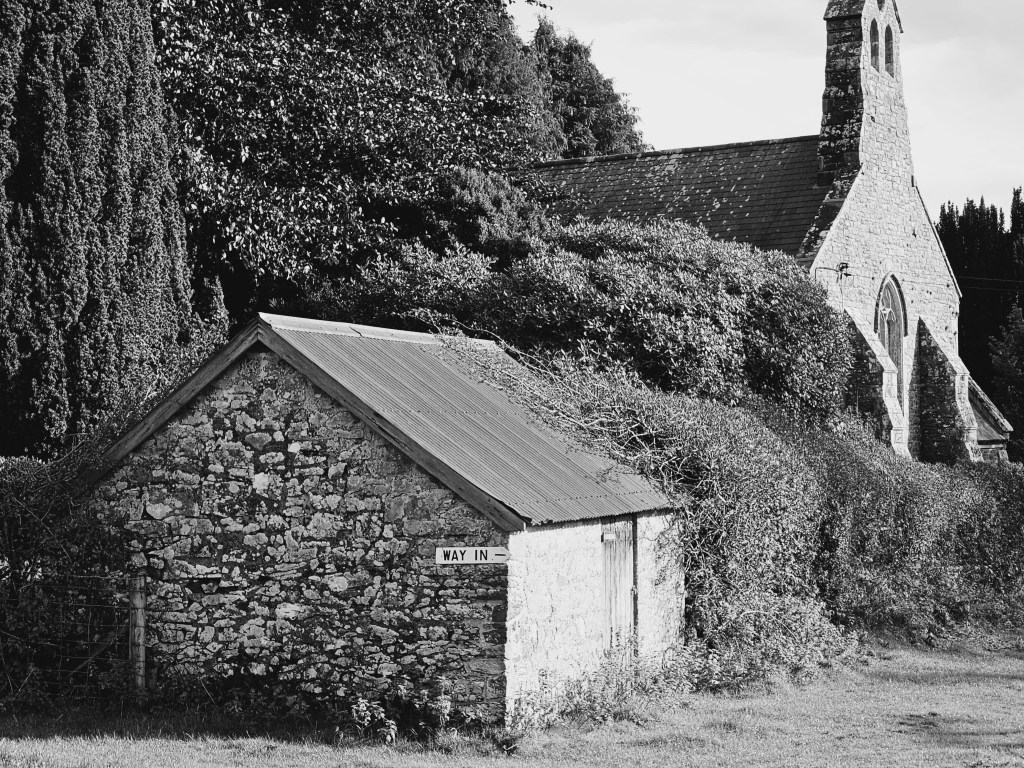
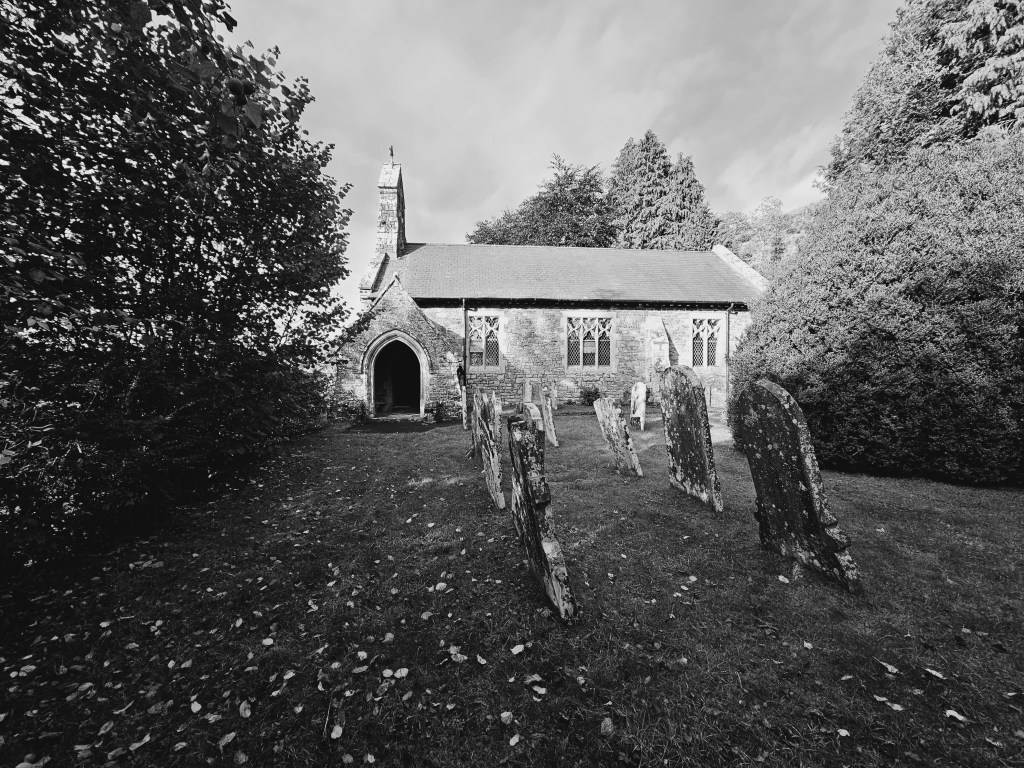
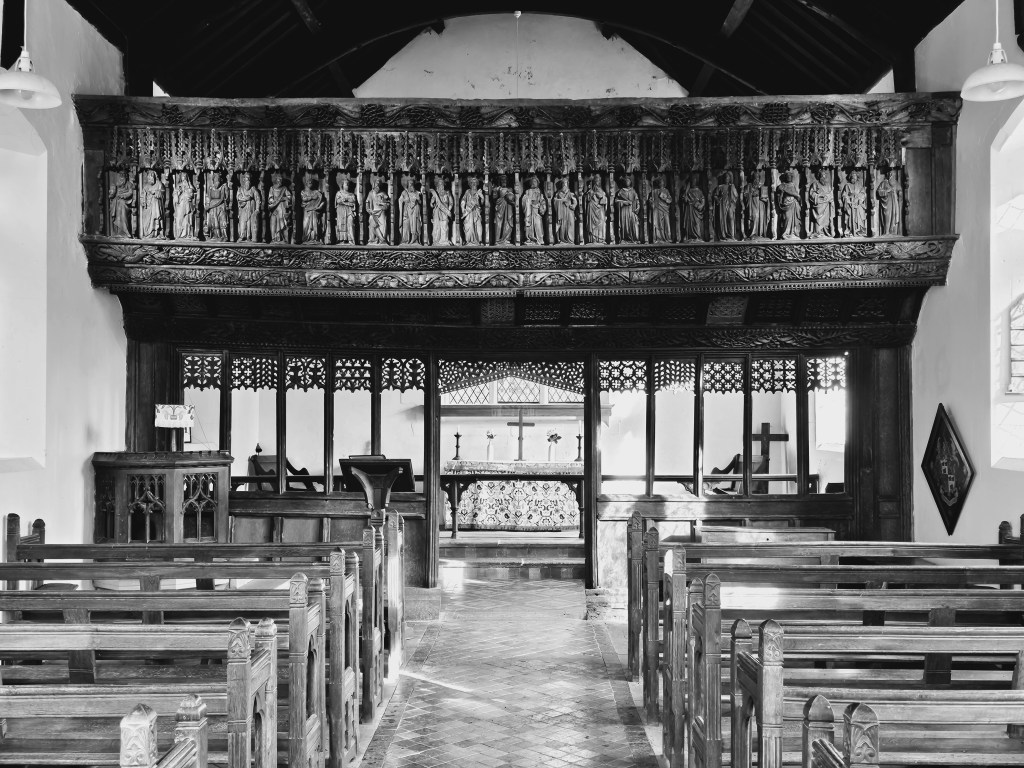
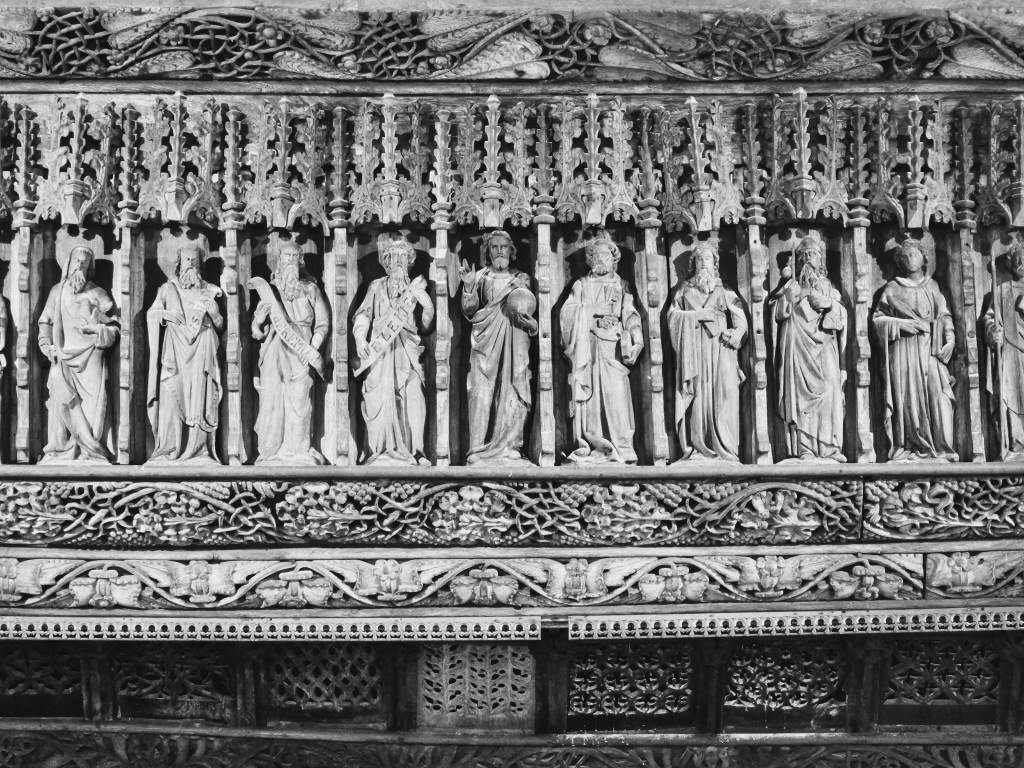
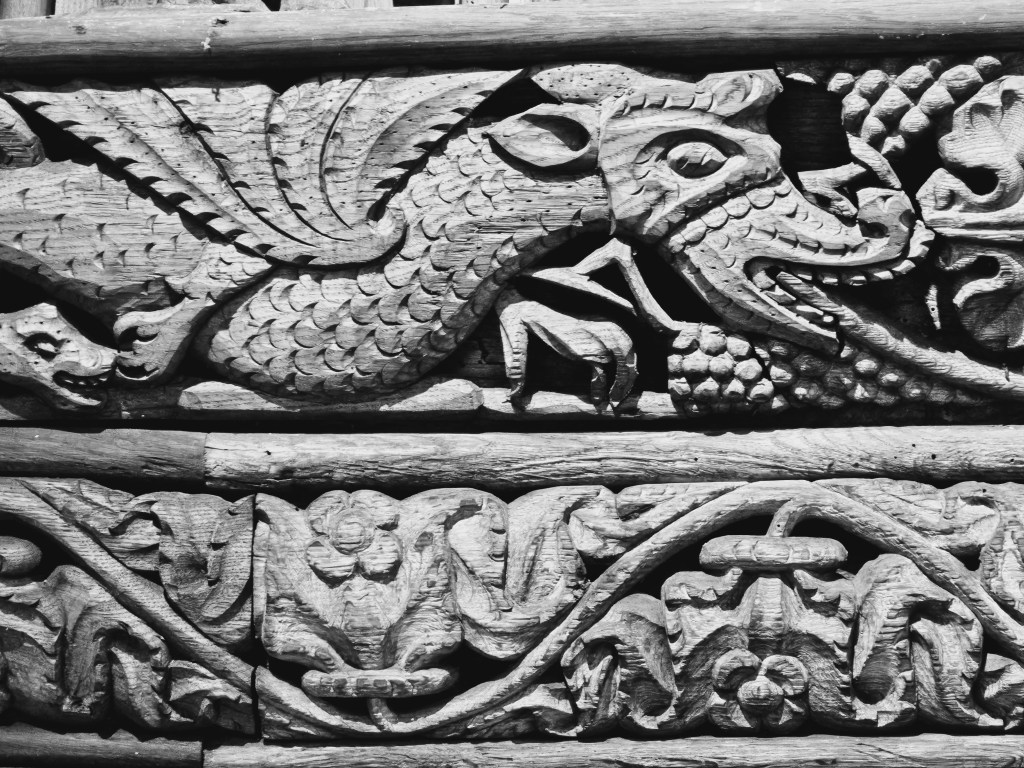
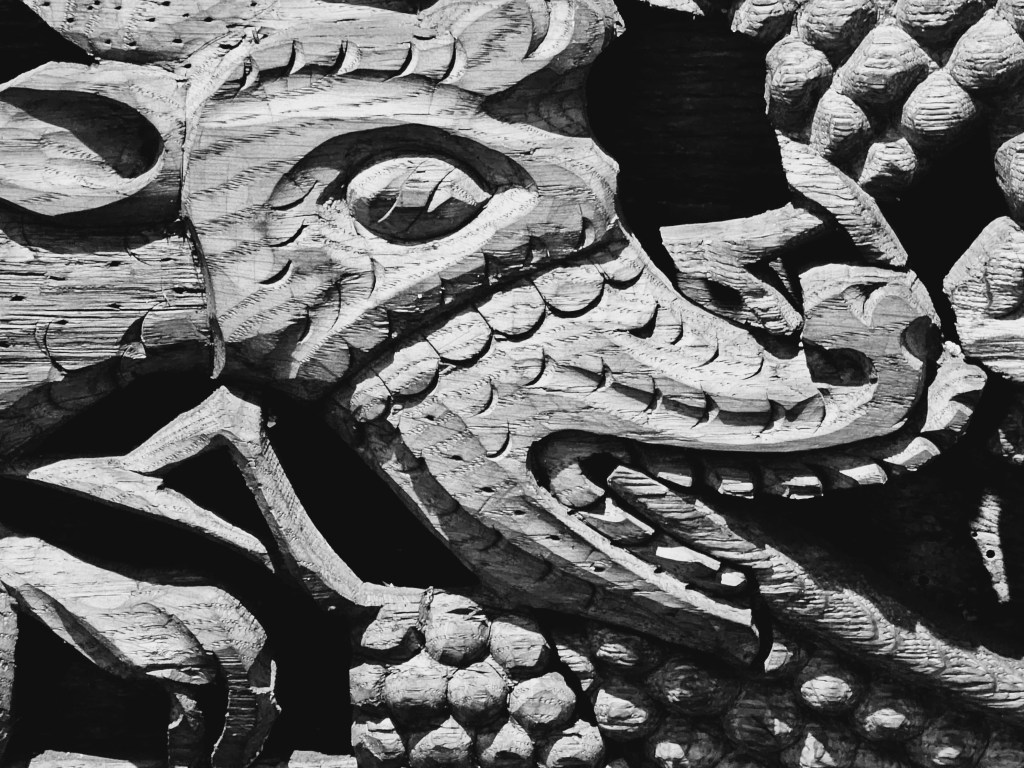
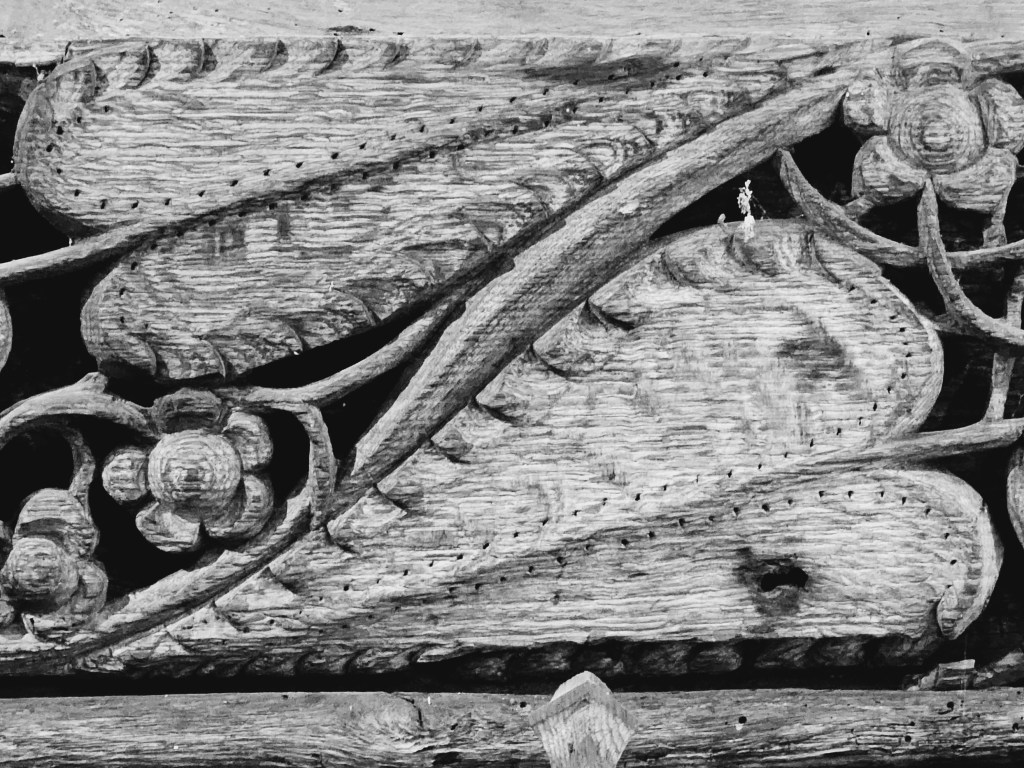
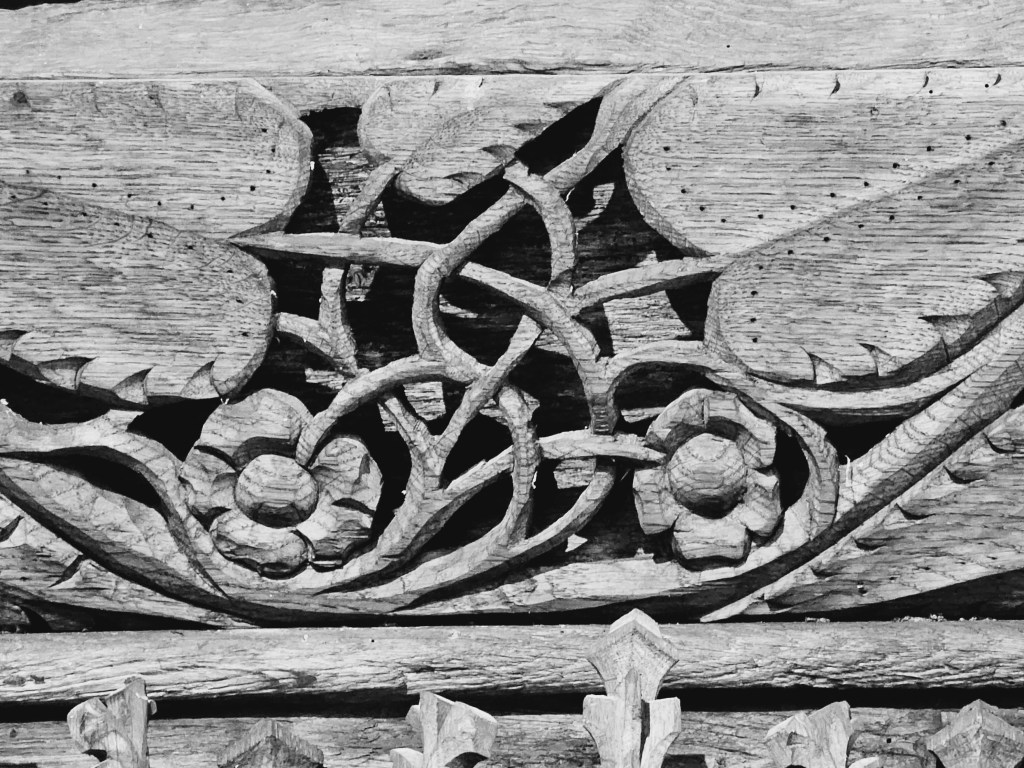
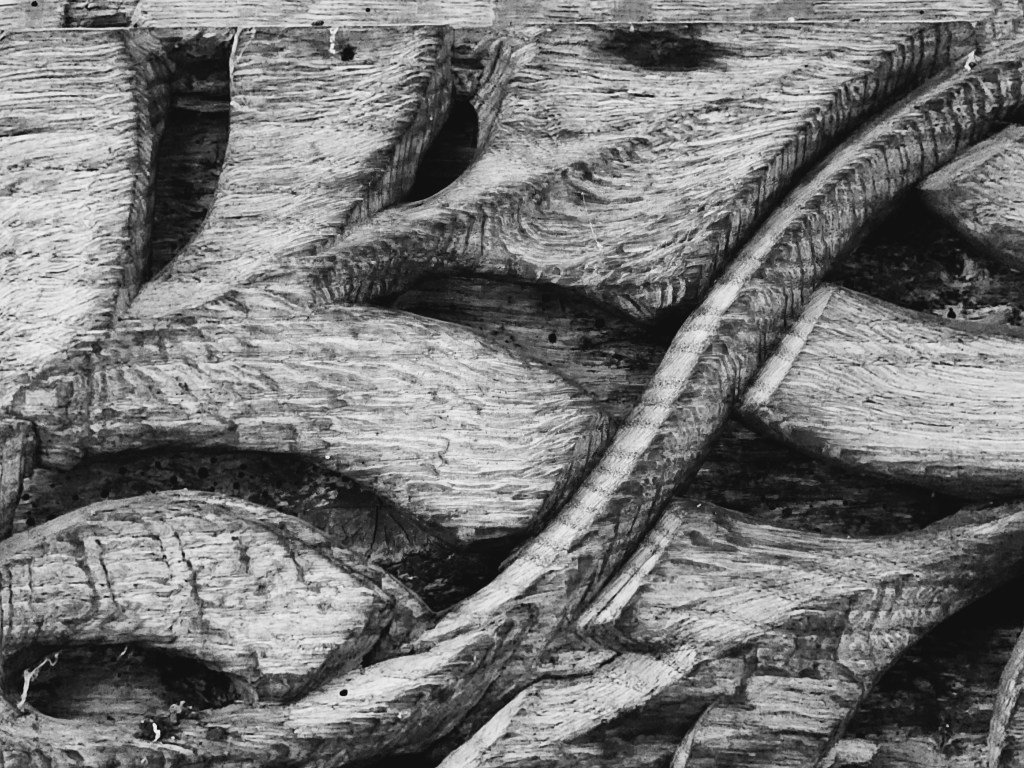
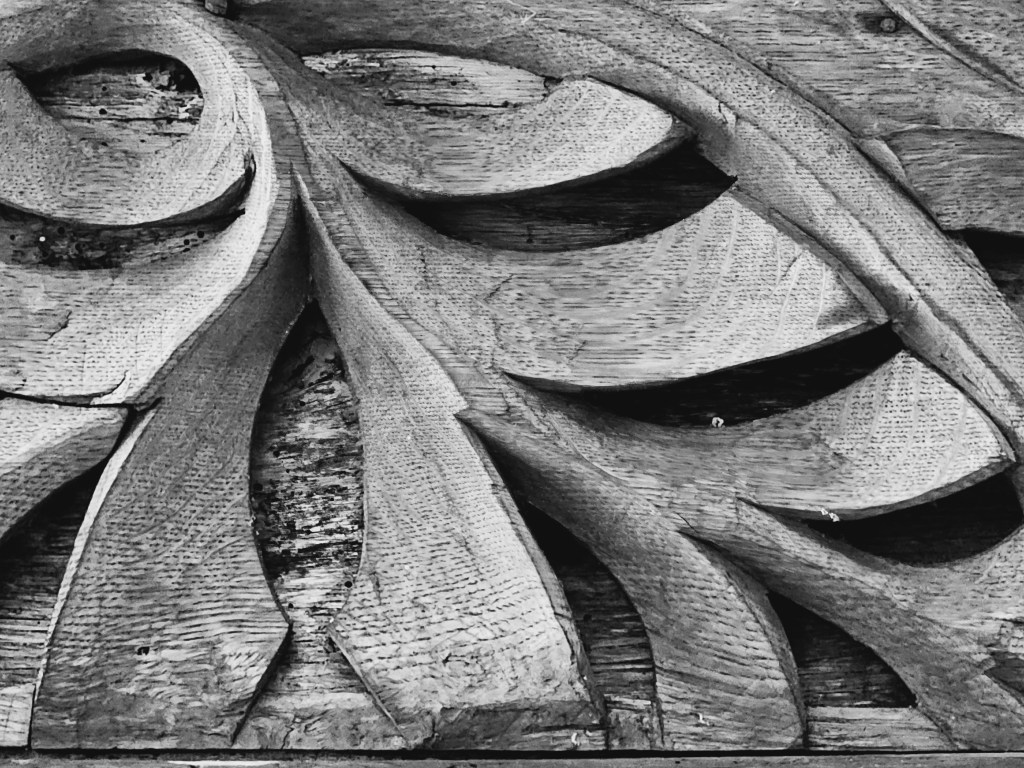
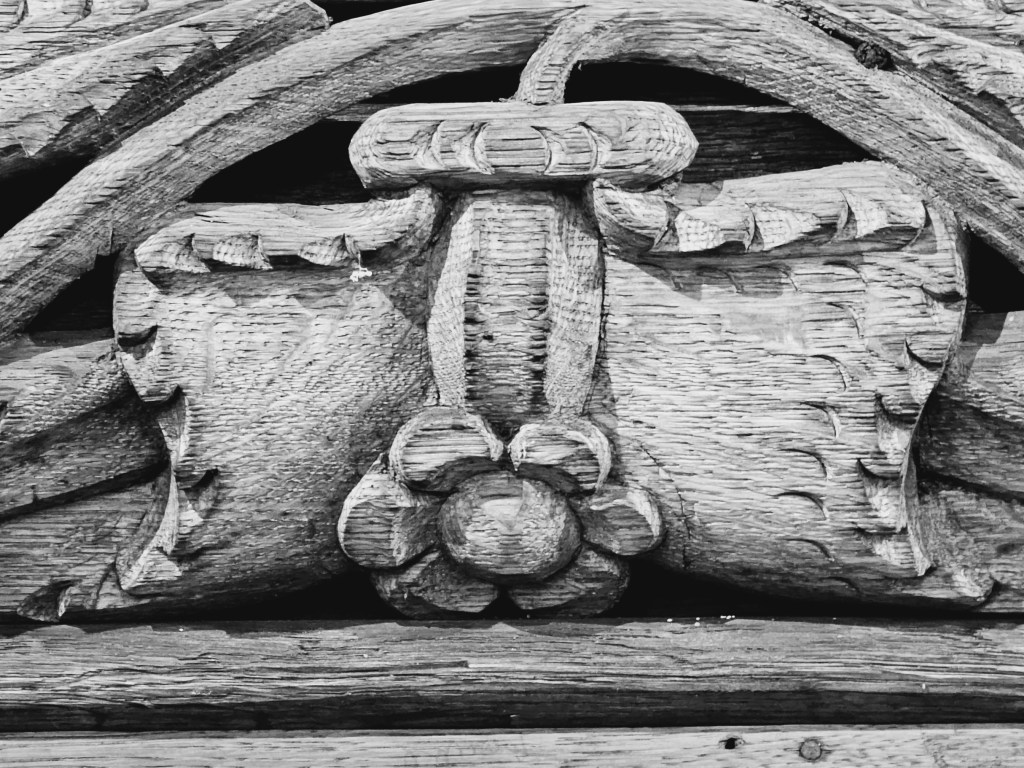
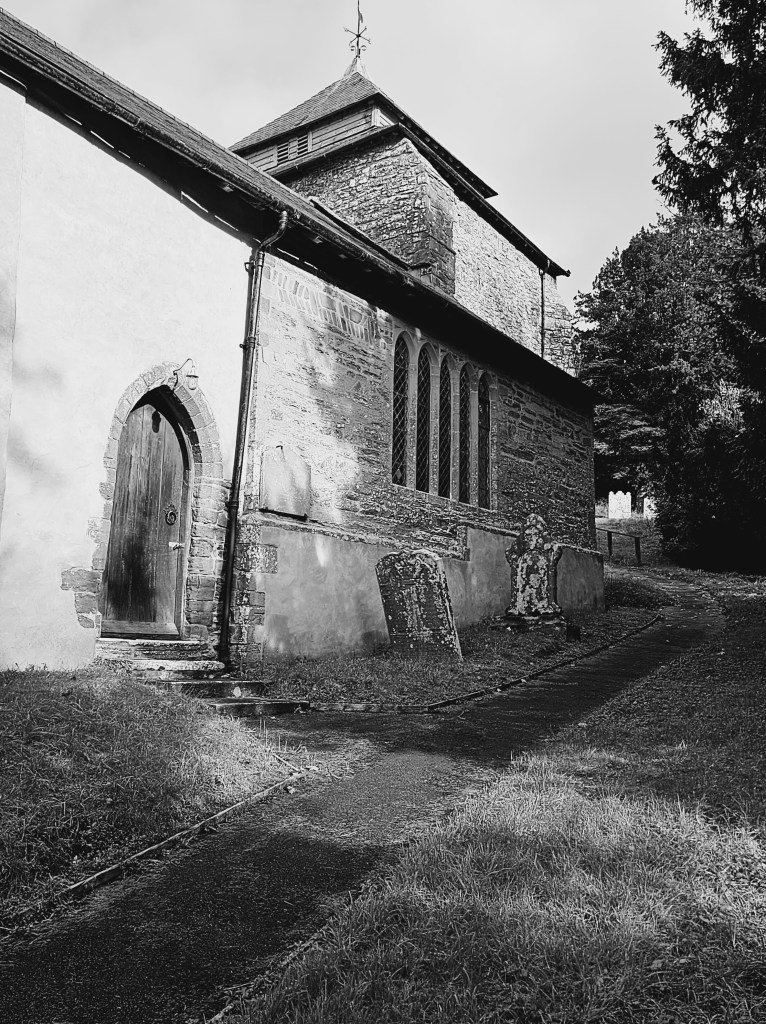
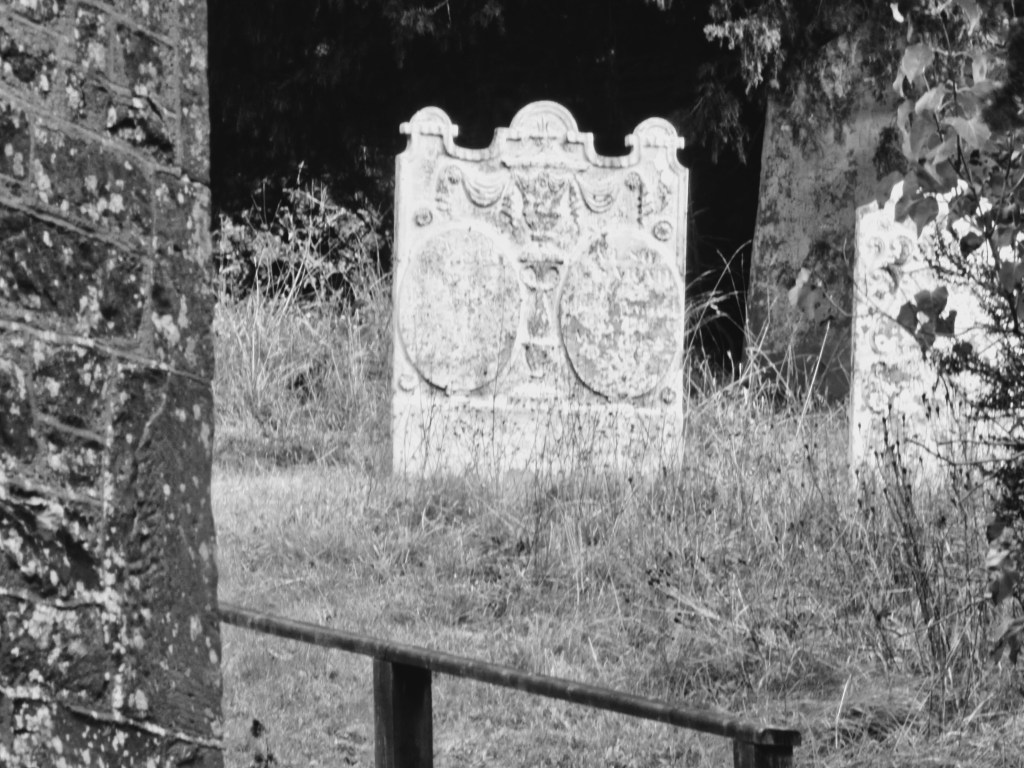
The Friends of Friendless Churches looks after this small Victotian church just below the A483 beside the River Ithon and easy to miss. It looks a tiny bit unpromising, but inside has a most spectacular, spotlit rood screen, partially restored in the nineteenth century – the figures are Victorian – but still with a great deal of lively, late fifteenth-century wood carving, by carvers of the School of Newtown.
This is a view of the church from the adjacent track:-
The entrance to the church by the South Door is reached by a steep and narrow path through the churchyard:-
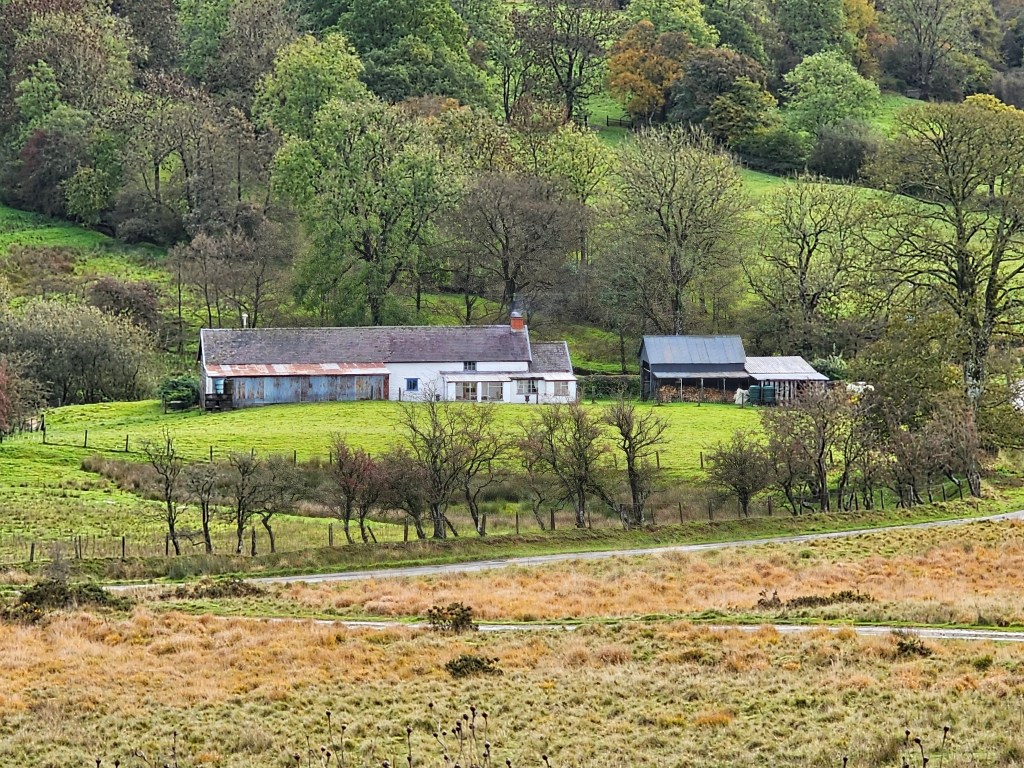
For those who have kindly written to commiserate about our experience of passage through deep floods, I should have made clear that we did make it in the end. So, now are enjoying the peaceful open countryside of what must once have been Radnorshire, now Powys, with even a bit of watery sun:-
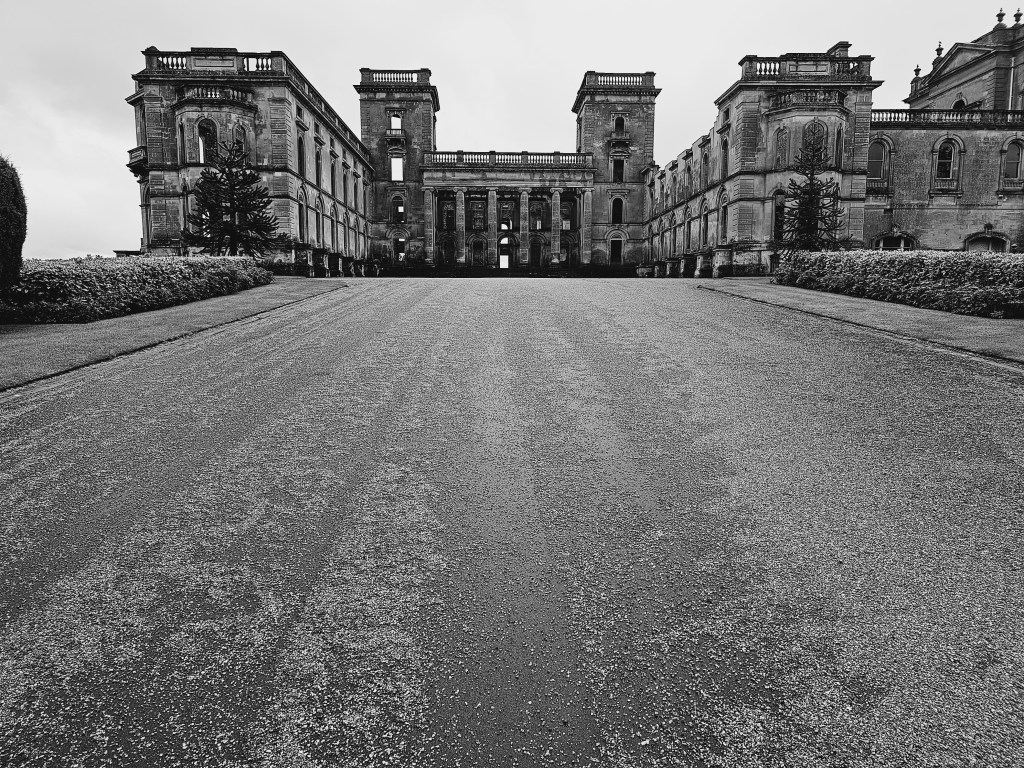
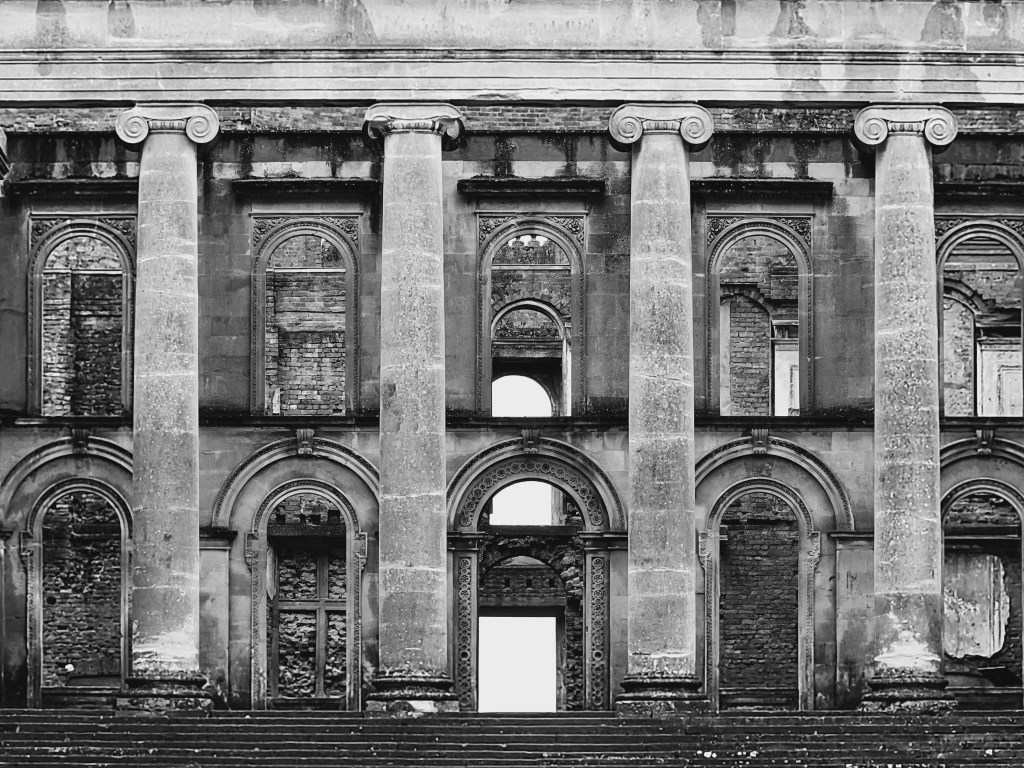
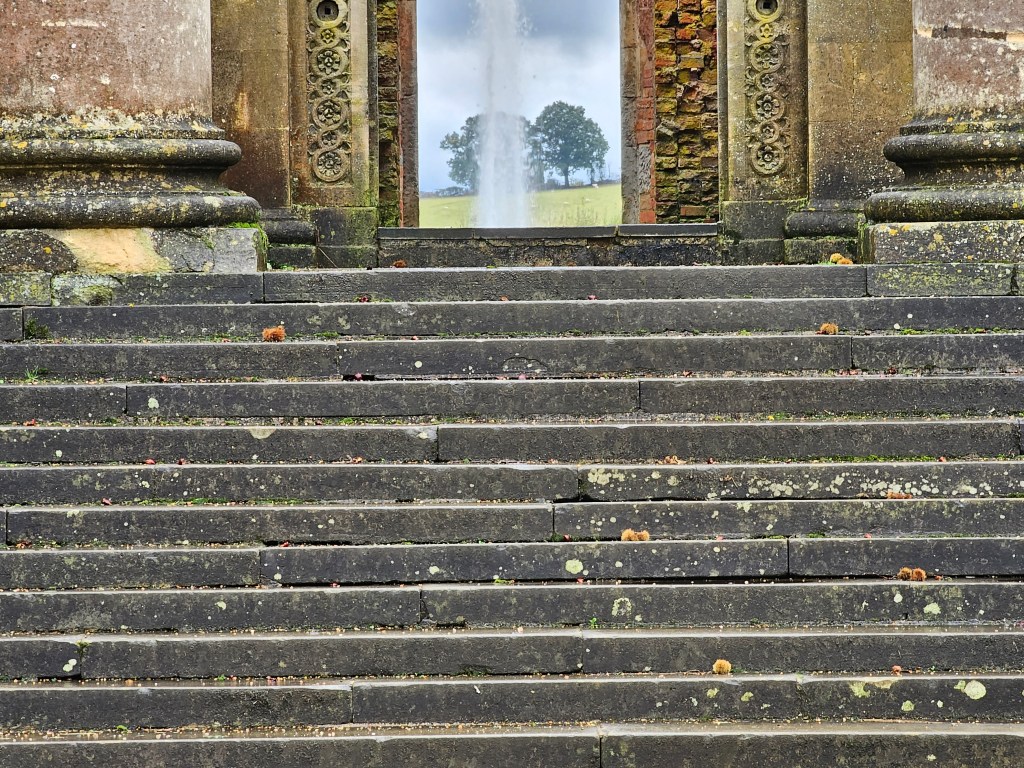
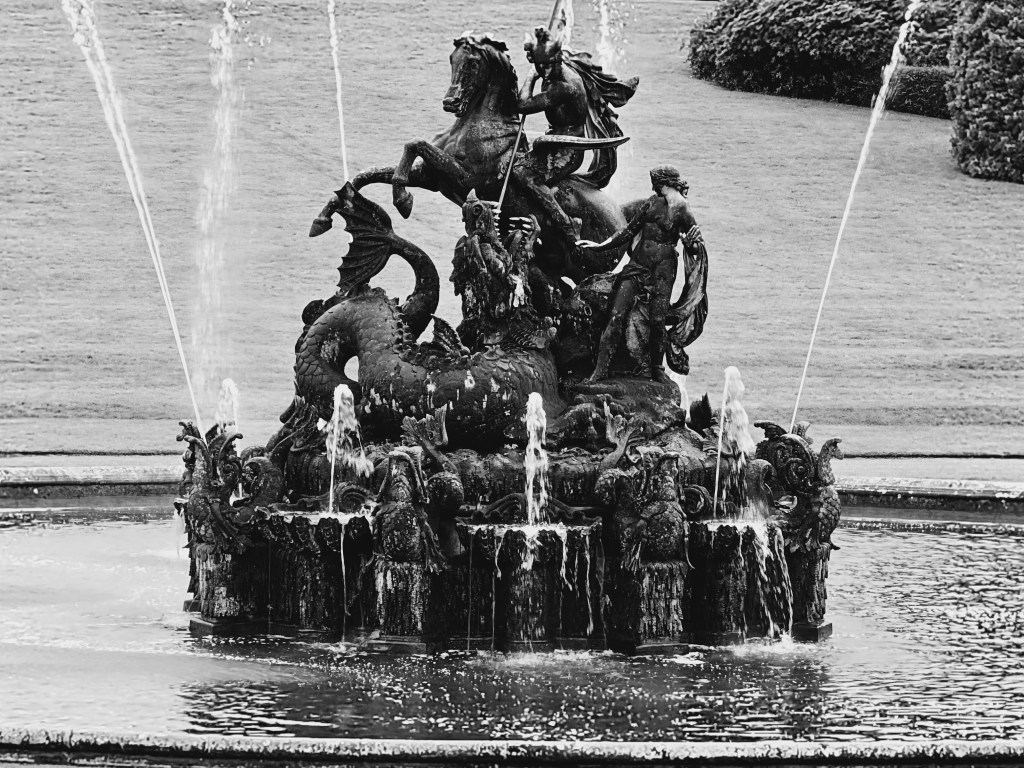
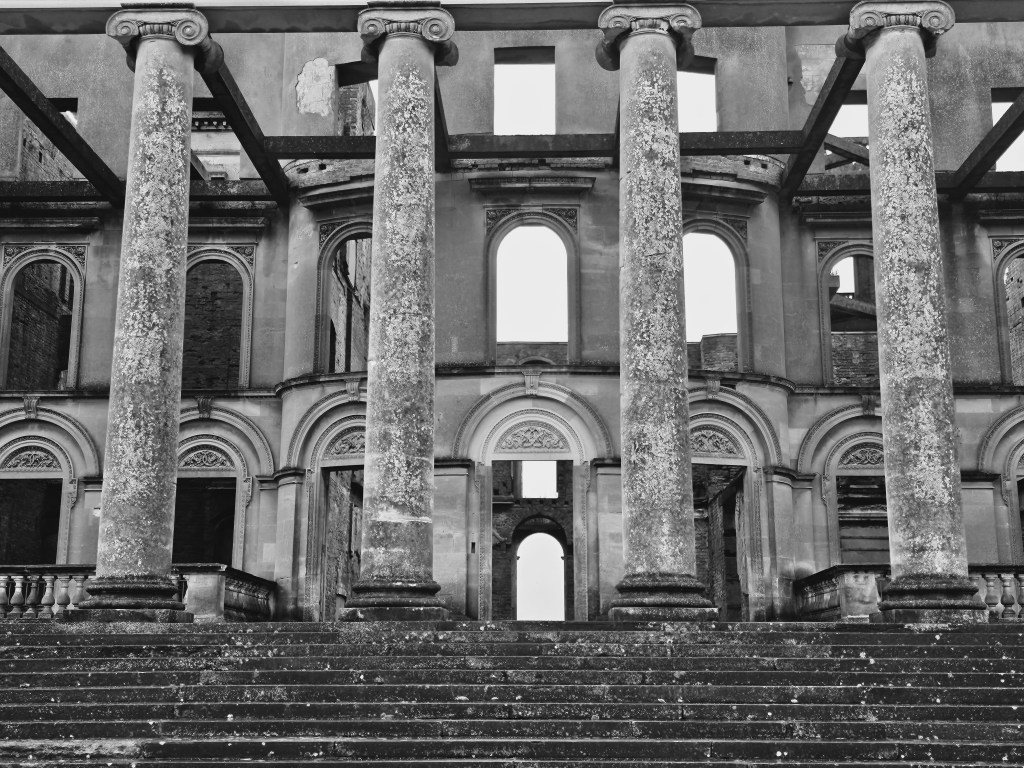
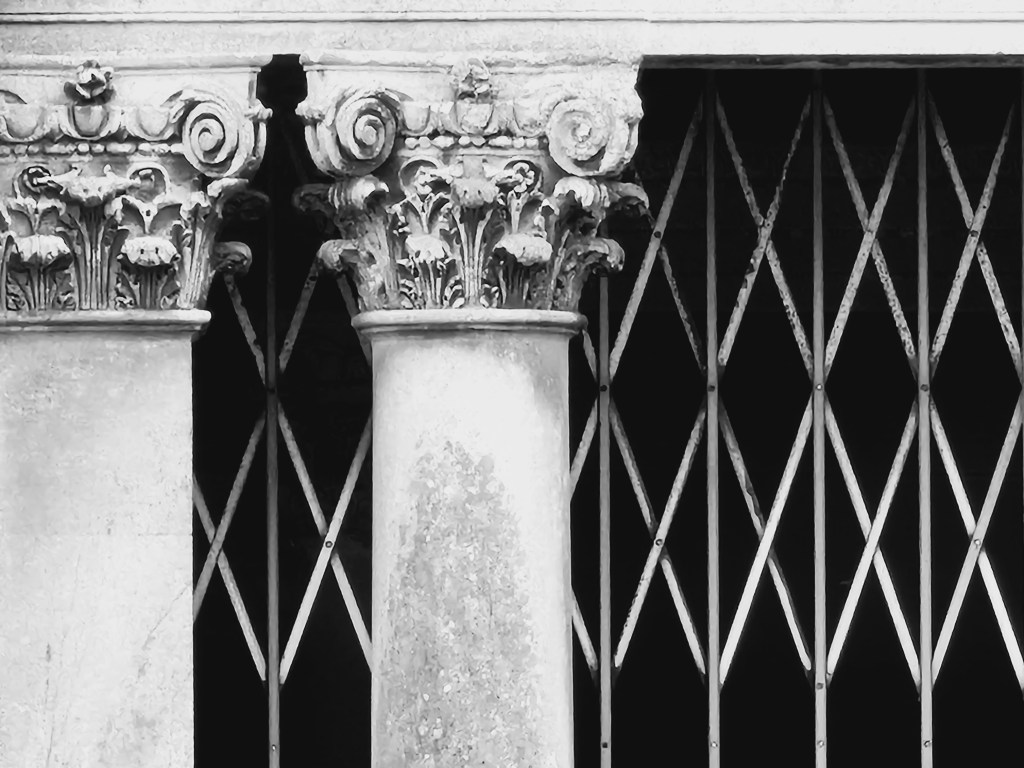
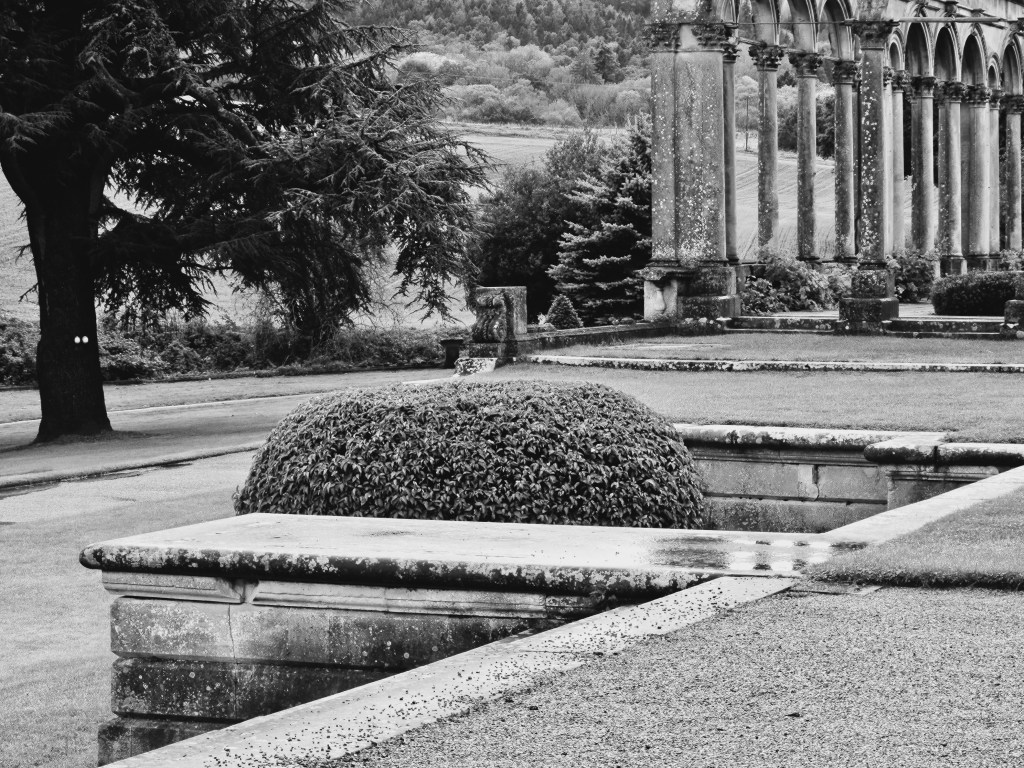
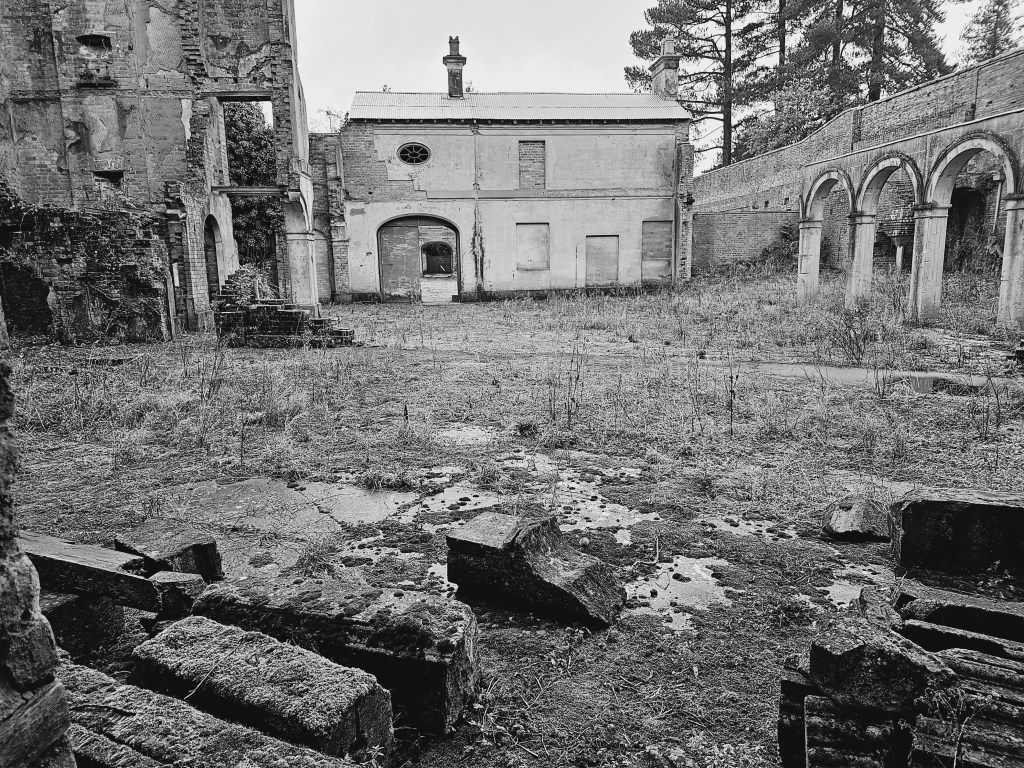
Witley Court is quite something: a vast ruined mansion, once the home of the Foleys, originally a Jacobean house, reconstructed in the early nineteenth century by John Nash and then again, on an even more opulent scale by Samuel Daukes for the Earl of Dudley. In the twentieth century, it was sold to Sir Herbert Smith (no relation), a Kidderminster carpet manufacturer. It was burnt out in the 1930s, the contents stripped and taken into government care in the early 1970s – an interesting decision. Now, it is beautifully maintained as a gloomy ruin by English Heritage:-
Today was, I think, nearly as alarming as anything I have experienced. We set off, post-Covid, for a weekend in rural mid-Wales. The only problem was that somewhere near Stockton-on-Teme, we discovered that the Teme had burst its banks. The road was a lake and clearly impassable. So, we diverted North to Cleobury Mortimer. Everything was fine until we got to Leintwardine where we discovered the roads were impassable. Lots of people were assembled to give conflicting advice, most of which was that there were no roads open to the north or west, all were under deep and impassable water. Then, a district nurse told us there might be a way through by heading north by way of Bedstone and Bucknell on minor roads.
The only problem was that I took a wrong turning. We found ourselves submerged in a sea of water with a mini coming in the opposite direction stuck in the flood. We tried to back out and got stuck ourselves. It looked like that would be where we would spend the night. Then, an unbelievably helpful person appeared in wellington boots, so practical, took charge, hitched our car to the van behind and hauled us out.
But far worse was driving west of Knighton down long dark roads which were under deep, nearly impassable water: no way of knowing how deep, no hope of being rescued if we got stuck, it was growing dark. Not nice.



 | Charles | Saumarez | Smith |
You must be logged in to post a comment.