Poundbury (2)
I felt badly that I had never been to Poundbury in spite of the fact that it is such a topic of architectural discussion and debate – I suspect by people who hold very strong views against it, but also may not actually have seen it. So, in August, I went on a day trip and was shown round Phase III of its development by my nephew, George Saumarez Smith, who has been responsible for much of its recent design for which ADAM architecture and Ben Pentreath have recently been awarded the Georgian Group’s Diaphoros Prize.
I was impressed by the scale of Poundbury’s development, done in three phases, and the way that the two earlier stages which are different in character have matured. It has taken time. Unlike Upper Heyford, its population is now about 4,000 after thirty years; Upper Heyford is planned to have a population of 13,000 after ten. The first stage is more like a village.
I sense that new towns are very scared of density, hypnotised by the early twentieth-century dream of the garden city. If you compare Poundbury to big new areas of recent urban development, like the outskirts of Aylesbury and Cambridge, then it scores highly in being carefully planned, well considered and properly Georgian in feel – three-dimensional architecture, not paste-on, neo-Georgian.
I can’t really understand why it attracts such extreme ire, except that it is thoughtfully traditional which architects absolutely hate.
I have written about it at greater length in this month’s Critic:-
https://thecritic.co.uk/issues/november-2025/dont-be-down-on-poundbury/
John Vanbrugh: The Drama of Architecture (14)
I had been tipped off that the first review of my book would appear in this week’s Country Life and, indeed, it has – a very nice, generous and well-informed account of it by Michael Hall, the former editor of both Apollo and the Burlington Magazine.
He makes the point that Vanbrugh may have been good at making sketches of his projects in the same way that Norman Shaw would do designs on the cuffs of his shirts at dinner parties. I think this is exactly right, as suggested by the two sketches of the garden front of Castle Howard which surfaced in the collection of the Marquess of Bute in the mid-1990s – not finished drawings, but showing just enough to give an idea as to what the garden front would look like.
More on this tomorrow in my talk at the Wigmore Hall for which there are still a small number of tickets available:-
Duncan Robinson (3)
Duncan Robinson’s posthumous book, Pen and Pencil: Visual and Literary Culture in Georgian England, was launched last night at the Paul Mellon Centre – very appropriately, as it turned out from Brian Allen’s speech, because Duncan had helped save and stabilise the finances of the Paul Mellon Centre when he first became Director of the Yale Center for British Art in 1981.
He had been thinking about the book while he was at Yale and later as Director of the Fitzilliam Museum, but only started writing it after he had retired from Magdalene College, Cambridge in 2012. In fact, I see that nearly my last correspondence with him was about his Introduction in February 2021. He died in December 2022.
After reading English at Cambridge, he went to study early Italian paintings as a Mellon Fellow at Yale, but he must have imbibed a great deal of the intense anglophilia and study of English literary culture which was a characteristic of Yale at the time. Chauncy Brewster Tinker, the author of Painter and Poet: Studies in the Literary Relations of English Painting had died in 1963, but his spirit lived on, not least at the Elizabethan Club which Tinker had helped found.
I am so pleased that Duncan’s book has now been published, beautifully produced by Pallas Athene:-
https://pallasathene.co.uk/shop/pen-and-pencil-visual-and-literary-culture-in-georgian-england
Vanbrugh Castle
The Gentle Author who in August 2009 pledged to write more than 10,000 stories about Spitalfields at the rate of one a day has generously given over his column today to Vanbrugh Castle, a building which I have found odder and odder the more I have pondered the time it was built and the fact that William Stukeley drew it shortly after it was finished as if it was an ancient monument.
Was it a joke ?
Or a snub to the neo-Palladians ?
If only he had written more about it himself.
https://spitalfieldslife.com/2025/11/14/john-vanbrugh-in-greenwich/
The Townhouse Bicycle (2)
I went on a spin on the new bicycle this morning. It’s so smooth ! And being upright is such a different sensation from being crouched over the handlebars.
Definitely better for enjoying the landscape:-
Rousham (2)
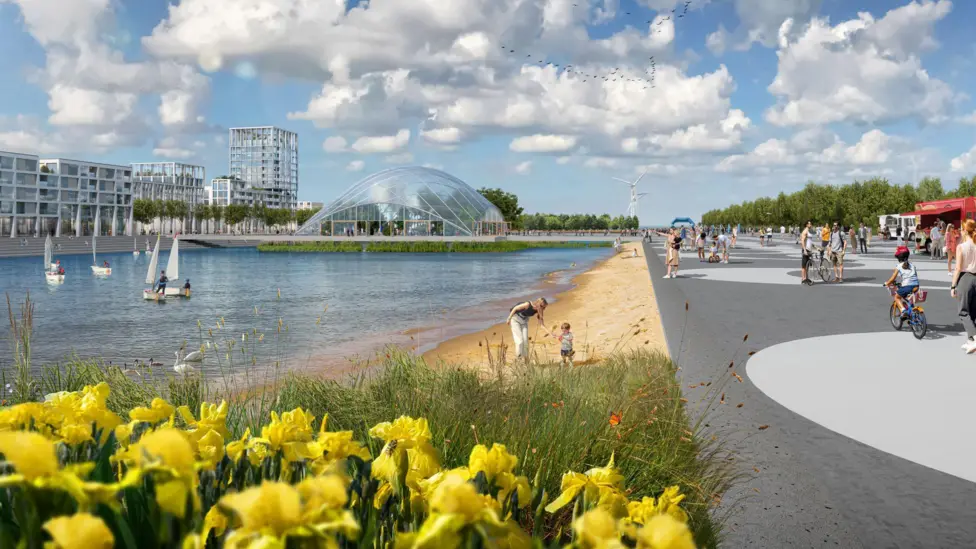
Since my previous post about Rousham and the threat to its historic garden, I have been finding out more about the plans for a new town on the old Upper Heyford aerodrome just north of Rousham.
It is currently a small-scale rural development of less than 2,000 homes, which has been marketed as ‘A modern take on the traditional countryside village’. The developer, Dorchester Living, currently has permission to add a further 1,135, houses.
Then, the government identified the site as a potential new town which would mean not a small village development, but a town currently planned to be 9,000 houses, to be enlarged in due course to 13,000. This means that the development will expand beyond the aerodrome into the surrounding agricultural land to its south-west, which has been bought for purposes of commercial development by New College, Oxford (they were left the local village, Upper Heyford, by their founder, William of Wykeham).
In other words, a relatively manageable small-scale development is being expanded into a new town without adequate advance planning about the infrastructure which will be required, including a new railway station, and, so far as I can tell, much thought about the differences in style and character between the design of a new rural village and a new town.
Most new housing development is in the vicinity of an existing city, but Upper Heyford is currently in the middle of unspoilt countryside.
The current proposals risk damaging the ecology of Rousham Park, which has remained essentially unchanged since William Kent landscaped the gardens at the end of the 1730s. However much the architects might like people to walk to the station, many will want to drive. There will have to be a big new car park. The gardens of Rousham look out over a medieval bridge which will have to be widened. The fields in the distance will sprout 6-storey new housing developments and wind turbines.
Without major changes, what is currently planned will destroy the character of Rousham.
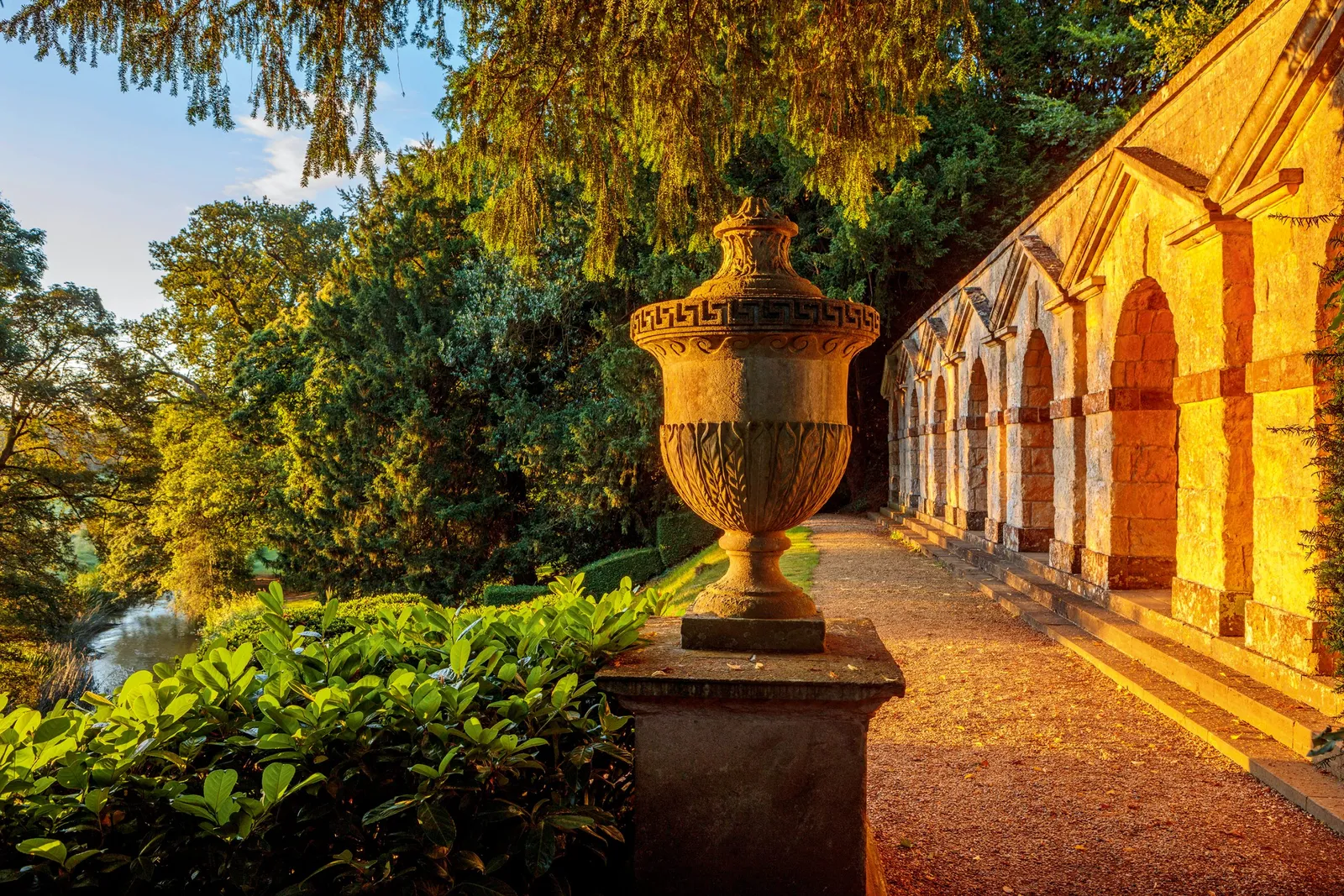
Here is a picture of Rousham as now:-
And here is a picture of the new town:-
The Townhouse Bicycle (1)
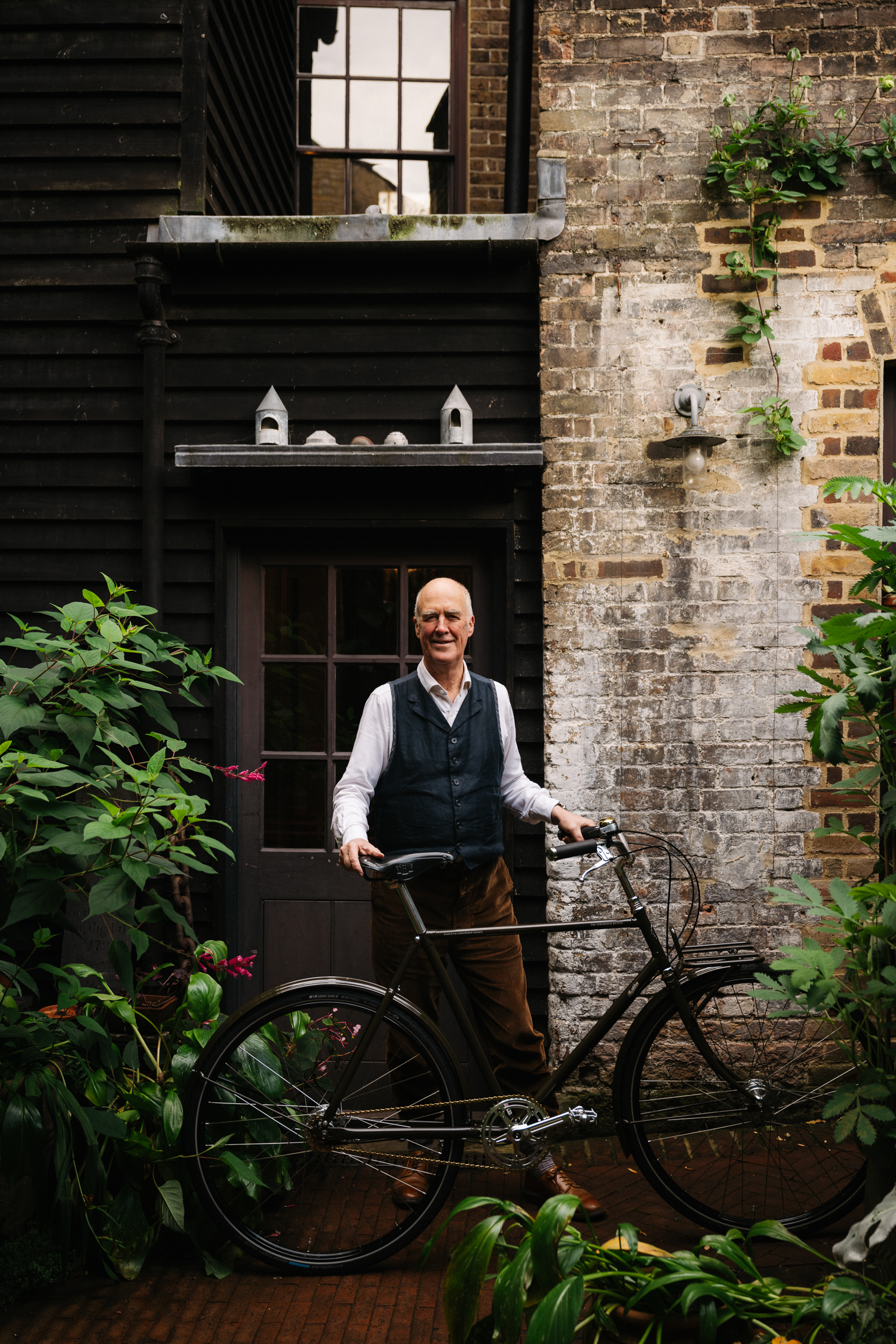
I have just taken delivery of a new bicycle, the result of a happy accident when a neighbour, Paul West, discovered that I am a long-standing enthusiast for Pashley Bicycles:-
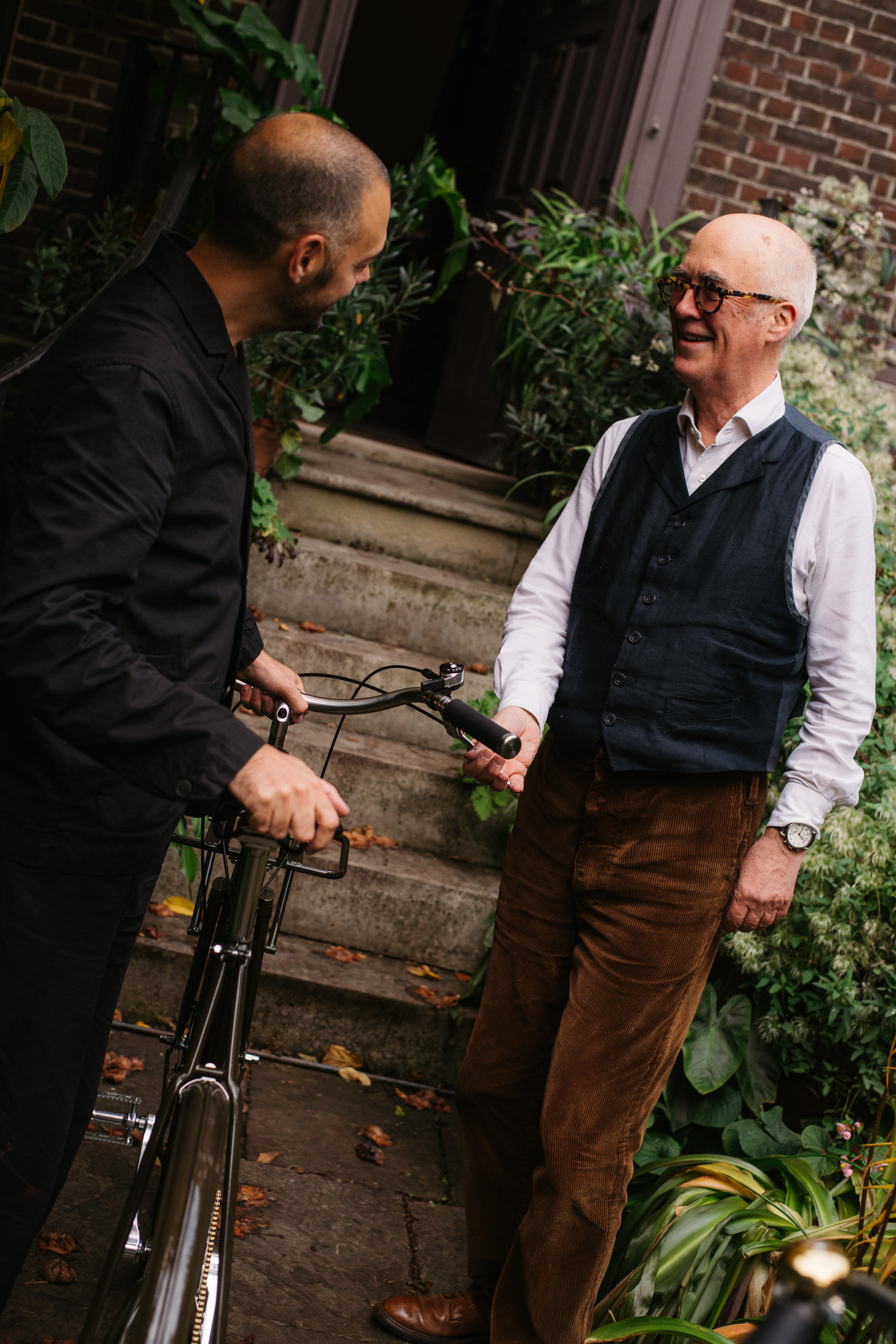
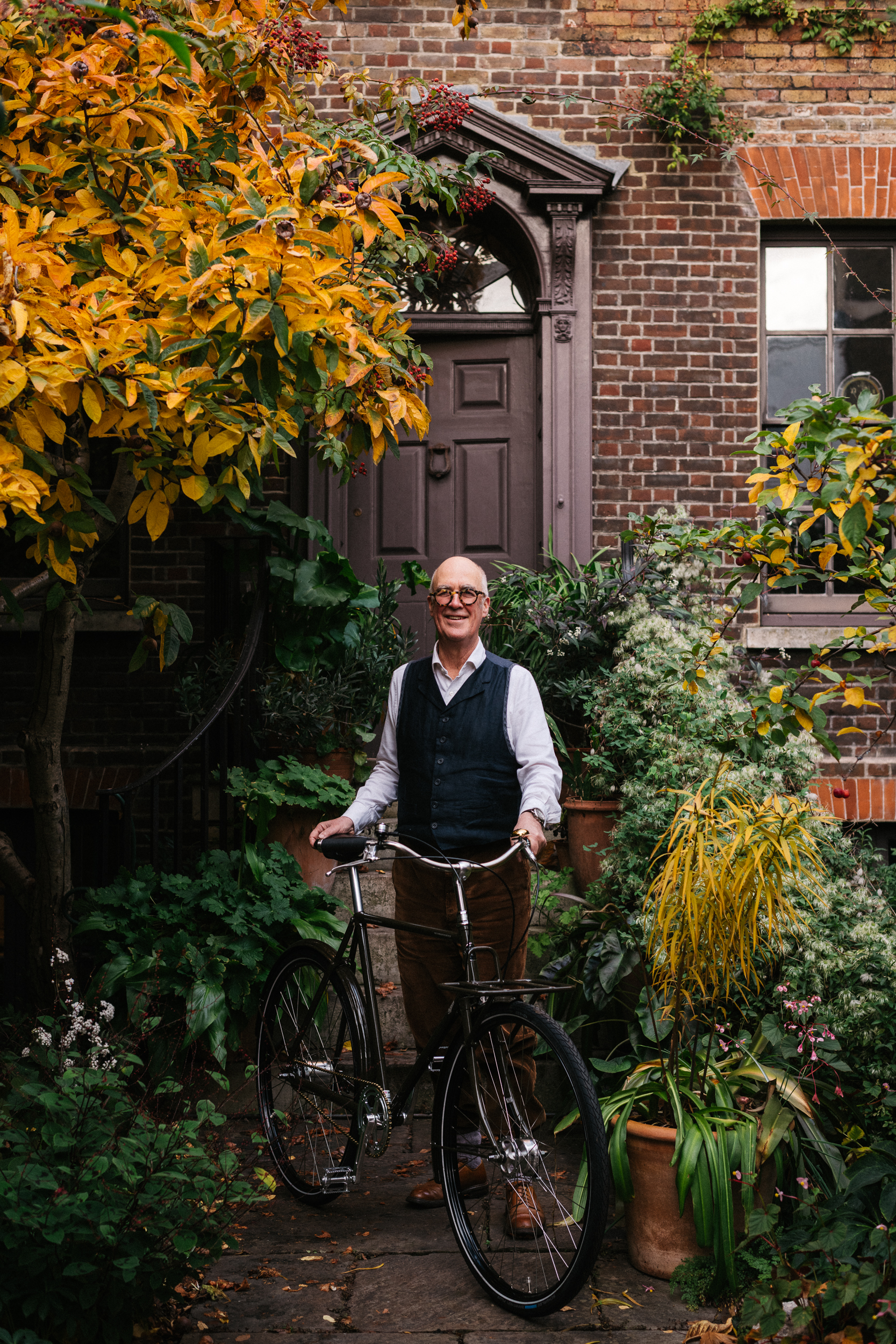
It’s a Pashley (again), based on a Guv’nor, which is what I ride on at the moment, but specially customised for metropolitan riding: five gears; painted a tasteful shade of autumnal olive-brown; an upright instead of drop handlebars; and a bell to repel the runners on the towpath by the canal.
Not surprisingly, I look fairly cheerful (it was nice and sunny on the day of the photoshoot):-
It’s my only exercise:-

John Vanbrugh: The Drama of Architecture (13)
This is a gentle reminder for those who have not booked for my book launch at the Wigmore Hall next Thursday that tickets are still available.
I am pleased that so many of you have and look forward to waving from the stage.
It’s being live streamed as well for those in Tasmania.

 | Charles | Saumarez | Smith |
You must be logged in to post a comment.