Whitechapel

For some reason, I was able to get access to Christopher Howse’s article in the Daily Telegraph about Whitechapel (see below), prompted by the publication in June of the new two-volume Survey of London volumes on Whitechapel, which were runners-up last night for the Colvin Award for the SAHGB (it would have been hard, if not impossible for anyone to beat Mark Girouard’s Biographical Dictionary of English Architecture 1540-1740, which Girouard had been working on since 1954). As Howse rightly points out, the area is changing fast. There is a good photograph of the Whitechapel Bell Foundry, still extant and needing to be preserved.

https://www.telegraph.co.uk/news/2022/12/11/why-history-former-london-gangland-erased/?s=09

Standard

The Whitechapel Bell Foundry (110)

I gave a talk this morning at the Art Worker’s Guild about the sad history – at least sad so far – of the efforts to save the Whitechapel Bell Foundry. On the two occasions I have done this, I have found it increasingly odd that Historic England made its decision to support redevelopment so early in the process and before it had become clear that there was a perfectly workable scheme by a heritage agency Re:Form which would have kept it as a Foundry. And a bit odd, too, that the decision never involved the Commissioners, but was made on the recommendation of a single officer.

Now it is likely to be presented with an alternative scheme by its developer – most probably to turn it into either an upmarket art gallery or offices. Either are likely to require planning permission different from the scheme to turn it into a hotel.

So, the question is whether or not Historic England will now insist, which it is legally entitled to do, on the terms of the previous planning approval which required the reinstatement of a Foundry. If so, the hedge funders may not be so keen.

Then, there is still hope.

Standard

The Red House (3)

The Critic has kindly posted my article about The Red House online in honour of the announcement yesterday that it is the RIBA House of the Year 2022.

You should be able to access the article for free, unless like me, you’ve already used up your month’s three article allowance:-

https://thecritic.co.uk/issues/december-january-2023/a-forever-home/

Standard

Art UK Sculpture

I was so pleased to see that Art UK had been awarded this year’s Digital Innovation Award for its project to document sculpture – a remarkable and very ambitious project which has turned out to be particularly timely, given the increased public interest in who is commemorated and where.

I was asked by Apollo to describe why it is important. See below:-

https://www.apollo-magazine.com/digital-innovation-winner-apollo-awards-2022/

Standard

Leighton House (4)

When we visited the redisplayed Leighton House recently, we admired everything about except that there was oddly little information about exactly how it had changed. So, I am pleased to find a very well informed account of this in this month’s Burlington, a reminder that its restoration was first tackled in the early 1980s by Stephen Jones and recognition of the role that BDP played in the new and well designed extension:-

https://www.burlington.org.uk/archive/exhibition-review/leighton-house-museum-london?s=09

Standard

The Red House (2)

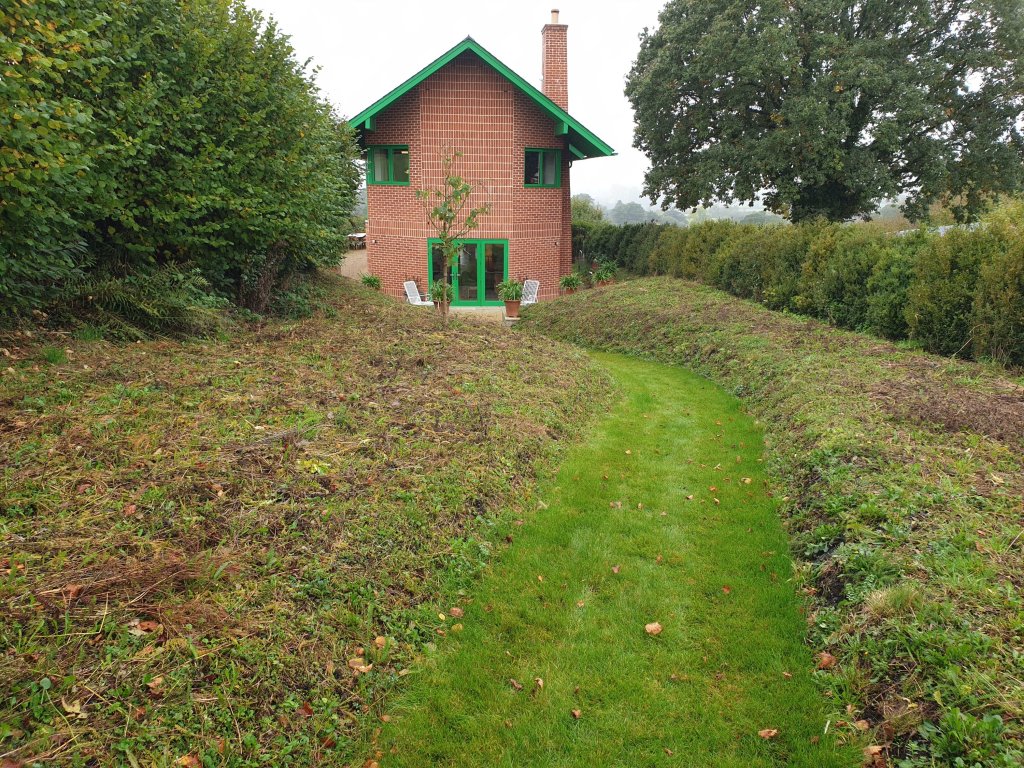
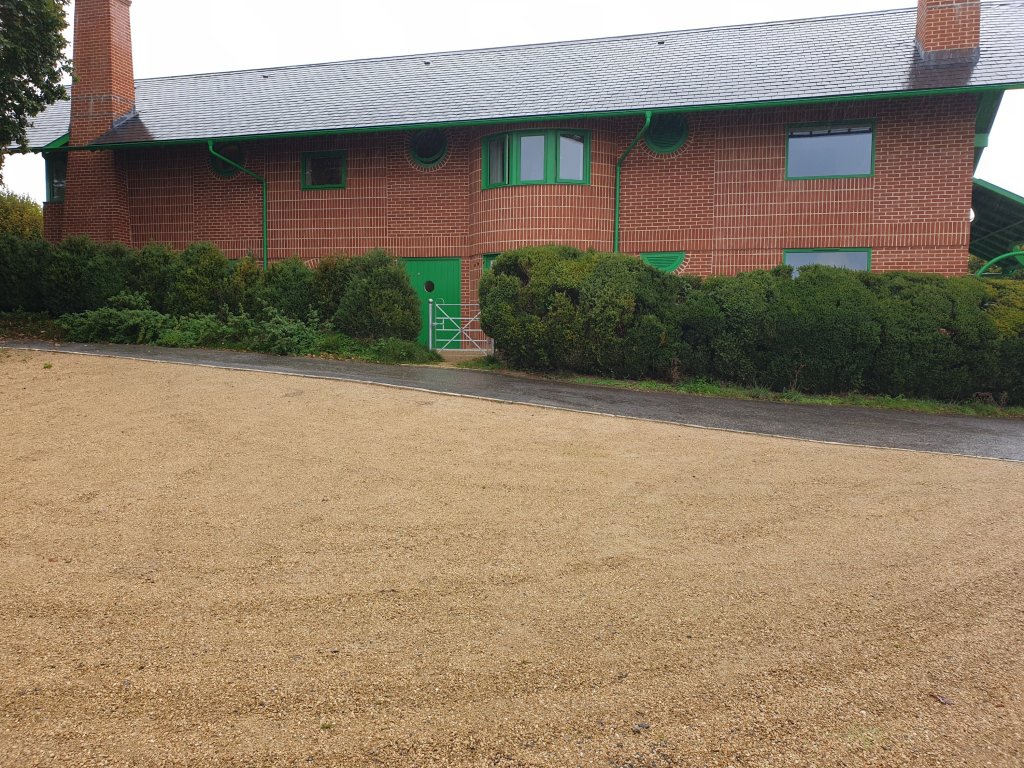
I’m so pleased to read that David Kohn’s Red House in rural Dorset has won the RIBA House of the Year Award. I went to visit it in early October on a damp grey day and greatly admired its quirky, but robust individuality which I have written about in this month’s The Critic. It seemed to me to offer a good model of clients determining to do something a bit out of the ordinary, including making the whole thing disabled accessible in spite of the fact that they are still in their fifties.

At the time, I was discouraged from publishing any photographs of it, in order to maintain its privacy, but now that it has appeared on Grand Designs, perhaps I might be allowed to post them in celebration of its win ?

https://www.bdonline.co.uk/news/david-kohn-bags-riba-house-of-the-year/5120810.article?utm_medium=email&utm_campaign=Daily%20Building%20Design%20%20Daily%20news&utm_content=Daily%20Building%20Design%20%20Daily%20news+CID_6c136cd4885d84cd0170876c305f1fcd&utm_source=Campaign%20Monitor%20emails&utm_term=David%20Kohn%20bags%20RIBA%20House%20of%20the%20Year

Standard

Duncan Robinson (1)

Very sad news from Magdalene College, Cambridge that Duncan Robinson has died:  an exceptionally nice, warm, interesting, and wonderful person.   He introduced me to art history by teaching a course on ‘Painting in Central Italy 1300-1350’ in 1975, which I took and it introduced me to the pleasures of intensive research on fourteenth-century Italian painting, which for a time I pursued before switching to architecture.   At the time, he was an Assistant Keeper at the Fitzwilliam and was said to serve behind the bar in the pub in Great Shelford to supplement his income (this could be apocryphal).   In 1981, he went to be Director of the Yale Center for British Art, where he had done graduate work as a Mellon Fellow in the mid-1960s and, in 1995, he returned as Director of the Fitzwilliam.   Someone was saying recently that he was one of those people who did a ton of work without ever showing off about it and he managed to combine being Director of the Fitzwilliam with being Master of Magdalene as well (his Wikipedia says he was also Deputy Lieutenant for Cambridgeshire, but if so, he doesn’t mention it in Who’s Who).   He was a predecessor of mine as Chairman of what was then the Prince’s, now the Royal Drawing School – always benign, but also very orderly, and unlike many art historians, good with money.   A great and very sad, irreplaceable loss.

Copyright: Lucy Dickens/NPG

https://www.magd.cam.ac.uk/news/mr-duncan-robinson-cbe-1943-2022

Standard

Ken Howard RA

It was Ken Howard’s Memorial Service today, conducted by Ayla Lepine who I discovered had done her PhD on Bodley and Garner – good subject.

The service was unusual in somehow conveying Ken’s infectious and enthusiastic bonhomie, able to paint at incredible speed and to sell everything he painted, as well as lead a very sociable life in London, Cornwall and Venice, in all of which he had studios.   I remember reading his autobiography which was dictated in a few days while he was ill and conveyed what it was like to be trained as an artist in the early 1950s.   He had great skill as a painter – particularly good at conveying sunlight and the streets after rain.  

We were encouraged to raise an imaginary glass in his memory and I assume we all did.

Standard

72 Upper Ground (1)

I’m so glad to see that Rowan Moore has taken up the cudgels to attack the massive (and monstrous) building proposed for a site nearly immediately next door to the National Theatre, right opposite Somerset House, and equidistant between the Palace of Westminster and St. Paul’s ie bang at the centre of London and bound to look vast and hideous from Trafalgar Square as well as all the way in a boat or on the footpath along the Thames.

Why has it got this far ? The answer, as Moore makes clear, is that it is in Lambeth and the heart of Lambeth is Brixton Town Hall. They care not for the more distant parts of the Borough and are happy to use the fringes of Lambeth as a cash cow for development nearer its heart.

There is no longer any unifying agency which cares about the look of London as a whole, so each borough has allowed big blocks without paying any systematic attention to how this might affect Westminster or Somerset House or river traffic on the river or what it might look like as one crosses Hungerford Bridge.

Moore provides a good account of how this has happened. Ken Livingstone thought he would be able to keep a balance, as advised by Richard Roger’s who had a good feel for the ecology of the city when wearing his town planner’s hat. Boris Johnson then promised to stop big development (‘Dubai-on-Thames’) and did the precise opposite: we have surely learned by now that whenever he used a fancy phrase, he was using it to mask his more sinister intent and employed Lord Lister and Simon Milton to glad hand the developers and take them to lunch. Sadiq Khan doesn’t seem to be much interested in the quality and character of the City which is odd as it’s his job.

So, it’s now up to Michael Gove who has promised us beauty and may just be the only politician with the spunk to stop it. It could be his legacy.

https://www.theguardian.com/artanddesign/2022/dec/04/thames-london-riverside-developments?

Standard