Whitechapel Bell Foundry (102)

There is a certain irony in the fact that, after more than a year since the developers were given permission by the Department for Levelling Up to turn the Whitechapel Bell Foundry into a boutique hotel, absolutely nothing has happened and the site has been left to decay. Yet, at the same time, the company which was established to take it on and keep it running as a bell foundry has produced its first artist-designed bell which will take centre stage at this year’s Royal Academy Summer Exhibition, available to ring every hour in memory of those who lost their lives from COVID (Grayson Perry’s memorial Covid Bell to go on show at Royal Academy’s Summer Exhibition (theartnewspaper.com).

There does seem to be a terrible weakness in the planning system that a single planning officer in Historic England can recommend giving permission to the Bell Foundry being turned into a hotel and then whatever happens subsequently, whatever objections come from all over the world, there seems to be no way of turning the clock back.

Yet, now the market for boutique hotels in London has changed. The developer has lost interest. Mayor Biggs who was passionately opposed to all forms of historic preservation has been voted out. I hope that Grayson Perry’s bell will be a reminder of what has been lost: not just the oldest place of manufacture in the United Kingdom; but somewhere which could have been a good model of community-based regeneration. Perhaps Mayor Rahman can intervene. Or Michael Gove.

Standard

Fish Island

Having got interested in the ecology of Hackney Wick, particularly when compared to Olympic Village, I went on a walking tour of Fish Island this morning organised by the London Festival of Architecture.

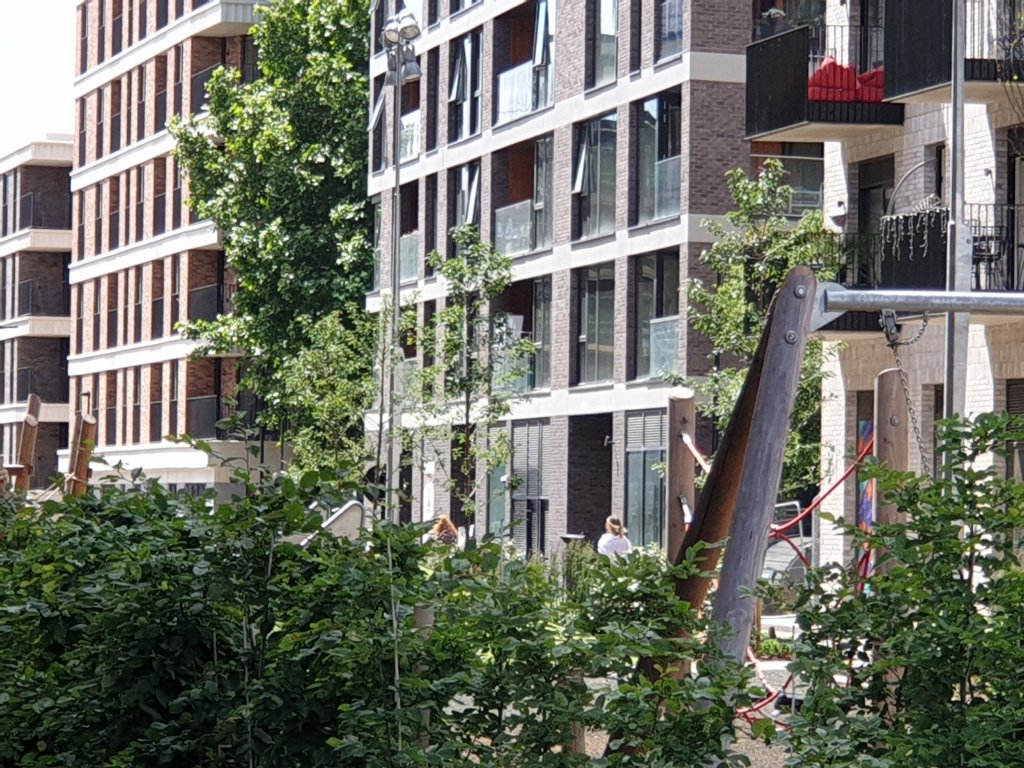
Haworth Tompkins won a competition to develop a big site in 2014. It’s now nearly finished and seems to me well considered: good use of materials, minorly varied, 35% affordable housing, 530 units, the ground floor made available to start-up fashion businesses through a social enterprise called The Trampery. Many are not yet occupied, but when they are, there will presumably be a great deal of activity at street level.

It’s not the sort of scheme which will necessarily win prizes because architects themselves are dismissive of what they call the new London vernacular; but it probably should because it has produced a good sense of urban neighbourhood, so lacking in many new developments:-

Standard

New Court, Christ’s College

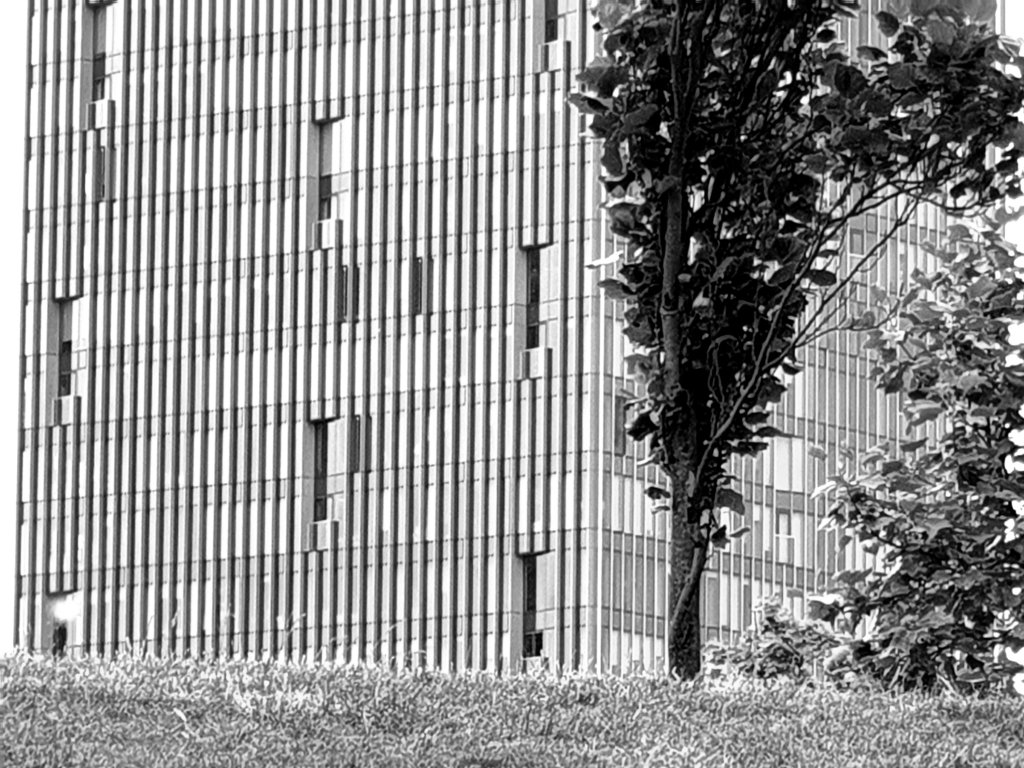
I was interested to see New Court in Christ’s College, a building I have scarcely seen since I was a student and certainly have never paid much attention to: by Denys Lasdun; post-University of East Anglia; pre-National Theatre (just). The college had turned down Walter Gropius in March 1937 and this was maybe expiation. Class of 1966:-

Standard

Paula Rego

In remembering Paula Rego, I discovered the attached recording of her talking about her commissioned portrait of Germaine Greer. I knew it had been a struggle. RIP.

https://www.bl.uk/collection-items/paula-rego-on-her-struggle-to-paint-a-portrait-of-germaine-greer

Standard

Iestyn Davies and Olivia Chaney

The last of our Jubilee weekend activities was a concert at King’s Place by Iestyn Davies, the counter tenor, and Olivia Chaney, a singer who crosses over between baroque and folk: a very successful combination of contrasting styles of singing, including work by Monteverdi, a lot by Purcell, and several songs which had been composed during lockdown, accompanied by violin, guitar and harmonium.

Standard

Straight Line Crazy

We went to see Straight Line Crazy today, David Hare’s excellent and polemical play about Robert Moses, the New York planner who drove highways up and down Manhattan, through Long Island and the Bronx, creating public parks and swimming pools along the way, before being stopped in his determination to create a highway through Washington Park by community groups led by Jane Jacobs. I have never read the biography of Moses by Robert Caro on which the play is based and I presume that some of the narrative is oversimplified, but it seems that many of the issues are still perfectly recognisable: the tendency for city bureaucrats to lose contact with, and sympathy for, local activists who stand in the way of the exercise of civic authority; their contempt for conservation and belief in the value of progress. These tendencies are not confined to Robert Moses.

Standard

Stratford (1)

In a moment of nearly complete insanity, I took myself off to see some of the new architecture surrounding Olympic Park, having seen so much of it go up, not least during lockdown, and wanting to get a better sense of what it is like close-up.

The answer seems to be that a lot of it is unexpectedly depressing in spite of – or is it because of ? – the vast amounts of public money which has been poured into it and the employment of good architects, including Allies and Morrison, in drawing up the masterplan.

First of all, it is surprisingly difficult to find out even quite basic information as to who designed many of the new buildings in spite of the fact that they are examples of the largest and, in some ways, most adventurous new architecture in London. My questions about the process of design both at the Information Centre and in the pop-up store opened by New London Architecture inspired a sense of total bafflement, as if my interest was highly idiosyncratic, if not perverse. Maybe the London Legacy Development Coroporation could commission the Survey of London to do a follow-up volume to their two volumes on Whitechapel, due to be published later this month.

It is possible that I am missing some easily accessible online resource, like the Architecture Foundation’s excellent online app; but this is very strong on Central and North London, less so on East and South. I have read Dave Hill’s excellent and informative new book on Olympic Park, commissioned by the LLDC, but this is strong on the politics and economics, less so on design and planning.

This is Lifschutz Davidson and Stanton Williams for University College:-

This is the new tower block by Skidmore Owings and Merrill, which has two chunks taken out of it, a considerable feat of engineering:-

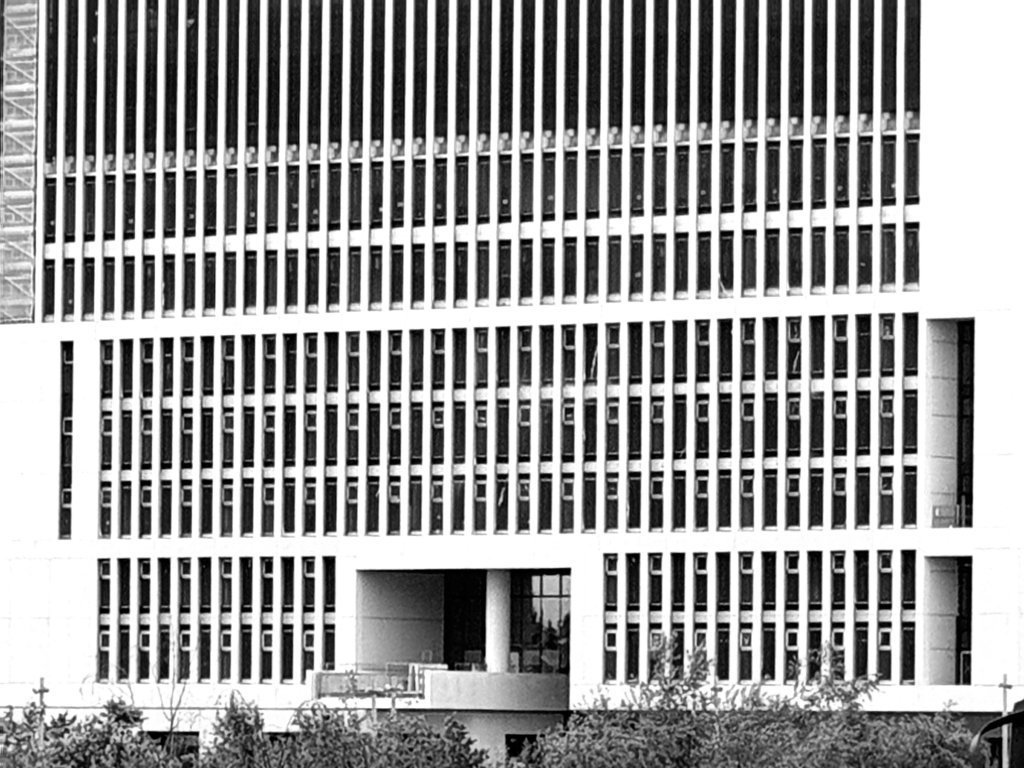
This is (I think) The Gantry, designed by LCA, who are specialists in hotel design:-

Much of the rest of what was Olympic Village struck me as terminally bland, as if the architects had been inspired by the outskirts of Stalingrad. Maybe I am wrong.

Standard

Jess Gillam

We celebrated the first day of the Jubilee not in the Mall but at a concert at the Wigmore Hall by Jess Gillam, the brilliant young saxophonist, and her ensemble. Two of the pieces were by composers in the audience and the work by CPE Bach (part of the Flute Concerto in A Minor) had been adapted magnificently and crazily by Simon Parkin who was also there, so it felt like attending an experimental musical gathering, very unlike the normal formality of an evening at the Wigmore Hall. A treat.

Standard

The Real and the Romantic

Richard Morphet, the former Keeper of the Modern Collection at the Tate, gave an absolutely brilliant speech at the launch of Frances Spalding’s new book, The Real and the Romantic, about the arts between the two world wars: stressing the importance of being generous and comprehensive about how the arts should be studied, rather than narrow and sectarian; an approach which has clearly been followed by Spalding who is apparently as generous in writing about the etchings of F.L. Griggs as she is about the work of Ben Nicholson. I’m looking forward to reading the book and learning more about the complexities of the period, including the role of the Royal Academy.

Standard

Elizabeth II Style

A very intriguing editorial in this month’s Burlington Magazine as to whether or not there is such a thing as an Elizabeth II Style: that is, whether or not there might in retrospect be more visual coherence in the artistic work produced during her reign than was acknowledged at the time, as in the reign of William and Mary or Queen Anne; hard to see given that the reign has been so long and has encompassed so many different changes of style, but it would be a way of acknowledging a wider range of artistic production than just the avant garde, including, as the editorial suggests, the new romanticism of the early 1980s.

https://www.burlington.org.uk/archive/editorial/the-elizabeth-ii-style

Standard