
It seems a bit perverse to continue posting about museums and architecture without referring to the fact that I, like everyone else in the world, have spent the last few days glued to the radio and twitter watching the current world order collapse: the belief that war in Europe could, and would, never happen again because of the collapse of the USSR and the end of the Cold War. It seems a bit strange that even a week ago it was assumed that Putin would not be so reckless as to invade, whereas now everyone takes it for granted that it was obvious he would. And, like everyone else, I have been watching with wonder and admiration the bravery of individual Ukrainians who have been so overwhelmingly determined to arm themselves, to resist and to fight in defence of their country, not to mention the heroism of their President.
Can museums shape the future ?
I have been sent a link to an article in today’s Sunday Times by Bryan Appleyard, a good description of the change in attitude in museums from being at least as much about influencing the present as examining the past, the subject of Neil MacGregor’s forthcoming radio series, The Museums that Make Us.
Appleyard contrasts this increasingly present-centred and judgemental view of history with the ideas and beliefs of Aby Warburg as exemplified by the layout of his library, now contained in its 1950s (not 1930s) building in Woburn Square. Warburg, I think, always subscribed to the idea of the strangeness of the past and that it should be explored with intellectual sympathy on its own terms, not ours. It’s a good reminder of the importance of Warburg’s ideas and of the potential intellectual benefits of the so-called Warburg Renaissance currently underway.
Westminster Gaslights (2)
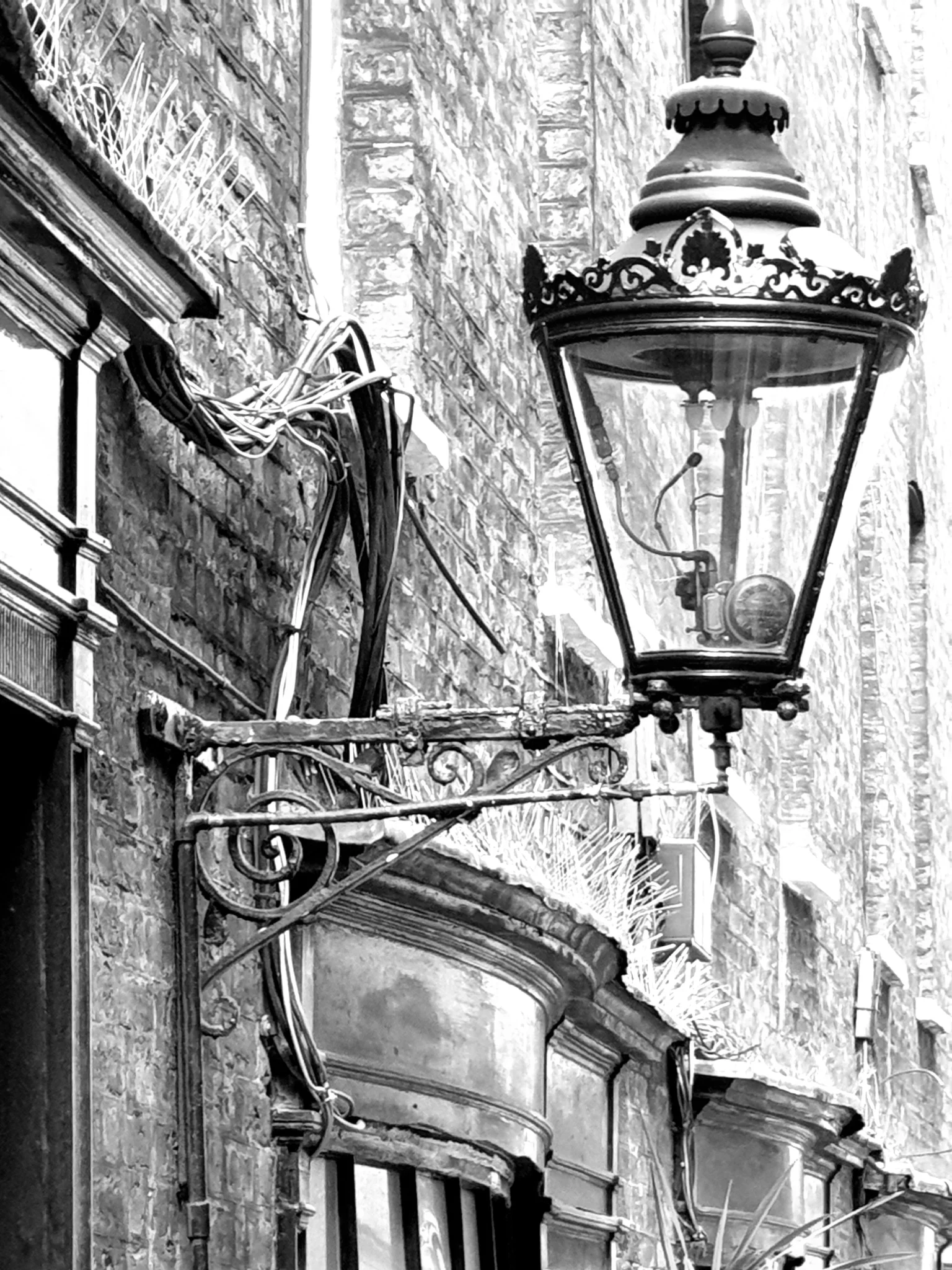
The Critic is performing a public service in highlighting the way Westminster City Council have been using COVID as an excuse for getting rid of gas lighting which has served it well for the last two centuries and lend a distinctive character, a warm glow, to its historic neighbourhoods. There is no good reason to change it now – at least none has been given. They thought they could do it by stealth.
Alan Bowness (2)
Following my post about Alan Bowness the day before yesterday, I received a very interesting email from Paul Huxley who was a trustee of the Tate during the 1970s about the process of selection for Jim Stirling as the architect (and who also sat in the interview panel when Alan Bowness was chosen as Director). He writes:-
‘I was on the buildings committee that included Sandy Wilson and Alan Bullock. After a series of interviews we arrived at a short list of three but Bullock had to leave on other business at the last stage. On leaving, he said he didn’t mind two of them but he was opposed to Stirling. I have to confess that Sandy and I were responsible for deciding on Stirling against Bullock’s wishes. He made it formally known afterwards that he disassociated himself from the appointment. We chose Stirling largely on the strength of his beautiful extension of the art museum in Stuttgart. Bullock was opposed on the grounds of the History Faculty building at Cambridge that leaked rainwater’.
So, the Turner galleries were already underway before Alan was appointed director and when Bullock was still chairman. As he says, ‘The concept of new Turner galleries was certainly in the pipeline during Reid’s time and there was much discussion about the exact location’.
This doesn’t at all surprise me. What I discovered in writing about museums is that people misremember the exact circumstances of their gestation. It’s often not tremendously well recorded and then gets mythologised, not deliberately, but as the reality is forgotten. I was particularly aware of it in writing about the Guggenheim in Bilbao where there are several different versions of the same story as to how it came into being, but it also applies to Tate Modern. In fact, the more the circumstances have been recorded, as at Tate Modern, the more complex the narrative turns out to have been.
So, I’m more than happy to provide this addition/correction, thanks to Paul.
Art Museums and the Modern Imaginary
Every so often Google’s search engine supplies me with reviews of my museums book which I have previously missed because they have appeared in obscure magazines or websites. Tonight, I was supplied with a review which I thought was amongst the more thoughtful responses to the book, saying, quite correctly, that it does not go far enough in reflecting on the current character and dilemmas of the museum. It’s true. I wrote the book to try and clarify in my own mind what was happening and the issues that museums faced; but I can’t, and didn’t try to, disguise that it was an insider’s account, helped, but also, in retrospect, perhaps a bit inhibited by that fact. Anyway, I like reading students’ examination and critique of it.
https://genealogiesofmodernity.org/journal/2021/8/23/art-museum-modern-imaginary
Hoxton
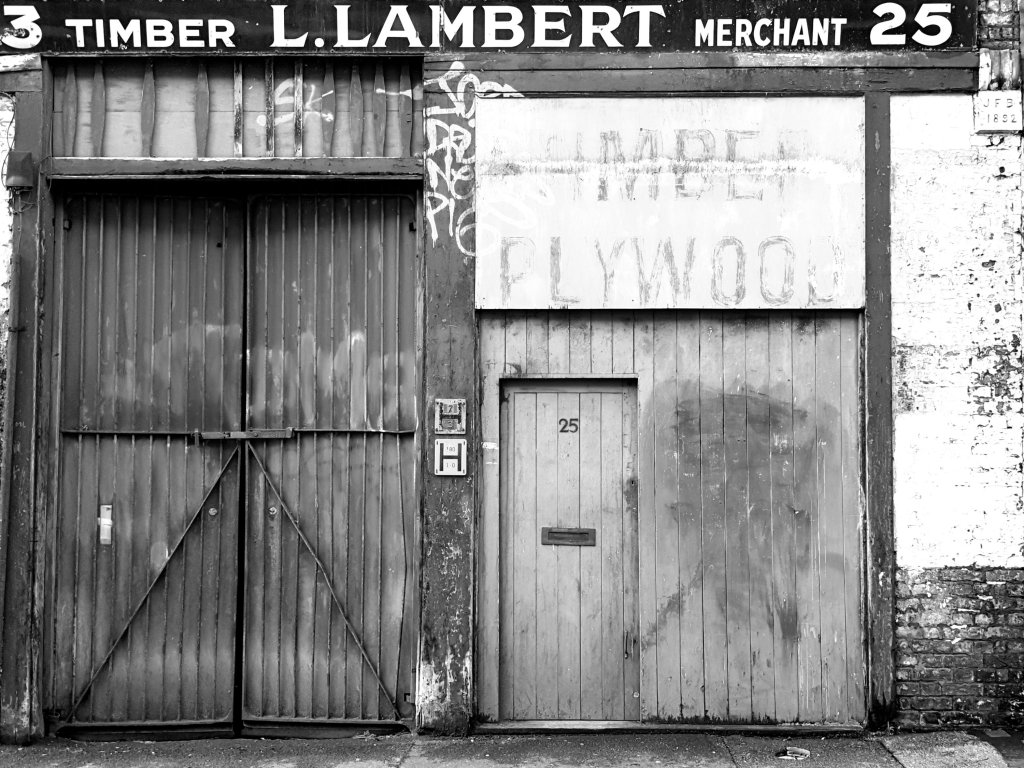
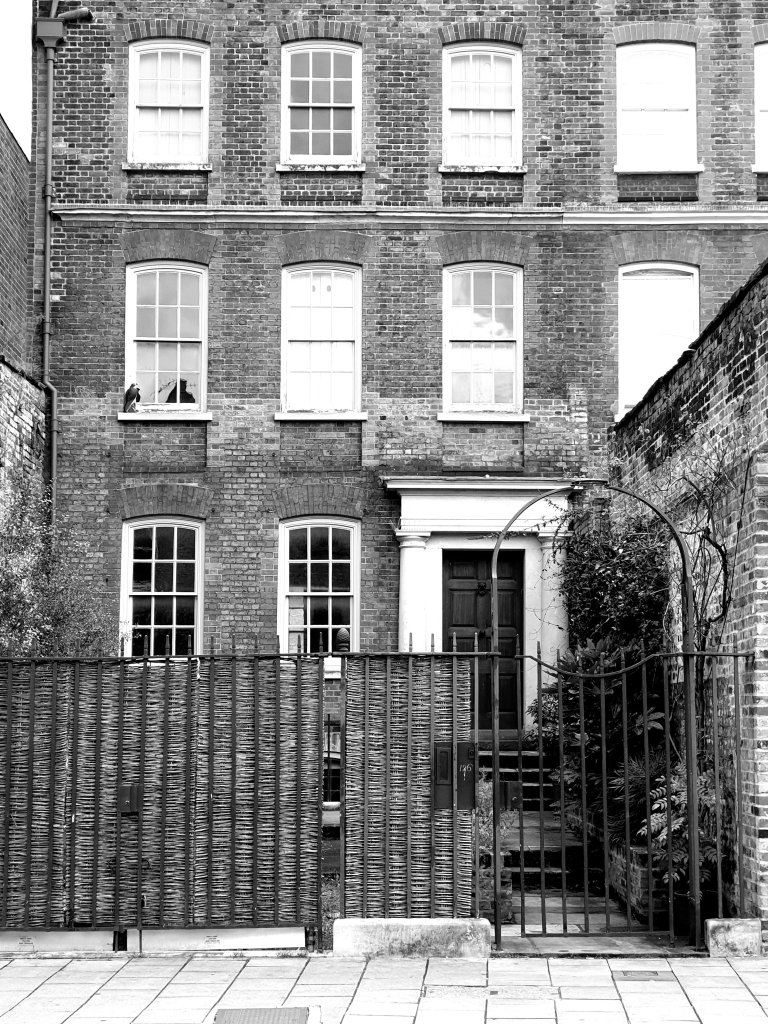
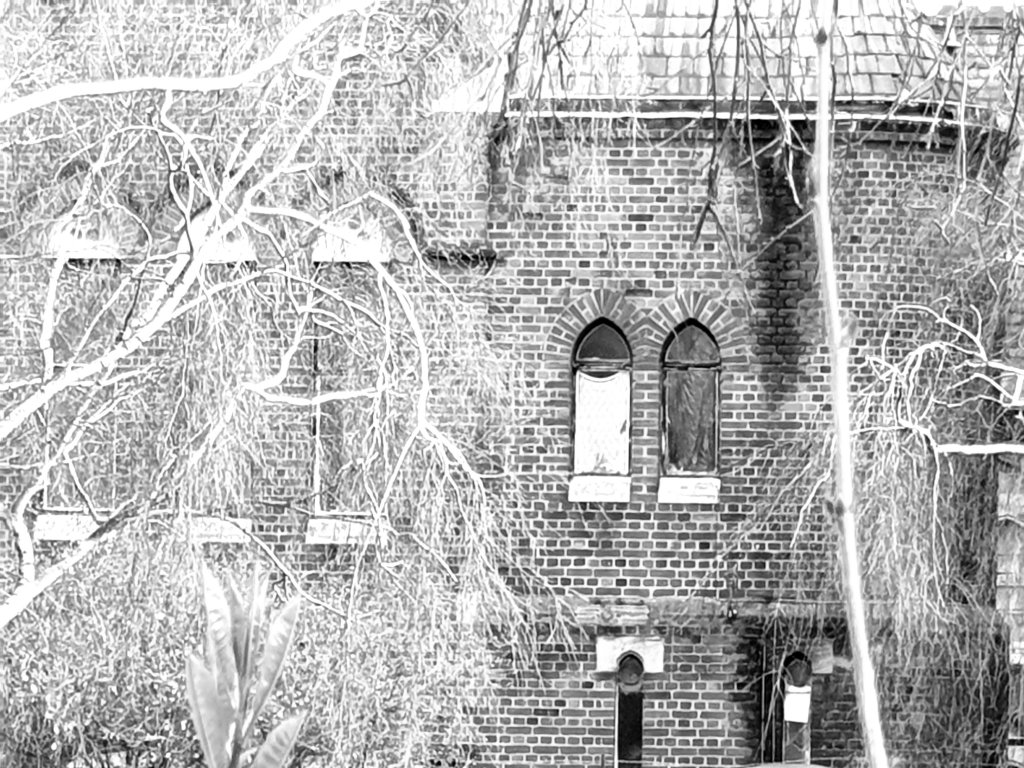
The entries for Hoxton in my East London book were a bit weak because for some reason I had never walked up Hoxton Street which is a bit like a parallel universe to the Kingsland Road.
An old timber merchant:-
An eighteenth-century house set back from the street:-
And the back of St. Columba, Kingsland Road:-
Alan Bowness (1)
There was an event at Tate Britain to commemorate Alan Bowness, its Director from 1980 to 1988. As always at such events, one learns thing I didn’t know – particularly about his great knowledge and passionate expertise about contemporary music, documenting performances in his diary from the age of seventeen.
But what I particularly want to be able to record in case it isn’t published was Jeremy Dixon talking about Bowness’s role as an architectural patron. First at St. Ives in keeping Barbara Hepworth’s studio as a museum which opened in 1976. Then, sitting on the competition for an architect for the Clore Wing and the selection of Jim Stirling in 1979 (it was Jeremy Hutchinson as chairman of trustees who had apparently instigated the project). Tate of the North followed, with Stirling again as the architect – a very important project. And then Tate St. Ives with Evans + Shalev as its architect after they had designed the law courts in Truro. Jeremy and Fenella Dixon were employed to design the Tate’s coffee shop before they won the competition to redesign the Royal Opera House. And then Dixon.Jones designed the Henry Moore Institute next door to the Leeds City Art Gallery when Bowness was running the Henry Moore Foundation. Quite a track record as a patron and supporter of architecture, leave aside his influence as a teacher of modern and contemporary art, his innumerable pupils, and what was acquired by the Tate during his time as its Director.
Best Museum Buildings
I was interested to see the list of the best art museums selected by Art News which I missed when it appeared last month. It’s a version of what I was trying to do in my book The Art Museum in Modern Times: what museums give the best purely architectural experience ? And which work best for the art ? Not surprisingly, there’s a lot of overlap. The Pompidou, the Sainsbury Wing, the Yale Centre for British Art. They like the ones that are more purely architectural, including some which I did not know, like the Jan Schrem and Maria Manetti Schrem Museum of the University of California, David. My list of ones to visit grows longer.
The Wolseley (1)
The only thing I really miss about not working in the West End is no longer being able to have breakfast at the Wolseley: the sense of a strong community; the greeting at the front desk; the discreet hierarchy of the seating arrangements; and the way that Jeremy King would nearly invariably stop by, sensing intuitively exactly how long to engage one, or not, in conversation, always impeccably dressed, just off his scooter. I have always been his greatest admirer and am sad to read that he now has to lock horns with brutish financiers in order to maintain the impeccable calm and orderliness of his various establishments:-
https://www.ft.com/content/9850ece6-a3b2-40c4-9342-645d4a4378b9
Westminster Gaslights (1)
I am often cautious about public campaigns, sceptical that people in authority pay much attention, whatever the requirement of local democracy. I certainly wasn’t aware of anyone in authority paying the remotest attention to the long-running and vigorous campaign to preserve the Whitechapel Bell Foundry, where the more the public campaigned, the more Tower Hamlets and Historic England dug in against the campaign, presuming they were right if everyone thought they were wrong.
So, it is with the utmost pleasure and some considerable surprise, that I read that Westminster City Council has reversed its position on gas lighting and are now planning to retain the historic gaslights which are such a feature and have been preserved so long through successive previous campaigns to get rid of them. Bravo ! Bravo not just to the campaigners, but also to the Council for changing its mind !
 | Charles | Saumarez | Smith |
You must be logged in to post a comment.