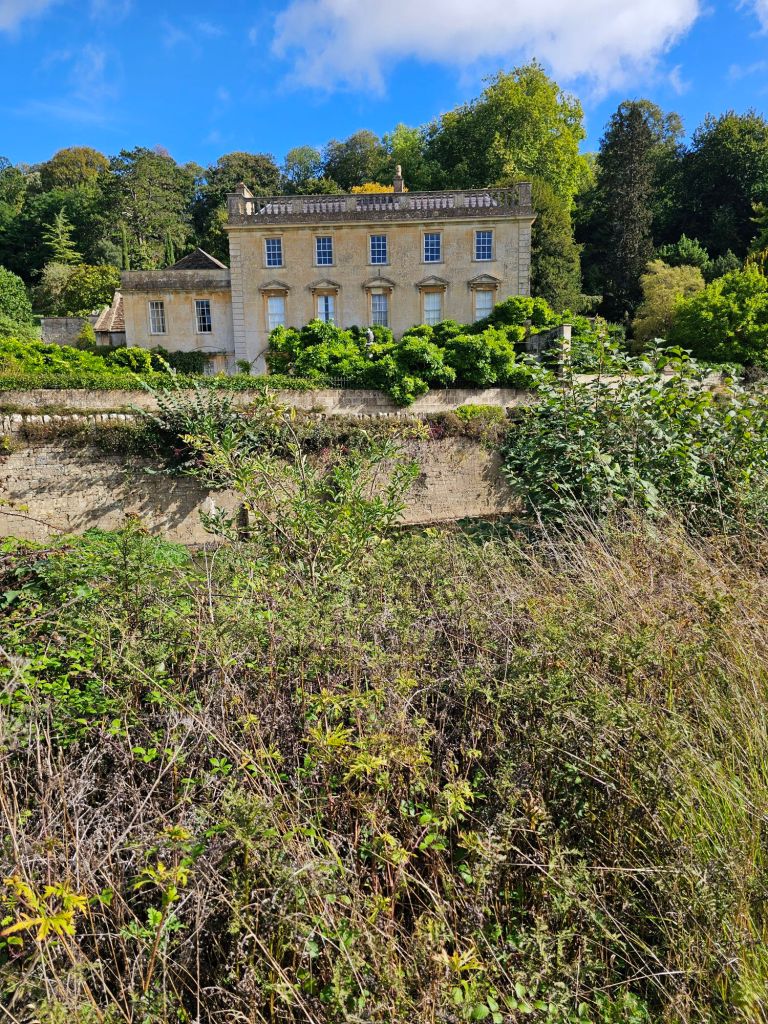
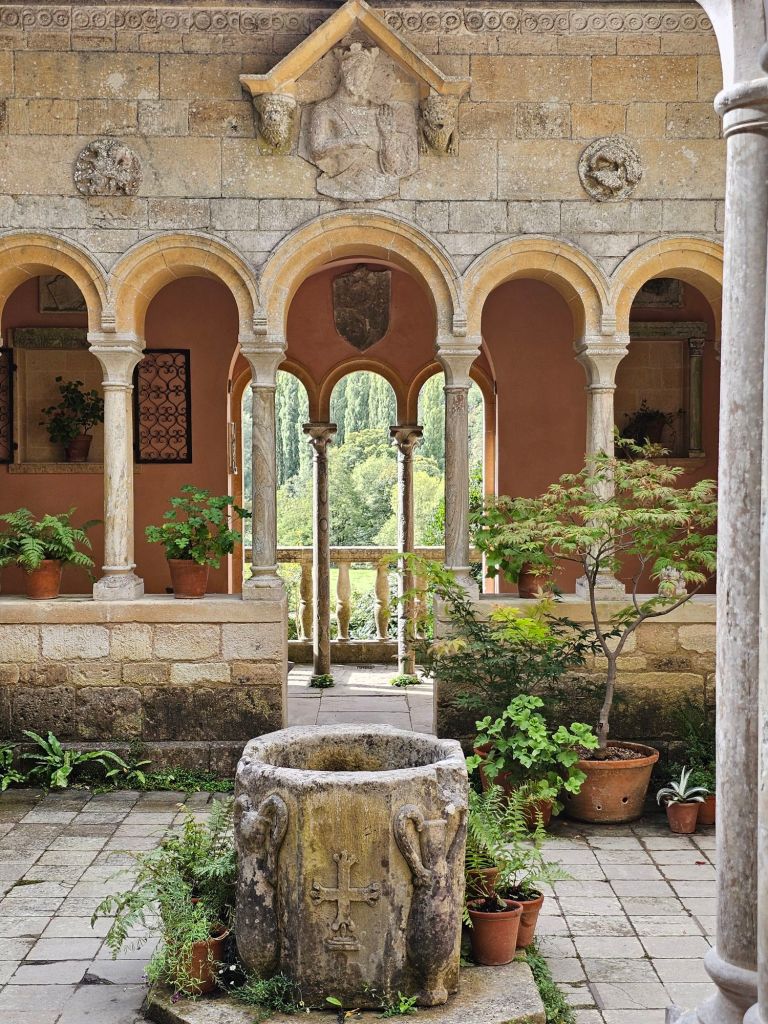
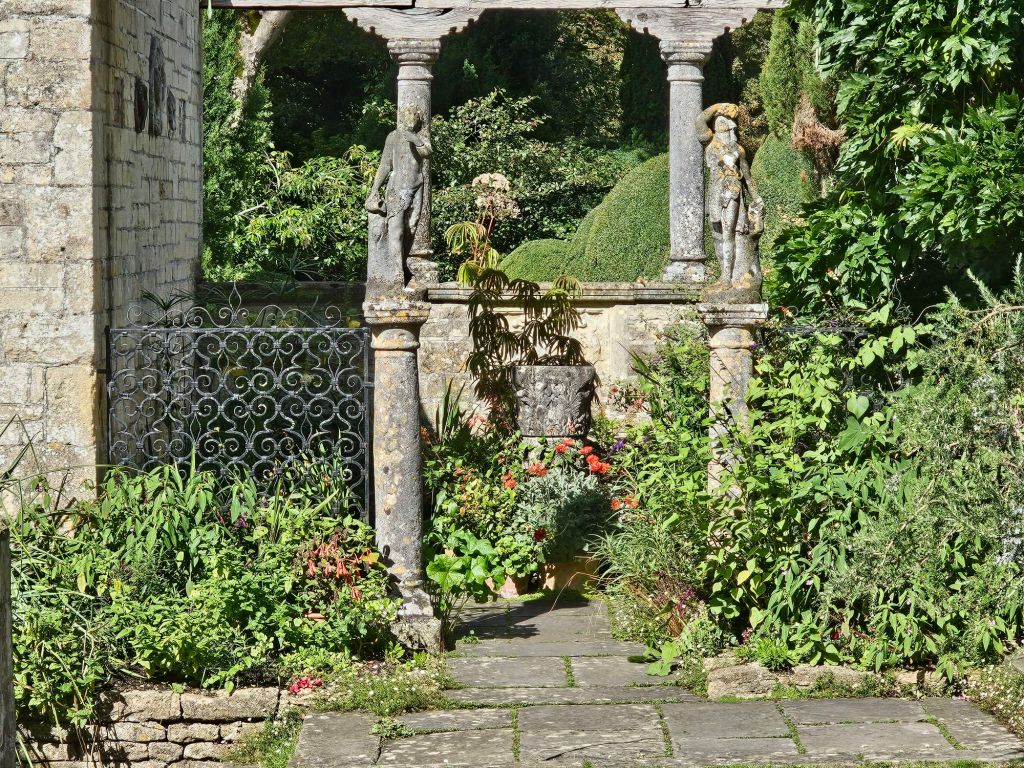
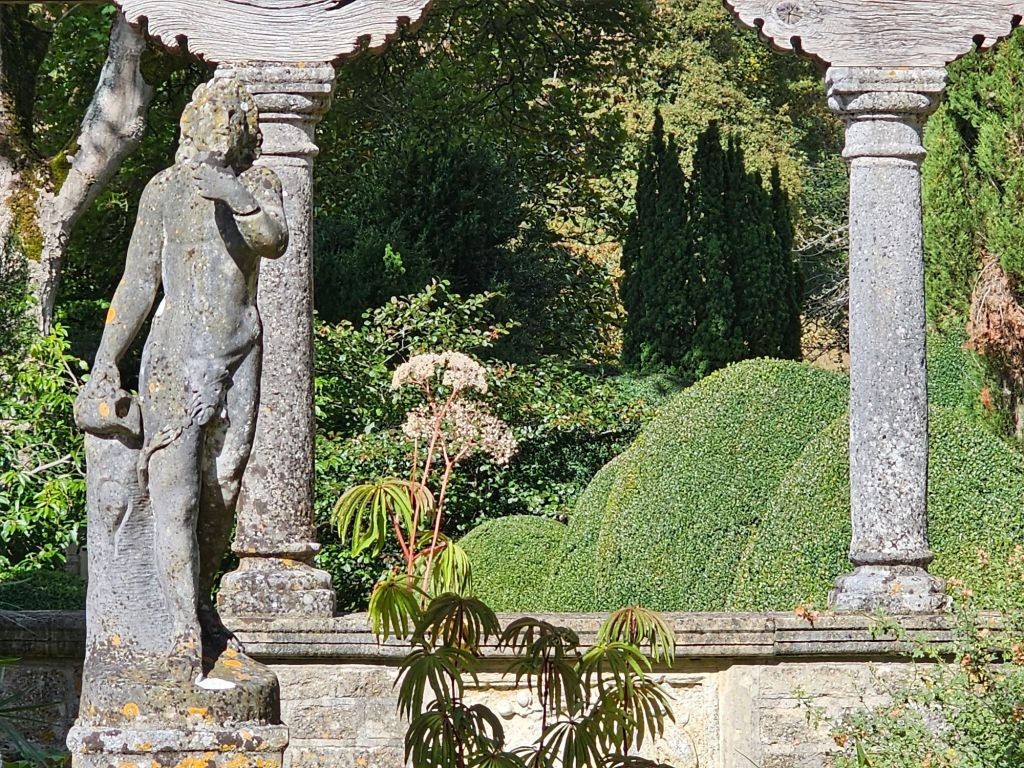
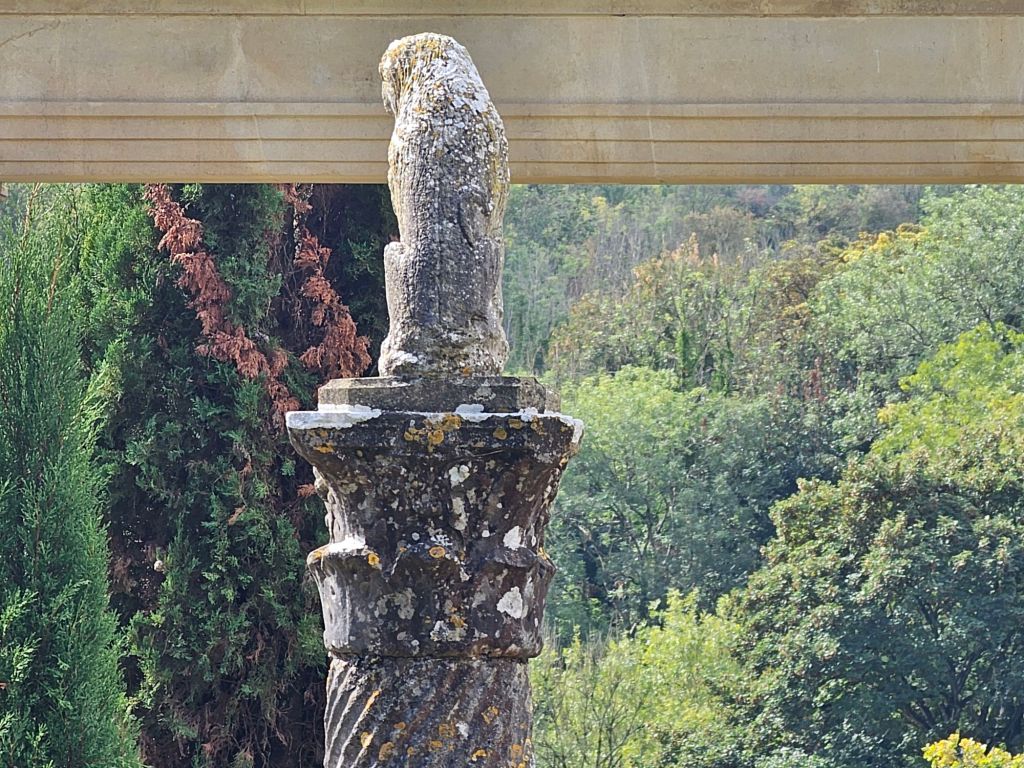
Harold Peto moved to Iford Manor in 1899. having visited it with H. Avray Tipping, the architectural writer (and a pioneer in writing about Vanbrugh). The house is in a beautiful location, in a steep valley, but looking out across fields. He added Italianate terraces, and sculpture which he had presumably acquired in Italy or from the flourishing market for Italian objets d’art:-
After visiting the London College of Fashion yesterday, I went to Appleby Blue Almshouse, another contender for the Stirling Prize, today.
Of course, it’s a totally different type of project. A small-scale, Southwark-based charity, United St. Saviour’s, building a version of an Old People’s home, but where each person has a separate flat.
It’s very beautifully done. There is a big internal courtyard, facing south, so sunny, with wooden panelling and window frames, and trees, Scandinavian in feel, but mainly because they manage social facilities better in Scandinavia. Much of the quality lies in the detailing, and it shows how valuable good materials are.
Witherford Watson Mann did the conversion of Astley Castle which has the best disabled lift anywhere. Appleby Blue exudes a sense of love and care in its detailing. It’s very admirable whether or not it wins:-
Following the announcement of the shortlist for the Stirling Prize, I went to visit the new London College of Fashion, one of the group of buildings on the east side of the Olympic Park, part of what is known for obvious reasons as East Bank.
I haven’t regarded the new LCF as the most likable of the buildings of this group – O’Donnell & Tuomey’s Sadler’s Wells East is lower rise and has made more of an effort to conform to a post-industrial aesthetic. But I can see that the Stirling jury will have been looking for buildings with a sense of grand ambition, and the London College of Fashion certainly has that.
From outside, it’s a grid. Only the ground floor and first floor are open to the public, so I wasn’t able to see the top part, nor the view which is no doubt spectacular:-
What is very impressive is the interior, a concrete Piranesi:-
Last night, I went to the launch of a book about London Clubs in the Subscription Room at Brooks’s. Tonight, I have been reading it.
What comes across very vividly is how varied London clubs now are, not least in the admirable photographs taken by Laura Hodgson. Of course, there are the traditional ones in Pall Mall, still opulently palatial. Then, there are the ones established in the 1980s like 2, Brydges Place which did damage to my waistline in the 1990s, and the Groucho, now owned by Hauser and Wirth. Jones treats them not really as clubs, but as examples of interior decoration, which he writes about interestingly and with an observant eye.
It’s a bit more expensive than I thought, but beautifully produced, an opportunity to visit all those clubs of which I am not a member.
I missed the Architecture Foundation’s tour of 469, Bethnal Green Road, a project by Carmody Groarke who are interesting architects (long ago, before the Olympics, they designed a restaurant on the roof of Westfield Stratford City). It would be easy not to spot the project altogether because it is an adaptation of an existing building – adding three storeys made of galvanised metal on top of an existing, previously nondescript 1970s workshop. It’s interesting to see architects (and developers) embracing the challenge of refurbishment in place of demolition and the fact that it fits so well in its surroundings is to its credit:-
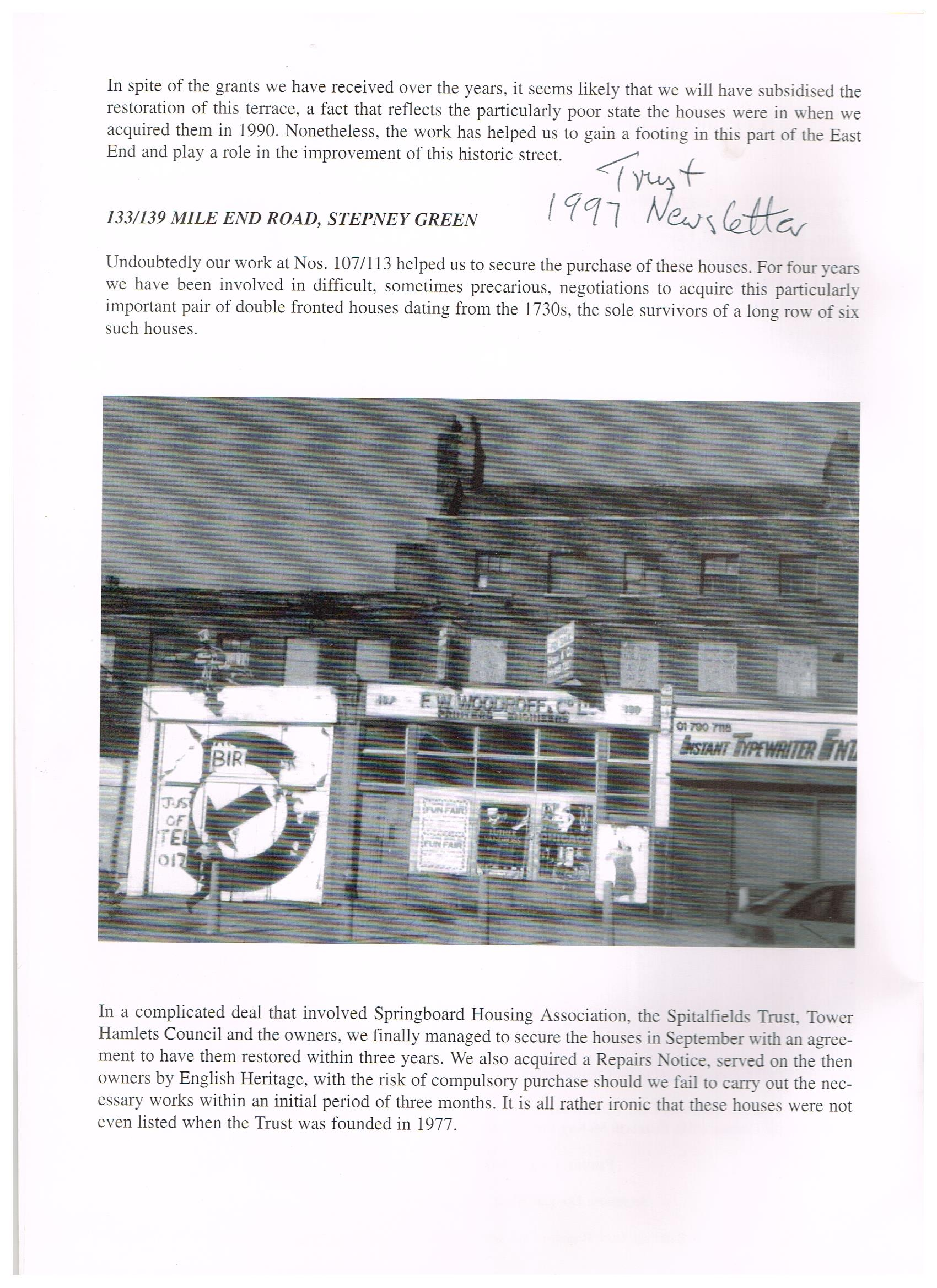
I have been sent a picture of our house as it was in 1997 when it was acquired by the Spitalfields Trust. It describes how the houses were acquired and the photograph shows the state they were in at the time, as well as the row of shops in front:-.







 | Charles | Saumarez | Smith |
You must be logged in to post a comment.