
We went to Thomas Adès’s 50th. birthday concert at the Barbican, starting and ending with Beethoven, with two great works by Sibelius and Janáček and two by Adès himself, one a new work based on a sea shanty and one an older work written when he was twenty-six, described by the chief violinist of the Britten Sinfonia as both disciplined and bonkers. It made me look up the picture which the NPG commissioned, when he was only thirty one, the first of a series of portraits paid for by the Jerwood Foundation to show young talent. It was rather a brilliant portrait, showing him in a buttoned-up white cotton suit, twisted up on an old leather chair with an empty wine glass by his feet. Of course, the hall was half empty because of the requirement for social distancing, but this didn’t diminish the intensity of the occasion and the sense of normal life beginning to resume, like sleepwalkers after a long intermission.
The Art Museum in Modern Times (5)
I am very honoured to have been sent a characteristically thoughtful review of my book by Svetlana Alpers, the great historian of Dutch painting, formerly of Berkeley, California, now writing about photography in New York. Of course, she is right that much is missing from the book by focusing only on the last eighty years or so, thereby missing out on the pleasures of the Grand Old Men of the international museums, including the National Gallery which she remembers, as do I, when it was a straight historical circuit, starting to the left of the entrance staircase. And I don’t dispute that it is important to encourage critical historical attention as well as more casual wandering. It will probably be seen correctly as a pre-COVID text when the mood was more optimistic. Let’s hope that some of the angst now surrounding museums dissipates, and we can recover a better sense of their role in fostering an interest in other cultures.
https://www.keyreporter.org/book-reviews/2021/the-art-museum-in-modern-times/
Typography and the Museum (2)
A couple of footnotes to the discussion on typography and museums.
- We were asked which museums do their graphic design best. Both Harry Pearce and I instinctively answered MoMA. I didn’t know, which I no doubt should have done, that the classic MoMA logotype was designed by Ivan Chermayeff in Franklin Gothic No 2 and launched in 1964, remaining fairly unchanged ever since, proof of its effectiveness. ‘The ideas that are quick, even instantaneous, are the best’, he said. ‘I sometimes have a great idea while the problem is still being described by the client. I have learned that the worst thing you can do is to put that idea forward immediately, because then it has no value’.
- I couldn’t remember who had designed the National Gallery’s logotype, which was in the process of being designed when I arrived in July 2002 and has survived pretty intact ever since. The answer, I think, is that it was done by Lee Hoddy, the then creative director of Bamber Forsyth. The font used – and which they still use – is (very appropriately) Bembo: conservative, but clear, legible and smart. We also put the definite article back, but asymetrically:-
The Future of Museums
Way back in early February, I was interviewed by Jesse Dylan and Priscilla Cohen who have a company in Los Angeles doing podcasts called Wondros. I had pretty much forgotten about it and what I might have said, but it has just gone live on YouTube (link as below) in which I am asked a series of interesting and intellectually challenging – and frequently unexpected – questions including ‘How easy is it to photograph snow ?’ It was at the beginning of what has been an intellectual journey for me over the last four months discussing the future of museums.
Typography and the Museum (1)
We had an interesting discussion last night with the MCICH Network of the Royal Society of Arts about the role that graphic design plays in the construction of a museum’s graphic identity, pioneered, as in so much else by Alfred Barr at the Museum of Modern Art, who included graphic arts in the course he taught at Wellesley in 1926-7 and paid close attention to the design and production of all the museum’s publications. My book is set in Futura, a sans serif typeface designed by Paul Renner some time between 1924 and 1927 when he was director of the Frankfurter Kunstschule typography department and first issued by the Bauer Type Foundry in 1927 as ‘the typeface of today and tomorrow’. It was the typeface used by the Museum of Modern Art in its series Documents of Modern Art, first issued in 1943. Apparently, ‘Barr’s zealotry was reflected everywhere in the museum, from the signs in the bathrooms and the catalog typography to the lapidary wall labels’, sending memoranda to members of staff about the colour, placement, shape and legibility of the museum’s building signage.
Then, Alice Rawsthorn reminded us of how Willem Sandberg, the director of the Stedelijk Museum from 1945 to 1962 had been trained as a graphic designer and devoted his attention to all aspects of the museum’s communications – street signs, posters, the museum’s journal and particularly catalogues. As she writes in her book Design as an Attitude, ‘If any designer can be said to personify design as an attitude, it is Willem Sandberg. As director of the Stedelijk Museum on Amsterdam from 1945 to 1962, Sandberg not only established it as one of the most dynamic cultural institutions of the postwar era by championing new movements in art, and introducing design and photography to the collection, he also discharged an unofficial tole as its graphic designer. Working late into the night and scribbling under the table at board meetings, he designed hundreds of exhibition catalogues and posters as well as all of the Stedelijk’s stationery and tickets’ (pp.17-18).
South Kensington Station (2)
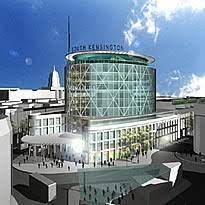
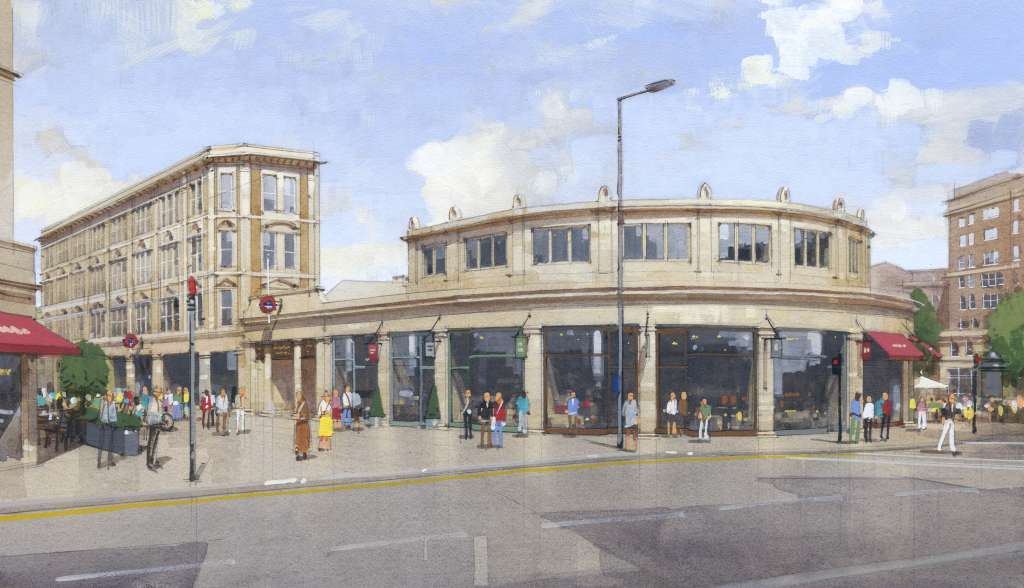
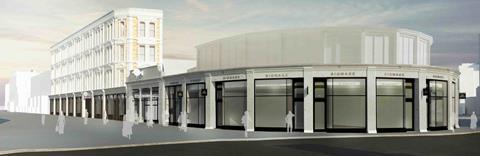
I thought it would be interesting to look up the various schemes which have been put forward for the redevelopment of South Kensington Station in the past.
There was a scheme by Terry Farrell (1997):-
Then one by John McAslan, but I can’t find an image of it.
Then a counter-proposal by Craig Hamilton:-
Then, Buckley Gray Yeoman produced a scheme, which looks like an adaptation of the Craig Hamilton scheme:-
Then, Native Land chose Rogers Stirk Harbour:-

Nuno
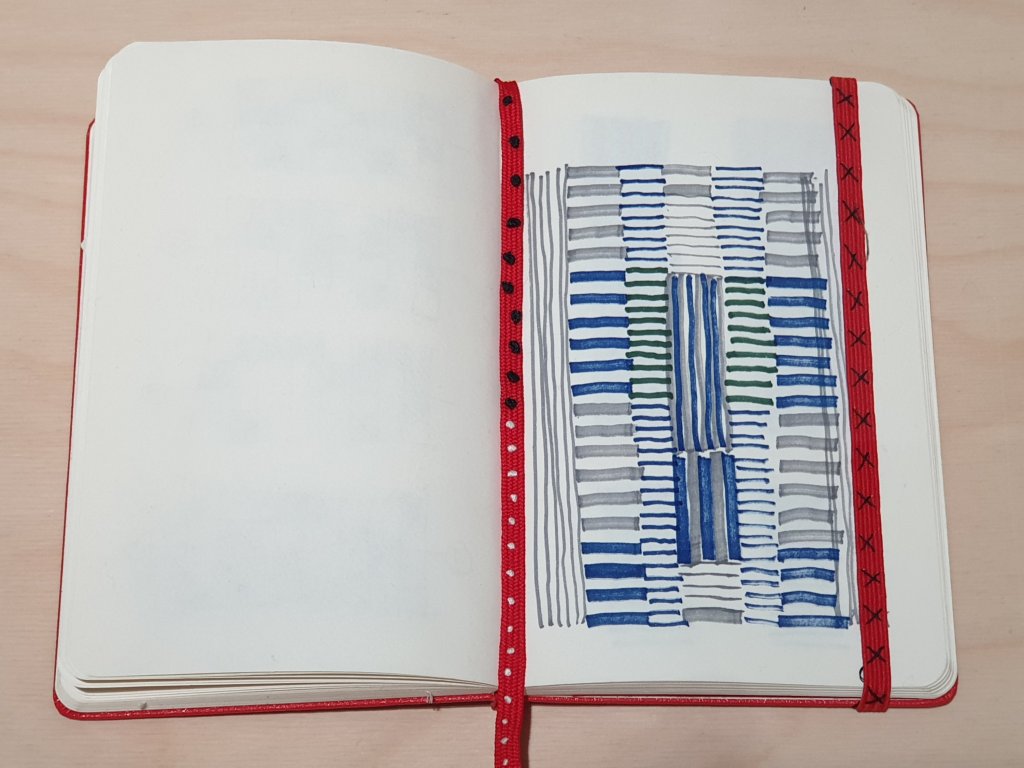
We were tipped off about the exhibition of the work of Nuno in the basement of Japan House. It comes from the Centre for Heritage, Arts and Textile in Hong Kong. When I see it, I am struck by the different way that the Japanese value traditional ways of making from the way we now do (according to Duncan Wilson in a letter I missed to the Daily Telegraph on May 22, a brand new burger bar is an exciting replacement for a five-centuries old Bell foundry, to be cheered on by Historic England). In Japan, on they other hand, they value traditional skills of making – to be treasured, but also to be developed, not kept in aspic as ‘heritage’. A living tradition using big machines and new technology as well as careful control of hand and eye, all demonstrated on the beautiful accompanying films of the work being done in their textile mills.
Unearthed: Photography’s Roots
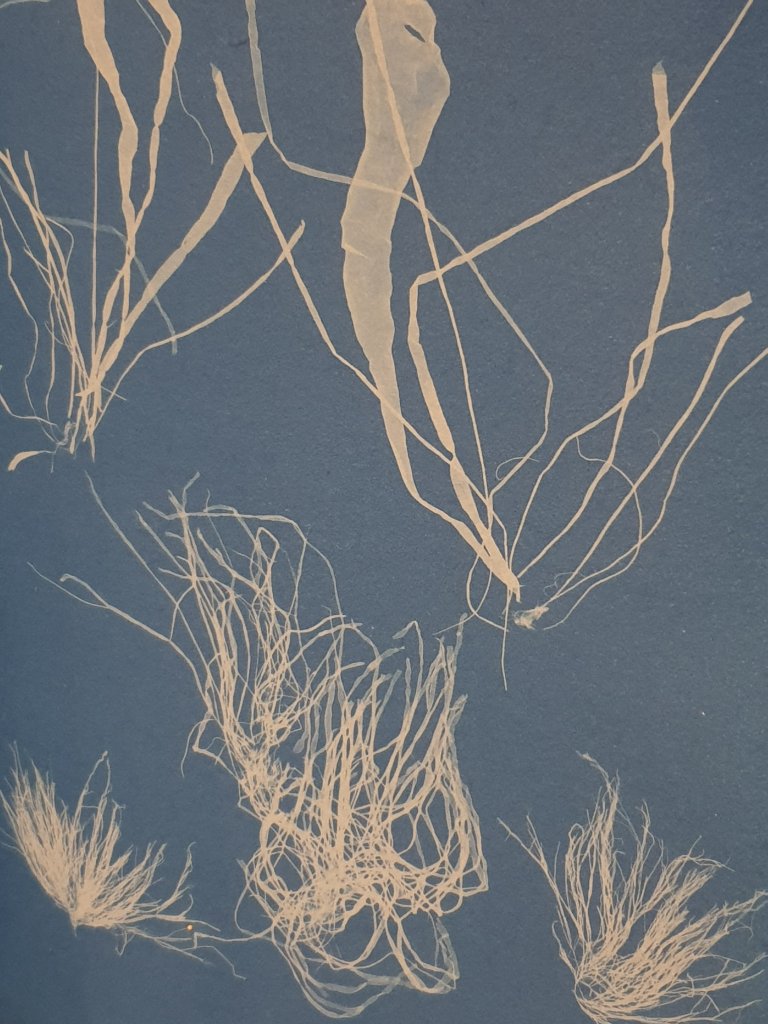
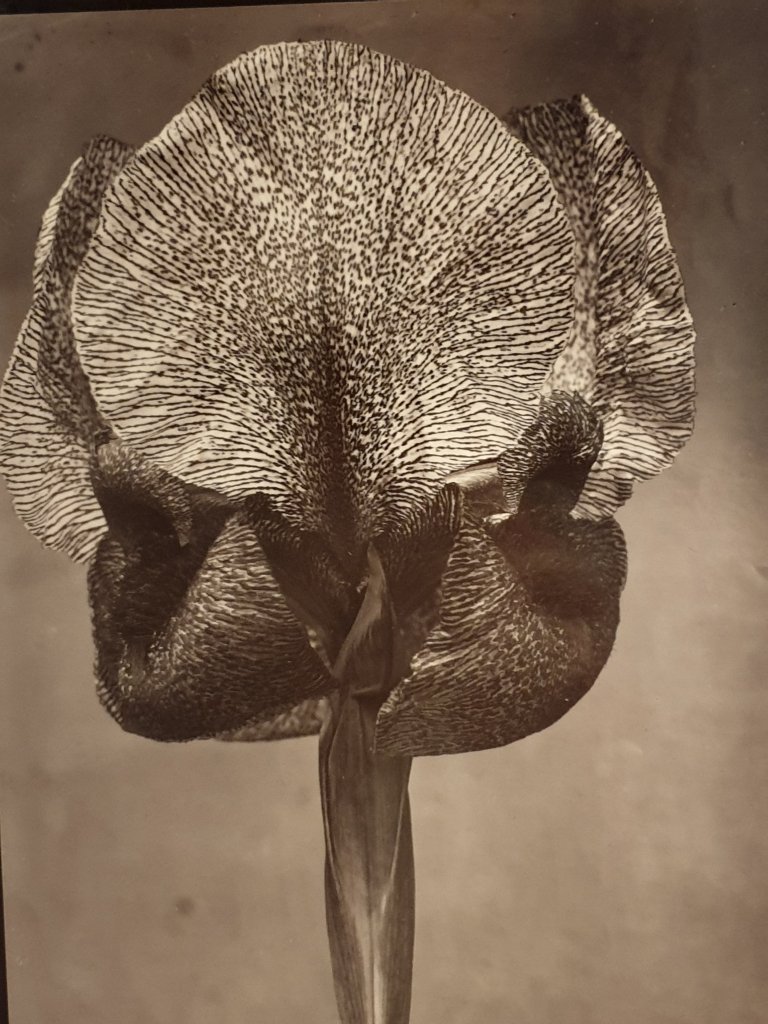
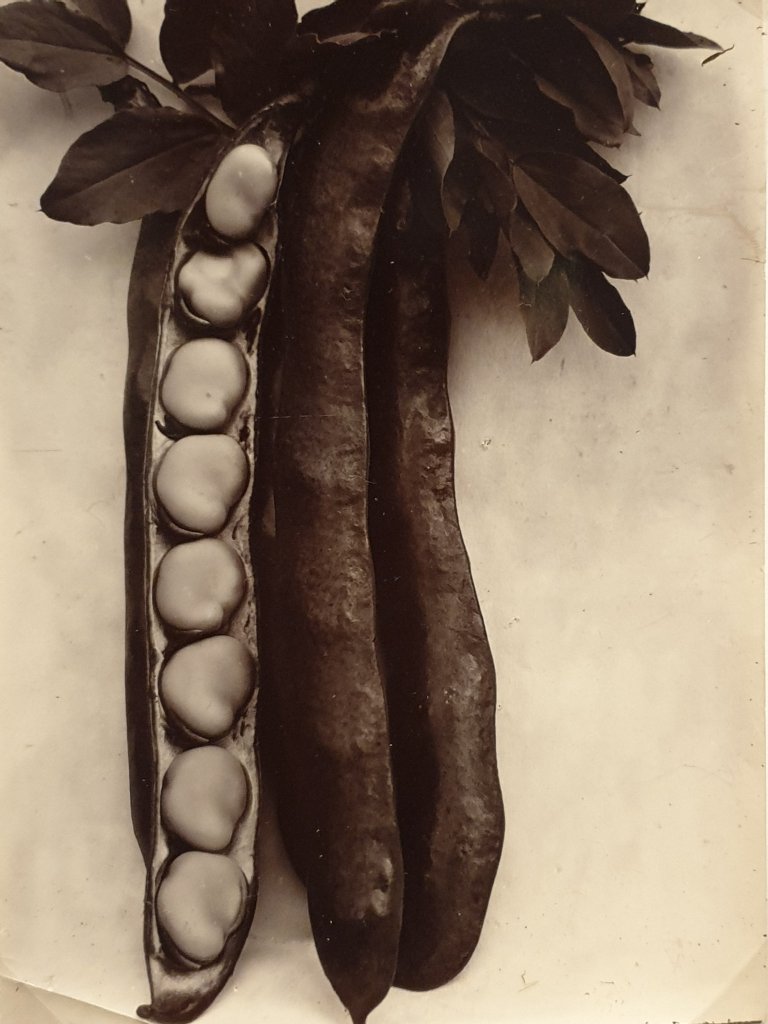
We went yesterday to the exhibition at Dulwich Picture Gallery of early botanical photography – a spectacularly interesting exploration of photography’s fascination for plant form.
Including Anna Atkins British Algae:-
Cecilia Glaisher’s Maidenhair Speenwort Fern:-

Charles Jones’s Iris Susiana:-
Jones’s Bean:-
Karl Blossfeldt:-
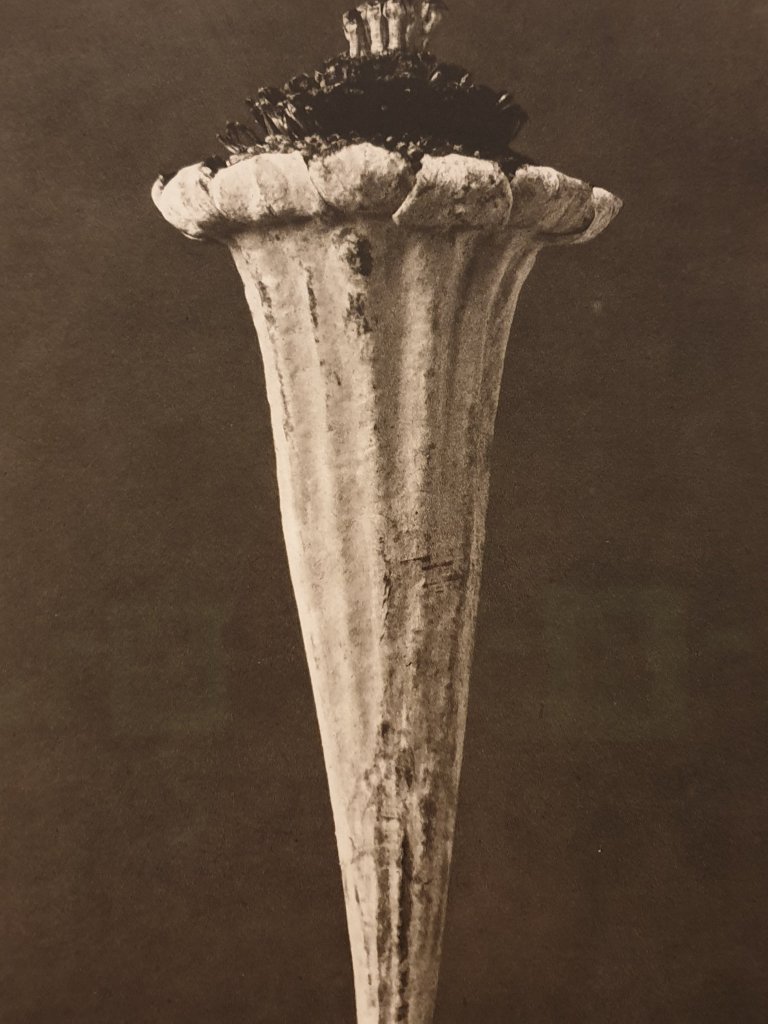
I strongly recommend it.
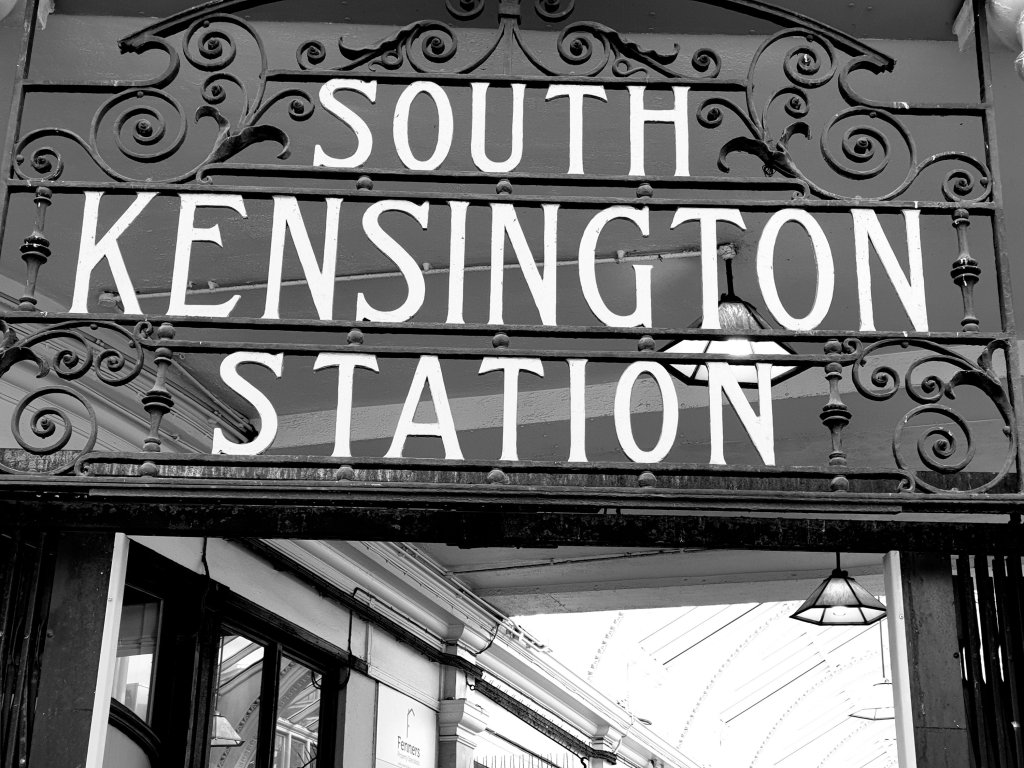
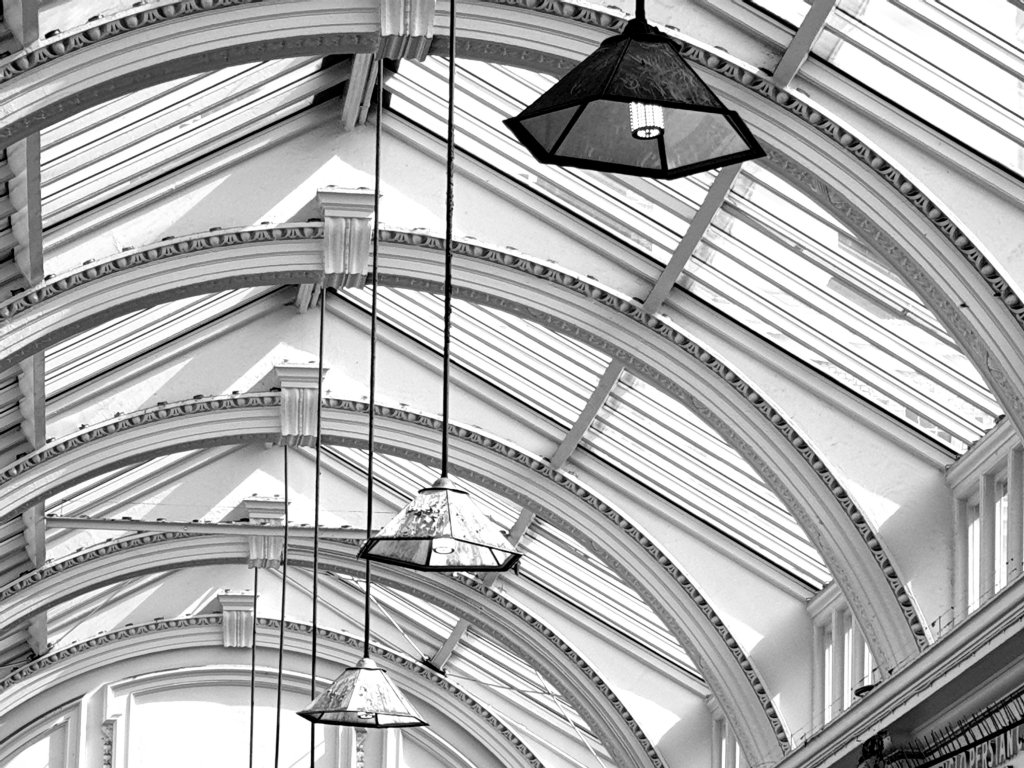
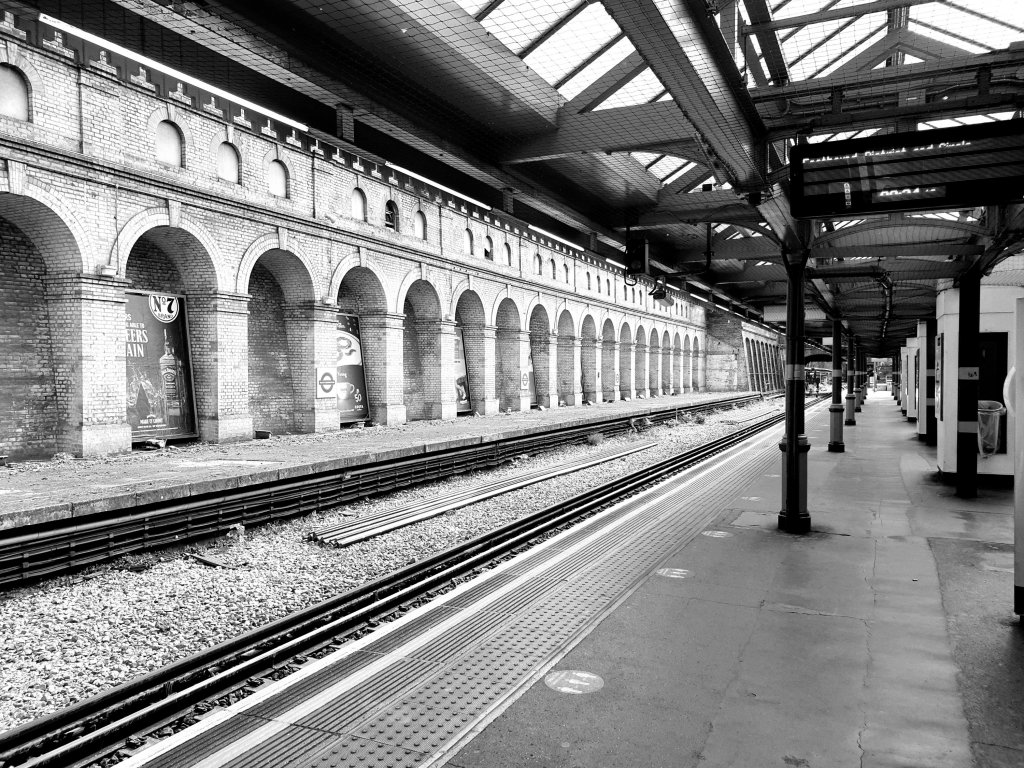
South Kensington Station (1)
One of the consequences of being involved in the debate over the fate of the Whitechapel Bell Foundry is that I pay more attention to planning battles across London, of which there seem to be so many.
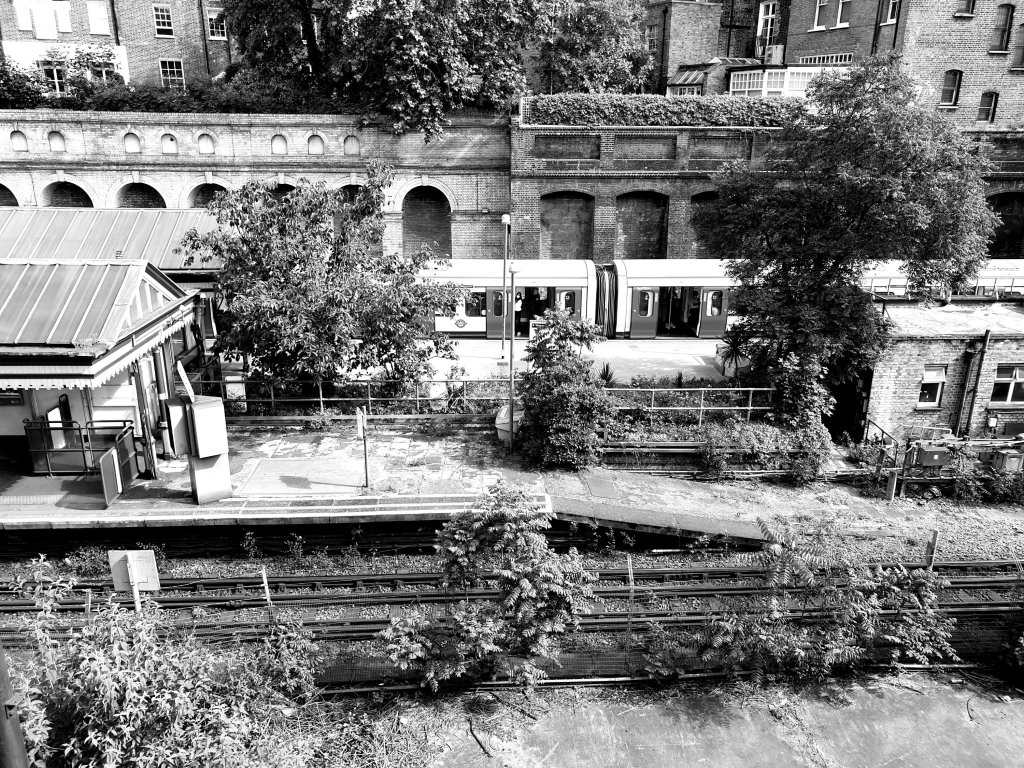
The most recent has been over the future of South Kensington Station. Whereas most of us probably regard South Kensington station as an attractively open gateway to the South Kensington museums – faintly rustic in character with flowerbeds on the platform, as if recalling the market gardens which were there before the museums and relatively unusual in being open to the skies (opened 1868) – Transport for London have long regarded it as being ripe for development where their air rights can be developed for maximum profit, regardless of the low-rise stucco housing round about populated by merchant bankers. Rogers Stirk Harbour came up with an ungainly set of plans leaving the tube arcade, but surrounding it with a circular gasometer tower block.
Unusually, Native Land has sensibly withdrawn its plans, presumably realising the strength of local feeling against the proposals. Who will it employ, one wonders, to draw up more sensitive proposals ?


 | Charles | Saumarez | Smith |
You must be logged in to post a comment.