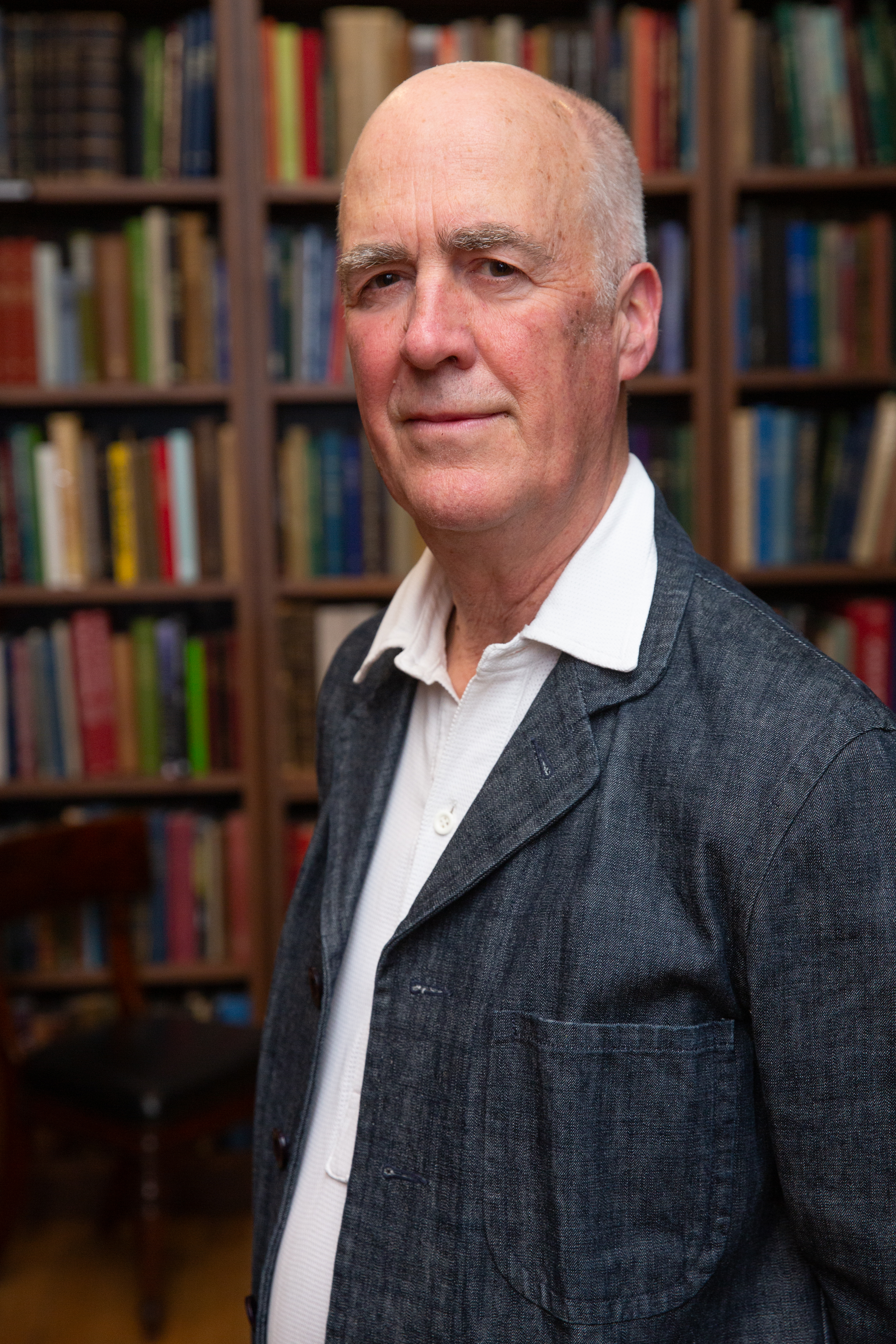
I was pleased to read this account of the origins of The Friends of Friendless Churches, which I did not know and am not surprised that it was founded by a Welsh MP because its work is particularly valuable in North Wales, including many of the churches I most admire:- St. Mary, Tal-y-Llyn, remote along a deserted road east of Aberffraw; St. Baglan, Llanfaglan, again exceptionally remote, on the coast west of Caernarvon; and the astonishing St. Mark’s, Brithdir, which I finally managed to locate last summer, on a hillside surrounded by rhodendendra near Dolgellau. Friends of Friendless Churches keeps them open as places to admire without song and dance – the best sort of charity.
Jakub Józef Orliński
We went last night to hear Jakub Józef Orliński sing at the Wigmore Hall, which he did divinely, singing arias from forgotten Italian operas of the late seventeenth and early eighteenth centuries by Cavalli, who studied under Monteverdi and became organist of St. Mark’s, Boretti, Bononcini, born in Modena, studied in Bologna, moved to Rome, moved to Vienna, Berlin and London, where, in the 1730s, he was a rival of Handel, Predieri, who likewise moved from Bologna to Vienna to be Kapellmeister, Hasse, who was born in Hamburg, but worked in Naples, Venice and Dresden, and Francesco Conti. Music of the courts, as Evelyn described it ‘the most magnificent & expensfull diversion’.
Baynes Street
I hadn’t previously spotted the eighteenth-century street sign attached to the wall of the Whitechapel Bell Foundry, which reads ‘This is Baynes Street 1746‘, erected presumably just after the completion of the bell foundry, which took over the so-called Artichoke Inn in 1743, when the Daily Advertiser announced the availability of the lease of The Old Artichoke Alehouse. It’s not even the oldest street sign in Whitechapel:-

Whitechapel Bell Foundry (16)
I went on a small pilgrimage this morning to see the Whitechapel Bell Foundry with an ardent visiting campanologist. I had learned something of the interest and enthusiasm of campanologists for the fons et origo of bells all over the world, but I hadn’t known that there are 80,000 bell ringers in Britain alone, that they have their own magazine Ringing World, and that they are all as upset as I am at the sale of the Bell Foundry and the loss of its deep rooted skills and historic traditions.
They all hope, as I do, that Robert Jenrick, if he is reappointed Secretary of State as he well may be, will intervene to find a creative solution to its future:-

E.H. Gombrich (2)
By a strange coincidence (or maybe it wasn’t), there was a long programme on Gombrich’s life last night on Radio 3 in which his grand-daughter talks about the archive: his time in impoverished Vienna in the 1920s where his father, Karl Gombrich, was a lawyer (‘interfering in other people’s affairs’); his upbringing as a Protestant; the growth of anti-semitism; his long and intellectually formative friendship with Karl Popper; his passionate interest in music, in some ways more than art, which he looked at intellectually; arriving in London as a research assistant at the Warburg Institute; monitoring enemy broadcasts in Evesham and developing an interest in the gestalt; turning down a job at the Albertina: dictating The Story of Art; his view of himself as a central European intellectual, his interest in the question of explanation and his belief in the inadequacy of explanations. Above all, it was good to hear his voice, cautious, burred, heavily accented, but with great intellectual authority.
Ernst Gombrich (3)
Last night I went to a seminar/discussion on the life and work of Ernst Gombrich, the Director of the Warburg Institute from 1959 to 1976, by his two grandchildren, Leonie, who looks after his literary estate, and Carl, who is himself an interdisciplinary historian crossing the boundaries of the arts and sciences.
Two things stick in my mind. The first was Gombrich’s determination not to be described as an art historian, but as a historian tout court. This was a Warburg tradition, the belief that art was only one part of a broader cultural tradition; and he was certainly not, in any way, a connoisseur, the dominant characteristic of art history in the 1950s.
The second was his determination not to be regarded as a refugee, having arrived in London in 1936 of his own volition before the anschluss to join the staff of the Warburg Institute as a research assistant, working on Warburg’s papers, which led ultimately to the publication of Gombrich’s intellectual biography of Warburg, written in spite of Gombrich’s own dislike of biography as a genre.
Election Night
So, we wake up to a different country: blue across great swathes of the north of England; the Conservatives the new party of the working classes and Labour apparently now only representing cities, universities, the young; Anglesey is now conservative; Emma Dent Coad has lost: so has Jo Swinson; running through the results, Conservative gains in all sorts of unlikely places, including Sedgefield. The world has been turned upside down.
Election Day (2)
I have been castigated for describing Jeremy Corbyn as ‘without obvious political passion’. It is true that I have watched him in full political flow speaking against the Iraq War, but on television during the election campaign, I found him oddly dry and unwilling to attack Johnson effectively as he so easily could, and should have: most especially in describing his own position on Brexit which seems to be a natural sympathy for opponents of Brexit and a visceral, traditional Bennite hostility to the neoliberalism of the EU, whilst at the same time wanting to defend the EU’s stance on wages and its internationalism. If this is indeed his position, why couldn’t he bring himself to say so, particularly when attacked by Johnson ? I didn’t mean to suggest that he doesn’t have deep-rooted political beliefs, because he obviously does, just not as effective as he needed to be in expressing them.
Election Day (1)
I have never previously been so apprehensive about the outcome of an election as I am this morning.
I realise that I was brought up to think that the British regard extremism with distaste, never likely to succumb to it, more inclined to compromise, seeing the virtue of the other side, and, above all, with some level of belief in the truth. But now, suddenly, in a short space of time, we have been faced by a government and a ruling party which have bombarded us with lies, not just small lies, but gigantic and incorrigible lies, incessantly, and completely shameless about them when they have been unmasked, as when it was suggested that the poor boy in the hospital corridor in Leeds was a fraud. Journalists, instead of probing the lies, revealing them, have played a prominent role in recycling them, even including the BBC.
What have we come to ? Well, under normal circumstances, there would be a well-constituted opposition. I would like to respect Jeremy Corbyn, but have found it hard to, because he is so curiously lacking in any obvious political passion, although there have been faint glimpses of a mordaunt sense of humour in his online appearances, nowhere evident elsewhere. Boris Johnson’s almost only real achievement in the election campaign has been to make Jeremy Corbyn seem relatively honest and, by contrast to the torrent of untruth, just acceptable.
I hate to think that a majority of the electorate may vote in Johnson.
Blain|Southern (1)
Since it is now in the public domain that I have left Blain|Southern, although I have been generously allowed to stay in my office, I should perhaps say how much I have enjoyed my brief sojourn in the commercial art world, how grateful I was to Harry Blain for hiring me, and how much I have appreciated the friendship of my colleagues there, as I disappear into pastures new.
 | Charles | Saumarez | Smith |
You must be logged in to post a comment.