St. Denis’s, East Hatley

We were close to East Hatley today, so called in on its church, hard to find, up a footpath off the only street, looked after by Friends of Friendless Churches and restored in 1874 by William Butterfield, when he was already well known, had been offered and turned down the RIBA Gold Medal.

It was completely neglected in 2002:-

It has now been put back into reasonable order by the Friends of Friendless Churches, helped by a grant from the Culture Recovery Fund:-

Inside one sees survivals of Butterfield’s decoration:-

Standard

Canary Wharf (6)

As I say in the accompanying article, I was prompted to write about Canary Wharf by bicycling through it last summer and finding it vastly much busier and alive than the City – the river banks and wharf-side bars all packed.

I read endlessly that Canary Wharf is suffering whereas the City is thriving.  I wondered if perhaps the truth is the other way round.

https://thecritic.co.uk/the-us-city-on-the-banks-of-the-thames/

Standard

St. Matthias, Stoke Newington

Reading Nicholas Olsberg’s excellent new book on William Butterfield (I am reviewing it for The Critic) prompted me to visit: a noble, if austere, mission church in the back streets of what must have been a suburb, built at the behest of Robert Brett, a local doctor, who was a close friend of Butterfield and had already got him the commission for St. Augustine’s College, Canterbury:-

Standard

and dead objects would acquire souls (6)

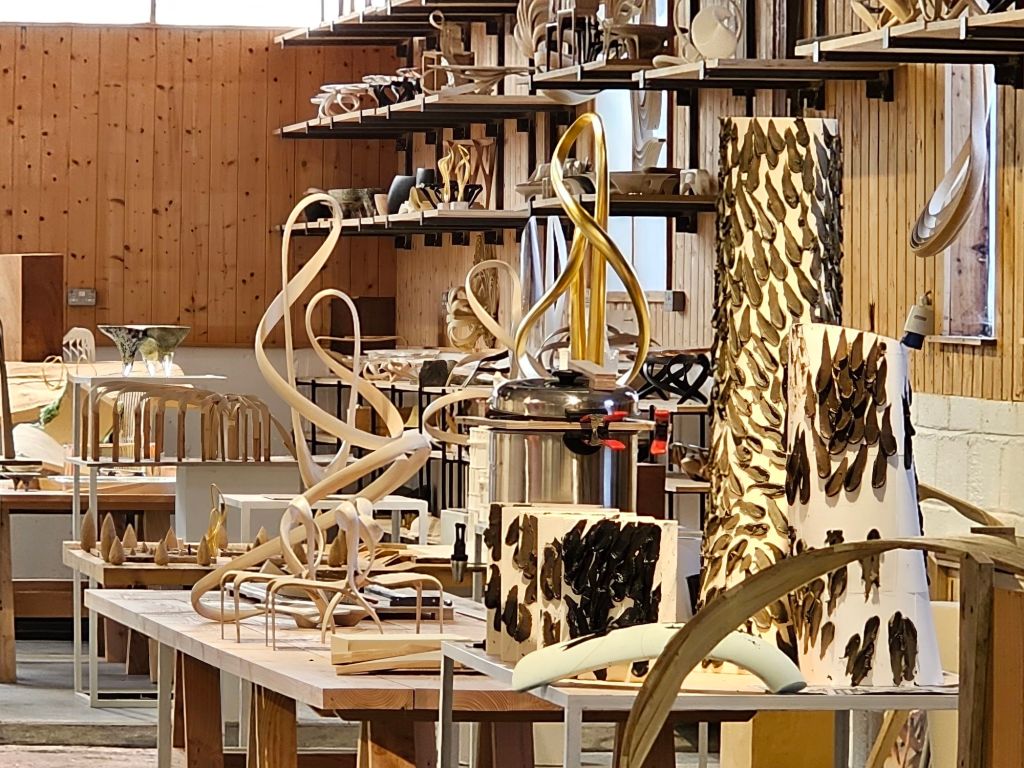
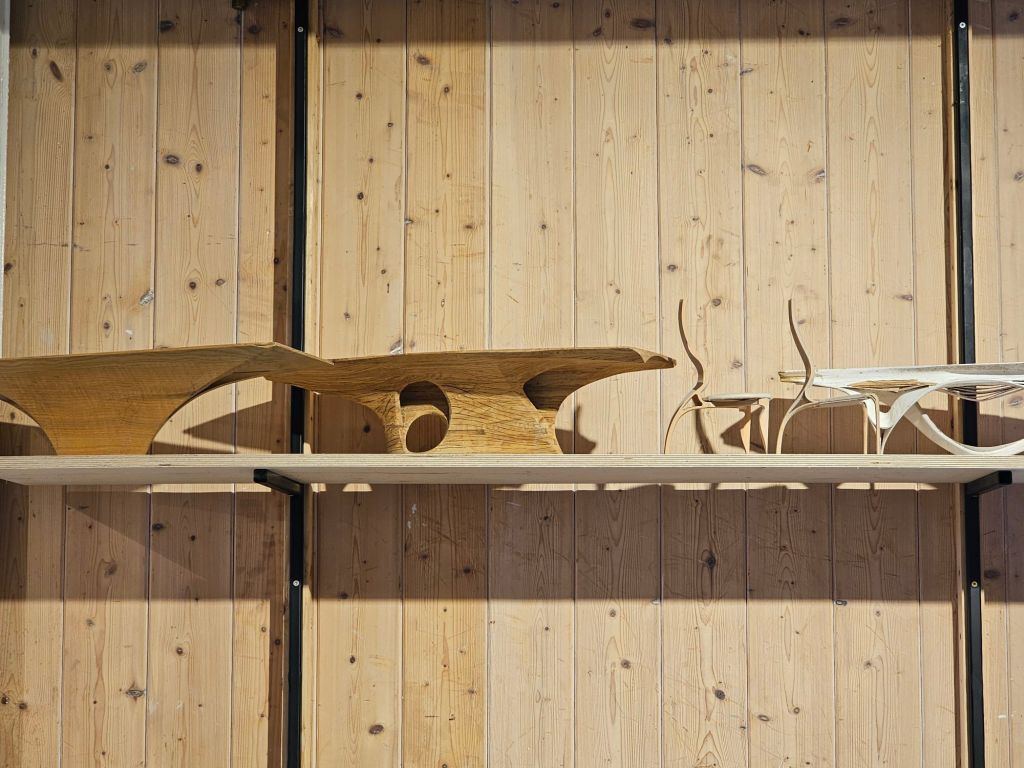
The film of the exhibition:-

https://mailchi.mp/3dff8af3e598/a-short-film-of-romillys-exhibition-at-edmund-de-waals-studio?e=9dc0f9b85b

Standard

Norton Folgate (4)

I have booked myself in for a tour of the newly developed Norton Folgate, an area which has historically been highly contentious.  Meanwhile, I walked past it this afternoon and was interested by how it tries to manage the relationship between new build and the surviving historic warehouses:-

Standard

Warburg Institute (7)

Of the many articles about the re-opening of the Warburg Institute, I have found the one by Matthew Bowman in the Art Review (see below) the most helpful as to why there is such a revival of Warburg’s ideas at the moment. 

What Bowman helpfully makes clear is that the two most obvious disciples of Warburg, Panofsky and Gombrich, actually very much skewed the way he was interpreted in the post-war period: Panofsky because he treated iconography (or as he called it ‘iconology’), as in some way a science, as if the transmission of images could be tracked, whereas Warburg’s Mnemosyne Atlas was much less precise in the way it traced influence; and Gombrich was always felt to be ambivalent, if not hostile, to Warburg’s belief in the subterranean, if not subversive, aspects of Renaissance thought. 

Gombrich is viewed as a disciple of Warburg, but he only arrived in London in January 1936, so learned about Warburg’s ideas from Gertrud Bing and Ernst Kris.

Anyway, it’s good that Warburg’s ideas and his Institute are now, as of today, more centre stage.

https://artreview.com/its-art-historian-aby-warburgs-world-were-just-living-in-it/

Standard

Henry VIII Gatehouse

I stopped off on my way home from Goldsmith’s Hall to examine the Henry VIII Gatehouse to St. Bartholomew’s Hospital.  The Board of Governors commissioned it in March 1702 from Edward Strong, one of the family of masons responsible for the construction of St. Paul’s.  It’s assumed that he provided the design as well, since the minute book documents that it was to be built ‘according to the model drawn by the said Edward Strong’.  The contract was for £550.  £1493 had been spent by Michaelmas 1702 and a further £1320 thereafter.  Plus ça change.

Standard

George and Vulture

I knew about Simpson’s Tavern, now sadly all shuttered up, but not the George and Vulture, an astonishingly well-preserved and authentically Dickensian pub – well, it features in Pickwick Papers – so buried in the heart of the city that I had never seen it or been before.  It is even open on a Saturday lunchtime although there were not many takers.  I felt I should have known about it.  I strongly recommend a visit before it too is shuttered up and scheduled for modernisation:-

Standard

The City (4)

In the intervals of attending Goldsmith’s Fair, I like poking about the City or what’s left of it after every vacant block has been redeveloped.

A surviving piece of woodwork from St. Anne and St. Agnes, rebuilt by Wren in 1680:-

Lothbury:-

Tokenhouse Yard:-

Throgmorton Street:-

The Bank of England:-

Birchin Lane (I think):-

Lombard Street:-

St. Mary Woolnoth:-

Standard