In discussing the first English translation of Leonardo’s Trattato in 1721, I had a faint idea that it might be connected to the early development of freemasonry because I remembered that John Senex, the bookseller, globemaker and mapmaker, who published the translation, was also the publisher of James Anderson’s Constitutions of the Free-Masons in 1723. Indeed, he was. Senex was an ardent Newtonian as well as freemason and was keen to promote the practice of experimental science based through his publications. In 1721, he also published a translation of the work of Claude Perrault on the Order of five species of columns according to the method of the ancient. But, as Harry Mount brilliantly suggested in his paper in the conference yesterday, the application of a rigorously experimental method to the practice of architecture and fine art had very limited success in the era of Lord Shaftesbury and Palladianism.
Anglesey (1)
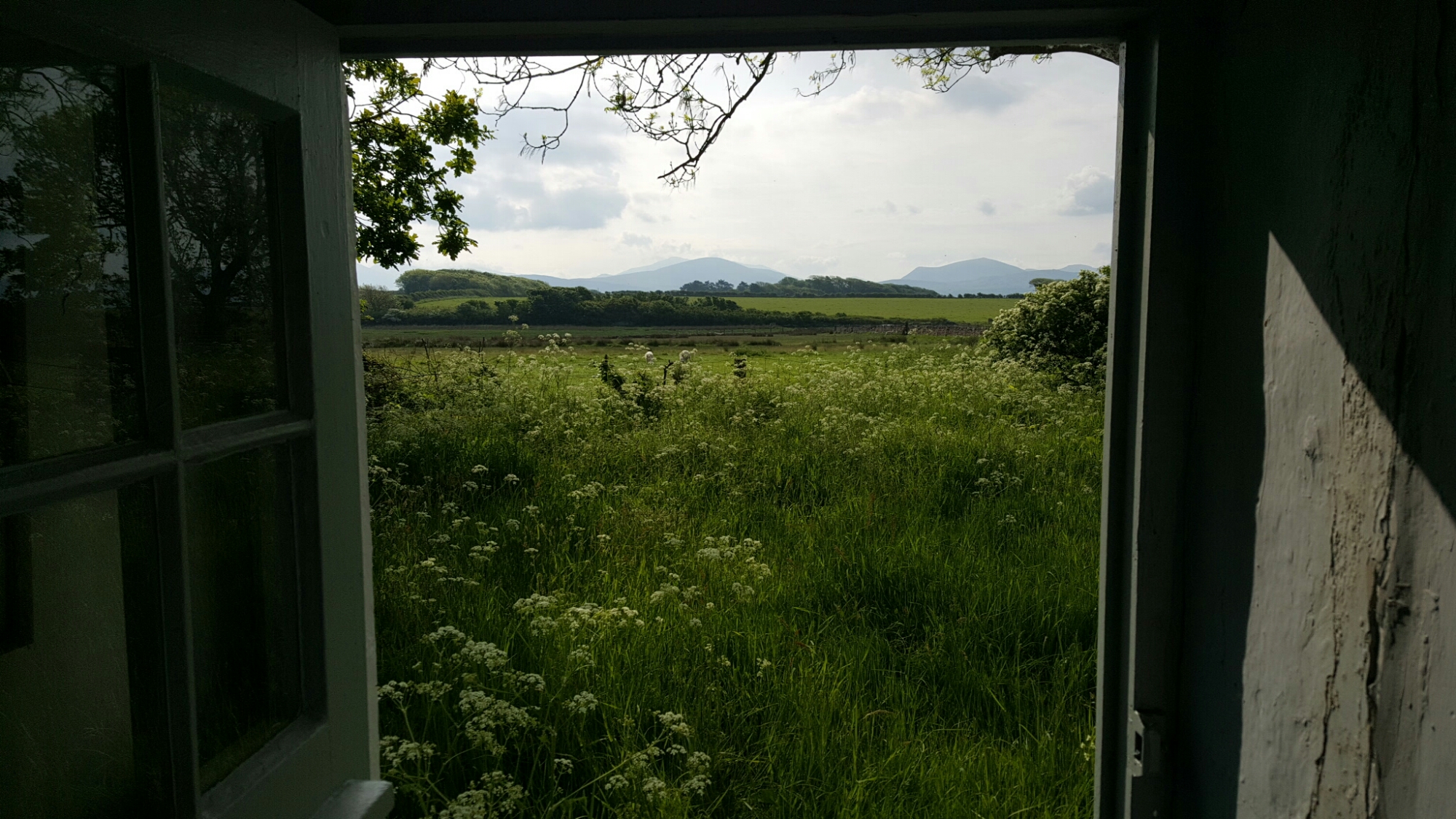
We have escaped to Anglesey for the bank holiday weekend where our cottage is thick with cow parsley.
This is the view out of the back door:-
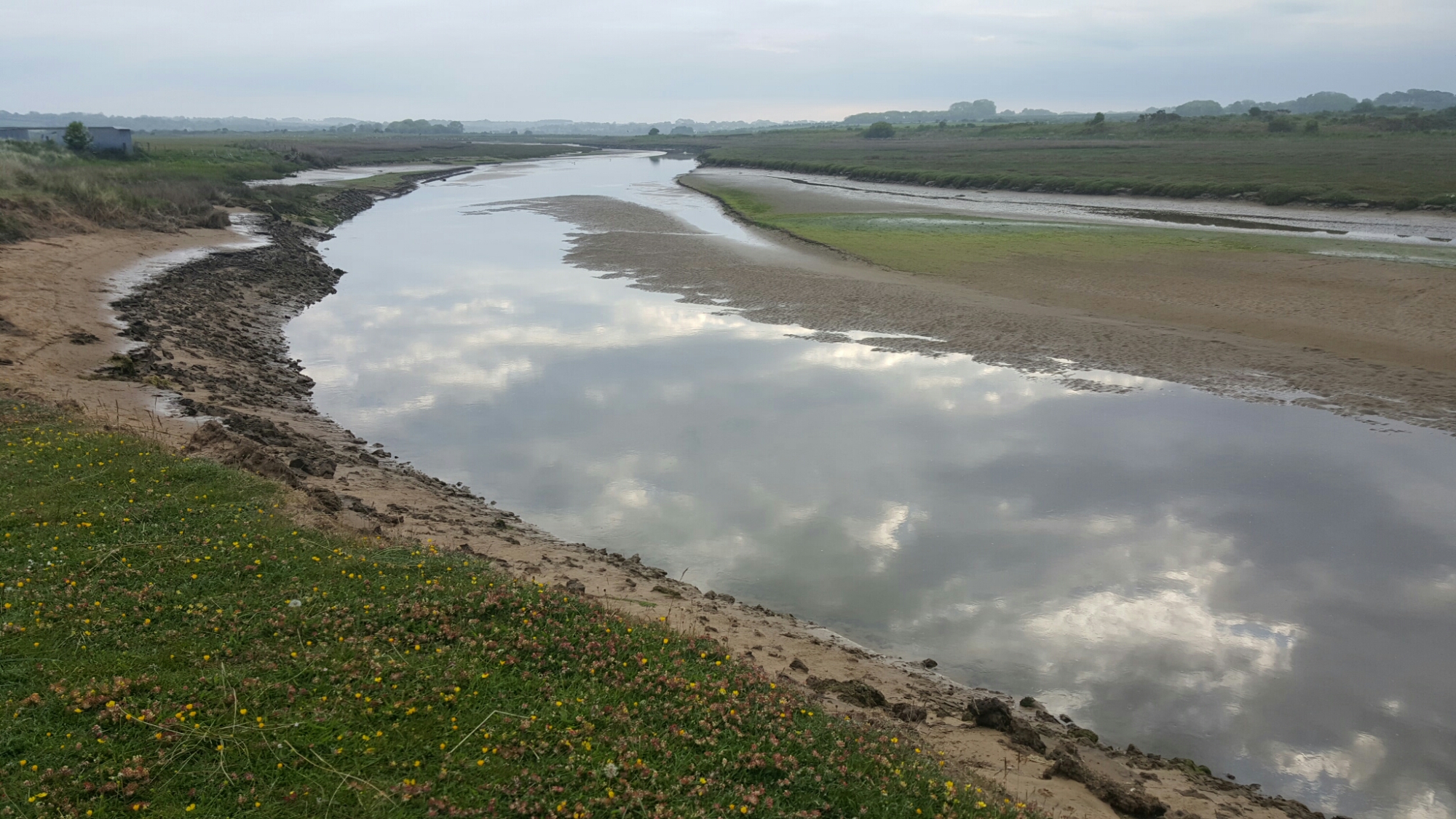
Before breakfast, I walked out to the beach to see the sea:-
Leonardo in Britain
I spent the last two days attending, and speaking at, a conference at the National Gallery and Warburg Institute on the status of Leonardo as an artist and art theorist in Britain. What turned out is that he was better known than I had realised in the seventeenth and eighteenth centuries, with works by him listed in seventeenth century inventories and in the collection of John Guise bequeathed to Christ Church, Oxford, as well as a Codex in the collection of the Earl of Leicester. But there was an inadequate appreciation of his style because his works were so widely scattered. It was in the early nineteenth century that collectors became much more interested, helped by the exhibition of the early copy of The Last Supper in the British Institution in 1817 and the later version of the Virgin of the Rocks, then in the collection of Lord Lansdowne, the following year. It turned out that during these years the Raphael Cartoons were also lent by the Prince Regent to the British Institution, where they were copied by Benjamin Robert Haydon (the Royal Academy already owned and displayed a set of copies by James Thornhill in the Great Room). So the question arises as to why there was so much interest in Leonardo during these years, which were not long after the establishment of Dulwich Picture Gallery and the Fitzwilliam Museum. Was it because of the renewed opportunities for foreign travel after the Battle of Waterloo ? Or the dispersal of works of art during the Napoleonic Wars ? Or the establishment of the Royal Academy’s painting school ? Whatever the answers, the acquisition of the early copy of The Last Supper by the RA on 14 June 1821 for 600 guineas looks more significant than I or others had previously realised, particularly given that it was hung immediately behind the speaker’s podium in the Great Room so visible for every student to see and study.
Eileen Cooper RA
I finally made it to Eileen Cooper’s exhibition having tried a couple of times previously without success. It’s in a gallery I didn’t know called Rook & Raven in Rathbone Place just north of Oxford Street and consists of work she has done since her exhibition at the RA, based on loose interpretations of the theme of Love-in-Idleness, inspired by a speech by Oberon in Midsummer Night’s Dream. They hover intriguingly between realism and myth:-


Mario Praz
Mention of Mario Praz in my post about Hugh Honour has made me realise that many people already know much more than I do about his significance to English writing about romanticism and design. He arrived in England in 1923 with introductions as to who to meet from Vernon Lee, taught Italian Studies at Liverpool University for ten years before taking up a chair in Manchester, and published La Carne, la Morte e il Diavolo nella letteratura romantica in 1930. It was about sadism, incest and necrophilia. His book about seventeenth-century emblem books was published by the Warburg in 1939 and Gusto Neoclassico in 1940. I had assumed he was gay, but, on the contrary, he married an Englishwoman, had a mistress in the war and described his furniture as his whores.
Burlington Gardens
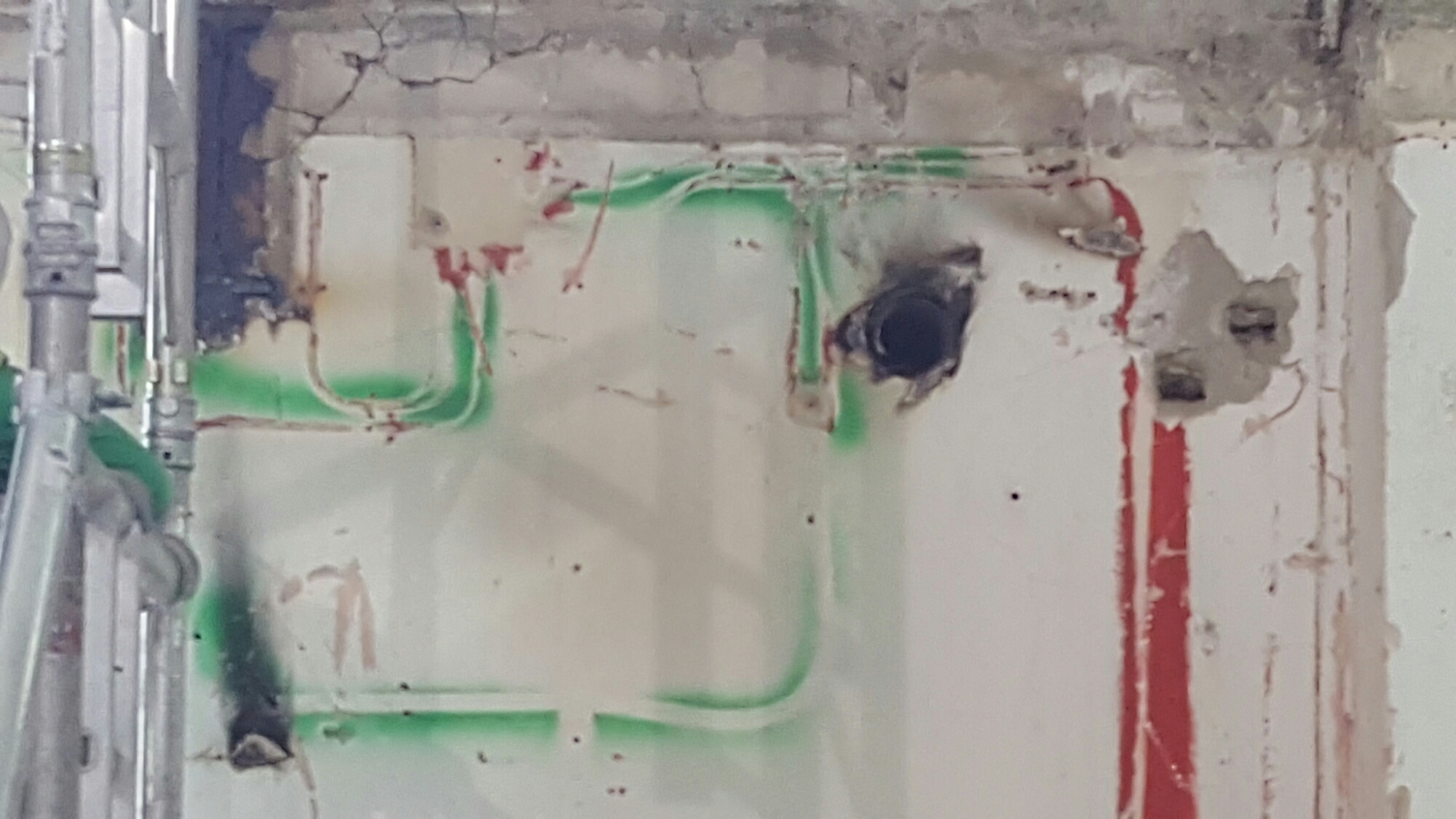
I did one of my regular tours of our building project. Each time one can see the signs of progress. The Lecture Theatre is now a grand empty volume:-

Hugh Honour (2)
I have been thinking more about meeting Hugh Honour in the summer of 1975. I travelled to Lucca from Siena where I was staying in the Monastery of Pontignano. He had lived in Asolo in the late 1950s before moving to Lucca and at the time was working on a life of Canova which he never completed. He used to visit England every year, staying in the Traveller’s Club and getting his hair cut in Trumper’s. He talked about Mario Praz, who he and his partner John Fleming would have known as the great English scholar in Rome, author of The Romantic Agony and The House of Life. He said that Praz had the evil eye and could cause a light bulb to break if he wished. I only met him later in the bookstacks of the Warburg Institute, but retain my admiration for the quality of his writing as an independent scholar.
Valentino
I was tipped off that there is a new and elegant building for Valentino on Old Bond Street which has been designed by David Chipperfield. Indeed, there is:-

Victoria Memorial
As I was slightly early for breakfast, I made a detour on my morning walk across the parks to inspect the Victoria Memorial, one of those great and overblown monuments which it is easy to ignore. Its design was the result of an open competition held in the summer of 1901 which was won by Thomas Brock RA, who had recently completed an equestrian statue of the Black Prince for Leeds. It was paid for not by grant from parliament, but by subscription throughout the Empire. The work took some time to complete. The bottom half was unveiled on 24 May 1909 and the final monument in March 1911. It benefits from close inspection rather than just being seen out of the car window with good bas-reliefs round the basin:-


Vogue
I went to the party to celebrate Vogue’s centenary (not the only one, I know). Two things struck me. The first was that it was founded in 1916, at the height of the first world war, when, as Nicholas Coleridge explained, there was both clothes rationing and paper rationing, not the most auspicious moment for the launch of a fashion magazine. But British readers were apparently missing the shipment of American Vogue. The second is the longevity of the Condé Nast stable. Coleridge himself has been there for as long as I can remember (although he cut his teeth on Harper’s and Queen). And Alex Shulman has been editor of Vogue for a quarter of its existence.
 | Charles | Saumarez | Smith |
You must be logged in to post a comment.