
Of the great priory church of St. Germans, seat of the bishop until the construction of Truro cathedral, we saw no more than the great west door surrounded by Norman ornament:-

Of the great priory church of St. Germans, seat of the bishop until the construction of Truro cathedral, we saw no more than the great west door surrounded by Norman ornament:-
After lunch we went to walk along the banks of the River Lynher in the parkland of Port Eliot, drained by Edward Eliot some time after he succeeded in 1748 and then planted by Humphrey Repton following the production of a Red Book in 1793:-

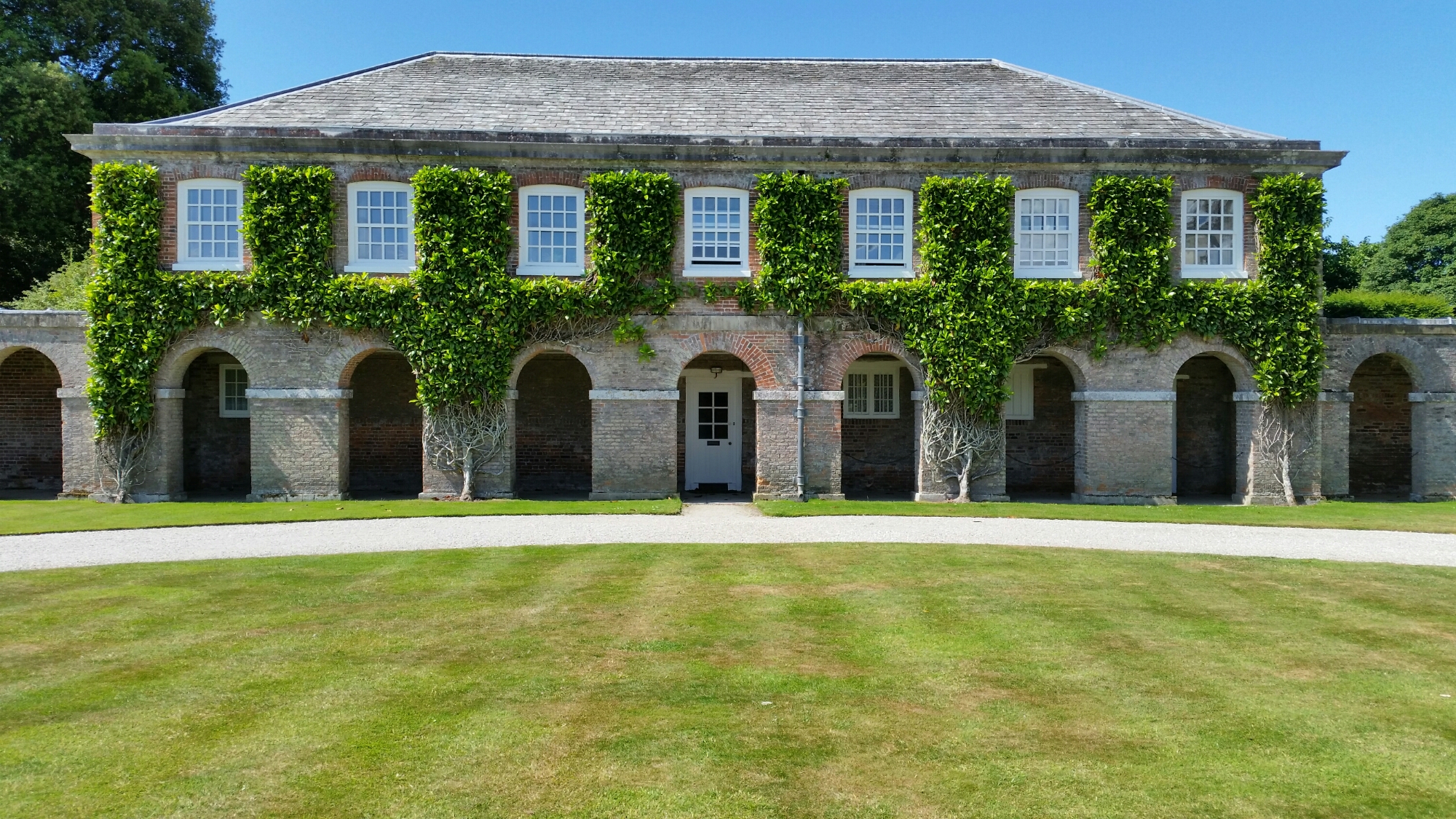
The weather was perfect for walking round the gardens at Antony: not too hot, luminously clear, with puffed clouds. The original gardens were laid out when the house was built in 1724, then modernised to an extent, but incompletely, by Humphrey Repton (the Red Book survives in the house) and the hedges and many of the trees were planted in the 1890s and later.
We started in the courtyard in front of the house, looking up to the gates on the horizon:-
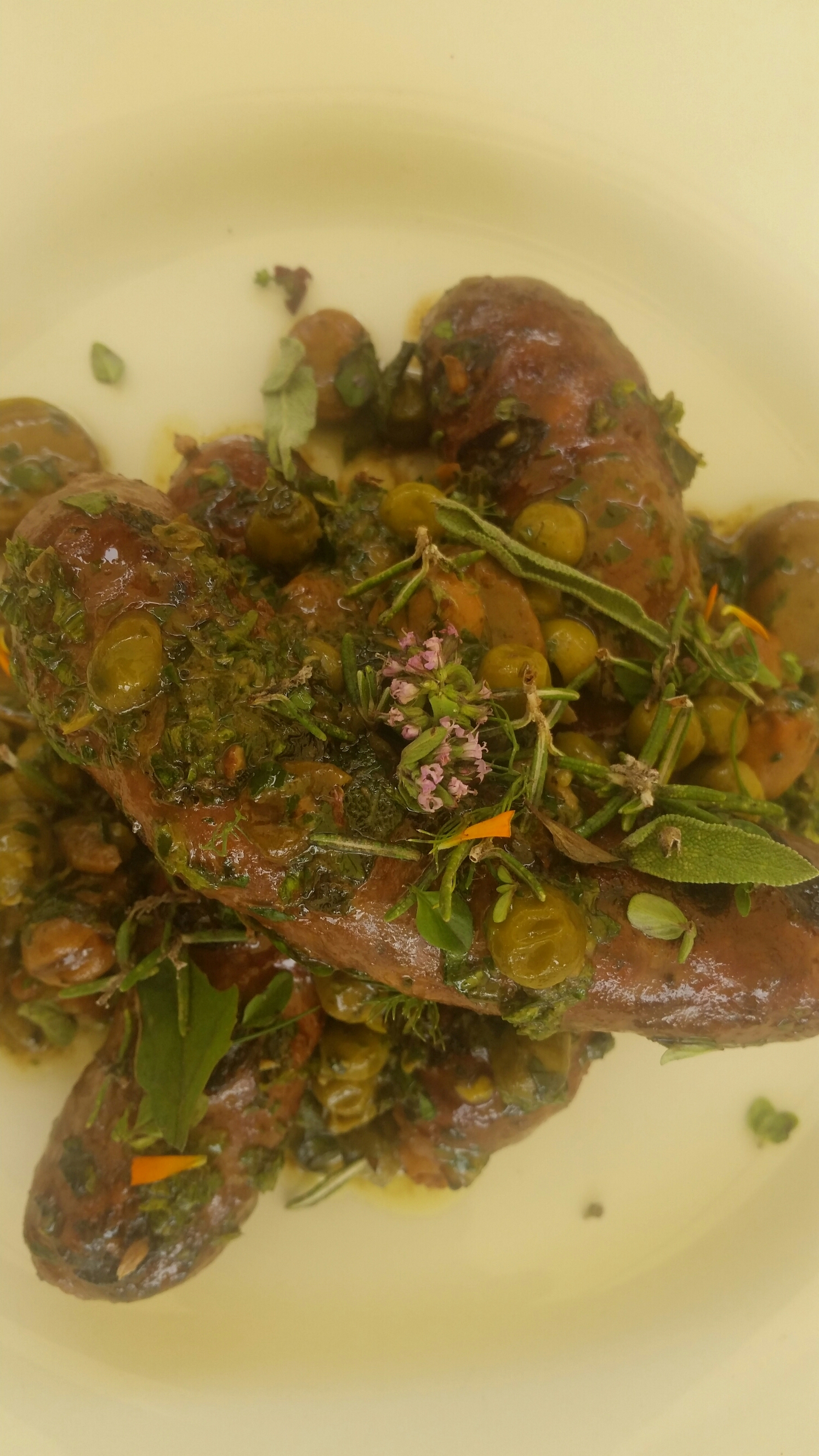
We stopped off at Hauser and Wirth in Somerset to enjoy venison sausages and ginger beer at the Roth Bar and Grill. After almost exactly a year, the place has settled into the Somerset landscape even with no exhibition.
These are the organic venison sausages (very filling):-
This is where we sat out under the canvas awning:-
I love Edinburgh, the blackened houses, the classical street plan, the New Town, the fact that there is so little new development, the back streets behind the façades and the views out towards the Kingdom of Fife. Walking across the city from end to end in the early night, not a car, let alone a taxi, in sight, I was struck by how extraordinarily coherent it is, not a wrong note, as I went from Broughton Street in the east, through streets named in honour of Nelson’s victories, as each generation added street after street according to a consistent vocabulary, right through to the 1840s, and all miraculously preserved by a conservative Edinburgh establishment who have not allowed high rise:-

I have come to Edinburgh to attend the opening of the exhibition of the work of Jean-Etienne Liotard, the Swiss artist who did immaculate pastel portraits all over Europe, not least in London where he arrived in 1753 and made a splash by his Moldavian costume. It is an opportunity to see his work assembled in a way which is normally not possible because of the fragility of pastel as a medium: a small, but extraordinarily choice exhibition, pastel being so beautifully delicate and precise in the depiction of fabric, lace, fur and skin tone:-

I went to a dinner last night to celebrate Brown’s Art Weekend, an initiative first established last year by Brown’s Hotel to encourage the innumerable art galleries clustered round Bond Street, many of them upstairs and normally not open at the weekend, to open for one weekend in the year. Meanwhile, the architecture team at the RA are organising a mini-festival on Burlington Gardens. In the long term, I hope the area can become more like Chelsea in New York whereby people go gallery hopping on Saturdays, but the galleries need convincing that this is worth doing.
I sadly missed the party which was held to celebrate Roy Strong’s 80th. birthday, so hadn’t seen (except in small-scale digital reproduction) the extraordinary set of images which John Swannell has made of him over the last five years in the style of Henry VIII, Nicholas Hilliard, the Duke of Urbino (a particularly good one), Isambard Kingdom Brunel, Magritte et. al. The odd thing is how convincing they are – the fictionalisation of ego.
So, what did I learn about Joseph Cornell in the course of the opening ? That he was, shy, reticent, unknowable, never travelled to Europe except in his imagination, was obsessed by the nineteenth-century ballet. Richard Feigen, who became his dealer, used to visit him in his small house on Utopia Parkway on the way back from Kennedy Airport. He kept his collections of objects and memorabilia in the basement. His great nephew sat on the beach with him but still did know him because a) he was unknowable b) he spent his time travelling obsessively in his imagination.
I haven’t had as much time as I would have liked to go through our Cornell exhibition, which opens tomorrow, designed by Carmody Groarke. I remember the 1981 exhibition at the Whitechapel which was a revelation, introducing an artist with an intelligent eye for the imaginatively suggestive assembly of disparate objects and paper artefacts into boxes. I gather he didn’t want to be regarded as a surrealist, but, looking at the exhibition, it seems pretty obvious that his aesthetic was surrealist in terms of the unlikely and witty juxtaposition of different elements of collage, quite apart from the fact that he was a friend of Duchamp and, at the end of the exhibition, did two works which are homages to Magritte.




 | Charles | Saumarez | Smith |
You must be logged in to post a comment.