
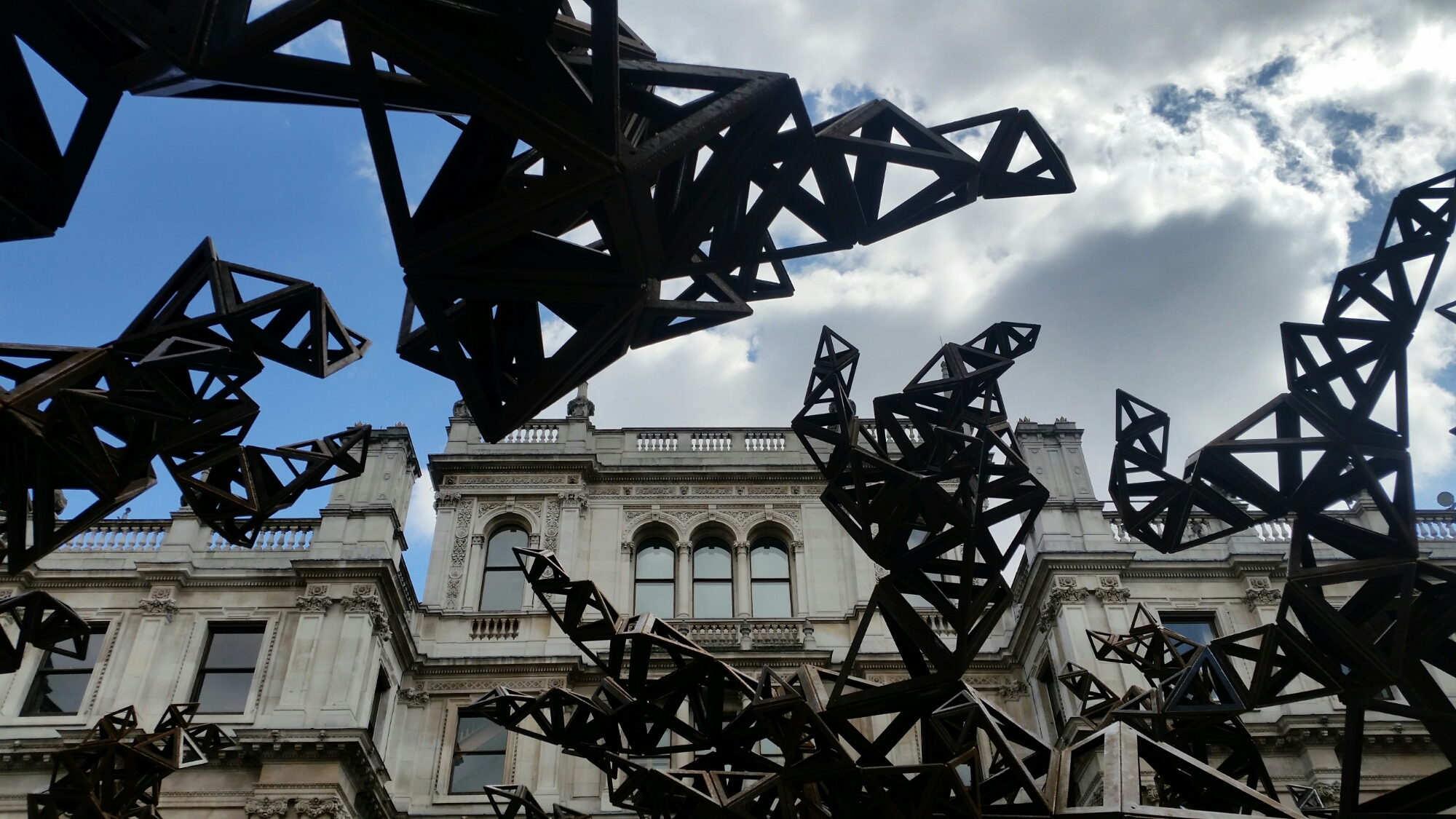
I walked out into the courtyard of the RA at lunch-time and witnessed the full glory of its invasion by metallic triffids designed and installed by Conrad Shawcross. It’s the prelude to this year’s Summer Exhibition:-
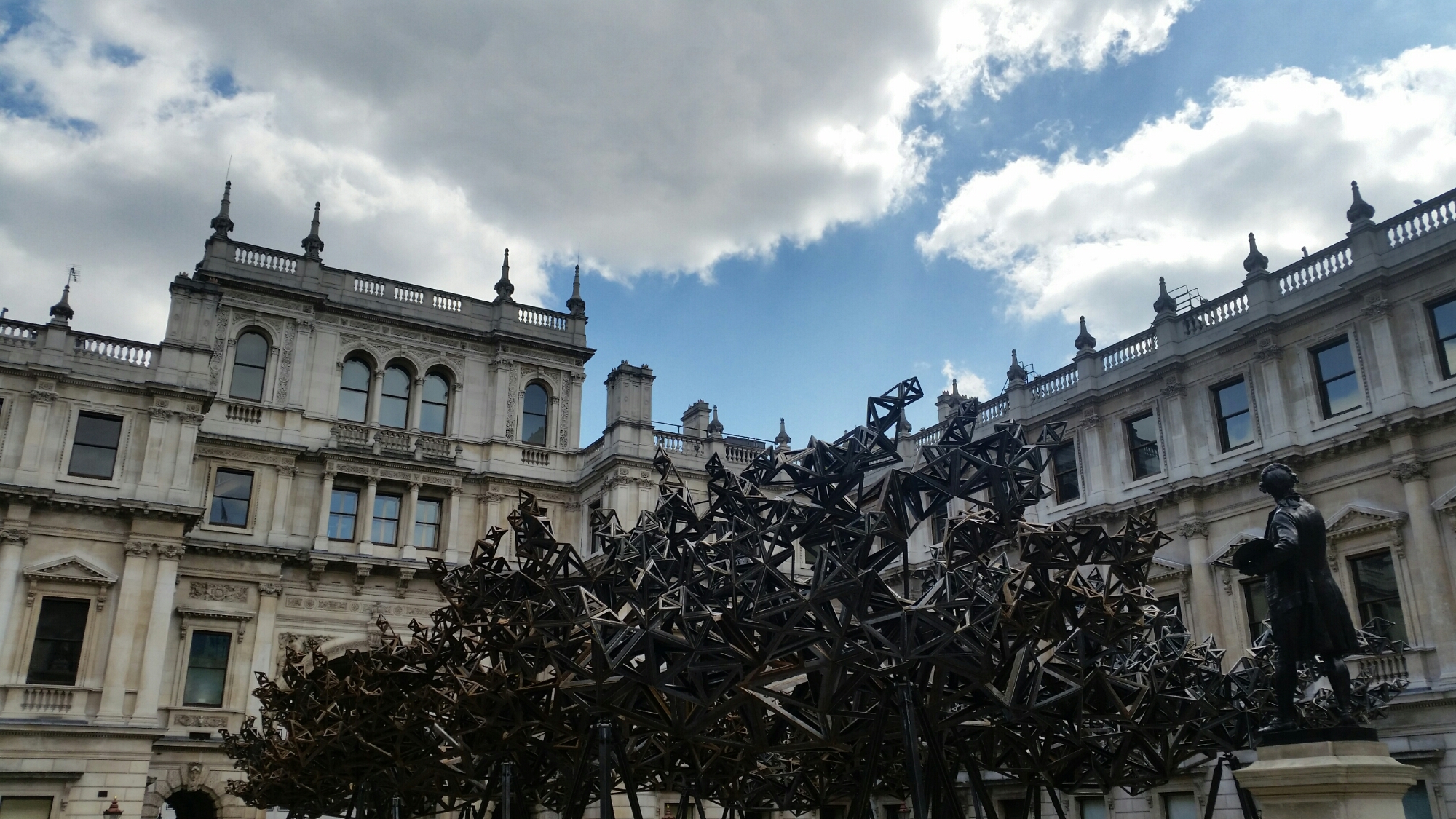
I walked out into the courtyard of the RA at lunch-time and witnessed the full glory of its invasion by metallic triffids designed and installed by Conrad Shawcross. It’s the prelude to this year’s Summer Exhibition:-
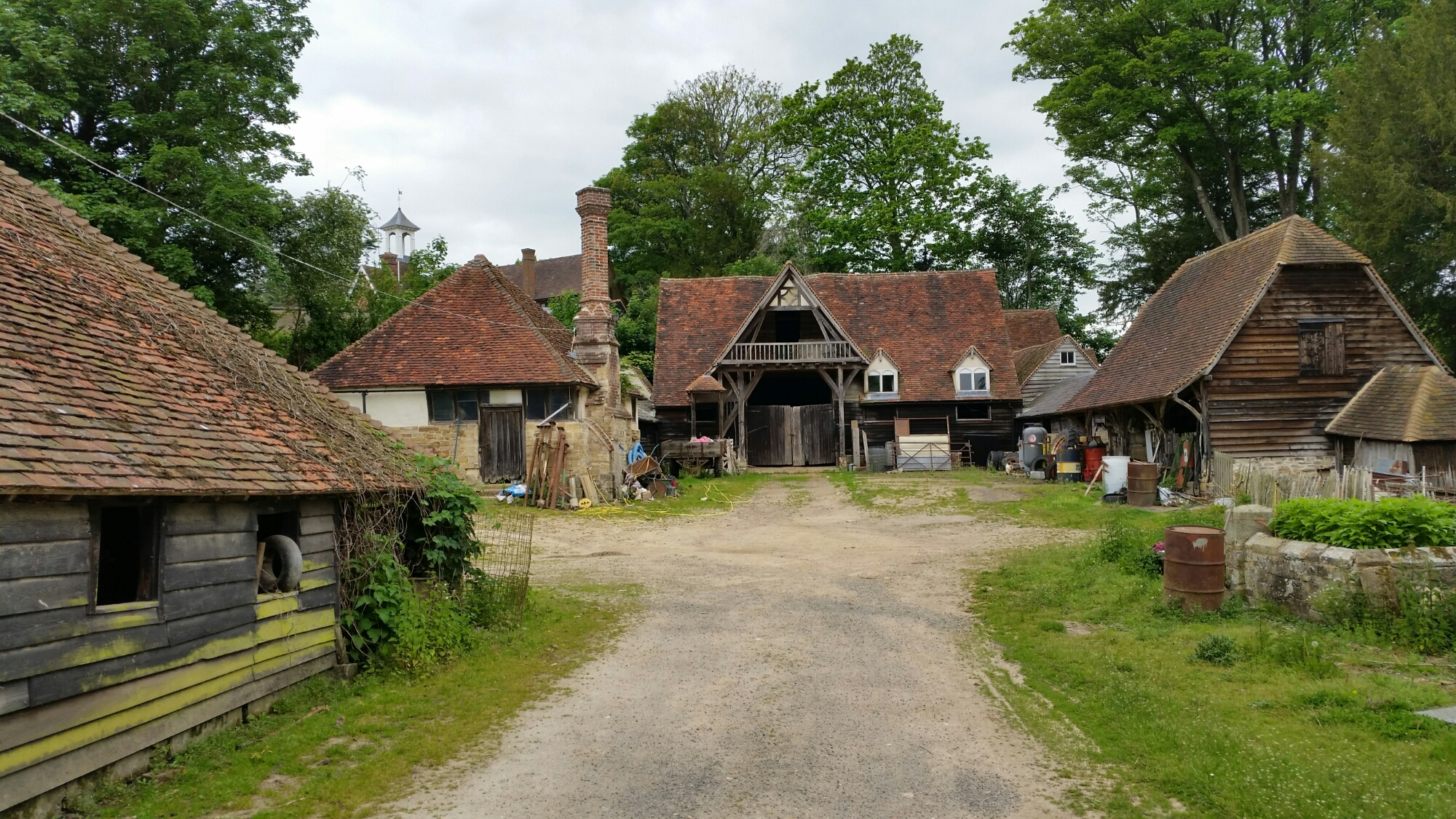
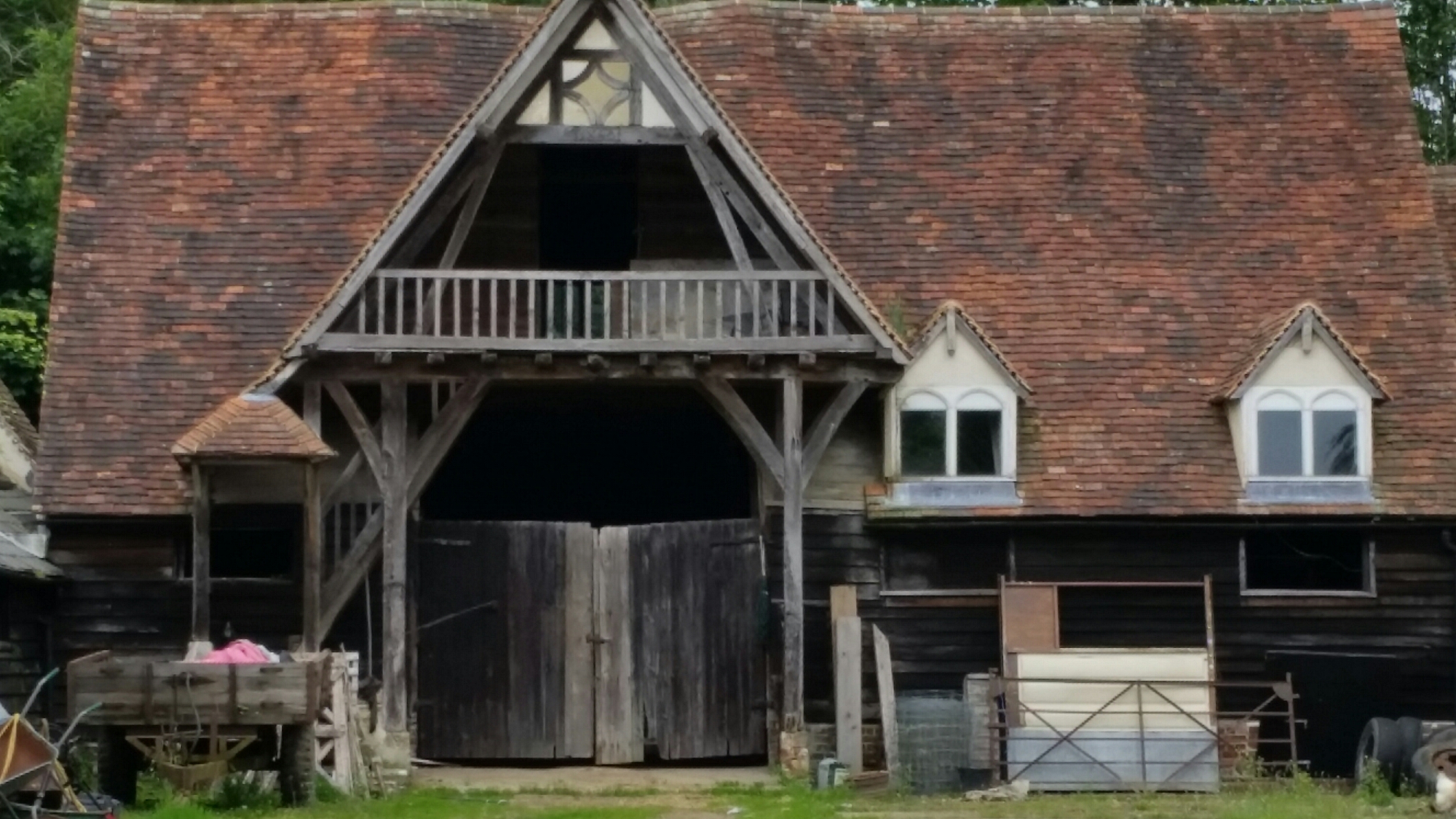
Just north of Fordcombe on the road to Penshurst there is an old sign advertising the sale of eggs and herbs. One turns off into a farmyard which is magnificently bucolic, disordered in a way which is now rare. We didn’t buy any herbs, but I did take the liberty of photographing it:-
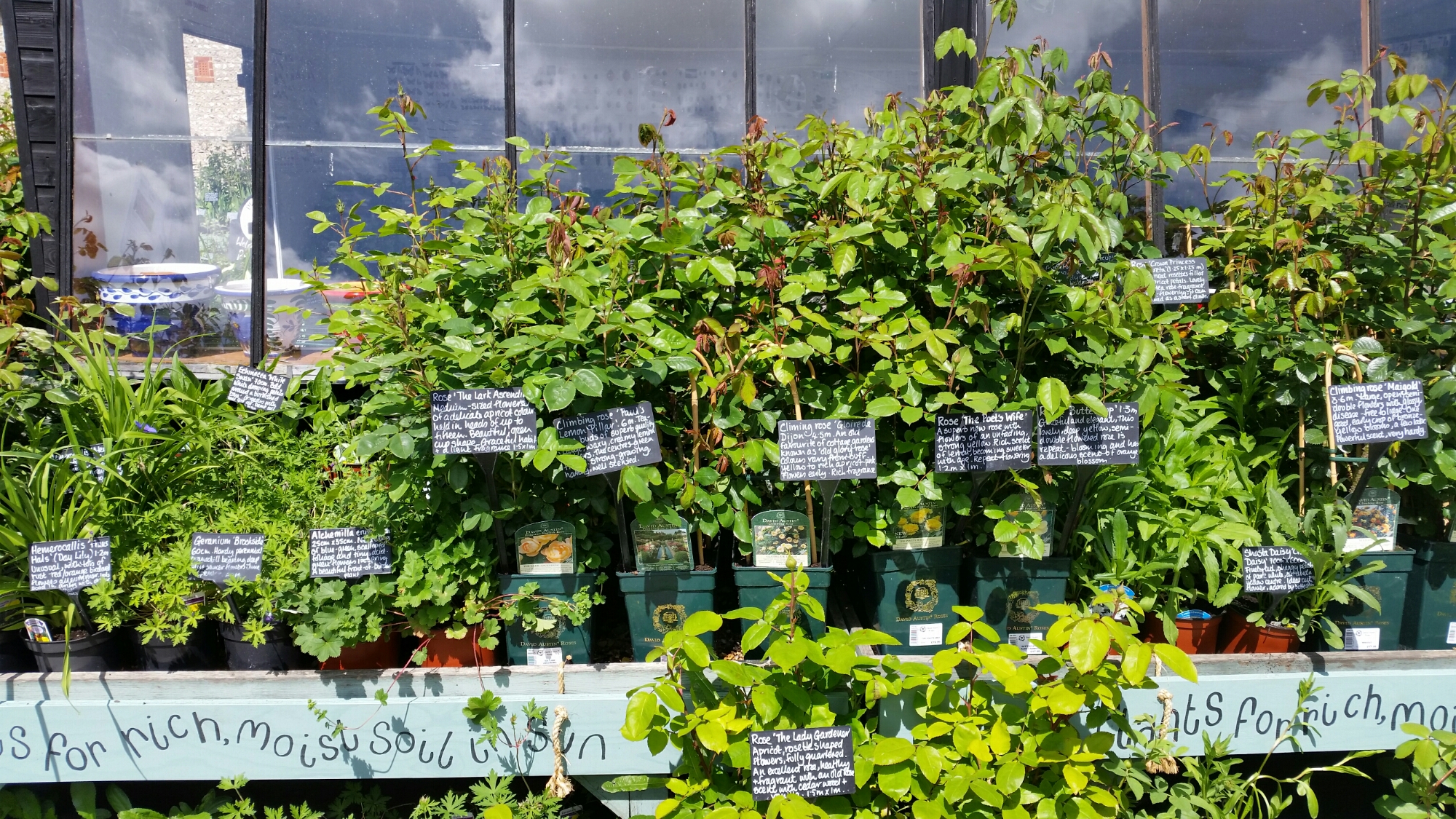
Over the years we have many times passed Middle Farm just near Charleston on the A272. This year we stopped to stock up. It has grown into a vast capitalist enterprise with every possible variety of food and plant and, most impressively, beer, cider, perry and gin, from specialist suppliers throughout the country, not just Harveys, the local brewers:-

The last session we were able to attend at Charleston was a discussion on the history of bohemianism, based on Vic Gatrell’s recent book, The First Bohemians: Life and Art in London’s Gokden Age. But the use of the term for eighteenth-century Covent Garden felt wrong. As Gatrell himself admitted, the term derives from the nineteenth century romanticisation of the life of the artist, first used in France in Henri Murger’s Scènes de la Vie Bohème (1845) and, in England, in Thackeray’s Vanity Fair (1848). What Gatrell is writing about is conventional low life which was a matter of necessity, not choice. Fiona McCarthy argued the case for Byron and William Morris being regarded as bohemians. Possibly. Both espoused a version of an alternative lifestyle. Most convincing was Antony Penrose describing the extraordinarily hedonistic life of his father in the south of France alongside Picasso, Man Ray and his mother, Lee Miller.
Silver spoon bohemianism
A very varied diet at Charleston today. Sofka Zinovieff and Selina Hastings talked about their upper-class relations – Selina’s father who was the Earl of Hastings and worked in Mexico with Diego Rivera and Sofka’s grandfather, The Mad Boy, who was the lover of Lord Berners. Juliet Stevenson read poetry by Emily Dickinson as orchestrated by Bill Nicholson. A session on ‘The Language of Fashion’ was organised by Justine Picardie. We ended with Benjamin Britten’s Phantasy Quartet followed by a balletic performance inspired by The Waves.
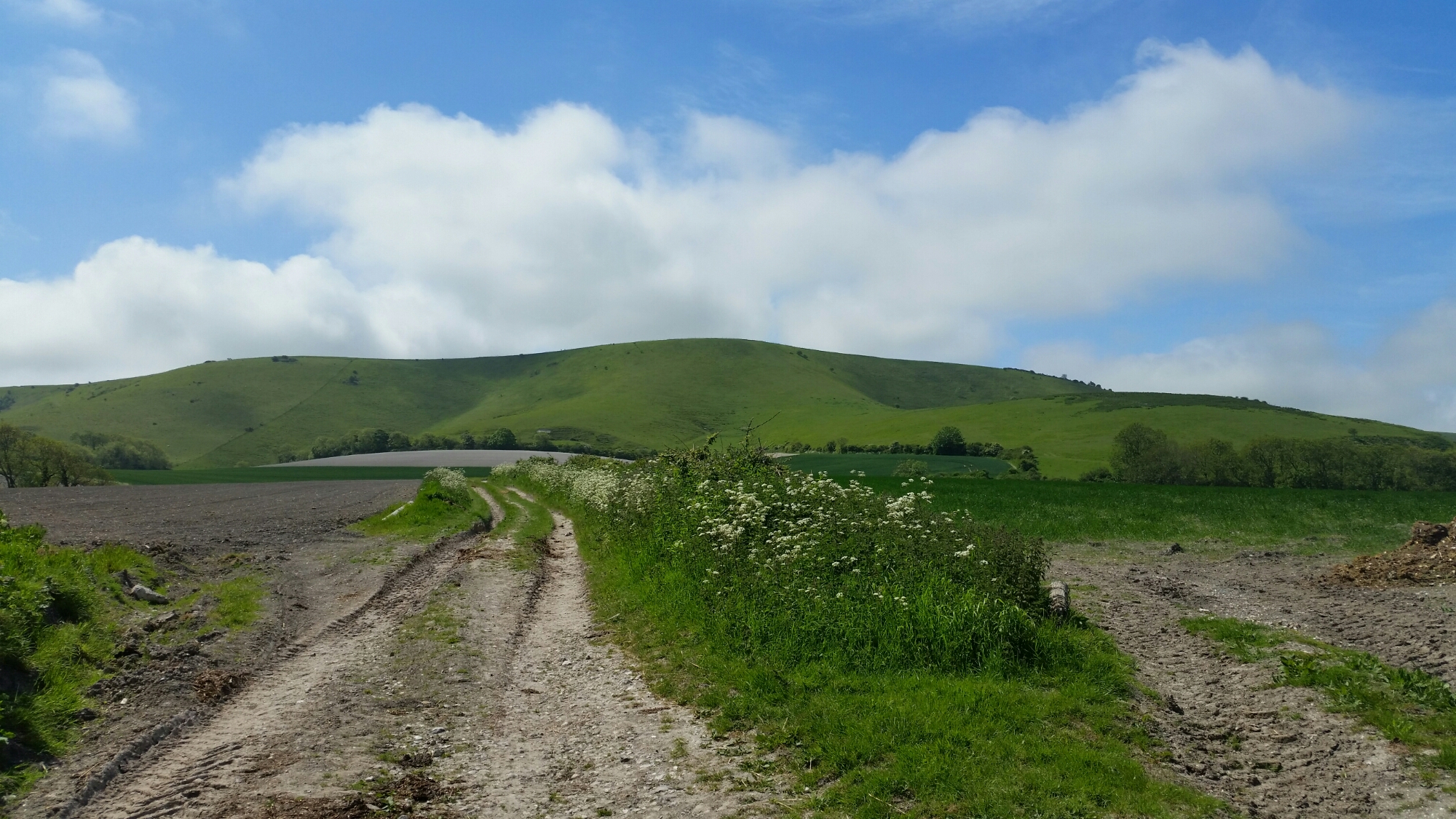
In the intervals, I walked up the track to see the Downs:-
Before setting off to Charleston for the day we wandered round the garden where we are staying enjoying the sudden sense of early summer in the Sussex countryside:-

Last night we attended a lecture given by Amartya Sen as a preliminary to him being awarded the first Maynard Keynes prize for all round brilliance. It was an astonishingly clear exposition of the continuing relevance of Maynard Keynes’s The Economic Consequences of the Peace in an environment in which so many professional so-called financial economists (ie bankers) advocate the imposition of extreme measures of austerity on European countries, including, most especially, Greece. He compared it to the administration of rat poison. Afterwards I walked down the track to Tilton where Keynes lived.
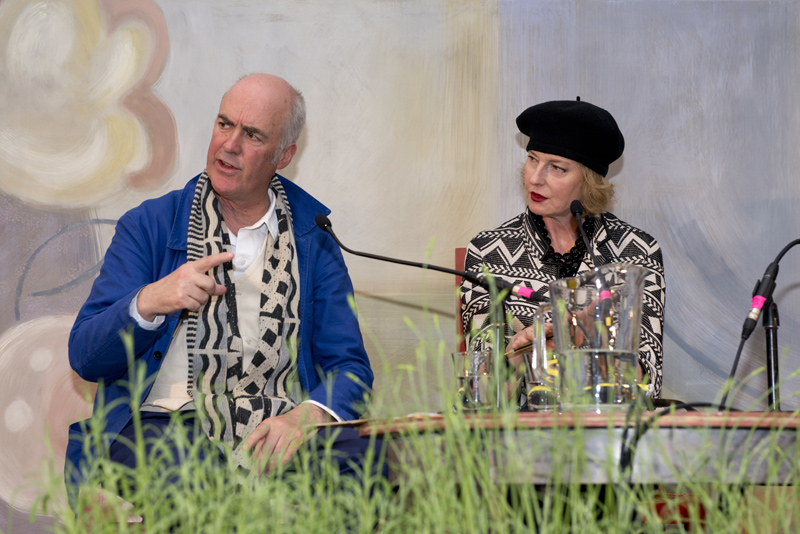
A busy day at the Charleston Festival. Julia Peyton-Jones and I were interviewed by Dinah Casson about what it is to be a curator. Dinah started off with the characteristics of a traditional curator as, I assume, she has experienced in working on the British Galleries at the V&A and, more recently, the First World War Galleries at the Imperial War Museum. Then Julia revealed the complexities of decision-making on the exhibition programme at the Serpentine. We all remarked on the ways in which there is now so much more interest in contemporary art than when we started our careers and discussed the reasons why. After lunch, Hans-Ulrich Obrist demonstrated what it is to be a high-powered international superstar curator in discussing his project to interview the best known artists and architects for his version of Vasari.
 Ⓒ Axel Hesslenberg
 Ⓒ Axel Hesslenberg
I have just interviewed Hannah Rothschild about her new (and first) novel The Improbability of Love in which she imagines a Watteau being discovered in a junk shop, being bought by someone accidentally for £75 and then the search for it and the adventures that ensue in the world of an overheated art market. She brings to it the knowledge which comes from being both a Rothschild, so a representative of the art-owning aristocracy, and a Trustee of the National Gallery (soon-to-be chairman), but she also brings to the art world occasionally sardonic and definitely comic powers of descriptive invention.
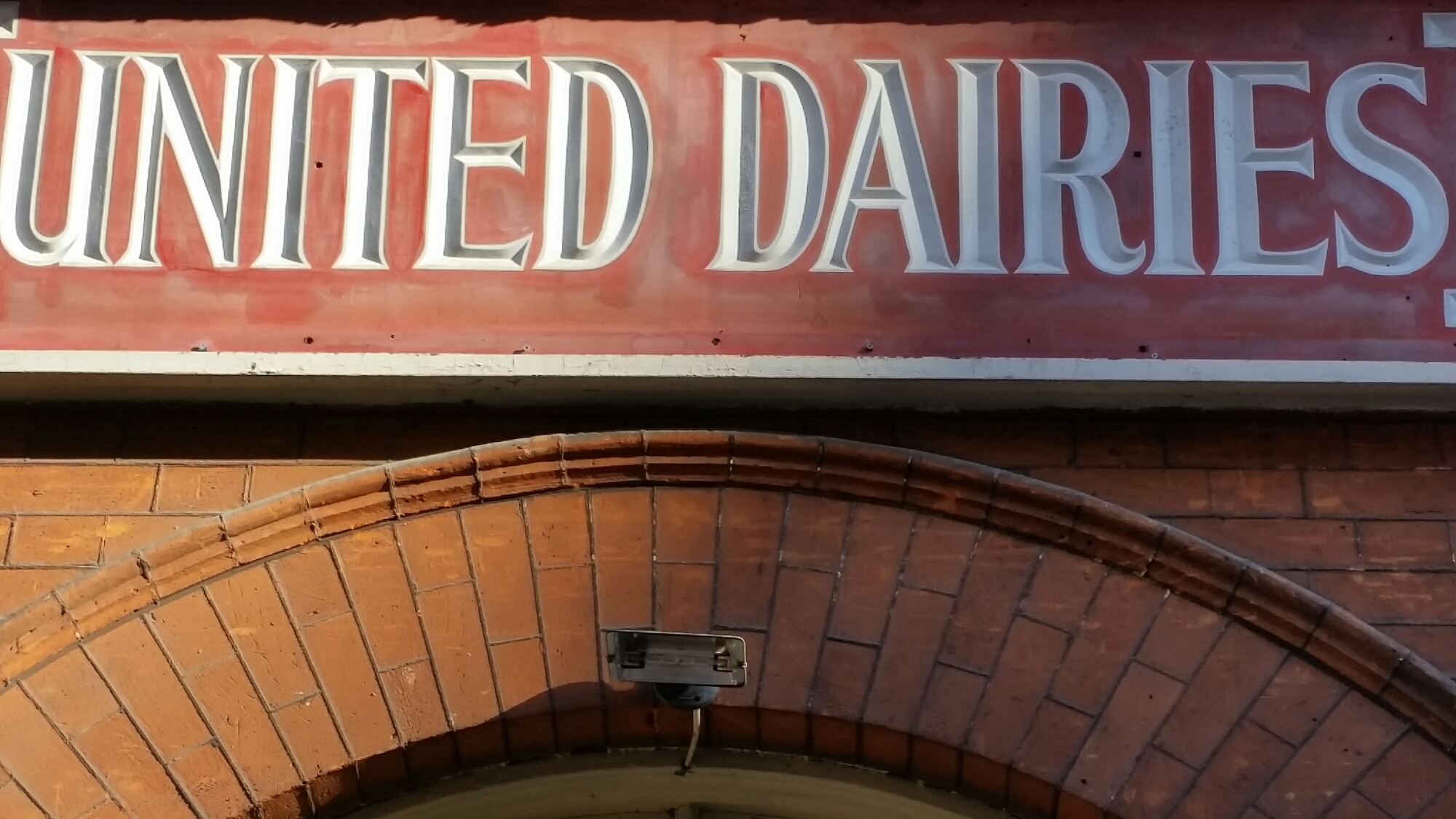
I was walking down Weighhouse Street the night before last and was sad to see that its branch of United Dairies is closing down, a residue of the days when Mayfair was more obviously residential, still with corner shops:-
Nearby is the grandest possible Electricity Substation hidden under a large raised terrace opposite the Beaumont Hotel. I’ve often wondered about it. At either end there is a neo-baroque pavilion designed by Stanley Peach, a Scottish architect who had trained as a doctor, spent time in the Rocky Mountains and later designed Centre Court at Wimbledon:-


 | Charles | Saumarez | Smith |
You must be logged in to post a comment.