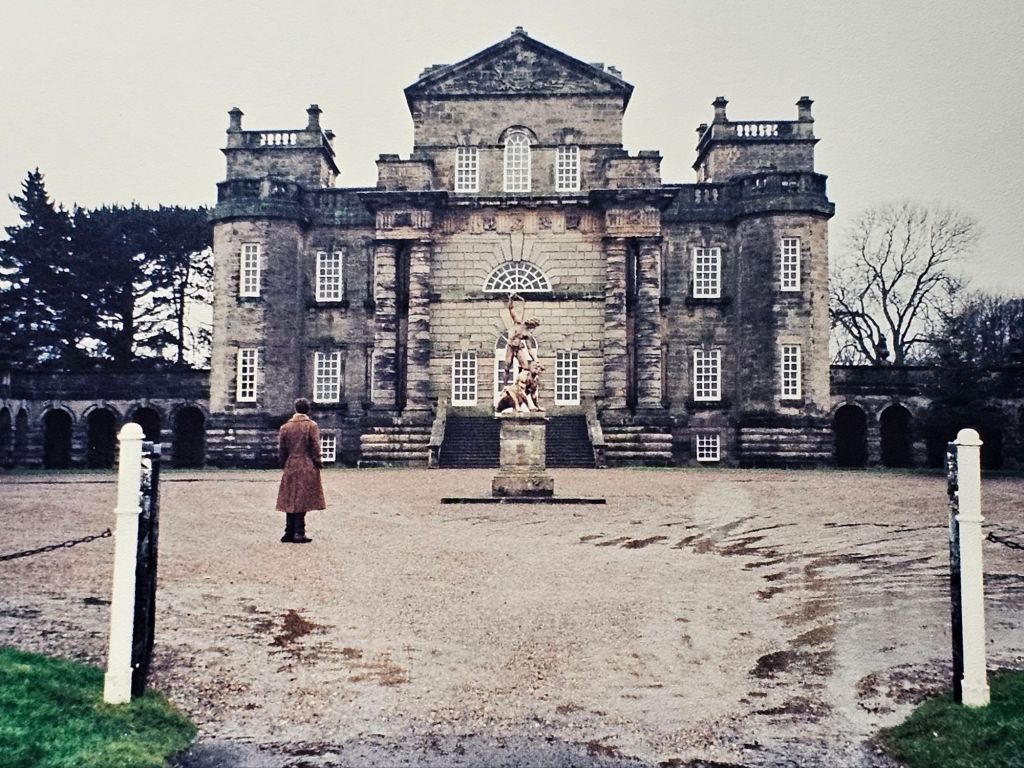
Georgian Group Auction

I have been encouraged to post information about the auction in aid of the Georgian Group – such an obviously good cause and also, by the way, responsible for all the celebrations for Vanbrugh’s tercentenary.

Houses to visit, wine to drink, port, a cup of tea, lots of eighteenth-century architectural prints, some rare and out-of-print books where the estimates look cheap.  I can live without playing golf at Woburn, but would dearly love to visit Inveraray:-

https://mailchi.mp/georgiangroup/january-2026-update-17457746?e=8cf251615d

Standard

Architecture for Culture

I have been reading Béatrice Grenier’s new book, Architecture for Culture: Re-thinking Museums, an exceptionally wide-ranging study of the changing morphology of mostly recent museums, inspired by a visit to the National Archives of Publication and Culture in Hangzhou, although compared to the museums she considers later in the book, this seems a relatively traditional combination of archive, museum and library, which were often combined in the nineteenth-century, as, not least, at the British Museum.  It looks amazing, designed by the inaptly named Amateur Architecture Studio.

The Museum du Quai Branly, so revolutionary in its time, already looks conceptually conservative and, indeed, was criticised at the time that it opened by James Clifford.

Having written myself about the Louvre Abu Dhabi, I admired her very clear account of the way it is structured and there are beautiful photographs of the Museum under construction – a combination of a souk and a universal museum.

Then, there is a description of the Fondation Cartier where she works as Director of Strategic Projects and International Programs.  It looks amazing under construction.  But can movable floors really be made to work ?

The merging of landscape and the museum is a very coherent chapter embracing the remodelling of the American Museum of Natural History by Studio Gang, the Crystal Bridges Museum in Arkansas, Bjarke Ingels’s Kistefos Museum in Norway and the sensationally beautiful, but apparently empty Zaishui Art Museum in Rizhao, another conceptually innovative museum in China.

Then we get M+, more as bill board across the water than as collection, although I’m pleased to learn that it owns the Archigram archive.

The book is about conceptual innovation in museum architecture and the expansion of the Museum beyond its walls.  I don’t see it as a primer for the new wing of the National Gallery or, for that matter, the future of the Louvre.

Standard

John Alexander Skelton

I am a long-standing admirer of the work of John Alexander Skelton, a fashion designer, but whose work is closer to fine art.  I even have a jacket of his which only comes out in the high summer.

We sadly missed his fashion show last night, but I pedalled off to see it in Asylum Road, south of the Old Kent Road, this morning. 

It’s an amazing installation, sadly ephemeral, in a highly atmospheric space.

Entry:-

A first view:-

The sun was coming in:-

The imagery is Celtic:-

This is the setting:-

And here is the man himself:-

Standard

Monika Machon

I called in on Three Colt Gallery in Limehouse which is showing quilts made by a friend, Monika Machon. 

A very nice and therapeutic space in which to admire her work:-

Standard

The Custom House (10)

I am obviously not the only person who views what has happened at the Custom House as a good model for how to convert a bad scheme into a better one.  It’s not rocket science.  You just have to consult the interested parties and pay attention to their views.  Then, you get a better scheme.

See below for a description from the two people who made it happen:-

https://www.linkedin.com/pulse/lessons-from-custom-house-early-engagement-unlocks-uwkye?utm_source=share&utm_medium=member_android&utm_campaign=share_via

Standard

Blenheim Palace (4)

If you happen to be passing a newsagents which stocks copies of Country Life (not many do), you might like to buy a copy of this week’s issue (January 14th.), which has a cut-down version of a talk I gave in October about Vanbrugh’s changing reputation.

Surprise, surprise, everybody hated his buildings during his lifetime and then gradually came to acknowledge their power – ‘The Shakespeare of Architects’, as John Soane called him.

https://share.google/IKr3vYzTxHlUoaoJE

Standard

The Custom House (9)

Long-standing readers of my blog may remember that, in 2022, I got involved in the controversy surrounding the plans to re-develop the Custom House, a fine, if austere, early nineteenth-century official building, much of it designed by Robert Smirke, occupying a wonderful site right next door to the Tower of London where goods could be off-loaded for inspection and payment of customs duty straight from the river.

The plans went to a planning appeal and quite rightly were turned down.

Then, it appears that a number of things happened behind-the-scenes. First, the Georgian Group either drew up, or had already drawn up, an alternative scheme which respected the existing fabric of the building. Next, with the encouragement of the City authorities, ownership was transferred to Jastar Capital, a hotel group which was more likely to respect the historic characteristics of the building. Then the new owners engaged the King’s Foundation to oversee a five-day formal process of consultation with all the key stakeholders, including the Georgian Group. The result is that they have come up with a scheme which, so far as possible, retains the historic fabric and opens the building and, equally important, its river frontage to public access.

This is the river frontage (in the rain):-

This is the interior as is with an iron roof and a great deal of later infilling:-

This is the wonderful upstairs Long Room:-

It feels like a model of how – sometimes – a long drawn-out planning process can have a good outcome.

Standard

John Vanbrugh: The Drama of Architecture (20)

I was originally expecting to use crowd-funding as a way of financing the publication of my Vanbrugh book, but, in the event, this turned out to be unnecessary owing to the generosity of two trusts; but the film that was generously made by Lone Star Productions to accompany the planned online request for funding survives and has been made available by Lone Star.

I have been trying to post it even though it is now a bit out-of-date and the book has been published (and despite the fact that I gave the wrong county for Kimbolton !).  But I have been experiencing difficulties in doing this and it may need someone better than me at tech to instal it, so that it is not password protected.

I am still hoping that it might be possible for someone to make a documentary about Vanbrugh as part of the celebrations of his tercentenary which are gathering pace, with exhibitions planned at most of the houses, including an exhibition, Blueprints of Power, opening at Blenheim Palace on February 14th.

The BBC say Vanbrugh is of zero public interest, but he designed two of the greatest country houses, two plays which are still performed, his drawings are going to be the subject of a forthcoming exhibition at Sir John Soane’s Museum (opening March 4th.), and the building of Blenheim starred in The Favourite.

Standard

Best Buildings

Sitting in the library of the Paul Mellon Centre this afternoon, Joshua Mardell asked if I would be interested in a poster drawn by Gavin Stamp advertising a series of lectures on ‘Best Buildings’ due to be held at the Architectural Association in Autumn 1983 and Spring 1984.

Indeed I was, not least because the first lecture in the series was by me. 

I had never seen the poster, but remember the occasion well.  The lectures were organised by Robin Middleton, then head of general studies at the AA, as well as librarian in the Department of History of Art at Cambridge.  They were unpaid, but included dinner afterwards at the Neal Street Restaurant, then über-fashionable; and it was nearly the only time I met the late Andrew Saint.  The lecture was going to be published in AA Files, but for some reason wasn’t. 

I would like to have heard Roger Scruton on Chiswick Power Station.

The lectures were thought to represent a shift in intellectual interests from the nineteenth century to the eighteenth, although this is scarcely evident in the overall choice of subjects.

GMS/6/1, Best Buildings lecture series poster, advertising lecture series held at the Architectural Association, 1983, Gavin Stamp Archive, Paul Mellon Centre for Studies in British Art.

Standard

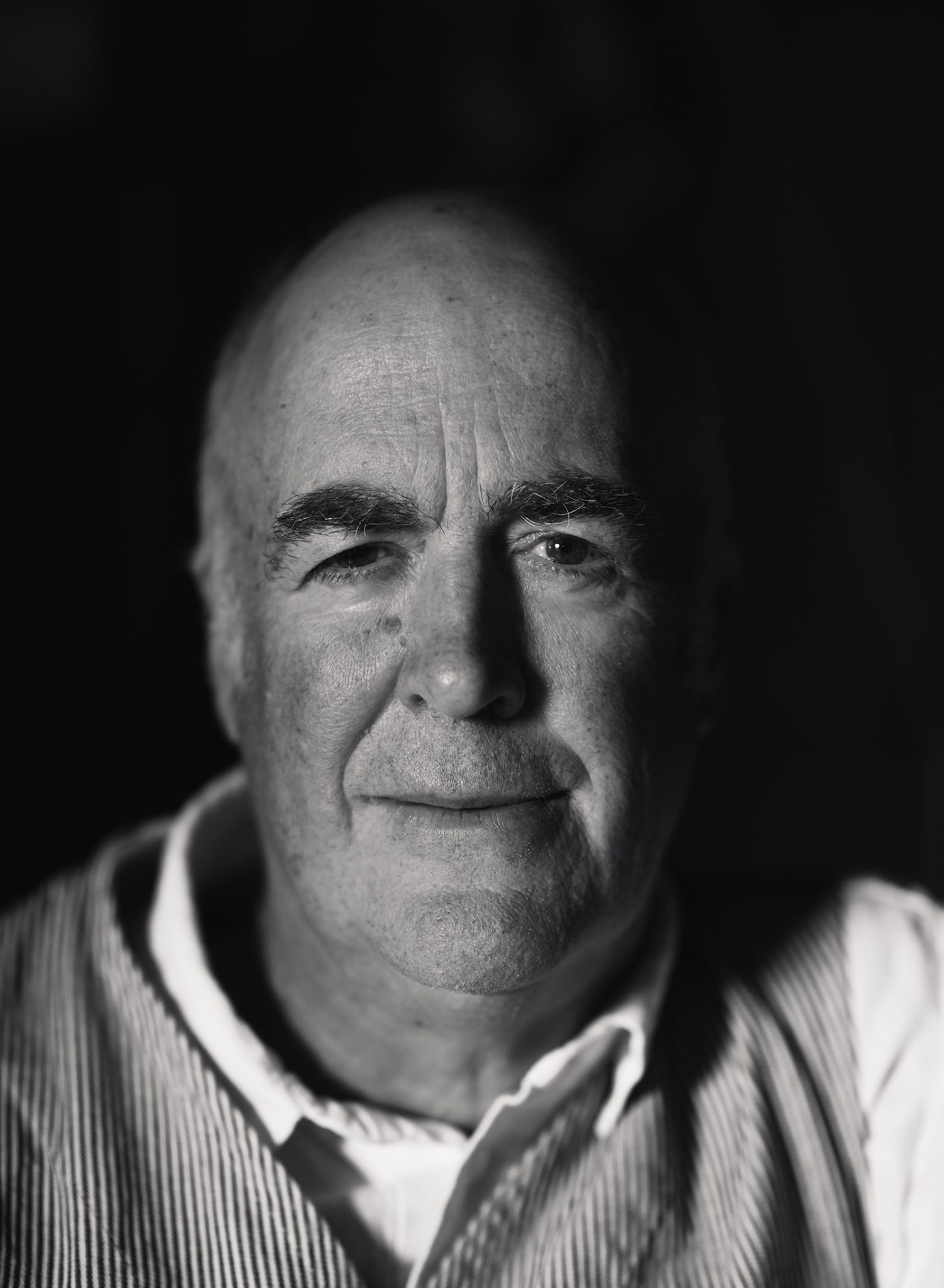
Dick Humphreys

I have been waiting to post something about Dick Humphreys, a friend from when he was Head of Education at the Tate (and, indeed, before that) who died entirely unexpectedly in October.

I’m glad that an obituary has now appeared in the Telegraph which is a very good record of his character, his contributions to the intellectual life of the Tate and the exceptionally wide range of his interests:-

https://www.telegraph.co.uk/gift/520e02fe6dc7a5b8

Standard