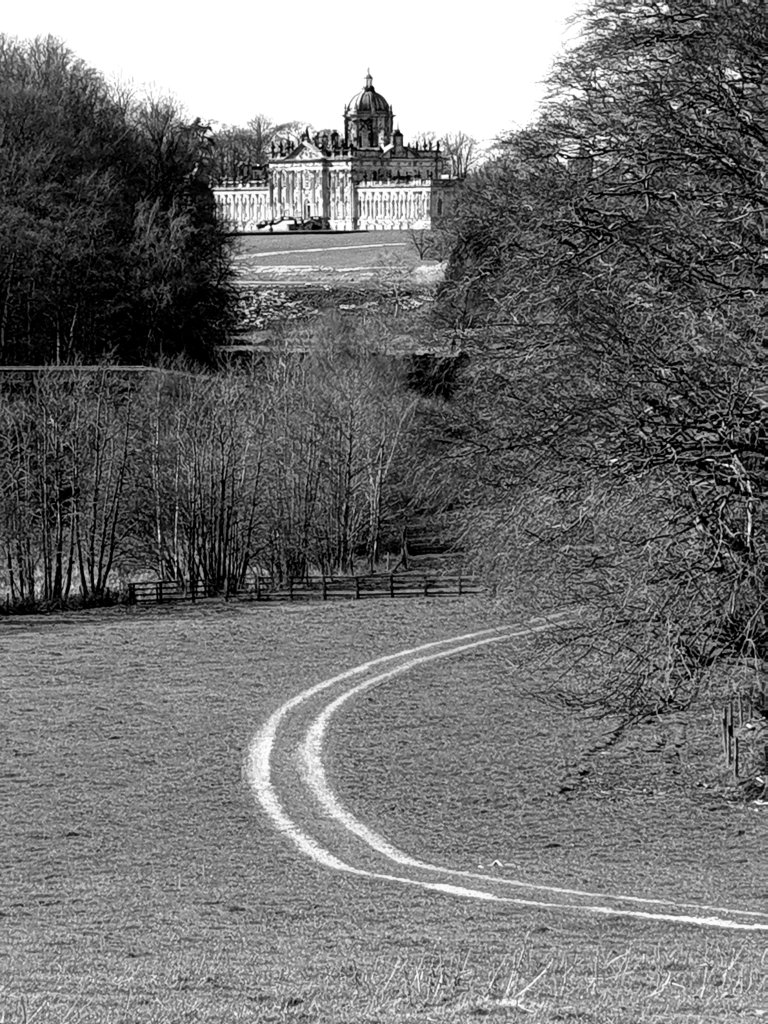
I love visiting Castle Howard: its combination of architecture and landscape; the way Vanbrugh treats architecture as something to be enjoyed, a visual adventure, not necessarily – or at all – logical, but done with a sense of unexpected vitality, sometimes a bit surface deep, but designed for effect from a distance as well as close up:-
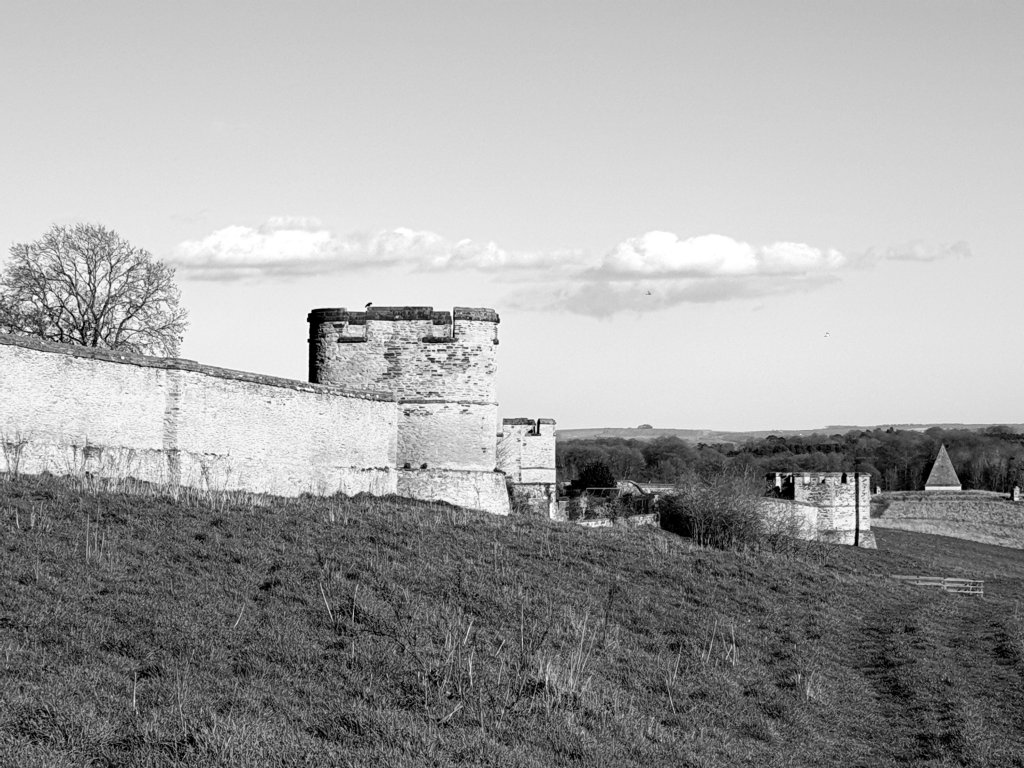
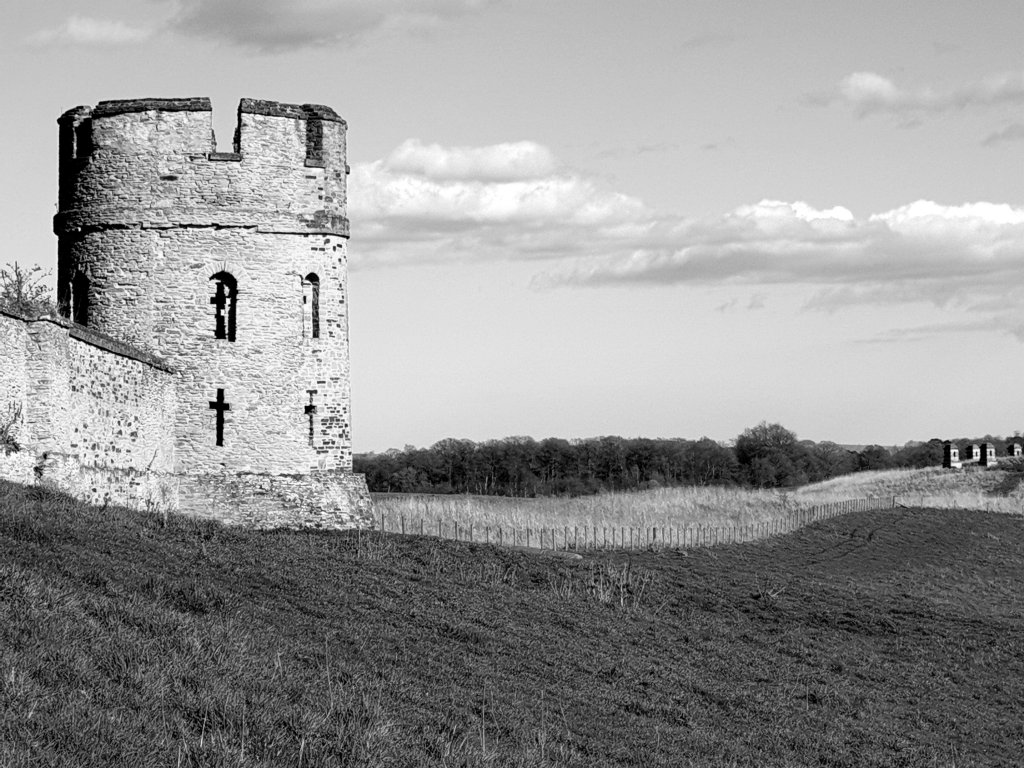
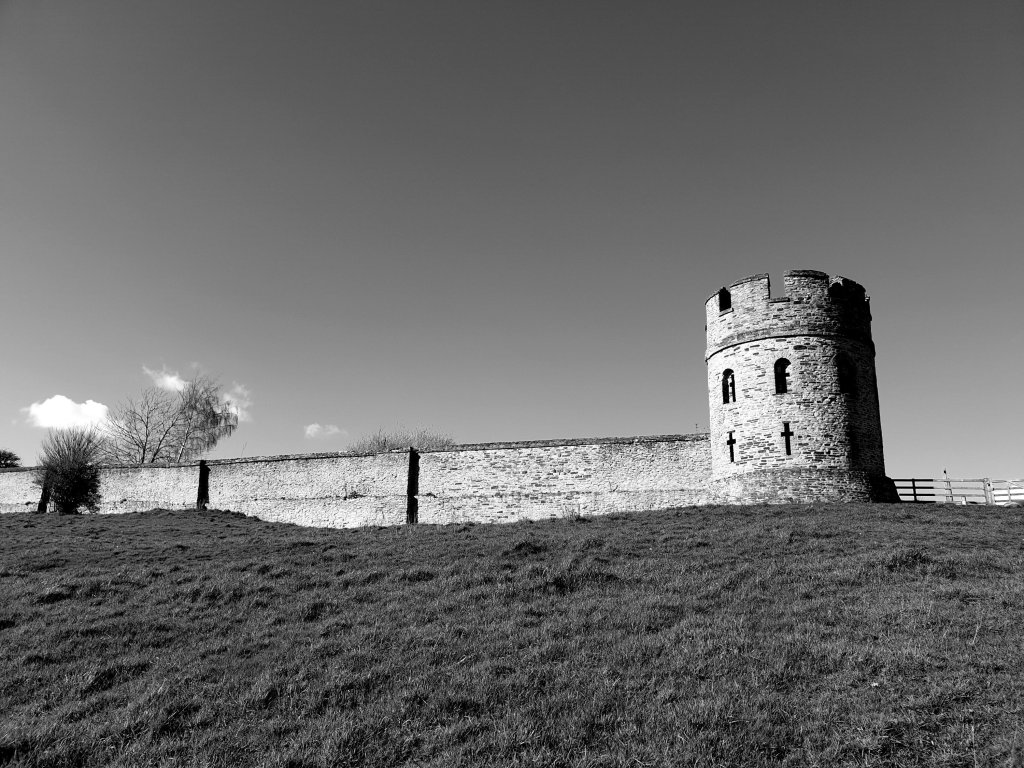
So, the obvious question is: what did Vanbrugh and the Earl of Carlisle think they were doing in constructing a line of medieval fortifications at the entrance to the estate ?
It is not as if there was an enemy to keep out. They are surprisingly serious, proper fortifications, not a piece of eighteenth-century game playing or ornament.
Of course, Lord Carlisle had been Earl Marshal. And Vanbrugh was a herald. In some way, it must be associated with Carlisle’s interest in his lineage, not least because they are accompanied by a pyramid dedicated to the memory of his ancestor, Lord William Howard. But no-one at the time thought it particularly unusual, apart from Horace Walpole and he described it in the 1770s:-
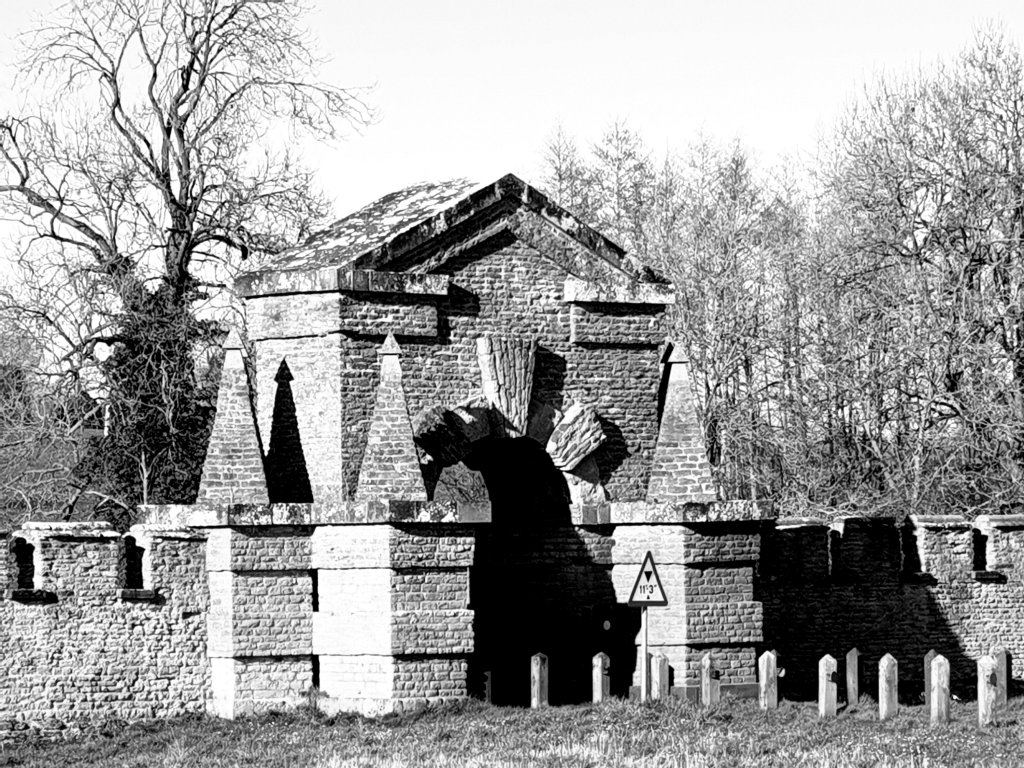
I don’t think I know anything architectural quite as exciting as the approach to Castle Howard: the way one feels the landscape begin to change and straighten out as one approaches from the York-Malton road and then the road descends steeply to the Carrmire Gate, which is hard to get through, and must always have been even in the days of a coach. And the Carrmire Gate is itself such a strange combination of authentic medievalism, so unlikely for the 1720s, and a sense of free, abstract design sensibility:-
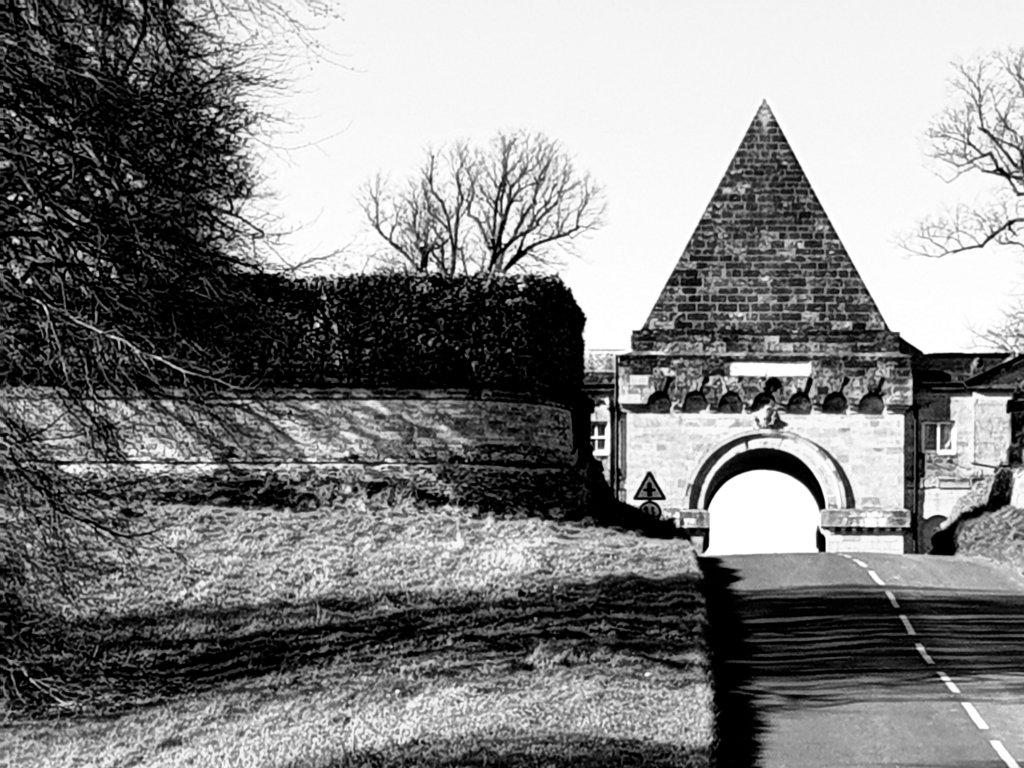
Then the road climbs equally steeply up to the Pyramid Gate:-
I used to be cautious of treating Vanbrugh as having a theatrical sensibility, but what could be more straightforwardly theatrical in creating a ceremonial sense of arrival, which the Marlboroughs didn’t encourage at Blenheim ?
It’s a long time since I’ve walked it, but necessary in order to experience the full impact.
If anyone is interested in my views of the Castle Howard mausoleum a mere thirty three years after I published The Building of Castle Howard (Faber and Faber, 1990), I am giving a lecture on it next month. Being asked to give the lecture has got me back into Vanbrugh/Hawksmoor studies, which is partly why you have been reading less of me:-
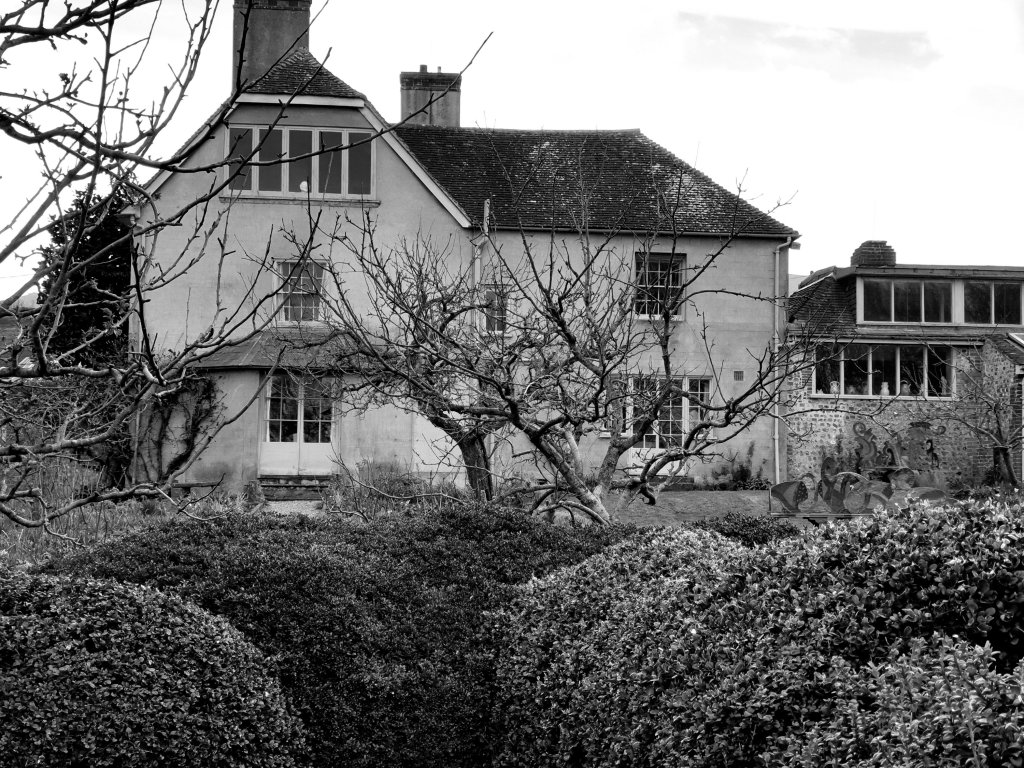
Three years ago, it looked as if Charleston could be a victim of the pandemic. It had recently completed an expansion into the adjacent barns. It is dependent on visitor income. No visitors were able to come and its annual festival was online. Now, three years later, there is something impressive about how resilient it has been: a good and lively café; two exhibitions; the house in good order; an ambitious public programme; a concert which we can’t go to this evening.
It is presumably testimony to the generosity of philanthropists who rightly admire it and have supported its survival.
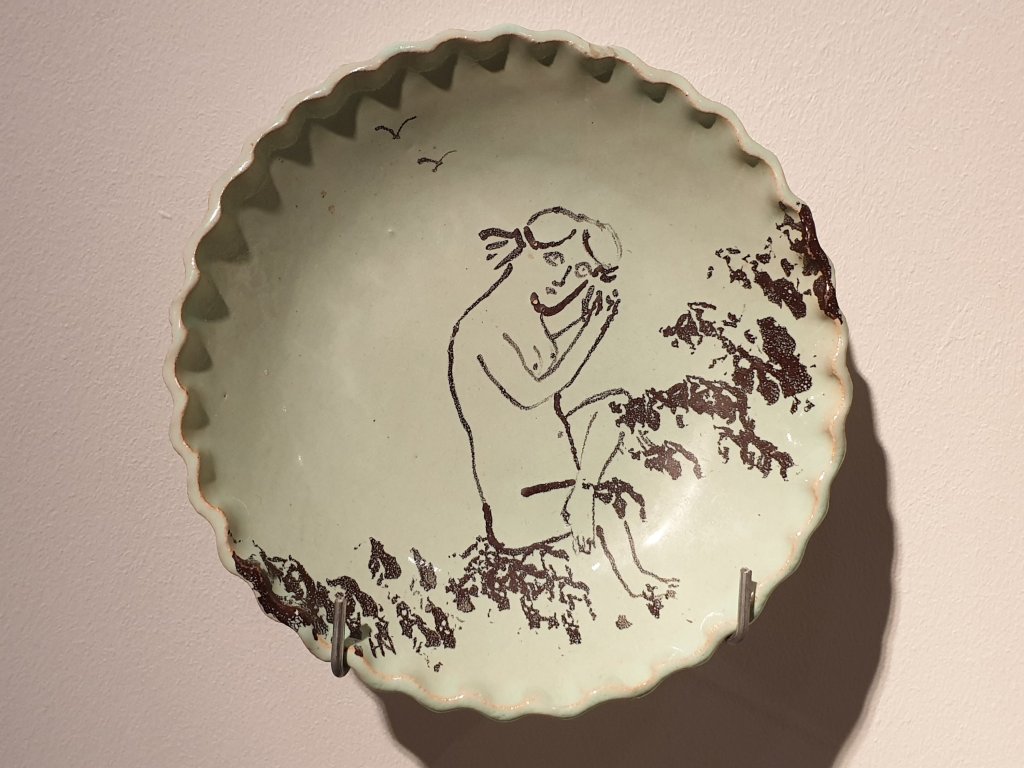
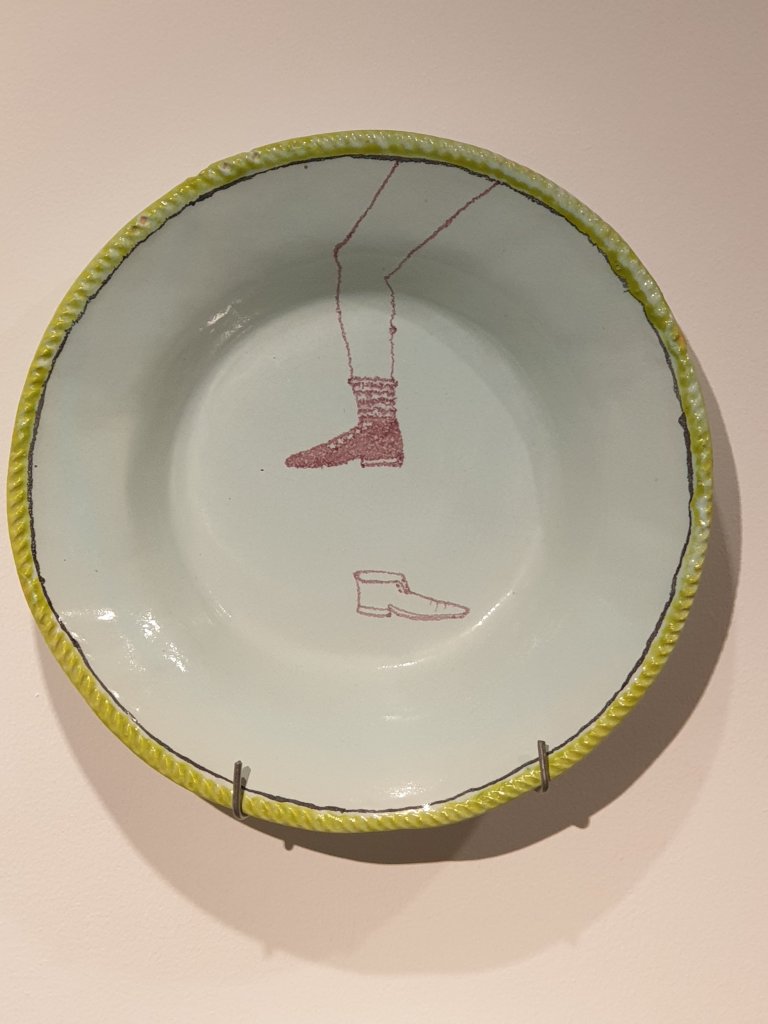
It was a great treat to be able to talk to Hylton Nel about his life and work: his time in London in the late 1960s when he was working against the tide by doing work which was ornamental/historical/figurative. And the great variety of his later work and the wide range of its historical antecedents.
A very good and thoughtful obituary of the late Phyllida Barlow by Ben Luke (see below), which makes clear her immense originality, both slightly anarchic, but also philosophical. I have never forgotten the experience of walking into the old Midland Bank on Piccadilly and finding it filled from floor to ceiling with an astonishing and magnificent, celebratory mess. She always struck me as a bit like that as a person: life enhancing in a totally original way. Such a great loss.
If you happen to be in Sussex tomorrow, I strongly recommend seeing the Hylton Nel exhibition and coming to hear him talk about his work because he is not often in the UK and the exhibition is beautiful, showing his decorated plates from the early 1980s to now.
I have been sent an absolutely brilliant photograph which demonstrates very clearly what has happened to the Bell Foundry over the last six years. Buildings deteriorate very fast if not looked after. It will no doubt soon be on the Buildings At Risk Register and deserves to be:-
Every time someone puts something online about the Whitechapel Bell Foundry, I can’t help but notice that there is a massive amount of public interest in its fate.
You only have to look at its current state to see that we are shamefully neglecting a historic building:-
The question is, what is to be done about it ?
The agent handling its letting/sale has provided assurances that many people are interested in taking it on, but the terms of any lease will require reinstating some level of foundry, which may not make it straightforward for a conventional tenant. A hedge fund is not necessarily going to want to cohabit with a working foundry. Meanwhile, it is deteriorating.
What is sad is that there is already a well worked-out business plan for it to be turned into a modern version of a historic foundry, using new technology as well as traditional crafts skills. The Planning Inspector dismissed this proposal, preferring the idea of it becoming a hotel. But the hotel proposal is now dead. It surely needs someone – maybe Historic England or the World Monuments Fund – to broker a deal with the current owner to get it back into a working condition, if necessary using the necessary legislation, in order to protect what is left of something which, in its way, is an extraordinarily important piece of living history.




 | Charles | Saumarez | Smith |
You must be logged in to post a comment.