I have been mildly taken to task for using the word ‘poop’ to describe what is floating about the English Channel, thanks to the Tory party voting in favour of it. I agree that it is possibly a euphemism and have been told that I should have used good old, Anglo-Saxon usage. We are now surrounded by a sea of SHIT. Our green and pleasant land is now entirely brown.
In looking up about my forthcoming book about John Wonnacott, I happened to spot that the lecture I did earlier in the summer at the Newlands Gallery in Petworth is now available on YouTube.
I don’t necessarily recommend watching it online – a live lecture can look a bit stilted on camera – but it gives me an opportunity of reproducing the lecture for anyone who might be interested in its topic: the rise of the post-war private gallery, as represented by five case studies:- Louisiana, north of Copenhagen; Kettle’s Yard in Cambridge; the Sainsbury Centre in the University of East Anglia; Heide Museum outside Melbourne; and the de Menil Collection in Houston, Texas. Although these galleries are in very different parts of the world, they share common characteristics: a desire to retain the integrity of their collection not only during the lifetime of the collectors, but after their death as well, rather than allowing the collection to be absorbed into a larger national museum; a preference for the experience of individual works of art over interpreting them historically; and an interest in the display of works of art in new buildings.
This is the lecture on Youtube:
And this is the text of the lecture, pretty much as delivered:
• The original suggestion was that I should speak about my book The Art Museum in Modern Times, which was published in March last year. But at the time I was asked, a couple of months ago, I had just been invited to have lunch with someone who is planning to open a private gallery and so I was thinking about two things in particular. The first was that, although my book deals with plenty of private museums and galleries, and indeed this was one of the themes that I tried to bring out in the final section of the book, I tended to focus on the larger and more internationally well-known museums, like the Museum of Modern Art and the Guggenheim Museum in New York and Tate Modern in London, and so I left out at least two very significant smaller private institutions, including Heide Museum of Modern Art, outside Melbourne, and one I particularly regret not having included — Kettle’s Yard in Cambridge. The second thing I was thinking about in connection with my lunch was the psychology of the private collector: what is it that makes a collector want to establish a small private gallery, rather than give works of art to add to the collection of a public institution ?
• So, instead of talking about the subject of my book as a whole, I thought that I would focus on one strand of the book only — the rise of the private gallery — and try to think through some of the answers to this question about the psychology of the private collector by looking at the history of a small number of the private galleries which have been established in the last eighty years or so: five in particular, how they have come about and what they can tell us about the nature and character of the private collector — their aims and aspirations and what they might have in common, besides their wealth.
• I thought I would start with Louisiana, outside Copenhagen, because for many people, including me, it is the model of the private gallery and its story is pretty well documented. I tell some of the story in the book. The hero of the story is the person who established the museum, Knud Jensen, a remarkable and interesting person, who inherited a very profitable dairy business, but, as sometimes happens with second, and particularly third, generation businessmen, he found that he was more interested in art and literature than he was in just making money. Here he is in the portrait that I reproduce in the book:
Dressed casually, which was probably his style, confronting the camera very slightly combatively, which was probably also his style. I don’t know what date the photograph was taken, but it was probably some time in the late 1950s or early 1960s, by which time he had already opened the museum of which he was the director. Here’s another picture of him when he was older:-
You get the feel of him: he was robustly independent minded and a bit contemptuous of traditional ways of doing things.
• He described what happened to persuade him to open his own museum in an article published in the New Yorker in 1982. He was asked what he thought about the Royal Museum of Fine Arts in Copenhagen. I assume they were thinking of Copenhagen’s National Gallery. This is what he said:
I hadn’t particularly thought about the Royal Museum in some time, I guess I just took it for granted. But prior to the interview I went over to take a look with fresh spectacles. And I was dumb-founded. It was a true horror cabinet, very much the nineteenth-century bourgeoisie’s exaggerated view of its own importance, manifested in the transcendent value of the art it prized. It was a real art temple — huge, fat columns, a broad forbidding marble staircase, rows and rows of plaster busts, dark alcoves. During the interview, I therefore started criticising the museum saying that it was a relic and had nothing to do with the art of our time. ‘So what do you propose ?’ the journalist demanded. Well — just improvising — I suggested that they ought to move out into the museum’s large park, get a good architect, build a low pavilion, with not too high ceilings and good lighting, and move all the modern stuff out there.[1]
This is, I suppose, a classic description of what made people in the post-war period want to build their own museum and certainly of Jensen’s own motivation. He thought that traditional museums were too formal, too forbidding, too didactic. He wanted something a bit more informal, less imposing. Some time after the interview, he sold his dairy business to Kraft and decided to use the money to build his own gallery next to the sea in the grounds of an old house near where he lived in the country north of Copenhagen. He commissioned two architects. One was Vilhelm Wohlert who was almost exactly the same age as Jensen, born in 1920, educated at the Royal Danish Academy. He had been a visiting professor at the University of Berkeley, California in the early 1950s. The other was Jørgen Bo. Here they are leaning against the brick wall of the newly constructed library at Louisiana:
Two young Danish architects, both modernists who had just completed a very thoughtful, new style of museum.
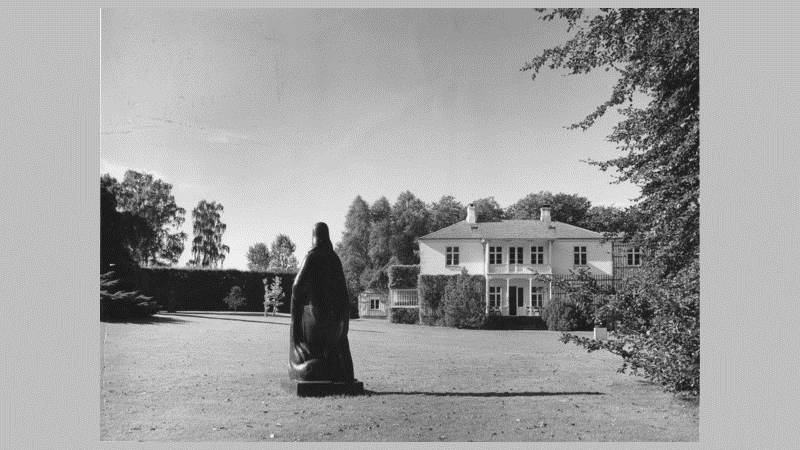
• So what was, and is, special about Louisiana ? The best way of getting a feel for it at the time that it opened in 1958 is to look at the photographs which were taken of it at the time by Jesper Høm. This is the old house which Jensen bought as the entrance to his museum which was planned to stretch out beyond it.
This is the terrace looking out over the sea where visitors could relax and have a cup of coffee:
This is one of the corridors — tile floor, wooden ceiling:
This is one of the galleries:
This is the Second Lantern Gallery:
• What I hope these images give you a sense of is how revolutionary Louisiana was in its time: providing a way of looking at art which was casual, domestic and informal, part of a day visit, intended for pure pleasure and not in any way didactic.
• The second of the institutions I want to focus on I for some reason didn’t include in my book: that is, Kettle’s Yard in Cambridge. I suppose I was anxious that the book shouldn’t feel too anglocentric. I maybe took Kettle’s Yard too much for granted; and I thought of it as much as a private house as a public gallery, which in retrospect was probably a mistake, because I think it is important in itself and also on the influence it has had on art historians, including, importantly, Nicholas Serota, who cites it as an important influence on his attitude to the appropriate display of art.
• So, let’s look at the background to the creation of Kettle’s Yard. Jim Ede, who created it, came of a fairly well-to-do family, was sent to boarding school in Cambridge, where he got interested in early Italian art, and then to the Newlyn Art School in Cornwall and Edinburgh College of Art, where he trained as a painter. After service in the first world war, he went to the Slade School of Art and got a job as a photographer’s assistant at the National Gallery in 1921, moving to work at the Tate the following year. In 1923, he made friends with the young artists, Ben and Winifred Nicholson, and moved to Hampstead, where he and his wife, Helen, entertained many of the young artists of the time. Here is a photograph of him taken by Lady Ottoline Morrell in 1930, presumably at Garsington Manor, her house just east of Oxford, together with Arthur Waley, the great translator, who had recently left the British Museum so he could spend more time ski-ing, and Walter Cresswell, a New Zealander who was trying to make a living as a poet:
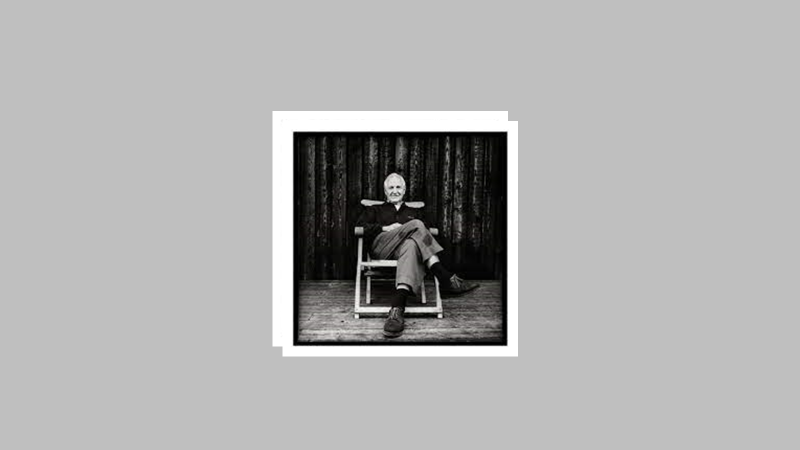
In 1936, Ede was regarded as a leading candidate to become Director of the Tate, a post for which he would have been very well qualified given his immense knowledge of contemporary art, but he seems to have had something of a nervous breakdown and he and his wife moved instead to Tangiers. Here is a picture of the two of them in Tangiers:
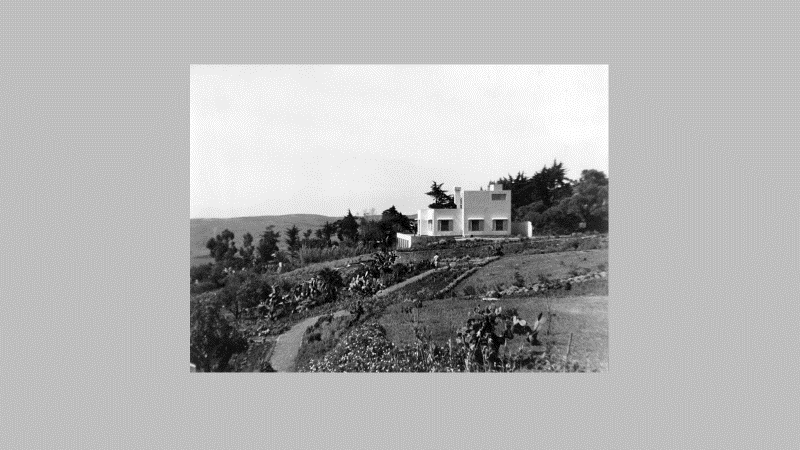
He designed a classic white modernist house for them called White Stone:
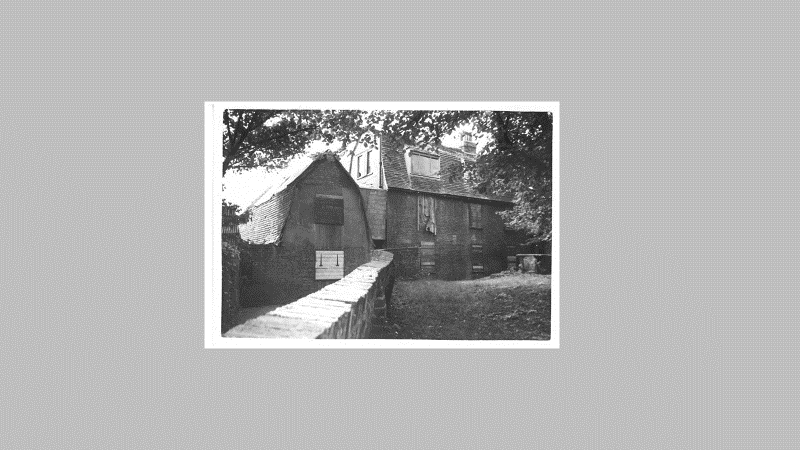
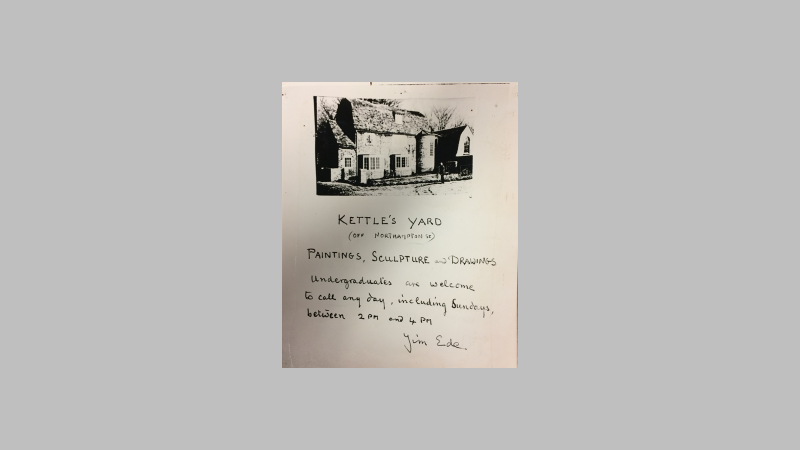
• After the war, the Edes moved briefly to a farmhouse near Blois in the Loire valley and then in 1956, they bought some dilapidated cottages not far from the centre of Cambridge, up the road from Magdalene College and next to St. Peter’s Church:
They restored them following the principles of design which Ede had developed, placing a great deal of emphasis on good natural daylight and simplicity of layout — a modernist aesthetic in which everything had its place and was very carefully and artfully arranged, including bits of wood they had picked up on the beaches of Tangier and stones. Ede explained his plans in a letter to his friend, the artist David Jones:
‘…it would be very interesting to be lent a great house on the verge of a city or a place of beauty in a town (Cambridge I have in mind) and make it all that I could of lived in beauty, each room an atmosphere of quiet and simple charm, and open to the public (in Cambridge students especially) and for such a living creation, I would give all that I have in pictures and lovely objects…’
• Ten years later, the Edes decided to donate the house and collection to the University of Cambridge as a place where students in particular could enjoy the experience of living with, and experiencing, works of art in domestic surroundings. Ede had ended up being pretty hostile to the Tate and its failure to collect contemporary art. He obviously felt that it was more important to live with art in a natural environment, surrounded by furniture and objects, than it was to study art in a museum environment. He liked to entertain students to tea and had a lending library so that they could borrow works of art for their rooms:
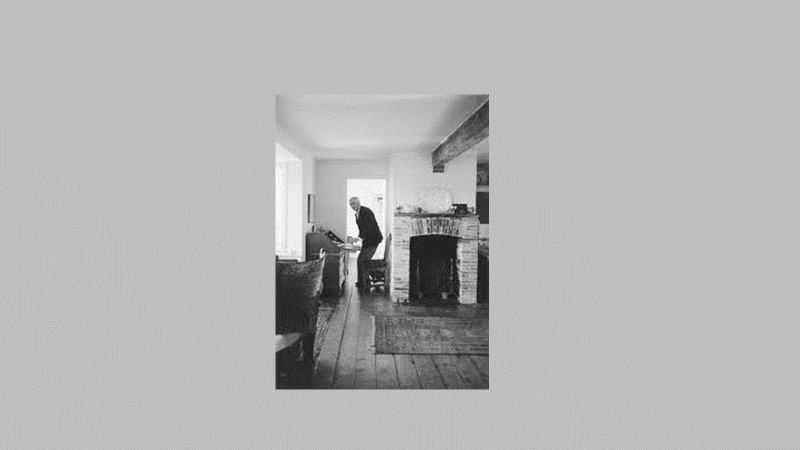
I’ve tried to find photographs of the inside of the house as it was when it was first laid out, which turned out to be slightly harder than I expected, but I include, first, a picture of Ede getting up from a chair at his desk which gives you something of its atmosphere, which was deliberately puritanical — oak floor boards, everywhere about the look of things with a cultivated and high-minded, partly spiritual austerity:
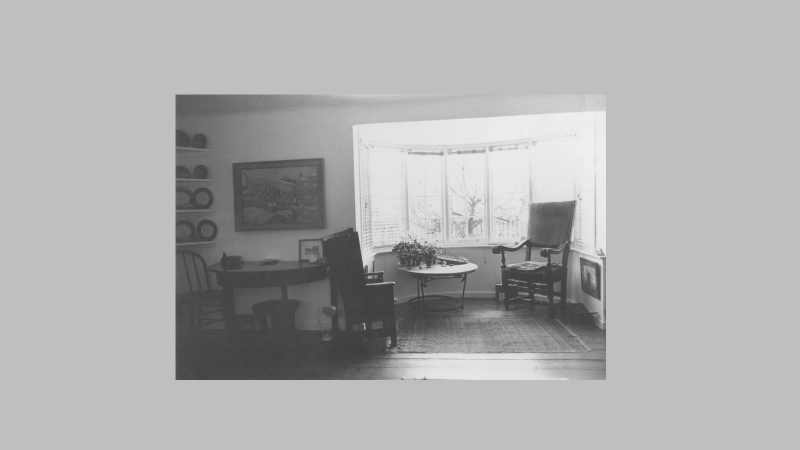
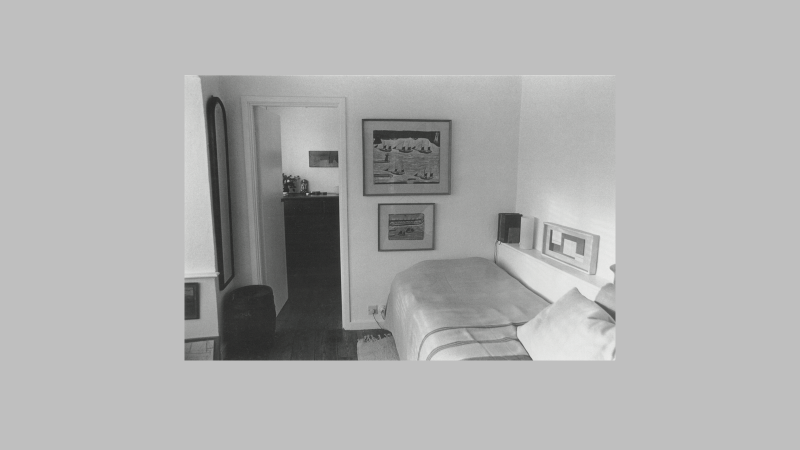
Then, Kettle’s Yard kindly sent me some illustrations from the book A Way of Life, which Ede published about the collection in 1984 which give a better idea of the interiors as they were originally laid out:
In 1970, an extension was added by Leslie Martin, the Professor of Architecture, jointly with David Owers, who was a partner in Leslie Martin’s office and like Martin taught in the Cambridge School of Architecture. This is the extension as it appears from outside:
And this is a picture of its interior, which gives some indication of its character: a bit more public in feel, but still domestic in scale, a long way from anything which might suggest a public museum:
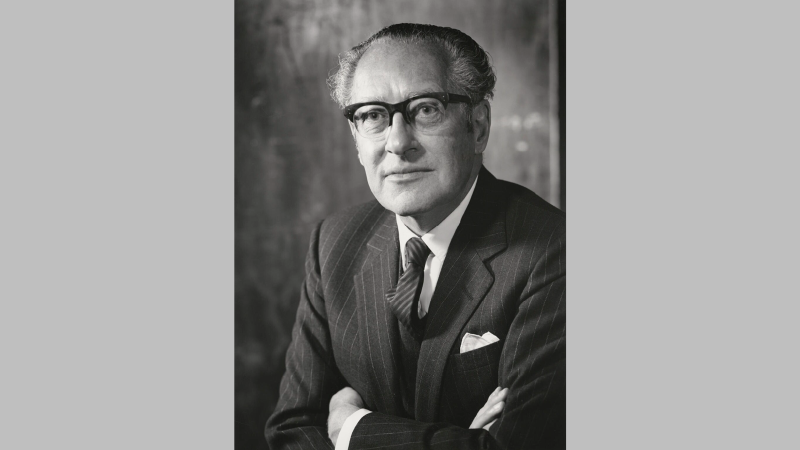
• The third of my case studies of people who decided to establish private museums in the post-war period rather than give their collections to established public museums is Robert and Lisa Sainsbury. Robert Sainsbury, or Bob as he was known, was one of the people who, together with his older brother Alan, was responsible for the post-war expansion of Sainsbury’s: Alan was responsible for the shops and Robert for the finance and administration. Here he is in a photograph taken by Godfrey Argent in 1969, the year that he retired as the supermarket’s chairman:
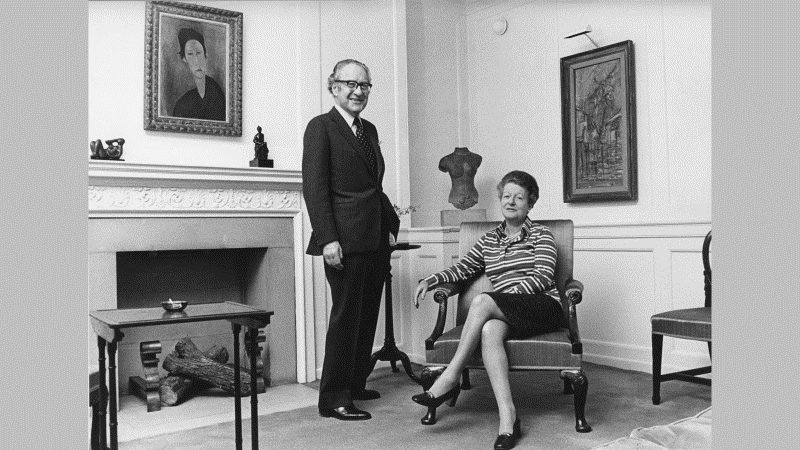
In 1937, he married Lisa van den Burgh, his second cousin:
They were passionate and knowledgeable collectors of both contemporary art and what they thought of as ‘primitive art’ — Oceanic art, African art, art from the Americas — which they were able to acquire relatively cheaply in the period immediately after the war, either from dealers in Paris or from their London dealer, John Hewett. Bob Sainsbury set up an account with which to buy art. From 1946 to 1953, it was £1,000 year, increased in 1953 to £2,000. With these relatively small sums, they were able to acquire an amazing collection, including the work of Picasso, Giacometti and Francis Bacon. Here is Francis Bacon’s portrait of Robert Sainsbury, painted in 1955 at Bacon’s studio:
• In 1969, following Bob Sainsbury’s retirement from the supermarket, they began to think what they should do with their collection. He was actually chairman of the Tate at the time, but they wanted to keep the collection intact and it was much too wide-ranging for the Tate. They offered it to the Fitzwilliam in Cambridge, but the Fitzwilliam said they would split the collection, keeping the European work in the Fitzwilliam and the work from other parts of the world in the Museum of Archaeology and Anthropology in a different part of town. Luckily, they had made friends with Frank Thistlethwaite, the first vice-chancellor of the University of East Anglia and Thistlethwaite persuaded them to donate their collection to the university as a resource for students. Here he is on the occasion of the announcement of the gift:
• Bob Sainsbury was not the type of person to delegate the choice of architect to the university and he immediately embarked on finding out about the work of young architects to design a gallery to house the collection on the University of East Anglia’s campus outside Norwich. He saw and admired a passenger terminal which had been designed on the Isle of Dogs by the young Norman Foster:
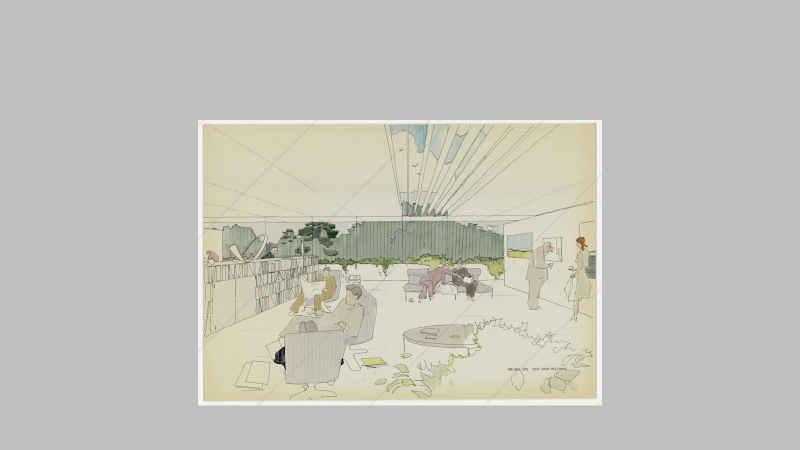
He liked its lightweight construction, the sense of modernity, the open plan offices. So, he commissioned Norman Foster to design an open plan gallery for them, which was essentially a lightweight shed, equivalent in style and design to the Olsen Centre, a version, I think, of a supermarket for the display of contemporary art, a more democratic way of displaying it than the hierarchies of a traditional museum. I show one of Norman Foster’s early designs for it, lightweight, open to the landscape, almost certainly influenced by Louisiana and belonging to the same aesthetic idea as Kettle’s Yard, because it is more about aesthetic experience, looking at art, than it is about studying it:
I show one of Norman Foster’s watercolour images of people sitting reading in the mezzanine:
And an image of the interior as it was when the building first opened in 1978:
• I hope that by now you are beginning to get a picture of the sorts of motives which lay behind the creation of private museums and galleries. We’ve looked at two very independent-minded industrialists who chose to house their collection outside the city in buildings which were much more informal and casual than the traditional museum. Both Jim Ede and Robert Sainsbury were interested in the impact their art would have on young people. They wanted people to enjoy the experience of living with art, a different experience from looking at works of art more historically in a museum.
• I want now to go to the other side of the globe and look at the circumstances which led to the establishment of the Heide Museum of Art outside Melbourne, because, again, this is one of the institutions which I feel I should maybe have included in my book, but didn’t.
• John and Sunday Reed shared many of the same characteristics of the other people I have been looking at. John Reed came from a well-to-do, evangelical Tasmanian family. He went to boarding school in Australia during the First World War and then to Cambridge where he studied law, returning to Australia where he worked in a law firm, but at the same time made friends with artists. In 1932, he married Sunday Bailleu, who also came from a wealthy family and had already been married and divorced. Here’s a picture of them at their wedding:
They bought a farmhouse north-east of Melbourne near a town called Heidelberg and christened it Heide, making it into a centre for artists, at least two of whom Sunday Reed fell in love with, one of them being Sidney Nolan, who did his great series of paintings of Ned Kelly while living at Heide during the Second World War. This is a picture of what became known as Heide I, the original farmhouse where they lived a pretty bohemian life:
• In 1938, they established the Contemporary Art Society and, in 1958, they transformed the Contemporary Art Society’s gallery in Melbourne into a new Museum of Modern Art and Design, modelled on the Museum of Modern Art in New York. In 1963, they commissioned an architect, David McGlashan, to design what was known as Heide II, a much more modernist construction, but still a building in which they expected to live, surrounded by their collection. Here it is from outside:
And this was its interior:
It’s very characteristic of its period, double-height, a place in which to show off their art as well as a place to live in. In the early 1980s, they donated Heide II and its collection to the State Government of Victoria. It opened in November 1981. John Reed died on 5th. December and Sunday ten days later. Their house, their collection and their support of contemporary art was absolutely central to the development of modern art in Australia and attitudes towards it during the 1950s. Public museums are perhaps inevitably more conservative.
• My fifth, and final, case study of the circumstances which led private individuals to establish a private museum, instead of donating their collection to a public gallery, is the de Menils in Houston, Texas where the de Menils decided to establish their own private museum in the suburbs of the city instead of giving their collection, which they could easily have done, to the Houston Museum of Fine Arts, of which John de Menil was an active trustee.
• You will quickly recognise that they shared many of the characteristics of the other four collectors that we have been looking at. Jean de Menil was an essentially self-made oil tycoon, although he came from an aristocratic French family. He started out as a banker. In 1931, he met and married Dominique Schlumberger, a young, smart heiress to a fortune based on the development of the electrical equipment which was able to detect whether or not oil was below ground. Her father, Conrad Schlumberger and his younger brother, Paul, established the Societè de Protection Electrique in 1926. Here are Jean and Dominique at their wedding:
In 1938, Jean joined the Schlumberger family firm and worked initially in Bucharest and then, from 1941, as President of Schlumberger Overseas and Schlumberger Surenco, their South American division, based in New York. They moved to New York, where they were deeply influenced by a Dominican priest, Father Couturier, who had trained as a painter and was interested in the nature of the relationship between art and religion, editing a journal, L’Art Sacré:
In 1942, they moved to Houston and Jean, who anglicised his name to John, began to collect paintings on his trips to New York, initially a small Cézanne watercolour, but later more abstract work. In 1948, they commissioned Philip Johnson, one of the leading post-war American architects, to design a house for them in River Oaks:
It was a statement of their belief in modernism and became the base for their activities as patrons, collectors and supporters of the civil rights movement. In 1954, they founded the Menil Foundation, dedicated to the ‘support and advancement of religious, charitable, literary, scientific and educational purposes’. They were involved in promoting the study of contemporary art as well as collecting it, creating an art department at the local Catholic university. Here is a picture of Dominique de Menil with Magritte at a rodeo outside Houston in 1965:
In 1970, they decided to commission a building for their collection by Louis Kahn, after hearing speak at the Museum of Fine Arts. Kahn produced an absurdly overambitious project, which the de Menils thought was impractical and not long afterwards John de Menil was diagnosed with cancer:
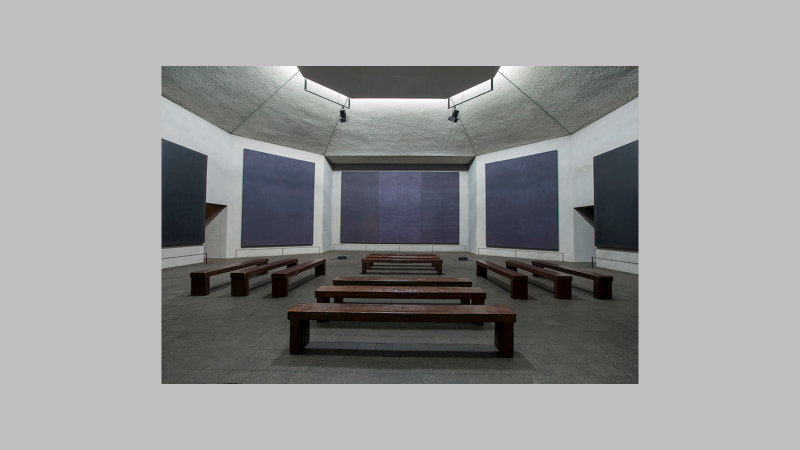
In 1971, they opened the Rothko Chapel, a place for meditative, ecumenical contemplation, a great and very important building:
John de Menil died in 1973 and so did Louis Kahn.
• As a result of John de Menil’s death, it was left to Dominique to fulfil their aspirations to create a gallery for their collection. In 1980, Pontus Hultén, the first Director of the Centre Pompidou, persuaded her that Renzo Piano would be the best architect to talk to, even though she hated the Centre Pompidou. They hit it off over discussions over the kitchen table in her house in River Oaks. As Piano remembers the discussion, it was ‘about art, light, intensity of emotion’. He describes how she
came to us with very clear ideas about the form her creation should take. She wanted nothing to do with the rhetorical modernity of downtown Houston. What she wanted was an experimental museum, one that would function simultaneously as a restoration centre, exhibition site and village. She had a great love of light and wanted us to work with the theme of natural illumination.[2]
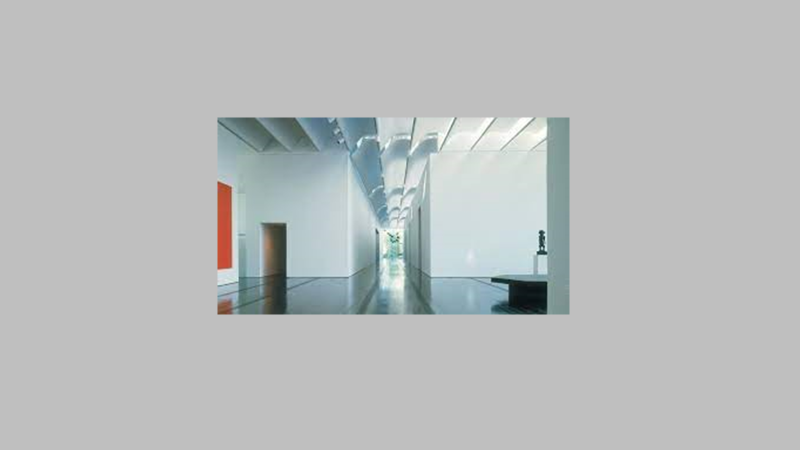
This is exactly what Piano did, producing a beautiful, but deliberately low-key set of spaces, with storage onsite, no shop or café, with beautifully daylit galleries and a sense of a close connection with the natural world outside. Here’s a picture of Renzo Piano and Peter Rice surveying the galleries with Dominique de Menil in the background:
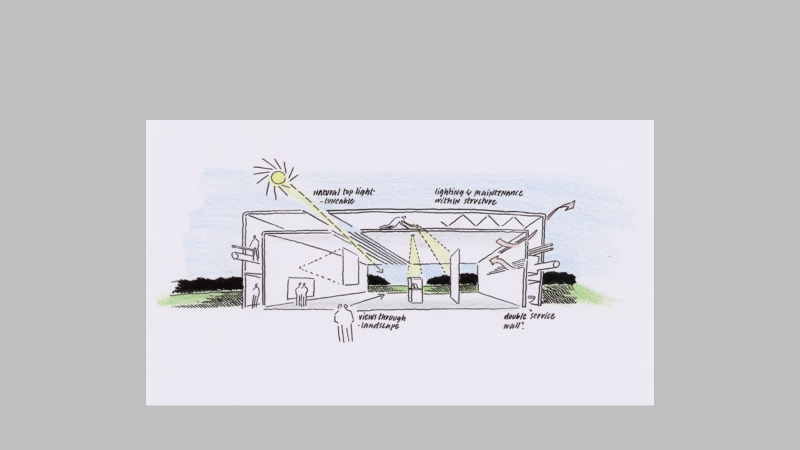
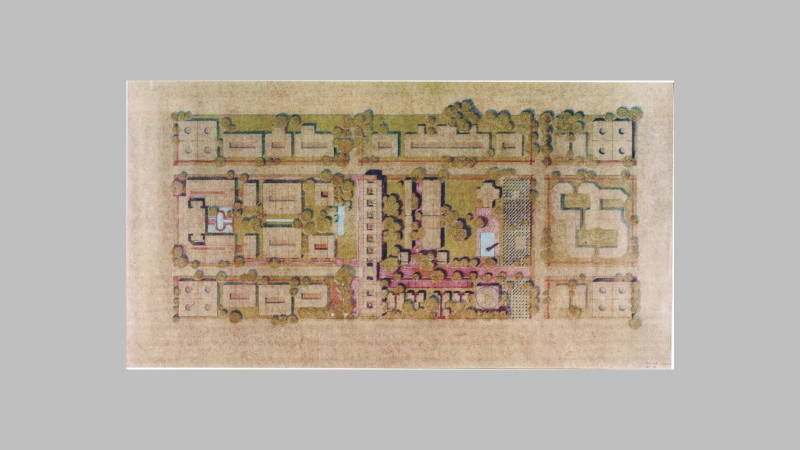
Here’s one of Piano’s drawings, which demonstrates how much care he put into the filtering and quality of daylight in the galleries:
This is the outside of the gallery: low-key, single story, undemonstrative:
And this is a picture of the gallery spaces inside:
• Now, I could, of course, go on. There is a long history of private museums and galleries in Germany, in America, of course, and also in Japan and now China. François Pinault has just opened the Bourse de Commerce in Paris as a private museum. George Lucas, the creator of Star Wars, is going to open a gallery to show his collection of narrative art in Los Angeles next year. James Dyson is planning a private gallery at Doddington Park in Gloucestershire. In my book, I included accounts of the Beyeler Museum outside Basel and the Susch Museum in a remote part of Switzerland.
• What I wanted to do this morning is not to provide a comprehensive narrative of all the private galleries in different countries, but to concentrate on those that I regard as key in establishing what has become an international movement across the world: those which established the pattern which others have followed. Above all, Louisiana which many private collectors want to copy because of the quality of its collection and the beauty of its setting. But, also, Kettle’s Yard which I think has been very important in retaining a sense of intimacy and an essentially domestic setting; and in the United States, the Menil Collection is the model of a private museum. These were all collectors who did not want their collection to be absorbed into an impersonal public institution, but wanted to retain a sense of the separateness and specialness of their collection as they themselves had wanted it to be shown and enjoyed: not in a didactic way, but as something to be absorbed and experienced visually, somewhere where it would be possible to appreciate art aesthetically, as they themselves had experienced it, as a private and personal experience of art, and not as a more impersonal, public one. They are admirable examples of people who wanted to make the private experience of art public, examples of museums which have been followed all over the world.
[1] Lawrence Weschler, ‘Louisiana in Denmark’ New Yorker, 22 August 1982, p.40, a profile which is apparently closely related to Jensen’s published memoir, Mit Louisiana-liv (Copenhagen: Gyldendal, 1985).
I have had a very helpful explanation of the reasons for the problems of untreated raw sewage which I reproduce because it feels emblematic of the government’s unwillingness to pay attention to long-term environmental issues and the need for infrastructure investment.
Apparently, HM Treasury would not allow money to be spent on curing and repairing the problem i.e. creating more sewage works and making the developers put in treatment plants with every new building project, so that it is not just not an issue of lack of the necessary chemicals, but the capacity of the old existing system – because the work to install more sewage infrastructure would increase costs of sewage and water rents especially to council tenants, necessitating additional huge ‘drains’ for the exchequer.
So, it is not just a consequence of the MPs voting against proper treatment last October, but a wider problem.
Am also reproducing the article from the Mail on the vote last year:-
I know that I am not supposed to be commenting on politics and that twitter is probably a bad way of judging the political mood, but it seems that after six years of debating the pros and cons of Europe, pretty well everyone can understand, whatever their political persuasion, that one of the reasons that we left Europe was so that we didn’t have to obey their diktats on the disposal of raw sewage.
Now that we have been free to change the legislation and are surrounded by a sea of poop, with beaches closed all the way along the south coast, people are beginning to think that perhaps after all it wasn’t such a great idea and are posting pictures of their MPs who are being held responsible for their vote.
At last, we have something which is inescapably a consequence of Brexit and it looks to me that people are possibly not best pleased.
A year or so ago, I was encouraged to write an article about the fact that Westminster City Council were using the cover of COVID to get rid of their many surviving gaslights, which have been retained in some of the more historical parts of the borough, including the Palace of Westminster, Dean’s Yard, the Mall and the alleyways and courtyards off St. Martin’s Lane. At the time, there was a vigorous campaign to keep them and it looked as if they might back off getting rid of them. But it was only a temporary remission and the work goes on in spite of many councillors being booted out in the local elections.
So, I am re-posting the original article in the hope that the new councillors might think twice before pursuing the same policies as their predecessors.
I am witnessing an interesting phenomenon. In general, I have not found it easy to get people interested in the idea of a biography of an older generation figurative artist who lives in Leigh-on-Sea, but I notice that on twitter figurative art is hugely much more popular and of much more widespread public interest than you would think if you look at how it is represented in public galleries and the art world more generally.
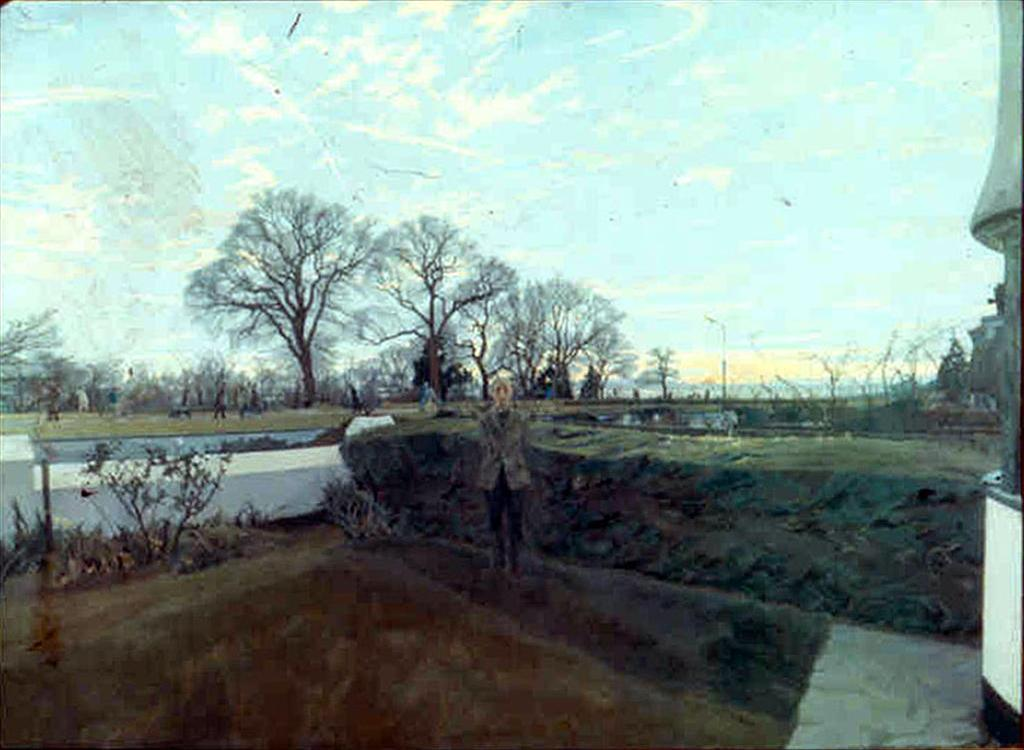
Since today is tree day on ArtUK, I am posting an early image, Winter on Marine Parade (copyright: John Wonnacott):-
We watched the film Thirteen Lives on Amazon last night about the thirteen boys who went exploring in a cave in Thailand and were then trapped deep within the caves by the premature arrival of the monsoon. Of course, I half remember it from when it happened, but had entirely forgotten, or maybe hadn’t known, that it was a couple of British amateurs who went out specially to help with the rescue. This forms an interesting aspect of the plot, which at a time when the British are being viewed, particularly by the current administration, as generally hopeless, lazy and incompetent is somewhat reassuring. But it is, of course, left-field thinking which solves the problems, not skill at elementary maths.
I went to the party to celebrate twenty years of Margaret Howell in Wigmore Street, the company headquarters next door to the Wigmore Hall, an appropriate combination, both being in their different ways so high minded. There is a short, thoughtful and very atmospheric film by Emily Richardson posted online (see below) in which she ruminates about her influences, mainly family and maybe the Suffolk coast, and her approach to design which is unworldly and in no way influenced by fashion, more fabric and how clothes wear over time.
I bought my first Harris tweed jacket from her shop in St. Christopher’s Place in 1979, so I now realise I was a pioneer (it says the shop opened in 1980, but this must be wrong). I used to buy all my ties from her, but I notice that we have both given up on ties during lockdown.
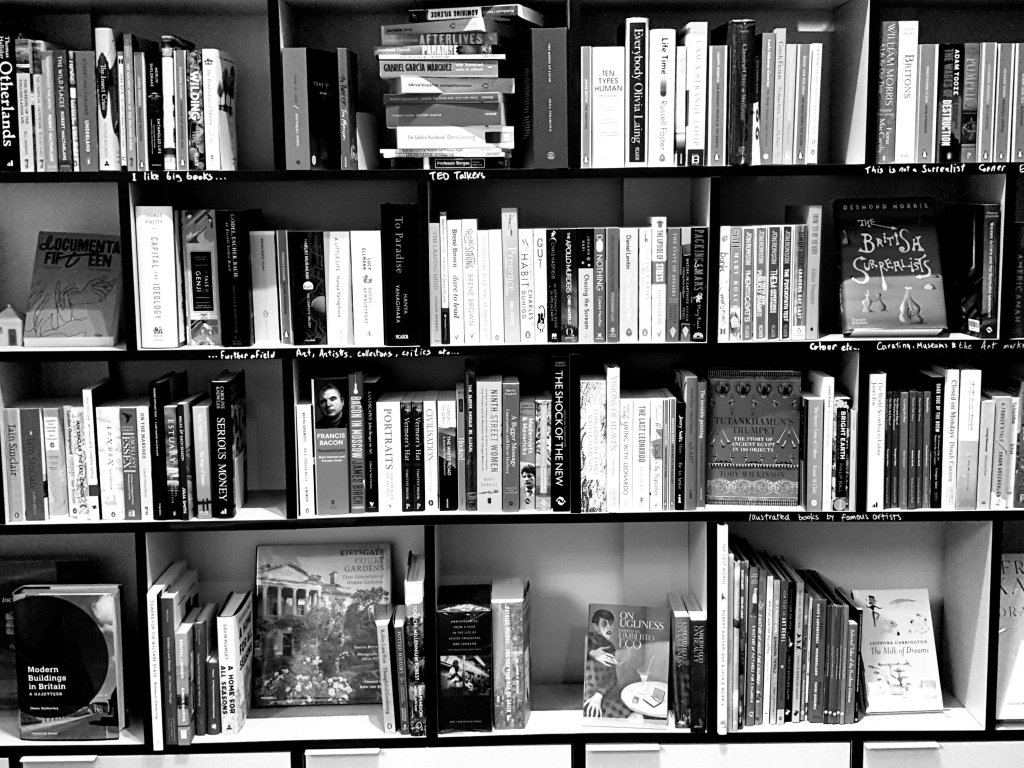
I discovered about Hoxton Books by reading about it online. It would be hard to find out about it any other way as it is nearly invisible on East Road, just up from Old Street roundabout – a tiny space, but impressively well stocked, including a surprisingly extensive selection of recent books about museums:-
Next door is an equally tiny, but equally thoughtful exhibition space, currently devoted to clothes which have been reconstructed from a 1930s fashion magazine. They are surprisingly contemporary – a utilitarian aesthetic, made by a contemporary Chinese designer under the label seventyfive: an exhibition both beautifully presented and informative, but only on for a week:-

















You must be logged in to post a comment.