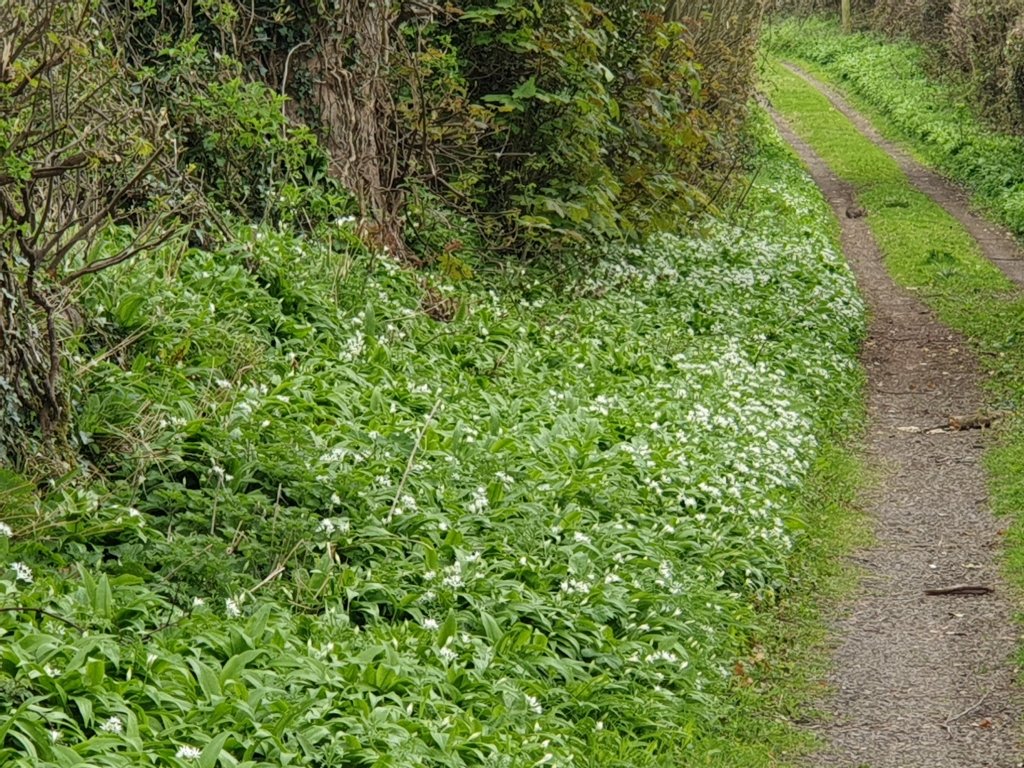
We went for a walk down lanes lined by wild garlic:-


We have been promised that the Prime Minister will ‘set the record straight’ next week.
Of course, we know the basic gist of it. He got up unusually early and had to trek out to Hemel Hempstead, even though it was his birthday. When he was paid £250,000 a year for writing only one article a week, he could have lain in bed and spent time with his family. But now that he was Prime Minister, he is expected to go on ghastly outings to the remote suburbs. Luckily, Carrie had promised him a surprise party for when he got back with birthday cake and champagne. Something to look forward to, even though she had asked that ghastly next-door-neighbour to join them, as well as the lovely interior decorator who he half fancied. Then there was a family party to look forward to in the evening, with Dad, and his younger brother who he had made a peer – lucky him ! He had had to promise that it would be in the garden even though the weather forecast was terrible.
It’s a dog’s life as Prime Minister….
I’m relieved to discover that a lot of people share my dismay at the sheer scale of the proposed new development by Make next door to the National Theatre.
People are asking what, if anything, can be done.
First, there is an online petition which I hope people will sign (https://www.change.org/p/sos-save-our-south-bank?utm_source=share_petition&utm_medium=custom_url&recruited_by_id=077e1c50-7ab4-11ec-a251-25d62d5f2bdb&s=09).
Second, maybe the National Theatre might be able to help make more of a noise about it.
Third, I am sceptical that Michael Gove will approve of it. He is in charge of planning. He has the power to call it in. I hope he will exercise it.
Please help if you can.
https://thecritic.co.uk/new-development-will-ruin-the-national-theatre
As readers of my blog will know, I was incredibly shocked and quite angry when I saw the scale of the new building development which has been approved on a site nearly next door to the Natiinal Theatre. It is simply vast, completely out of scale with its surroundings and will overpower the National Theatre and potentially Somerset House and the Houses of Parliament as well.
I have tried to find out and reflect on how this could have been allowed in the accompanying article in The Critic online:-
https://thecritic.co.uk/new-development-will-ruin-the-national-theatre/
Great efforts have been made by Tory MPs in recent weeks to say that it should not matter if the Prime Minister is found by Scotland Yard to have been a liar about his attendance at parties during lockdown and that there are more important things in life, including the war in Ukraine.
Of course, there is some truth in this. But it is worth reminding ourselves that the Prime Minister made the rules he broke. He repeatedly denied that he had broken them, not least in the House of Commons. And he was himself on television night after night telling us what to do, what not to do, and how to behave, where it is now obvious – and proven – that he was behaving differently himself. Of course, nobody expects him to resign because he has demonstrated over and over throughout his life that he has absolutely no sense of shame. No doubt he will persevere in his shamelessness.
But it doesn’t look good.
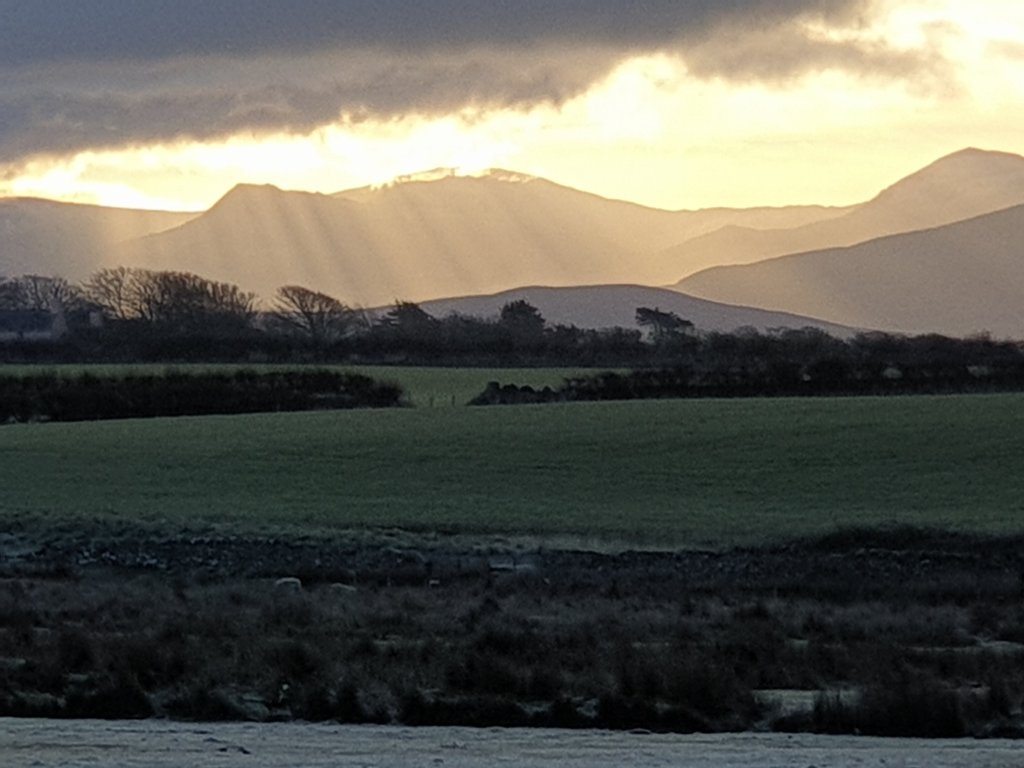
Readers of my blog will be familiar with the attached view. It is the moment of wonder when we look out of the window at the mountains of Snowdonia, still lightly dusted with snow:-
I am relieved to discover that I am not alone in being shocked by the enormity and lumpen scale of the set of buildings proposed by Make on a site nearly adjacent to the National Theatre. It is their scale which is shocking – six tower blocks aggregated in such a way that it will completely overwhelm the more modest Denys Lasdun National Theatre. It now apparently depends on Sadiq Khan to approve it.
Of course, you could say that the battle to save any kind of human scale in the City has been lost. What seems to me important is the way that this construction will tower over not just the National Theatre next door, but also Somerset House opposite. And it will not be insignificant in relation to the Houses of Parliament and St. Paul’s.
I hope you will sign the petition.
We went to a very beautiful, very intense but also faintly melancholy performance of Winterreise last night – melancholy because it was commemorative of Ann Tusa, a historian of Germany, as was revealed by Ian Bostridge before the start of the performance, which was only interrupted by the loud rustling of pages turning as nearly everyone was intently following the translation. Bostridge was accompanied wonderfully by Angela Hewitt. I can’t think of a more moving way to be commemorated.





You must be logged in to post a comment.