
For what was nearly our first outing, we went to Bow Cemetery, where the paths are shady in this period of unexpected heat:-



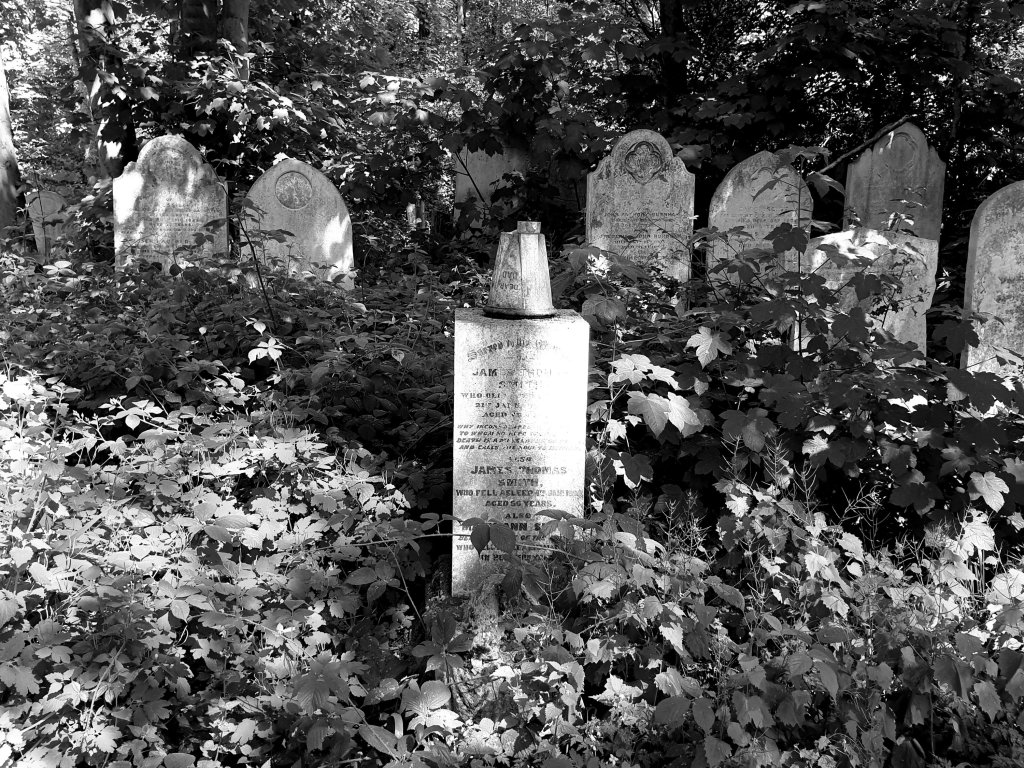


For what was nearly our first outing, we went to Bow Cemetery, where the paths are shady in this period of unexpected heat:-
I was asked last night to launch the summer term series of lectures at the Royal Drawing School on the theme of ‘Artists in Isolation’. Since it was not a fully public lecture and since it is possible that there may be people who would like to read it, I am reproducing it here verbatim, with only a few very modest changes to the wording which I picked up in the course of delivering it.
• I’m the chairman of the trustees of the Royal Drawing School and a while ago, from 2002 to 2007, I was Director of the National Gallery, before moving a few blocks north-west to be Secretary and Chief Executive of the Royal Academy. I say that as a necessary preliminary to what I am going to talk about, because — probably inevitably — I have remained deeply interested in the institutions which I have worked in, making every possible effort not to interfere as an ex-Director, but, at the same time, watching with interest, and sometimes concern, the challenges they face in the current environment, not least because I should maybe add that I have spent much of the last year writing a book on art museums, due to be published by Thames & Hudson this time next year, so I have remained very involved — in some ways, more involved with what museums are doing internationally and more able to think about, and reflect on, how they operate, the changing expectations, and, not least, the influence of new technology on them, particularly during the last two months of lockdown, when I’ve been following with great interest the discussions and debates about how far they can, and have, moved their operations online and what is going to be the long-term impact of their current closure.
• I was asked by Claudia Tobin, who runs the programme of Wednesday evening events at the Royal Drawing School, to launch this summer programme of talks about ‘Artists in Isolation’ by discussing and reflecting on a work of art which I have particularly missed during this long period of lockdown, when we have all been so isolated at home, unable to go out, unable to see people, either completely solitary or in the company of a single person, unable to go to concerts or libraries or — and this is what I’m going to talk about this evening — visit temporary exhibitions or museums.
• The picture which I have thought about a lot — not because I am an expert on Titian, nor, frankly, would I necessarily make strenuous efforts to go and see it under normal circumstances, nor, as it happens, would either I or you be able to, because it is currently on tour in Japan for the exhibition which was due to be held alongside the Olympics, is Titian’s Noli Me Tangere (NG 270). This is because of its deep symbolic value as the first work which was shown, in March 1942, at the National Gallery at the request of the public as nearly the first — not quite the first, as you’ll gather — in a programme of displays of single works of art, which was known as ‘Painting of the Month’.
• Some of you will already know of this project because it has been much alluded to during this period of lockdown, not least by Gabriele Finaldi, the current Director of the National Gallery, who, in public statements, has several time alluded to the role of the National Gallery in the Second World War and by Tristram Hunt, the Director of the Victoria and Albert Museum, who has rightly referred to the project as demonstrating the importance of museums and galleries in a period of national crisis.[1] But it is perhaps worth telling the story again and in full, however already well known, in the light of our response to what has been, I think I can safely say, the biggest national emergency during my adult lifetime, involving the total closure of all the national museums and, indeed, till this week, when some are re-opening in Italy and Germany, almost every museum and gallery across the world.
• As war approached in 1938, Martin Davies, a very dry and extremely academic, scholarly curator, a specialist mainly on Flemish paintings and who became the National Gallery’s Director for a relatively short period from 1968 to 1974, was sent off to Wales to look for appropriate places to store the collection in the event of war breaking out, which was beginning to look extremely likely. He went round lots of country houses and identified Penrhyn Castle as the best candidate — it is a massively solid, neo-Norman castle in open fields just outside Bangor, above the Menai Straits, in which it was obviously going to be relatively easy to store the collection far away from the dangers of bombing (by chance, it’s the only place where I’ve experienced an earthquake in this country). They started sending the paintings there in September 1938, but no sooner had they been dispatched than the Munich Agreement was signed, war seemed to have been averted, at least for the time being, and the paintings were returned to London.
• A year later, in August 1939, the National Gallery was closed and the paintings were removed to a variety of country houses, including Penrhyn. But there was a problem. The owner was a drunk. As Martin Davies wrote to the Keeper:
For your most secret ear, one of our troubles at Penrhyn Castle is that the owner is celebrating the war by being fairly constantly drunk. He stumbled with a dog into the Dining Room a few days ago; this will not happen again. Yesterday, he smashed up a car, and, I believe, himself a little — so perhaps the problem has solved itself for the moment.[2]
Also, by 1940, there were fears of an invasion and so plans were drawn up to transport the paintings to Canada. Kenneth Clark, who was the Gallery’s still relatively young Director, but extremely well connected, best known for his television programmes on Civilisation at the end of the 1960s, went to see the Prime Minister, Winston Churchill, who apparently said, in a very Churchillian way, ‘Hide them in caves and cellars, but not one picture shall leave this island’.[3] On June 1st., a civil servant wrote from 10, Downing Street to confirm that ‘The Prime Minister wishes me to say that he is not prepared to agree to the evacuation of any pictures, which he feels would be quite securely placed if there was adequate protection for them — if necessary, under ground’.[4]
• As a result of these instructions, Martin Davies and the Gallery’s scientific advisor, Ian Rawlins, began to search for somewhere where the pictures could be stored underground. They identified an old slate quarry up in the hills south of Snowdonia near Blaenau Ffestiniog. The quarry was requisitioned and, in 1941, the paintings were moved from their various locations through the countryside by lorry and train to Manod, a small village in the high hills just south of Blaenau. Meanwhile, the National Gallery itself was not exactly closed, because it was used for a programme of daily lunchtime concerts organised by Myra Hess, which began on 10 October 1939, very soon after the outbreak of war, and, also, for a programme of temporary exhibitions, beginning in March 1940 with one organised by Lilian Browse on British Painting Since Whistler, followed, in the summer of 1940 of work commissioned by the War Artists’ Advisory Committee’, which included the work of artists like Edward Bawden, Stanley Spencer, Edward Ardizzone and, not least, Henry Moore.
• What happened next is what particularly interests me, an event which I half knew about, but am pleased to have had a chance to find out more. On January 3rd. 1942, a letter appeared in the Times (I quote it in full, because people, including me in the short book I wrote about the history of the National Gallery, have in the past got both its author and its date wrong). It was written by Charles Wheeler, a sculptor now regarded as very conservative, a figurative sculptor who worked with Herbert Baker on the sculptural reliefs for the new Bank of England in the City, but at the time was regarded as so progressive that his election as an Associate of the Royal Academy in 1934 was opposed by Sir William Llewellyn, its then President, as opening the doors to work of a ‘revolutionary kind’. Wheeler wrote in his letter:
Sir, Your excellent illustration of the nation’s newly acquired Rembrandt was good to see. So good that one longs to see the original, which will now, I suppose, be stored in a safe place till after the war.
Because London’s face is scarred and bruised these days we need more than ever to see beautiful things. Like many another one hungry for aesthetic refreshment, I would welcome the opportunity of seeing a few of the hundreds of the nation’s masterpieces now stored in a safe place. Would the trustees of the National Gallery consider whether it were not wise and well to risk one picture for exhibition each week ? Arrangements could be made to transfer it quickly to a strong room in case of an alert. Music-lovers are not denied their Beethoven, but picture-lovers are denied their Rembrandts just at a time when their beauty is most potent for good. I know the risk, but I believe it would be worth it.[5]
Now, you can feel in the wording of this letter the sense of hunger for being allowed to the real thing. Pictures and photographs were not an adequate substitute for the experience of seeing an original work of art.
• The then Director of the National Gallery, Kenneth Clark, is often, I think, remembered as if he was a very grand, aesthetic snob, responsible for a patrician view of culture, speaking down at people from the television. But, actually, I think this is quite wrong as an interpretation of his personality: he was a strong democrat in his attitude to the public experience of the National Gallery, with an interest in opening up the pleasures of the élite, of which he was indisputably a member, to a broader public. Less than two weeks later, on Monday 19th. January 1942, under the headline A REMBRANDT ON VIEW, Clark wrote back to the Times answering Wheeler’s request to see the recently acquired Rembrandt as follows:
Sir,—A recent letter in your columns expressed the hunger which many of us feel for the sight of a great painting by one of the old masters. With this in mind, the trustees of the National Gallery have now decided to place on exhibition the Rembrandt portrait of Margaretha Trip recently presented by the National Art-Collections Fund. It will be exhibited for about three weeks beginning on Monday, January 19 [that is, on the very day that he was writing]. Needless to say, it will be taken down every night to a very strong shelter.
The trustees are also considering the suggestion that one picture from the Gallery should be exhibited every week in this way. The Gallery pictures are stored in a remote place and are kept under ideal conditions of temperature and humidity which it would be regrettable to disturb. These difficulties must be weighed against the delight and refreshment which the sight of a great picture would give, and I cannot anticipate the trustees’ decision. But I can assure your correspondent that members of the board sympathize with his idea, and will put it into practice unless they feel that the risks are too great.
Yours, &c,
KENNETH CLARK[6]
So, the Rembrandt was put on public display that very day, Monday 19th. January, and the following day the Times was able to report ‘LARGE CROWD TO SEE THE REMBRANDT’:
The National Gallery which, for many war months has served splendidly as a centre for good music, reverted in part yesterday to its role of a home for the best in pictures. To be strictly accurate, one great painting was shown, but it was a Rembrandt — the portrait of Margaretha Trip, recently presented by the National Art-Collections Fund — and so of course was sufficient to draw a large crowd of those “hungry for aesthetic nourishment”.[7]
• Clark was no slouch. On Saturday 31 January 1942, a further article appeared, again in the Times, NATIONAL GALLERY MASTERPIECES ONE TO BE SHOWN EVERY THREE WEEKS. ‘The trustees of the National Gallery have decided to exhibit in the gallery one important picture every three weeks…the director will choose the pictures which he thinks likely to give pleasure, but he will be much helped if lovers of painting will put on a postcard the names of one or more pictures which they would most like to see again’.[8] The following week, on February 5th., Clark wrote to Martin Davies, who was living in a cottage in Blaenau Ffestiniog working on a scholarly catalogue of the Netherlandish Paintings, how
I have received a large number of suggestions…These make it perfectly clear that people do not want to see Dutch painting or realistic painting of any kind: no doubt at the present moment they are anxious to contemplate a nobler order of humanity. I think therefore that we ought not to begin with the De Hooch, but with a religious picture of some sort. The two that have been most often asked for are the El Greco Agony in the Garden and the Titian Noli me Tangere.[9]
• So, on 17th. March, Noli Me Tangere was put on public display. It attracted large crowds of people seeking a sense of communion with the art of the past, solace, and an opportunity for solitary contemplation of a single work of art. I hope you can begin to see why an awareness of this episode has preoccupied and intrigued me, and not only me, over the last nearly two months since the doors of our national museums were closed. Of course, I understand why the closure happened. It was a requirement of national government, necessary to prevent the spread of infection and, if anything, it happened at least a fortnight too late. But it is a strange sensation, this period when all the museums are closed so absolutely, no-one at all is allowed in, not even, at least until this week, the gallery’s curators, and works of art are completely inaccessible to all but the security staff who are presumably patrolling the galleries solitarily day after day, without anybody disturbing them. And I think that it has made everyone in the world of museums and galleries internationally have to think carefully about what is lost — and equally well, what is gained — during a period when access to original works of art is no longer possible.
• As an example of the type of thinking and discussion which has been taking place during this enforced period of only digital access, a fortnight or so ago I took part in an online discussion organised by Art Newspaper and an organisation based in Madrid called Factum Arte about how far one needs access to original works of art when it is now possible to have access to reproductions which are so exact, so realistic, that they effectively deceive the eye and can stand in place of the original. This has, not surprisingly, set me thinking about the vexed issue of the relationship between original works of art and their reproduction, the issue which Noli Me Tangere and its display in the National Gallery during the war symbolically represents.
• Apparently, at Waddesdon Manor in Buckinghamshire at the moment, there is, or, at least, there was, because, of course, like everywhere else, it has had to be closed, there was an exhibition of a painting of Madame de Pompadour, originally owned by Baron Ferdinand de Rothschild, who left it to his brother, Nathaniel, who must have sold it, unless it was seized during the 1930s, in circumstances which led to it ending up in the Alte Pinakothek in Munich. But Jacob Rothschild, a direct descendant of Baron Ferdinand and who still looks after Waddesdon, although the house is now owned by the National Trust, still owns the frame. So, he has arranged for the picture to be digitally replicated from the original in the Alte Pinakothek, in order for the replica to be put back in its original frame. Alongside this replica are two oil sketches of Madame de Pompadour. One is the original. The other is a replica, made by using the best possible current facilities that are available of digital reproduction. Visitors to the exhibition were encouraged, and presumably will again be, if and when the exhibition can re-open, to work out which was which, but very, very few of them could, as also happened when Dulwich Picture Gallery put modern Chinese copies into the collection and asked visitors to identify which were the originals and which the copies. Visitors apparently studied the paint surface very carefully, but it showed no differences. Eventually, they worked out which was the copy by looking at the backs of the paintings, because one was very obviously comparatively new and the other was equally obviously old. So, Adam Lowe who runs Factum Arte which does the digital replication simply darkened and aged the back of the new one, at which point visitors were unable to tell the difference.
• Does this matter ? Should we worry that in an age of infinitely sophisticated digital replication the lines of difference between an original and its copy are now perfectly capable of being blurred, such that the old looks like the new and vice versa ? Should we, therefore, abandon what is essentially a modernist preoccupation with what is real and authentic for the make-belief world of the replica ?
• Let me tackle some of the issues surrounding this debate by talking about two case studies which were a topic of discussion in the online conference.
• The first is the replica of Veronese’s Wedding at Cana which was commissioned by the Benedictine monks for their new refectory, designed by Palladio, next door to the church of San Giorgio Maggiore, on an island immediately opposite St. Mark’s Square. It showed, as was required by the terms of the contract and as was entirely appropriate for a refectory, where the monks assembled to eat, ‘the history of the banquet of Christ’s miracle at Cana, in Galilee, creating the number of figures that can be fully accommodated’. It’s a huge painting, filled with colour and incident — architecture, waiters, onlookers, musicians, crowding out the central point of the narrative which is Christ turning water into wine. In 1797, soldiers fighting for Napoleon cut the painting off the wall, rolled it up like a carpet and sent it to Paris, where, it joined the collection of the Louvre, where it has remained ever since, in the same gallery as the Mona Lisa, so that very few visitors pay attention to it where it now is. In 2007, Factum Arte installed a digital reproduction of the painting back into the original setting where it belonged. Now, clearly, the replica has a great value in enabling one to see and admire a version of Veronese’s work in its original setting, in many ways more easily and possibly in a way that is more intellectually and visually satisfying than having to fight through the crowds surrounding the Mona Lisa in order to see and experience the original painting.
• The second example of where a replica has an obvious and essential value is where Factum Arte have made a digital reconstruction of a lost Caravaggio, the Nativity with St. Francis and St. Lawrence, which was stolen from its place above the high altar in the Oratory of San Lorenzo in the heart of Palermo. Clearly, a digital reconstruction, based on a very detailed and meticulous analysis of the photographs made at the time that the painting was restored in the early 1950s is vastly superior to the photograph which was previously used as a reminder of the work which had been stolen. I have absolutely no problem with a view that the ability to make incredibly detailed and, so far as is possible, remarkably faithful replicas of paintings has enhanced our knowledge of them and is an immensely valuable tool for making it possible to see a version of the original in circumstances where it is not otherwise available.
• But in the online debate and discussion surrounding the Art Newspaper conference, there was an extension of this argument to a view, which I see articulated increasingly often, particularly in current circumstances when we are wholly dependent on online access to works of art, that now we have such perfect forms of digital reproduction, we don’t really any longer need access to the original and may be able to survive perfectly well without it in the future.
• It is at this point that I think of Noli Me Tangere and the crowds lining up for solitary communion with a single painting. They would not, of course, have done it, had it been a replica. They wanted, and needed, and valued the sense of being with a painting which came from the brush of Titian himself, which allowed them to look at, and meditate on, a picture from early in his career, when he was still very much under the influence of Giorgione, in which Mary Magdalene stretches her hand out to touch the figure of Christ who has appeared in the Garden of Gethsemane and Christ pulls the garment he is wearing away from her, saying, or at least he says in the English translation of the biblical original, ‘Touch me not’. I no longer exist physically. I am only the memory of what you think me to have been.
• So, what this online conference two weeks ago made me think about, and reflect on for the purpose of this talk, is the precise difference between seeing and studying pictures online which, of course, it is now perfectly possible to do and, in some ways, experience aspects of them better, since it is possible to get so much closer to the precise detail of a painting through zooming close-up to it and you can do this in the privacy of your own house, undistracted by the swirling crowds of tourists moving through the galleries of the National Gallery, not necessarily paying very much concentrated attention to individual paintings, just apparently chalking them up as works to be seen and places to visit as part of a modern version of the Grand Tour. There may have been advantages in a period of solitary confinement which has forced us to explore the increasingly impressive resources of the online world, to be able to visit the galleries of the Sainsbury Wing in three dimensions, thanks to Google, to acknowledge that we now live in a changed world with the future opportunities of virtual reality.
• But I hope it is not merely sentimental or a form of false consciousness or just a consequence of being a member of an older generation who has not got wholly used to the realities of the online world, that I do not wholly share this view of the virtues of the simulacrum as compared to the experience of the original work of art. So, I am going to end this meditation on the characteristics of a single picture by trying to think through in some detail exactly what it is that differentiates the original from a replica, what are the physical characteristics of a work of art which make it desirable to go and see the original and not be intellectually or emotionally satisfied with a mere substitute.
• First, I completely accept that, if you are interested primarily in the subject matter of a painting, then you can derive the information you require from a reproduction. You do not need to be in front of the original to think about the way Titian has represented the biblical narrative and how it relates to, or can be differentiated, from the way other painters have depicted the same scene — the much more static way, for example, that the scene was depicted by Fra Angelico in the Convent of S. Marco.
• Likewise, you do not necessarily need the original to gain a sense of the way that the picture fits within the development of Titian’s early career, how far he was influenced in the way that he painted by the work of Giovanni Bellini and Giorgione. But, as I say that, I realise that this is not really true. You do need the original painting to have a proper and effective understanding of the ways in which Titian as a painter can be differentiated from his near contemporaries. Now, you may say, and think, that this is a matter for specialists only. But, I think that everybody can differentiate in their minds between the real and the false. We do not want to have to respond and react to a substitute. One can have this experience with twins. One makes a mistake as to which is which. They may look the same, but their characters are different. Our mind and our reactions are scrambled if we make a mistake in the identification as to which is which. Pictures, like human beings, are made up of so many different layers, of surface and pigment and touch. I know, and other people have pointed out, that even an original painting is based on layers of restoration in which pigment may have been added by restorers over the years, its surface tampered with in good faith, so that you can argue that, in some ways, the original is not itself wholly original. But the reason connoisseurs spend so many years looking at, and arguing, which is the original, as they recently have been over the two versions of Titian’s Danaë — one in the Prado, which was always thought to be the original and the other in Apsley House, which some, but not all, scholars now think may be the original, as suggested in the catalogue of the National Gallery’s current Titian exhibition.
• Walter Benjamin talked about the ‘aura’ of the original, as a way of differentiating the original from its reproduction, but I do not think that this is in any way an adequate way of describing the nature and the quality of the difference between an original and a copy, however close in time and intent to the original. We crave an adherence to truth in the way that we view and value the past. Of course, I recognise and do not dispute that there is a value in different versions of a picture, like different musical interpretations of an original score, or different performances of a play. But in different interpretations of an original piece of music, we still pay close attention to the nature of the authenticity of a performance and the sense in which it properly pays attention to, and respects, the qualities of the original.
• So, I do not wish our attitudes towards the qualities and characteristics of an original work of art to be too radically undermined by the benefits of digital reproduction, and I am in a way surprised by the extent to which recent events have encouraged a view that museums can and should take the view that their online presence is at least as important as the physical experience of a visit to their collections, that somehow what happens online is just as important, just as valid, as the sensation of being there, looking and paying attention to the special physical characteristics of the work of art in situ, in the National Gallery itself. I do not think that it is irrational to want to adhere to some form of physical and psychological differentiation between an original and a copy. I like cookery books, but I don’t think reading a recipe is a substitute for eating and tasting the meal itself. And so, when the doors of the National Gallery open once again, when we are allowed in again without the risk of infection, I will be joining the queues at the gate to be able to experience the qualities and characteristics of what is real and authentic, instead of sitting at home and looking at pictures on Zoom.
[1] For Finaldi’s comments, see Laura Cumming, ‘Self-help is the key for an art world in lockdown’, Observer, 29 March 2020 and Alastair Sooke, ‘How the National Gallery hid its art in a Welsh mountain’, Daily Telegraph, 6 May 2020. For Hunt’s reference to the National Gallery, see Tristram Hunt, ‘When the lights come back on, our museums will need support’, Art Newspaper, 30 March 2020.
[2] Suzanne Bosman, The National Gallery in Wartime (London: National Gallery Company, 2008), p.25.
[3] Bosman, p.31.
[4] Bosman, p.32.
[5] Charles Wheeler to the editor, Times, 3 January 1942.
[6] K. Clark to the editor, Times,19 January 1942
[7] Times, 20 January 1942.
[8] Times, 31 January 1942.
[9] Neil Macgregor, ‘To the Happier Carpenter’: Rembrandt’s War-Heroine Margaretha de Geer,the London Public and the Right to Pictures, Groningen, 1995, p.16.
I have previously written about, and supported, Bella Gonshorovitz’s project to make hospital gowns for the Royal Brompton Hospital, which has now taken off in spite of all the difficulties which government regulations have put in its way Attached is a short film of her talking about the project.
I have been reading a new book, Circles and Squares, about the Hampstead art world in the 1930s, which demonstrates very clearly the social, as well as artistic, interconnectedness of the avant garde art world, with Barbara Hepworth and Ben Nicholson living in Mall Studios, Herbert and Loulou Read nearly next door, and Henry and Irina Moore in Parkhill Road nearby. There are good descriptions, for example, of the supper club organised at the Isokon building when Raymond Postgate organised a Jamaican menu and Marcel Breuer rang Jack Pritchard up in the middle of the night because his pee had turned blue. It makes the 1930s art world feel small-scale, localised and attractively amateurish.
This is my last post on the topic of architectural photography at the Warburg Institute, having now got hold of a copy of Michael Berkowitz’s excellent and authoritative book on Jews and Photography in Britain, which has a whole chapter on ‘Photographic Practice at the Warburg Institute, 1933-1948’. The key figure, as I had half realised, was Helmut Gernsheim, who is much better known as a historian and collector of photography than he is as a photographer himself. But after training as a photographer in Munich, he left Germany for London where he worked first for the National Gallery – I suspect for Helmut Ruhemann, who was already doing freelance work there as a conservator. Then, after a period of internment, first sharing the same tent as Pevsner at Huyton, then in Australia (Ernst Kitzinger was in the same camp) where he lectured on the history of photography, he was recruited by Rudolf Wittkower to take photographs of English seventeenth-century monuments, including wonderful, very atmospheric photographs of St. Paul’s. But he fell out with the Warburg, as he was to fall out with most people with whom he had professional dealings, presumably because of his excessive desire to be credited for his work, which in many ways he deserved to be, but was obviously against the traditions of studious anonymity in architectural photography. He was the first person to lobby for the establishment of a photographic museum in Britain, which might have been based at Osterley, under the auspices of the V&A. But Leigh Ashton seems to have taken a dislike to him – a great loss to the history of photography in this country because Gernsheim’s collection went instead to Austin, Texas.
You may think that I’ve forgotten about the Bell Foundry during lockdown, but I haven’t. It’s just been hard to raise money for it when we didn’t know quite when the Appeal was going to be heard and what form it would take. We now do. It will open on Tuesday 6th. October at 10am. Please write it in your diaries because it’s important that as many people as possible appear to impress the Inspector of the strength of public feeling.
Now we need to raise the money to fight the appeal. We’ve been hoping to get five people to give £25,000 each. Two so far. If there is anyone else out there who can help, please let me know or you can give anonymously on the Re-form website or to:-
Account name: Re-form Heritage
Sort Code: 60-49-05
Account number: 32067062

Since over the last few weeks, I, like everyone else, have spent much more time looking at museum collections online, I was very interested to read Andy Ellis’s analysis as to what works people have been actually looking at. Much of it is unsurprising. Lowry comes out on top. A picture of the naked Sappho is very popular. An image of the creepiest object in a Scottish museum comes third. But what seems obvious is surely a bit surprising: old-fashioned, nineteenth-century art is still much more popular, if this survey is anything to go by, than art of the last thirty years, including Thomas Lawrence’s absurd picture of Satan, which spent most of its life rolled up in store.
I like these articles which are completely straightforward, non-technical, written in such a way that even I, who have hitherto had zero interest in medical matters, can easily understand. Here is one on masks.
https://www.theatlantic.com/health/archive/2020/04/dont-wear-mask-yourself/610336/
Of all the short clips of music which seem to be a feature of lockdown, this is definitely the most bizarre and oddly moving, of a blind elephant being played Beethoven on an upright piano in Thailand:-
As is the way of these things, I’ve got more interested in the influence of the Warburg in the Second World War and in photography. It has become clear to me from an article in The Yearbook of the Research Centre for German and Austrian Exile Studies, which fortunately is available online, that one of the reasons Fritz Saxl was so keen on photographic exhibitions was because, having served as an officer in the First World War, he was then employed by the army to organise morale-building photographic exhibitions to tour what was left of Austria, so retained an interest in this form of adult education. And the quality of the Warburg’s photographs of the tombs in Westminster Abbey was so high, as taken by Helmut Gernsheim (but unattributed), that Kenneth Clark gave his set to the Queen, who used them in turn to encourage the young Princess Elizabeth in an interest in art, Clark writing to Saxl in July 1943 that ‘I have given away the original set of photographs of the bronze effigies in Westminster Abbey to the queen. She is enchanted with them, and they are being used in the history lessons of Princess Elizabeth’. Interesting – at least, it is to me.


You must be logged in to post a comment.