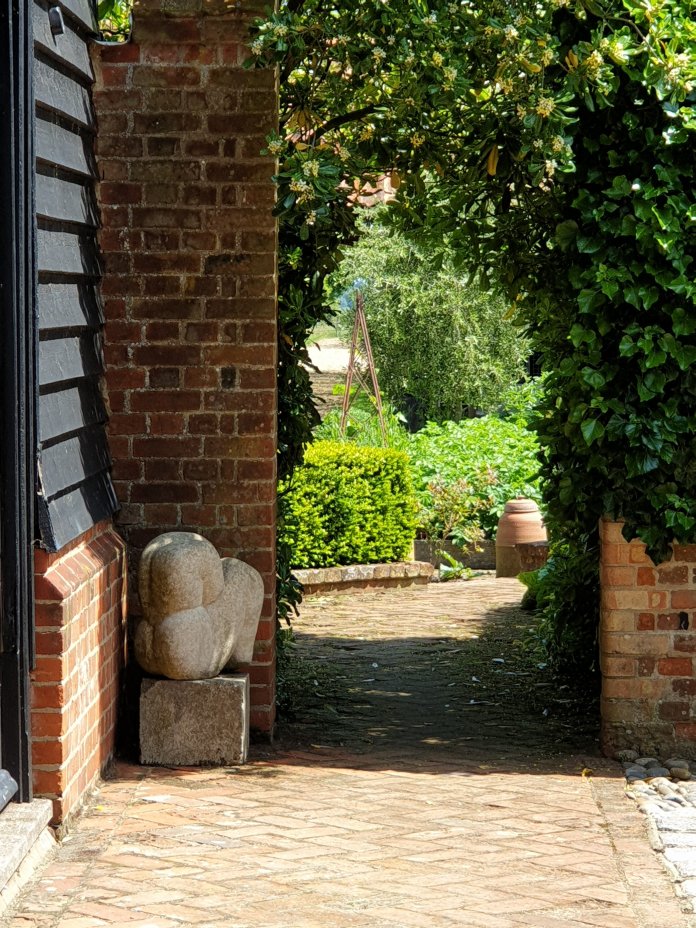
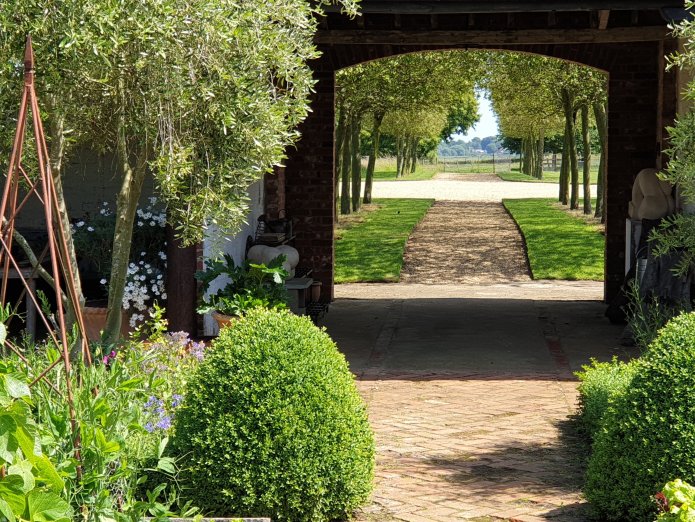
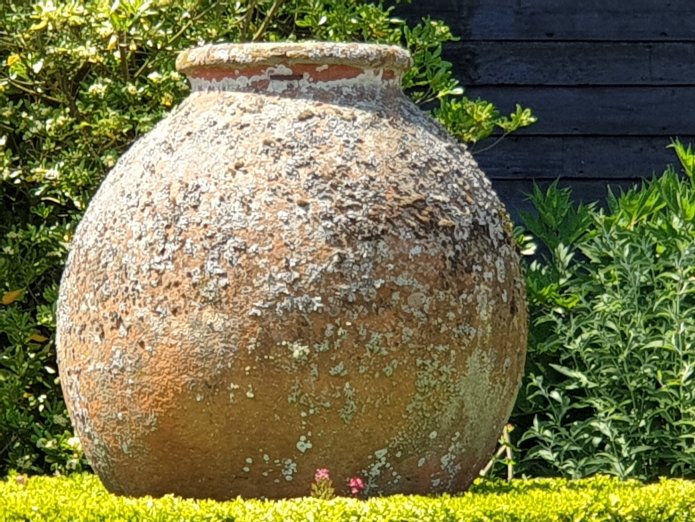
Calouste Gulbenkian

I am attaching the reference to Apollo’s tweet not for purposes of self-advertisement (I hope), but in case anyone is interested in the article it promotes, a short digest of a long, scholarly biography of an important figure in early twentieth-century taste and art politics, not to mention the establishment of the oil industry:-
@Apollo_magazine’s Tweet: https://twitter.com/Apollo_magazine/status/1123972916796887049?s=09

Standard

Processing Lichen

I went to see The New Craftsmen’s new exhibition Processing Lichen & Other Matter, in which Charlotte Kingsnorth, a graduate of Toord Boontje at the RCA, shows her metalwork inspired by the patination of lichen:-

I admired the work of Lucie Gledhill, who works with Romilly:-

And a case of work by Romilly herself:-

I had thought it was a revival of the work that Stephen Calloway celebrated in Baroque Baroque, fin-de-siècle neo-naturalism. Perhaps it is:-

Standard

Anthony Caro (1)

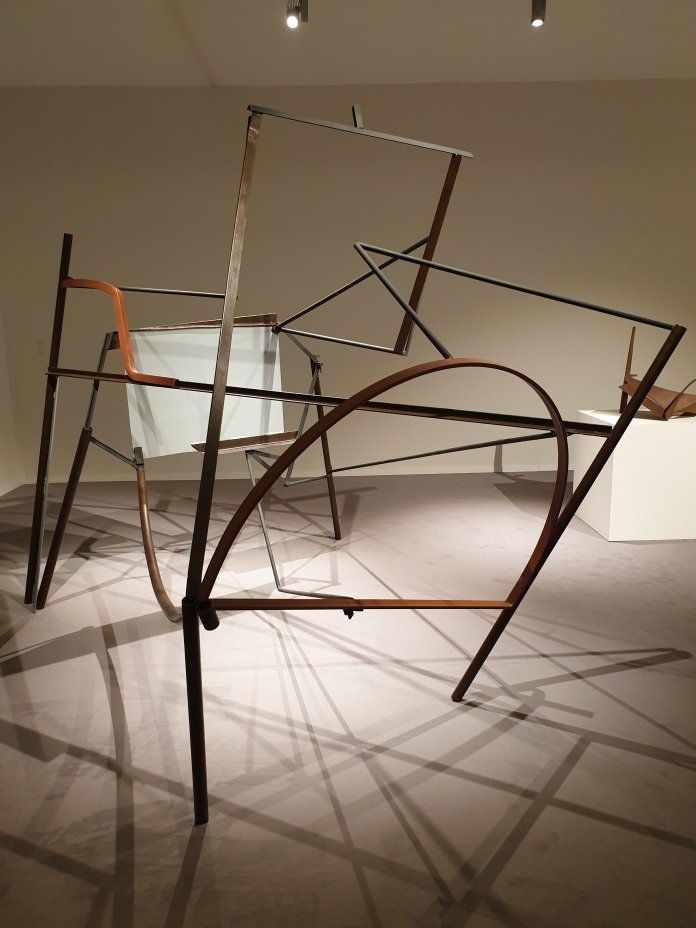
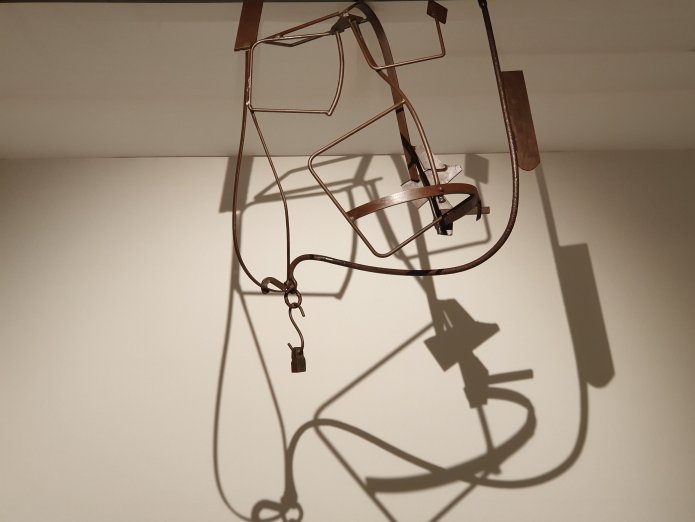
I went to the opening of the Anthony Caro exhibition at Annely Juda last night and was particularly interested to see his early work, undertaken when he was studio assistant to Henry Moore at Perry Green, including Warrior I, influenced by Moore’s collection of African art:-

Also, one of a set of sculptures he did in 1957 of the Cigarette Smoker, done when he was still hovering between figuration and abstraction and before he had discovered his own style:-

Standard

Mary Moser

In walking through the RA last night, I was impressed to see a commemorative floral artwork celebrating the life of Mary Moser, who died 200 years ago tomorrow aged 68 and has become of increasing interest as one of only two artists elected as Royal Academicians (the other was Angelica Kaufman) at the time of its foundation in 1768 – Moser for her skill as a young flower painter, winning prizes at the Society of Arts from the age of fourteen and exhibiting not just flower paintings at the RA until her eyesight began to fail in her late fifties.

Standard

Boom Cities

Boom Cities was launched tonight: a very good send-off.

Peter Mandler talked about changes in intellectual fashion and how when, in the late 1990s, he had wanted to work on the history of post-war town planning, nobody had been remotely interested, whereas now it is a hot topic: presumably partly generational, now that brutalism has lost its stigma.

Otto SS quoted Mark Girouard’s preface to English Towns which was magnificently derogatory about the effect of new telephone exchanges on old town centres; and summarised two key findings of the book – that it was not all the fault of architects, but of a multitude of politicians, civil servants, town planners and other assorted utopians, and that fashion in town planning changed not because of the actions of a few lone conservationists, but because those who had advocated radical town planning realised that they had got it wrong (and many of them were themselves ardent members of the William Morris Society).

Now, you have to buy the book, published by OUP for £65.

Standard

James II

In coming out of the Sainsbury Wing, I was struck by how prominent the statue of James II appears, as if framed by William Wilkins’s columns. It was commissioned from Grinling Gibbons’s workshop, but is unlikely to be by Gibbons himself as full-scale bronze statuary was not his forte: more likely by Artus Quellinus III who was in the workshop at the time that it was commissioned, together with one of Charles II, by Tobias Rustat. It was originally erected in the old Whitehall Palace in March 1686, later moved to outside the New Admiralty, and only arrived in its current location after being stored in Aldwych tube station in 1947:-

Standard

Jayne Wrightsman

Following my post on John Richardson, I have been sent a copy of the tribute by Hamish Bowles to Jayne Wrightsman, who died on April 20th. She was obviously a great and remarkable collector, tough and shrewd, a close friend of Kenneth Clark in the 1950s, patron of Francis Watson, supported Patrick Kinmonth’s redisplay of the Met’s French galleries:-

https://www.vogue.com/article/jayne-wrightsman-tribute-hamish-bowles/amp

Standard

John Richardson

Of the various books I read on holiday, the funniest and most charming (as well as much the shortest) was the late John Richardson’s account of the various houses he lived in – At Home – beginning with a late Victorian mansion in Upper Norwood (his father, hard to imagine, set up the Army and Navy stores), followed by Stowe, the Slade, life with Douglas Cooper in the Château de Castille, which he has already recorded in much more detail in The Sorcerer’s Apprentice, East Seventy-Fifty Street, Connecticut, and Fifth Avenue, but downtown. The style is the most haute of haute bo (he describes a hillock as a ‘callipygian protuberance’). I loved it.

Standard

A Last Post

This is my last post from Anglesey as we head back to the smoke.

The infinite solitude of the mudflats down towards the beach:-

And the evening sky after Storm Hannah:-

Standard