
Being still on British time, I went out early to get some breakfast and see the sun rise on the east side of the city. It was an impressive sight:-
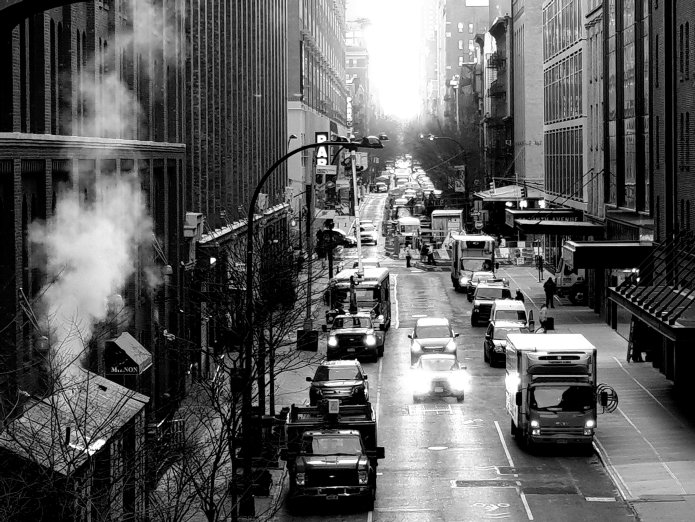
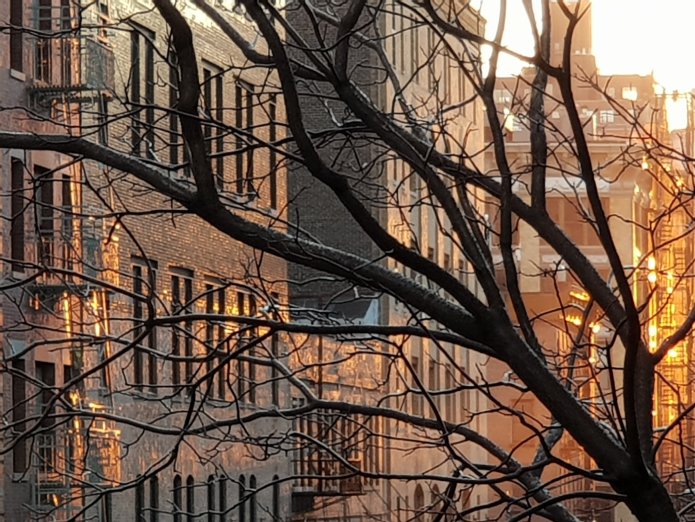

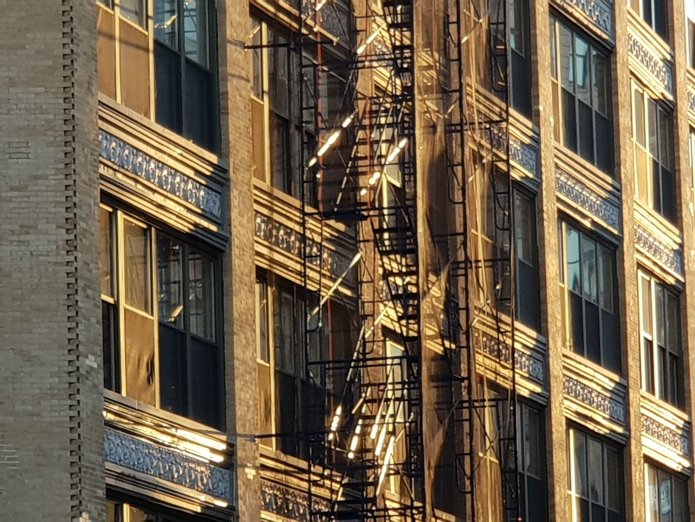
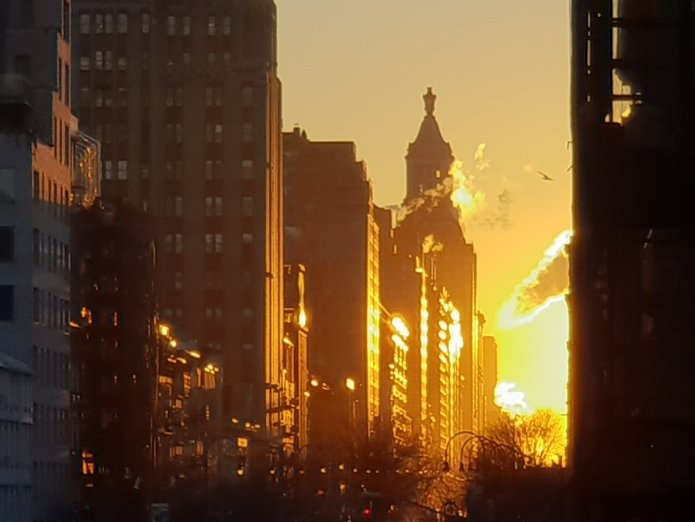
Being still on British time, I went out early to get some breakfast and see the sun rise on the east side of the city. It was an impressive sight:-
We went to the first night – actually, it was the first afternoon – of a new production of The Queen of Spades: rather Germanic, with Stefan Herheim as the Norwegian director and Berndt Purkrabek as the designer of the beautiful, but traditional set and everyone dressed up in grey semi-frock coats as versions of Tchaikovsky, who was on stage throughout. Much was made of the fact that Tchaikovsky was both gay and briefly unhappily married. Beautiful singing by Liza and the Countess.
I had to meet someone under the portico of the British Museum:-
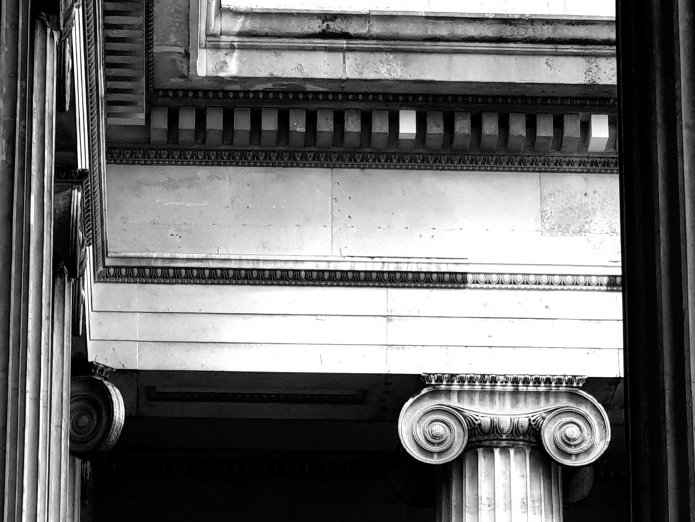
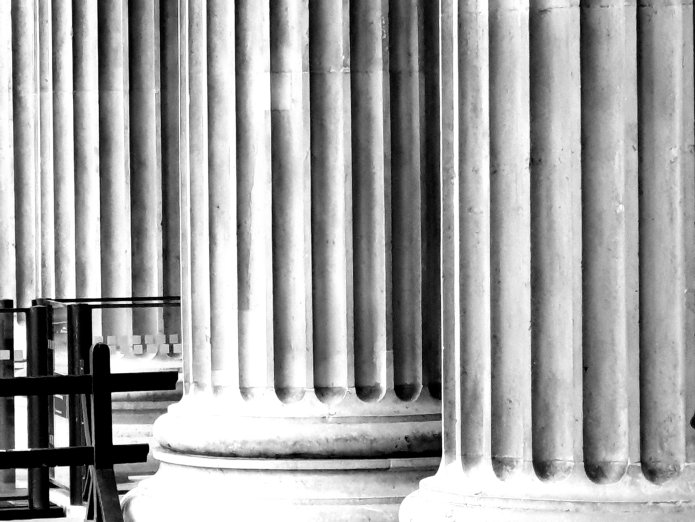
I took the opportunity of exploring the area to its east – not exactly Bloomsbury. I noticed that the local police station calls it Holborn.
Lamb’s Conduit Street:-
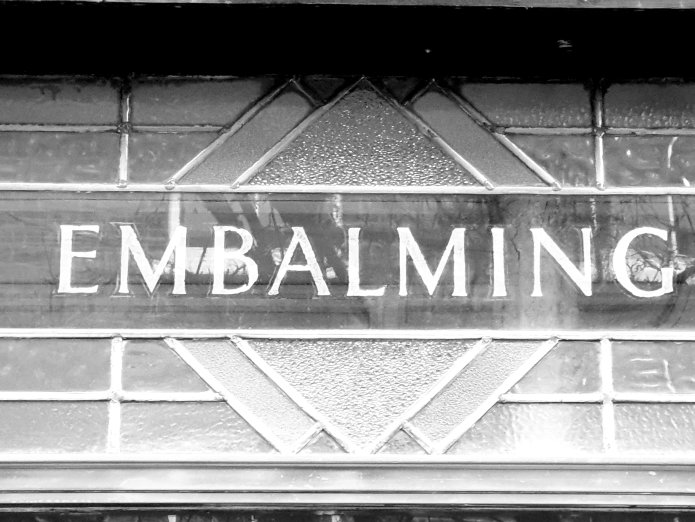
Rugby Street:-
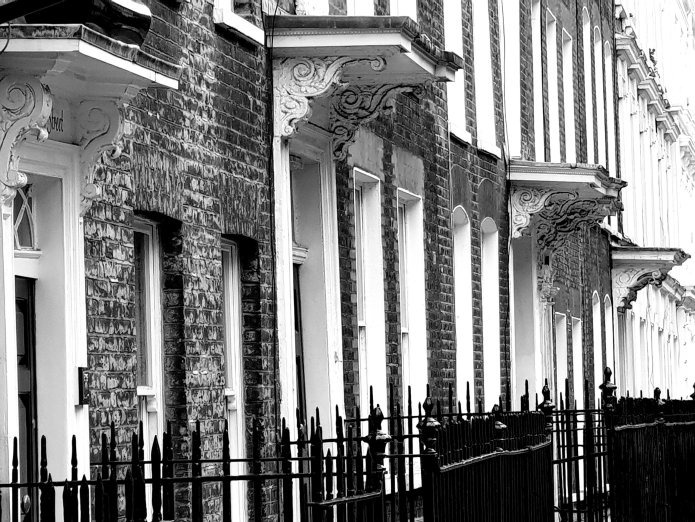
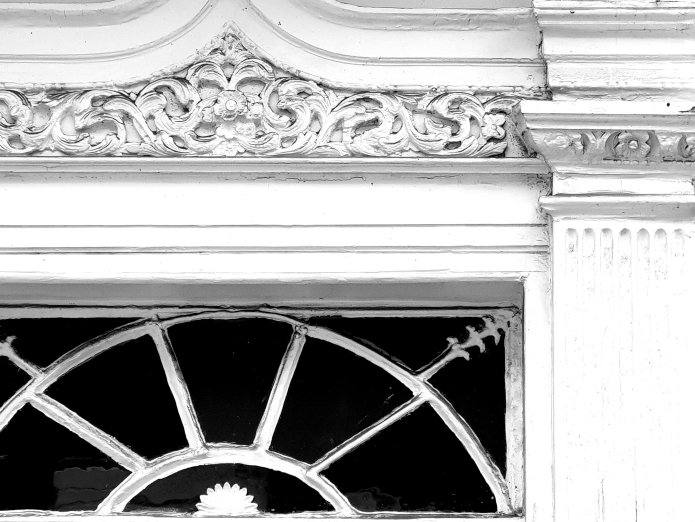
Dorothy Sayers’s house in Great James Street:-
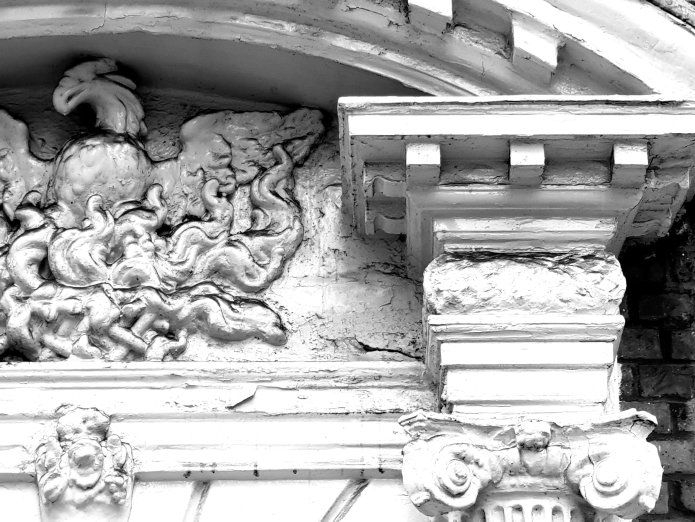
John Street (Doughty Street is only it’s northern section):-
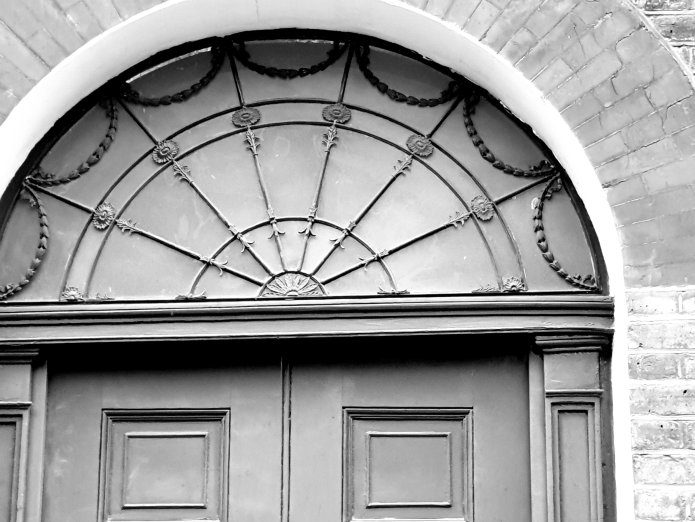
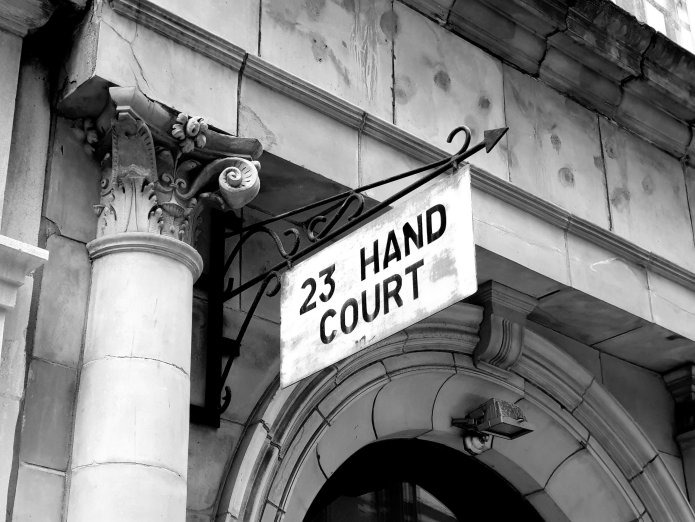
And Hand Court, where one gets into lawyer’s territory:-
For those who have access to today’s Financial Times (and those who don’t), I strongly recommend an article in the weekend supplement Life & Arts, which this weekend is a Special Edition ‘Inside the Mind’. The article is about the way that Romilly works as a jeweller with three collaborators, who she calls translators: how she designs very elaborate and complex works in her head and then describes what is required not through drawing, which she is unable to do, but through precise, but esoteric, verbal description, a highly developed personal shorthand. It’s on page 6, next to Donatella Versace and Catherine Deneuve.
I admired a very beautiful wooden, fifteenth-century, carved altarpiece from Minden Cathedral:-
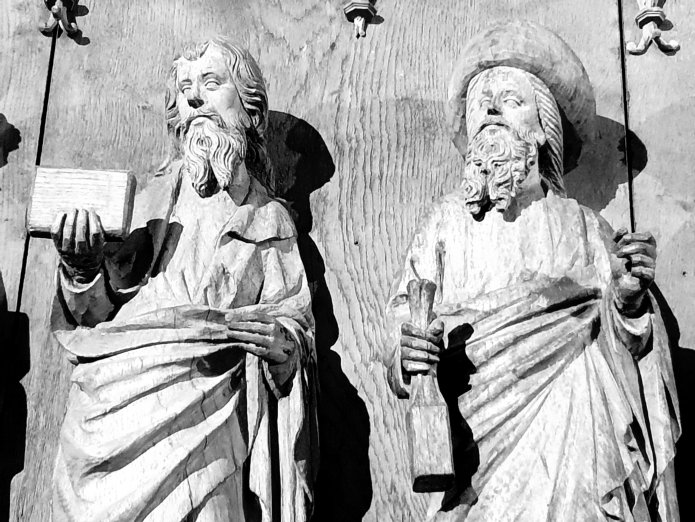
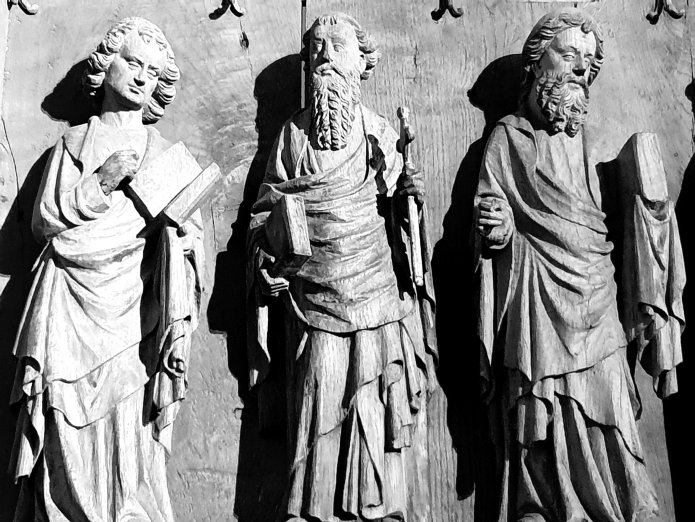
A limewood carving by Michel Erhart from Ulm:-
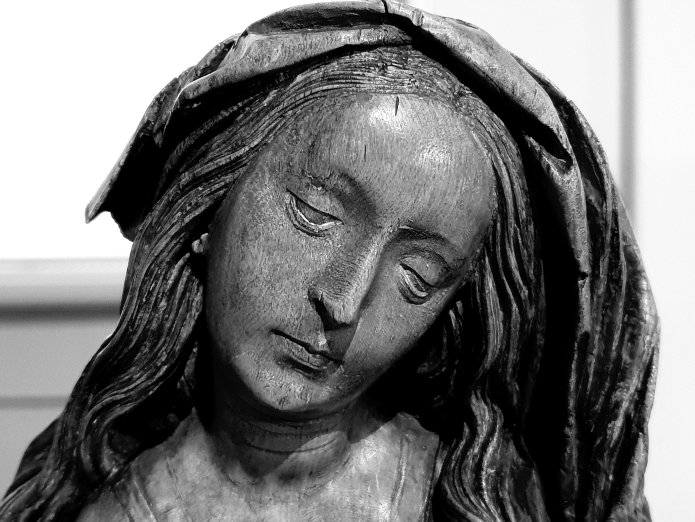
St. George by Tilman Riemenschneider (c.1490):-
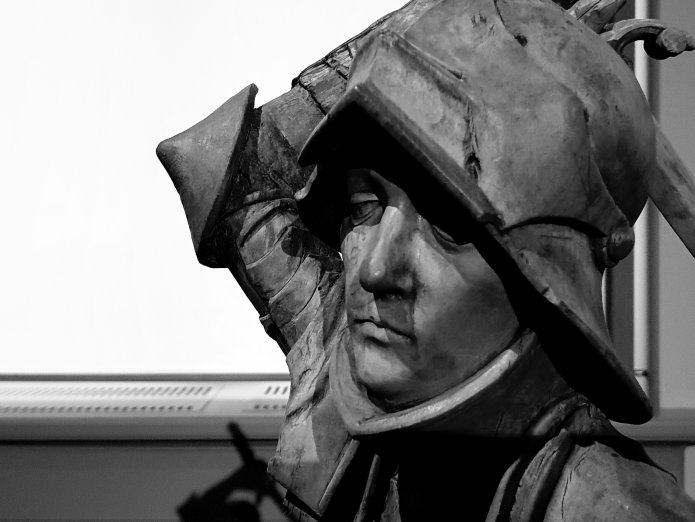
St. John the Baptist (Florence c.1480):-
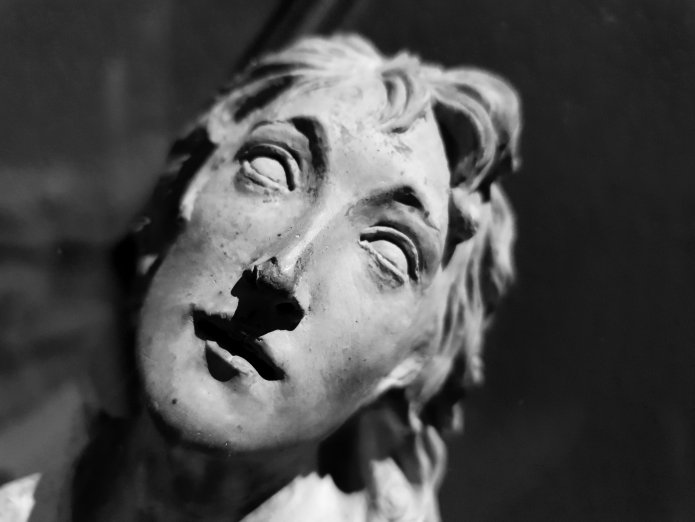
An amazing Algardi (an unknown man):-
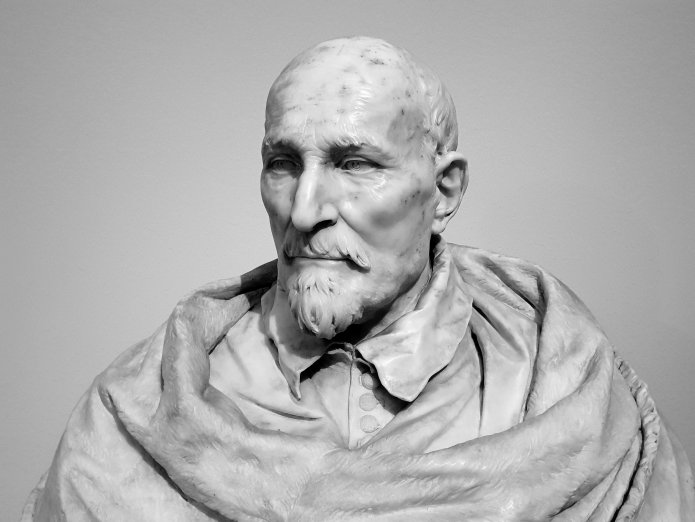
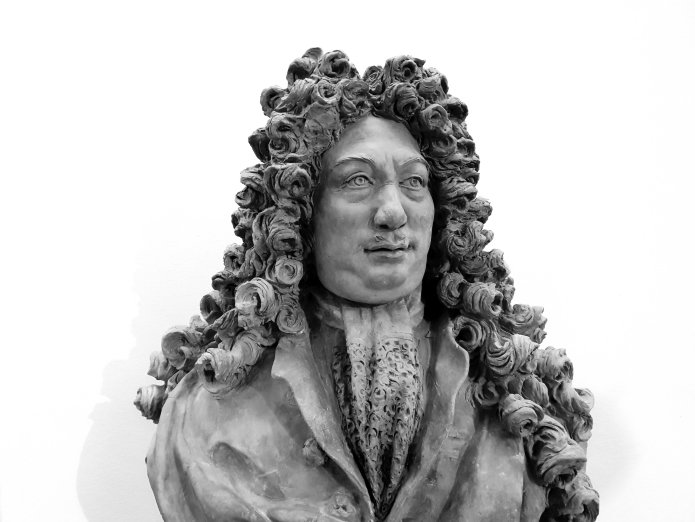
A terracotta bust of Marquise Fabio Feroni:-
I was tipped off about the Feuerle Collection, works of art acquired by Désiré Feuerle, a collector who studied in London and New York, worked for Sotheby’s in New York, opened a gallery in Cologne, and then devoted himself to collecting, placing two large groups of Khmer sculpture and Chinese furniture on two floors of an old wartime bunker in Kreuzberg:-
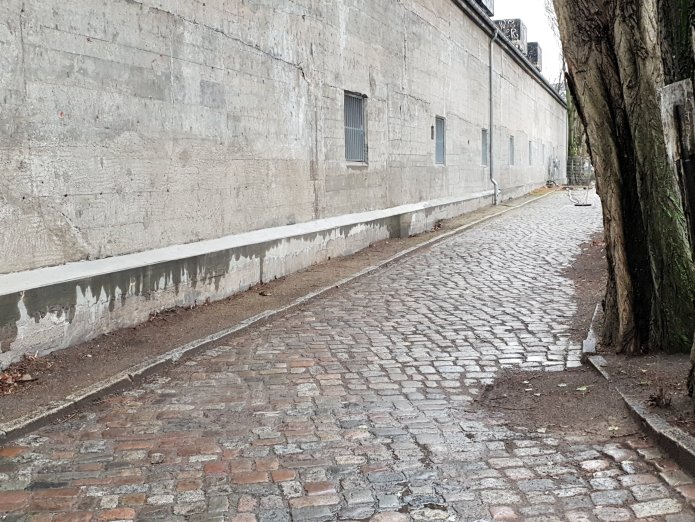
One starts underground in a dark room with music by John Cage, then move through to a big columned space, some of which is flooded, and filled with Khmer sculpture in display cases. Upstairs in the room of Chinese furniture, and a small number of contemporary works, including a bronze by Cristina Iglesias. It is all deliberately and wilfully, but magnificently, aestheticised.
It’s cold and wet in Berlin and the galleries don’t open till 11, so I walked to the Bode Museum, always a treat, through Mitte, now poshed up, but still with signs of its former life.
The old Handwerkervereinshaus in Sophienstrasse:-
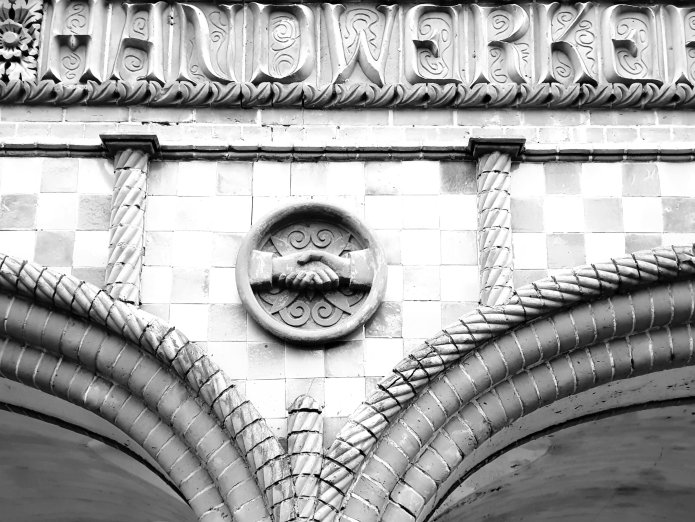
And details of the buildings round the Sophienkirche:-
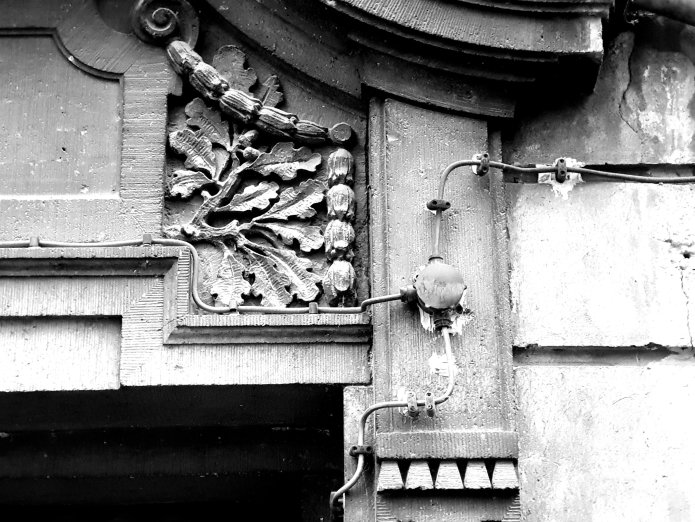
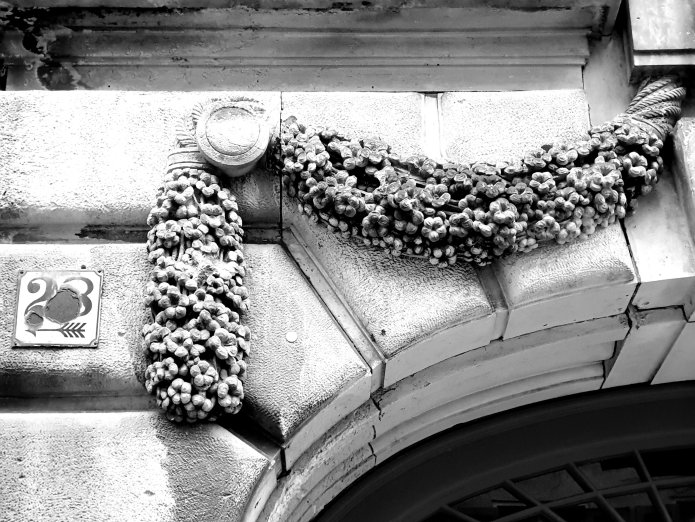
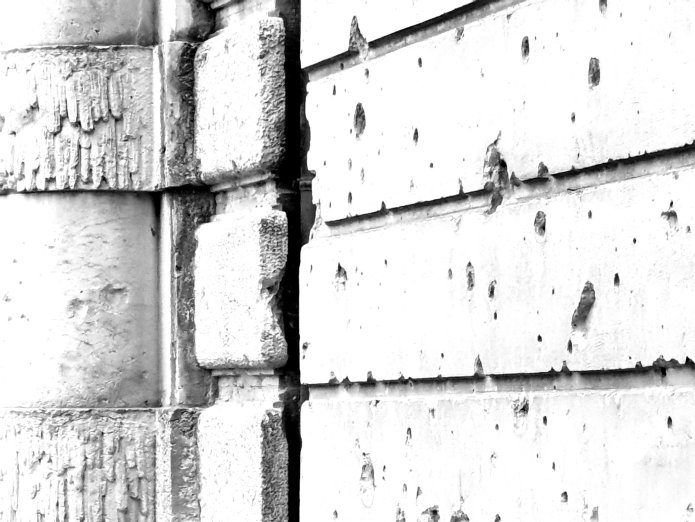
An old house in Auguststasse:-
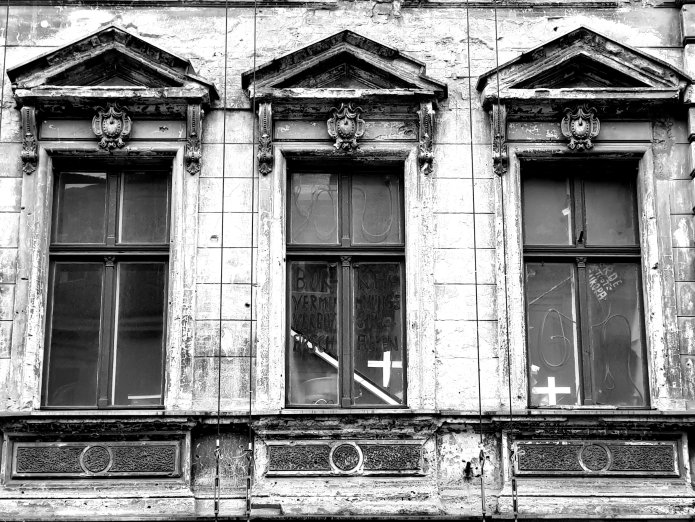
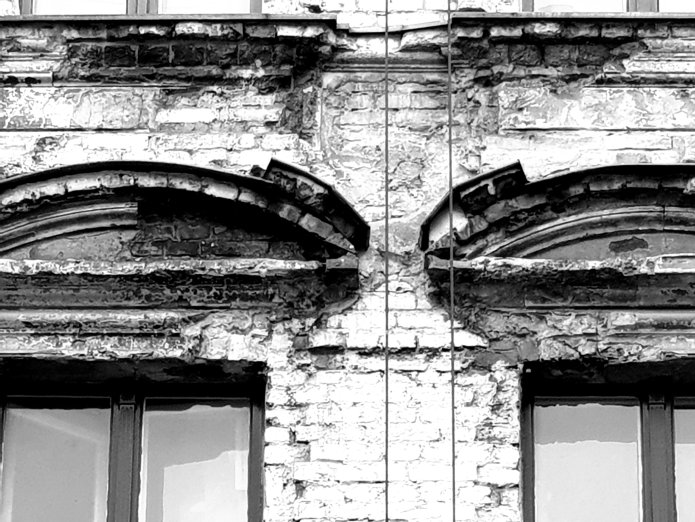
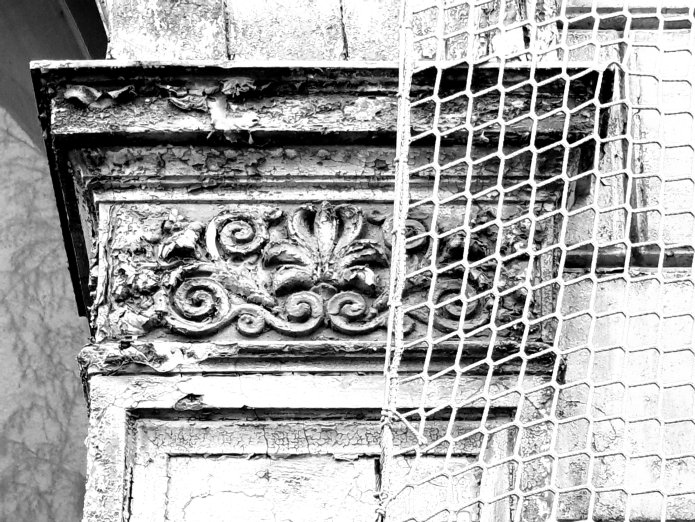
And on Linienstrasse:-
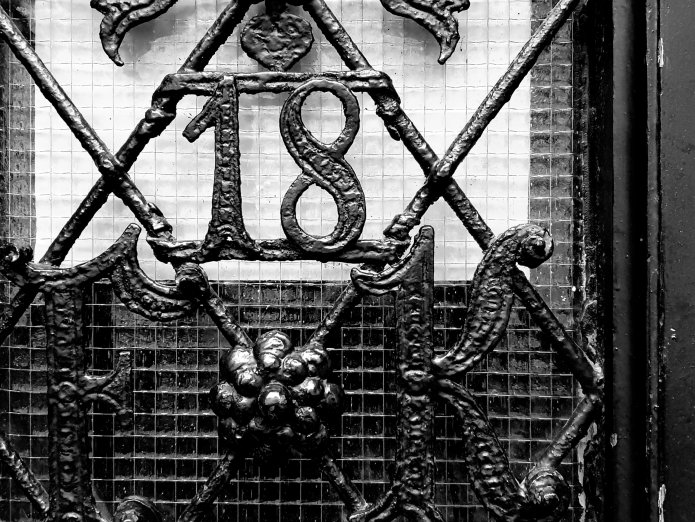
And the entrance to the Neugerriemschneider Gallery:-
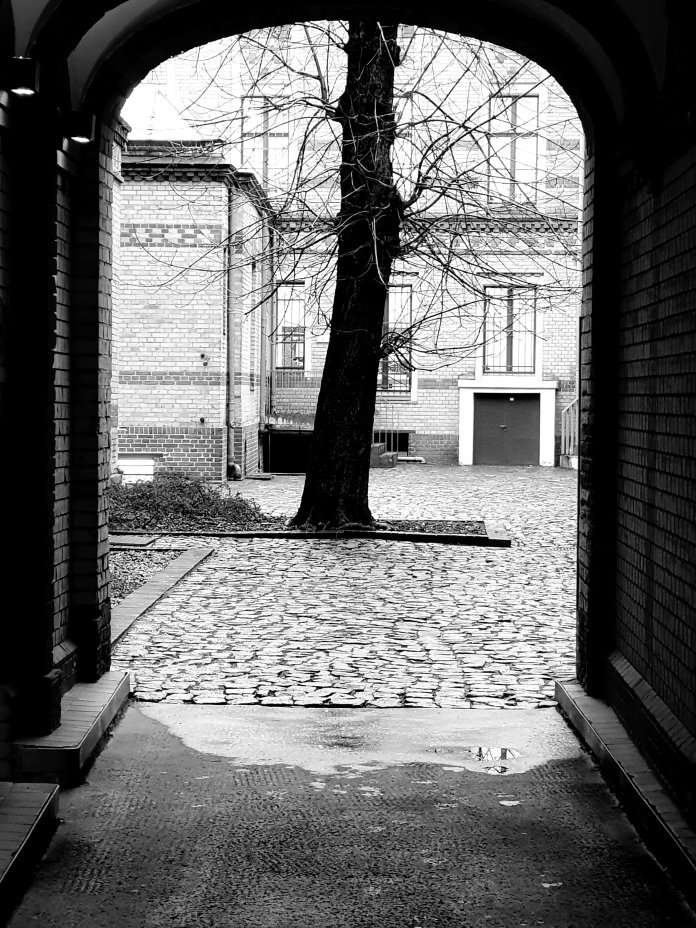
I went tonight to a conversation between Mat Collishaw and Lisa Seitz, the editor-in-chief of Weltkunst and author of a book about Werner Muensterberger, a German psychoanalyst based in London who studied the psychology of collecting.
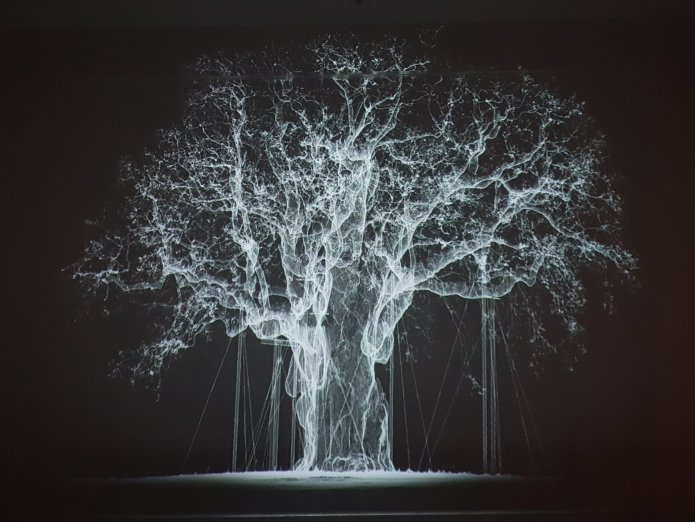
I had not realised the extent to which Collishaw is interested in Old Master painting, based on his upbringing as a Dawn Christadelphian, starved of the experience of any imagery, including television. He spoke particularly well of his experience of the Major Oak, a tree in Sherwood Forest which is the subject of Albion, one of the biggest and most ambitious works in his current exhibition:-
My first visit to a gallery artist was to see Jonas Burgert, who lives and works on a leafy street in what used to be East Berlin in an old factory complex which went bust shortly after unification and who luckily I already know having met and interviewed him in 2015:-
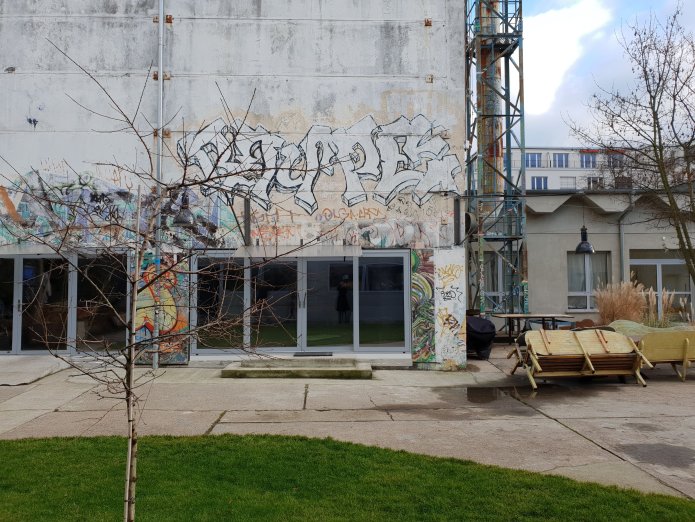
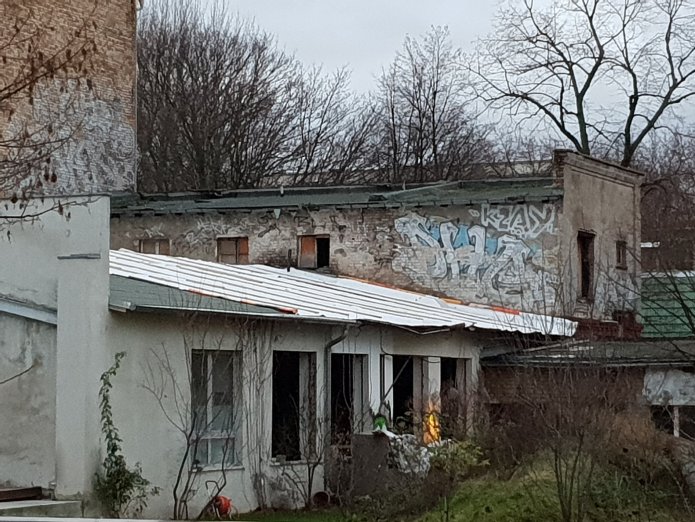
He needs the space since he sometimes paints on a gigantic scale, as in a work, Zeitlaich, which completely fills one wall of the studio (it’s 6 metres high) and was recently shown to great effect in the gallery.
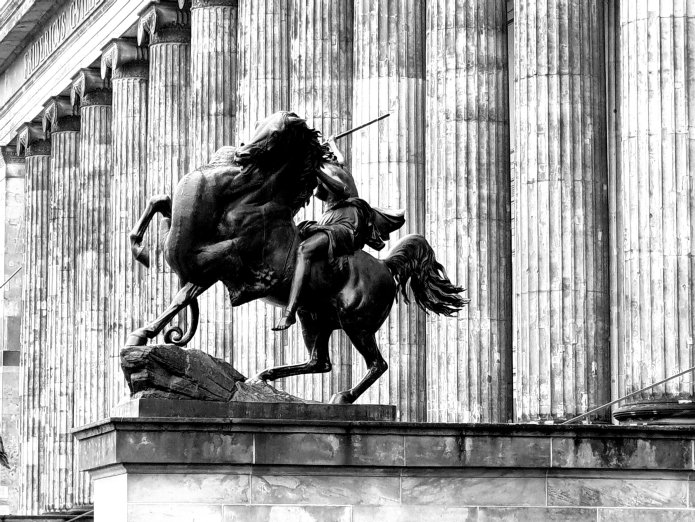
I decided to walk to the gallery today, through the centre of Berlin, starting with the Lustgarten and Schinkel’s Altes Museum, once the Königliches Museum and always a cerebral pleasure in the way that it dominates the approach to Museum Island:-
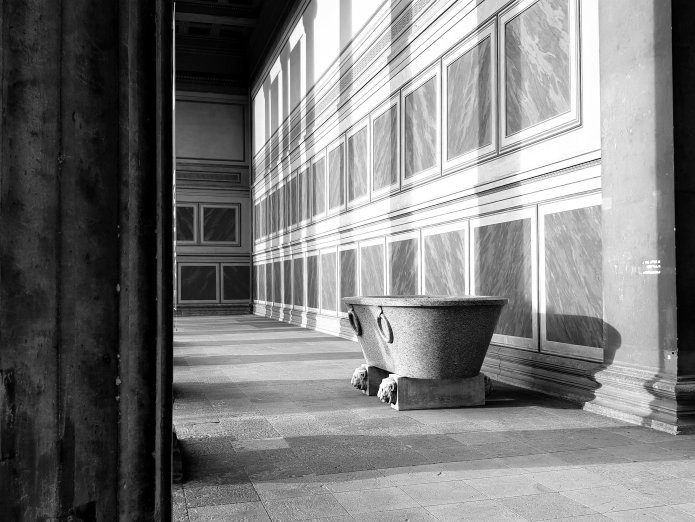
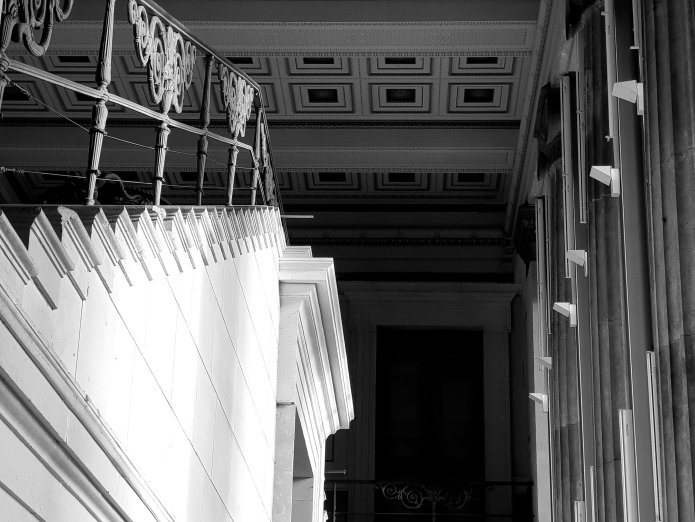
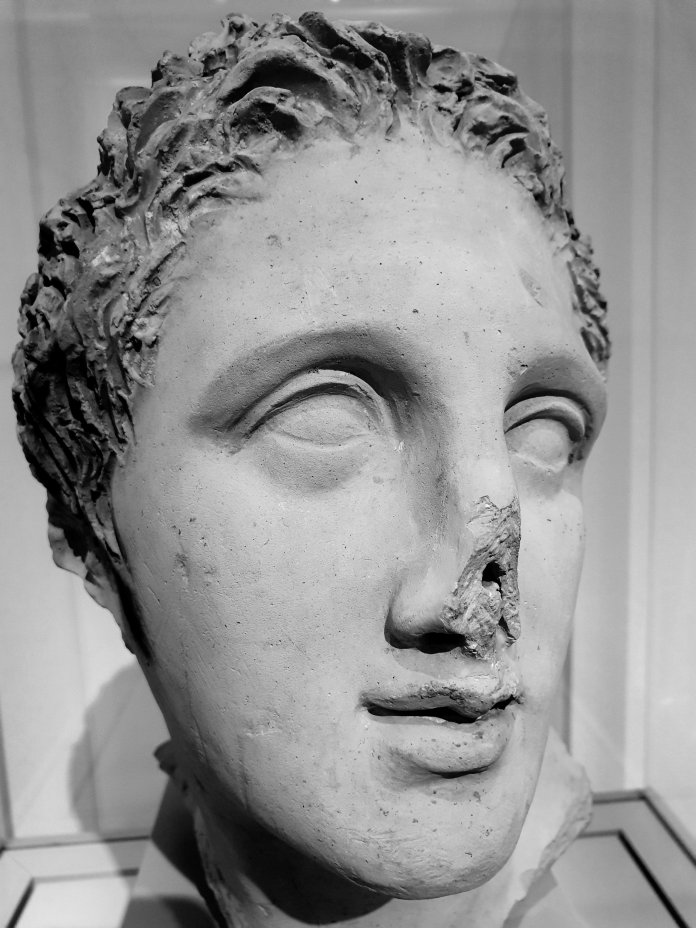
I stopped to pay my respects to a few works in the museum, including a clay portrait Head of a Young Man found in Italy in 1883:-
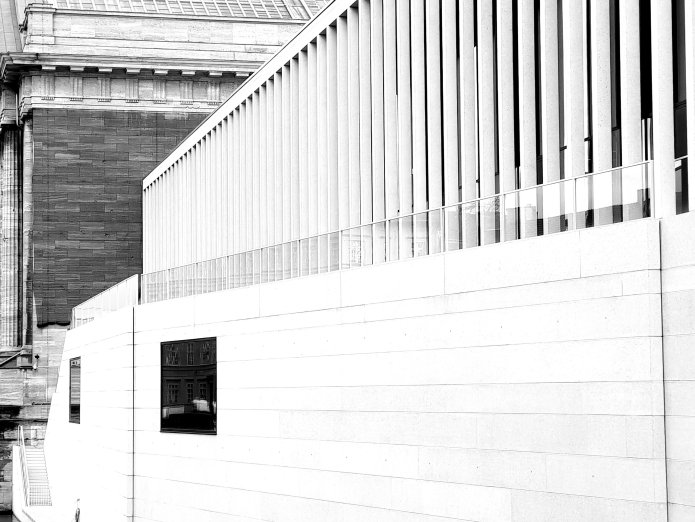
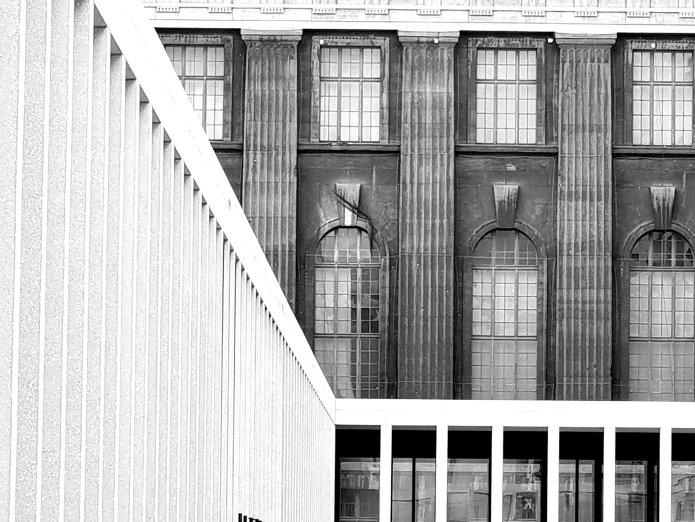
The James Simon Galerie, designed by David Chipperfield as a grand entrance to the Museum Island as a whole is nearing completion and is due to open this summer:-
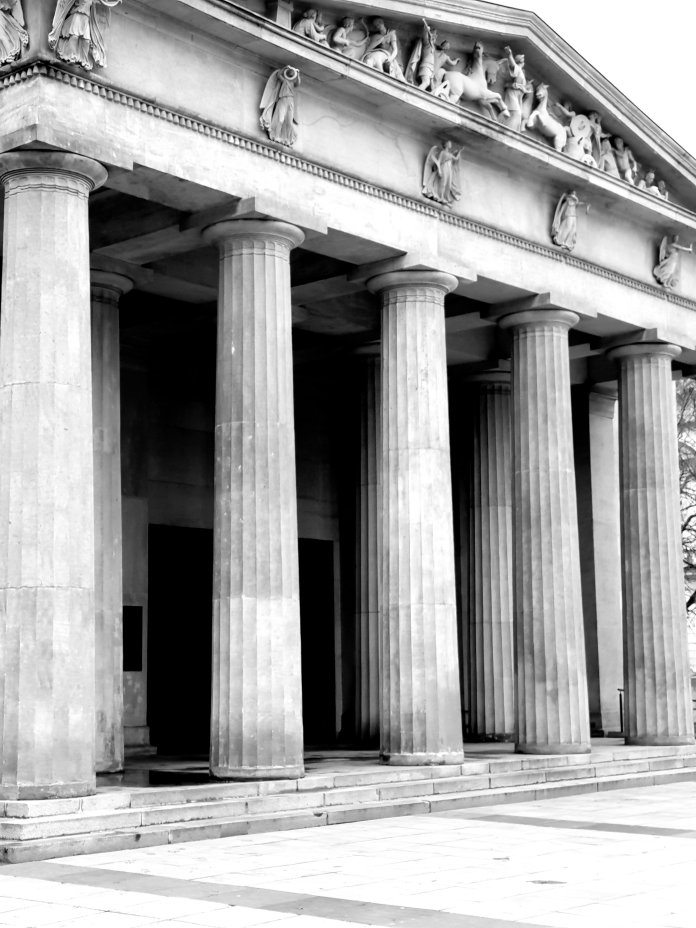
Schinkel’s Neue Wache, designed in 1816 to guard the Königliches Palais across the road:-
Borchardt doesn’t serve coffee:-

By the time I got to the Martin-Gropius-Bau, I realised the distances are too great:-


You must be logged in to post a comment.