
Sketched by Tuomey + O’Donnell and then constructed in a free way by local craftsman, it is a building without a purpose, a primitive hut:-

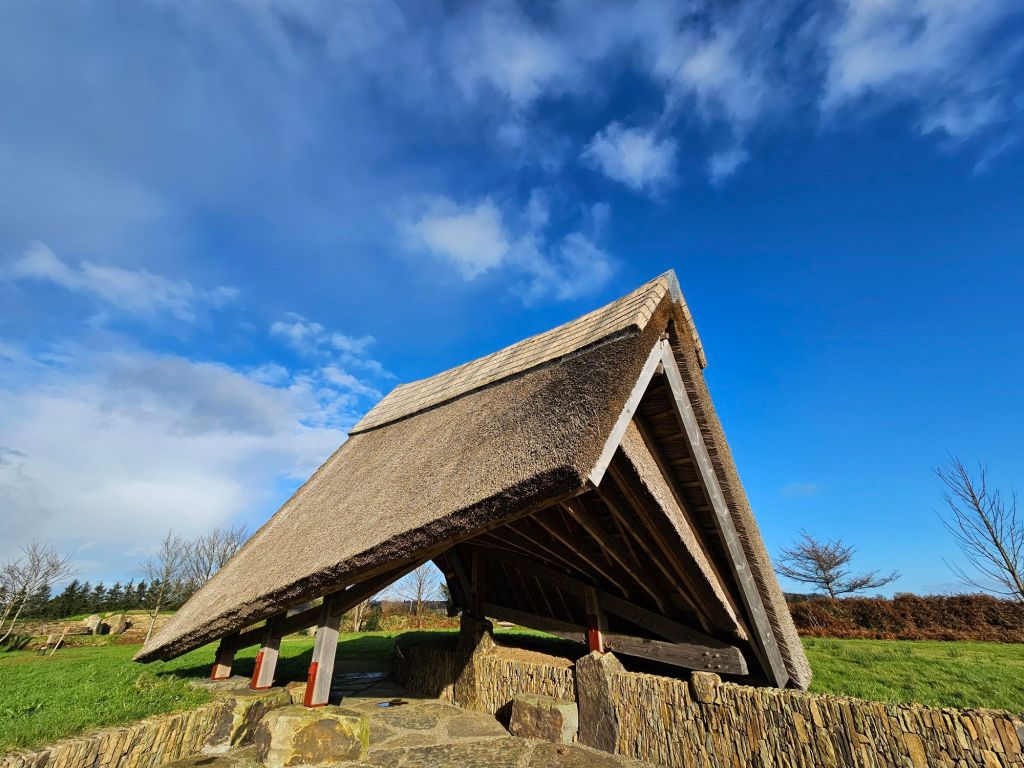
Sketched by Tuomey + O’Donnell and then constructed in a free way by local craftsman, it is a building without a purpose, a primitive hut:-
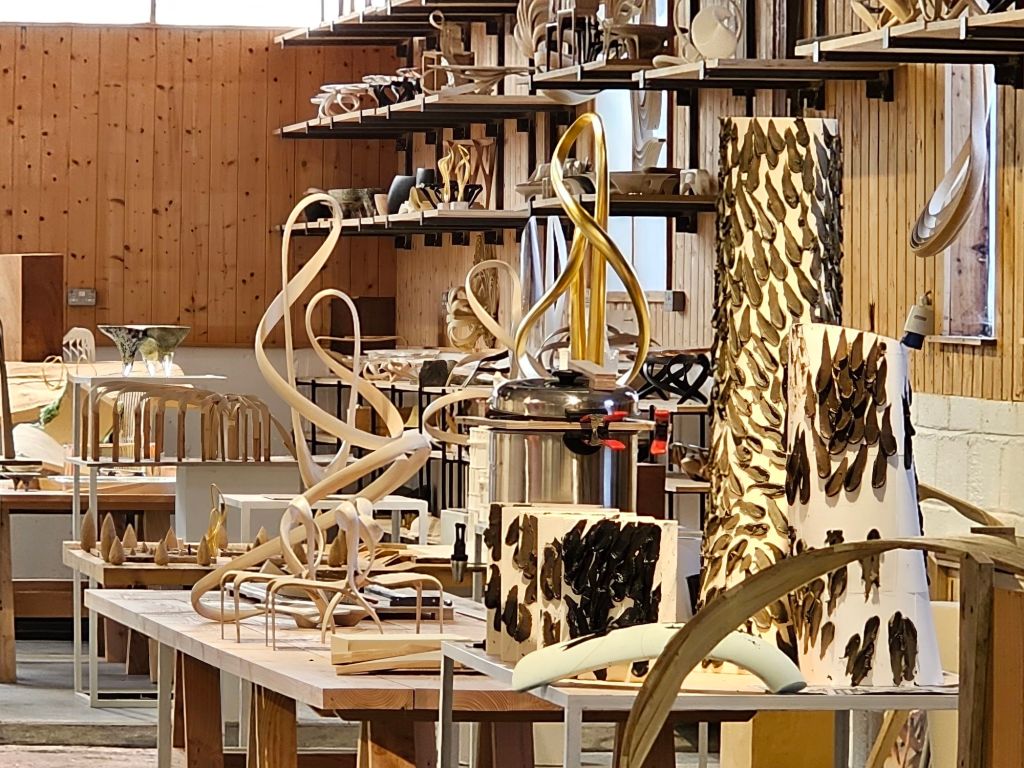
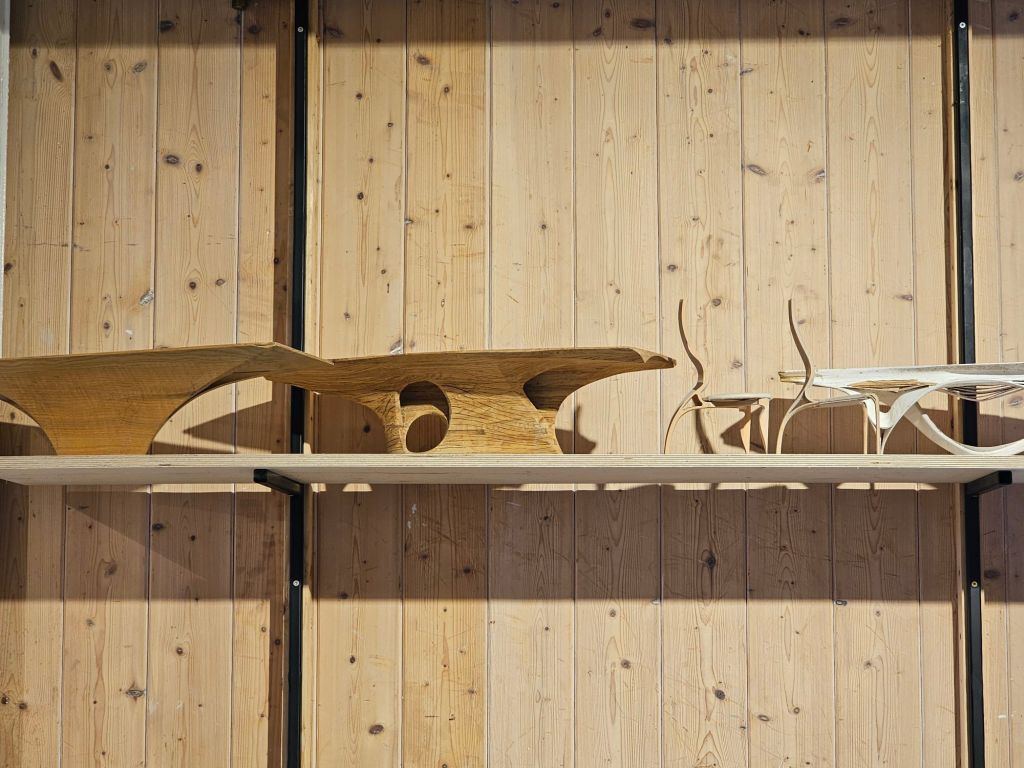
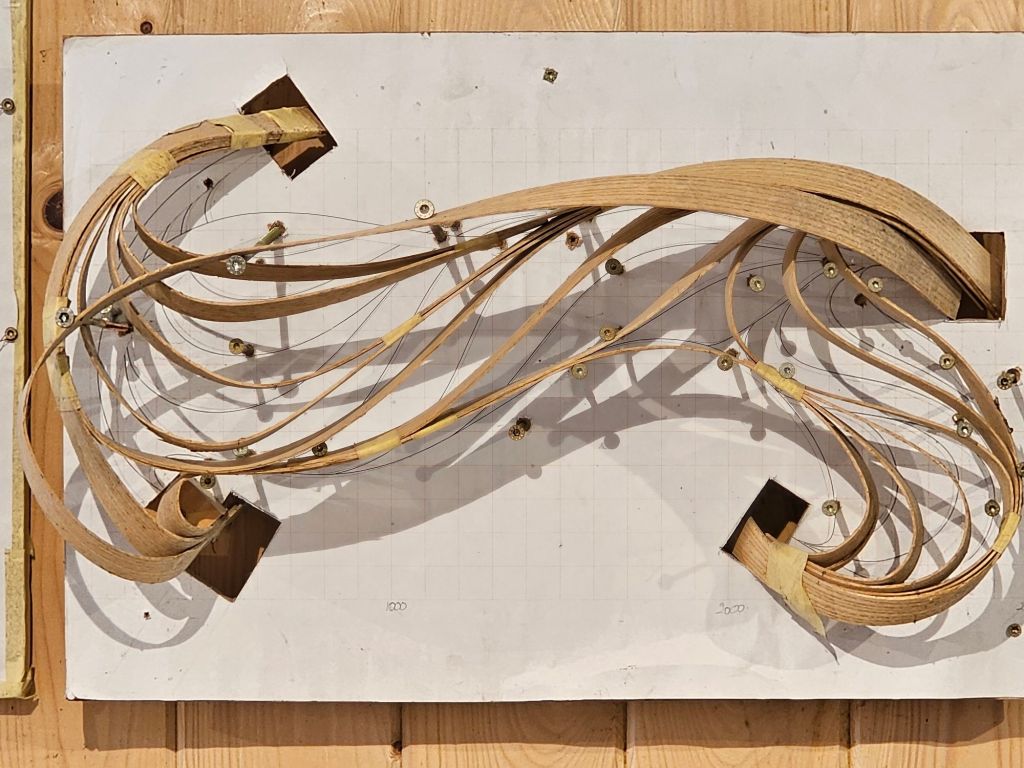
I have come on a slightly mad trip to Cork to see two buildings which John Tuomey and Sheila O’Donnell showed in this year’s Robert Maxwell Lecture. They are in the grounds of the Joseph Walsh Studio, so first I saw the work of the Studio:-


If you happen to have a subscription to the FT, you can read an article about Old Town’s sad demise – actually, a well-deserved retirement after a life well lived, making clothes to last.
I lament the fact that nobody has been able to take it on: all that loyalty; such consistent devotion to high quality; it’s hard, apparently impossible, to replicate.
I am one of those people who hopes I have enough corduroy trousers to last me out, plus I can always go back to the green moleskin suit in the cupboard.
The end of cult British brand Old Town – https://on.ft.com/3OodV1r via @FT
My review of Simon Jenkins’s recent architectural history has just gone online: a very enjoyable book, but not if you want to find out about any pleasures of post-war architecture:-
https://thecritic.co.uk/a-passionate-battler-for-buildings/#
For my architectural article in The Critic this month (see below), I have written about the newly refurbished Warburg Institute which I think is a model of good practice in the renovation of a recent building. Please note Marks & Spencer (and, indeed, hundreds of other buildings of the recent past). It can be done. What Haworth Tompkins have done in a totally admirable way is to immerse themselves in the building’s and the institution’s history and then have done everything to restore it, but in the spirit of the original, so that it is now more like what it was planned to be than it had become owing to changes over the years: a great achievement.
It also feels more welcoming.
The story used to be told of how Kenneth Clark arrived one day to use the photo library and was turned away because he didn’t have a library card. It may be apocryphal, but represented an ethos of wilful high-mindedness which was in some ways admirable, but not necessarily in the Institute’s long-term best interests.
I went to the memorial service for Lord Cormack this morning, held, very appropriately, at St. Margaret, Westminster, where he was a long-standing church warden, devoted as he was to the church of England, as to parliament.
I knew him through the All-Party Arts and Heritage group which had been established by Cormack and arranged visits for parliamentarans, mostly members of the House of Lords and their wives, to museum exhibitions, establishing a network of informal contacts. Through this, we became friends. In fact, not so long before he died, I consulted him about the fate of the Whitechapel Bell Foundry, sitting on the terrace of the House of Lords which was otherwise empty because of COVID. He was good at working behind-the-scenes, one of the foot soldiers of parliament, rather than a big player, partly because he was determinedly independent-minded, voting against his own party when he thought it was in the wrong, as, for example, in the privatisation of the Royal Mail.
He failed to help us save the Bell Foundry, but he was one of the key figures in the 1970s in the establishment of the National Heritage Memorial Fund. Indeed, it could even have been his idea.
A force for good. RIP.
I had heard that the Allotment Kitchen in Stepney City Farm was closing because the rent expected of its tenants had gone up so much. Whether or not this is true, it’s a big loss. It was opened just before lock-down by two sisters-in-law, Betty and Lucy Cuthbert, who kept the neighbourhood deliciously fed all through lock-down. The food was based on local ingredients. It was highly imaginative. Let’s hope that its replacement is as good:-
The obituary of Tim Hyman in the current issue of the RA Magazine reminded me to see what other obituaries had by now appeared. Strangely, only an ‘Other Lives’ in yesterday’s Guardian (see below).
I feel he deserves more: such a strong-minded, individual artist and writer, someone with such obvious integrity. I hope he will not be forgotten just because he swam against the tide, fighting for what he believed in, independent of fashion.
https://www.theguardian.com/artanddesign/2024/nov/15/timothy-hyman-obituary
If you want to learn about the work of the Factum Foundation, which was heavily involved in the attempt to preserve the Whitechapel Bell Foundry, I strongly recommend the attached, quite long, but wide-ranging conversation between Richard Delmarco and Ferdinand Saumarez Smith which explains the nature of its work and historical interest:-
I have been trying to figure out what has happened at Liverpool Street. It appears that Network Rail have dumped their partnership with Sellar as developers and Herzog & de Meuron as architects in favour of working directly with a big local architectural practice, ACME, based very near Liverpool Street in Tabernacle Street (this surely is an advantage).
So, who are ACME ? They were set up in 2007 by Friedrich Ludewig who came to London from Berlin to study at the Architectural Association with Farshid Moussavi and Alejandro Zaera-Polo and then worked with them on the John Lewis building in Leicester.
His practice has done a strange miscellany of projects internationally, including big masterplanning in Earls Court, but that is perhaps to be expected for a younger practice seeking work internationally. Their projects include an interesting housing project on the edge of the City and the pavilion which opened recently as the gateway to the Olympic Park. They have also done an organic food market in Wiesbaden.
What they are proposing looks definitely better than the crackpot Herzog and de Meuron scheme:-
I could live without the cauliflower on top of the tower blocks and the tower blocks themselves look bland; and I suspect there is considerable loss to the unlisted 1980s additions; but overall it looks as if they are at least trying to do something interesting and adventurous having been given a very tricky brief.
 | Charles | Saumarez | Smith |
You must be logged in to post a comment.