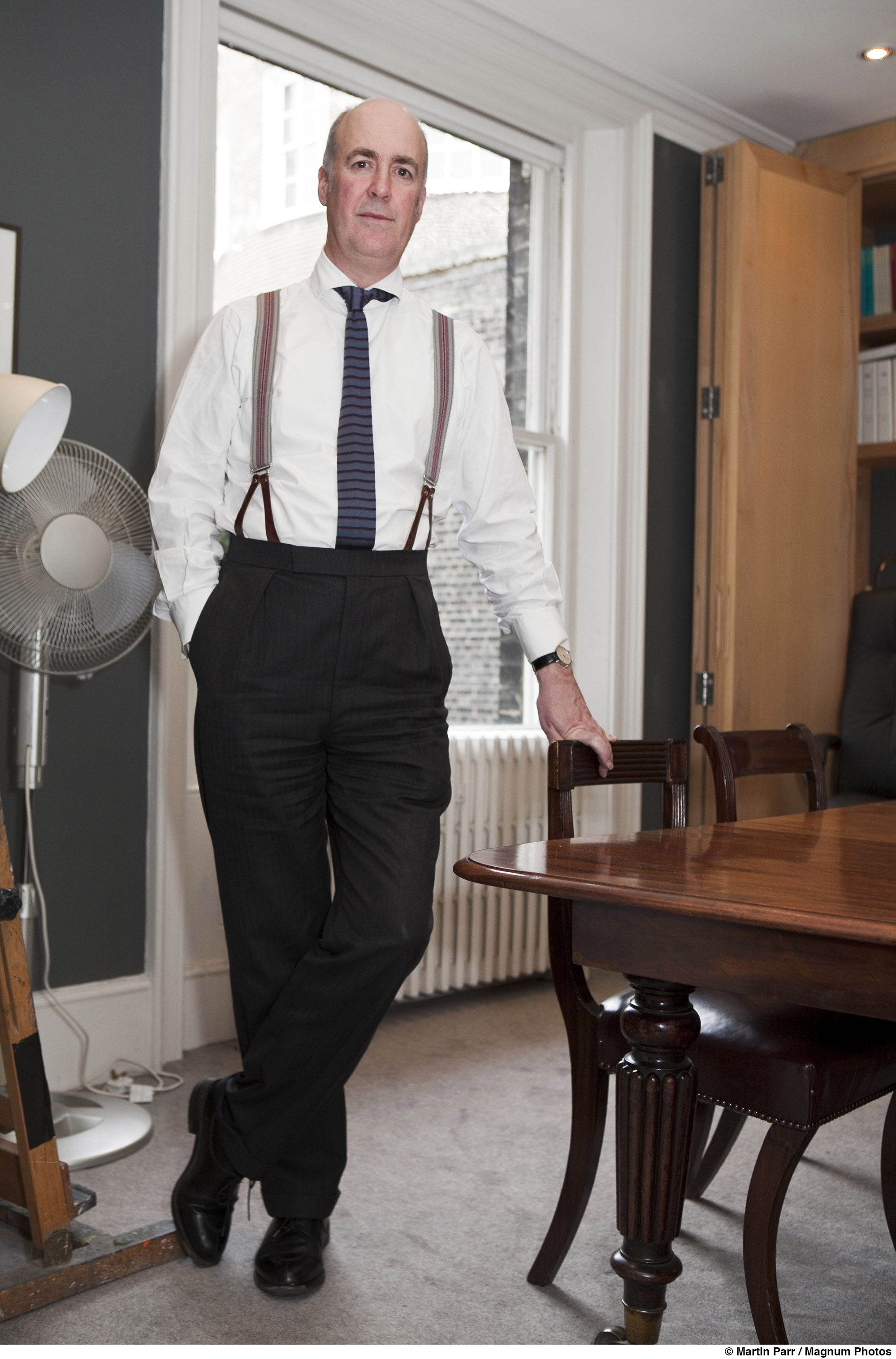
I have never been to Parham before, the site of this year’s Garden Museum Literary Festival. Almost as enjoyable as the talks was the opportunity to explore the garden, which is unexpectedly extensive, looking out towards the Downs:-
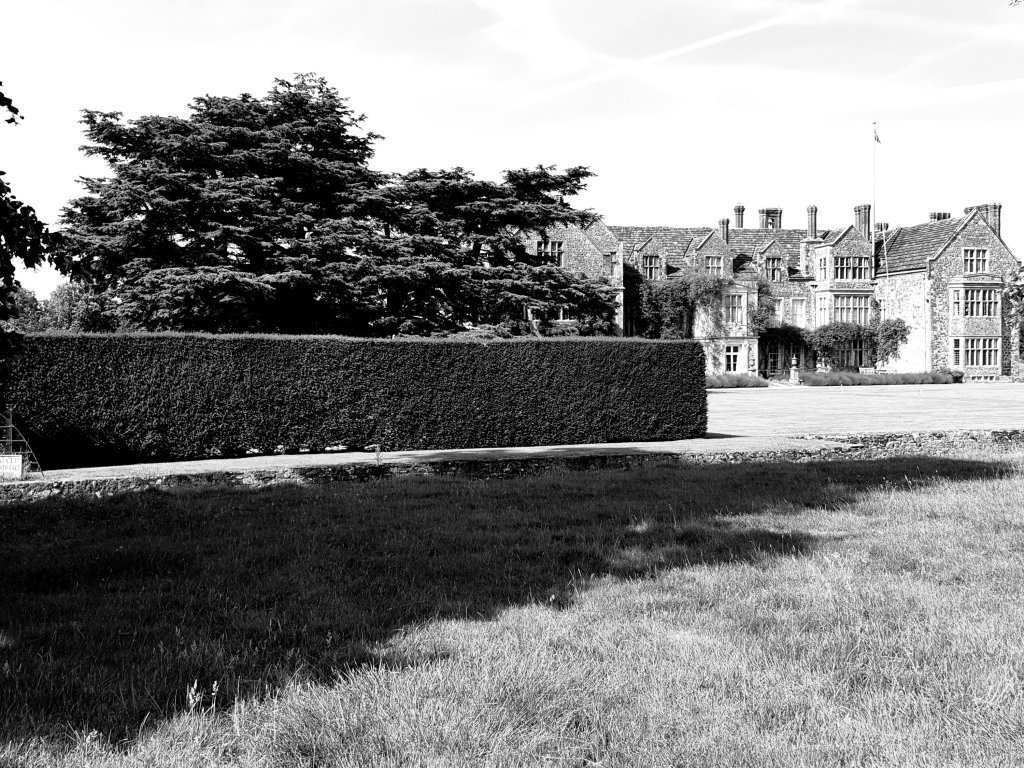
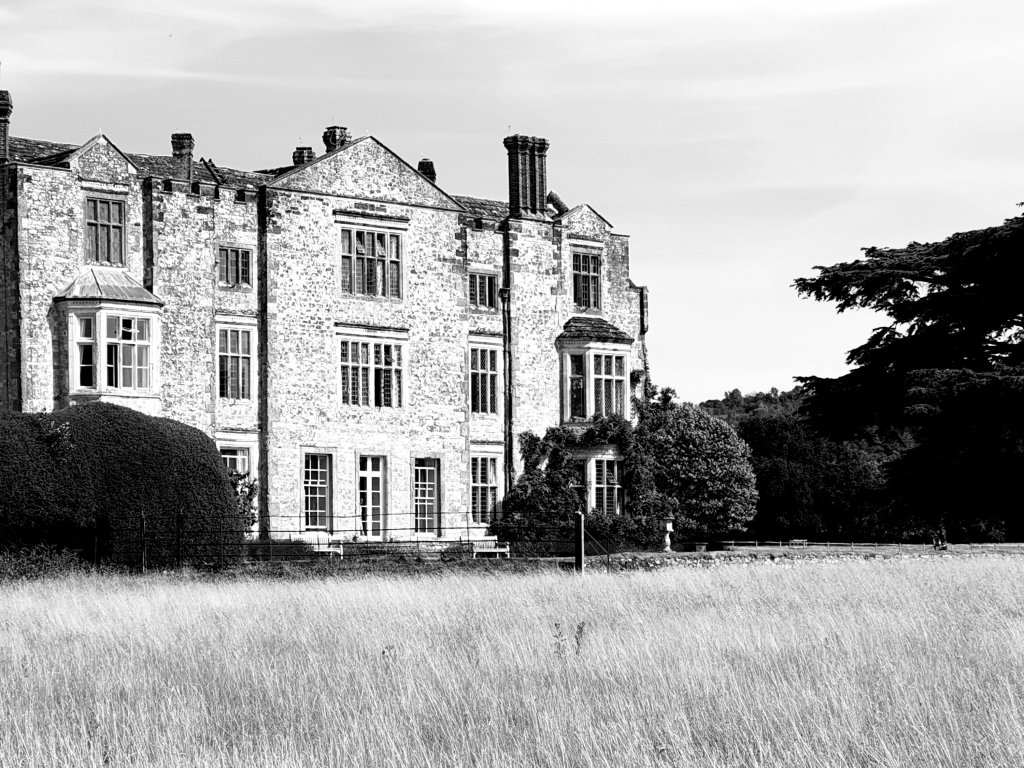
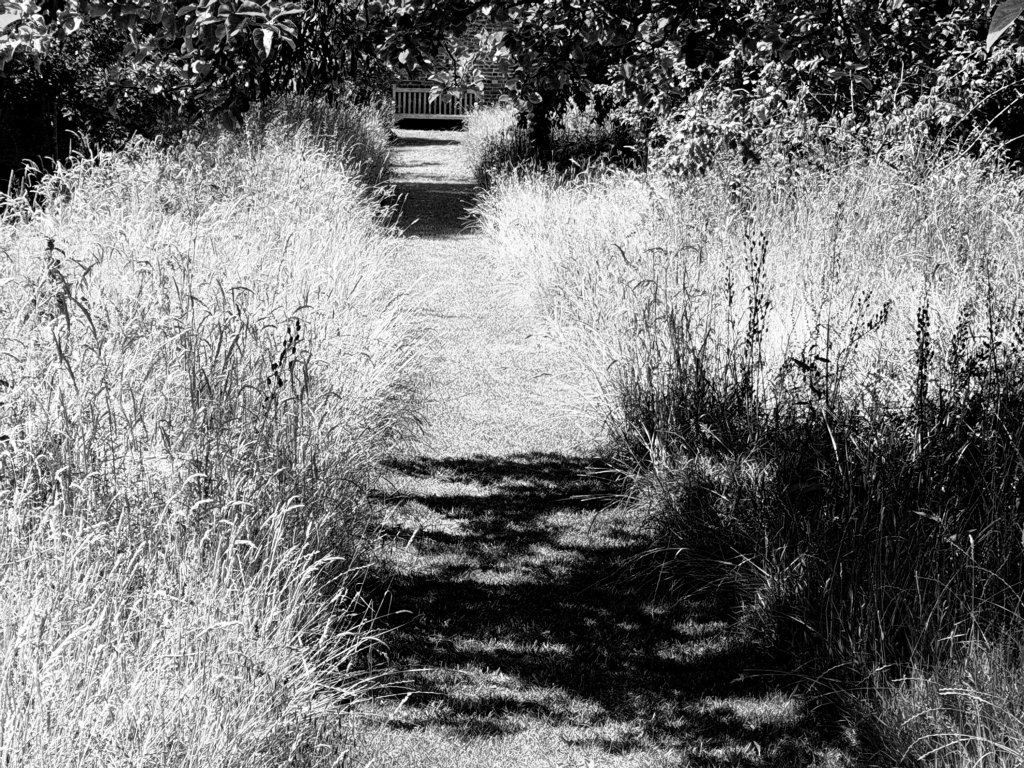
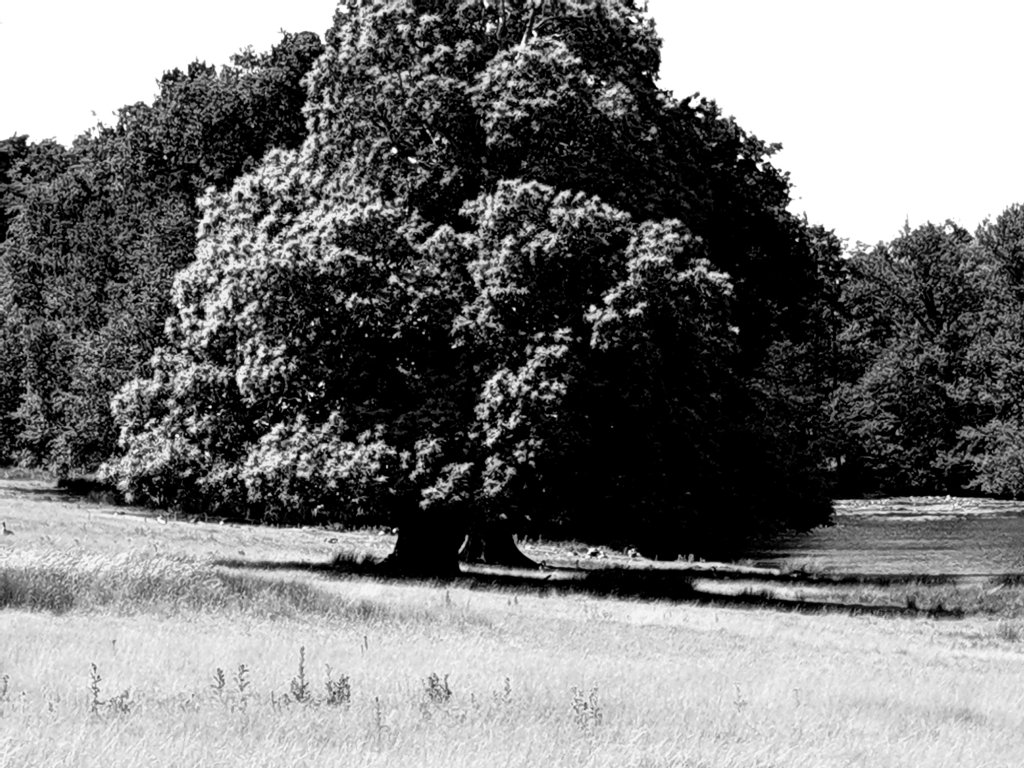
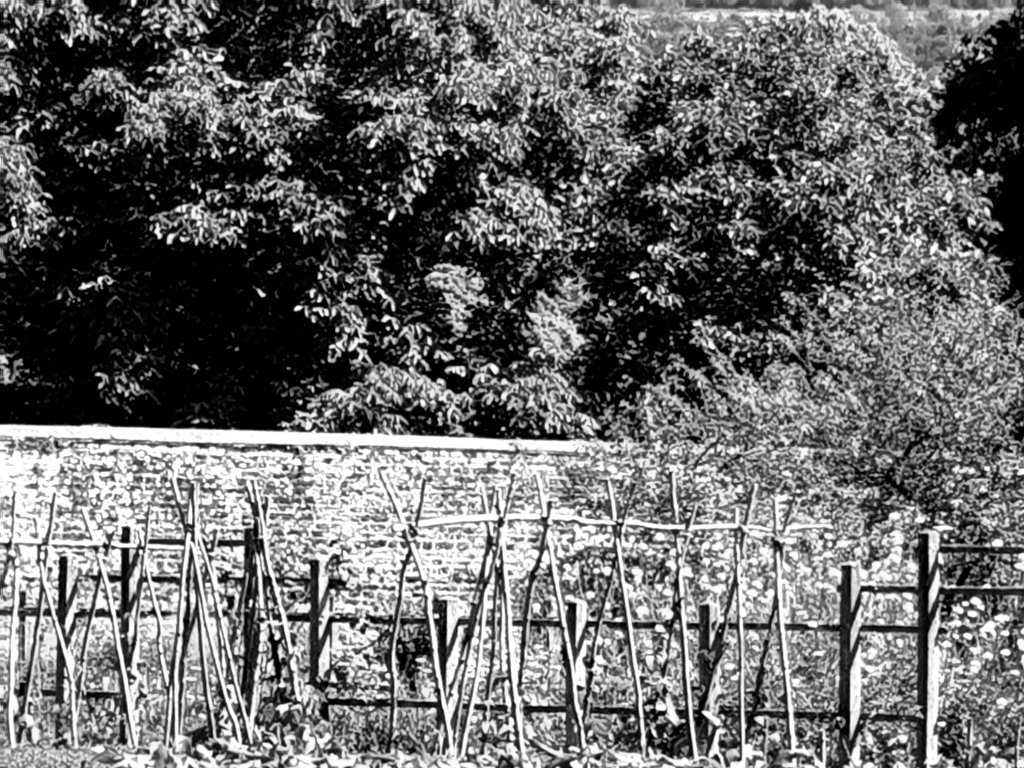
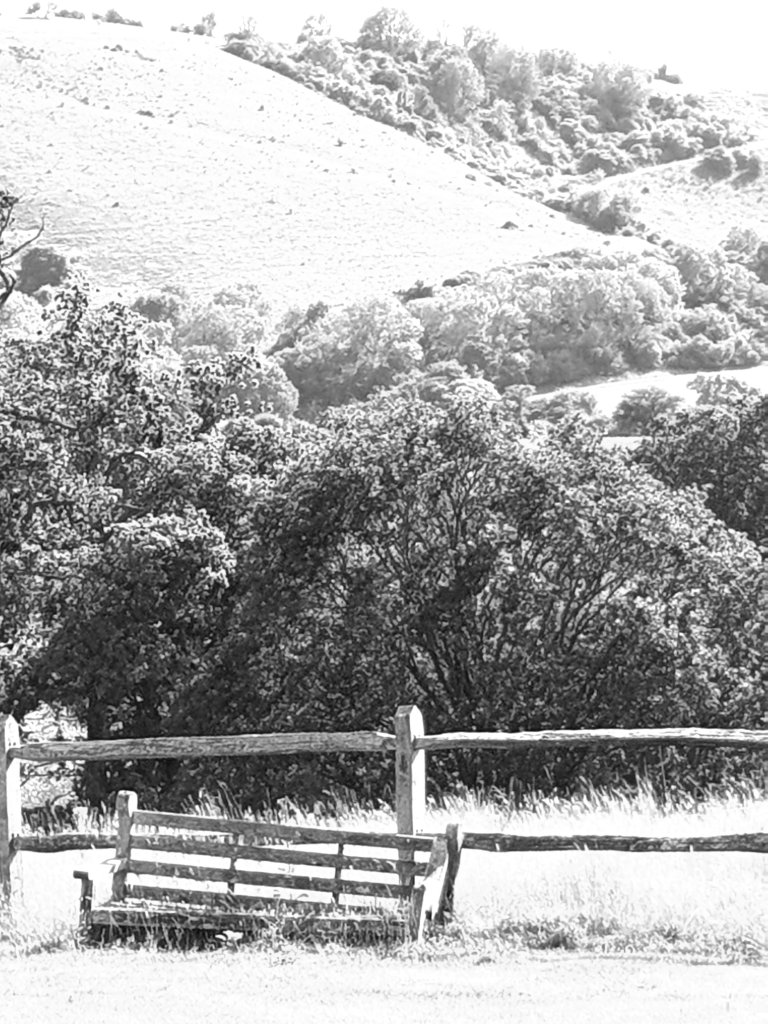
I have never been to Parham before, the site of this year’s Garden Museum Literary Festival. Almost as enjoyable as the talks was the opportunity to explore the garden, which is unexpectedly extensive, looking out towards the Downs:-
As a small postscript to my recent post on the Hopkins’s work on Manchester City Art Gallery, it is probably worth adding that they had been involved in museum projects for a long time before they renovated the Manchester City Art Gallery in 2002.
First, as I have already mentioned, they drew up a Master Plan for the development of the V&A in 1987, following the creation of the Board of Trustees as a result of the National Heritage Act in 1983. This was the beginning of a big change in the way the national museums operated in which they were required to manage (and fund) their buildings. I am not sure how much remains of the Hopkins’ Master Plan, but I suspect that it was very important in a number of ways: in treating the complex of buildings as a totality; and developing a Master Plan for its future development for the first time. The only bit I remember being done was the opening up of the so-called Index Corridor which runs east-west beyond the entrance hall with prominent graphics by Pentagram, which was symbolically important in helping visitors navigate their way round the building, but the total renovation of the V&A has continued to be guided by an overall Master Plan, greatly to its benefit.
The second huge project they were involved with was a project to develop the Royal Academy in the late 1990s. They won a competition in 1998 when Philip Dowson was President to connect the main building to the building in Burlington Gardens which had been the Museum of Mankind and which the Royal Academy was negotiating to buy. It was a hugely ambitious project which survives in the model held by the Royal Academy:-
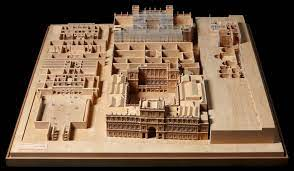
The idea was to connect the two buildings with a glass atrium between the two (there is a drawing in the RA Collections which is reproduced in Nicholas Savage’s excellent book on Burlington House: Home of the Royal Academy of Arts). The costs of the project grew to (from memory) £89 million and the Heritage Lottery Fund turned down the application for funding, which killed the project, much to Michael Hopkins’s frustration. But I suspect that some of the thinking helped inform the work they did so successfully in Manchester.
Howard Smith, one of my readers, has tried to post a comment about Sir Michael Hopkins, but has not been able to and the truth is that I don’t know how the system works myself, so I am posting it myself, because it refers to one of their works which is less often referred to involving the total renovation and reconstruction of the Manchester City Art Gallery in 2002 (I might add that I remember visiting it myself not long after it opened and being very impressed by the way it combined the original Charles Barry building with the old Athenaeum behind, a model of sympathetic and intelligent stitching together of two historic buildings and an important moment in marking the move of the Heritage Lottery Fund as it then was from supporting prestige London projects to a much wider distribution of funding):-
MANCHESTER ART GALLERY
Michael Hopkins and Partners were responsible for a significant expansion of Manchester Art Gallery, completed in 2002 for the Commonwealth Games. This is their only art gallery project, as far as I am aware and is not as well known as their other buildings in the UK. I was a member of the curatorial team that helped deliver it. The brief was complex: to link two important buildings by Sir Charles Barry, the Grade I City Art Gallery and the Athenaeum, respecting their integrity whilst creating a new building on an adjacent car park site. This was achieved by inserting a glazed atrium, enabling views through from adjacent streets that features an imposing central staircase (echoing that in Barry’s Art Gallery) flanked by exposed lifts. A dramatic bridge with glass-block floor is at first floor level. Hopkins’s muscular modernism of steel and glass contrasts successfully with the beautiful mellow stonework in Italianate style of the former rear of the Gallery. The new building has two floors of galleries and educational facilities. The existing historic galleries were sensitively refurbished to current standards, retaining elements of decoration from an earlier scheme. The Athenaeum’s first and second floor (formerly a members’ lecture theatre) were converted into display spaces.
Viewing the Art Gallery’s façade little is revealed of the extensive changes but walking around the now completed street block, one encounters the new build exterior: exposed concrete frames, bronze sub-frames and stone panels complementing both historic buildings. Throughout the new build, Hopkins and his team devoted tremendous care in the detailed design, for example with the lighting modules and subtly modulated cast concrete ceiling panels. They provided Manchester with a first-class gallery that plays an important role in the city’s cultural life.
It was a pleasure to visit Windsor Castle. Its building history is so horribly complicated. Norman in origin, Queen Elizabeth apparently added the Long Gallery, which was later converted by Jeffry Wyatville into the King’s Library (a perfect Tudor fireplace survives, as well as a Rysbrack bust of Elizabeth which came from Queen Caroline’s library, now lost, designed by William Kent at St. James’s Palace). Then, Hugh May added the State Apartments, with ceiling paintings by Verrio, only for it all to be redone by Wyatville under George IV:-

I read somewhere that Michael Hopkins was influenced by Jim Richards’s The Functional Traditional in Early Industrial Buildings. This seems plausible: a combination of intelligent and non-academic problem-solving with the use of good quality materials both new and old and a strong infusion of East Anglia, where they have built a lot. I know that in 1990, Michael and Patty helped donate Eric De Maré’s beautiful photographs to the RIBA, including those he had done for Richards’s book.
We have both been mourning the death of Sir Michael Hopkins, a good friend to us both, who I first got to know when he and Patty were the masterplanners for the V&A in the mid-1980s, brought in by David Mellor and Terence Conran to bring some order to the immensity and complexity of its Victorian layout. Not long afterwards, they won the competition for the Glyndebourne Opera House, a brilliant and beautiful project which fits so well in its bucolic surroundings, characteristic of their work in combining the latest technology with the most traditional materials. Over the years, I have visited many of their projects and greatly admire how different each can be, from the simplicity of The Round Building at Hathersage (his obituary in the Guardian is by Fiona MacCarthy, whose husband, David Mellor commissioned it) to the Piranesian complexity of the subterranean depths of Westminster underground station. He remained admirably un-self-important, happiest bumbling around on a small tractor on his estate at Blackheath or on a boat out on the river. We will miss him.
https://www.theguardian.com/artanddesign/2023/jun/19/sir-michael-hopkins-obituary
Two weeks ago, the Wedding Cake at Waddesdon was still under scaffolding. Now it’s been unveiled in its full glory:-

It’s quite something:-

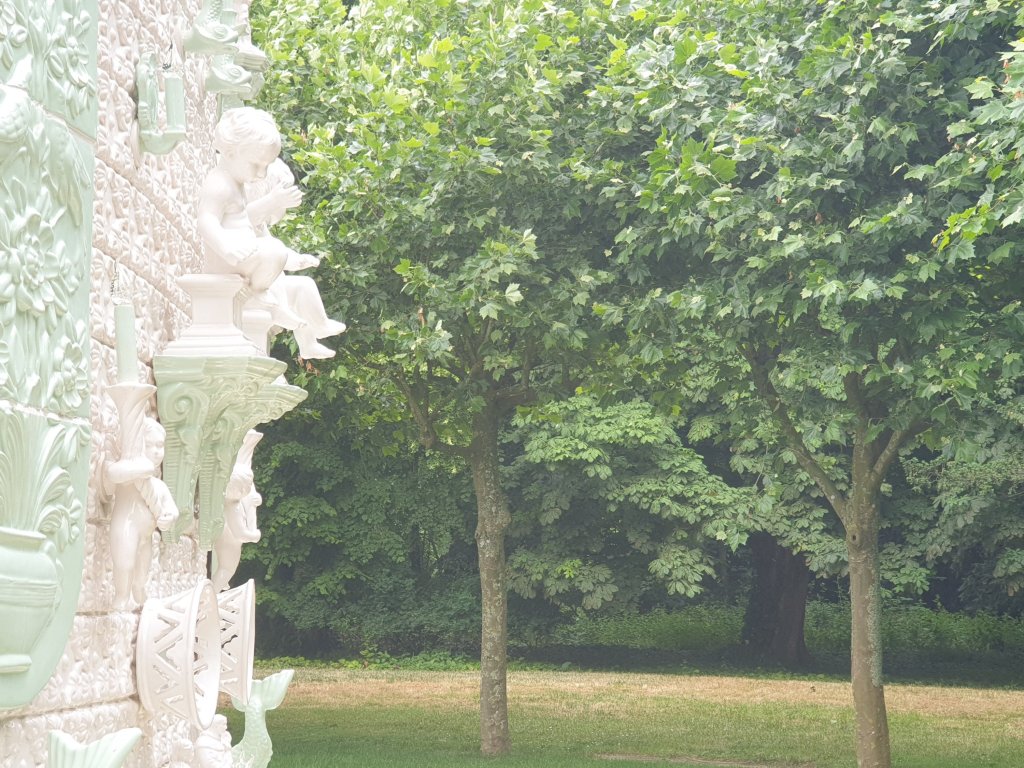


A Meissen goat commissioned for Dresden:-

The wood carving in the dining room:-

I have only just discovered that the article I wrote about the Farrell Centre in Newcastle for the June issue of The Critic has already appeared online. It’s a product of Terry Farrell’s generosity to the city where he was brought up and the university where he was educated:-
https://thecritic.co.uk/issues/june-2023/a-bid-to-inspire-future-architects/
I had seen that I am advertising a work by Romilly, but I couldn’t find it. Now she has sent me the link (A Different Planet — Romilly Saumarez Smith). I have added the picture to the randomised photos which appear every time you open the blog, just to add a bit of variety. The picture is by Lucinda Douglas-Menzies, a brilliant photographer of both objects and people.
 | Charles | Saumarez | Smith |
You must be logged in to post a comment.