The Goring Hotel

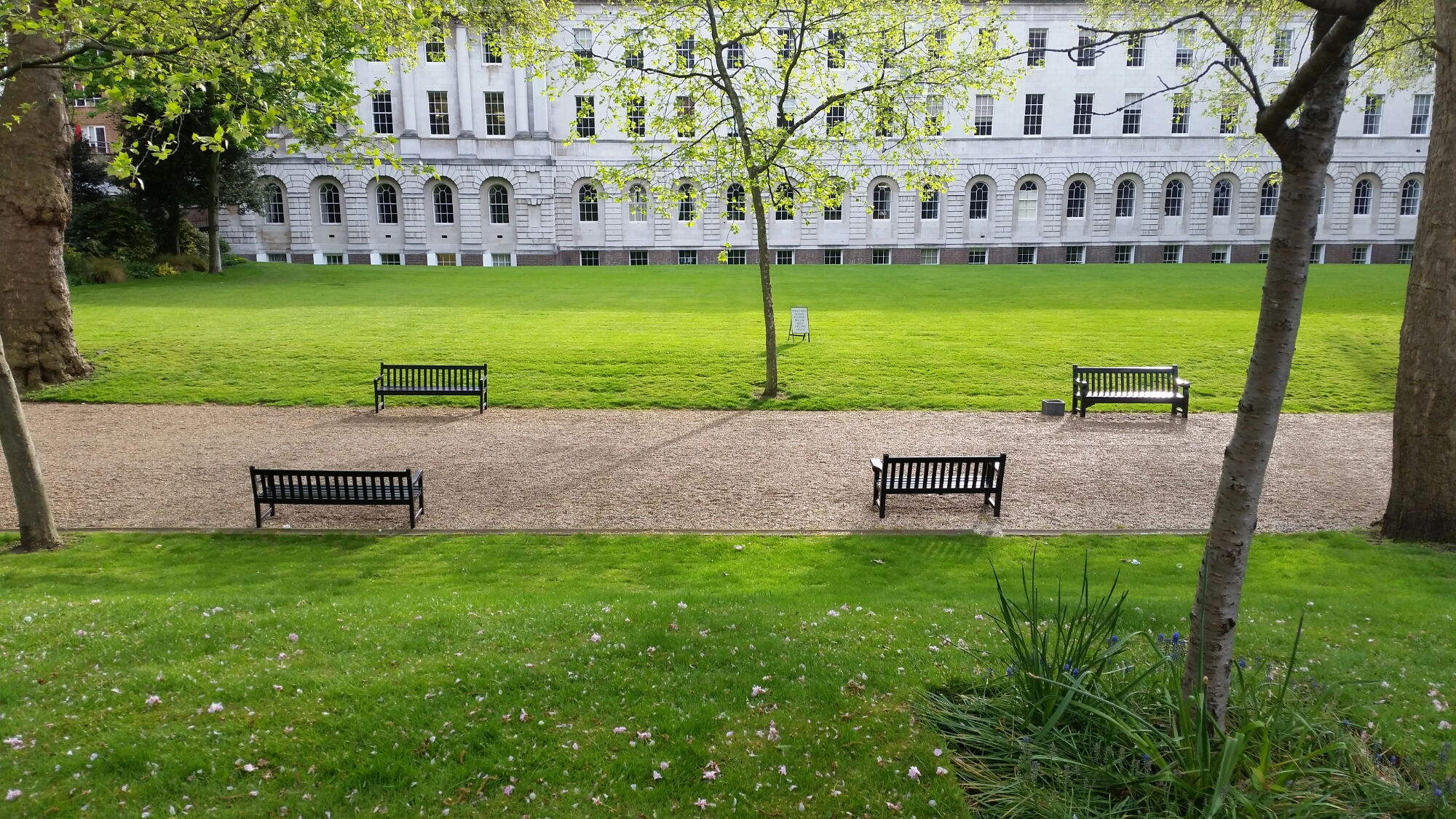
I went for dinner for the first time in my life in The Goring Hotel, a whole new experience of the country in London, stuffed full of wedding parties (or maybe it was the Garden Party) and with the opportunity to play croquet on the lawn, odd in its location just near Victoria:-

image

Standard

Conrad Shawcross RA

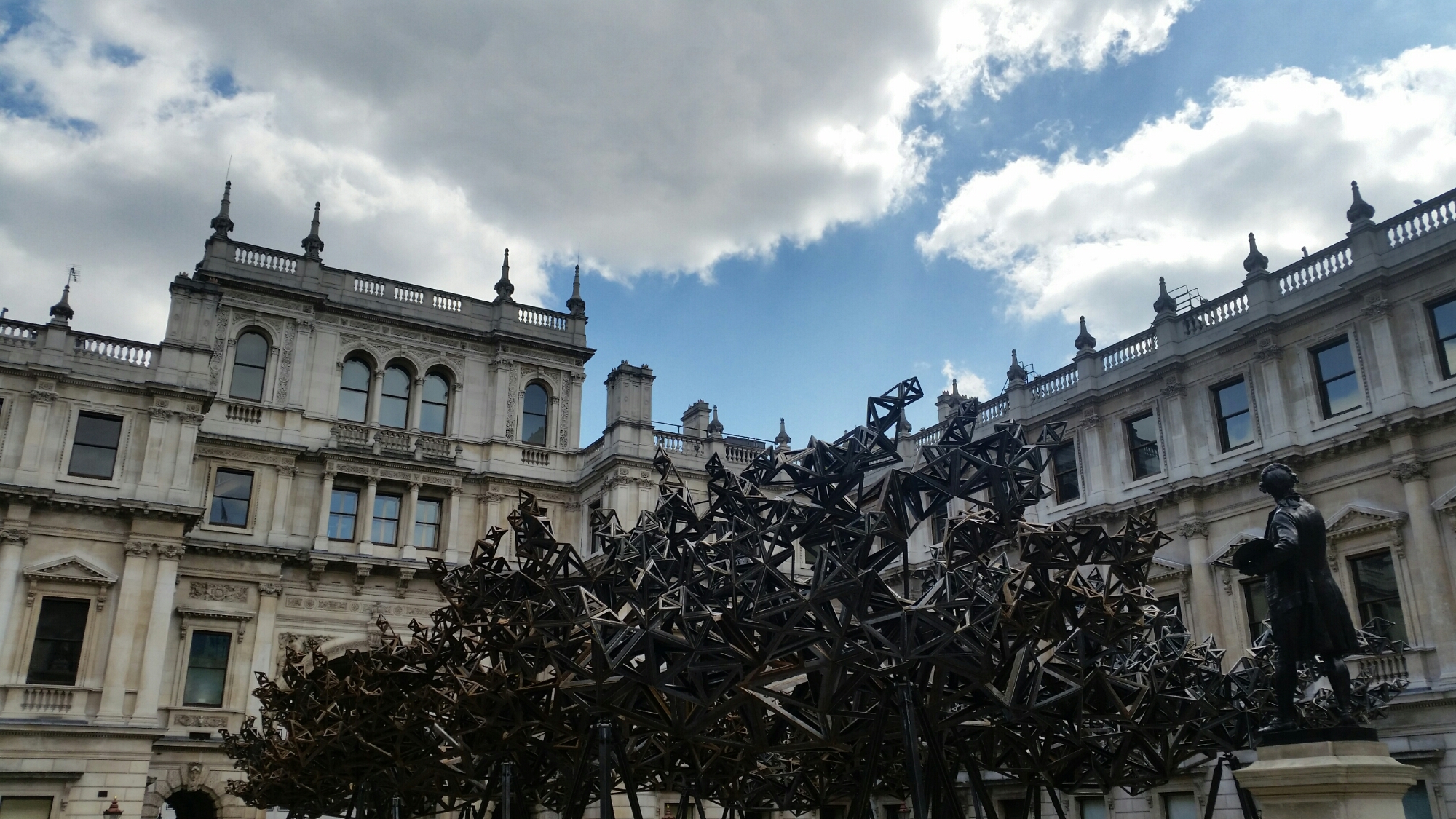
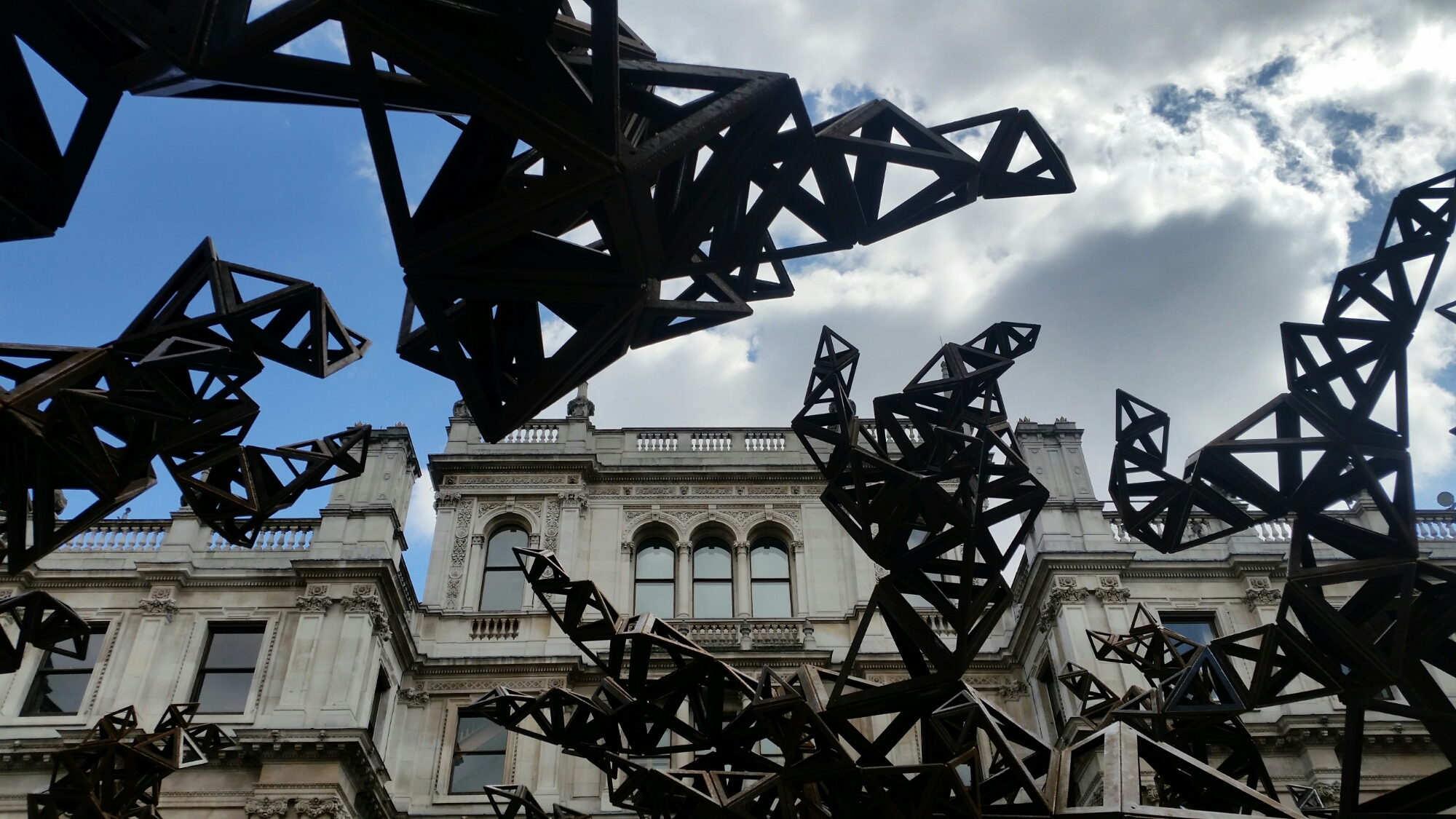
I walked out into the courtyard of the RA at lunch-time and witnessed the full glory of its invasion by metallic triffids designed and installed by Conrad Shawcross.   It’s the prelude to this year’s Summer Exhibition:-

image

image Continue reading

Standard

Weighhouse Street

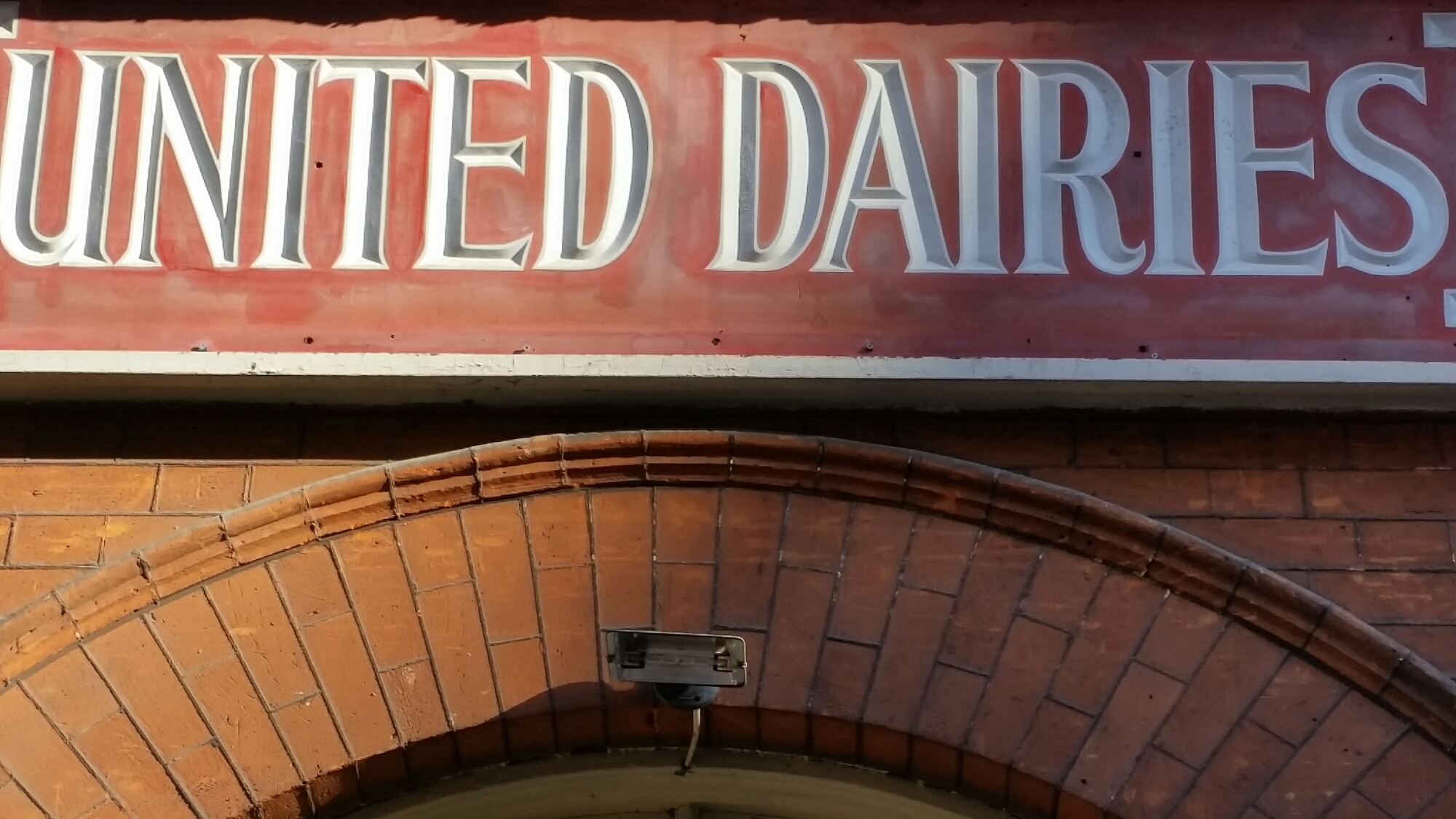
I was walking down Weighhouse Street the night before last and was sad to see that its branch of United Dairies is closing down, a residue of the days when Mayfair was more obviously residential, still with corner shops:-

image

Nearby is the grandest possible Electricity Substation hidden under a large raised terrace opposite the Beaumont Hotel.   I’ve often wondered about it.   At either end there is a neo-baroque pavilion designed by Stanley Peach, a Scottish architect who had trained as a doctor, spent time in the Rocky Mountains and later designed Centre Court at Wimbledon:-

image Continue reading

Standard

Alfred’s Club

I went to breakfast this morning in Alfred’s Club, one of those mysterious private clubs in Mayfair.   It occupies premises just behind Bourdon House, which used to be Mallett’s and is now Dunhill, with its own humidor downstairs.   Little is known of Bourdon who was the first lessee of the house in the early 1720s.   It’s presumed that he was Lieutenant William Bourdon who had been in the foot guards and was a Justice of the Peace, but the name was only attached to the house in the 1860s.   It’s the closest one can get to eighteenth-century Mayfair.

image

image Continue reading

Standard

Colnaghi’s

I was asked by a friend where he could best see, and possibly buy, Old Master drawings.   I thought the best place would be Colnaghi’s, one of the oldest established dealers.   I hadn’t realised that it goes back to 1760, when Giovanni Battista Torre opened a shop in Paris which sold books and prints alongside barometers and fireworks.   His son Anthony opened a print shop in London in 1767, just before the Royal Academy was founded.   It was acquired by Paul Colnaghi in 1788.   Originally based at 132, Pall Mall (in the eighteenth century the art trade was based round Waterloo Place and only moved north of Piccadilly when the RA opened in 1868), Colnaghi moved to Cockspur Street in 1799, where he held three o’clock levées for the world of fashion.   In 1911, the firm moved to 144/6 New Bond Street when Otto Gutekunst was making a fortune, working with Berenson in supplying paintings to the great American collectors.   They are still in Bond Street, but now upstairs.

Standard

Garrick Club

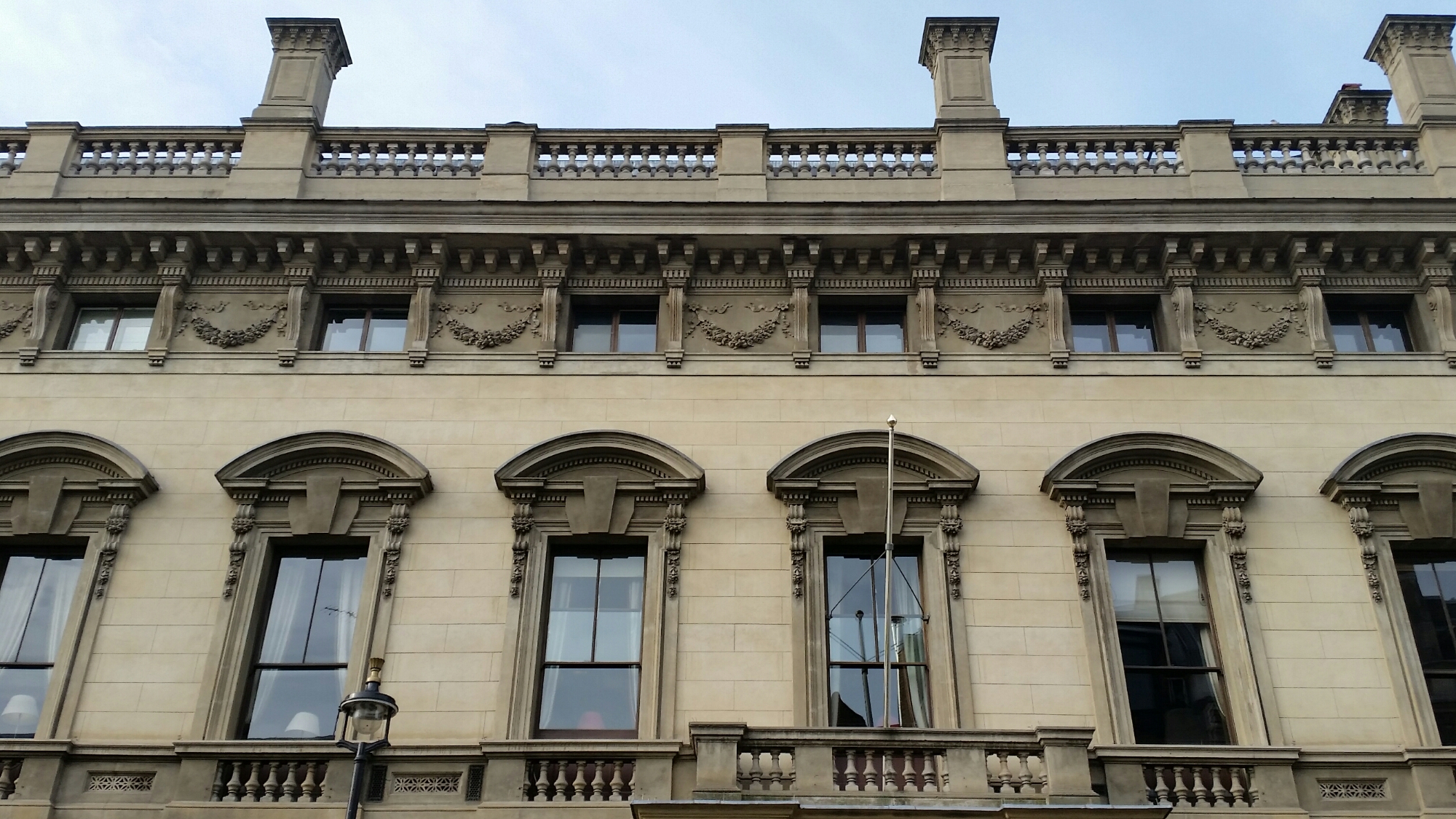
I was walking past the Garrick Club last week and stopped to admire the grandeur of its façade, now that it is no longer covered in soot and grime.   It was no wonder that I could not identify its architect, a man named Frederick Marrable, a pupil of Blore.   He was architect of the Metropolitan Board of Works, responsible for settling claims, laying out Burdett Road and the design of Holborn Viaduct.   The Garrick is a more than halfway decent piece of Clubland classicism, with its high entrance, its dining room remote from the street and surprisingly good stone detailing:-

image

image Continue reading

Standard

Lincoln’s Inn

I had dinner last night in the Lincoln’s Inn Great Hall with the upper echelons of the legal profession in white tie and decorations.   I have sometimes walked through Lincoln’s Inn with its mowed lawns and atmosphere of academic seclusion, but had never penetrated the Great Hall, which makes Oxbridge dining halls look small-scale and has a huge and not wholly successful fresco by G.F. Watts depicting A Hemicycle of Lawgivers, including Moses, Confucius and King Alfred, as well as Tennyson impersonating Minos.

This morning I went to check out the architecture of the Stone Buildings with their grand neoclassical façade, designed by Sir Robert Taylor:-

image

image Continue reading

Standard

Abercrombie and Fitch

My eye was caught this morning by the façade of Abercrombie and Fitch which looked fleetingly like the American Embassy, flying the American flag in the morning sun.   Once upon a time it was Queensberry House, the town house of Charles Douglas, the Marquess of Queensberry, although it was originally designed in 1721 for John Bligh, an Irish peer, by the Venetian architect, Giacomo Leoni.   According to Leoni, he showed the design to Lord Burlington who ‘gave leave to the person who executed it, to set the Front towards his own garden’.   Constructed by a Chelsea bricklayer, John Witt, it was later remodelled by John Vardy for the Earl of Uxbridge.   In the nineteenth century it became a branch of the Bank of England.   So it is perhaps not surprising that it looks more like an Embassy than a fashion store:-

image

image

Standard

The Back Road

I have always thought that the back road which runs alongside the Royal Academy, behind the Society of Antiquaries, is one of the more mysterious spaces of central London, a phantom space unused for most of the year, like Down Street, the forgotten stop of the Piccadilly Line.   But the road is opened once a year to allow for the delivery of sculpture to the Summer Exhibition, so tonight there was a view down what may be the longest unadorned wall in Europe to the gate which was open onto Piccadilly:-

image

Standard

Achilles

I woke up early and thought I should go and have a quick look at Richard Westmacott’s colossal statue of Achilles, one of those commemorative statues one half knows about and never really bothers to look at.   It’s pretty magnificent, on an epic scale, straight out of central casting, and designed by Westmacott as a memorial to the Duke of Wellington’s victories at Salamanca, Vittoria, Toulouse and Waterloo.   The fact that it was paid for by donations from the women of Britain led to a certain amount of ribaldry, including a cartoon by George Cruikshank of the Backside & front view of the ladies fancy-man:-

image

Standard