
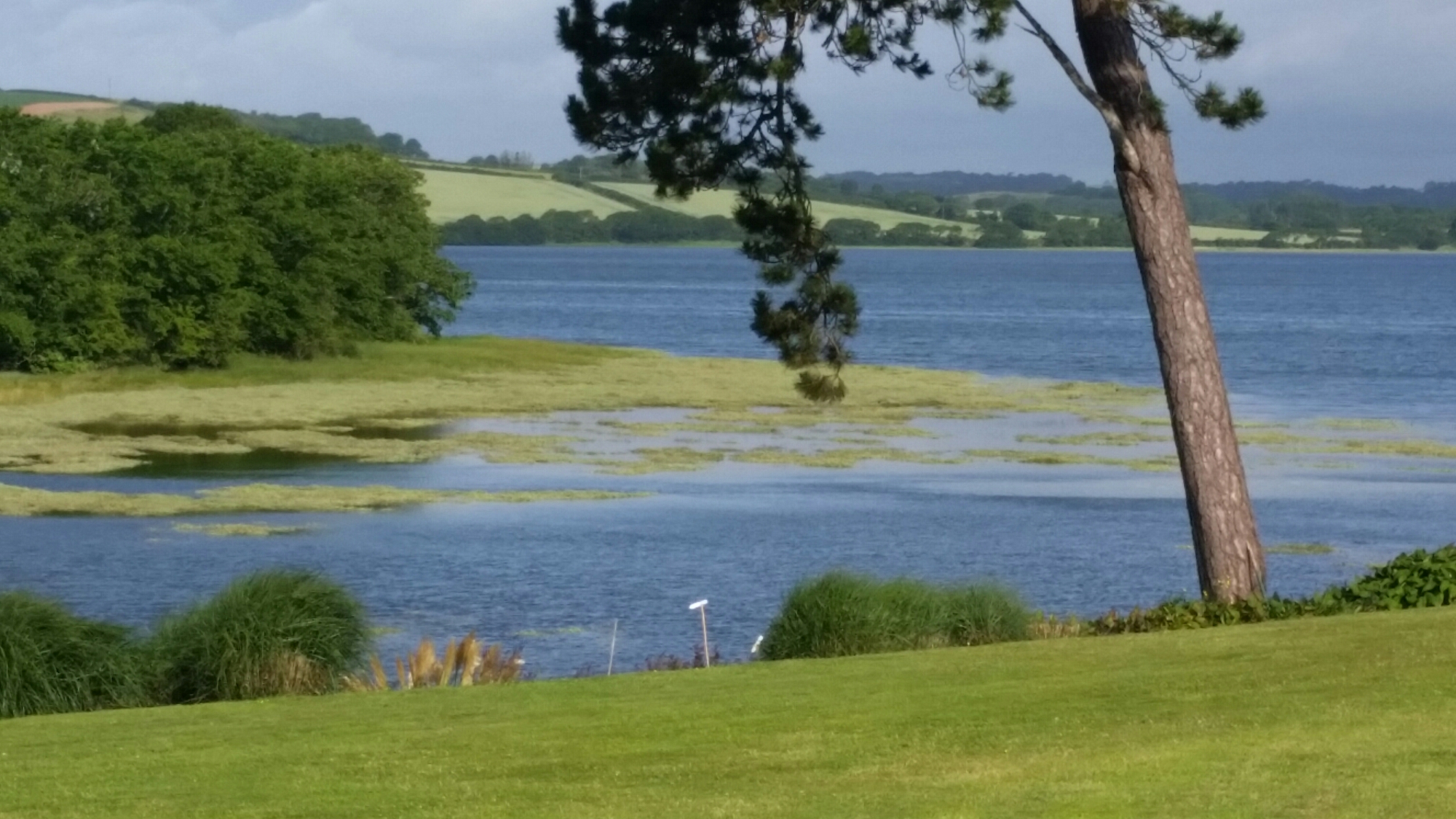
We stayed the weekend on the Rame Peninsula looking out onto the estuary of the River Lynher, a view which changed according to the light:-
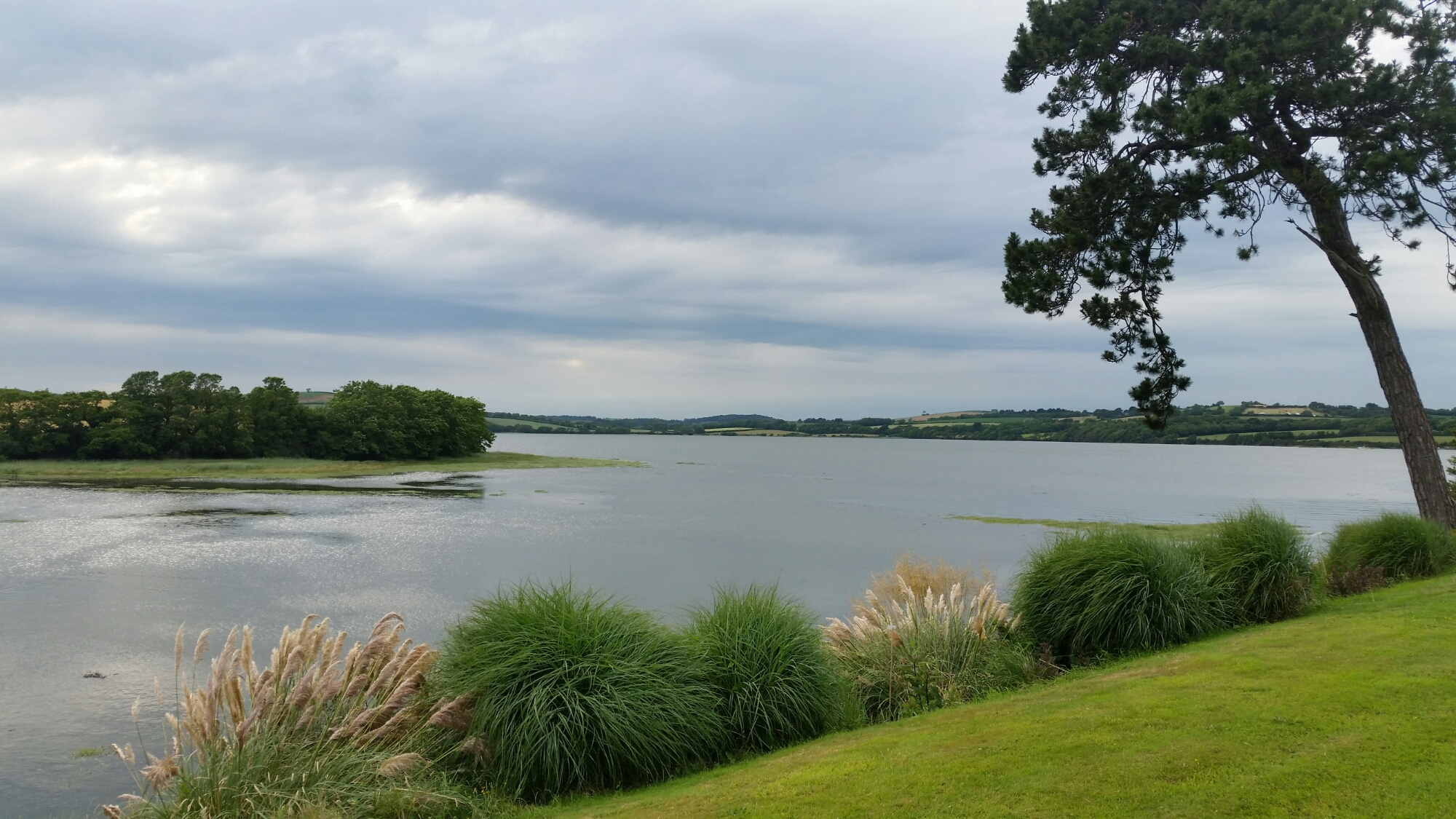
We stayed the weekend on the Rame Peninsula looking out onto the estuary of the River Lynher, a view which changed according to the light:-
On Sunday morning, we went round Antony, admiring portraits of generations of Carews, Pole Carews and Carew Poles, beginning with Richard Carew, the historian of Cornwall, and including Alexander Carew, the regicide, and Sir William Carew, the builder of the house, up to Sir Richard Carew Pole whose portrait was painted in the mid-1990s by the PRA.
The house is a perfect size, not too large and perfectly proportioned, built of Pentewan ashlar between 1718 and 1724 by a local builder John Moyle, who agreed to build the house ‘according to a Draught agreed upon in a good and workmanlike manner and to the satisfaction of Sir William Carew’. Inside, it’s darkly panelled, its atmosphere more that of the generation before the 1720s than Palladian.
The south front:-

The garden front:-
Of the great priory church of St. Germans, seat of the bishop until the construction of Truro cathedral, we saw no more than the great west door surrounded by Norman ornament:-

After lunch we went to walk along the banks of the River Lynher in the parkland of Port Eliot, drained by Edward Eliot some time after he succeeded in 1748 and then planted by Humphrey Repton following the production of a Red Book in 1793:-

The weather was perfect for walking round the gardens at Antony: not too hot, luminously clear, with puffed clouds. The original gardens were laid out when the house was built in 1724, then modernised to an extent, but incompletely, by Humphrey Repton (the Red Book survives in the house) and the hedges and many of the trees were planted in the 1890s and later.
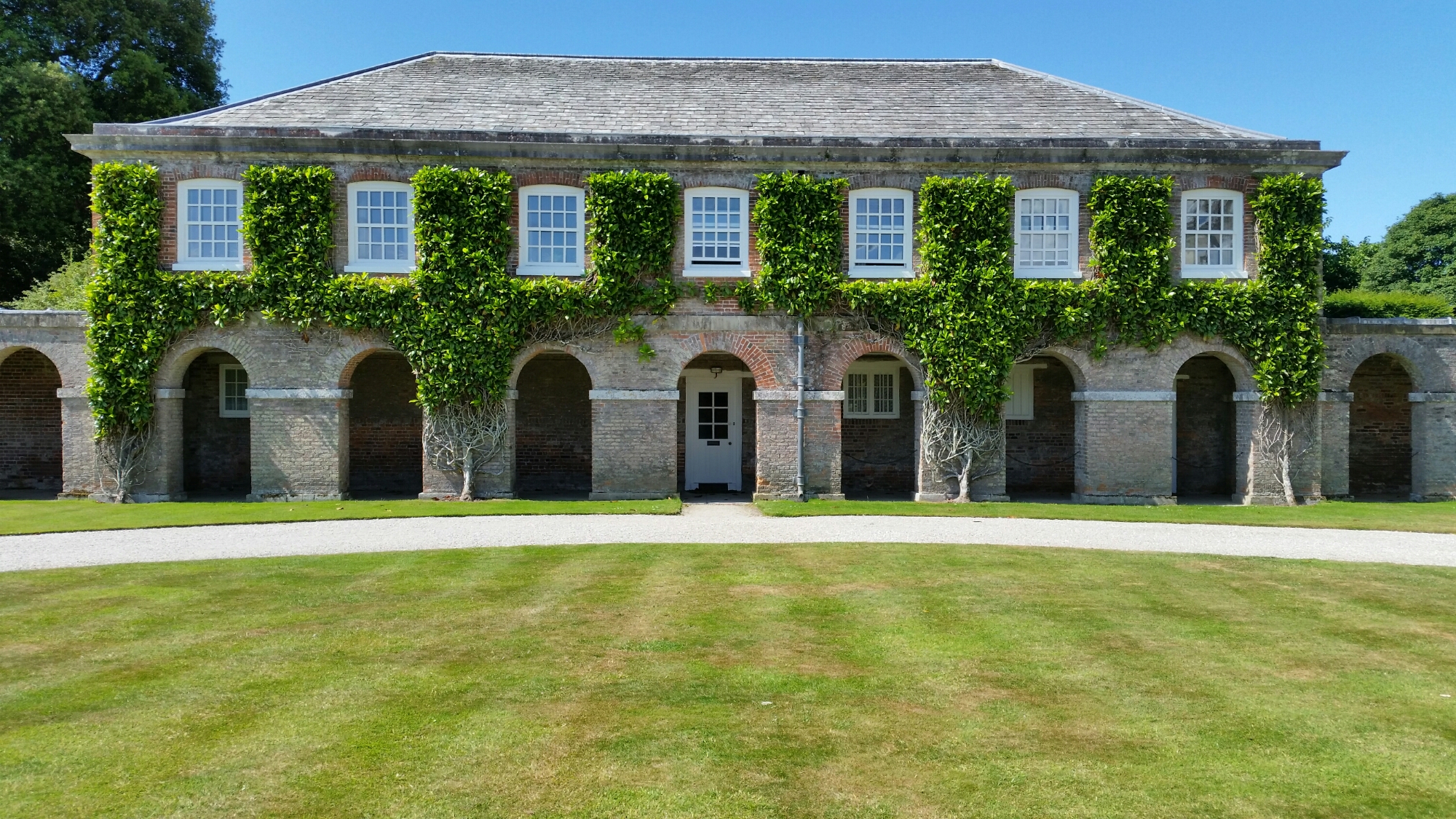
We started in the courtyard in front of the house, looking up to the gates on the horizon:-
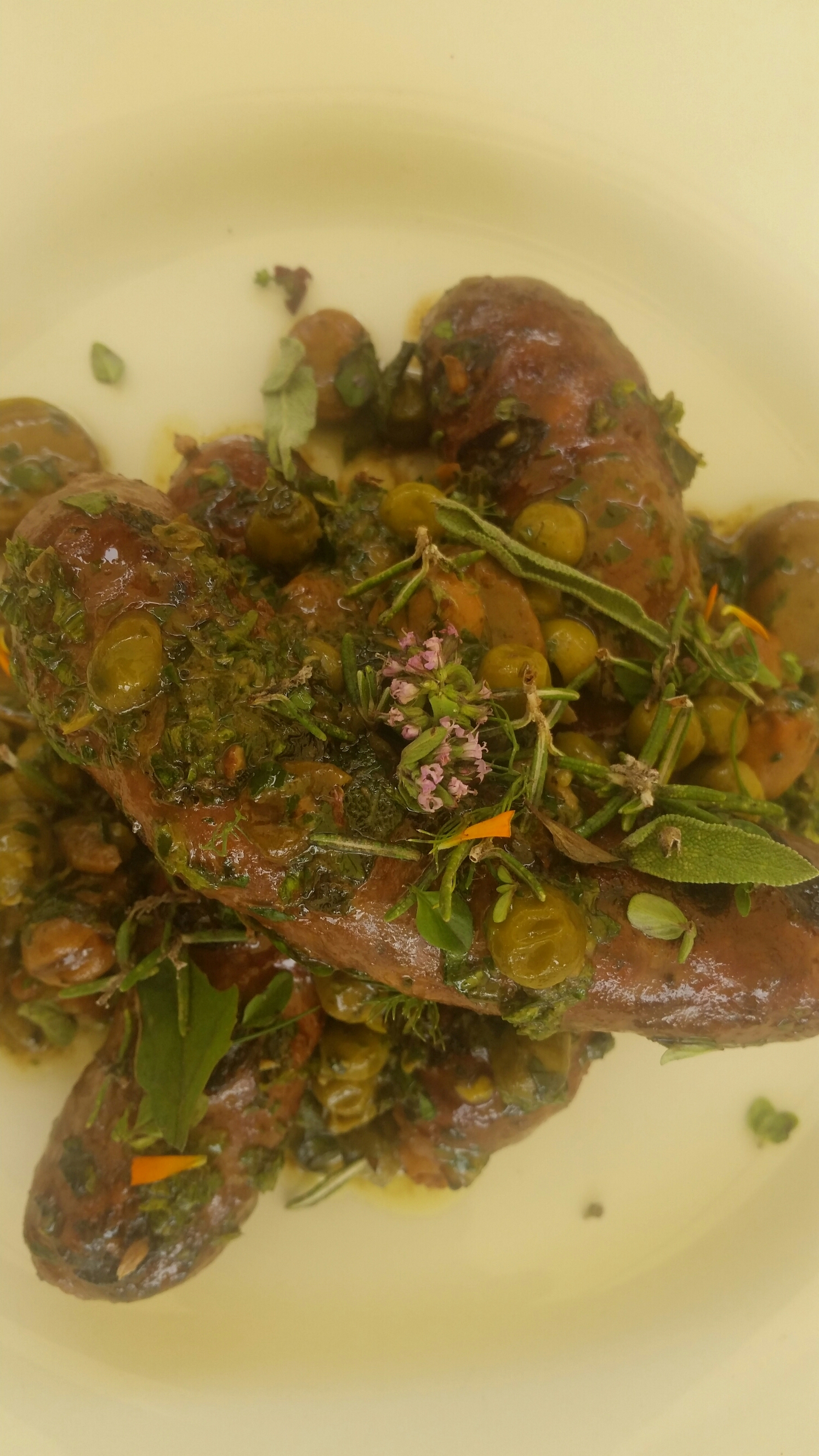
We stopped off at Hauser and Wirth in Somerset to enjoy venison sausages and ginger beer at the Roth Bar and Grill. After almost exactly a year, the place has settled into the Somerset landscape even with no exhibition.
These are the organic venison sausages (very filling):-
This is where we sat out under the canvas awning:-
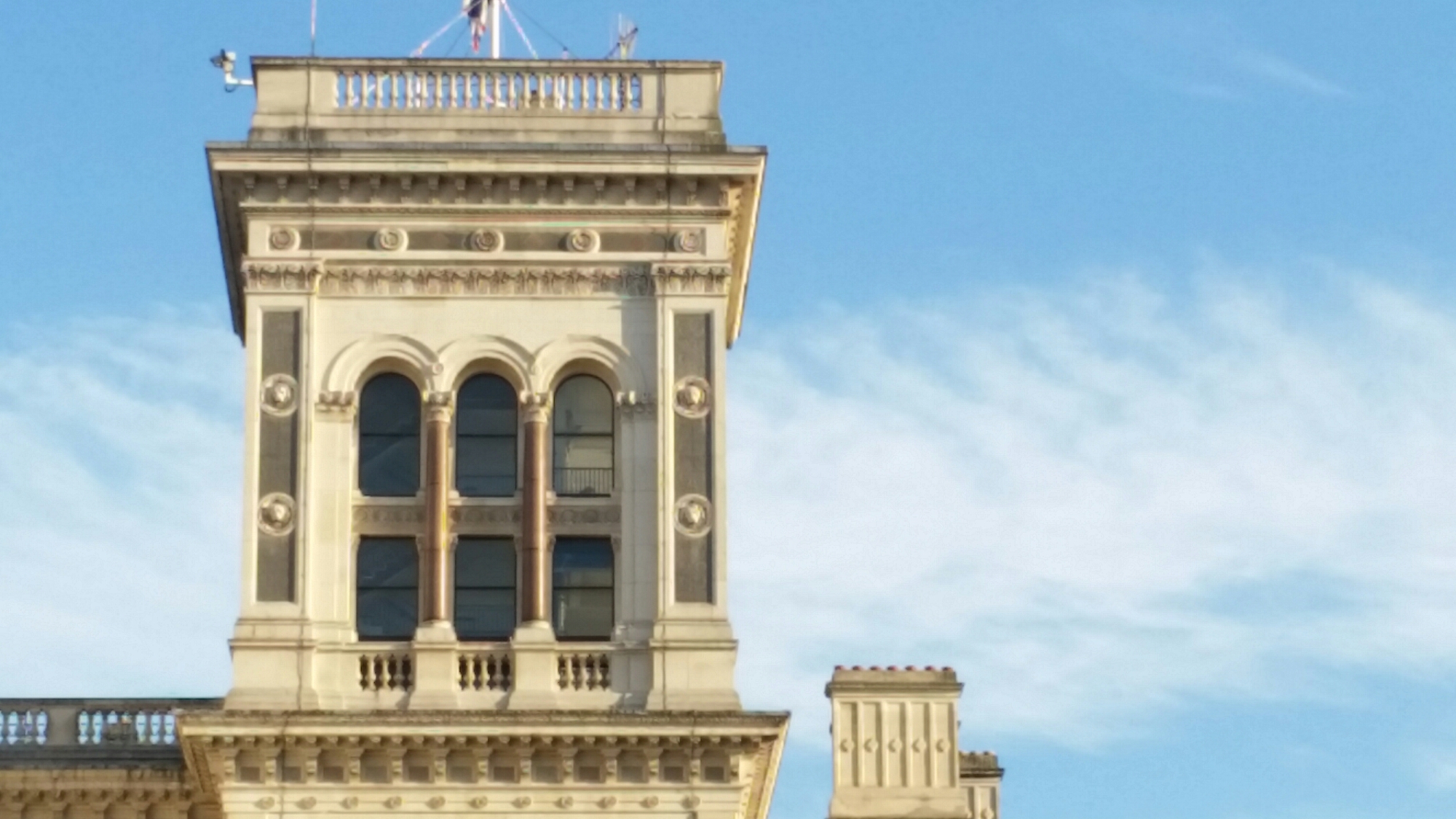
Immediately south of the Horse Guards Parade and normally monumentally reticent is Sir Gilbert Scott’s great building for the Foreign Office which ended up being a victory for the Neo-Renaissance in the Battle of the Styles after Lord Palmerston rejected the first gothic designs:-
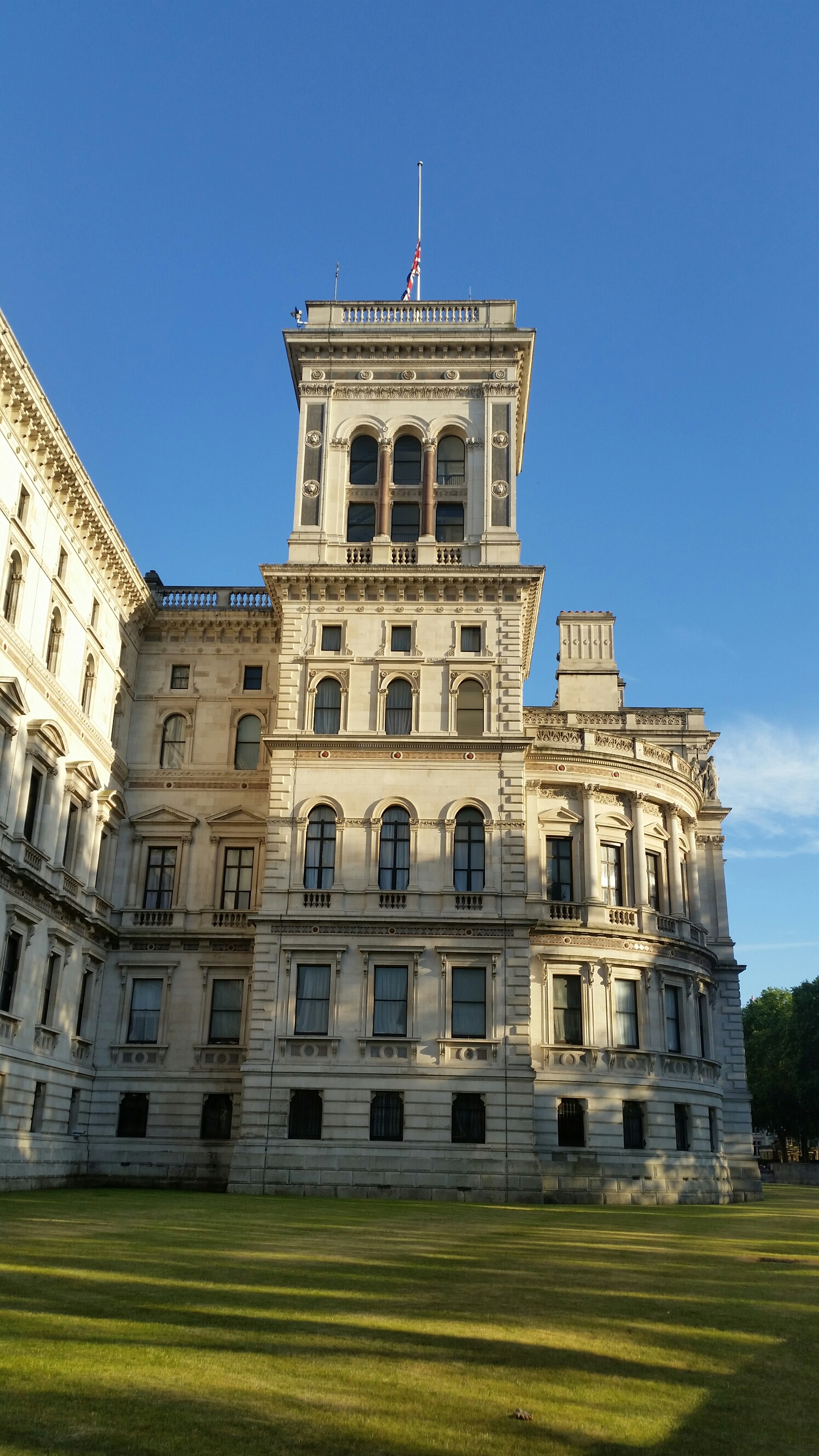
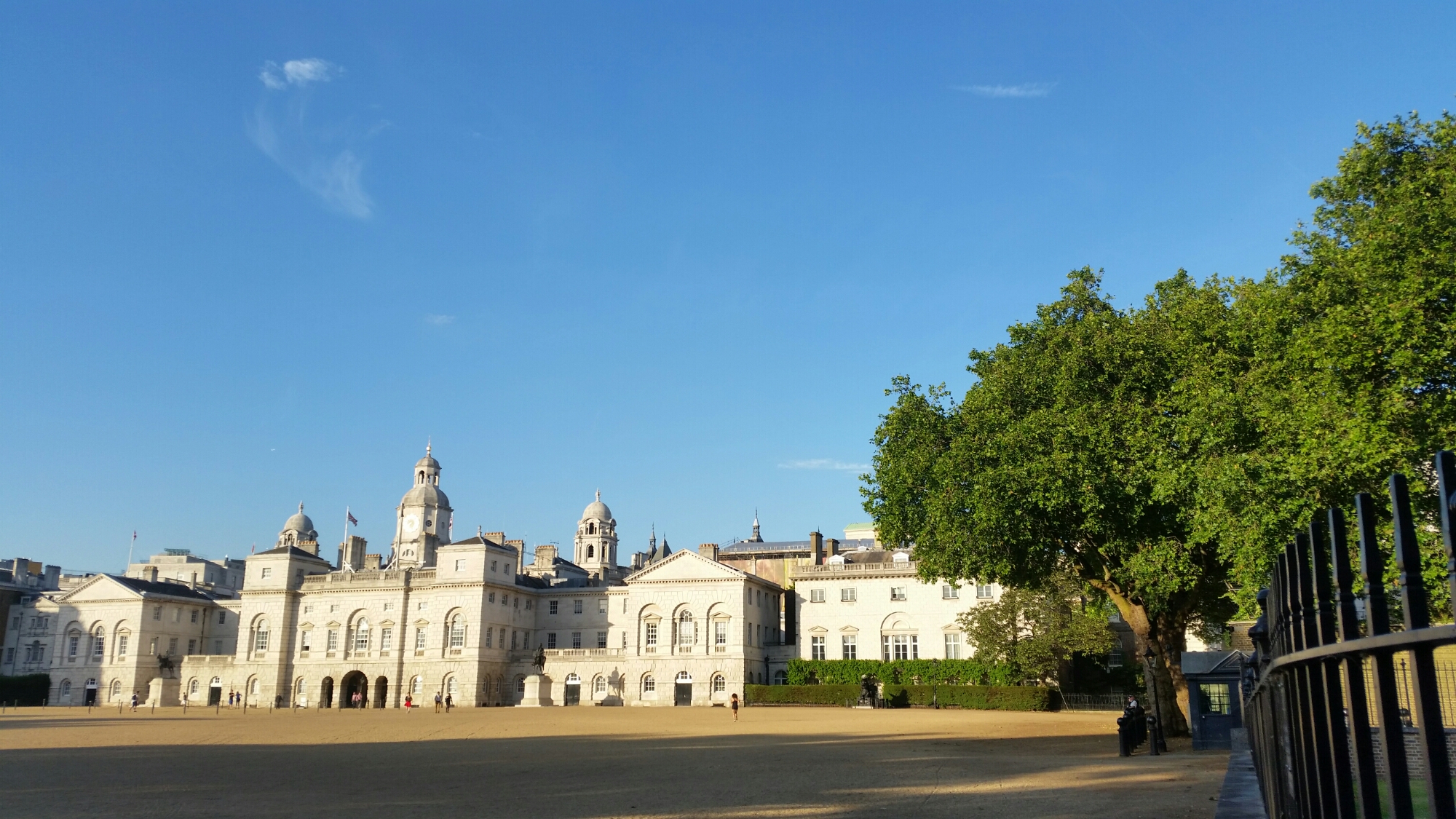
Every so often I can half imagine the scene which Canaletto painted when he depicted the Horse Guards Parade from the south west, full of picturesque incident, the pond in St. James’s Park much less lush than it is now. The Horse Guards itself is not an especially distinguished building, designed by William Kent right at the end of his life (he died in 1748), a piece of flat, patternbook Palladianism, aggregated out of distinct parts like a children’s toy. But tonight it looked good in the evening sun:-
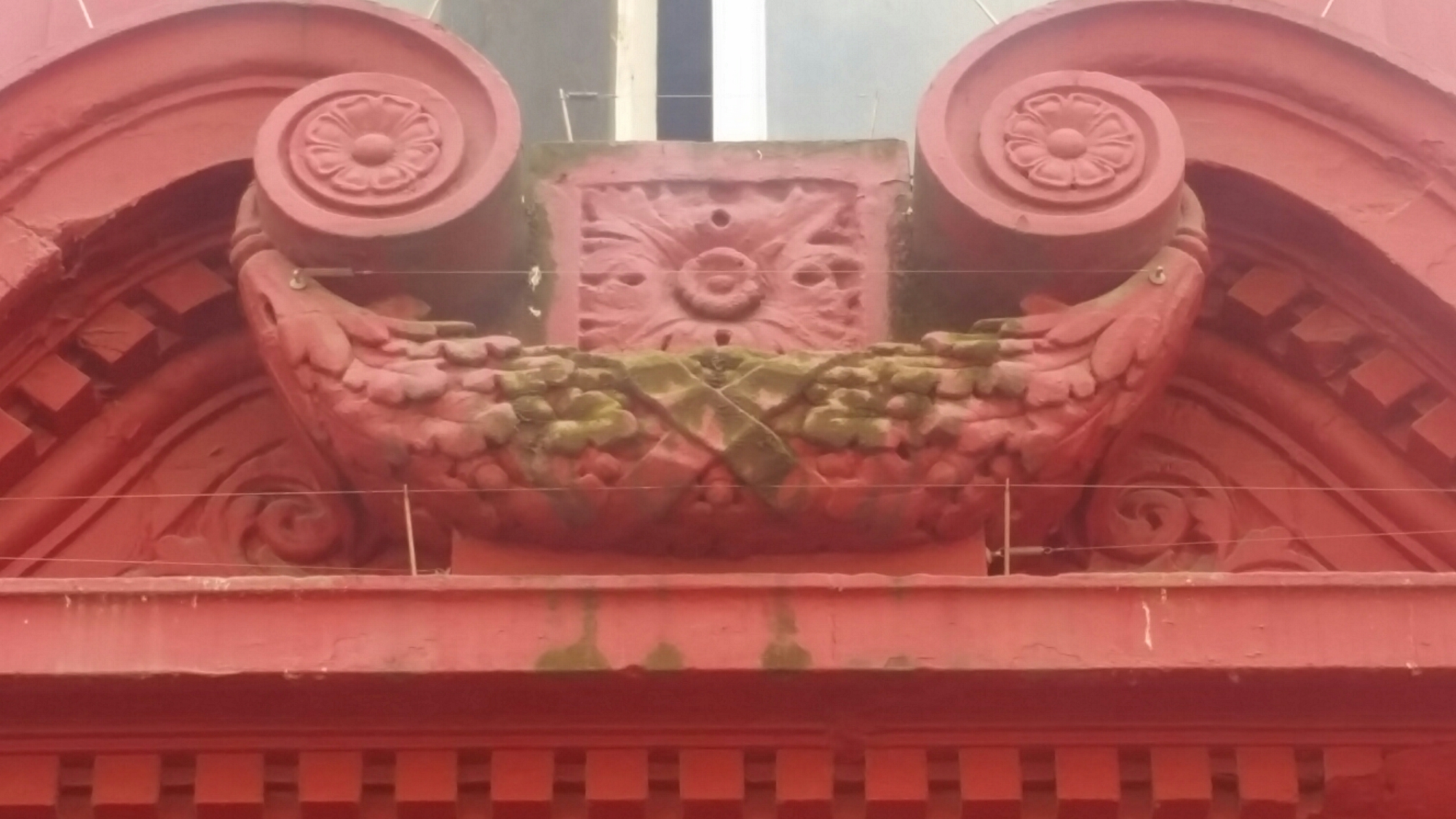
In walking down Hanway Street yesterday I was struck by this bright red oversize door surround. But I have been unable to find out anything about it. Hanway Street was developed in the early eighteenth century by Major John Hanway, who translated the odes of Horace and whose nephew Jonas invented the umbrella:-
We walked along the sea front at Aldeburgh enjoying the miscellaneous brightly coloured architecture and the huts selling smoked fish, the bandstand and some of the ornamental lettering:-





 | Charles | Saumarez | Smith |
You must be logged in to post a comment.